

Цифровой Фотоаппарат Canon PowerShot SX510 HS — 1209 отзывов, плюсы и минусы
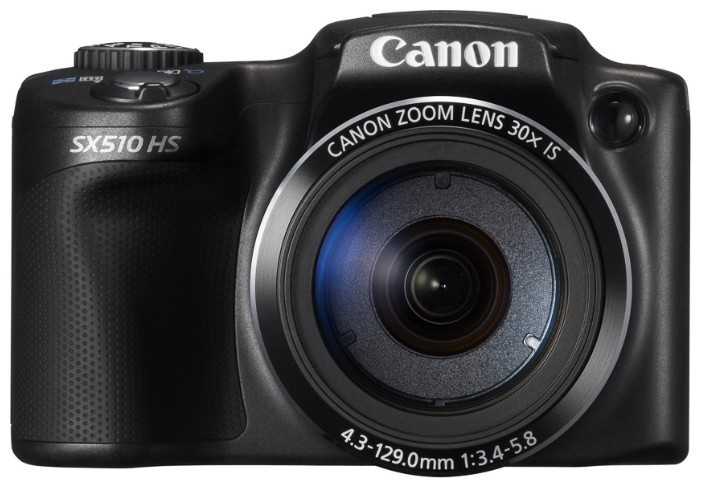
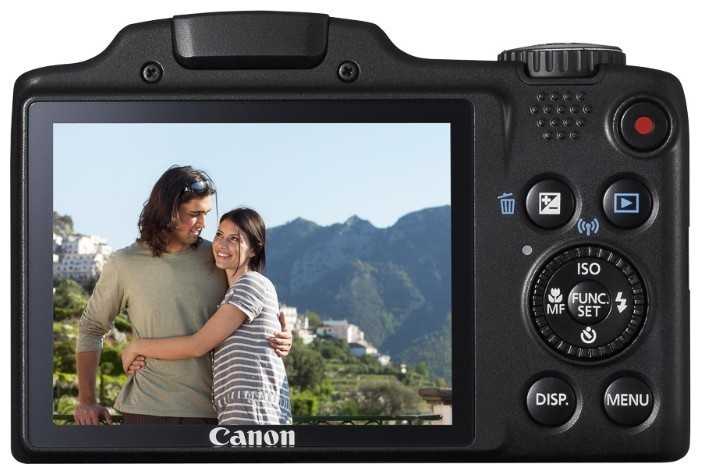
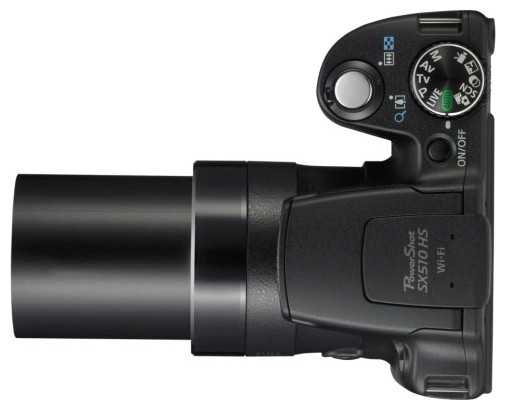
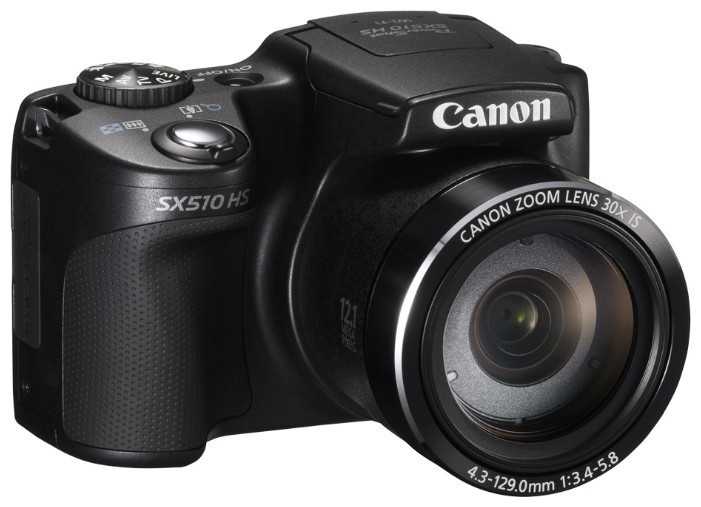


👍Почему стоит купить Canon PowerShot SX510 HS - Преимущества по отзывам пользователей
- Исключительный оптический зум 50x (24-1200 мм экв.):
- Позволяет снимать детализированные фото Луны с видимыми кратерами, номеров на самолётах в небе, оперения птиц на расстоянии, без приближения (множество отзывов с примерами).
- Цифровой зум до 100x сохраняет приемлемое качество при устойчивой руке, идеально для дикой природы, животных и спортивных событий.
- Zoom framing assist помогает быстро находить объект при сильном приближении.
- Отличная стабилизация изображения (IS):
- Обеспечивает чёткие снимки с рук на полном зуме даже при ветре или движении, превосходит предшественников SX40/SX30.
- Работает в фото и видео, минимизирует тряску на 1200 мм экв., пользователи снимают птиц в полёте и салюты без штатива.
- Поддержка 4.5 стопов, позволяет выдержки до 1/15 с на максимуме.
- Высокое качество фото днём и на улице:
- Резкие снимки с хорошей детализацией, цветопередачей и насыщенностью, 12 МП хватает для A4+ и кропа.
- RAW и Super Fine режим улучшают резкость, HDR для контрастных сцен, серийная съёмка до 13 к/с.
- Макро от 0 см, отличные портреты с боке на длинном конце.
- Эргономика и управление:
- Удобный хват для больших рук, интуитивное меню для пользователей Canon, кастомные режимы C1/C2.
- Поворотный ЖК-экран 461k точек для съёмки сверху/снизу, электронный визир для яркого солнца.
- Быстрый AF (0.19 с), горячий башмак для внешней вспышки.
- Видео Full HD 1080p:
- Качественная запись со стереозвуком, тихий зум, стабилизация без тряски.
- Съёмка фото во время видео, замедленная до 240 к/с.
- Длительность до 30 мин, подходит для путешествий.
- Автономность и сборка:
- Аккумулятор на 250-350 снимков, быстрая зарядка (2 ч).
- Прочный пластиковый корпус, Made in Japan, компактнее DSLR.
👎О чем стоит задуматься перед покупкой - Недостатки по отзывам пользователей
- Шум в слабом освещении (ISO >800):
- Видимый шум indoors/ночью без вспышки, не для съёмки свадеб или концертов (15-20% отзывов жалуются).
- Выдержка >1 с фиксирует ISO 80, ограничивает ночные фото без штатива.
- Низкое разрешение EVF (202k точек):
- Размытый в ярком свете, уступает конкурентам (Fuji HS50, Nikon P510), экран лучше для визирования.
- Сложная диоптрия, авто-переключение EVF/LCD неудобное.
- Эргономические недочёты:
- Случайные нажатия на self-timer/video/меню большим пальцем при хвате (частая жалоба).
- Вспышка поднимается вручную, слабая на расстоянии >3 м.
- Отсек АКБ/карты снизу, недоступен на штативе.
- Слабая светосила объектива (f/6.5 на 1200 мм):
- Требует штатива/хорошего света на максимуме, мягкость по краям (но лучше, чем ожидалось).
- Нет резьбы под фильтры (нужен адаптер 58/67 мм).
- Комплектация и мелочи:
- Нет USB-кабеля, печатного мануала, запасной АКБ желателен.
- Аккумулятор Li-Ion, не AA, коротковат для видео.
- Меню сложное для новичков, крутая кривая обучения.
- Ограничения видео/звука:
- Шум зума/ветра в микрофоне, лимит 30 мин (налог ЕС).
- Нет внешнего микрофона на hot shoe.
*Плюсы и минусы, которые пользователи называют чаще всего на основе практического опыта использования.
1209 отзывов пользователей о Canon PowerShot SX510 HS
Пользовались
Canon PowerShot SX510 HS?
Поделитесь своим опытом и помогите другим сделать правильный выбор

Скромный эксперт
16.04.2014
10/10
Оценка пользователя
Великолепно
Wow. This is a truly amazing little camera. I bought this to replace my Nikon Coolpix. I had my coolpix for just over 12 months when it broke, due to no fault of my own, and it was going to cost $150 to repair. Rather than repair a camera that I liked but didn't love, I decided to make a new purchase.My initial intention was to purchase a Canon Rebel, I have used my mom's in the past and really love that camera. I loved using the interchangeable lenses and the ability to manually focus. Seeing the cost though ($500+,) plus the cost of additional lenses, it just wasn't in my price range at the moment and I needed a new camera urgently. If you're looking for a DSLR, do not expect this to function the same. It's a powerful little camera, but it is NOT a DSLR. If you're an amateur photographer and have no intention of taking a class to learn how to use the functions of a DSLR, this is a perfect camera for you.So began my research. It became a toss up between the Canon SX510 and the Nikon L820. Reviewers were split between the two, some preferring the Nikon, some preferring the Canon. They seemed to come out about even except in a few minor categories, and having been very pleased with the Canon Rebel, I decided to go with the Canon despite it costing about $30 more than the Nikon.Pro's-*30x Optical zoom - awesome, no more grainy pictures of kids on stage during performances*Built in wifi - go ahead and upload your pics to facebook, send them to your phone, or directly to your wireless printer.*Manual setting - can do your own iso settings, white balance, shutter speed etc. The auto setting works fabulously in most cases, far better than any camera I've ever owned, but the option is there for those times it's just not adjusting quite how you want it.*CMOS sensor provides for a clearer image, especially on the macro setting, than my own eyes give me.*Zoom assist - for when you use your 30x zoom but lose your subject*Size - for anyone that has gone hiking with a DSLR and multiple lenses, you know what a pain that can be. This lighter camera is perfect for running around and still has a lot of the qualities that you'd look for in a DSLR. So unless you're out taking professional shots, this comes in really handy*Discreet mode - This is a setting on the dial, great for those events when there is no flash allowed. In this mode, the camera doesn't make noise when turning it on, nor does the flash go off. Even if the camera goes off and you turn it back on, because it is set on the dial, it doesn't reset itself. I've accidentally had my flash turned back on so many times that way on previous cameras.Cons -*Very poor manual - A lot of skipping around to get one thing done. IE Looking through the start up manual, it says "for instructions on attaching (the lens cap cord and neck strap) please see the user manual on the canon website" Granted, it wasn't difficult to figure out, but there was no clear spot for the lens cap cord, and it is something that should have been included in a "start-up" manual. Another example of a poor manual, referring to the downloadable pdf manual...say you want to learn how to use the miniature setting...so it says "miniature setting, pg 48" You go to pg 48 and it says to follow steps 1 and 2 on page 46....okay back to page 46, got that down, back to page 48. It seems to be this way when trying to learn how to access any of the features. I can't fault the actual camera for this, but definitely Canon. I actually made up my own cheat sheet for accessing my favorite features until I have it down.*No ability to manually focus - Being that this camera is not a DSLR, I didn't expect or really even hope for this feature. I would have liked it, but for the $$, I definitely can't complain and will upgrade in the future.*Mirrorless - I would definitely prefer to use a viewfinder, I am used to going without though, so it's easy to work around.*No Raw Shooting - this feature doesn't apply to most people, but sometimes I prefer to use it*No Touch Screen - This is taking time for me to get used to, I find myself constantly tapping the screen. My last 2 cameras, going back to 2010, have been touch screen, so I'm surprised to find this camera doesn't have one.Some reviewers have complained about the difficulty of accessing the wifi, this was fairly easy for me and took about 15 minutes max. It's a little more work than it typically takes to connect a device to wifi,and you have to use the computer to do it, but it's still not overly difficult.Despite the cons, I'm still incredibly impressed with this camera and it has definitely earned 5 stars when taking into account the type of camera, the construction, and the value. I'm very happy with this purchase despite the fact that I was hoping for my next camera to be the Rebel. I never imagined I'd get a camera of this level of quality for under $400. (I paid $229, could have bought a slightly cheaper one, but wanted one that was Amaz
Скромный эксперт
06.04.2014
8/10
Оценка пользователя
Хорошо
Coming from an SX30, and standard point and shoot cameras, I was very hesitant about this camera. I owned the sx30 for about 4 weeks before selling it. The image quality was horrid...The lens on the 30 wasn't sharp, the images were blurry and out of focus, the colors while accurate, were often overexposed. So when I heard about the sx50 I was very hesitant. But I took at look at the images side by side with the SX 30, saw that the lens on this camera was much much sharper, and decided to give some credit to all the reviews that were raving about the improvement on the image stabilization system on this camera. It arrived and I had a chance on a nice sunny day to take some photos. I was blown away. The color is there, rarely did I have any overexposure (something commonly seen on many of the compact canon point and shoots), and the image stabilization allowed me. to capture moving birds at a decent 1/150-1/300 second all the way zoomed in. Full zoom. For a point and shoot camera for outdoor photography, I am very impressed by the images that this camera can put out. It balances color well. If you wish, you can take a look at some of the pictures I have uploaded on flicker. You will find samples of unedited, full resolution on program mode that I took outside in the late afternoon early evening hours. They look great. To view them select the links below and copy and paste them into your browser. (please note for full size download on flickr, you have to click on the three dots on the right hand side of the page. It will show download all sizes. Click on that and then select the Origional size and click download to view the photos in full resolution These are all 12mp unedited full size photos. Make sure the images are viewing as SX50. Here they are:https://flic.kr/p/mRb32Whttps://flic.kr/p/mRaVhohttps://flic.kr/p/mRbTkfhttps://flic.kr/p/mRbRduhttps://flic.kr/p/mRbVydhttps://flic.kr/p/mRadCMTo put it the least, I am very impressed with the outdoor shots on this camera. As it so happens, I take the majority of my photos in conditions where there is sufficient light, as I enjoy nature photography and vacationing, most of which even in a dim forest, is still outside and allows enough light to this sensor to get great images. But if this doesnt fit you, and if your into indoor photography, and want to take pictures WITHOUT the flash, than I would encourage you to keep looking . The reason I say this is that ISO beyond 800 is not usable on this camera (as is the case with most point and shoots). You can still get some good shots in well lit rooms, but if you think your going to take this camera into a church and take wedding photos where there isn't sufficient light and have it look as sharp as it would outside without flash, I would look elsewhere. In fact there are two cameras I would recommend in this case. Half the people on here are claiming that DSLRS are super expensive, which is what led me to this fairly camera. Its called the olymus EPM2. Its one of the new interchangable mirroless cameras on the market. However instead of using Sonys expensive NEX lenses, it uses the Micro 4/3 system that is shared by both Panosonic and Olympus and that is taking off like wildfire right now among photography companies. If you can nab one for around 300-350 with the kit lens, its a good price as of April 2014. The camera:The EPM2.Its a 16 megapixel camera that costs nothing next to a DSLR. You can use hundreds of lenses and the image quality will put most point and shoots on the market to shame...save for the SX50 which im still just blown away by with good lighting. Anyhow the samples for the OlympusAgain to appreciate the optics, click on the three dots on the right hand side once the page loads and click on view all sizes, select the origional size, download and view. The senor on this camera is used in another 800 dollar camera made Olyumpus:https://flic.kr/p/eSzRgchttps://flic.kr/p/eSMwAChttps://flic.kr/p/eSzLR8Plus you can use lenses of various types as low as f1.2 for indoor photography. Another one to look at on flicker is the Panasonic GF3. Here is a sample photo of that one:https://flic.kr/p/9T34MZ (same process. Click on the three dots on the right side of the page and click download other sizes and select the origional size, download and view on PC).Anyhow the senors on those cameras are much larger and are on DSLR level without being nearly as expensive. The Olympus is 16 MP, the Panasonic is 12 MP. You can find the panasonic for under 250 with the lens kit. Its a GREAT price! Find a zoom lens 20-150mm for under 100 and your at the right at this price point.That being said, if your into the long zoom and you think you will be shooting mostly outdoors, I cant recommend the canon Powershot SX enough. Its an amazing camera for what I use it for, and Im very impressed by the improvements in auto focus, color reproduction, lens sharpness (its a sharp lens for this focal length. Two thumbs up for canon
Скромный эксперт
13.03.2014
10/10
Оценка пользователя
Великолепно
I'm an experienced nature photographer, having been at it for over 50 years. I have been using Canon's PowerShot cameras going back to the S3. My relationship with these cameras has been a love-hate one, but the SX40 was a "Like" and this is "Really-Like-but-Love-is-too strong-a-word."See uploaded photos (click on "most recent") many of which have been published in birding magazines as well as with Audubon societies. But remember, I know this camera...This should NOT be your first-time-digital point and shoot camera! The learning curve is way too sharp because this camera is quite complex, and has unnecessary bells and whistles that you should avoid (at least until you learn the basics).What did I think about this camera? Well, after doing an awful lot of research, *I bought two* even after there had been a "recall" which I still don't understand! (One of these was for my wife.) I am a pro turned amateur nature photographer, and have been for many years. As for digital, I have had the Canons S3, S5, SX10, SX20, SX30 (returned immediately), SX40, and now the SX50.After you've played with the SX50 for a couple of days, I'd be happy to send my standard settings if you just email me. Here are the improvements over the SX40 and all SX models that preceded this (you can see the progression on my web site (see my profile).The good:1. Shutter lag is minimal! You can shoot in burst mode of 7-9 frames per second depending with the mode you're in, but shutter lag has been cut by 70%. Canon says that you can shoot up to 13 frames per second. Not with this camera, but 7 should be sufficient.2. Fast focus with center metering. The SX40 (and other like cameras) want to focus "on an average" of all the elements in a shot. Unfortunately, anything that uses the term average is like the guy with his head in the refrigerator and his feet in the oven, and on average, he's comfortable. It just doesn't work that way ... which is why you should also steer clear of "Auto." (More later) So, basically, if there's a bird on a branch in the center of a bunch of branches and twigs, the SX50 WILL focus on the bird and usually on the first try.3. Super Fine Mode. The SX40 goes to Fine resolution, but still left noise (the "snow" you'll see when cropped a distant shot of a bird etc.). For lack of a better way of putting this, Super Fine Resolution gives you many more pixels making the shot "tighter" and easier to crop without losing definition.4. Burst (continuous) Mode: This will hit a top speed of 9 frames per second. That's maximum, but if you can find a bird in flight, you stand a pretty good chance to get at least one frame in focus. It could be the bird's butt as it's leaving, but it will be in focus. There IS a locking device called High Speed AF (two buttons to the left of the lens). I am still trying to master this, and it will come to me ... I hope. So far, it feels like I'm trying to play an accordion with both hands doing something. I am pretty good at panning, but finding a bird in flight in the fully extended zoom is difficult. High Speed AF should correct that problem.NOTE: In order to get the most from burst mode, reducing shutter lag, etc., be certain to get a SDHC card! You need a fast card to maximize some of the aspects of the camera. Also, because the files will be much larger than what some are used to, I use a 16GB CLASS 10 card,* but 32GB CLASS 10 when on vacation in Yellowstone, Rainier, Bryce, Yosemite, in other words, anywhere where I'll be taking as many as 1,000 shots a day. And yes, especially with burst mode, you can easily take 1,000 pix on a vacation day. A Class 10 card will transfer 10 MG per second. If you want to - and you will - take pictures in burst mode, you need that speed between card and camera processor.5. Low light: Well, it isn't a disappointment because I expected this. You're buying a camera with a one chip sensor as opposed to 6-9 with a DSLR. The lens does allow more light than the SX40, but it still isn't a DSLR. Indoors, I recommend a flash.6. I have 9 settings that I use very often, but not all the time. One of the most critical difference is the white balance so that I don't blow out the whites of birds, goats, even recently bathed dogs. You can store ALL of your favorite settings in two modes C1 and C2. I store my settings for bright, sunny days in C1, and for low light or cloudy days in C2.7. IMAGE STABILIZATION: There's IS and then there's IS. The SX50, for a one-bit processor, has marvelous IS. I took shots of my TV's "What's playing" menu at 1/5 of a second (that's SLOWWWW!), hand held, and it was so sharp that my optometrist could actually see what I was complaining about, ghosting of letters and numbers on a white background. There are several photos I posted here that were taken hand-held at 1200mm (full zoom), and they're tack-sharp. Note that I haven't used a tripod or monopod since my 35mm SLR film days.8. Weight: 21 ounces and a 1200mm zoom! Those who carry a 6 pound camera
Скромный эксперт
28.02.2014
8/10
Оценка пользователя
Хорошо
I like this camera overall. The image quality is excellent in terms of detail, color accuracy, saturation, sharpness, consistency, and depth of field at all aperture settings. I tested six other competitive cameras in the super-zoom/bridge camera category, and this is the camera I ultimately purchased.So . . . the end results are very good; however, I have a number of complaints concerning the poor design and ergonomics of this camera. Read on . . .The absolute MOST annoying design flaw is that the self-timer button is the far right "wing" tab of the circular function wheel which is located, as one holds it, on the very far right-hand edge of the back of the camera body. This is a most unfortunate location for this or any other control button, since almost every time you pick up, pass, or hold the camera to shoot, the heel of your palm or your thumb inadvertently presses this button and activates the timer - GRRRRR! Often this cannot be corrected with just a single button press, as the timer has a number of elapsed time options and you may have to depress the button numerous times to turn the timer off and commence shooting! One has to learn how to delicately and unnaturally hold the camera to prevent this from occurring, and even then it happens consistently despite one's best efforts. Canon has tried to ameliorate the problem by designing a thumb-trough with grip nodules swaled into the camera back to help guide your hand into a holding position that will not trigger the timer; this helps a tad, but the resulting hand position, requiring that right-handed folks support the camera with the pressure of the ball of one's thumb is neither natural nor intuitive, and it detracts from one's ability to hold the camera steady. This flaw drives me out of my mind, to be honest, and if it were not for the camera's good performance which has forced me to learn to live with this perpetual frustrating annoyance, this would be a total deal-breaker.If Canon improves nothing else in its next iteration of this camera, fixing this issue is a must-do. It would be so simple to relocate the timer button, or move the function wheel a millimeter or two to the left and away from the edge of the camera body which is used for gripping, even if that would mean shrinking the LCD screen a touch or making the camera a fraction wider.Second major issue: the electronic LCD viewfinder's resolution at a mere 202k dots, frankly speaking, is absolute junk compared with competitors in this bridge camera category and price range, all of which at least more than quadruple this resolution spec! I use an EVF a lot, and it is almost essential if you want to take photos in bright light or shoot extended telephoto shots without camera-shake blur. There is no excuse for so poor an EVF. And the diopter adjustment wheel is EXTREMELY difficult to operate - fortunately, you can set it for yourself and forget it after the first grueling five minutes of fingertip-shredding adjustment, but if you want to pass your camera to someone else to use, forget them ever being able to adjust it to their own vision prescription!Related to the EVF inferiority is the inconvenient location of the button which alternates the photographer's view between the EVF and the LCD screen, and its inconvenient operation. This button is located on the bottom right of the camera back, and you must pull the camera well away from your face to locate and operate it. Moreover, since the button is one of many dual-function buttons on the camera, you must press it twice quickly to change the views -- silly, and it slows down composition and shooting. This camera either needs a well-designed automatic EVF switching sensor, or else the button needs to be relocated -- ideally to the left side of the flash unit near the [hopefully-soon-to-be-redesigned] diopter wheel, where it belongs!Some good news: the telephoto (1,200 mm equivalent, optical, plus additional power in the digital realm) is amazing. With practice and technique, you can actually eliminate most camera-shake blur, even at such an extreme focal length (especially with the use of the aforementioned low-rez EVF). There is also a button on the side of the lens housing that further locks in the image stabilization - although this is a bit clumsy to use, and why Canon couldn't build that tweak into the actual stabilization algorithm, I don't know -- especially since the button is quite difficult to locate by feel, even with practice, and often jars the camera when one has to depress it against the lens barrel, thus defeating its efficacy entirely!Personally, I could do with better image stabilization and less zoom - let's face it, 1,200 mm + digital zoom is simply overkill; 1,000 mm optical, tops (like almost all its competitors in this camera class), would be plenty, and the zoomed images would perforce be more consistently clearer due to more manageable image-stabilization at the extreme focal lengths. If you give folks a mass
Скромный эксперт
04.10.2013
8/10
Оценка пользователя
Хорошо
Two Minute Guide to Super Zoom Bridge CamerasBy way of a mercifully brief introduction, I make a goodly portion of my living with the use of digital cameras, and have for a very long time. My applications are wildlife and the outdoors, product reviews, industry consulting work, and legal work. Part of the territory is optics, whether binoculars, laser rangefinders, scopes, or cameras. Image examples are readily found online and in print from numerous devices, you can check the latest issue of African Adventures magazine if you wish.We all have different eyes, heads, hands, fingers, and divergent uses for cameras. Nothing replaces a bit of quality hands on time with any camera, for what feels good to me might feel too large or too small to you. It is of course why we try on clothes and take test drives: there is no one size fits all and cameras are not excluded from that. Some folks may consider video capability of great importance. Many buying cameras have no interest in video at all.Only you can decide what fits your hands and your needs. Whether you think a camera is too heavy, too bulky, or too light and too dinky, you're always right. Some may find a 1-1/2 pound camera a lightweight dream as opposed to a system camera and lenses that totals 30 pounds or more. Yet, the bridge camera-class in its entirety could just as easily be considered horrifically overweight pigs, compared to a 7 ounce shirt pocket camera. I'm calling a bridge camera a small-sensor non-interchangeable lens camera, with at least 35x zoom range, and a 1000mm maximum focal length for purposes of this article.Fuji HS50EXRThis Fuji currently sells for under $400, has the largest and most advanced sensor of the cameras very briefly covered here, is the heaviest of the group at 28.5 ounces, has the fastest auto focus and zoom. This Fuji has a Its 24mm to 1000mm zoom range. It also has an articulated LCD at a pleasing 920K resolution, as well as an electronic viewfinder of 920K dots as well. It is capable of the best images of this group of cameras, although it takes a bit of work to explore and embrace the 1/2 inch EXR CMOS II sensor.With phase-detection auto-focus and enough features to suggest you download and peruse the HS50 manual (or brochure) for details, this camera may sound like the best of breed. Well, it certainly could be considered that, to some it is. However, the zoom is manual: a reason you will either love this camera or hate it. The manual zoom makes it difficult for smooth-zooming operation during video, so what is its great strength to some is also a weakness at the same time.Fuji SL1000A bargain at $290 street price (as low as $250!), the 28.5 oz. SL1000, uses the smaller 1/2.33 sensor (compared to the HS50), yet is still a 24-1200mm 35mm equivalent camera. It also loses 25%-35% of the HS-50's its price as well. While light in price, it isn't light enough to carry, and the lack of a fully articulated LCD is a slight negative (if you want to be in the picture), though it does tilt enabling overhead shots. In most ways, the Fuji is the better general purpose camera than the Canon SX-50: better EVF, better LCD, far better rubbery grip, slightly better battery life, better video, and a $70 - $120 or so lower price tag as a bonus. The SL1000 also has the panorama mode that Canon still ignores as well.Canon SX-50Claimed to be the world's first 24-1200mm or 50x zoom bridge, it now has a lot of company. At 21 ounces, it sheds almost a half pound as compared to the Fuji HS50EXR. The electronic viewfinder is 202K and unimpressive. The 460K articulated LCD is very well done, but small, as now there are higher resolution (and larger) displays out there. Its video mode is excellent but limited, *if* you shoot at 720p and 30 frames per second. It lacks an auto-panorama feature, its lens is slightly dim compared to many, but it is a fun camera to use with a balanced level of performance that suits me extremely well for wildlife and the outdoors, even if technically it falls short on some features compared to the Fuji HS50 and has a slippery build compared to the SL1000.Panasonic FZ-70With a 20-1200mm (60X) range, the latest from Panasonic has built-in marketing hyperbole. At 21.44 ounces, it is minimally and trivially heavier than the Canon. It shares a 202K viewfinder with the Canon, though, and lacks the Canon's articulated LCD which is a huge, inexplicable deficiency. The Panasonic LCD does not even pull out and tilt, forcing you to rely on the lackluster EVF more than you would want to. Overhead shots, as in shooting above a crowd are not possible. The Chinese build quality here is just average, and the non-Leica branded lens seems to be average as well. The images are soft, particularly at the long end, and its burst mode of only three images maximum is disappointing as well. It was a disappointment to me, compared to the rest of the pack.Sony HX300The Sony HX300 is the most expensive camera of the group, takes somewhat soft pict
Скромный эксперт
06.09.2013
10/10
Оценка пользователя
Великолепно
I'm an amateur who has long been curious to learn more about photography. I bought this particular camera for two reasons: (1) to help promote organizations of which I'm a member by taking photos of our events, often in low-light conditions and (2) to teach myself more advanced photography through its manual controls, such as ISO, aperture, and shutter speed.Surprises:Although the zoom certainly seemed nice when I bought the camera, I had not realized how useful its 50x zoom would be. (With digital enhancement, the zoom can reach 200x, but with heavy digital zoom, the image quality suffers.) I can sit in the rafters of a sporting or singing event and easily photograph the faces of the performers across a crowded gym or auditorium from me. As long as the images are with the optical zoom, they are good enough quality to be used in a newsletter or on Facebook. The zoom has also been useful to photograph wildlife. For example, I went to a lake, and while there, I was able to isolate ducks as they swam and even when they reached land. I also was able to be closer to the ducks without causing them to alter their routine. I've since learned through research that obtaining equivalent zoom functionality with a DSLR would require lenses that could cost 3-4 times as much as this camera.Various reviews, particularly on professional websites, had commented that a tripod was necessary to capture the benefits of the SX50's zoom, and I now agree. At 50x zoom, very small movements of the camera can cause you to go from watching a bird in a tree to staring a random, out-of-focus leaf on another tree. A tripod usefully reduces such opportunities for human error.I was also pleasantly surprised by the self-timer. It's not a reason to buy this particular camera, but I had not realized how useful self-timing 3 shots in a row would be, especially when I'm gathering the family for a photo on the sofa.Pros:So many of these reviews have "Pros" and "Cons," and my thoughts won't differ from those to any great extent. The biggest pro is that this is essentially a very advanced point-and-shoot camera that gives you customization options akin to a true DSLR. In this way, it is a "bridge" between the two camera categories, but you may alternatively encounter "superzoom" as describing its category in professional reviews. The photo quality is solid and the auto focus is adequate. Unlike other point-and-shoot controls that I've encountered, the on-screen controls treat you like an adult, In fact, the scroll wheel and function button are quite easy to manipulate while staring at the image through the viewfinder.Cons:The biggest con is that this is not a DSLR camera -- though it's still a very good camera. The auto focus and shutter speed can be slower than ideal when I'm trying to photograph a speaker using Auto mode, but when I switch to the Sports mode and take bursts of photos, I'm often able to capture the images that I strive for. When I read reviews, a line like that will sometimes cause me to pause and over zealously think "Oh no, I need a camera that has a faster or better X feature!" Still, provided that you aren't trying to be a professional photographer at a college football game, it's pretty good functionality.Various reviews state that the viewfinder is inadequate, and I agree that the viewfinder is subpar, especially when compared to the SX50's beautiful optical screen. Nonetheless, as a practical matter, the weak viewfinder does not cause me to take bad photographs. That is, when I photograph an object by viewing it through the viewfinder, I tend to believe that the image has some flaw in it, but often, when I look at the photograph on a computer or through the screen, the image looks quite good despite the sometimes unclear quality displayed in the viewfinder. I credit the auto focus with making me come across as a better photographer than I actually am.Fulfilling My Motivations to Purchase:Earlier, I mentioned my two primary motivations to purchase. As to photographing events, the camera does so well. I've even discovered that the zoom, particularly at a setting like 75mm-100mm equivalent, has a nice effect of flattening the image and improving the appearance of the subjects (though that's not a phenomenon unique to this camera). In low light, the camera distinguishes itself from a typical point-and-shoot camera. Again, it's not going to create miracles and I've seen DSLRs do better, but for an amateur photographer like me using it for promotion of my organizations and family photos, I'm satisfied with the results.As to teaching me more about photography, it really is a fun camera to use because it has a serious side that treats me like an adult. I've gone the EasyShare route with two cameras that used icons to suggest particular functionality, and the Canon SX50 has similar icons for preprogrammed functionality without being limited to those. I really like how the camera has hands-on features that
Скромный эксперт
01.08.2013
10/10
Оценка пользователя
Великолепно
I was given this camera to test and then own via the amazon Vine programme.I used to be a photography buff in the age of the SLR's, buying ISO film and exchanging filters and lenses to ensure the correct photo was produced. One would then take the roll of film to the shop and a week later you would see if what you took turned out OK. With today's digital cameras all these issues have been taken out of the equation with the compact digital cameras. There are still constraints with most compacts I have used, which is compromise between picture quality, the ability to manually set the camera for creativity purposes and the ability to change lenses to allow great macro or zoom shots. I have had 3 very good quality Panasonic Lumix cameras, the last being a TZ30. Whilst these compacts were good, they did not serve all the purposes I wanted in a camera.The Canon SX50 is not a compact camera and it is not a DSLR, but it is something in between. It is small and compact compared to a DSLR but has so many features included in it, you would think you are using a DSLR. The biggest difference is that this camera does not have inter changeable lenses, it comes with a magnificent 50X zoom, 4.3-215.0mm 1:3.4-6.5 USM canon wide angle lens. Having chosen Panasonic cameras in the past because they use a leica lens, all I can say is this lens is every bit as good in terms of picture quality as anything Panasonic can produce. The zoom is breathtaking in its clarity at 50X zoom. The zoom itself is very quiet and fast. The camera also has a 100X digital zoom which does not compromise the picture quality too much. In essence the lens is stunning with what it can do, allowing for maximum creativity in such a small camera.I experimented with this camera and its zoom lens. What blew me away was a shot I took in a totally dark room, focusing on a balloon with print on at 50X zoom. The result was a flawless picture whilst using the Auto mode. The picture had a minute amount of grain and the printing on the balloon was perfectly reproduced. The Panasonic cameras I have been used to, could not take such a perfect photo, as they are very poor at taking night shots. All I can say is every night shot I have taken with this camera has been virtually perfect.If the more experienced photographer wants greater freedom than that offered by the AUTO mode, there is a myriad of different settings which allow everything from fully automatic, semi automatic, differing shutter and apeture priorities, scene modes, JPEG and RAW modes which allow virtually every function of the camera to be set by the user. I have never used a digital camera which allows for so much control by the user.I must say I am an AUTO setting fan and on this mode picture quality is outstanding and with a little bit of adjustment to the menu, it eliminates red eye problems, has face recognition technology and even gives a warning if someone in a photo has their eyes shut. I have found whilst set in auto mode it has chosen the apeture and shutter speed perfectly virtually every time. It is almost impossible to take a bad photo in AUTO mode. I cannot express how impressed I am with this camera whilst using this mode.The Video function records in HD and again offers superb quality pictures and allows for the zoom function whilst filming. The sound quality is also very good and is HD.The LCD screen is large and very clear. Once set up it can display a multitude of information which helps the photographer who wants to use the RAW mode. There is a small viewfinder but I prefer the multi angle, flipable LCD screen.The quality of the camera appears to be top notch. Although it is made from plastic it appears to be quality plastic and is nicely balanced in how it feels to hold. The grip could do with being rubberised, but this is a minor problem.The battery needs charging for 2 hours and lasts for about 350 shots. It comes with a strap and lens cover. You will need to buy an SD card and I would suggest nothing less than a class 10 card from a good manufacturer, so that it can cope with all the features of this amazing camera.There is one downside and for the life of me I cannot understand why Canon did this, the internal flash needs to be manually raised and does not pop out automatically when needed. There is a traditional horseshoe flash point on top of the camera and maybe the non auto pop of the flash may have something to do with the ability to use a more powerful flash gun. Non auto pop up may be there so avoiding damage to the internal flash if it flipped up whilst a flash gun was being used.I can only find minor flaws with this camera, which are far outweighed by the beautiful pictures it produces, myriad of functions it has and ease of use in AUTO mode. Whilst I have used a DSLR and not liked it because of the lens constraints, I have used this little beauty and loved every minute of it. The zoom is outstanding and the lens produces almost perfect results. I could go on and on abou
Скромный эксперт
10.11.2013
10/10
Оценка пользователя
Великолепно
My old camera died some time ago so I was only using my cell camera. Didn't take bad pix, but it would not capture the scene like I remembered it and my daughter's first homecoming was quickly approaching. I decided I would begin researching a DSLR. Unfortunately that turned out to be much more expensive than my budget could handle so I researched the bridge cameras as well as used/refurbished DSLRs. I never looked at this camera until I walked into a local camera store. What I learned there was that older DSLR camera are lacking in video camera, on-screen display, and long zoom in the price range of sub $500.After testing this camera, I was hooked and bought it (locally). I began playing with it prior to homecoming so I could get used to it and found it to be very easy to use. Here is my amateur review of the camera.Viewfinder vs screenFor the most part I use the viewfinder. I like it for 3 reasons: 1) It eliminates everything else from view, 2) In college I had trained my self to use a microscope without closing one eye so I could switch concentration from my right to left eye. The advantage to this is that I could get the entire view of the scene then switch back to see what the camera is seeing, and 3) the battery lasts longer. I occasionally use the screen when I need to hold the camera over others to take a picture. The view finder is nothing special IMO, but it does its job nicely.Picture qualityI took picture at homecoming that people loved. I would like to say that it was me, but it wasn't. The camera takes great pictures. My daughter met a bunch of her friends for pictures. I took the normal posed pictures like everyone else, but the ones she liked the most were the ones when I stood in the distance and took pictures she didn't know I was taking. Photos like her talking to friends, another while she was talking on the phone to her boyfriend's dad, another when Mom was helping her with a tag that was sticking out, and when her boyfriend's grandmother helping her to put on the corsage. The way this camera isolates the view is awesome, but I was also taking advantage of what I learned here [...] Standing back from her while zooming in allowed me to take a picture that emphasized what I wanted it to. Also, it is able to take quick pictures so I could take the picture at the moment when people moved and allowed me to get the shot. Recently, I was at a ceremony where my son was talking and I wanted to get a good shot, but he was shaded so it made the background much brighter while he was dark. To adjust I would have the camera focus on the area around his feet which brightened the foreground and I could then take a good picture of him. I know pros would find this a hack method, but it was a fast adjustment and worked well.FunctionsI haven't used the camera long enough to learn all of the functions, but I really like to turn on the on-screen meters, which also shows in the view finder. I am learning more about the fstop and others just by watching this. The level showed me that I have a tendency to tilt to one side because of my nose :). In playing with it I programmed a setting which later made recording appear to pink. I thought the camera was broken until I finally saw that I was using a user-programmed setting. I turned off the feature and everything was fine again. I also realized that I only needed to press the dedicated button for recording. The zoom is incredible. I have taken the standard pictures showing craters on the moon, but also pictures of people on a golf course near my house. After taking it I had look a bit to see where I actually was zoomed.ErgonomicsThe camera fits well into my hands, but I bet it would also fit into smaller hands (I am 6'2"). The neck-strap is short when hanging around my neck. The viewfinder is very easy to use, although my nose gets in the way a bit. The flash conveniently has bumps on the side which allows me to quickly flip it up with a finger without moving my hands. I don't use the buttons around the lens and I have to be careful not to hit them. Although they have functionality that I have not explored since they are not operational in auto mode. The function wheel is something I still need to get used to, but it works and it helps that I can turn it or tap.In all, I rate this excellent for my needs and I would recommend it. It boots quickly and makes up for my lack of experience.
Показаны отзывы 1-8 из 1209.
Как менялась цена на Canon PowerShot SX510 HS
Характеристики Canon PowerShot SX510 HS
Информация о характеристиках носит справочный характер.
Перед покупкой уточняйте характеристики и комплектацию товара у продавца
Обзоры и руководства на Canon PowerShot SX510 HS
Альтернативы с более высокой оценкой






Wizemart © 2026.
Рекомендательная система по умному выбору товаров по отзывам и рейтингам
