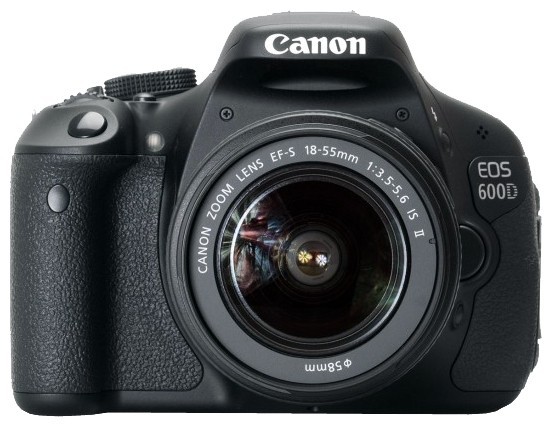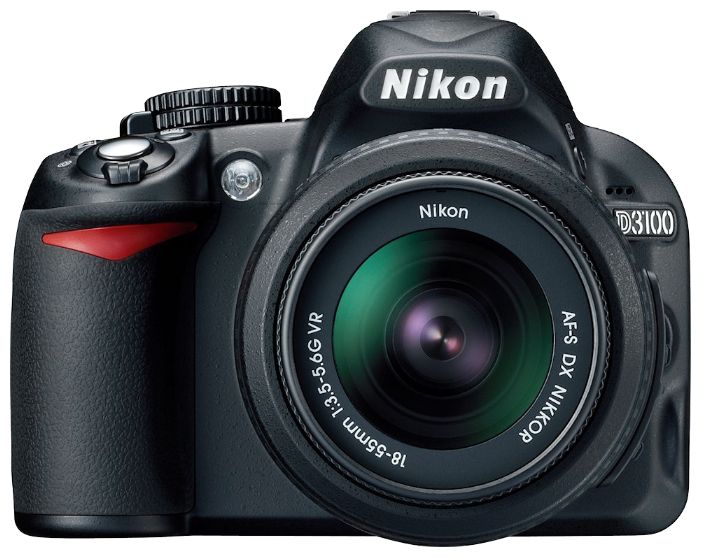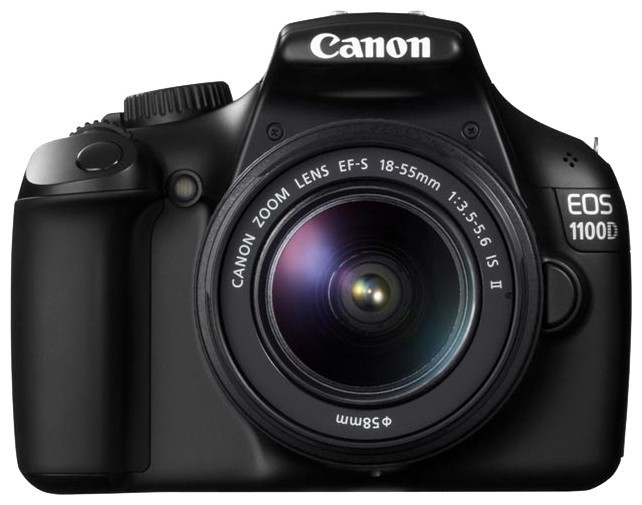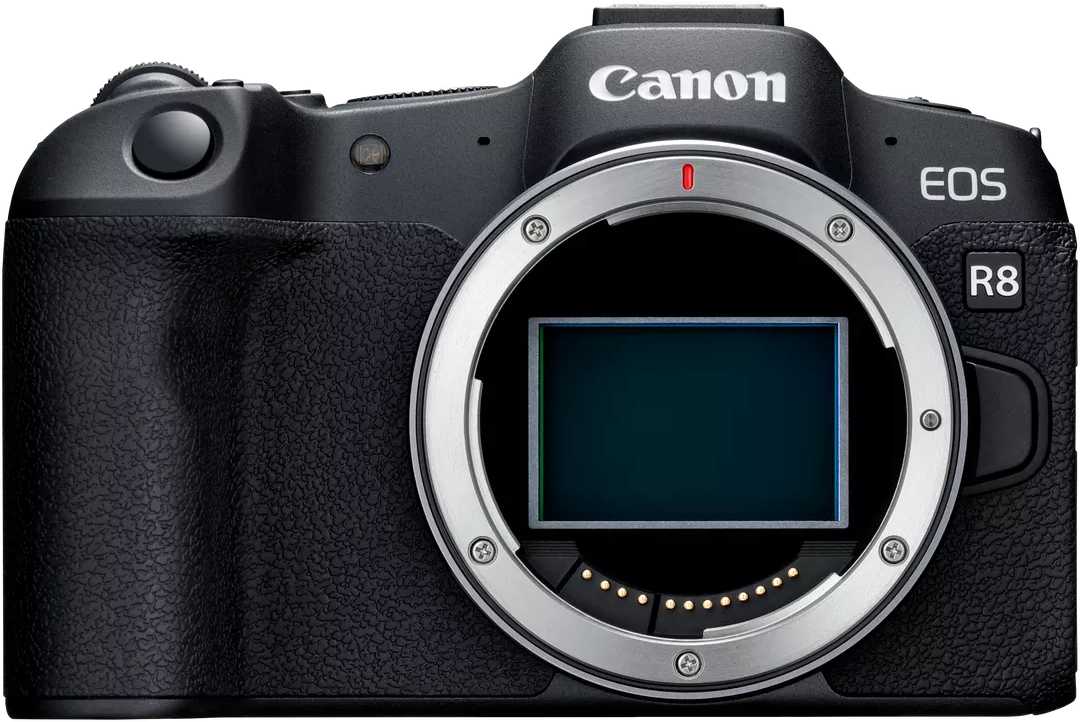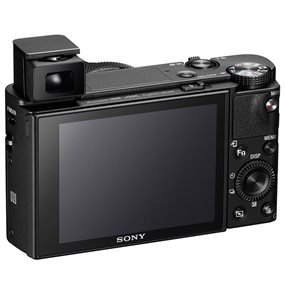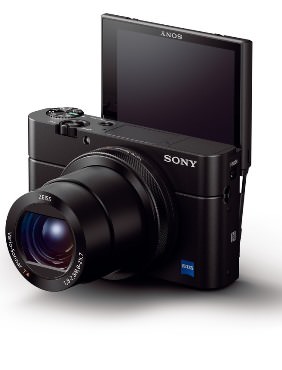
this good product which give very amazing quality for Full HD photos and Videosthe limitiation is the SDCard Memory which is Maximum 32GB
Скромный эксперт
04.04.2013
10/10
Оценка пользователя
Великолепно
I think the Canon 60d is a magnificent camera. It takes great images in even the most difficult settings. It has a wonderful grip which makes it very comfortable and secure to hold. It does not weigh too much with the basic 18-55 kit lens but with longer zooms it is a handful. It focuses very quickly, stores the image quickly on a high speed SD card (you buy) The high speed capture allows 5 shots per second. The many options available make even the most difficult to take images, possible. I rated this camera 5 stars because it is a true 5 star super Rebel camera that has everything any non pro could ever want. It is missing some of the great new features that have been added to the Canon T4i and newer Canon T5i like the fabulous touch screen LCD.You do get a full user manual unlike the standard rebels. This is very helpful and it is small enough to carry in a dSLR bag. Right now, Amazon is selling the body for almost half the price I paid for my original Rebel and it is an good bargain. Many will be tempted to buy the newer T4i model which now is about the same price. The t4i may have some newer features and better video performance so it may be a very difficult decision for some to choose which way to go. If you are a beginner looking at this camera for your first purchase of a dSLR, may not a good choice. I would stick with an entry level Canon or Nikon dSLR camera because it will take just as good images and be much easier to learn the basics. I think you can learn faster with a more simplified interface and lighter camera. If you find you really love photography, it will be much easier the second time around to choose a more competent camera which will have more features and will probably cost less to buy in the future.The Canon 60d matched with a nice lens, is possible to get superior images of macro objects, very low light scenes with image quality not possible with the smaller sensor cameras. However, I must admit now, I will not take this camera on a trip because of total weight with lenses and body. This is always a personal decision everyone has to make when packing for a trip. I find a super zoom (bridge camera) like the Canon SX50, or the Panasonic FZ200 and subcompacts such as Canon S95 or S110 are easier to take anywhere and allow more candid photos.Things I like about the Canon 60D which are not available with the entry level Ti series.1. Extra info LCD display on top, which gives extra helpful info but not easy to see in dark setting,it has weak light which helps a little2. Great button placement and many individual controls for ISO, Drive, exposure, etc3. Better and brighter viewfinder with pentaprism.4. Wireless flash control, more flash options5. Q menu allow quick change of functions... T4i has this with touch screen6. Longer battery life. Can take a huge number of images, 500 plus before needing to recharge battery7. Many more custom settings allowed. They can easily be reset8. Electronic level helps keep horizon level, helpful especially when on tripod.9. Many extra features and options in the menu system.10. Better grip, camera is larger and easier to handle especially with a larger lens.11. Better build quality than entry level or ti series.12. Some weather sealing but not pro level. More robust than ti series but less than pro models which have magnesium frames. This doesn't have it.13. Very fast focusing and display14. Many more options than available to entry level models.Things not so great. I am struggling to find complaints, so here are a few weak arguments.1. 60D has not been updated for almost 2 years. a new model will be out soon.2. Camera is larger and heavier than ti series.3. The LCD display is difficult to view in some lighting situations, could be larger4. No touch screen, gps, or other newer features found on newer cameras which might be on upgraded model at a higher price.Canon wisely steered this model to the Amateur who wants a little more Camera but does not need a professional model with Magnesium frame and fully weatherproofed with a giant sensor, extra processors, and a camera that can be used and abused. The 60D uses a poly-carbonate frame like the other rebels. It's strong enough and tough enough for 97% of us taking pictures. It probably has enough to satisfy anyone maybe even the pros who may chose to buy it as a second or third body.If you are trying to decide whether to buy this camera over the T4i, the T4i has the edge because it has been upgraded to have many newer capabilities beyond the Canon 60D. The advanced amateur, semipro, and pro would probably be better off with the 60D primarily because of better ergonomics, build quality, weather sealing, better viewfinder and more customization. The novice photographer to advanced photographer might be better of with the T41 with its many great new features. Both take great images with a good lens (glass).What lenses to buy?The kit lens is OK starter lens and has the advantage of cost and l
Скромный эксперт
15.07.2013
10/10
Оценка пользователя
Великолепно
I'm an experienced amateur photographer who does professional video work. Last year, I purchased a Rebel T3i to use for both photography and video. After doing some research, I decided that the T3i was probably the best value in DSLR video and I was (and still am) very happy with that camera. However, the recent price drops on the 60D (due to the announcement of the 70D) inspired me to trade in my T3i and upgrade from the "Rebel" line of DSLRs. I'm incredibly happy I did so and would whole-heartedly recommend the 60D to anyone serious about photography or DSLR video.It's important to remember that the 60D has the exact same cropped sensor as the T2i, T3i, T4i, and T5i Rebel cameras. That means that the quality of photos and videos produced by the cameras will be virtually identical – and very good. In the right hands, any one of those cameras can capture stunning photos and HD video. The difference is largely in the quality and layout of the body, as well as the smarter, faster focusing system in the 60D. The 60D feels great in the hands and – although it isn't advertised – there is apparently much better weather-sealing in the 60D than there is in the Rebels. It has an articulating LCD screen, like the T3i (a real plus for video work), but it lacks the touch functionality of the T4i and T5i.Where the 60D really shines is in its manual controls. Instead of having to hunt through menus or use combo-button presses, the 60D puts a ton of controls right at your fingertips. The buttons are laid out in a fairly logical way and I became familiar with the workings of the camera pretty quickly. The 60D is a camera that really wants to be used in "manual" mode. If you're the kind of photographer that sticks mostly to automatic settings – which is fine! – this might not be the camera for you.I actually love having the digital readout on the top of the camera, which displays the aperture, shutter speed, ISO, and more. Having that info on the top of the camera means that the rear LCD screen can remain off until you want to use the menus, check the electronic level (which is kind of rad), or review your pics. This saves battery life (at least in photo mode) and is great for sunny conditions that make LCD screens tough to see. Speaking of battery life, the 60D uses higher capacity batteries than the Rebel line. They're a little heavier and a little pricier, but at nearly double the battery life, this is well worth it.I have a few nitpicks with the camera, although nothing very substantial. It lacks some of the features, particularly for video, introduced into some of the more recent Rebels. It doesn't have electronic video zoom (introduced in the T3i) and it can't autofocus during video recording (introduced in the T4i). As I mentioned earlier, the LCD screen is touch-free. Probably my biggest gripe is that it is weirdly inconvenient to switch the camera from photo-mode to video-mode. Video mode is down at the very bottom of the mode dial, below all the "creative" modes (Sports! Face! Flower!) that I frankly wish weren't even there. Going from "M" manual photo mode to video mode requires you to depress the dial lock and turn the thing almost completely around. The T4i switches into video mode from the power switch, instead of the mode dial, which just makes so much more sense. It's a tiny gripe, but a persistent one. I also desperately wish that Canon would make a headphone jack standard issue on their video-equipped DSLRs for audio monitoring, but this is apparently wishful thinking. There's one on the 5D Mark III, but right now that's five times the price of the 60D.Going from the T3i to the 60D has felt like switching from a consumer-grade camera to a professional one. While I don't expect it to capture drastically better images, it has absolutely encouraged me to take ownership of the camera's manual controls and become a better, more knowledgeable photographer. Now that the 60D's successor, the 70D, has been announced, I'm sure that many people are wondering if the 60D is still worth it. The 70D will have an improved sensor (the first new Canon ASP-C sensor in years), and more video features, such as autofocus and digital zoom (still no headphone jack, though). However, the 70D will also sell for around double what the 60D is currently selling for. As far as I'm concerned, as a photographer and video user on a budget, that means that there has never been a better time to pick up a 60D.
Скромный эксперт
26.02.2012
10/10
Оценка пользователя
Великолепно
DPReview.com and TheDigitalPicture.Com both have extensive, in-depth reviews of the 60D, so I won't re-hash technical details here that the experts have already covered better than I could. My review will just be a list of likes/dislikes and commentsWhat I like about the 60D:1. Fits and feels really nice in my hand, especially compared to Canon's Rebel line of DSLR's, which are smaller and feel too cramped to me.2. User can control just about every exposure parameter imaginable. This camera will allow you to express your creativity in ways that you won't outgrow quickly.3. With "L" series lenses, the CMOS sensor in the 60D takes outstanding photographs. I suppose the 5D and 1D out-perform the 60D in several functional areas (besides their obvious megapixel advantages) but I doubt that I could shoot photos that were significantly better with a 5D.4. The flip-out LCD is a must-have for anyone who wants to shoot video. Also makes it much easier to shoot landscape photos with the camera right down on the ground (very dramatic landscapes can be shot this way).5. Very fast and responsive, certainly fast enough for landscape and general purpose photography. NOTE: The experts are generally of the opinion that the 60D's buffering and writing speed is "marginal" for sports photography.Dislikes:Only one so far: the video format of this camera is QuickTime MOV. I discovered a long time ago that QuickTime is one of the LEAST widely supported, and most difficult to edit, video standards. Most open-source editors like VirtualDub have no built-in support for it, requiring tedious and time-consuming conversion of the MOV file to AVI or MPEG before actual editing can even begin. Also, the MOV files from the 60D seem to be awfully large, about 360 megabytes per minute for full-HD size, 30 fps. After converting to AVI and re-encoding with XVid (at 5000 kbps), my finished videos are 1/3 to 1/2 the size of the original MOV with no visible loss of image quality. Setting XVid to 3000 kbps yields an AVI that is 1/4 the size of the original with only a slight image quality loss that most people would probably not even be aware of. I assume that Canon chose this minimal level of compression deliberately, sacrificing file size economy for reduced in-camera processing and power consumption requirements.Just keep in mind that a 3 minute video clip from this camera is a full gigabyte, so if you shoot a lot of video, you will quickly use up even a large hard drive unless you re-process those MOV's to some other, more size-economical format.Who should buy a 60D:1. If you already have a kit of EF or EF-S lenses, and are looking to replace an older Canon DSLR that is 8 megapixels or less.2. If you don't need the specific benefits (like very shallow depth of field) that a "full-frame" sensor camera like the 5D or 1D can provide.3. If you want a back-up camera to a 5D or 1D that can be taken to places or into environments where you might not want to risk your more expensive full-frame camera. The 60D is priced only slightly higher than the T3i and feels much nicer in the hand. A professional used to a 5D or 1D would probably get along better with a 60D as a backup than with a T2i or T3i Rebel.4. As a first DSLR for someone upgrading from a point-and-shoot or film camera. I would skip over the Rebel line and go right for a 60D. You won't outgrow this camera for quite a while, and it's far more affordable than a 5D.NOTE: If you can squeeze enough cash out of your budget to buy "L" series lenses, DO IT!!! You will not be dissapointed. Canon's "L" series lenses are so much better than the basic consumer lenses in both image and build quality that they will last you a lifetime and you will never outgrow them.UPDATE JUNE 2012:I took the 60D to Death Valley National Park last winter and the camera performed flawlessly. It's versatility, in terms of focus and exposure settings, is incredible. Until Canon comes out with a 36 megapixel version of the 5D, (to compete with the Nikon D800), I don't see myself outgrowing the 60D.I still have not become totally proficient with the 60D as a video camera. Here's the problem: compared to most camcorders, the 60D has far less automation. For example, my Canon HV-20 camcorder, even in it's most basic configuration, reliably and _quickly_ sets and adjusts focus and exposure, so I rarely get a bad shot, even when hand-holding it: just aim and pan, and let the camera worry about everything else. The 60D can only auto-focus when you manually press the focus button, which places a noticeable discontinuity in the video. And of course it's not "continuous" auto-focus. Exposure control is also tricky. To get automatic exposure, I think you have to set auto-ISO speed, otherwise you have to manually adjust f-stop and shutter, and the camera's mic clearly records the "CLICK" every time you turn either of the control dials. The 60D's video output is beautiful - if the settings are proper, and the lighting is adequate -
Скромный эксперт
13.07.2013
10/10
Оценка пользователя
Великолепно
I'll spare everyone from all the technical mumbo jumbo but coming from 20D that I purchased eight years ago, it's a fresh breath of air moving to something more updated. Sure, it's three years old already but there's a bigger appreciation beating the crap out of my first DSLR and finally upgrading the body.Noise? Everyone is talking about how noisy the 60D and 7D can be it's nothing compared to the 20D or older models. I was astounded how clean it looked at ISO 800 and 1600 with very minimal grain. Sure, there will be noise at high ISO but from 20D's mere 'okay' images at ISO 800 and horrible grain at ISO 1600, I can shoot up to ISO 3200 and still suppress majority of the noise during post processing. I know it won't be like the 5D MKII/MKIII or the 6D. But for the price, what a huge leap. Our family took a trip to Boston Children's Museum days ago and I was able to shoot at average ISO 3200 indoors and performed very well. If low ISO is desired that's where the Speedlite will come in handy.60D is 0.2fps slower than the 20D but it seems to focus more accurately, the shutter is quieter and I've been leaving it in a high shutter speed mode to capture multiple shots for any given scene. There are basically more usable images is all I can say.It opened up quite a bit of possibility with this body alone; astrophotography is something I want to try (just purchased Manfrotto 294 aluminum tripod) without worrying about excess noise. I also don't worry about needing my Speedlite for most shots and of course if I ever want to shoot video with it the function is there.Let's not forget battery life. I set the output to smallest RAW which I took about 300 photos at the museum. I didn't even put a dent in the battery. Normally with 20D it'll easily eat up a third of battery life. While I didn't use the Live View function often (drains the battery faster) for a day's trip worth it was nice not having to worry about carrying a spare battery. When I put the battery in the charger at home after 400 photos the charger light was still blinking at the 3-pulse 75% full!One thing I noticed coming from 1.8" screen to this giant 3.0" screen is that I can clearly see the picture detail and appreciate the photos at the same time. Photography is becoming fun again. This is what I needed after all these years.7/16/2013 Update with some astrophotography:Though I'm new to astrophotography, I've stacked some images shooting at ISO 1600, less than 25 sec shutter (the Rule of 600) along with my Tamron wide angle shot wide open (f2.8) and wow...what a difference. Because of 60D's articulating screen, I can magnify to the brightest star using the x10 zoom function, set the lens on manual and focus (it doesn't focus at infinity but about one notch below). Now I know there's 60Da specific for astrophotography (like the 20Da) but there's so much you can capture with this camera. Luckily I live in a rural area and 30 minute drive away from most towns give me plenty of dark sky with stars so venturing out again once the new moon is out next month.Now off to shoot some sunrise this week :)
Скромный эксперт
26.12.2013
10/10
Оценка пользователя
Великолепно
Here's the deal: If you're reading this or anything about this camera you're probably looking to jump to full-frame. If you've already got Cannon glass and action photos aren't going to be a big part of your future (it will do them, just not as well as some others) then this camera should be very high on your list.I rated this 5 stars because this camera does what I want it to do. It takes beautiful pictures of people and landscapes in a wide range of lighting conditions. I can push the ISO and get very nice pictures at ISO 3200 and beyond. I can shoot indoors with no flash. I can shoot night shots, and glorious landscapes in the blue and golden hours (really more like minutes).All on-line hand-wringing aside, it focuses very well, but probably not well enough to make it an action shooter. If you want to shoot sports with a telephoto get something else, probably a 7D, unless you can afford really long glass then go get a MK III or a IDX and hang an $8,000 lens on it.But if you want to shoot people at normal distances, urban photography, and beautiful places, then this camera is all the camera you'll want. It is smaller, lighter, and cheaper than other full frame options. Other cameras will do it as well, but they're heavier, bigger, and more expensive. And anything smaller and cheaper is a crop sensor that simply can't do it as well. It just can't.The 6D will take some learning. The buttons are probably a bit different than what you have, but so was every other camera you've owned. You learned those. You'll learn these. You give up direct control over white balance, but it isn't a big deal, just a couple extra button presses and an extra 2 seconds of your time once you get good at it. You probably leave it on auto WB, anyway, like I do.The wi-fi is cool but it takes a little while to set up, more than a few seconds. I'll use it, someday, I'm sure. GPS tagging will be cool when I'm in the middle of nowhere, which I am from time to time. When I'm miles from anything I'll be glad this camera is lighter than the alternatives.Low price entry into full frame, extremely low noise at high ISO, a few less bells and whistles to offset the price. If those bells and whistles didn't matter to you (they didn't matter to me) then this is very much the real deal.
Скромный эксперт
04.08.2013
10/10
Оценка пользователя
Великолепно
cameras are tools and I consider this a great tool, making my "job" of photography an easier one. my only camera and it is combined with 3 canon ( 50, 100, 70-200) lenses and the sigma 17-70 os which stays on about 90% of time. the q setting for instant setting changes is easy to use and the place where I do most of changes instead of the buttons on top right. ( I use aperture priority 99% of time for shots) great camera and it has gone with me to top of many mountain ridges here in Alaska in the tamrac zoom pac along with the manfrotto tripod both attached to my kelty goshawk pack.battery life is great (over 500 shots) 5fps is enough for my needs as is the 18 meg sensor. I print a lot of 16x20's and they are all awesome as are the 20x30's I have done at Costco. the twisty screen is great for short flowers and such. no video from me so no review on that.it is paired with canon 430 speedlite when needed. i do have on occasion the problem of the external flash holder "contact" not releasing and thus the camera says flash still attached. easy just to lift contact up with thin implement of some sort. no big deal.i use the built in flash to set off my 430 flash for varying effects where the on camera flash would flatten out the image. nice to be able to fire the flash off camera.i shoot with standard picture style and adjust if needed in DPP, canon's raw converter.i set the white balance to the rough conditions of the moment. i will use the histogram part of info on screen to adjust exposure.i don't use the creative filters but they are there in the menu if one wants. like i said, i use the q setting to change settings most of the time and and the top panel buttons only when i don't want to take eye away from viewfinder. even being an olympus guy for 30 years, most of the buttons /settings on the 60d were very intuitive after only a few hours.i use liveview mostly for static subjects like landscapes and flowers as they don't tax the slowness of the liveview focusing system. but, nice to see in liveview what the image will look like as you make changes to various settings. coupled with the twisty screen, images of short flowers and small pets are easier to take.my only gripe is the need for the af point selector to be attached to the wheel function stead of having to push multiple times on edge of it to change af point. my 2011 version of 60d seems to have avoided the loose/failing grip previous versions had. sadly no in camera micro focus adjustment for differing lens.all in all a great purchase in 2011 and even better now at it's lower ,superceded by 70d, price. pick one up fast. or 2.remember though, it's the photographer and not the camera that produces great pictures.
Скромный эксперт
15.12.2012
10/10
Оценка пользователя
Великолепно
After a long search and reading many reviews I purchased this camera for a few reasons I will mention further down inthe review.My first camera was a Canon AE-1 i bought back in 79 and loved that camera growing up in high school and beyond. I recently have also purchased a couple Panasonic cameras as I think they have made great strides in the camera arena. I also have an FZ200 and a G5 which produce incredible IQ. I actually think it's on par with this 60D but i wanted a camera with a top of the line senser to get good IQ at high ISO's and this one is it. My G5 also does well but the Canon performs and feel s like a pro DSLR and it is. he IQ is incredible, lots of manual controls and the manual for this thing is great with lots of easy to follow instructions on how to work the camera. It also focuses very fast for action shots and i find the top window info screen very helpful for changing some settings in a snap. The thing is built like a tank. I got a great deal on Amazon for a Used like new for $770 with the 18-135 lens which is also fantastic so i couldn't refuse. The main things I have to have in a camera (which this one had) are:- Great IQ- Articulating LCD- Viewfinder (hate taking photos looking at a screen.)A lot of cameras out there don't have an articulating LCD for whatever reason, well i know a lot of manufacturers like to keep the size of the camera down so they fix the screen to the back of the camera with no movement. I find that having this option opens up more possible photos from differnet angles and creativity. It really closed down my options and made it easy to select a camera. I probably would have had the Nikon D7000 if the LCD moved off tha back of the camera. I see a lot of reviews on YouTube making fun or having many people dismiss the LCD but I don't quite understand why. If you don't like it turn it around and keep it open on the back then it's just like a fixed screen. It is also nice to close down the screen and face it towards the camera when closing to protect the screen. I wouldn't be able to use a fixed LCD when taking pictures of the moon or anything high in the sky at night using a tripod. Or.. if your in a crowded area and need to move the camera up or around someone to get a pic, or.. if you decide to take pics of the rich and famous you can put the camera at all sorts of angles and get that money shot of Brad Pitt tounguing Angelina and sell it for the price you paid for all your cameras.. :-)Anyway a great camera and I am enjoying Canon once again!*** Update January 15 **Stll loving this camera and taking many shots with it. I have bought some lenses for it and have been using them for mostly action shots. I didn't get the L series lens becauee they are a bit too expensive for my budget but I did get the Canon ones which get great reviews for a mid grade type of lens. One lens everyone should have is the nifty 50 f1.8. I took some portrait shots with a softbox setup and holy cow the quality was amazing. The crispness and color rendition at f1.8 is flawless. I zoomed in all the way and had minimal noise if any at ISO 100. I mean if i had a cavity in my tooth i could see details on it, thankfully I don't :-)Action shots at the local park of birds and ducks was excellent also. Very happy, auto focus is resposive and spot on most of the time outside of user focus errors. :-)
Скромный эксперт
15.07.2011
8/10
Оценка пользователя
Хорошо
I'm pleased to say that the Canon 60D is a worthy investment for those upgrading from the Canon T2i. I had the great opportunity to own both cameras and see in-hand the differences between the two, and the differences are enough to warrant the extra hundred dollars, maybe more. First of all, I know that they share the same sensor and light metering so pretty much pictures under the same conditions turn out the same - high ISO noise control, color rendition, resolution. But take note that A LOT of how a picture turns out depends on the User and how they compose the shot, and thats where the 60D significantly differs...in handling and performance.The most glaring difference not easily seen in online reviews is the increase in viewfinder size. The brightness and larger size is like upgrading from a 21-inch lcd monitor to a 23-inch one. At first, I never knew or cared for this increase in spec, but seeing it first hand changed what I wanted in a camera. After all, you spend most of your time viewing through it and it definitely helps to see more of your shot before you take it. Next is the increase in build quality and hand grip size. Yes, its still not magnesium alloy but it feels much more sturdy than the T2i. Weight-wise the 60D is about one kit lens heavier (~200g) which does better balancing heavier lenses like the L series. That's what this camera promotes, a good upgradeable path to handle better lenses. The hand grip is much more filling in my hand. Despite the increase in weight, the ease of holding the camera and preventing strain actually depends more on how your hands hold in position. Another feature is the 9 cross-type AF sensors (T2i has only 1 in center) which allow better focusing in continuous shooting and low-light conditions. One example where I noticed the difference is indoor lighting. After taking random shots, the 60D just feels a little "smarter" on how it chooses the main focus points. Battery life is the next big difference for me. The 60D actually uses the same battery as the Canon 5D Mark II so you know its serious stuff. During one photo trip, one charge lasted over 1,000 photos with about 50% of them using liveview. The included battery charger is very fast too, and it has a retractable built-in prongs..none of that separate cord nonsense you get with the T2i charger. Take note that Maximal Power on Amazon has 3rd party batteries for cheap that works just like the original.Obviously there are blatant differences too. The swivel screen is great for self-portraits handheld in front of you because you can compose the picture instead of guessing the angle. My gf loves this feature the most for couple shots, and it makes us less relying on unsuspecting passerby's to take our photo. It does inspire creativity when using liveview to compose your shots as well since you dont have to strain your neck or pull a back muscle trying to bend down to take low-to-the-ground photos or over peoples gigantic heads. I haven't tried, but it turning the screen around would be useful for people doing self videos for youtube. The top lcd screen is also great for quick access for basic information, plus it saves battery life and it looks pro. You can basically use this top screen while having your main lcd screen inverted backwards for protection and compose your shots. The faster continuous burst rate of 5.3 vs 3.7 fps is noticeable, but the main difference is that the buffer size for the 60D is much bigger than the T2i to increase your chances of getting that perfect shot. Couple this with the better autofocus system and you can see what I mean about handling and performance. If you like to take shots of your kids running around in the house or fast dogs playing in the yard, then I would highly recommend the 60D over the T2i.Other difference in features that I haven't tried: horizontal virtual level, wireless flash control, and control over audio levels in movie mode.Dont get me wrong though, the T2i is a very good camera and probably more popular than the 60D. It has in its favor a lighter body, easier learning curve, and lower price. However, if you are just starting with DSLR's, I would highly recommend getting the T3i instead. Prices are almost the same as the T2i, and its more user friendly with the enhanced Auto mode. Plus it has the swivel screen!Everything is not mind-blowing with the 60D though. CONS include the same irritable custom white balance implementation and heavy orange-cast under tungsten lighting. The directional pad within the circular control wheel is almost flush and does not have distinct clicks to let you know if you sucessfully pressed it. Contrast liveview is still slow.Either way, all these cameras are great choices that will not let you down. This review includes my purchase with the 18-200mm lens. The lens is a little better than the 18-135mm version because it has a little more reach and magnification for close-up shots (.25x vs .21x) but comparing their prices I do not th
Скромный эксперт
31.01.2013
10/10
Оценка пользователя
Великолепно
I researched cameras forever (I'm sure you understand), before deciding on either the Nikon D7000 and the Canon 60D. I was not tied to either system. Based on the INCREDIBLE reviews of the Nikon, I went for it. I will not discuss its performance here--we all know how good it is, and it IS--but I'd like you to know why I eventually returned this camera and purchased the 60D.THE GRIP: Though the D7000 has a very nice, deep indent, and appears taller than the 60D, it is not wider, and that seems to have made a world of difference for me. My hands are a "normal" size I suppose (I'm 5'8") and when holding the D7000, my pinky ALWAYS gravitated to the bottom/base plate of the camera. A solid camera to hold, yes, but I still could never get over this. My hand never felt comfortable while holding it. The 60D, however, has a beefier grip. It's more rounded, which allows more of my hand/fingers to stretch over the grip. Very comfortable, and I never think about how to hold the camera. A little off topic here, but while the Nikon is (partial) magnesium alloy, and has a terrific weight and solid feel, I do not believe the Canon suffers much in comparison. It's also solid in build, feels wonderful to hold, and has a well-balanced weight. Edge to Nikon, but build quality should absolutely NOT deter you from buying the Canon. It's excellent.MENUS/BUTTONS: The 60D is brilliant. I know 40/50D owners and MK owners will beg to differ, but I find the right-side placement of buttons to be outstanding. I use my thumb, and that's it. I rarely have to hold the camera with 2 hands for any setting switch. And while it loses some external buttons to the menus, I find this to be incredibly picky. Aside from still having the ability to assign custom functions, the Q menu button is idiot-proof and welcome, as I can get to my frequently-used setting fast (I LOVE the Q!). It is true the buttons are not as responsive-feeling as the D7000's, but I have never had a problem getting from function-to-function, and as quickly as I would like to. As far as menus go, I much prefer Canon's to Nikon's. Though both are excellent, very bright, quick and comprehensive, I like how you can move to a folder and see EVERYTHING in that folder in a single screen display without scrolling down, as is the case with the D7000. With the Canon, if what you're looking for is not in that menu, just move to the next tab. No scrolling that goes on and on.BOTTOM LINE and the LESSON: It came down to the grip and menu layout for me. Spend time with the cameras you're looking into. Lots of time. No one is going to boot you out of the store for taking too long in making a decision that will cost you--and benefit the store--over a grand. I wish I did this initially, instead of purchasing-and-returning, but ultimately, having owned (the Nikon, briefly) both cameras, I have no regrets. Image quality is terrific in both cameras, but equally important, if not more so, is ergonomics. You simply have to want to hold it and use, and be excited about that, too.
Скромный эксперт
26.09.2012
10/10
Оценка пользователя
Великолепно
I bought a 60D to replace my XSi that has served me very well. I just received it and checked out a few things to get a quick feel for it.UPDATE:I have used the camera for a couple of photo shoots (about 3000 shots). Regarding the LCD clarity, it turned out to not be a problem with the camera. It was customer error or in my case, customer stupidity. I could try to make excuse like the edges were indiscernible but the fact is I had not removed the protective film! DOH! Needless to say, minus the film, the LCD is crystal clear and the colors are great.Moving up from an XSi this camera is heftier and feels great in my hands. I use the battery grip and I find the camera to be very comfortable. My reasons for upgrading were for greater ISO and the extra 4 megapixels in image size. I occasionally print out poster sized pictures and I prefer to not have to enlarge an image. A feature that I wasn't aware of, is that the 60D has a shutter sync speed of 1/250 vs. 1/200 sec. That was a pleasant surprise.The higher ISO gives me much more shooting power. My XSi showed some noise at 400, noticeable noise at 800 and an extreme level of noise at 1600. I took a number of shots with my 60D at 3200 and they look very good. I am extremely happy with the picture quality of this camera!Note about ISO: The 60D allows 1/3 stop increments where as the XSi only did full stop. However, from what I have been reading, only Canon's 1 series uses partial stops when processing. When converting to jpeg, the other cameras (like the 60D) use the nearest full stop ISO and push the image to that value. At ISO 125, it pushes the image to ISO 100. If you set it to 160 then it pushes it to ISO 200. How that works is a whole discussion in itself so I'll leave it to others to look into it further. I just thought it was worth noting.Not surprisingly the 60D interface was a little confusing to me at first but once I got familiar with the layout it made sense. The 60D has a Quick Menu that displays a screen where you can make many of the most commonly used settings; what mode you're in, shutter speed, f-stop, ISO, exposure compensation for bracketing, drive mode,, flash compensation, picture style, WB, auto lighting optimizer, AF point selection, metering mode and image quality. It also has an electronic level. The dial and the On-Off switch are located on the left side and at least for me, being right handed, is more awkward. Fortunately, as I rarely have a reason to use the dial, it's not that big of a deal.The articulated LCD screen is extremely helpful when getting shots that don't allow you to compose through the view finder. I have been able to take shots right on the floor without craning my neck!I haven't even tried taking video with the camera since I didn't buy the camera for that.I have one issue with the camera but it's likely my camera and not an issue for the model...After I take a shot sometimes the image doesn't appear on the display or it flashes on the display. The image is there but doesn't get properly reviewed. I've gotten an error 70 that seems to be related to the battery. There is a thread about this particular problem in the Canon forums. I have to look into it. Neither issue affects my ability to use the camera.Anyone looking to upgrade from the Rebel line and isn't dead set on a full frame camera would do very well with the 60D.
Скромный эксперт
27.04.2013
10/10
Оценка пользователя
Великолепно
I bought this camera primarily for shooting YouTube videos of tricking and parkour. After years of salivating over DSLRs, and reading dozens of reviews, and trying to understand the technical specs, I chose the 60D for several reasons.1) Price. It is affordable, and becoming more so. As I write this review, it's dropped ~$70 since I bought it a couple weeks ago. I'm still happy with my purchase. Not only is the 60D a good value, but the EF lenses that cropped-sensor DSLRs use are also generally more affordable than their full-frame counterparts.2) Durability. The "build quality" of the 60D is what separates it from the T3i and other Rebel models, for me. This was truly the selling point. There is less plastic and more metal on this camera. Deathklok would be proud. I know that I'm going to take this on cross-country flights, road trips, hiking trips, beach adventures, and more. It's not bullet proof, but a little extra resistance to moisture and the elements is worth it for how I'm going to use it.3) Versatility. I'm going to use this camera to make YouTube videos to share my progress in my sport, and to promote my gym. The fact that it's a high quality camera means I can also use it for snapshots of friends, marketing photos for the website, action shots of events at the gym, head shots of my employees, etc. Using different lenses I can get into all kinds of fun stuff: wildlife photography, macro photography, perhaps even astrophotography (though the 60Da is better for that). I can add microphones, separate flashes, mount it on a Glidecam, or a tripod, etc. It is upgradeable and useful in a variety of situations.4) It's an "industry standard." After talking to a lot of people who make awesome parkour and tricking videos, Canon DSLRs in general are the cameras of choice. If you're looking for a camera for wedding photography, vacation photos, or whatever else, ask people who do that what camera they like. Fifty million Elvis fans can't be wrong. If they're all using Nikons, and have good reasons why, then get a Nikon, or a Pentax, or whatever.Okay, that said, I have only been using it for a few weeks. It is definitely going to take me awhile to learn how to use this camera to it's fullest. I have however taken a few pictures and videos already that I am very happy with. The resolution is clear, the autofocus in photo mode is great, and the controls are easy to use once I have learned them. I am pretty much a noob, so if I can do it, you can do it.In summation:1) Get this camera2) Do backflips3) PROFIT!
Скромный эксперт
12.05.2011
10/10
Оценка пользователя
Великолепно
I upgraded from a Rebel XS, I spent months researching this camera, and it's Image Quality (IQ) and video handling capabilities, I can now confidently say it's a workhorse of exceptional quality!Having owned a Rebel XS for a few years, and now as a musician with a need for a high Image/ Video quality camera for producing music videos, I researched the Canon 60D extensively. I mean extensively to the point where I re read all reviews online, examined the footage and pics presented, found a friend with a 60D and tested it myself, cross referenced other cameras in it's range and then made an easy decision to buy Canon's offering. Here are my findings:1. The 60D is a sturdy well built camera which will instill confidence in it's user...unless you throw cameras off a cliff for a living!The body having a metal chassis and over layed with a polycarbonate and fiberglass resin mix feels tough in your hands, can take a beating, can be slightly banged, can take a fall, but don't slam it to the ground and expect everything to be 100%...it might be 99%. It's designed to take some weathering as well, a sprinkle here and there, and dust blown at it, but no heavy rainfall or sand storm.If you've used a rebel series, it's much tougher than those.2. It's size and ergonomics are perfect for anyone with medium to large size hands, even small hands too.The rebel is a small size camera, so at first this camera felt a bit big. As the hour progressed I realized how well balanced it felt, no longer over powered by my hands, not too big, JUST RIGHT. I have medium sized hands. The camera itself has sufficient weight to balance lenses well on it's own, not throwing the camera back or forward. In fact it felt like the bigger the lens the more "well balanced" it became. You see the 60D is not TOO HEAVY. I've read of some people's complaint, that the 60D is not heavy as compared to the 50D or 7D...I'm not sure if people have an obsession with carrying lots of weight around, but when you're like me shooting for several hours, you easily begin to adore how comfortable, yet well balanced the 60D is, especially if you go on hikes or trips where the camera hangs on your neck for some time.3. Ergonomics: the 60D has ALMOST but not everything controlled by your right hand, this is well thought through and wise. Even more so, when I had to use my left hand to turn it ON or OFF as well as turn the DIAL MODE, FLASH, LENS RELEASE and use the THRASH, I totally understood why they were placed where they are. These five moves are not to be guessed or happen by mistake, so allowing the left hand to come into play here turns out to be wise, and left my right hand not feeling totally sore as it was sometimes left with the rebel ( which is right hand dependent). My right thumb no longer searches on the back of the camera for buttons, here the layout is simplified with this new SCROLL WHEEL, and MULTI DIRECTIONAL PAD, which being a closely paired unit allowed me to stop searching when my eye was on the view finder. As well as the DRIVE, ISO, METERING, and AF buttons had me very certain as to what I was pressing without looking at them, all under a couple of hours. My one issue though with respect to the THRASH button is that you must confidently press it to get it activated, even when trying to delete photos one at a time but many altogether. This however may turn out to save me from easily deleting wanted media!4. IMAGE QUALITY IS AMAZING, even on the kit lens. Now I've tried the Canon's 50mm F1.8 prime, this is an amazing lens for quality, at a low price, also the 18-55mmIS, 28-135mm IS, 55-250mm IS, 35mm prime and the 18MP stands out and shines. I clearly understand the difference between a 10MP rebel XS and the 60D. I also understand a good lens makes a big difference, as the 50mm f1.8 is a far better quality lens under low light and depth of field image quality when compared to the 18-55mm kit lens. However the 18-55mm delivers excellent images and handles extremely well when shooting video especially in low light. At the end of the day a good lens makes the difference, but the image quality of the 60D will match with the 7D, and beat it's rivals when it comes to colour, and low light images.5. The Creative Filters suite is a master class of an addition to the camera's internal software. It gives a dimension to images only offered in pc editing, all done on the 60D. As well as the In CAMERA RAW EDITING feature. On the rebel XS, I never quite appreciated the RAW files, as I wanted to fix my images on the go, and have as much work done when the images were uploaded to my MAC. The 60D has not been heralded as it ought to for incorporating this new software where many aspects of a RAW file can be easily edited in the camera on the go. After which the images can be further sweetened using the creative filter suite. These additions now have me yearning to shoot in RAW so I can tweak my images for creativity. Truly an enthusiasts camera. A creative mind
Скромный эксперт
02.02.2012
10/10
Оценка пользователя
Великолепно
I go along with all the praise on this and will just mention a few points.First, I went back and forth: Body only or kit? I'm glad I went with just the body, because I spent a little more and also bought the Canon EF 50mm 1.4 lens. What a fantastic combination! Startlingly clear shots, richness of depth and color, and very, very lightweight combined with the 60D. The resolution is so sharp that you can crop your image quite small to get a good zoom effect and still have great prints.Another point to consider about the kit lens is the AF. Using a lens that has a minimum aperture smaller than 2.8 dumbs down the center AF point on the 60D, as clearly stated in the manual. I want to get the most out of my AF. Plus, those several extra fractions of stops below 2.8 come in very handy and allow for low light shots without the need for a flash or cranking the ISO too high.I was disappointed that Micro-Focus Adjust was not one of the features built-in; however, before buying the 60D, I did test my three old lenses and found them to be focusing accurately. I hope they stay this way! As said, I bought the 50mm 1.4 with this and, fortunately, it focuses precisely.The flip screen is handy for still shots in live view if your subjects are staying still and you have time to let the contrast AF find its target. To get the most out of a DSLR that has amazing video quality, I couldn't imagine going without a screen that can tilt like this.EDIT: You can also use "AF Quick Mode" in Live View, but it takes two distinct presses of the shutter button--one to focus, the next, all the way down, to take the shot. It seems a little awkward, but it is the way to use the camera's AF points while in Live View.One other feature I like about Live View: I can disable it. I have been accidentally engaging it while handling the camera. Believe me, it is easy to turn it on by mistake and drain the battery. Since I'm rarely going to need Live View spontaneously to grab a quick shot, I just leave it disabled. If I need to put the camera over my head or on the ground in and awkward position, making the Live View button active again is pretty quick. And, BTW, disabling the Live View button does not affect movie mode at all that I can see.The LCD display itself is wonderful for quick, accurate feedback and for reading the menus. The Quick Menu's large font on such a sharp screen makes life very easy for those of us who don't want to be slipping on reading glasses all the time.Before using the camera even once, I trimmed down an iPod screen protector to fit on the 60D's LCD. For sure your nose is going to leave big greasy prints on the screen when you are using the viewfinder! I like being able to flip the screen inward for safety when stowing the 60D, but otherwise I just leave it screen-side out (with the protector on) so I'm not constantly putting wear on the hinge.That hinge, by the way, is smooth and seems durable, but I'll still be very easy on it.Coming from a 20D, this is a massive, wonderful upgrade. I thought a bit about getting a FF sensor, but the clarity and the size of the RAW images make me happy I saved the money by going with the cropped sensor. Plus the 60D's features are so rich, so up-to-date. Compared to the 20D, the AF is faster and more accurate. Ergonomically, this fits my hand better. The right-side grip area feels a little deeper than the 20D's, making this easier to carry securely in one hand when you get tired of carrying it on your neck.My other choice was the 7D, but I felt like the savings could go towards the better lens and Photoshop. Yes, the 7D has some stronger specs in a few areas, such as faster rapid-fire and more sophisticated AF, but the features of the 60D, and the same sensor as the 7D, made me feel this was the better value. And I already mentioned the flip screen being so important for easy video use.By the way, I'm using a Transcend 16GB Class 10. No problems with long bursts or full HD video.Heck, I'm just getting started, but it is an astounding upgrade.
Скромный эксперт
27.11.2013
10/10
Оценка пользователя
Великолепно
If I had tons of money to throw around, I would have gotten Canon 5D MK3 with its full frame sensor and excellent high ISO. But I don't - even the Canon 6D with its full frame sensor is out of my price range. The next best thing after that is the 60D. I picked the 60D for $600 when it was on sale over the summer here on Amazon. I felt the 60D is the best bang for your buck among crop frame cameras (better than the 7D which is a much more expensive crop camera) if you're an amateur photographer who enjoys shooting in manual or aperture priority modes where you're setting your focus points on each shot. There are separate dials to set your F stops and shutter speeds. Setting the ISO is a simple button press on the top followed by moving the shutter speed dial. Setting the focus point quickly is a little less convenient requiring a button press to activate and then moving your thumb over the rocker dial in the back, but I've gotten used to it over time. It's got a built in flash which I hardly use, but is nice to have when you don't have an external flash with you. Most people know on camera flashes generally don't make for very good pictures because it make things look flat and can have lots of glare.I bought the body only version and picked up a Canon 28mm F1.8 and Canon 85mm F1.8. The quality of pictures I take now versus 2 years ago on a Canon point and shoot are literally worlds apart. The 60D with Canon prime lenses really make taking great pictures easy.If you're an auto or program mode photographer using the auto detect focus points, I think foregoing the extra features in the 60D and get a Canon Rebel instead - save some money and get comparably similar quality pictures.
Скромный эксперт
08.11.2011
10/10
Оценка пользователя
Великолепно
I have owned this camera for over a year now and still enjoy using it. I only shoot as a hobby so my review will be from a hobby standpoint. To give a little background to know where my review comes from, I took photojournalism in high school, but did not really shoot regularly until 15 years later when I bought this camera. I really felt the entry level models would be too basic, and a pro level too far above my head. When buying I considered both nikon and canon, and after settling on canon was looking at the t2i, 60d, and 7d. I mainly shoot nature or my friends at events. As I like to shoot nature, I wanted a camera I felt would hold up to being taken out on a four wheeler ride up in the mountains, or to keep with me when out camping.The main thing that made me select this camera over the t2i or the 7D was the articulating screen. As stated above I do ride four wheelers occasionally and felt the abilty to close the screen would prevent scratches and dust particles rubbing on the screen due to the vibrations on the four wheeler. (ive scratched my cell phone screen up, so I figure this screen would be just as easily scratched) So if you plan on putting your DSLR into a bag/backpack and going outdoors where it could be dusty, Id recommend a camera with an articulating screen. On my particular camera I turned off the review photo feature and mostly keep the screen closed, and only open when I want to review a specific photo.Ive read alot of other reviews and there seem to be lots of complaints about the "plastic" body. The camera is solid I have no problems putting this camera in my backpack and taking it hiking or putting it on the four wheeler. The body has heft to it, it's not a cheap hollow plastic body. I feel confident the camera would stand up to being dropped from a normal height and still shoot. I find the ligher (but sufficiently strong) body better suited for my needs when I want to take it on a hike in a backpack and weight is important.Most reviews ive read talk about how the camera feels in hand. I too agree this camera feels good in the hand. The grip is sufficient to let me feel like I have a solid grip on the camera when im just walking around. I took my 60D with a Sigma 70-200 f2.8 attached on a mile and a half hike and pretty much carried the camera by the grip and it was comfortable. Also, I like that the buttons and controls are pretty much all accessible with the right hand. Once you learn your way around, you can make changes with your right hand while still holding the camera to your eye with the left.Also, ive read reviews which complain about having to push down in the center of the mode dial in order to turn it. To me this is nonsense. Its easy and comes very natural. Ive also read complaints thats the video mode is all the way at the end of the mode dial. I have yet to find this to be a problem. In all fairness I rarely shoot video with my camera. In my opinion, when im thinking of shooting video im out with that purpose so it will stay in that mode. If im out to shoot photos it will generally stay in that mode. For the 5% of the time I decide to shoot both, ive had no issues getting from one mode to the other.After a year of using this camera I started looking at cameras again to see what is out there and if I would change my mind and now go for the 7D or T3i. I've looked at the others in the store and wouldnt go down to a t3i from a 60d. I do think the plastic body of the t3i is of lesser quality plus I dont like not having a wheel selector on the back, and find myself using the top LCD panel quite often. I would like faster frames per second of the 7D but thats really the only thing more I would really like. For my uses, the ligher 60d with the ability close the screen for added protection make me feel more confident with the camera outdoors. I realize the 7D is better weather sealed, however unless you have weather sealed lenses and plan on shooting in torrential downpours this doesnt realistically benefit me. That said if I was buying again id likely go with the 60d again, but put an articulating screen on the 7D and it would be a difficult decision.
Скромный эксперт
17.12.2013
10/10
Оценка пользователя
Великолепно
I'm not inexperience with photography, but my experience has lately been limited to compact digital cameras without attachments. The most you have to deal with, is taking the camera out of a zippered case and turning it on. Back in the day, I carried a Minolta 35mm SLR. In those days, I had three lenses, filters, a tripod, batteries and rolls of film (under-, over-, and properly-exposed). There WERE no second chances...either you exposed it right or you wasted it. Today's prosumer digital SLRs are a different story. There are second chances galore. If you can't get a good picture, it's because you missed the moment by not being ready for it. Although this camera is heavier than any camera I have carried, it more than makes up for it in the quality department. When I carry it, I constantly look for challenges. A closeup here, a landscape there, a group photo here, a portrait there. It masters them all. The automatic modes alone are comprehensive enough to allow the photographer to become lazy about lens stops, shutter speeds and ISO settings. Everything magically comes out sharp and clear, with or without flash. And the lens that came with the camera! Image-stabilized, autofocus, adjustable from a nice wide group-friendly 28mm to a very satisfying telephoto of 135 mm and everything in between. What's not to like? I can't see muself outgrowing this camera. You could say I like it, but you'd be wrong. I love it!
Скромный эксперт
17.03.2013
10/10
Оценка пользователя
Великолепно
My first DSLR was the T2i and I briefly had a 7D, which is still Canon's top of the line APS-C sensor camera as of March 2013. All three share the same 18mp sensor, but I prefer this camera to both of those, due to its handling, and primarily the fully reticulated LCD screen. This allows shooting from multiple angles, down low, above your head, around corners, self-portraits, and self videos. The AF isn't as advanced as the 7D and the viewfinder is a bit smaller, but larger than the T2i which seems like looking through a tunnel by comparison. The camera body is polycarbonate instead of the magnesium alloy of it's predecessor the 50D. That doesn't bother me, it's still quite a substantial and strong body. The only feature I really wish they would have retained from the 50D is the lens micro focus adjustment.The T3i and T4i also have reticulated LCD screens and the T4i offers some features that this 60D doesn't, such as supporting the continuous focus while shooting video that is available in conjunction with two new Canon STM lenses, the Canon EF 40mm f/2.8 STM Lens and the Canon EF-S 18-135mm f/3.5-5.6 IS STM. If that feature is important to you, you should skip the 60D and go look at that camera.Others have given detailed reviews of all the features and performance of this great camera so I won't repeat that here. You can't go wrong with this camera; however, the 60D is getting a little long in the tooth. Even though it's a five star camera in every way and I've never had a single problem with it, it's been around for 3 years now, which is longer than any of the previous xxD cameras lifespan before they got an upgrade. In this same period, the top Rebel T2i got upgraded twice. Only the 7D has been around longer -- 4 years!There are rumors that the successor to the 60D -- the 70D, is going to be announced soon. (Spring of 2013.) Canon is reportedly planning a big jump in terms of specs from the 60D to the 70D, with the camera pushing toward more pro-level features. Of course, it will most likely come out with a more pro-level price too. But look for the price of the 60D to drop, and more 60D cameras to come on to the used market from people upgrading; that's always a good time to pick one up in good shape used at a very nice price.
Скромный эксперт
07.05.2012
10/10
Оценка пользователя
Великолепно
If you are trying to decide what to buy and your main criteria is for video, then get the 60D. I was trying to decide between this and the 7D and the 60D won. Why? It is basically the same thing as the 7D (well, almost) but for a lot less money. The 7D has two Digic 4 processors (overheating) and more auto-focus points and a stronger body that's pretty much all and no manual control over audio. With the 60D you can control the audio manually and a whole lot more because there is a nifty piece of software named "Magic Lantern" that adds a lot of very useful features to your 60D and isn't available for the 7D (at the time of this review)...Magic Lantern adds all this to your 60D...GUI menus: press the ERASE button to display themBit rate control (QScale parameter) for the H.264 encoder. Up to 87mb/s but unstable.Zebra stripes for overexposed / underexposed areasSpotmeter, histogramCropmarks (16:9, Cinemascope, Fisheye)Simple intervalometerTrap Focus: camera takes a picture when something comes in focusWireless trigger with the LCD face sensor & your own handAE bracketing (like on 5D2 ML)Rack focusStack focus (Live View only)Lens data computationOnscreen audio metersManual audio gain, selectable input source, disable AGC and digital filtersDisplay time remaining during video recordingDebug functions (display CMOS temperature, screenshot, logging)ISOs: 100, 110, 115, 125, 140, 160, 170, 185, 200, 220, 235, 250, 280, 320, 350, 380, 400, 435, 470, 500, 580, 640, 700, 750, 800, 860, 930, 1000, 1100, 1250, 1400, 1500, 1600, 1750, 1900, 2000, 2250, 2500, 2750, 3000, 3200, 3500, 3750, 4000, 4500, 5000, 5500, 6000, 6400, on up to 12,800Shutter Speeds: 1/30, 33, 37, 40, 45, 50, 53, 57, 60, 67, 75, 80, 90, 100, 110, 115, 125, 135, 150, 160, 180, 200, 210, 235, 250, 275, 300, 320, 360, 400, 435, 470, 500, 550, 600, 640, 720, 800, 875, 925, 1000, 1100, 1200, 1250, 1400, 1600, 1750, 1900, 2000, 2150, 2300, 2500, 2800, 3200, 3500, 3750, 4000This is why I chose the 60D...Magic Lantern1.6x crop factor (same as 7D)Less battery drain (than the 7D)It has a really great and very high resolution 1 million-pixel 3:2 ratio swivel screen! Perfect for video shooters.Really cool swivel screen!Did I mention the fantastic swivel screen (which allows you to shoot from any angle without having to strain your neck and body)Lighter than the 5D and 7DIt doesn't overheat as quickly as the 7D (DUAL DIGIC-4 = DUAL HEAT SOURCES)It uses SDHC and SDXC cards used (smaller, cheaper, and just as fast as Compact Flash, if not faster) and with most modern laptops like my Toshiba you can just pop it into the front slot so no need for a USB card reader.7D differences...DUAL DIGIC-4 processors that blast through your battery powerFaster shooting for still images (8fps for the 7D)Overheating more quicklyRugged magnesium bodyBetter for you if your brain is running on ego-driven softwareHas that "Look, mine is bigger" appealMore function buttons on the bodyOverall, the 60D is just as good as the 7D although many may disagree, but if you want a lot more functionality and manual control over pretty much everything then the 60D with Magic Lantern is for you. This combo is superb, especially for anyone who's main focus is on video.
Скромный эксперт
10.12.2010
8/10
Оценка пользователя
Хорошо
All the Canon XXD camera reviews quickly devolve into a criticism of the compromises Canon makes for the price point and the intended market. The 60D is no exception, perhaps more so with the 60D. I recall all the bad press and angry reviews the 50D and even the 40D got when they first came out, always whining about missing features, arguments over the pixel count, is it a real semi-pro camera or not, etc. It's a tough spot to satisfy a tough crowd. Clearly Canon is repositioning the XXD line with the 60D. This line of Cameras has always been in an odd space, stuck between the Rebels and higher end Pro Cameras. It appeals to those that want a pro camera but don't want to spend the money to get a real pro camera like the 5 or 1 Series cameras and those that wouldn't be caught dead with a lowly Rebel, the camera snobs. This crowd often wants more than it is paying for.Perhaps it will help to compare what you get to a Rebel to see how Canon is positioning this Camera.- For starters it is a larger more ergonomic body, a pleasure to hold and use. The Rebels were always too small for me, especially the grip. The 60D has a larger grip that feels much nicer in your hands. It is poly carbonate over metal but still feels strong and sturdy although I'm not willing to try it with mine it feels like it will take some knocks pretty well, it's not cheap feeling like some of the Rebels. Try it you may find you really like it.- It has a built in flash transmitter, I've already use this s couple of times, you won't find this on any Rebel, it's cool and useful.- Better metering, it now uses color to help meter exposure not just luminance, this will give a more accurate reading and better exposure especially in scenes with bright reds; you won't find this on any Rebel.- Same 9 point focus system, but they are all cross type which are more sensitive than the older 9 point system that only had the center as a cross type. Now better than any Rebel.- Shutter to 1/8000 sec vs. 1/4000 sec for the Rebels- Better battery life, the 60D's uses the same battery as the 7D and 5D 2, giving you about twice the battery life of a Rebel, tell me you don't want that.- Flash Sync at 1/250th vs. 1/200 for the Rebel.- Built in horizontal level, not on any Rebel, great for landscape shooters.- 5.3 FPS vs. 3.7 FPS. OK this is down from the old 50D's 6.3, although the 50D never really did shoot as fast as advertised whereas the 60D does, the difference between the two cameras is really only about .8 FPS, still far better than any Rebel. It also has a high and low speed continuous shooting rate, nice to have that option, the Rebels are not fast enough for this to make any sense.- Articulating screen: the only Canon DSLR that has it and it is a wonderful addition and very useful, it WILL without a doubt help you take better pictures. No Rebel has it.- Picture quality: The T2i and the 60D are using the same sensor and Digic 4 processor so picture quality and noise are about the same, any differences are very minor so a wash here.- Movie mode: The 60D is perhaps the best APS-C movie camera on the market, period. It offers multiple frame rates and sizes and stereo audio control as well as an external stereo mic jack. Comparable Nikons don't have this. Yes the new Nikons have auto focus while shooting movies but it does not work very well, is not reliable and fails to auto focus much of the time so I don't count it as a serious feature, it's no more than a feature bullet point, totally dismissible. The 60D's articulating screen is also a huge plus for shooting movies. If you care about movies the 60D may be the best APS-C camera out there right now.Another small but useful feature is a locking mode dial, if like me, you have ever accidentally changed modes while the camera was swinging at your hip you'll appreciate this feature. So if you look at this as the next step up from a Rebel the 60D starts to make a lot more sense.In short you get a bevy of upgrades and new features with the 60D over any of the Rebels for about $370. Might some of these features be on the next Rebel? Probably, but not all but you can get them now with the 60D.Compared to the higher end 7D there are some features missing such as the lens micro-adjustment which many photographers never user use, none the less it was on the 50D so this is a step back. The 7D is capable of up to 8FPS due to its dual Digic 4s compared to 5.3 FPS for the 60D. The 7D has a 100% view finder compared to the 60D's 96%. The Auto Focus system on the 7D is the newer 19 Point AF system which is superior to the 60D's older 9 Point. The 7D also has a flash port which is important for some types of studio work, this was something that was on earlier XXDs but has now been removed. The 7D also has a Magnesium alloy body so if you are very rough with your camera this might be a consideration although the 60D looks like it is pretty solid despite the gripes you read. You also pay a heavy price
Скромный эксперт
29.01.2011
10/10
Оценка пользователя
Великолепно
At firs when Canon released the new 60D DSLR, I didn't know what to think yea maybe the swivel screen was good but was it really worth taking a second look at it? That type of thought continued with me through the time I saw one on the shelf at my local Best Buy store, they had one on display so I asked if I would be able to try it out and use it, so they took it off their shelf and let me use it. Upon looking at it at the store I noticed one thing right off the back. The dial on the top of the camera that switches between full manual, portrait, auto picture and to video mode didn't move. Thinking it was just a factory lock for the Best Buy display I gave it back to the person at the store who let me use it and walked off, in all honesty a little disappointed at the 60D. But that all changed when I had the opportunity to use the Canon 60D out on the field. When I was using the 60D I realized that the reason why the dial wouldn't move between picture / video modes was because Canon had added a locking feature on it that prohibits you from changing it unless you unlock it. It unlocks with the simple push of a button that resides right in the middle of the dial. You push and hold the button to be able to easily switch modes. When using it on the field I also found that I didn't bump it between video and night portrait mode by accident because of the locking feature. I was really happy to have that convience on the camera. Another thing that I noticed with the 60D was it has all the ISO settings that the slightly older 7D has but at a smaller price tag as well, but still a bit more then the older T2i. The Canon T2i has a ton to offer by being below the $1,000 mark but the 60D, being only a few hundred dollars more gives it a lot more winning features that neither the 7D nor the T2i have to offer. One of those features is the ability to freely move the LCD Monitor. Canon has given you the ability to move the LCD monitor out making it a whole lot easier to actually view what you're shooting way up high or way down low, so you no longer have to be in those real awkward positions to get your shot. You also have the ability to close the LCD monitor putting the screen toward the camera so you don't scratch it between shots, and when the camera is in the bag. I do wish, however, that when you do close LCD Monitor you had the ability to view what your shooting through the viewfinder on top of the camera. unfortuniatly you still do not have that ability with this camera just as you don't have that ability with the other Canon DSLR Cameras when shooting video. I did like the ability to view your cameras settings on top of the camera, like you do with the 7D so you don't have to have it displayed on the LCD screen if you don't want to. When using the 7D or the T2i for video you notice at the top and bottom of the LCD monitor those not quite black bars giving you the unsettling feeling while shooting if what is darkened out is also being recorded. The 60D removes not quite dark bars completely giving you two full black bars on the top and bottom of the LCD monitor allowing you to now focus completely on what you are recording. I do wish that Canon would remove those bars all together to give you full access to the LCD Monitor, but the black bars are better then the half black bars that used to be there. One thing that I really hated about the 60D was that Canon has changed where all the controls (what is on the back of the camera by the LCD monitor) on the camera are, so using the 60D you may have to sit down before you hear or say "Action" and make sure you know where all the buttons are. Another thing is although the camera may 60D on it, but it doesn't really look like all the other cameras in the "D" series line. It looks like a mix between the "Rebel" and the "D" series cameras but that aside it still looks great. One thing that Canon has failed, once again, to put on the 60D is no XLR input, and no audio meters, thus making you have to guess, hope, and pray that your audio is being recorded to the camera and that it's being recorded nicely.All in all the 60D is a powerhouse of a camera packing quite a punch with it and another landmark in the world of both Professional photography and Professional Videography. For me personally, having used all three in the field multiple times there are just those winning features that I've mentioned along with other small adjustments that make this camera win over the 7D and the T2i. Plus it's a lot cheaper then the 7D also which is also big plus and that saving allows you some extra money for some "L" Series lenses, which work perfectly with the 60D, I would buy the Canon 60D over the Canon 7D or the Canon T2i any day.
Скромный эксперт
29.01.2011
10/10
Оценка пользователя
Великолепно
At firs when Canon released the new 60D DSLR, I didn't know what to think yea maybe the swivel screen was good but was it really worth taking a second look at it? That type of thought continued with me through the time I saw one on the shelf at my local Best Buy store, they had one on display so I asked if I would be able to try it out and use it, so they took it off their shelf and let me use it. Upon looking at it at the store I noticed one thing right off the back. The dial on the top of the camera that switches between full manual, portrait, auto picture and to video mode didn't move. Thinking it was just a factory lock for the Best Buy display I gave it back to the person at the store who let me use it and walked off, in all honesty a little disappointed at the 60D. But that all changed when I had the opportunity to use the Canon 60D out on the field. When I was using the 60D I realized that the reason why the dial wouldn't move between picture / video modes was because Canon had added a locking feature on it that prohibits you from changing it unless you unlock it. It unlocks with the simple push of a button that resides right in the middle of the dial. You push and hold the button to be able to easily switch modes. When using it on the field I also found that I didn't bump it between video and night portrait mode by accident because of the locking feature. I was really happy to have that convience on the camera. Another thing that I noticed with the 60D was it has all the ISO settings that the slightly older 7D has but at a smaller price tag as well, but still a bit more then the older T2i. The Canon T2i has a ton to offer by being below the $1,000 mark but the 60D, being only a few hundred dollars more gives it a lot more winning features that neither the 7D nor the T2i have to offer. One of those features is the ability to freely move the LCD Monitor. Canon has given you the ability to move the LCD monitor out making it a whole lot easier to actually view what you're shooting way up high or way down low, so you no longer have to be in those real awkward positions to get your shot. You also have the ability to close the LCD monitor putting the screen toward the camera so you don't scratch it between shots, and when the camera is in the bag. I do wish, however, that when you do close LCD Monitor you had the ability to view what your shooting through the viewfinder on top of the camera. unfortuniatly you still do not have that ability with this camera just as you don't have that ability with the other Canon DSLR Cameras when shooting video. I did like the ability to view your cameras settings on top of the camera, like you do with the 7D so you don't have to have it displayed on the LCD screen if you don't want to. When using the 7D or the T2i for video you notice at the top and bottom of the LCD monitor those not quite black bars giving you the unsettling feeling while shooting if what is darkened out is also being recorded. The 60D removes not quite dark bars completely giving you two full black bars on the top and bottom of the LCD monitor allowing you to now focus completely on what you are recording. I do wish that Canon would remove those bars all together to give you full access to the LCD Monitor, but the black bars are better then the half black bars that used to be there. One thing that I really hated about the 60D was that Canon has changed where all the controls (what is on the back of the camera by the LCD monitor) on the camera are, so using the 60D you may have to sit down before you hear or say "Action" and make sure you know where all the buttons are. Another thing is although the camera may 60D on it, but it doesn't really look like all the other cameras in the "D" series line. It looks like a mix between the "Rebel" and the "D" series cameras but that aside it still looks great. One thing that Canon has failed, once again, to put on the 60D is no XLR input, and no audio meters, thus making you have to guess, hope, and pray that your audio is being recorded to the camera and that it's being recorded nicely.All in all the 60D is a powerhouse of a camera packing quite a punch with it and another landmark in the world of both Professional photography and Professional Videography. For me personally, having used all three in the field multiple times there are just those winning features that I've mentioned along with other small adjustments that make this camera win over the 7D and the T2i. Plus it's a lot cheaper then the 7D also which is also big plus and that saving allows you some extra money for some "L" Series lenses, which work perfectly with the 60D, I would buy the Canon 60D over the Canon 7D or the Canon T2i any day.
Скромный эксперт
08.11.2010
10/10
Оценка пользователя
Великолепно
Quick 1-sentence review: The 60D's image quality (IQ), features and ergonomics are just as good as the 7D that will undoubtly stay in kit for a long time.Background:I come from an entry-level DSLR background and have never owned anything about the Rebel Series. However, I have played with my friend's 40Ds, 50D's, 7D's, 5D's and 5dMkII's a lot. My style is a photo journalistic style, where I follow people and take candid pictures or posed pictures. I take pictures of children and at times, just still subjects like food products or decorations. I have previously taken a lot of photos from my old Canon S400 and SD800IS point and shoot cameras. My XSi was and still is a wonderful camera. I still find myself bringing the XSi for trips, so I don't have to worry too much about the body. I've probably taken at least 20,000 pictures on it already. I have done some event photography as well for friends or friends of friends.I was hesitant to purchase the 60D because of all the flak and hate people were throwing at it. Some of the complaints I heard were:(-) A Polycarbonate aluminum chassis - a downgrade from the Magnesium alloy(-) 5.3 fps - decreased from 6.3fps(-) lack of lens microadjustment - only the 50D had this in the xxD line as I recall.(-) SD cards - used to use CF cards(-) Bad product direction seen in the xxD line - Seems like they are going to dumb it down for noobs.I'll try to address these separately, but won't go really deep in them.Polycarbonate Aluminum ChassisThe change back to a "Plastic" casing has quickly gotten the label of being cheap, less-durable and unprofessional. Cheap, it does seem cheaper, I will agree with that. Metal is more expensive. Less-durable? I don't know about this. Plastics nowadays are so strong that could withstand a good fall on the floor, water damage and maybe even some fire. [...] In my hand, the 60D feels very comfortable. It has weight and heft to not make it feel like a smaller cheaper camera. The feel is important here, because this is what you are feeling when you grip your hand to shoot photos. I think the 60D is almost at the borderline of being just large enough to fit fully and comfortably in one hand, meaning, don't be smaller than the 60D in the future or else it might as well be a Rebel. As for being unprofessional. This is the one that I find that ego and pride get in the way of logic makes it irrational. No one in their right mind is going to say you are unprofessional just because it isn't build like a tank. How often are you going to drop your camera? I bet less than you drop you phone by a long shot. The only impact I get from my camera is knocking into walls or tables. It doesn't do a thing. Thus, watch the video on durability on the plastics even on the Rebel series that I have already put a link to in this paragraph.5.3fps - Slower than 6.3This one is the case of losing something that has been in the xxD line for 2 generations. The 40D had 6.5fps, the 50D had 6.3fps. Now the 60D is only 5.3fps. I see how people are disgruntled here. Losing that extra frame sucks. I won't argue that maybe that extra frame could have been the right frame. In some way, this is an argument of numbers. Mind you, if a photographer wanted to do some highspeed photography like sports, they probably wouldn't have looked at the xxD line of products anyway. The would have looked at the xD (1Ds or 7Ds). Oh, also, did you notice that the 5Dmkii only has 3.9 fps? That is a professional Full Frame camera. Do people complain? yes they do. Should you worry about it? I don't think so. Some people (not all people) just like to see higher fps numbers, but almost never use it. And when they do use it, it isn't going to be the life saver they may think it is. I had shot with my 3.5 fps with the XSi and that was very good already. I is about photography technique, not the numbers and capabilities of the camera. So is it a huge loss of 1fps? Not a huge loss. I agree that is sucks and is a downside, but it is not a deal breaker at all.Lack of lens microadjustmentLike the previous 5.3fps argument. This one is more of a case of been given something and then taken away right away. Only the 50D had this function. The 40D didn't have the Lens microadjustment. Once again, it would be nice to have when you need it for sure. But once again, is it necessary to take good shots? No it isn't. People can still take wonderful shots with the 30D or 40D and they didn't have this functionality. When it is needed though, it is super helpful to adjust the lens for the body. Most of the time, you won't have to worry about this. If you really really need it done, get the lens calibrated, hopefully that helps.SD cards coming from CF cards for xxD lineSome will like and some will hate. Personally, I like this approach for Canon. SD cards, are smaller, cheaper but not as fast. But what I love about having SD cards is that i don't have to carry an extra card reader to transfer to my laptop. All new laptops have SD ca
Скромный эксперт
06.11.2010
10/10
Оценка пользователя
Великолепно
I'm in love with photography in general. I always have a camera with me and started shooting when I was seven years old. Nature, scenics, portraits, anything that is beautiful or touches me in some unexpected and magical way ends up in my camera. Along the way people noticed my pictures, asked me to take them for their special events, and since then I've been shooting portraits and weddings mostly for the sheer joy of it, having the good fortune of a day job that pays the bills.For years I was committed to Olympus, and had a complete two camera, two wireless flash outfit with quite a few of their high grade lenses. But Olympus' recent focus on micro four thirds, a form factor that I cannot stomach and will therefore never own, their continued mediocre low light performance compared to APS-C sensors, and their announcement to the effect that they will not pursue any more mid-level 4/3rds camera bodies, pushed me over the edge and I started looking elsewhere.So I went to a few camera stores and handled many different models.I do not buy pro bodies, since I don't need anything that rugged and would rather buy the same sensor in a cheaper camera and spend the money an top-quality glass and flash units. I only had one pro body in my life, a Nikon F series back in ye olde film days, and it was also the ONLY camera that ever failed outright , something that dozens of cheaper Minolta, Pentax and Olympus cameras have not once done, even after having been handled rougher than the Nikon ever was. That was a lesson I haven't forgotten, and I've since not bought a pro body OR a Nikon ever again.I'm not going to let the AF select what to focus on, so even a 2,000 - point sensor won't excite me. I just need one good, reliable, fast focus point in the middle, and then I do the old "lock focus and AE and recompose" routine which takes no time at all, certainly less than selecting an alternate focus point. The 60D has nicely lit, unobtrusive focus points, not the garish, semi-permanent black rectangles of the 7D. The focus is absolutely accurate and I have had hundreds of wonderful, sharp pictures in the month I've owned the camera.I take the occasional picture and video from odd angles, so the articulating monitor - which is a thing of beauty, firm and solid and gorgeously clear - is wonderful for me. Again, a perfect "10" for the 60D.I don't need 7 or 8 fps since I rarely shoot sporting events or wildlife that moves THAT fast. When I do, the 60D's 5.3 fps have so far been more than enough.The out-of-camera JPEG's are great. I don't for a moment deny the usefulness of RAW, but again, I'd rather be out shooting pictures than post processing in the computer. The 60D gives me consistently pleasing, well exposed photos IF I've taken the time to adjust the metering and white balance according to the situation at hand. Auto white balance is fairly accurate but manual tweaking always renders better results, regardless of which camera one uses.The viewfinder, especially coming from the 4/3rd format, is brilliantly bright and clear and easy to compose shots in even with glasses. I can see all the information and all of the screen.The top deck controls are much better, in my own humble opinion and for my own personal use, than the dual-function buttons of the more advanced 7D, which I was initially set on buying before those same buttons turned me off. I want one button to do one thing, period. I enjoy photography, not rote memorization of multiple button press functions.The grip and the texture are wonderful, for someone who when shopping for gloves usually gets the XL sizes. The controls are grouped sensibly, the menu structure is instantly recognizable even though I've never owned a Canon DSLR before, and it just makes sense.Battery life is so good that this may just be the first camera where I can make it through an average day/shoot without having to worry about spares. Mind you, I do 90% stills and 10% video, and of the stills less than 5% are live view. So far, the claimed battery life of 1,000 plus shots seems entirely realistic. I've shot for several days and taken hundreds of images and it's not even half empty yet. WOW!The built-in flash is excellent. It is more powerful and exposes subjects spot on at a much higher percentage of the time than I am used to seeing. Remember that if you're shooting in P/Tv/Av/M , you need to manually adjust the metering area, or you'll have some unexpected over or -underexposure. Which leads me to the intuitiveness of the Quick menu on the back panel, where things such as flash compensation can be quickly adjusted, a feature that I believe Olympus first introduced on the Evolt 500. I was very glad to find it here. Even so, next on my shopping list is one of the wonderful Speedlight units.The thing I was most worried about when making the switch was whether I was going from a company with excellent high-grade lenses ( Olympus ) to one where all but the "L" series lenses were mediocre. I needn
Спасибо за регистрацию на портале Wizemart, вам на почту пришло письмо с подтверждением регистрации, пожалуйста перейдите по ссылке внутри него для подтверждения вашего e-mail