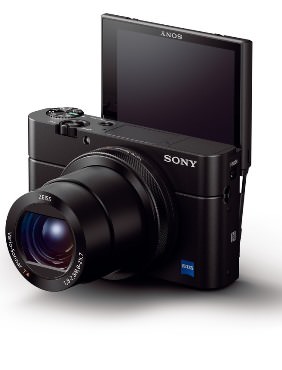
Плюсы по отзывам пользователей - Почему стоит купить Sony Cyber-shot DSC-RX100 II?:
- Отличное качество изображений, особенно в слабом освещении:
- Матрица 1 дюйма обеспечивает резкие снимки с низким уровнем шумов до ISO 3200, превосходя многие зеркалки в компактном корпусе (множество отзывов сравнивают с Canon 5D, Nikon D800).
- Светосильный объектив Zeiss f/1.8-2.8 даёт красивое боке и детализацию, подходящую для печати 30x45 см.
- HDR и DRO режимы улучшают динамический диапазон без постобработки.
- Компактные размеры и портативность:
- Помещается в карман брюк или сумку, всегда под рукой, заменяет смартфон и DSLR для путешествий (похвалы от пользователей с семьями и туристов).
- Лёгкий вес (около 240 г), но солидная металлическая сборка.
- Выдвижной электронный видоискатель (EVF) в M3:
- Удобен в яркий день, стабилизирует съёмку у лица, автоматическое включение камеры при выдвижении.
- Высокое разрешение (1.44 млн точек), лучше LCD в солнце.
- Поворотный экран и эргономика:
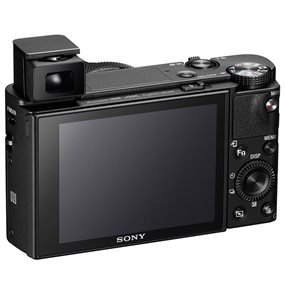
- Экран наклоняется на 180° для селфи и съёмки от бедра/над головой.
- Кнопка FN для быстрого доступа к ISO, WB, эффектами; кольцо объектива программируется.
- Качественная видеосъёмка:
- XAVC S (50 Мбит/с, 60p/24p), отличная стабилизация SteadyShot, звук без шумов зума.
- Сравнима с dedicated камкордерами, подходит для Full HD.
- Wi-Fi/NFC и беспроводная передача:
- Быстрое соединение с телефоном для просмотра/управления/передачи фото.
- Удобно для Instagram или удалённой съёмки (таймер/зум).
- Многорежимность и RAW:
- Автоинтеллект распознаёт сцены, ручные режимы P/A/S/M, серийная съёмка 10 к/с.
- RAW+JPEG для постобработки в Lightroom.
Минусы по отзывам пользователей:
- Слабый хват и маленькие кнопки:
- Скользкий корпус, требует доп. грипа (Sony AG-R1 за 1000 руб.), иначе рискует выпасть из рук (жалобы от пользователей с большими ладонями).
- Кнопки тесные, случайное нажатие power/флэш.
- Сложное и запутанное меню:
- Логіка навигации нелинейная, много вкладок без подсказок; нужно привыкать неделями (частые жалобы новичков и профи).
- Нет touchscreen, фокус только кнопками.
- Маленький аккумулятор и зарядка:
- Держит 200-300 снимков, быстро садится на видео/Wi-Fi; нет внешнего ЗУ в комплекте (зарядка по micro-USB медленная, 4 часа).
- Требует запасных батарей NP-BX1.
- Короткий зум и ограничения объектива:
- 3.6x (24-70 мм экв. в M3), не для телепортретов/дикой природы; шум зума на видео.
- Выдвижной объектив рискует повреждений в кармане.
- Хрупкий экран и сборка:
- Легко царапается, требует защиты (PCK-LM15); люфт экрана/крышки у некоторых экземпляров.
- Китайская сборка с клеем/отходящими деталями (редкие браки).
- Автофокус в сложных условиях:
- Медленный в темноте/движении, сбивается на фоне; нет GPS.
- Шторка 1/30 с в авто-ISO слишком долгая для ручника.
- Высокая цена и аксессуары:
- Дорого для компакта (от 30-50 тыс. руб.), допы (EVF 30 тыс., грип 1 тыс.) раздуты.
- Нет чехла/ЗУ в комплекте.
646 отзывов пользователей o Sony Cyber-shot DSC-RX100 II
Пользовались
Sony Cyber-shot DSC-RX100 II?
Поделитесь своим опытом и помогите другим сделать правильный выбор
I echo all the accolades of this camera from other reviewers. RX100M2 produces beautiful images that rival (or sometimes better than) DSLRs. The new backside illuminated sensor is supposed to be 40% better at gathering light than the 1st gen RX, though this has been debated. The daytime photos are fine. Evening/low-light photos are another story.There is one big problem that just destroys the camera experience for me. I'm a long-time photo enthusiast and understand enough about photography and cameras. I'm not a beginner-DSLR user that never graduates from the 18-55mm kit lens and full auto mode. But carrying a DSR kit while hiking the mountains in Canada, I got tired of all the bulk and subsequently sold and bought a NEX outfit (currently 5R). I also wanted to upgrade my p&s Nikon P310 (a 2012 camera) as a capable complimentary camera to the NEX, so I bought the RX100M2.Especially for p&s cameras, I prefer to use the cameras in "P" mode for the least amount of thinking. Sure I can tinker with all the dials and settings like a DSLR but you know what, most of the time, I'd rather let the camera do the job, intelligently, and intervene when I have to. The one huge problem with RX100 is that if you have auto-ISO and in low light, then the max shutter speed that the camera chooses is 1/30 and even with OIS and with my best efforts to keep the camera still, I often get blurry photos in low-light situations. A handheld, auto-ISO 1/30 is too slow for this camera and you cannot set min shutter speed with auto ISO. I've gotten more blurry handheld photos than I've ever gotten compared to my older, tiny-sensor Nikon P310 in similar lighting situations. The components inside the camera are not to blame. It's how they're being used. Why did Sony choose to cap the camera at 1/30 knowing this is too slow for handheld shots? I just don't get it. Yes, I can set it on Shutter priority and force faster shutter. Or I can boost ISO for the shots that need it. But then now I feel like I'm using a DSLR, which is what I don't want using the RX to feel like, and even with DSLRs, you don't have to do this much tinkering for a quick/easy shot. It's a P&S after all - a capable one, but for my usage, I'd prefer to use it like a P&S and don't want to be adjusting the controls on every shot I take. In a dimly lit environment, it's very difficult to simply turn on the camera, have it in auto-mode and snap and get a good blur-free pic. Instead, I feel like you have to endlessly tinker with shutter and ISO settings to "get it right". Imagine being out with friends at a restaurant - you're either taking photos of them or your food (and forget asking the waiter to take a group photo w/o flash - but to be fair, that's probably the case with other cameras too). This simple task now feels like a big chore b/c it's not a simple 1-2-go operation. I never had this problem with my Nikon P310. And come to think of it, not with my NEX 5R (or the previous 5N) either. So I spent $600+ on a camera I can't simply turn on and snap when it's dark. I'll give you an example. I took a pic indoors in a semi-well lit env. Not outdoors-bright, not an Italian restaurant for dinner dark. In Program mode, the camera took a photo of the subject at 1/5, f4.5, ISO400. The resulting photo is blurry and unusable. My point is simply this - why is the camera programmed for such a dismal aperture/shutter/ISO combination when in many real-life, hand-held situations, the resulting images are just unusable? In dark settings, the camera should boost ISO (to a point) until the shutter speed becomes usable for handheld pics. Sure it's noisier but I'd rather have noisier, usable pics than clean but blurry, unusable pics. Plus, this camera can handle higher ISOs anyway.On many occasions, the camera also chooses to set low ISO and compensates for that by setting the aperture wide open (1.8)... it's great if you want to get bokeh deliberately but not when you're taking a closeup of something (i.e. your dinner) and only part of the image is in focus because of the shallow DOF. That's when the 1" sensor gets in the way compared to other P&S with equally large apertures but smaller sensors.The 1/30 issue is extremely disappointing and frustrating for such an expensive camera with so many good features packed. On top of that, this camera is supposed to be the low light champ. Why couldn't Sony get this right? All it takes is a firmware update to fix this well-documented problem that's existed since the original RX but Sony hasn't corrected this. My workaround is using Shutter mode in dark places, using shutter speeds that I know won't create blur hoping for aperture and ISO to adjust and take care of the rest. Though when I do this, it tends to open the aperture to max so again, you're not getting the sharpest pics and now you get unwanted bokeh. So to close the aperture, I'd raise ISO manually. But if it's still not closing up, then I'd go to aperture mode to close it up.
There is no such thing as the perfect camera. In general, small cameras must sacrifice picture quality for convenience; most professional grade cameras must sacrifice portability. I chose the RX-100- II as a possible compromise, choosing portability with the expectation that I would have the camera with me more often, and because of the relatively large sensor the photo quality would satisfy for most purposes. After about a month of use, I find the camera is slightly less portable than I thought. At the same time the picture quality far exceeds my expectations.On the portability - it's a small point, but that was the rationale for getting a compact - it is just big and heavy enough to be awkward in my jeans pockets. If the pocket is loose enough, like a jacket pocket, there is no problem, even if the power button is accidentally pushed and the lens extends. But in my pants pockets, it's a squeeze getting the camera in and out, and if the lens extends when you reach in for the camera, extracting becomes a major operation. After trying the pocket route for several weeks, I decided to purchase the beautiful Sony camera case that comes with a shoulder strap. This is more convenient than digging the camera out of your pocket, although the camera is less concealed, but having the option works well for different shooting situations.The picture quality is much better than I expected. The main reason I chose this camera is the sensor size, which is among the largest of any compact camera. Unsurprisingly, in my test comparisons of the same shot, it beat hell out of my older point and shoot, but I didn't expect it to run circles around my 5-year old Olympus DSLR. SLRs are supposed to give better results than compacts, period. Apparently not so. Except for rare situations where an extended telephoto is needed, if picture quality is essential, there is no good reason for me NOT to use the Sony. The resolution, color rendition, relatively low noise even at 1600 ISO and above, low light capability with its f1.8 lens, all this in addition to the extensive control features -- this is one terrific package.Some of the disadvantages (I've listed them below) were inherent in the design of a compact, so I don't downgrade it for being what it is. I haven't tried all the features yet, including video, but overall for two main reasons so far I give this the highest rating: 1) The picture quality exceeds my expectations. I was planning to invest in a full-frame DSLR as well, but for my purposes, after seeing what this camera can do, I'm not sure I'll bother. In the long run, this may offset the disadvantage of camera's expensive price; 2) There is virtually unlimited control if you want it, as much or more than most DSLRs. But the two automatic modes quickly and accurately determine ideal settings if you're in a hurry or if you just prefer to leave decisions up to the camera. In summary:The good:* compact - fits in jacket pocket or fanny pack, a bit of a squeeze for jeans, but beats an SLR for travel.* rugged construction, heavy weight (even though aluminum), doesn't feel cheap* Modest appearance for security: doesn't call attention to itself as an "expensive" camera.* fold down 3" LED screen - good for shading and angle shots. - an upgrade from the earlier model RX-100 which does not fold out, and well worth the extra expense.* Superior quality photos for any camera, particularly a compact: -- considerably sharper, less noise and better color rendition than my SLR.* large sensor for a compact: close to 4/3 size* Good dynamic range: ISO to 1600 with virtually no noise, higher when needed.* Fast lens: f1.8 max aperture (f4.9 at telephoto position). Great for low light situations.* Good resolution at 20 mp (RAW image), 6-8mp (.jpg).* sharp lens* Excellent macro position - as close as 2"* RAW capabilities (.arw) - see below* Flexible arrangement of dials and buttons, most are programmable to user's choice, a huge plus (i.e., traditional "focus" ring can be used for manual focus, exposure compensation, ISO, aperture, shutter speed, etc.)* Lens cover closes when lens retracts - provides lens protection without having to place and remove cap. A major convenience in my view.* Menu intuitive and extensive.* Good battery life.The bad:* No viewfinder -Difficult or impossible to compose shots in bright sun. This is a big sacrifice, but necessary for compactness.* Expensive for a compact, and expensive accessories (i.e.,case = $70)* Small size awkward to manipulate if you're used to full-size SLR.* Zoom only 3X telephoto, not extensive.* RAW files are proprietary Sony .arw - requires conversion to .dng for Lightroom 4, i.e., a slight inconvenience.* WI-FI doesn't connect to my iMac. Others have reported this problem. I'm using Eye-FI instead, but the USB cable is fast and easy enough. I haven't tried the NFC and probably won't have much use for it.* No GPS, but Eye-Fi memory card (optional) has WPS.* Some edge distortion
I've been using a Canon Powershot for years now and have very little experience with fiddling with camera settings. I just point and shoot. But that camera is showing its age and it was time to upgrade, and I was interested in a bit more engagement with the camera. A DSLR seemed like too much so I went for this one, and I have no regrets at all.The image quality is excellent. At the "Intelligent Auto" mode, which is basically a standard point and shoot mode, I consistently get good pictures. The largish sensor also means that I can crop or zoom poorly framed pictures and they'll still be really high quality. Best of all, it means I can hand the camera to my wife and she'll be able to use it and still get good results. So right off the bat you get a camera that takes great pictures and is really easy to use.The remaining modes are a bit overwhelming at first, but once you start trying them out their uses become more apparent and they're all still pretty easy to use. Basically each setting changes what the lens ring adjusts, while still holding your hand and auto-selecting most of your options. So this camera in a lot of ways is a stepping stone to a DSLR, where you can learn about how to set your shutter speed, aperture, etc. while the camera helps make sure you don't screw up your pictures. You could probably set the camera to Intelligent Auto permanently and still get great pictures 90% of the time though. But take advantage of the other modes and you can make a lot of good adjustments that the computer can't quite do.For me, where the camera shines is the Shutter control setting and the burst mode settings. Taking pictures of my kids typically results in blurs and missed shots. With the ability to set a fast shutter speed and burst photos that's a thing of the past. Action shots are crisp, and usually I'll have a bunch of them in sequence thanks to burst capture, so I can pick the best one. Or upload them all to Google Drive and they get "auto awesomed" into a GIF or cool time lapse shot.Another notable thing is the dedicated video button, which eliminates the fumbling to switch to video mode (or back if you forget after taking a video). The video quality isn't the best (my 4-5 year old HD camcorder still gets better quality) but it's still pretty good. You can take pictures during the video capture which is great too. It's a nice plus overall, but if you're doing a lot of video capture an HD camcorder is a better choice.The camera itself is typical Sony engineering. They've crammed a lot of technology into a small body, cleverly hidden the ports, and made the whole thing pretty sleek. This is actually a bit of a drawback; the lens is kind of huge relative to the small body of the camera, which can make it hard to hold. I got a leather case for the camera that alleviates that problem nicely though. The camera is still bigger than most point and shoots, although smaller than the G1 or other large sensor cameras. Also in typical Sony style, the menus are awful. They get the job done, and are pretty clear as to what they do, but there are a lot of them to get through.The connectivity features are excellent. They are fairly easy to get working, and once you do you can back up your photos easily to your computer or phone. This is huge for me, no more plugging my camera into my computer or pulling out the SD card. Just turn on the computer, hit "send to computer" and you're done. Come back in a bit and all your new photos are on your computer. The smartphone transfer is easy if you have an NFC enabled phone, although the process is a bit slow. Smartphone control is a bit too slow to be super-useful, but it's nice in a pinch if you're taking group photos or something. If someone wants a photo off the camera its now really easy to transfer it. It's not quite as easy to send to someone compared to smartphone pictures, but it's close, and the marginal effort needed is certainly worth it to get the far better image quality.The only real downsides to the camera, other than the size and menu issues I mentioned, is probably the price. It's pretty expensive and you can get a DSLR for the same or less that can probably produce better pictures. Also, if you're just going to point and shoot, you can get cameras that are almost as good but much cheaper. But as in terms of being easy to use, while still giving you lots of control over your settings, I don't think this camera can be beat.
I've been using compact cameras for recording indie rock/folk shows, from big venues to basement shows, for a few years now. The idea was to capture the look and sound at being at the show as unobtrusively as possible. I started off with a Kodak Zi6, and then several months later replaced that with the Kodak Zi8 with a Sony DSM-DS70P mic plugged into it. This turned out to be very good combo at the time and for a couple of years afterwards. There was no good follow-up device from Kodak and they exited the camera business. Alternatives from other manufacturers all had deal-breaking drawbacks, usually in regards to not having a mic-in jack. Nikon came out with the semi-compact Coolpix P7000 and I got that because it did have a mic-in jack, but while it took nice pictures, it was rubbish as a videocam -- fussy with plug-in microphones and issues with focusing, and even color drift. I updated its firmware and got its color drifting repaired under warranty, but it was really only good as a camera and not as a Zi8 alternative. I finally got a Sony HX9V after seeing some live music videos online, despite it not having a mic-in jack. I got got a Zoom H2n Handy Recorder to record the main audio (the HX9V's audio track was used only for syncing), and mounted it on a hand-holdable bracket with the Sony. This made for an awkward combo to hold and operate, and more tedious post-processing, but resulted in some very nice looking & sounding videos. I later on got a Zoom Q2HD Handy HD Video Recorder with 2GB SD Card and Two AA Batteries pocket videocam as something a lot more convenient to use and edit, like how the the Zi8 was, and while its audio was stellar, better than even the H2n at rock club sound levels, the video was only very modestly better than the Zi8's, and definitely inferior to the HX9V's in most cases (the Q2HD has has this "Concert Lighting" mode that actually helped it take better videos in extreme lighting conditions than the HX9V.)When Blackmagic announced their Pocket Cinema Camera earllier this year, I thought I finally found my ultimate rock club camera, but that has been plagued with delays, and early reviews and videos were not what I expected -- I was just looking for a compact videocam that can handle typical rock club and basement lighting and sound, and not some very fussy, battery eating puppy shaped like a camera. In the meantime the Sony RX100 II came out to glowing reviews, and with a proprietary hotshoe, the "Multi-Interface Shoe," that can take a Sony microphone, the Sony ECM-XYST1M Stereo Microphone (Black). Unfortunately, there were no good videos to be found on the Internet using this combo that applied to what I had in mind. It seemed like a not too risky a risk, though, so I ended up ordering both the RX100 II and its matching mic. My verdict:Short version: When it's good, it's very, very good, but there are so many gotchas overall that I'm likely going to return the RX100 II at least (I may replace it with the much cheaper HX50V because that can also use the ECM-XYST1M mic.)Longer version: My HX9V made for a good comparison -- the RX100 II is about the same size and has similarly laid out controls and options. My first video tests were at two small clubs with dimmish lighting that's normally are a struggle for my HX9V, and the results were confusing at first: with the RX100 II at its default wide angle, it definitely shot brighter than the HX9V would. But when I zoomed in, things darkened quite a bit. When I got this Sony combo, I was initially more concerned about the ECM-XYST1M because it simply attached and there is no level control whatsoever either on the unit or in the RX100 II. But this performed very, very well even when I shot some videos deliberately by the main club speakers to see it that would cause distortion. It's audio on needed some mild EQing in the editing later on, and it had very impressive frequency range to just over 20 kHz.As far as that strange darkening while zooming issue I ran into, later experimenting showed that this was caused by leaving it in its default "Program Auto" movie mode. To keep things from darkening while zooming, I had to set movie mode to "Aperture Priority". This brought up the first big "Gotcha!": when you do set it into "Aperture Priority" mode, the overall video brightness drops a lot if you're in a dimly or complexly lit room. So while it doesn't darken while zooming in this mode, it basically cheats by starting off dark to begin with! A recent second test at a larger music venue with more typical rock club spotlighting verified this: while in "Program Auto" mode, the video went from actually too bright to too dark, while Aperture Mode was generally too dark overall, and with very murky colors compared to what I was seeing in Program Auto mode. To get a balanced video, I zoomed in while in Progam Auto mode until I was happy with the overall brightness level and then simply kept it there -- no more zooming, in or out. This sort of wo
m2TWGRBMKA0SUI / mo153K787DYXEY2 Length:: 5:48 Mins♦ Brief ♦I purchased the RX100 last year, which has since been my favourite compact camera to use, and so far I haven't come across a camera that betters it, that is of course until this upgrade that brings some much welcomed extras.Here are some of the upgraded features:☑ An improved sensor (Exmor R CMOS Sensor); it's still the same size and has the same effective mega-pixels, but is now backlit which means it's able to pick up light by a further 40%.☑ Hot-shoe; no idea why they didn't include this on the previous version, but at least it's here now.☑ Tilt-able screen; one of the things I was longing for on the old RX100, this is one of my favourite upgrades by far!☑ NFC (Near-field communications); I love this extra feature, by tapping the bottom of this camera onto your phone that has NFC enabled, it will connect them both together straight away.If you don't have PlayMemories Mobile installed, it will take you to the store to download it (for free), if you have it installed already, it will connect them both together where you can then control the camera with your phone, though the modes are limited, you're able to take stunning quality photos and instantly transfer them over to your phone when taken.☑ 24p recording; an extra welcomed option for those who love having more choice when recording (24p, 60i & 60p).☑ PAL & NTSC choice; in the settings you can switch from one to the other which I'm sure certain people will love.- Zoom is still 3.6x optical zoom, this is normal for high-quality compact cameras such as this one.☒ One thing this camera doesn't have is a touch-screen, this is debatable as a lot of people like this kind of feature, however others don't, personally I'm not a fan of touch-screen on cameras; I have a NEX 5RL and I always use the buttons to navigate, I hate using the touch-screen for some reason.☒ Grip is minimal (best used with the wrist strap), once again this is down to preference, I like the combination of the sleek style whilst having just enough grip, but others may not like this.- - -♦ Box contents & recommended items ♦Included in the box are the following:Camera | AC adapter | Battery | Micro USB cable | Wrist strap | Two shoulder strap adapters | Manual.Things you NEED:SDHC Memory Card (You can choose a different brand/memory capacity, though do remember as this is a 20MP camera, files sizes average between 3MB-5MB if your using Jpeg in fine detail, or is around 20MB if using the RAW format (RAW image has a '.ARW' file extension)).Optional:Camera Case (LCJ-RXC) | SDHC Card Reader | Spare Battery NP-BX1 | HDMI - Micro HDMI Cable.- - -♦ Settings & Modes ♦Just like the RX100, this is aimed towards people who are more advanced in photography due to it's great amount of changeability in settings, that said, like most cameras these days, regardless if it's a professional camera or for basic needs, they all seem to have automatic modes which allow people to snap shots quickly without having to worry about tweaking the settings in most situations.The interface is pretty much identical to that of the RX100, with the addition of a few extra available settings located within the menu, for those who haven't seen it before all the settings are changed within the main menu, unlike the other cyber-shot cameras where a side menu pops up allowing you to change settings whilst being able to see what the camera is pointing at, this one has a solid menu that covers the whole screen, which is very appropriately tabbed making it easy to navigate.Though if you wish to change a few settings quickly without going into the main menu, you can edit the 'Fn' button options (located on setting tab 2 in the main menu), this will give you the choice to select 7 out of 17 settings which will instantly be available upon pressing the 'Fn' button, choices range from image size, exposure, ISO, white balance, picture effects, HDR etc...This function is partially transparent, so you can see where your pointing at.To change modes, all you have to do is twist the mode dial located on top of the camera to the setting you want:Intelligent Auto | Superior Auto | Program Auto* | Aperture Priority* | Shutter Priority* | Manual Exposure* | Memory recall** | Movie | Sweep Panorama | Scene Selection***.* Advanced modes which allow you more customization in the settings.** Allows you to set three different profiles, giving you quick access to your favourite settings.*** Gives you a choice of many pre-set modes such as 'portrait', 'landscape', 'night scene' etc...- - -♦ Image Quality ♦The quality is utterly fantastic, the camera is able to focus quickly to the subject to then take very nice sharp photos.This camera is able to deliver an amazing amount of depth of field (obviously depends on which mode or settings you use), and found it be a bit more better than the previous RX100 when it comes to focusing on subjects at a closer range.Due to it's sensor it's able to produce g
My primary camera is a Sony A65 with a G Series 70-300mm zoom, a macro prime, a wide angle prime and a 18-135mm kit lens. I shoot wild life, ultra marathons, sunsets, friend's weddings, events and anything else that takes my fancy. I keep buying point and shoot cameras because I love the idea of a pocket sized camera that is always ready. But the image quality is never good enough and I end up selling them. I read the reviews of the RX100 and decided to go all in on the RX100 II. Maybe this time I'd find a worthy compact camera to supplement my A65.I got the Sony RX100 II on the day it was released (thanks Amazon). I had bought the Wasabi external charger and spare batteries from Amazon in anticipation, so I could start shooting immediately I got the RX100.If you have used Sony Alpha cameras, the menus are easy to navigate. I soon figured out how to shoot in Manual mode and how to use the front dial and rear wheel to adjust shutter speed, ISO and f-stop quickly. The only problem I found was I'd sometimes pop-up the flash menu while using the rear wheel. I shoot RAW and JPG. Until Adobe release support for the RX100M2, I need to use Sony's image converter to process the RAW files. It creates a TIFF file that loads into PSE 11.The camera feels very solid and it is easy to handle. I keep putting my left forefinger over the flash, but I've kept the flash turned off, so it isn't a problem so far. The LCD screen pivots nicely, so you can take overhead shots and shots with the camera held low and discreetly. I do miss the A65's EVF but I'm not quite ready to spring for the RX1's $400+ EVF option.Image quality is amazing. I compared macro shots of bumblebees on flowers taken with the A65 and 300mm zoom and the RX100. The RX100, wide open at f1.8, and held 2" away from the subject delivered more detail and nice brokeh. The RX100 turns out to be a great camera for casual macro photography.The few sunset shots I've taken match those taken by the A65.The WIFI capabilities will appeal to many users. It was very easy to pair the camera with my PC and my old Android phone. I can use the phone as a remote control and view finder. I haven't tried it yet, but I'm planning to use this feature to shoot small birds, such as hummingbirds.I shot an ultra-marathon using the A65 and the 18-135 zoom. I considered using the RX100, but the lack of a view finder stayed my hand. If Sony releases a cheaper, lower-res EVF for the RX100, I'd be in hog heaven.It is starting to look like the RX100 is going to be my primary camera, with the A65 staying home until I need the reach of the 300mm zoom or the power of an external flash. I am blown away by the RX100 and I've just started dipping into its capabilities. I'll update this review as I use the camera in different shooting situations.I was going to give it 4 stars because it doesn't have an affordable view finder option. I'd like a lower resolution EVF that would plug into the multi interface shoe. On the other hand, an external view finder compromises the ideal of a pocketable camera that is ready to shoot at a moment's notice.Update - Aug 1st, 2013:I just discovered that when the camera is off, I just have to touch the review button to see my pictures. This saves the camera from extending the lens.I bought the Sony PCKLM15 LCD Protector for DSC-RX1 (Black) to protect the screen. This has a stiff border and seems to be better than those 3rd party films. I also ordered the Sony RM-VPR1 Remote Control with Multi-Terminal for when I use a tripod and the Sony ADPMAA Shoe Adaptor for Mi Shoe so I can mount my Sony DSLR Alpha HVL-F43AM Camera Flash. Will update again after I've tried them out.Update - Aug 4th, 2013The RM-VPR1 works very well on the RX100. I'll be using next time I need to take tripod mounted shots. The Shoe Adaptor makes it easy to mount the F43AM flash. There is a protective cover you need to remove from the adaptor before you can slide it onto the camera. The combination of a large flash unit and the tiny RX100 looks odd and makes the camera more difficult to handle. You end up holding the flash and the camera. It sort of defeats the portability requirement, but the camera takes such great photos that you can use it in contexts where you would normally use a DSLR.Update - Aug 12th, 2013I tried using my old Android phone as a remote control to take pictures of a hummingbird at a feeder, using Sony's Play Memories app. This could be a great feature but it is fairly primitive; it seems to be geared towards getting photos from the camera to social media. It was sluggish and introduced a long delay between shots. You couldn't trigger a burst of shots, even though the camera can do that. Focus is an issue, because you don't want to introduce focussing delays and sounds. I chose to use manual focus and pre-focussed to where the bird would be. Despite the limitations, I got a few nice shots of a hummingbird shooting while wide open (f/1.8). Next time, I'll zoom in. If Sony could mi
The RX100 is agreeably one of the best cameras Sony has ever invented, although its performance falls behind the DSC-HX30V; however, the image quality is far better on the RX100. This is because the sensor on the RX100 is four times larger. However, if you mostly shoot video with the camera, the HX30V is a better choice, especially if you prefer to record in 1280x720, which the RX100 cannot do, and neither does the RX100M2. However, you get the 24p AVCHD 1920x1080 ability to shoot, choice between 17mbps (divide by 8 to get MB per second; 8 bits per byte) or 24mbps. This is better than the 28mbps at the 60p setting, as each individual frame is less compressed or has more color to it. Do the math; the 24p versus 60p setting yields about 50% larger file size, useful for extracting a frame from a movie clip. You cannot shoot stills in the 60p setting, and the image quality is atrocious because a small region of the sensor is used for video-recording, and the file is enlarged to the 17MP (you cannot shoot 20MP stills in video mode because of the aspect ratio at 16:9 versus the 3:2 for the 20MP still setting). Video quality is the same. You get very smooth capture at the 60p setting, but the interlaced mode I do not use due to playback problems. Somehow, it is either my computer, or the interlaced 60i codec does not work as well as the one on an NEX model, for instance. I am unsure if this issue were resolved, as I have not had the desire to shoot at the 60i setting on the DSC-HX5V, which I used to own but wrote a review on back in the day. The HX5V's interlaced AVCHD was very jittery and blocky, and that had me frustrated since.First, the photo quality is the same as the RX100, and the autofocus is no better either. I found the RX100 did a little better job with the contrast detect. Perhaps the BSI CMOS sensor is just hype, or there is a setting I am unsure about to make it work properly. If anyone has a solution to this, please let me know. Other reviewers say this camera is a step up from the succssor, but the image quality certainly is iffy on my testing experience.The upgrades are the hotshoe, but I do not care about that only due to that they are pricey, and the pop-up flash is adequate for my needs. The WiFi does not interest me right now because I have no iPhone or Android 3/4G Network capability. Is nice for those who have such a phone. The next upgrade and the fourth one are minor. Yes, very minor... As I said, the 24p is the most important to me, for quality, and less disk space consumed. The BSI CMOS sensor, even if it is better than the RX100, is hardly enough to convince worthy of the upgrade if that is what your main area of necessity plays out.Have read that RX100 users should not consider upgrading to the RX100M2 unless the hotshoe and WiFi are most important, and I agree.This camera given four stars because you can get a similar camera with much better performance and image quality for a lot less, although performance and video quality may be a little less than that of RX100. I would recommend the Nikon P7100 over the RX100 if 12MP (not 20) is important to you, but keep this in mind. You have no dedicated movie mode, and cannot photograph during the movie capture. It has no AVCHD capability either, just MP4. The main reasons to choose the Nikon are it is cheaper, has half the sensor size of the RX100 but image quality is amazing (DSLR-like clarity and sharpness--very sharp at ISO 100), flip-out swiveling screen (Canon-style), and pocketable with a neck strap. You get no neck strap with RX100. Bummer. (Just the wrist strap.) RX100's tilting screen, like the NEX, is tricky, and I don't intend to try to "move" it as it could be damaged. One more note on the Nikon; autofocus for photos is faster than the RX100/M2, but the movie performance is not quite so good; hunts but quite clean in low-light as the Sony.Hope this helps. Even though the RX100M2 was a little disappointing (especially since the RX100 actually did better in very low-light conditions, surprisingly), if you already have that camera, and do not need the hotshoe (accessories very expensive and proprietary anyway) and WiFi, I cannot recommend this item. Stick with the RX100, and maybe if you do not have either, buy it used or new, if the price has fallen below the MSRP. Thank you.Matt Eye, an avid "professional" photographer/videographer
I tried to record a musical production in the old Saenger Theater here last night using the RX100II and a Canon Powershot S120. Tried is the key word. I have large hands. The video button on the RX100II is almost impossible for me to use much less find in the dark. I have to use a fingernail to depress it. There is no way to do this smoothly. The recording indicator is confusing when one is in a hurry. It says recording when you have actually just ended a recording so that if you are not entirely focused you think you are still recording. I missed a key scene involving my granddaughter through the combination of the record button being so demanding to use and the confusing interface. The camera is so extremely slow in everything it does in the video mode, especially autofocusing, that it is mostly useless for anything other than just turning it on and letting it run at a fixed distance. It is very difficult if not impossible to operate this camera in the dark with the small and numerous buttons.Although I am disappointed and perturbed, perhaps all of this is just the provence of the pocket camera class and I should not be complaining; however, I bought the camera based on reviews that seemed to say that the RX100II had somehow transcended the point-and-shoot level of usability and performance. It takes decent stills. I own other Sony cameras, including the R1, which I love.On the other hand, the Canon S120 is much much faster in all of its operations. It also has controls that I can use with my fingertips (not to mention a touch screen). I have the S110 and the S100 and the S90 and the S20 also. The S120 is a huge improvement over the S110 in multiple ways. The buttons are slightly convex which makes all the difference. Canon is not ashamed to make the video button usable for someone like me. The interface is less confusing. The stills are more than adequate for a pocket camera.I would like to see a pocket camera with the speed, buttons and touch interface of the Canon and the size, screen and sensor of the Sony. I have handled the Panasonic GM1 and would have bought it; however, it, like the RZ100II, is too fiddly for my hands.I own a collection of Nikon and Canon DSLR's (which fit my hands but I rarely use anymore) and a Panasonic GX1 and an Olympus OMD E5 and an OMD E1. All of the Micro 4/3 cameras are small for my hands but I tolerate this for their size and weight advantages.I will lug the OMD E1, conspicuous as it is, to the next theatrical performance.Addendum 20140302: I need to give the RX100II more credit for it's stills performance which is excellent especially in low light. The sensor and the lens work together at all focal lengths to make sharp pictures with accurate colors. The WIFI transfer function (which I use a lot with my iPad) is extremely fast, much faster than any of my other cameras that have this feature.Addendum 20140323: Today the SD card will not longer insert into its slot. Something is protruding into the slot half way in and I can't get it bent back. Seems to be part of the slot construction and not something loose having fallen in. The camera is out of window to send back to Amazon. Guess I will have to package it up to Sony and see what happens. A real pain.
I love this camera. I bought it to replace may Canon S120, which I also loved, but which I lost...my fault. Both of these cameras are reasonable DSLR replacements for those of you (you know who you are...over 30, want to have a camera everywhere, but not just for snapshots--for which your cell phone is fine--and money not a limiting factor) who have pictures you have taken framed and hung. For what it does well, it's amazing: extra high quality images under very tough shooting conditions, in terms of lighting, speed, visibility, etc.). I had gone the Canon SLR route 10+ years ago. Pocket cameras were a necessary evil, under some circumstances. The Canon S90 changed all that. I found it capable enough that I was increasingly leaving my Canon 40D + 50mm f.8 & tamron 18 - 270 + flash, tripod & bag at home even on vacation!For me, the first priority became size...has to fit in my coat pocket. Second priority is it has to have full manual options. I just like to think I'm the one taking the pictures. Third is image quality...this camera is intended for the 8 X 10 prints and larger. Need to have Raw option. Fourth is lens capability. The 24 - 120 f1.8 -5.7 Canon is better in this respect than the 28 - 100 f1.8 -4.9, but with 20.2 mp, the "clear view" digital zoom to 200 is good enough for the limited cases when I want zoom snapshots. (IMHO, real photographers require a DSLR and a $$$ 300MM fast lens for zoom photography). Fifth "features" which for these types of cameras is ha highly subjective "market basket." including video capabilities, ISO range, camera modes, flash capability, etc. For me the RX II is far better equipped than the S120. It's flash is far superior to the s120, though a key reason to buy the camera is to minimize the use of flash. It's auto mode--it has two-- are really quite amazing and fun. The "intelligent" auto mode make easily handles extreme back-lighting situations.Finally, I'm not oblivious to price and at $698 list there's a lot of competition and options, especially if you're not so hard over as I am on the size of the camera. The S120 at $400 (if you shop) is a good deal. Nikon J series (new J4) is about the same price, but changeable lens. The Panasonic DMC-LX7 and the Leica version of the camera the D-lux 6. are similarly capable and the lx7 is under $400. Complicating the decision is the new Sony RX 100 III, which changes the lens (24-70) adds an EVF and $100 to the price ($798). All-in-all, I'm happy where I am--but I know the march of technology and my absentmindedness only allow me 2-3yrs with what becomes a trusty friend[Special notes: if you buy this camera, buy the sony screen protector ($10) at the same time and put it on immediately. If you don't, you WILL scratch the screen. Also, don't worry about the lack of an external charger. Buy the off brand package with 2 batteries and a charger for under $20. They are fine]
I have been looking for and pricing point and shoot cameras for quite some time. I had to decide should, I go in debt and get a full senscor camera or get something very good with a smaller sensor. Well full sensor point and shoot are more problematic then you would think it not just the price. A full sensor using average lenses can cause you to lose resolution out away from the center of your pictures. So to get a point and shoot with a great lens or lens system and full sensor, I would have to pay over $2000 and I just can't see paying that much. Also I did not want a lens system camera anyway, I already have a very good Canon DSLR (with a 4.3 Sensor) and I really wanted a point and shoot as a second camera to take with me everywhere. So After doing lots of research I decide to buy this Sony RX100M2 and I am very happen with my decision. First off the price was reasonable. Second the camera is very well constructed. Its made of metal and has a nice bit of weight feel to it. It can still be easily put in pockets purses etc., It is a bit thick but not bad (so probably not for a Shirt pocket). The Lens is a Large-aperture F1.8 Carl Zeiss Vario-Sonnar T lens which is about as good as you can get for a point and shoot Zoom lens. When you take this good lens and combine it with 20 megapixals and Sony's New 1.0 inch Exmor R(tm) back-illuminated CMOS sensor you get supper good picture quality. The Back lighting gives you even better low light shooting (Which I have tested and found to be excellent, even netter then my DSLR), I will post some pictures later its amazing in a dark setting without the flash and all the pictures are very very sharp. The Camera is really idiot proof (speaking for myself hear) you can simply put it in Intelligent Auto, which will do everything for you or even into Intelligent Auto Plus which takes a series of pictures and interlays them into one super sharp picture. In these modes the camera picks what you need, Night Mode, Landscape, Portrait, Portrait Night, Sports, Sunset, Baby, etc., You can also use SCN (= Scene mode) and pick the mode you want, I find that in shooting sunsets the sunset mode is a help. If you want to control the photography more, you can use Program, Aperture Priority, Shutter Priority, or Full Manual. You can also bracket and do just about everything a DSLR can do. I won't go crazy hear listing all the camera does Amazon has done a great job above listing everything. I do what to say if your computer is windows you can get your software at Sony's website (it comes up on your camera viewing screen the first time you plug it in to your computer), and you can also go wireless with the camera. While if your on mac your I Photo or Aperture will take over for you by downloading the drivers etc., for this camera. I have not tried every feature yet, such as panoramic (I have tried it but I get a failure when I use it I am not study enough, I will try again with the built in Level next time to see if that helps), I do not use the Wi fi so I can't commit on it (I still have a regular cell phone yes I am in the stone ages) and also since I error on the panoramic feature I have not been able to see how it works with mac yet (I use aperture on mac). I will report back on how that works by adding to this review. So Far I love this camera. SO FAR, I am very happy with my choice, its really great for getting those quick shots when I am out around the state.
Coming from MFT and after a week with this camera I have to say I am impressed, it's SO close to perfect, if only SONY would fix a few bugs/annoyances..First off with cons (a firmware update could fix all these):- The separate folder views for videos/stills has to go (or become an option) it's just silly and inconvenient- Some options are selected by turning the wheel in one direction, others in the opposite, this doesn't make any sense.- The camera tends to select a fairly slow shutter speed in aperture priority mode (unless you manually bump up the ISO), would be great to have a way to set a min shutter speed- The menus are not as confusing as I expected from most reviews, but they could definitely be simplified- I read everywhere that the 4 way controller buttons could be customized, but so far I have only managed to customize the left/right ones, can't find if customizing the up/down ones is possible- The special shooting filters (Picture Effects: high contrast b&w, old film, etc.) are clunky to use since you cannot disable some of them, so if you just want to use a couple you have to toggle through a whole bunch of useless ones. Maybe something I could configure through memorized settings but haven't explored this yet.- When viewing photos (playback mode), if you hit the zoom lever in front of the camera it zooms in at 100% (useless since with a 20Mb photo zoomed in at 100% on a tiny screen you are way too close up), it should instead zoom in smoothly.- Manual mode doesn't have an auto-iso option (so you could set aperture and shutter speed with the ring + wheel and let the camera pick iso) that would be really useful.- PlayMemories wifi sync to smartphone is really nice but (a) would be nice to have even faster connection if possible and (b) have an option to download all photos not already downloaded (or since last download)- SONY is apparently notorious for never releasing firmware updates (according to forums on dpreview) which is a shame, a lot of things could be improved with one.Pros:- Amazing image quality for a compact- Pretty good at handling low light for a compact- Image stabilization, especially when shooting movies, is amazing- Very fast focus/shooting- The wifi/nfc is surprisingly useful and easy (not exactly apple easy, but close), transferring to a smartphone is really easy.- The control ring around the lens can be assigned any function, it's a really nice feature, since the multi function wheel can also control another setting.- It's a true compact camera, with the lens closed it fits very easily in almost any pocket- I actually like that you don't need a separate charger, usb charging makes perfect sense. The battery life is good enough to last through a whole day of shooting casually. If you need a second battery then you'll need an external charger.It's the kind of camera that makes shooting fun again, I just always have it with me. If SONY would just fix the issues above (most of which I've also seen in other reviews) it would be the perfect compact camera hands down.Review updated after a couple of weeks of use and to note PlayMemories sony app crash on Android KitKat/4.4 is now fixed, SONY released a kitkat/4.4 version (so maybe we could hope for a firmware update??)
This is a great camera. Don't get me wrong, it takes excellent pictures. However, the improvement over the last model (RX100) is marginal. I have owned the Sony RX100, and I was very impressed. Now Sony came out with a newer, more expensive model. It should have big improvements for the cost, because if you buy used, you can save a few hundred dollars by buying the RX100.Here are the improvements and my criticism of them:Hotshoe: this is great if you plan on buying an attachment, except that they are a few hundred dollars for the least expensive attachment. If not, it will just be a waste of space. Fortunately, it comes with a cap to block the connector so it doesn't protrude so much.Backside illuminated sensor: frankly I thought the original RX100 performed really well in low light. I felt like this performed the same. It's great in low light, but I don't feel the difference. That's probably because it's so insignificant.Tilt screen: i have always used Sony NEX cameras with the tilt screen, and they have been very helpful. Most of the time I tilt the screen up because I have the camera below me to take low-angle shots. This tilt screen, unlike the Sony NEX5n, needs to be brought outwards before tilting up (whereas the NEX5n needs to be brought outwards to tilt down). This slows down the tilting when I want to take a quick low-angle shot. It's helpful, but it could be better had it not be needed to bring outwards to tilt up. (also does not come with a touchscreen)Wifi/NFC: I never use the wifi manual connect because I have an NFC capable phone. However, this feature which I was really excited about, turned out to be huge disappointment. Here's why:1. Connection unstable. It keeps disconnecting and I don't know why. The range wasn't that far as I'd expect from a wifi connection. In that case, they might as well have included an IR sensor.2. The NFC chip is on the bottom of the camera, which makes it difficult to connect when attached to a tripod. I can't imagine how people would be able to do it if they had a Galaxy Note.3. No matter what mode you're in, wifi control is ONLY in intelligent auto. You have self-timer (2, 10 second), zoom, and flash controls, but that's about it. not even exposure controls. WHAT??? Exposure controls are the most basic controls you have in a camera. How could you not have that?The wifi control can be updated through firmware updates, if not through the phone's app, then through the camera's firmware. However, it doesn't seem very likely that they will so don't count on it.Overall great camera, but marginal improvements over the last one makes it not worth its price. My recommendation is stick to the last model to save on the costs, unless these features are a MUST-HAVE for you.
There is no need to repeat what has been said about this cute puppy. The followings are personal impressions, observations and experience that I'd like to share, hoping they might be helpful in some way or just interesting to read or know in some other way.After a month of usage, along with some adjustments and additions, I have found these features useful by themselves or worthy of price difference over the already excellent RX100. My opinion on the latter is based on reading numerous reviews and watching many YouTube reports. These features are:- Wi-fi capability: I can take photos in California, transfer them onto smartphone, then send them to anywhere on the planet. I talk about high quality photos, not iPhone equivalent.- Richard Franiec's grip: unable to wait for Sony's grip, I purchased one from Lensmate. It blends completely well with the little Sony and nicely and noticeably increases its photo taking capability. So far I do without any strap, just using a small Sony bag that fits the RX100m2 well.- Tilted LCD screen: Enables me to monitor and take photos from above the head or ground low level, using the built-in lever meter (more below).- What I called a "3-D lever meter": left right and front back lever. Very useful!- Compact yet solid form: I don't find anything cheesy or cheap about this piece of jewel-like camera. Ok not that high quality you might argue but it's clearly a Sony, and I don't care where it was made from. Hey, my trusty Nikon D7000 among other quality gear is also made there.- Beside usual DSLR modes (P/S/A/M), the Auto mode is really intelligent and satisfying.- The LCD screen alone is a beauty itself. Instead of putting the camera in pocket and risking the screen scratched, I bag it in the little Sony bag (see above) that Focus Camera bundles with the purchase. Turned out a vey handy and effective accessory. Oh, the camera in the bag is always with me when I go out, attached to the belt.- Hot shoe for adding accessories later on: I am very curious about the EVF and mic, but they will have to wait until I have settled down with the camera as is, and until I can justify and afford the extras.- RAW capability, but JPEGs are quite good. Only time I find raw essential is when lighting is complex, less than predictable requiring WB correction in post processing.That's all I can think of for now. May come back later if anything new and interesting is discovered. Happy shooting!Updated 9/6/2013 - Some more thoughts on the subject:- Add non-Sony extra batteries and charger at lower cost.- Shoot RAW for ultimate image quality control. LR5 is already .ARW friendly. Download Adobe DNG free converter and have fun with Photoshop/Sony .ARW raw files. Thanks Susan Elliott and Ohcat9 for your greatly helpful information on this.- Flexible compact-ability and pocket-ability: shooting sans EVF 95% of the time, and with EVF the remaining 5% when focus, bright lighting, and stability are critical. No, I don't have the EVF yet, this is just crossing my mind.- AWB (auto white balance) is mostly spot on during daytime and/or outdoor. Shooting indoor in evenings, it's easy to tweak WB (in my case: push Fn key, select WB, rotate control wheel to select best WB while looking at the LCD). For instance, I found the Fluorescent White Warm match to my room lighting in the evening. YMMV.- AF is both effective and fun with focus magnification and/or focus peaking.
I don't know about you but I like my pictures of peoples faces sharp so I can see the defects on there face! Unfortunately I didn't try to return this product in the first 30 day so after 45 days when I called Sony support all they did was try to tell me what I was doing wrong and tried to give me suggestions on getting better pictures. They wanted a specific situation where the picture quality was unacceptable, I told them all situations were unacceptable quality but they were no help. They wouldn't take the camera in for repair so I am stuck with a lemon. This is my 8 point and shoot and I have also had 3 DSLR's. My current DSLR is a Cannon 5D MK2 with incredible picture quality, my current carry around camera is a Cannon G1X also with very good quality. I purchased the DSC-RX100M2 because I wanted good quality in a compact size. My former compact camera was a Cannon S90, a very nice camera and it looks like I will be purchasing a Cannon S120 soon to replace the RX100. I take around 1,000 picture a month between my three cameras and cherish the pictures of family and friends. My RX100 is unsuitable for any family memories or even pictures of scenery. My suggestion to you before you purchase an RX100 is go to a camera shop with your own chip, take a few pictures, go home and view them on your computer screen. If they are acceptable to you then maybe I just got a lemon.I tried shooting my pictures in RAW format and processing them using the Sony downloadable RAW software. Don't bother it is the worst photo software I have ever used. First It makes exposure adjustments in 1/3 of an F stop. Cannon does in in 1/6 of an F stop, much better. Also the Sony software is so slow that it makes processing RAW files unacceptable My machine is a 6 core Intel with 9 GB of memory. I tried it on my 4 core Intel machine and it is even slower! Every time you make a exposure adjustment is takes approximately 15 seconds for the changes to display on the screen. If you go back and forth between exposures like I do to find the proper setting it takes at least 3 minutes a picture to get the correct exposure and most time you must key in a value because it is somewhere between the 1/3 stops the use. With the Cannon software I just roll the mouse back and fourth between three different exposures, one under, just right and one over exposed until I get the proper exposure. Cannon does this in real time and it is a pleasure to use. The Sony software is useless.For some reason someone at Sony thinks 1/30 of a second is proper shutter speed for taking flash pictures in the 'P' mode and 'A' mode?? I tried every adjustment but was unable to increase the speed in 'P' or 'A' mode. Yes you can change the shutter speed in 'S' and 'M' mode but sometimes it is just nice in changing conditions to let the camera do the work. I take mostly flash pictures so this was another bone of contention.This little camera has a real solid feel and lots of features, and real adjusters dream. But for me image quality is everything and I see lots of camera's costing $200 with better image quality. I have own lots of Sony products over the years, TV's, Stereo's, VCR's (remember them) etc but I figure this is my last Sony product.
I do fine art photography, and my regular camera is a D800. I got this because I wanted something to carry around all the time, not just when I was specifically on a photo shoot. This little thing is impressive, not just impressive for its size, but just darn impressive. While it doesn't have the flexibility that my bigger DSLR's have, when used properly the image quality is absolutely good enough to make big prints that are plenty good enough to show in a gallery.Now, for why I didn't give it 5 stars...For the price, it's missing a couple of things. I understand why something like the optical viewfinder or the filter adapter would be extra cost accessories, although I'm not sure I understand the pricing on the optical viewfinder. But no external battery charger? C'mon...The camera doesn't have enough battery life to last for a full day of shooting. A $750 camera aimed at advanced photographers should have a battery charger, so that I can charge one battery while shooting with another.The other thing is the manual. It's a useless pamphlet that doesn't really even cover the main features of the camera properly. The help button on the camera itself is useless as well. For example, if I go to the aspect ratio screen and push the help button, I get "sets the aspect ratio." If that's all the help you're going to provide, why bother with the button at all? Message to Sony...a good firmware upgrade for this camera would be to add help button messages that are actually helpful.The last thing is that when I'm using Auto-ISO, I can't tell what ISO I'm actually shooting with until after I've taken the shot. The display tells the aperture and shutter speed, and that I'm using Auto-ISO, but it doesn't tell me which ISO it has chosen. Since I print big, I'd like to have some idea how much noise is going to be in the image before I go banging away and shooting a bunch of shots that aren't usable because of ISO noise. UPDATE: A commenter helped me figure this out. You have to hold the shutter button down halfway, then the actual ISO will display. I wish the manual said something about that.UPDATE 2 (Nov. 27, 2013): Now that I've had it a month and shot with it a lot, I'll add a couple of things. I still give it 4 stars, with pretty much the same pluses and minuses. It's small enough that I use it a LOT, much more than my D800, because I carry it with me everywhere. The ability to carry it everywhere has opened up whole new areas of photography that I hadn't really explored before. Image quality is still impressive for a compact. The poor manual is still poor. There are still features of the camera that I struggle with, like how to make the different autofocus modes work correctly, which are not addressed in the "manual". The other thing that caught me by surprise is how it behaves when the battery runs out. The display says that the battery is full until it is about to run out. Then, pretty much without warning, it runs completely dead and stops working, usually leaving the lens sticking out and the lens cap open. I've taken to carrying a USB cable in my pack so that I can get enough charge from my laptop to turn the bloody thing off when I run the battery dead.
I will update my review monday...My order arrived from PCnation (via amazon) today. I didn't order from Amazon because the page said they didn't have enough models in stock to meet the initial shipment. I picked PCNation and it arrived on the 26th.Even without switching modes on it I am already impressed. I started it at 4 stars and may very well raise/lower it as needed.I use multiple digital SLRs and Panasonic LX3 and LX5 and Canon S90. Definitely better than the S90I was looking for a camera that performed better that could be pocketed for "adhoc portraits". That means low light shooting of people. The LX5 has a bit too much lens distortion and the ISO is limited about 800-1600. The s90, way to slow. This camera by far has the most bad a$$ autofocusing I have used.***First Steps after unboxing***Step 1 - Find the battery - it is hidden in the box on the right side.Step 2 - Turn off the beep. Push Menu Button -> Wrench Menu -> Menu 2 -> Audio Signal -> Set to offStep 3 - Live Histogram - By default when you press the "DISP" it cycles through 4 screens with different items displayed. I like to see the live histogram. Press the menu button -> then the Cog/sprocket menu -> DISP Button -> Check "Histogram". The press the DISP button to cycle through the 5 menus.Step 4 - How you change the Auto ISO to increase the minimum shutter speed? It is defaulted to 1/30? I have looked around the menus and can't see where you can change this setting (shutter speed). The LX5 has it. This may be what keeps me from giving the camera 5 stars. This is a simple software change sony can do. I could adjust the max ISO speed to 12000, but not adjust the minimum shutter speed. If anyone know how to change this please let me know. the work around is to change to shutter priority mode.**Handling/Grip**Closer to the S90. It is much easier to drop then the Panasonic. There really isn't much of a grip.**Light Metering/Exposure**Nothing Special - Indoor -1/3 exposure compensation (EC) appeared to be needed if more difficult lighting scenes (lot more testing needed). I went out this evening (sunset/dusk) and had to adjust (EC) or do special framing techniques to get a better exposure. I did have several times I needed to use +1/3 or +2/3 EC which is something I rarely do.Key notes:1. The power battery is charged while in the camera. There is no battery charger. Apparently you can not charge the camera via the cable and use it at the same time.2. The tilt screen. Good idea.... Would have been better if it could twist around for self portraits.Issues List:1. When I try to setup the wifi I keep getting "access point not found". I have setup may devices before, so I think this is a bug in the camera...2. The first SD card I put in it, it says the card is full even though there is space. I used the card in both Panasonic and Nikon SLR and it works fine. I am going to clear off a card and format it. When I put the card back it said "missing database". It then created a database and it appeared to work. It may have been I inserted the card with the camera on. I went ahead and formatted the card and it appears to be working.3. With Auto white balance my indoor incandescent lights are a little too yellow for my taste. The bulbs are compact florescent. I have seen the problem with older digital cameras.I will update the review all weekend. It is funny I just got 3 new nikon AFS lenses yet this is what I am playing with...
I've been shooting with this camera for a couple of months. My results have been mixed, but I'll take a stab at a review.The camera is small - it's truly pocketable, although it's a hunk of well built metal. If you are wanting a pocketable pro (or prosumer) cam, this qualifies.Alas, the RX100 Mk2 feels clunky in the pocket. It's a little heavy (again, it's metal).The Zeiss lens is fast. I rarely ever use the zoom since it reduces the available aperture. The camera is excellent in low light.Sony has included a zillion picture modes & features. Some people dub this a drawback, but personally I like all the options. It's up to you to figure out how to use 'em. Some of the auto modes are overly auto - you may get best results by dialing down the computer.OTOH some of the auto & scene modes are capable of fun results. Don't knock 'em until you try 'em. I like that Sony is going all out with these processing modes, so long as they are merely options.Controls are cramped, which I guess is unavoidable in such a small space. Sure, you can fly in full manual mode - but can you figure out the controls? It will take some time. I love shooting in manual with most cameras, but it's not intuitive here.Video is GREAT. Sony's given us 24p. Image stabilization is top notch. Audio is surprisingly good with an external mic (via the multi interface show). I have two external mics (yes, I'm stuffing money into Sony's pockets) and they both work well.The tiltable LCD screen of the RX100 Mk2 is helpful, but it would be more helpful if it flipped forward like a video camera (and like the Nikon D5300 series).I want a viewfinder but am not inclined to pay Sony's high price for one.Handling is poor out of the box. I added a texture skin AND the grip, and everything is much improved.Battery life is excellent. Better yet, it accepts low cost aftermarket batteries without complaint.Overall I'm pleased with the RX100 Mk2 and would buy it again. My results have been inconsistent, but I may chalk that up to the learning curve. I feel I get a more organic result from my Fuji X100 - but the RX100 is much more compact and versatile.You will get radically different results with this camera depending on its settings. Sure, that's true of any pro level camera, but this one is styled as a point-and-shoot. Don't think of it as a point-and-shoot. It's a powerful, even finicky, camera that's packaged in a deceptively small body.The PlayMemories app works well. You can control the camera with a phone or ipad! It's actually a fantastic way to remotely operate the camera.I think this will be a BRILLIANT travel camera, which is why I bought it.
I like this camera. It's a little heavy, but seems to be well-made and durable. It looks sharp, and of course it has the Zeiss lens. I like the quality of the photos that I have been getting from it. I think I will keep it for a long time.However, there are some things that you should know before getting this camera. First, there are virtually no instructions or user guides in the box. There is a bare-bones guide that tells you (in several languages) what the various parts of the camera are, but as far as a discussion of the features of this camera, forget about it. Sony does have an on-line guide "CyberShot User Guide", but you're going to have to Google it to find it, because Sony's website is so fragmented and incomprehensible that it's unlikely that you will find it easily.Second, be advised that the highly-touted WiFi feature to upload your images to your computer is very difficult to use. It is not automatic, meaning that every time you want to upload images to your computer, you've got to go through a manual process. It is a very clunky process, and it takes a long time to upload images wirelessly. The process has failed on me several times and I don't know why. The USB cable upload process is much better than the WiFi feature. Similarly, uploading to a smartphone has never worked for me (iPhone). It simply does not work.There are a couple of proprietary applications that Sony touts to process images (PlayMemories and one other (I forget the name of it)). Be advised that these applications are designed for Windows, not Mac. Sony has adapted both applications for Mac, but you're going to have to look hard for them on the Sony website (try Googling them), because Sony's website and tech support are such a mess. If you have a Mac, you're probably better off just importing photos into iPhoto and forgetting about the Sony software.I realize that "real photographers" probably don't need much hand-holding to use this camera or to process their images. If you've got Photoshop and know how to use it, all the other software is unnecessary. Similarly, the various features of the camera are second nature to adept photographers. However, for the rest of us (weekend users, etc.), it seems to me that Sony could have at least included a guide in the box to refresh our memories (aperture control, shutter control, etc). It would have cost them virtually nothing. Let's face it, folks, this is a $750 camera. Would a $1.00 color brochure have been asking too much of Sony? My little $200 Canon point-and-shoot had a full-color guide in the box when I got it several years ago.I give this camera a solid 4 stars, but I give Sony a very generous 2 stars. This balances out to 3 stars, in my opinion. The camera is really nice, but Sony is clearly not ready for prime time in the consumer camera market.
I've had reasonable point and shoot camera's in the past and often wished I could get better pictures. Obviously that meant learning more about photography. What were are all those settings, when do I use them, etc. As I learned more about them and as I began to do more digital content creation I found my .jpg photos, from my point-n-shoots could stand up to only so much manipulation before the image quality began to suffer. And even photos for print had only average quality. This resulted in my wanting/needing to shoot in RAW formats; so I would get all the digital 'information' possible in an image and thus have more flexibility post-processing images, In short, I realized I needed camera that would take RAW photos. When I looked for them I was once again daunted by the complexity of the the options and cost. In fact it reminded me I didn't understand near enough about how to use the many options. Eventually I began to hear about an astounding compact mirror-less camera (the Sony RX100M II, for great overview via Marques Brownlee's video blog on YouTube go to [...] ). In the past, I'd been hesitant to spend $1000++ on a camera to only have to learn about the expensive lens I would likely end up needing to also buy, so this Sony began to look appealing.While the RX100M II is not cheap ($700+) it offered an alternative to having to commit even more money to learn more about photography. What I am trying to say is that this camera has amazing auto modes, so I can leave it on auto and shoot like I always have and still get great photos AND get images in RAW format. But what I love seeing now that I've had one for a month is that it has all the other settings and all the depth of control I will want as I learn more. True I can't swap out lens, and using filters is a bit wonky (requires add on products), but I can have access to all the settings as I learn more. And if that wasn't enough to convince me it also has WiFi and NFC connectivity. It shoots video and it has an excellent 1" sensor for great low light photos It excels at Macro shots (something I love doing). The only thing that keeps this camera from getting the 5th star is the price point. Mind you I think it is worth the price, since it does occupy that high end, hybrid, cutting edge mirror-less camera category. All and all this will be a great camera to both use in the moment, learn from. If you don't feel you are ready for the full on interchangeable lens DSLR, or you want add an excellent compact camera to your gear this the very high quality 'top of the line' choice. While it took me weeks to figure out which direction to go re: which camera would be best choice for me, I am now with out a doubt this was the best choice for me.
No need to rehash what others have written, but I want to add a few points: a. I'm a big guy, and this small camera is, of course, designed for average-sized hands. I chose it anyway, based on the specs and reviews. My large clumsy hands overwhelmed this camera until I made a couple of small changes: I added the Sony AGR1 hand grip. The grip is a great addition, perfectly engineered, and should be on the camera from the factory. Holding the camera is so much easier now; it feels so much more secure. b. The shutter release is so smoothly integrated into the top surface that I can hardly feel it. Again, large clumsy hands. I added a small self-adhesive foam "bump" onto the release button. Not pretty, but I can feel it better now. The factory design will be perfect for most people with normal fingers, I imagine. c. The files are beautiful, and surpassed my expectations. I, too, was a pro photographer (retired now) and worked with some truly great equipment over the years. My go-to camera for personal work has always been Leica Ms, and for nearly 4 years I have been loving the raw files from an M9 (18 MB), usually with a 35 or 50mm Summicron mounted. As you likely know, the Leica lenses are legendary. For fun, I recently ran some comparison tests, the Leica vs. Sony, trying to keep all settings as equal as possible. Sure, it's apples and oranges, and rather ridiculous to expect a pocket camera with collapsing zoom to go against a full-frame sensor camera with a prime lens. Well, guess what? The Sony held up to the comparison beautifully! I compared images in Photoshop at 100 %. The differences were much less pronounced than I expected. No need for excuses and I fully expect a 11"x14" (or larger) print to impress any rational critic. The Sony's lens' slight flaring when shooting into large bright light sources is the only real comparison fault I could find that actually shows in the photos. And yes, the Leica lens out-performs in sharpness and contrast, as expected, but hardly noticeable at all in real world usage. With previous pocket cameras I've owned (Canon mostly), I never expected much, and got what I expected. This Sony RX100 ll changes that dramatically. It's taken some getting used to, but I now have the Sony nearby at all times, and use it often. Gone is the feeling that I often experience with lesser pocketables when a potential photo presents itself : "Darn, I should have brought the Leica". With the RX100, I shoot, walk away happy, looking forward to opening the files. Great job, Sony!
Like many of my generation, my photography interests started with smart phones. Unlike many of my peers I was never interested in ruining my photos with instagram(it probably helped that instagram wasn't available for Windows Phone at the time). I started with the Lumia 920 which was the first smart phone to introduce optical image stabilization; I enjoyed taking superior low light pictures with it and read up about the technology behind OIS. These pictures while excellent compared to other smart phones still resulted in a lot of blur and/or noise especially with moving objects in low light(a limitation of OIS). In good light the 920 was merely ok. I then moved up to the Lumia 1020 which builds upon the 920 by adding a xenon flash, a 41 mega pixel 2/3" sensor with OIS, and full manual controls in the camera app. The 1020 was a definite leap over the 920, but it still wasn't enough; the slow shot to shot times, the lack of optical zoom, and the inferior optics were enough to convince me to buy a real camera.I researched DSLRs but was dismayed by their bulk. I couldn't see myself lugging around a DSLR and appropriate lenses to the places I really wanted to shoot, concerts and parties. I did some research and stumbled upon the RX100. I read reviews and looked at camera sensors and the RX100 seemed to have a leg up on other compact cameras. I saw the M II and read about the additional features such as NFC and WiFi which really appealed to me(even though there isn't a Sony PlayMemories app for Windows Phone). After reading countless reviews I finally made up my mind to graduate to a RX100 MII.I am impressed by the quality, flexibility, and size of the RX100 MII. I have taken some amazing shots with the RX100 MII; shots that wouldn't be possible or at best lower quality on my Lumia 1020 and I am glad I have moved up. I still use my 1020 as my "carry everywhere" camera, but I make sure to have my RX100M II ready for the shots that matter most to me.I wouldn't put it past me to one day "upgrade" to a DSLR, but I use the term "upgrade" loosely as I know a DSLR will never replace the portability of the RX100M II. This is an investment in good, pocketable photography that I see myself using for the foreseeable future.
I previously had a rx100 and thought it was the perfect camera minus a few additions I wish it had for it's price. I wanted it to have wifi, a built in nd filter and maybe more optical zoom. ND filters can now be attached to the front of the camera with an adapter so that wasn't a problem anymore. Having wifi is nice but I upgraded to the rx100 II mainly for one thing only which was the ability to control the camera with my smartphone.I frequently go on trips alone and the ability to control the camera with my smartphone would easily let me take a nice shot with me in the picture with just a tripod rather than setting a shutter delay or having someone clueless hold my camera to take a picture of me. No one is left out a group shot anymore either. This camera combined with the joby micro tripod is the perfect travel companion. They both fit together in my travel case and attached to my belt.However, I was really disappointed in that I can't take advantage of this camera's manual settings or picture effects when using it with a smartphone. For example, once linked together the camera is locked in auto mode and the only things that can be set are the zoom, camera/video mode and flash on/off. I was hoping I could put the camera in manual mode, adjust the shutter/aperture etc to my liking from the camera then simply use my phone to press the shutter button but this is not the case. I'm hoping that this can be an easy fix with software and that Sony can fix this with a better phone app.I really can't tell the difference between the rx100 and rx100 ii pics. They both take amazing photos. The rx100 ii is a great camera and I only deducted one star because of the price. $649 was a ridiculous price tag as it is, $749 is outrageous. These additional features should of been added to the newer model and shouldn't have been reflected with the additional $100 to the msrp. My rx100 was also one of the early manufactured batches made in japan with the metal body but I paid more for this one with a plastic body? This makes no sense to me. It seems like Sony got greedy and took advantage of the high demand and cut corners on the manufacturing cost at the same time to make more profit.In the end, I would of never upgraded to the rx100 ii and sold my rx100 if it wasn't for the ability to control the camera with my smartphone but with this feature and the ability to transfer files via wifi makes this camera just about perfect to me. When I go on trips, I only want to bring one compact camera with me that can take best quality pictures possible. This camera does it for me, but I got raped with the price
There is a lot to it, so I haven't even learned to use all the features yet, but so far this camera is awesome. The automatic functions take such great photos I wonder if I'll ever learn to use all the manual settings now. (My daughter, who is a photographer, told me she wouldn't bother since the auto-produced photos I took were so nice!) I've taken so many good photos inside my dark house and other dark settings without using the flash, which was a primary reason for my wanting this low light capable camera. I've already used the camera in both RAW and jpeg formats and am happy to have that option.Not having a video feature before and my cats always doing the cutest things, I thought I'd have a whole series of videos by now, but every time I aim the camera they freeze so I've done only one boring video, but it was taken in low light and still looks quite sharp. It downloaded to my iMac and opened without a problem, which was something I'd worried about because I'd read about issues with the original rx100 videos and iMac compatibility.Following others' recommendations, I bought a spare battery, which was a smart move for a recent vacation. The camera is a nice size for my medium sized woman's hands, but it seems like it might be a bit small or awkward for a guy with bigger hands, so adding a grip is probably a must for some. I'd bought a hard case for it to go on vacation, but eventually carried it around in a little cloth bag with spare battery and memory card tucked inside my purse and it remains unscathed. I did put a protective cover over the LCD screen because I've managed to scratch other electronics in the past and this camera was too expensive to have it looking used from the start.I think this camera is too expensive just to use as an automatic, but it is tempting to keep using it that way because it takes such good shots, especially with the Superior Intelligence setting in bad lighting. Having purchased the Photographer's Guide to the Sony DSC-RX100 (no rx100 ii guide available) I can say it is quite helpful for anyone wanting to advance their manual skills and understanding to make the most of this fine camera. Even if you won't use the manual settings, the Guide is helpful learning the many other features of the camera, much more so than navigating the Sony online manual.UPDATE 9/09/13: Mac OS X just added Digital RAW Compatibility Update 4.0 for the Sony rx100 ii. I just downloaded the update but haven't tried it out. Until now I've used the Adobe dng converter.
I began my prosumer photography only a few years ago when I bought a Nikon D40X with 15-200mm VR lens back in January of 2007. I would haul around that camera everywhere I went and got very good at setting and framing shots. But as time went on I noticed I wasn't taking my camera with me as much, then not at all. The issue for me was the size and the amount of storage space I required for my other lenses and accessories. I felt odd carrying all of that around.So at the of 2011 I made the plunge into mirrorless and sold all of my Nikon gear and bought a Fujifilm X10. The camera took some really great photos but in order to accomplish things like good dynamic range or a bokeh effect the camera did a little trickery putting two images together. The results were fairly stunning but the image size was cut in half, to roughly 6MP. This made large prints out of the question. This kind of bothered me and made me wonder if I had gone too far away from the DSLR lines.My next attempt was with the Sony NEX F3 camera in early 2013. That camera was fantastic and I was getting DSLR-like images at about half the weight. But I quickly understood that with the interchangeable lenses, I was going to run into the same problem I had with my DSLR. I bundled it up and returned it after only 1 weekend.I was so impressed with the Sony NEX and it's awesome flexible flash that you could point toward the ceiling or wall with your finger during a shot to get indirect lighting that I found myself looking at the Sony RX100. There was a lot to like about the RX100 and it checked off a lot of my needs. But I wasn't sure if it would be quite right so I waited. And I'm really glad I did because the RX100-M2 is everything I was hoping for and more. It's highly portable and even pocketable in a pinch. It has that flexible flash. The backside illumination on the sensor and higher ISO means I get great shots in low light. Incredible amounts of detail in every shot that I can zoom in on and crop thanks to the generous 20MP size. The camera performs so well that I actually used it to shoot my cousin's wedding and some of the shots I got look every bit as professional as shots you see from high-end cameras. All-in-all I believe I have found my every day camera (until phone cameras catch up and then the point-and-shoot is over).
Показаны отзывы 1-24 из 646.
График изменения цены Sony Cyber-shot DSC-RX100 II
Характеристи Sony Cyber-shot DSC-RX100 II
Информация о характеристиках носит справочный характер.
Перед покупкой уточняйте характеристики и комплектацию товара у продавца