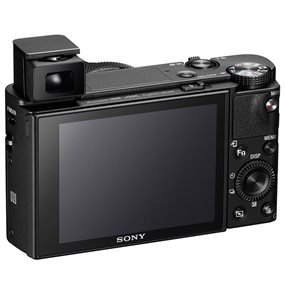
Отзывы о Фотоаппарат Sony Cyber-shot DSC-RX100 II
646 отзывов пользователей o Sony Cyber-shot DSC-RX100 II
Пользовались
Sony Cyber-shot DSC-RX100 II?
Поделитесь своим опытом и помогите другим сделать правильный выбор
To highlight some improvements and changes:
1) The Wi-Fi/Smart Remote app works better
When you power cycle the camera after turning on Wi-Fi, the Wi-Fi is already enabled. In other words, you can turn the cam off, then back on, and the Wi-Fi is connected and ready to go.
Depending on your shooting mode, you now have the ability to change certain settings via the Wi-Fi such as exposure.
The overall connection is much, much better. With the RX100M II, the connection constantly drops, lags, disconnects, etc. There is still some of the with the M III, but not nearly as bad.
2) Better Video
Dealing with AVCHD/.mts files is a pain. The XAVC/.mp4 format is amazing and allows recording at 50mbps. The quality is out of this world.
3) More stabilization options
They've included a new "Intelligent Active" mode which has a pretty big crop factor. I don't recommend using it unless you have to (such as riding a bike on gravel). I suggest using Standard mode or leaving it off if possible, allowing for the least amount of crop and better quality. Noise levels on Active and Inteliigent Active are noticeably high.
4) Better exposure/metering and focusing
The problem with the RX100M II is that it has problems with focusing on the foreground. You had to go into macro mode, which is a pain and not suitable for video. It also has problems with exposure and brightening subjects that are against bright lights. The RX100 MII improves on all of these issues.
I highly recommend this camera for video. It's hands down the best handheld camera for video in this price range.
Suggestions to Sony:
A backlight compensation function to further improve brightening subjects that are against lights. I still found shots that would be ruined because the camera would darken a subject in the foreground to highlight everything in the background. Very annoying!
On the video end, the XAVC-S is a great codec (but maybe overkill for the quality the camera can deliver). I tend to use AVCHD to save card space. In video mode, the camera will crop heavily unless you turn Active Steady Shot off. This is counter-intuitive since turning it "off" actually leaves the optical stabilization "on" and does not crop the image. I'd recommend people shoot in this mode and learn how to keep the camera steady. Not only does the Active Steady Shot get rid of your nice wide-angle, it softens the image.
I hate the video mode on the dial. It chooses really bizarre frame rates, really inappropriate for video filming. Instead, I choose shutter priority so I can keep the shutter at a consistent 1/60 of a second, then turn ND on or off and tweak exposure with the +/- adjustment.
The microphone is not great. Any wind will blow the thing out regardless of whether you engage the electronic wind filter. (Note: electronic wind filters are pretty limited, they just roll-off the bass). With no place to put an outboard mic and no mic input you don't have many options here.
If you want a good video DSLR, look at the Panasonic GH4. If you want a pocketable camera for photos that you can take occasional videos, the RX 100iii does a good job.
Got the sony battery and 2 aftermarket batteries -- they work fine new! Also like the separate charger.
Otherwise bought a VERY tight-fitting kodak zipper hard-case that barely fits this (Kodak 1972736 Hard Camera Case (Black)). I can wear it on my belt in front and it's fine unless I run. It can go in a pants pocket too but with the belt clip that's pretty bulky.
Oh and I used those clear mini drawer-stop bumpers to add grip -- it's truly a slippery sucker (not as bad as a naked iphone but similar). I put on 3 of those bumpers (I had these nice fat ones) and that's worked like a charm.
1) This Camera is small. Good and bad in some ways. Great to put in your pocket and go. Small enough to be carried everywhere. I even put it my pocket when I go bike riding. This size camera also brings an other consideration. . . how big are your hands? Mine are average for a male. However, I am having to get use to holding the camera correctly for its size. When holding the camera with my right hand to shoot, it is difficult to not press the "info" button accidentally at the bottom right hand corner. Just press it again to turn off. Also difficult to not press the flash side of the control wheel accidentally. Both just inconvenient, just hard to get use to. Sony has designed a rubbery grip at the top next to the "Record" button but I tend to want to hold it at the bottom corner.
2) Highly recommend getting the Sony AG-R1 grip or equivalent. You will definitely need additional grip assistance on the front side of this camera. It literally is so small and compact that anyone's hands have to adjust to this little gem of a camera.
3) Great pics so far and I'm not not even accustom to all the settings. A little bit difficult to control highlight areas so far but will be fun to get to learn more of this camera's traits. I take pics for a living and this camera is just plain fun to use. The flash is quite versatile in that you can adjust the tilt direction of the flash but will have to hold and tilt the flash head yourself, there is not preset adjustment built into the flash. My only real complaint so far is the refresh rate, a little slow but certainly acceptable, just not great in that aspect.
4) Auto-focus in Macro setting is not perfect. May need to adjust the focus area smaller to help auto0focus feature. It tends to falter in this area a little. But manual focus is always an option too, so no big deal.
5) Love the "control ring" to the rear of the lens. You can set this to function how you like. The default out of the box seems to be to control zoom.
6) Do not expect a "real" instruction manual with the product. To get that you will need to visit the Sony website and type in the model number and download the PDF of the manual.
7) Considering this camera and its size, having it shoot in RAW format and with a full 1" size sensor is the best part ! Hard to find that on a compact digital camera.
So far not disappointed in this little gem of a camera. Will update later after using the camera more.
I did not find the "grip" issue as in other reviews to be an issue. I always use the wrist tie anyway.
THE WONDERFUL STUFF ABOUT IT
In sum, for someone who's not a digital camera expert who wanted a compact camera, great pictures, and fast "clicks," this is perfect.
I wanted a camera that was pocket-sized but functioned like an SLR for these reasons:
1. I wanted great-quality pictures
2. I wanted a camera that took pictures quickly so I can "catch up" with my toddler who won't often times sit still for pictures.
This camera gave me that, and I LOVE IT!
I'm not a camera expert. I just wanted to be able to take good pictures of my toddler.
-This is easy to use even if I don't know all the camera's intricacies (no time yet to peruse the manual.) I mainly use the "Auto" mode, and it's perfect.
-Even dim-light pictures come out great. It looks like I have an external spotlight. ***I hardly ever need to use the flash.***
-It's not bulky - fits in my pocket or purse. I can bring it everywhere without feeling like I'm lugging something around.
I think the design has been nicely and intelligently thought out. There's a clip and velcro attachment to secure the camera in the case but the lid opens easily at the top making it quick and easy to access the camera (much better than a zip). The velcro attachment at the back allows you to quickly attach and detach the case from your belt without having to undo it. It also has a very cleverly designed double velcro mechanism that prevents the case from becoming detached from the belt accidentally. There's also a nice quality fully adjustable neck/shoulder strap with clip on metal attachments included.
All in all this is a really excellent camera case for the RX100M2. I can't really fault it, hence the five stars. Much better than the Sony's own brand case I bought previously.
Update 8/9/14: Because I have been primarily using this camera for video, using the higher bit rate XAVCS setting has been VERY disappointing. It seems like Sony decided to put all of their design efforts into the video and totally disregarded the audio. For a camera that uses uncompressed LPCM, they still manage to yield poor audio. This is probably the worst audio I have ever experienced with all of Sony's cameras (I have owned 6 previous cameras). I really do think that the Sony marketers figured that with the growing number of consumers that do not use full-range audio systems to view the video and more into mobile devices like tablets and smartphones, the average user would not know the difference. I mean the bass is almost non-existent and highs are very muffled. This is very noticeable when you connect into a home theater system.
- It has lots of functions, so it pays to take an hour or so when its new to figure stuff out.
- We do not use most of the bells and whistles, but a camera "expert" friend is around he has helped usmake the most out of this camera's extensive features list.
- Highly recommend the Sony LCJRXC/B Jacket case- when its hot the camera can get slippery and the leather case gives a firm grip, as well as protecting.
- We love the two different Auto modes- one for simple shots and one more advanced. Practice with these.
Overall we are very happy with the purchase and we expect this camera to last another couple years before we have to move on. Money well spent!
Pros: nice and small; generally, very good results in "perfect mode" (see "cons"); "selfies" easy to take with rotating lcd display, bracketing modes make for very pleasing results in mixed lighting; better than expected battery life; clear, strong colors; great for travel; great detail at 20MPs; many many options/features.
Cons: power-up to photo-ready is a tad slow at about 2-3 seconds; bright backgrounds are washed out in perfect mode (use bracketing to correct); lcd screen scratches (buy a protector); smooth finish is a little slippery (buy a small grip); very expensive; very limited zoom; Sony's Android PlayMemories with WiFi to download the photos to a Sony Xperia Tab Z took about 15 tries to get the WiFi to work and connect to the tablet (no excuse for poor quality of software!).
On a trip to Utah, I took over 1000 photos in RAW mode on a 64GB memory card and clarity and colors snap out. I found the biggest drawback was washed out colors in mixed lighting (bright background, shaded foreground) and should have made more use of bracketing. Software helped correct some of this, but not totally.
Note: I am coming from a Nikon D700 DSLR with 4 lenses (I got tired of lugging it all around), and this compact camera was/is very, very convenient for travel while still offering high quality images. I never used the pop-up viewfinder which may have accounted for the good battery life.
1. Image quality: The best you can imagine. In challenging dark situations, the camera really shines. I took many pictures inside churches and museums, without flash, and they came up impeccable. Even with the zoom they were great. I took pictures at night during a cruise on the Danube in Budapest, and photos of the illuminated city were excellent, even during the moving vessel in a windy night!
2. Battery life: I bought two extra batteries and carried them around, just in case, but I never used them. The battery provided with the camera lasted two days before needing charging, with moderately heavy use.
3. Size and handling: I bought a snug camera case, and I carried it in the front pocket of my shorts or pants. With jeans it was a little too tight for comfort, but possible. Whoever says the camera is not compact enough better use a cellphone instead. The camera is very small and has a slippery grip, so be careful when handling.
4. Controls: I found the controls and menus easy to use, but there are so many options, that I am still learning all the details. The flash is a little flimsy, but very useful. I never used the viewfinder, since the screen was clear enough, even under bright sunlight. The zoom was enough in most situations.
5. Price/value: At $800, the camera is not cheap, and friends were asking me, "$800 for a compact?". However, I believe the quality of the camera is well worth the money and I am very happy with my purchase. Very highly recommended!
Pros:
1. Image quality is the best I've seen on a compact, probably as good or better than my old Sony a55 DLSR.
2. Auto focus is fast and accurate, as long as you're not shooting through a dirty window.
3. The built-in flash is surprisingly powerful.
4. Front control ring multi-function is intuitive and easy.
5. Menus and control layouts are familiar to existing Sony DSLR users.
6. Lens zoom range is very useful, and f/1.8 at the widest end is helpful in low light.
7. Decent low light performance, which includes image stabilization.
8. Small size opens new possibilities for portability, and less intimidating when shooting candids.
9. Pretty good battery life.
10. Solid build and hand feel.
11. Can be charged with any micro-USB cell phone charger
Cons:
1. Manually adjusting shutter speed using the back control ring is a hassle. One false push and you've turned on your flash instead of changing your shutter speed, since the ring serves multiple purposes.
2. Manual focus is difficult, since it's electronic without the feedback you'd get from a regular lens. Focus peaking helps, but the focus magnifier just makes things worse.
3. Auto focus differentiates poorly when shooting through dirty glass, and there's no way to select a focus point, as with a DSLR.
4. Auto WB is not as accurate as I would like, tending to be warmer than necessary.
5. When shooting in auto mode, the camera defaults to higher ISO instead of larger aperture in lower light situations.
6. The images are still somewhat noisy at high ISO, above 800, but acceptable.
7. No GPS
8. Sony Play Memories cellular app is quirky, and you can't access the photos on your phone unless the camera is connected. I have to turn off cellular data on my Samsung GS4 to get the phone to connect, then turn it back on to share a photo, losing the camera connection.
Despite the shortcomings, I'm very happy with the RX100II, mainly because the image quality is just so good for a compact, and while not quite offering the level of control of my a99, it comes pretty close.
The fact that the case was not real leather as the Amazon website suggested, really had no bearing on the subject as the price had implied that it was not leather.
The size of the case is appropriate for larger cameras such as the Sony RX100 Mark 2, but is so large that the LF1 would have been lost inside it - and it would have been such a large lump on the belt that to carry it all the time would have been irksome.
To declare that this case is of a size appropriate for carrying the LF1 is like suggesting that you need a Transit van to carry golf clubs around. This is why I was disappointed.
For the larger cameras it would almost certainly be appropriate and useful, and it seemed well made and thought out with a soft pouch for the camera to fit in, before being placed in the imitation leather pouch shown. It could also be carried on a shoulder strap, which would also have worked, keeping the camera to hand - but was not how I intended to use the item.
The camera, however, is brilliant.
Things I love about this new revision:
-Excellent and very useful EVF. Slides back into Camera when not in use
-Screen can go 180 for self-portraits or to monitor when using video
-Normal Burst Mode shoots good quality
Improvements from the Mark II except for the following:
1) Hot Shoe detachment has been removed. This is a big disadvantage when using the camera for video. I was unable to attach a microphone or light units easily because of this. Sony should integrate the flash into the body (Like the panasonic LF1) and return the Hot Shoe.
2) Lens aperture has been improved, but you lose some telephoto range. While this isn't a huge disadvantage for everyday shooting, it is when you consider you can't remove the lens on this camera.
Things I would like to see:
i) For the amount of money your paying for this camera, it would be a much better value if they changed the lens to a 5x version with either 24-120 or 28-140mm equivalent. There is Sony's Clearzoom that gives you an extra 2x of reach, but I wouldn't go beyond that and use the digital zoom because the image suffers too much.
ii) It would be nice if it was touchscreen
iii)No GPS functions
Don't let this cameras small size fool you. It's a great backup/B Camera that I would consider a professional instrument. I hope Sony addresses some of these issues with the Mark IV or creates a spin-off like the RX100 IC in which you can change out the lenses. I'd love to be able to have a Prime Lens, 28-140 and telephoto I could install. The Nikon 1 V3 is doing this already, but the price is too much right now.
- Great camera, very sharp pictures.
- Fits in your pocket!
- Amazing (revolutionary) amount of light-gathering ability for a camera of this size. (1" sensor)
- The in-camera processing (esp. sharpen/denoise), for the jpg's, seems to be better than what I can get out of Lightroom (from raw).
- Photos beat the heck out of any cell phone camera in existence.
Cons:
- The AWB (auto white balance) is a bit weak, and definitely tends toward cool (rather than warm) renditions of the scene.
- You often have to wait on the memory card to catch up.
- Not as good in low-light as an APS-C or larger sensor, of course, but the quality you do get (in low light) is still pretty astounding for a pocketable camera!
Tips:
- Be sure to buy the FASTEST possible memory card with this. I bought a class 10 SDXC card (90 MB/sec) and even with it, after you take a pic, you often have to wait ~1.0 seconds before you can review it - it'll say "Please wait... writing to memory card." I've never experienced this with other cameras, and I find it pretty annoying.
Image quality is excellent from this camera. I'd go out on a limb and say that this is one of the best cameras that Sony has made to date as far as image quality is concerned. The camera takes well-detailed, colorful photos and is clean through ISO800. But can take respectable pictures through ISO3200 (although noise reduction does kick in at that sensitivity and does smear some fine detail at closer inspection). But the cameras does a better job at balancing out noise, noise reduction, and detail retention at least a stop better than the original RX100. It compares nicely with APS-C DSLRs at low and mid sensitivities. I find the exposure behavior has also improved and the camera is less prone to overexposure when compared to its predecessor. Color output is punchy and contrasty but most colors are reproduced very well. The lens is fairly sharp throughout its entire focal range, although I think the new RX100 III is even sharper at telephoto than the RX100 II is at 70mm.
Please note that I do not do video so I can't really vouch for the quality of it, although the reviews from others have been uniformly positive.
The camera's performance is pretty good. Autofocus speeds are decent in most lighting conditions but the camera does have some accuracy issues in low light. This is one area where the Canon G1X Mark II is a little better. At times, in low light shooting conditions, the camera will not bother to pinpoint the subject you are trying to shoot and just throw a huge box over the whole scene. This is something I have seen with other Sony cameras as well. It's better in this condition to take control of the AF yourself and move the focus point to where you need it. Image stabilization, which was an issue on the RX100, and is mostly rock solid on this model.
I don't understand why Sony is being so block headed about the camera design. More specifically, why there is no indent or grip on the front. This is true of the 3rd gen model as well, which is just about to be released. Luckily the extra Sony grip costs $10-$15 but I consider it essential because the camera is much more comfortable to hold. So if you order this camera, don't order it without the grip.
Despite some design quirks, this camera line from Sony still stands on its own terms of providing big image quality in such a small package.If you don't feel you need the faster lens or the built in EVF, you can save some money and get the RX100 II instead. Don't bother with the original RX100. It's not a bad camera but this 2nd gen model has all the quirks worked out and has even better image quality.
My only complaint so far is the functionality/location of the flash. It is right where you put your left finger to hold the camera with your left hand. This camera is very heavy and I'm afraid that I'll drop it if the flash pops up with my finger sitting there. Just a bizarre design, but I suppose I will get used to it.
One other complaint - the AC adapter that comes with the camera does not provide power to the camera. It charges the battery, yes, but if you plug it in and attempt to review your pics or play with the camera, you can't. If I am paying $600 for a camera, I expect it to come with a slightly better AC adapter! I just found another 5V adapter laying around (from an old cell phone) and I use that and it does provide power.
UPDATE: Sony has corrected the skin softening issue. As far as the barrel shadow is concerned, maybe I was being too picky. Updated from a one star to a 3 star. I still prefer not to own this camera on account of how it feels in hand, just too small and square shaped. It just doesn't feel very secure in my hands, like I'm going to drop it at any given moment. I ultimately went with the Canon G7X which feels 10x more sturdy to me.
replacement that might improve on photos I take of my grandkids as well as a pocket camera to keep on hand on photographic trips when I am principally using a DSLR. I was considering the Fuji X100S and the m3 RX-100 Sony DSC-RX100M III Cyber-shot Digital Still Camera. I decided on the latter, in part because of its smaller size. Having had the RX100m3 for about 3 weeks now, I can say that there are several improvements over the original RX100 which I find useful. First, the electronic view finder really is useful when it is very bright making it hard to see the subject with the LCD. Second, having a wider angle really does help getting more into the picture especially when you are close to the subject. And the improvement in the low light capability when using the telephoto is also appreciated. On the negative side, I did find that the battery did not last as long on a single charge as with the original RX100. Also, I was quite surprised to find that the flash does not automatically pop up even when set on fill flash when you go to shoot your picture as in the original RX100 and stated in the guide to using this camera. Instead one has to manually force the flash to pop up using a very hard to find button. I haven't yet had a chance to try the 120 p video or the built-in WiFi, two additions which I am looking forward to using (when I figure them out, something that is not as straightforward as it sounds and requires a new memory card,a SDXC card, as well as new software). I also do still wonder whether the Fuji X100S would have shown a more remarkable improvement in my pictures.
A lot of advertising material implies that the WiFi feature of this camera will work on smart iPhones with iOS less than 7. But in early February 2015, at about the time I purchased the camera, Sony (and Apple) eliminated that version of the app, and upgraded to one requiring iOS7. My older phone won't do that. I have contacted Sony, twice, and gotten no reply as to where I might obtain the older app, which is still mentioned in the product brochure that comes with the camera.
If you have iOS7, or Android, or don't care about the WiFi, then this does not concern you. Note that Android devices with near-field communictions have an additional capability (not all Androids have this, and currently no iPhones do).
Can't blame Amazon, I contacted them, and they tried to help. But it's not Amazon's problem. I'll keep the camera.
Top 3 favorite things: 1) The crisp clarity of details in the pics, even when cropped. 2) I was very impressed with the auto low light adjustment, whether taken at night or indoors without a flash, the shots from the RX100M II were "night and day" better than I've gotten from any camera, and 3) The macro capability was not only fun but gave that crisp foreground with the blurry background effect. There is so many things with this camera, that I anticipate I will have fun discovering many more bells whistles in it that I don't even know about.
The bundle: All of the products that came in this package were of good quality, and made this a phenomenal deal. I used all of the items just in the first three weeks of my trip, and I expect I will continue to get a lot of use out them since I now favor this smaller camera now over my DSLR.
I've attached a few examples photos; NOTE that the last 4 pics are all cropped from the same photo (5th from the end) to show the level of detail even when cropped more than 75%.