

Фотоаппарат Nikon D90 Body — 844 отзывов, плюсы и минусы
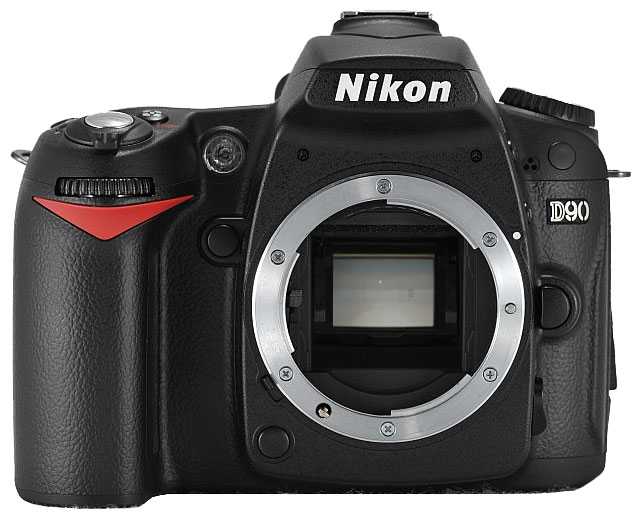
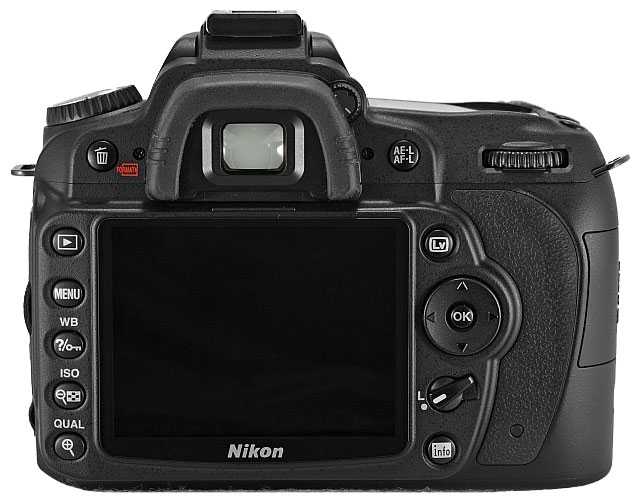

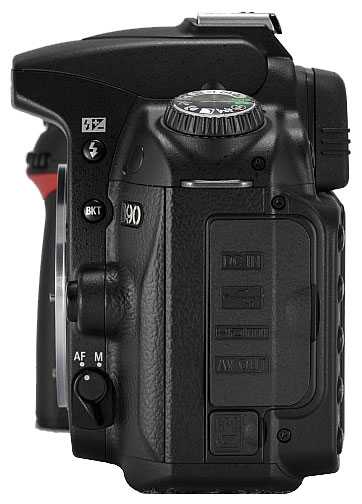
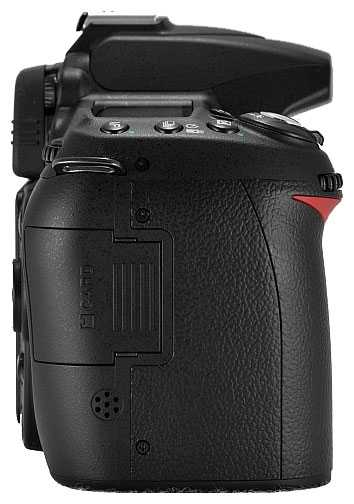


👍Почему стоит купить Nikon D90 Body - Преимущества по отзывам пользователей
- Отличное качество изображения при высоких ISO (до 3200):
- Минимальный шум, естественные цвета и высокий динамический диапазон; многие пользователи отмечают, что ISO 1600–3200 дают рабочие снимки в слабом освещении без вспышки, лучше, чем у предшественников (D40/D50/D60/D70).
- Active D-Lighting сохраняет детали в тенях и светах, упрощая съёмку в сложных условиях освещения.
- RAW-файлы дают отличную детализацию для постобработки, цвета насыщенные без пересыщения в JPEG.
- Удобная эргономика и управление:
- Хорошо сбалансированный корпус, комфортный хват для средних и больших рук; верхний LCD-экран показывает все ключевые параметры без отвлечения от видоискателя.
- Два командных диска для быстрой смены выдержки/диафрагмы/ISO; кнопки WB, качества, metering вынесены на корпус, минимизируя меню.
- My Menu для часто используемых настроек ускоряет работу; интуитивно для перехода с D40/D60/D70.
- Быстрый и точный автофокус (11 точек):
- Отличная работа в динамике (3D-трекинг) для спорта/движения; совместимость с объективами без мотора AF (D-type), включая дешёвые primes (50mm f/1.8).
- Скорость AF-S линз высокая; центр-точка точна даже в слабом свете.
- Высокая автономность батареи:
- До 1000+ снимков на одном заряде; CMOS-матрица экономит энергию по сравнению с CCD (D80/D200).
- Меньше разрядов в live view/видео; хват MB-D80 удваивает время работы.
- Качественный видоискатель и задний LCD:
- Пентапризма с 95% покрытием, яркий; 3" LCD 920k точек чёткий даже на солнце.
- Гистограмма и данные на экране для точной оценки экспозиции.
- Хороший китовый объектив 18-105mm VR:
- Резкий на 24–70mm, VR даёт 3 стопа стабилизации; универсальный диапазон (27–157 экв.) для повседневной съёмки.
- Богатые опции кастомизации:
- Picture Control, авто-ISO с лимитами, AE-L/AF-ON; подходит для роста от новичка к профи.
👎О чем стоит задуматься перед покупкой - Недостатки по отзывам пользователей
- Частая ошибка F-- (проблемы связи объектив-камера):
- Многие (20%+ отзывов) жалуются на блуждающий контакт с 18-105mm VR; требует перемонтировки объектива, прерывает съёмку (спорт/события).
- С Tamron/Sigma реже, но Nikon-сервис обязателен; возвраты/ремонт под гарантией.
- Слабый видео-режим (720p):
- Нет AF во время записи, rolling shutter (волны при панорамировании); моно-аудио, лимит 5 мин; не для динамики (спорт/дети).
- Медленный фокус в live view; контрастный AF тормозит.
- Медленный live view и AF в нём:
- Контрастный AF 3–6 сек; нет phase-detect как в Canon; бесполезен для динамики, только макро/статичные кадры.
- Отсутствие влагозащиты и магниевого корпуса:
- Пластик прочный, но не для дождя/пыли (vs D300); хрупкая дверца батареи/SD.
- Заполнение буфера в серийной съёмке RAW:
- 4.5 fps, но ~8–10 RAW+JPEG; пауза 2–3 сек; не для спорта (нужен JPEG или D300).
- Горячие/мёртвые пиксели на сенсоре:
- Появляются на высоких ISO; Nikon маппит бесплатно, но рецидив; заметно в тёмных областях.
- Сложное меню и мелкие огрехи:
- Неинтуитивно для новичков; нет dedicated ISO-кнопки (низко); metering иногда переэкспонирует.
*Плюсы и минусы, которые пользователи называют чаще всего на основе практического опыта использования.
844 отзывов пользователей о Nikon D90 Body
Пользовались
Nikon D90 Body?
Поделитесь своим опытом и помогите другим сделать правильный выбор

Скромный эксперт
10.04.2010
10/10
Оценка пользователя
Великолепно
I bought this camera 2 months ago at my local camera shop, with the 18-105mm kit lens as a complete kit as I had the IRS and the Gov't to thank for the opportunity and no, it was NOT the least expensive price but buying locally was worth more than mere cost savings IMO.As to the camera itself, I chose it based on my photographic style in that I shoot a lot of city based landscapes, street scenes and the like and like to get arty every now and then and wanted a camera that could be flexible, had good image quality and would allow for good high ISO performance and had already the Nikon Cool Pix P5000, an advanced P&S with full manual exposure but alas, no RAW or manual focus but I could tell it what to focus on however and was very familiar with the menu system and decided to stick with Nikon. Budget being an issue here in that I could not go much over $1200 for the kit, which would include the sales tax so that left out anything above the D90.My research revealed a lot of good about the D90, things like better viewfinder, able to auto focus more lenses as it has the in body focus motor, built in flash commander and a better ergonomic layout amongst other things - and has many of the features also found on the D300 as well and I'd also checked out the D5000 too but in the end, liked the D90 better with it's more direct access to the more common features via the 2 command dials and less menu diving for the basics, the better penta prism viewfinder was a boon since I oftentimes find myself shooting in low light, dusk/night while out and about using what available lighting there is and the camera's superb high ISO performance, something cameras like the D80 with it's older CCD based sensors just don't do as well as with cameras that have the newer CMOS sensors.All that said, here are my thoughts on this camera, based on just over 8GB of images or just over 400 shots taken in 2 months time.Metering, the camera even when the E/V is set to 0.0, it still sometimes slightly underexposes things when in either center weighted or spot metering, and it's especially true when using Matrix metering (really good for certain situations where spot or center weighted won't do) so I usually use either spot or center weighted, even though I shoot RAW. Overall a lot of that is what you meter on that will affect how it meters and by that I mean, meter of the bright area of the image and use that to set your exposure or you risk blowing out the highlights if you meter on something dark. One negative is that this camera can be prone to blowing highlights if you are not careful when metering in the first place.Auto focus, from what little I've used it, it seems to work fine but some claim it tends to back focus some (some even claim it front focuses some too), which means that if you focus on the eyes, the focus may NOT be right on them, but just behind or in front of them. I have not used it enough to notice if my particular copy does either as I shoot mostly in full manual mode. Now, to ensure it WILL auto focus, you have to put the camera's switch in AF mode and the switch on the lens to AF to ensure it works, also, you won't see it focus until you half press the shutter to activate it and it is fairly quick to focus in most situations.Ergonomics, I find this camera quite intuitive to use as it has plenty of quick access buttons for dedicated things like the menu, the image playback and buttons with dual functions such as the WB/help/image lock button, the ISO button just below it that also zooms in on images taken and QUAL(ity) button to set the image from RAW to RAW+Jpg or Jpg and their 3 levels from fine to low that are on the left of the LCD screen, the joystick is a pleasure to use and adjusts it's function depending on what you are doing, the LV (live view) button to turn that on and off and a sensor lock switch below the joystick and below that is the info button. On either side of the viewfinder are 2 buttons, one is the delete and the other is the AE-L/AF-L lock button and on top around the top LCD display are buttons to access things like the remote sensor, the burst modes etc, the metering, E/V and Auto Focus settings and lesser used buttons on the front such as flash (flips up the flash), exposure bracketing and the DOF preview along with the lens lock button when un-mounting the lens.This camera has 2 command dials, making it much easier to set shutter and/or aperture or they can control other functions such as when you press down the metering button on top, the back command dial rotates through the metering options, the WB button will allow you to set the WB to either Pre or one of it's other settings (pre allows you to set the WB yourself by taking a photo of something white or gray and it stores it to reference from for WB) are just 1 example. If you press the ISO button and rotate the back command dial, you can adjust your ISO. It may take a little bit to bet used to where everything is but it will fall naturally
Скромный эксперт
09.01.2009
10/10
Оценка пользователя
Великолепно
Well, I'm no camera expert, but you can get my opinion as an amateur photographer, feeling too limited by the point-and-shoot and looking for an equipment upgrade.And what an upgrade this is! I am in love with this Nikon, for the most part it does everything I need quite well. Colors are excellent, vibration reduction is great, and it is low-noise. I was fairly unfamiliar with all the functions, but a read through the manual made everything very intuitive, and I am surprised how fast I caught on. So I also enjoyed to find that it was easy to learn.One of my favorite aspects is the ability to do some photo editing on-camera:- You can do a quick re-touch, which automatically adjusts levels for better contrast and color balance.- apply filter effects: warm filter, skylight (I still don't know what that is), blue filter, red filter, green filter, even cross-screen (more customizable than the actual filter, but not as organic and worse in quality than actual filter, so it has its pros and cons against the actual).- adjust color levels on a four-dimensional color grid.- adjust D-Lighting. This is a really really awesome feature to have, definitely a favorite!- fish-eye effect, as well as a sort of reverse fish-eye to correct for distortion- resize- tilt- RAW processing- crop- and probably more that i am forgetting- monochromatic in BnW, Cyanotype, and Sepia. The latter of the two being adjustable in saturation. You can also customize it further in shooting mode - you can pick almost any color and saturation!I especially enjoy the absolute customization you have over the white balance. You can select a preset, make your own presets in several ways, or adjust color temperature easily before every shot. Actually you can customize almost anything on this camera, and I love having my control. Most settings are really easy to change with the external buttons, without going into the menu.Live View is also a huge plus, but less helpful than I imagined. Apparently using Live View for extended periods of time damages the camera's sensor, and the camera has a very difficult time focusing in LV mode.There is a limitation with the viewfinder; it only shows about 95% of the space (that exists in all Nikons in this range, as far as I'm aware, and I don't know if other brands are any different).The movie option is good to have, but even though it's HD, the quality isn't that great so it's just something that's nice to have as an option.The only thing I can try to complain about is the camera's sensitivity to temperature. But this is an issue with all cameras, so there's nothing that can really be done. The manual says not to use the camera in below-freezing temperatures, but I have done so and so far it still works (I got a protection plan so I'm not too worried about ruining it to get some dazzling snow shots!). If it's in the cold for long periods of time, however, it begins displaying error messages. It seems that it loses contact with the CPU of the lens and does not detect it. (Actually, my other qualm is that sometimes it seems to lose this contact for no particular reason, which is annoying, but all I have to do is shift the lens slightly tighter onto the mount. I don't know if this is a problem with all cameras, but it seems that mine in particular isn't perfectly crafted, that the lens doesn't lock on the mount tightly enough, or something). If it's really cold, sometimes it displays another error and freezes up, so I can't even turn it off. So my recommendation is to keep the camera out of the cold as much as possible, and what has kind of worked for me is keeping it zipped up under my jacket between shots. Of course, it's better to stay out of the cold altogether.One other qualm, actually. I have noticed after transferring the photos that they are not the standard length/width ratio. They are slightly more panoramic/narrow, with black strips on the top and bottom filling out the rest of what should be the photo. I have no idea what this is all about, and I haven't noticed any settings for this, so although it might be my fault completely, I don't have evidence to believe that it is.Overall I am very pleased with my baby, I named her Delila, and we are going to live happily ever after. Or rather, until I have progressed enough as a photographer to crave more sophisticated equipment.So that's my very lay-man opinion. I recommend this camera to anyone who is looking for a hardcore upgrade from a point-and-shoot, and those who highly value having control and customization. For most intents and purposes, this camera will get the shot for you...EDIT...the matrix metering and the D-Lighting work great; the camera has a great sensor and captures an very good range of shadows/highlights.
Скромный эксперт
14.09.2008
10/10
Оценка пользователя
Великолепно
I start by stating that we are still waiting for those that can do the most critical of reviews concerning image quality (IQ), etc. Therefore, this will be a general reference of the features based on experience, the competition, and my own 2 cents.For those of you familiar with the D80, this camera is very similar. The 3" LCD is the first obvious difference. Besides being larger, it's much sharper, allowing more critical examination of photos, and, combined with live-view, a much greater ability to use for critical focusing. The only, very slight drawback, is the larger size seems to have required the toggle on the back to be slightly redesigned, and I feel it is a bit more uncomfortable (on my thumb joint) to toggle with the camera raised to my eye than on most Nikons.A closer look of the externals show a bit of difference in the plugs. The place for a remote control cord now is also an input for an optional GPS device. Cool, but Nikon hasn't released pricing for this piece yet, nor do we really know how well it will work, nor any of its complete functions. The camera now can output HD, which is a big boost if that feature is used.Going into the inside mechanics to things we can't see, the frames per second (fps) has been increased from 3 on the D80 to 4.5 on this camera. That's a tremendous advantage to budget oriented sports photographers. Going hand-in-hand with that feature is that the shutter has been upgraded to a 100,000 cycles. We like to think that shooting extra frames are "free", but shooting at high speeds puts a big burden on the camera's durability. We like to joke about 100,000 being a lot, but at 4.5 fps, that's about 6.25 hours until you camera's toast!Also inside inside is a cleaning system to keep dirt and dusk off the imaging surface.OK, so now let's go to the image quality. From the samples I've both shot and seen, they look good. But we really need to wait for critical reviews to be absolutely certain. From the D80, we've upgraded from 10 to 12 megapixels, which is nice, but the better part is we've gone to a CMOS sensor. This should have two results: 1) lower power consumption; and, 2) better low-light performance. The former is a certainty, CMOS sensors are way more power efficient than CCDs. The latter is based on experience. CMOS sensors tend to have nicer performance in low light shooting when we have to crank up the artificial "film" speeds to things like 1600 ISO. However, adding more pixels seem to make the situation worse. Based on previous experiences, and with the advances made in technology, the D90 should produce both sharper images and better low-light noise control than the D80.From just "looking" at the images I've shot, they look great in all kinds of conditions, although nothing I've shot would be considered "demanding". Sharpness is great, colors look real.From a spec point, the only thing that might be a bit disappointing is that the images are 12-bit and not 14-bit (like the D300). For those of you who shoot only JPEG (.jpg) images, that's no concern. For those who shoot RAW (.nef on Nikons), then 14-bit means that more data is recorded in the process of turning the image (taken by an analog sensor) into a digital file (called A/D conversion). If we go back to work with these files, there is more data available. This has some, limited, practical practice today. The biggest difference will be somewhere down the line when computer monitors allow more info to be displayed, and when printers allow more to be printed, etc. Twenty years from now you'll probably be able to make much better prints from today's images.Now let's touch on video. I think it's a great thing that video is included, because, at worst, you don't have to use it! What little I've done with the camera looks good (but I've only played it on the LCD), and the sound playback, although mono, was MUCH better than I expected. But let's not try to compare this with the best camcorders on the market. First, the HD clips are limited to 5 minutes. That simply won't work for many events, and even though you don't see many continuous 5 minute clips in "serious" productions, most of what you see are edited down from longer clips. The 24fps is a trendy thing today on BluRay players, because that's what feature length movies are shot in traditionally. However, 30fps is more typical video, which helps stops action better. Autofocusing is not available with video, which might be a hindrance for some people.My biggest disappointment was that Nikon didn't include "voice memo" capability, available on all Coolpix cameras. Since you have a microphone for the video, this feature allows you to attach voice memos of about 20 seconds to a photograph. This is a great way to connect a name to a face or place. Boo, Nikon, for not including this simple feature!OK, so how does it compare to the competition? We first must look at their biggest competitor, Canon. Price wise, the D90 is betw
Скромный эксперт
30.03.2010
10/10
Оценка пользователя
Великолепно
I have owned this camera for over a year and have taken thousands of pictures. I bought my first digital camera back in 1997: a Sony with a floppy drive storage. Boy have we come a long way! When I compare this camera to some of the full frame models like the Nikon D3 and the upper end Canon models, the D90 holds its own considering the other cameras cost over $6000 more! I know the D3 has twice the pixel count (24.5mp to 12.4mp) but the only time the human eye (at least mine) can see a difference is when the picture is blown up to poster size or major cropping takes place. The D3 also has a faster continuous shooting speed of 9 frames per second (fps) to 4.5 fps for the D90. While this gives a definite advantage to the D3 in shooting fast moving sports activities, 4.5 fps is still pretty fast. The "quality" ISO setting is double the D90 but I find ISO 3200 on the D90 more than adequate and rarely use that. Finally the D3 is a full frame camera giving it an advantage when shooting with a wide angle lens. Of course you could argue the D90 has an advantage in the telephoto end since it extends the focal length.Don't get me wrong, I am not bad-mouthing the D3: it is a fine camera. My point is the D90 has virtually all the features the D3 has except the ones I previously mentioned and you can take the $6000 you save and can spend that on top quality lenses.So, what do I like about the D90? Well my "Top 10" (in no particular order): 1) Beautiful large high resolution LCD display 2) Movie mode: great for spur of the moment video capture 3) D-lighting 4) Button layout and quick access to changing parameters (rarely go into menu when shooting) 5) Live view: I like to manually adjust white balance and you can see the effect in Live View mode as adjustments are made 6) In camera editing functions 7) Info button: when depressed shows virtually all settings in shooting mode and allows key changes to be made when pressed twice 8) Ability to use Nikkor lenses (especially the fast 50mm 1.8) 9) Price ++++ 10) Last, but not least, the beautiful pictures!If you are wondering if I spent the $6000 I saved by choosing the D90 over the D3, the answer is no. I did buy the Nikon 18mm-200mm VR lens ($650), the Nikon 50mm 1.8 lens ($125) (might just be the best Nikon lens ever made on a dollar for dollar basis) and the Sigma 70mm - 300mm zoom ($200). I am about to purchase the Sigma 150mm 2.8 macro ($729). If you check out the reviews here on Amazon for that lens, you will get an idea why I am buying it. I can hardly wait to start shooting in macro mode with that lens. So my total expenditure on lenses will be less than $1800.Lastly, if you are thinking of buying this camera, I can strongly recommend it and also recommend you consider buying it through Amazon. Their replacement policy and support is great. They make it easy to return a product which I have on a couple of occasions and it couldn't have been easier!
Скромный эксперт
20.09.2008
10/10
Оценка пользователя
Великолепно
I am far from a professional photographer, but I take it as seriously as possible while still referring to it as a hobby. I take mostly pictures of people at events and many of my baby son without flash in low light situations.I had been using a Nikon D40x for 1 year and very early reached my limitation with that camera. The Nikon D40x has very nice image quality, but the camera's interface is not suited for a more serious shooter who wants quick single button or dial access to such shooting parameters such as white balance, shooting mode, metering mode, etc. I also felt very limited by the D40x not having an in-body focus motor that would allow me to use non AF-I/AF-S lenses (which are lenses without the focus motor built-in).The Nikon D40x limitations were severe enough that I was about to consider purchasing a Canon 40D until the Nikon D90 appeared just in time.PROS:1. Fantastic set of separate buttons on the camera to control parameters like ISO, white balance, metering, autofocus, image quality, shooting mode, etc.2. Two command dials3. High resolution 920K pixel LCD screen (like the one on the Nikon D300)4. 12.3 megapixel CMOS sensor5. Low noise high ISO capability (for low light shooting) I can shoot ISO 1600 with good image quality with this camera, while on my D40x I could only shoot with ISO 400 and obtain acceptable IQ. I will even use ISO 3200 frequently with very usable results!6. Separate top-viewing LCD screen in addition to the rear high res screen, to show shooting parameters constantly7. In-body focus motor which allows the use of Nikon's non AF-I/S lenses, including wonderful and CHEAP prime lenses such as the Nikkor 50mm 1.8 (~$100 lens!)8. Continuous shooting of 4.5 frames per second9. Small size, although larger than the D40/D40x/D60, it is still substantially smaller in the hand than the D300/D310. 720p 24fps MPEG video shooting capability with incredible ability to use depth of field that I cannot achieve with my Sony High-Def camcorder.11. Eleven auto-focus points (not as nice as the 51 points on the D300, but substantially better than my D40x with its 3 points)12. GPS option13. HDMI output14. Enormous number of options to customize camera and shooting settings to fit your style of shooting15. Fantastic image quality right out-of-box if you don't want to do any post processing16. Terrific build quality17. Top notch camera ergonomics (but this will be a very personal opinion that differs for each shooter)CONS:1. "Rolling shutter" phenomenon while recording video: The D90 CMOS sensor has the same problem that other CMOS video recorders have when recording video. If you move the camera, especially horizontally, you get a "jelly" or "rubberbanding" effect where the image wobbles significantly. It is nice to have the video features, which looks very sharp at 720p, but it is NOT a substitute for a video camera. If you use a tripod, and do not do quick zooms/pans, the video quality is excellent. Without a tripod, however, you may get nauseous watching a wobbly video. The sound is also in monoaural.2. 1/200 flash synch: Not a problem for me, but it might be for you.3. No weather sealing: This is found on the Nikon D300/D3 and even on similarly priced models from other camera companies4. The buffer will fill up after about 8 continuous RAW + JPG (FINE) shots. This number differs depending on the shooting parameters that you will choose. If you shoot primarily JPG, the buffer seems to allow a very large number of continuous shots, but I have not quantified this for JPG only.TIPS:1. Get the FREE Nikon ViewNX software from Nikon's site as your 1st step in your workflow. This will let you examine your RAW images that you can process for either Nikon CaptureNX2 to do further RAW processing or just export to JPG or TIFF for a JPG/TIFF editor such as PhotoShop.2. Recommend buying the Nikon CaptureNX2. It is a RAW converter (if you shoot in RAW) that will read the camera settings properly for export to JPG or TIFF. Capture NX2, however, is not as slick as the Adobe products and Capture NX2 requires a fairly powerful computer, otherwise it can run pretty slowly on a PC > 3 years old.3. If you use JPEGs out-of-camera, consider increasing the sharpness above the default 3 or 4. Nikon uses a very conservative sharpening default setting. Nikon has also decided to change the default JPEG images to match the higher end D3/D700/D300 cameras which produce more neutral images. Consequently, the D90 images that are less punchy than the D40/D40x/D60/D80, so you may also want to turn up the in-camera saturation and contrast.The Nikon D90 has all of the interface features that serious and even professional photographers need with wonderful image quality.
Скромный эксперт
11.05.2009
10/10
Оценка пользователя
Великолепно
After reading recommendations here as well as heeding Ken Rockwell's advice, FINALLY, after several years of indecisiveness between the Nikon D80, D200 and D300, the D90 really stood out for price/performance - I made the plunge. I paired this D90 with the Nikon 18-200 mm lens and the Santechi LCD battery grip, as well as a Delkin silicone body skin and a B+W UV multi-coated filter as well as a Nikon SB-600 speedlight flash. Every part of the camera and lens is now fully protected. ( A slight bit of trimming on the Delkin skin was necessary, along the bottom of the skin, so I could put the LCD battery grip on. Delkin states you can't put a battery grip on with their skin. But if you trim a bit of the skin then it fits perfectly! So no worries there. Get the Delkin skin. It is well worth it!) As a complete unit, it functions beautifully. Speaking about just the camera here, it is ridiculously easy to use, very intuitive, a well thought out design, well balanced, with enough heft, yet light enough for all that it offers. The pictures rendered, and the bright, 3" LCD screen on the back of the camera makes it wonderful to use. The menus are thoughtfully laid out. As for the video mode, it works just fine with the Nikon 18-200 mm lens. Best used in video mode for fixed distance videoing. I vidoed my future son-in-law fishing waist deep in a local river. The video came out excellent. Remember, this is a camera first. Not a video cam. But having the video option is nice, as you have everything within one camera body. This camera is certainly worthy as a semi-pro entry; maybe even as a back-up camera to a Nikon D3 or D3X for a professional photographer. I think the D40 or the newer D5000 would be a better choice for light users who want a few more features than a simple point-and-shoot camera, but who have no intention of really delving into photography and learning all the terminology and techniques involved in lighting, exposure compensation, picture composition, etc. But, if you are serious about photography and want room to grow, or you are a photo enthusiast, semi-pro or pro, you would be hard pressed to find a camera with a better price/functionality point. I purchased my D90 through Amazon via J&R Music, as they had the best price and had the D90 in stock. I received the camera a day after the order was placed. In less than 2 weeks I had taken nearly 1700 shots. I have taken early dawn, early twilight, late night, portrait, nature, time exposures, double exposures, and sports photos in that time. It is nearly impossible to take a bad picture with this camera. It is easy and a pleasure to set up. Once you take the necessary time to learn the camera and all that it can do, you will understand what a joy it is to own this camera. I highly recommend visiting the KenRockwell.com site to become well-educated on photography in general as well as getting a crash course with a simple, no-nonsense approach regarding the workings of the D90 -- well beyond all the sometimes useless and verbose language the Nikon manual for the D90 employs.Bottom Line: The Nikon D90 is nearly impossible to beat right now for the price/function point. TIP: Invest in high quality lens/lenses as it/they will do more for you than the camera, as far as giving you quality pictures. Great pictures are more about proper lighting and exposure than the camera or the lens. Those things merely make it easier for getting that great shot. The photographer is responsible for the composition of the shot. Learn the proper way to compose and you will be well on your way to productive and enjoyable photography!
Скромный эксперт
30.11.2009
10/10
Оценка пользователя
Великолепно
As new grandparents, my wife and I wanted to take photos as wonderful as our granddaughter. :-) We quickly discovered we needed a camera that would negotiate very dim indoor lighting without having to use flash. My wife also wanted a camera that would also be easy to use: turn the dial to Auto/No Flash, zoom, focus, shoot. I wanted a camera I could customize in about every way possible. We considered the D700, but ruled it out because of size and weight, not to mention price. Then we looked at the D300 and ruled it out for similar reasons. While looking at the D300, however, we ran into the D90, a very lucky break indeed. As far as we could tell (and we're amateurs), the D90 blew away the D300 in very low light shooting. The results of the D90 are simply amazing no matter what the lighting. The camera is large enough to be comfortable in my hands and light enough my wife doesn't mind carrying it around. It's a surprisingly easy camera to figure out, especially with the help of a few Web sites and Nikon's lengthy D90 manual. The biggest surprise to me is that photos shot using Auto/No Flash are almost always better than photos shot with tweaked settings. We're shooting RAW, and straight out of Adobe PS3/4, the photos are ready to print. I'm sure we'll grow into this powerful camera and learn what wonders tweaking can accomplish, but it's great to be able to lean on the D90's intuition while we're in the process of developing our own. We did a LOT of research, comparing, and shopping to find the right camera, and the D90 is the perfect fit for us. I usually have second thoughts after a major purchase, but with the D90, my only regret is that I didn't find it earlier.I picked up Nikon's 24-85mm AF-S for peanuts on eBay, and it beats the kit lens hands down. I also picked up the Nikon AF-S 18-200mm VR that other reviewers have recommended; it's matches up superbly with the D90. My recommendation is to buy the body only and then match it up with a lens that best suits your needs. Amazon's price for the D90 is very competitive, plus Amazon makes exchanges easy if a problem turns up (true of other dealers? not so much). Same for whatever lens you buy--Amazon's prices are very competitive. Use eBay to pick up high quality Nikon clear filers to protect your lenses. eBay is also a cheap source for a backup battery. The battery that comes with the D90 recharges quickly and lasts a surprisingly long time on a full charge. Still, there's no reason not to have a charged backup.I must admit my wife and I went into the search for the right photos-of-granddaughter camera with misgivings. What we were after seemed to require a very expensive pro camera. Happily, we found the D90, an extraordinary camera that's both user friendly and capable far beyond our amateur needs. Even priced 50% higher, the D90 would be the best buy out there.
Скромный эксперт
05.11.2009
10/10
Оценка пользователя
Великолепно
This camera is an upgrade for me from the D70. The D70 was a good camera however; the D90 is a great camera. I've had it for about 3 weeks now and it takes great pictures. I've taken well over a 1000 photos to date. I also brought the SB-900 flash to go with the camera and the two combine work superbly. The thermal overload protection on SB-900 is annoying but that's for a different review. Back to the D-90...I currently have not nor do I in the near future plan to use this camera for video so I cannot comment on the video ability of this camera. I'm having too much fun with stills. There are a lot of value added features on this camera. The features I've used the most so far are Commander Mode, Automatic Bracketing and in some post production processes including the D-lighting, filter effects, color balance and image overlay on a some what regular basis. But you don't want to over do it. These processes eat up your battery. The best feature and a great tool for me is the ability to use the camera in the Commander Mode and control several flash units directly from the camera. I've used it with both SB-800 and SB-900 flash units and it works flawlessly. I also like the feel of the camera in my hands. I fits comfortably in my rather large hands and I can reach all the controls without twisting my fingers in knots. I am just using the Live View screen to view the camera setting. It certainly makes it easier to read than look at the readout on top of the camera especially in dim lighting.############## UPDATE ####################It's been eight weeks and I still find this an amazing camera.In addition to the feature listed above I also like best are the 3 inch high resolution screen where you can use "Live View" in lieu of sighting the shot through the view finder and the use of the "Info Button" to view the camera setting on the larger 3 inch screen. I also love the 11 point autofocus system that can follow the subject as it moves around keeping the subject in focus at all times. As a bonus it also has face recognition for which I find occasional use. But first, the 3 inch LCD screen has great resolution and is well suited to view the shot before or after it has been taken regardless of the environment. You can also call up histograms and other information about the photo you just took. The screen is also great for viewing the camera setting especially in situations where it is difficult to see on the traditional small monochrome LCD located on the top right hand corner of the camera. The camera information is transferred to the larger screen with the push of a single button, the "Info Button," making it much easy for these old eyes to view. The 11 point AF system in Dynamic mode is great for action pictures or in situations where you want the subject to be in focus at all times. Once locked on the subject it will follow until you recompose the shot.
Показаны отзывы 1-8 из 844.
Как менялась цена на Nikon D90 Body
Характеристики Nikon D90 Body
Информация о характеристиках носит справочный характер.
Перед покупкой уточняйте характеристики и комплектацию товара у продавца
Обзоры и руководства на Nikon D90 Body
Альтернативы с более высокой оценкой







Wizemart © 2026.
Рекомендательная система по умному выбору товаров по отзывам и рейтингам
