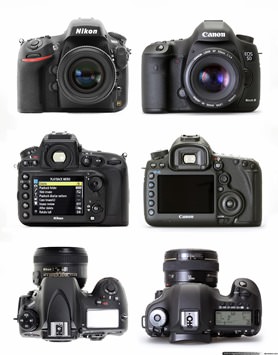
I am an avid photographer and filmmaker. I have won several awards for my films and used many different cameras. In the market for affordable, but high quality DSLR Camera that shoots videos, I found myself in the procession of the Nikon D7000 Kit. It comes with an 18-105mm lens, a rechargeable battery, and a battery charger. Being a highly functional and useful camera, it comes with awesome features, but there are minute technical issues when first getting used to the camera and it lacks a few minor features, but ultimately, the Nikon D7000 Kit is an exceptional camera for its price. The Nikon D7000 is a highly functional camera because it is easy to put together and it takes high quality photographs. Shot after shot taken with the camera's 16.2 megapixels, whether using manual focus or autofocus, produces vivid and eloquent photographs. Great DSLR cameras take amazing photographs. The camera incorporates awesome features as it is supplied with basic features as well as features you didn't know you needed. Autofocus is a basic function, but there are two types on this camera. One for moving objects and the other for still objects. Also, there is a continuous mode, which allows the user to snap six photos per second, which is nice when your subject makes subtle movements. The camera has dual memory card slots for extra storage and also, face detection. There are a few minor features the camera lacks. For instance, it does not possess panorama mode, smile mode, and is not waterproof. However, there are not many DSLR that include a waterproof feature and none that are affordable. Consequently, good cameras have standard features as well as bonus features. The D7000 contains quality video capabilities. There are a couple drawbacks, but nothing too troubling. Overall, its features over compensate for its minor negative one. The only drawbacks include: the camera does not display the light meter and the user cannot change exposure compensation, both while in video mode. However, the Nikon D7000 shoots in 1,080p and 24 frames per second. Shadow bars rest at the top and bottom of the screen to show the user that, if his/her subject does not sits within the bars, it will not be recorded. Furthermore, this camera records up to twenty minutes, while other DSLR cameras struggle to have this ability. This aspect is ideal for shooting documentaries. As mention before, the dual memory card slot, which is quite idea for video shooting and other DSLRs are not often equipped with it. A good DSLR should incorporate the ability to record in its system. The Nikon D7000 Kit is affordable. The kit is under a thousand dollars at $996.95 and is it a whole lot of camera for that price. High quality DSLRs range from $500 to $2,000. This camera is on the low end of that spectrum while still having all its amazing and standard features. Also, it comes the 18-150mm lens with a rechargeable battery and a battery charger. High quality cameras should be affordable as this one is. As the filmmaker and photographer I am, the Nikon D7000 simply wows me. It is a very practical and functional camera with great features. There are a few things would discourage someone from buying it, but they would have to be very picky about taking underwater panorama photos. For professionals and novice alike, this is a great camera kit for its price with all its special features.
Скромный эксперт
05.03.2013
10/10
Оценка пользователя
Великолепно
Considering this camera's reputation has long been established, I figure the world doesn't need another technical review of it. As I have not owned it until now, I wanted to share my thoughts on it in a more candid manner. I was originally a Nikon shooter, first with a D80 and later the D90, but sold my D90 shortly before this camera came out because I was not impressed with the D90 and became curious about the Canon 60D, so I sold out of Nikon and bought into Canon for a while. I have no brand loyalty, I was simply out to see which suited my style. After shooting with the 60D for more than a year, I wasn't as impressed as I thought I would be, with both the camera and Canon's system. This was no fault of Canon or the 60D, it is a great camera and a great system, but it just didn't handle the way my Nikons did. I found myself having to think about the camera too much and my choice of glass left much to be desired, it was getting in the way of what I wanted to accomplish with it. So I recently sold back out of Canon and into Nikon once more with this, the D7000 paired with the 85mm f/1.8G, and was quite impressed within the first few hours of using it. I can't quite describe it other than to say that it just feels right. After spending about an hour to set everything the way I want it, I instantly recollected how wonderful it was to shoot with the D80, which back in its day was an amazing camera. The D90 in my opinion was a wasted design and probably did no one anymore good than the D80. But the D7000 is altogether a different animal. It does everything the D80 did, but faster and with a little more polish, an absolute joy to shoot. ISO performance is just awesome. I can shoot at ISO 1600-3200 with my 85 1.8G without a care for noise at all, and even 6400 looks okay. It's there, don't get me wrong, but it isn't. I can tell you that it looks a lot better than film does at ISO 800, with more dynamic range (and that's saying a lot). The AF system is awesome as well. 39 points is overkill though. I don't like AUTO AF because it chooses focus based on distance and with that many focus points, sometimes it will pick every point within the frame except the one you want. I'm not always interested in focusing on whatever is closest to me so I set the AF drive to 9-point/AF-A and have found it to be the best way to use the AF on this camera, all 9 are cross-type AF points. Essentially, it uses the center point as the primary, but allows the points around it to re-focus if you move the camera slightly, or if what you're shooting moves slightly. It stays put though when you want it to. 6 frames per second is pretty trick and I like the Q-drive, it isn't silent but it's pretty quiet and automatically turns the beeper off when set. I like it. Two card slots are probably better than one but to be honest, I only use one. It's cool that I can put two in though, for backup. And lastly, the single most impressive feature of this camera by far (IMHO) is how it works with AI/s manual focus lenses, of which I have a few. I set the non-cpu lens data for my Nikkor 55mm f/1.2, slapped it on, and not only will it tell you shutter speed AND the aperture value in A mode (which it writes to the EXIF), but the three-way focus indicator nails focus at f/1.2! Sold. That lens is impossible to focus without a split-image rangefinder or 10x zoom in live-view. It's made of magic, I swear.I like this camera, it is definitely worth every penny and 5 stars. The D7100 will be the evolution of the D7000, but do yourself a favor a wait one if you're trying to decide between it and this camera. I suspect if you're reading this review at this point, you're probably trying to decide whether to get this or the D7100. Get this one first and become proficient with it. In a few months, the D7100 will sell for a grand or less and getting it will be like using this camera only more awesome. Canon cameras at this level (DX/APS-C) just aren't as good, also in my humble opinion, and I've used both.
Скромный эксперт
08.08.2012
10/10
Оценка пользователя
Великолепно
Auto Focus (AF). I want to provide my experience with the camera and my take on the AF situation.1. Back-focus. Some claim their units have back-focus issue. The camera does have AF fine-tune that can be used to correct the focus. But if amount of back-focus extends outside the fine-tune range, then it will require Nikon service. I'm sure there are units that do indeed back-focus and need repair. But I suspect many more users mistakenly and incorrectly attribute any AF issue with back-focus. Anyone who says their unit back-focus sometimes or % of photos, then that is not true back-focus issue. Back-focus means the AF is not calibrated correctly. It will not focus right sometimes and miss focus sometimes. So I suspect the rate of true back-focus (quality control issue) is smaller than people claim.2. Auto Focus learning curve. There is definitely learning curve on getting the D7000 to focus correctly. D7000 is very sensitive and this learning curve is steeper than expected. It will takes some practice (and possibly changing your shooting method) to get the focus consistently correct.My experience. When I first got the camera, at least 50% of my images are soft for 1 reason or another. There are out of focus images, camera shakes, subject motion (try taking photo of baby and toddler who are constantly on the move), etc. I thought I had "back-focus" issue. After doing AF test, I confirmed there is no back-focus. But there is still AF reliability. After couple months reading web forums (particularly dpreview), I finally learned the tricks on improving the AF reliability.First off, why so many people (including me) had problem with AF? My take:- 16 meg. With 16 meg, you can zoom in to 1:1 and still see quite a bit of details. So any out of focus shots will be very apparent 1:1. This might not be the case with older DSLR with less than 12 meg.- AF sensor. Web forums stated that the AF sensor size is larger than what users see in the viewfinder. This can cause confusion on exactly where the camera focuses. Sometimes the AF sensor focus on more contrasty region outside the AF box, which is not what the photographer intended.Here are the suggestion on focus:- Use 9-point dynamic AF area mode.- Use the center AF point only, rather than the other 11 or 39 AF points.The center 9 AF points are cross type, so they can focus on both vertical and horizontal features. The other AF points are either vertical or horizontal, which are not as sensitive. If using the center AF point with 9-point dynamic AF area mode, then all the center 9 cross-type AF sensors are being actively used.- Use AF-C, not AF-S. With AF-C, the focus is continuously being updated. While focus is activated, move the camera ever so slightly, so the subject (area where you want to focus on) is being moved around the AF box in the viewfinder. As you are doing this, the focus is being updated and improved. When the focus stops changing (you can hear it in the lens) even as camera is being move slightly, then you know you have focus locked. You probably don't have to do this all the time. But for subject that can move (like kids and pets), indoors (lower light), and low contrast subjects, this really helps.- Use 1/250 sec or faster shutter speeds. I was used to using 1/90 sec and sometimes down to 1/60 or 1/45 sec on P&S. There is no way I can use these low shutter speed without camera shake and blur on D7000. I basically use 1/250 sec or faster, even with VR lens. I sometimes push to 1/180 sec when needed, but I notice more blurry photos. Your mileage can vary depending on how steady your hands are. But expect to use faster shutter speeds than you are used to.- Use AF-ON. Personal taste. I just find using AF-ON with AF-C together works better.- If your lens is VR, make sure you hold the shutter button half-press for 1 sec before clicking, because it takes some time for the VR to settle. This is particularly true if you use AF-ON for focusing.Even with the AF learning curve, I still rate D7000 5 Stars. I have being using D7000 for over 1 year now. The image quality, low light performance, dynamic range, and features are just incredible. Luckily, I'm able to figure out the AF issue (or non-issue) 2-3 months after I got the camera. Now, I don't even think about the AF while shooting. I can keep my attention on the subject and framing; and enjoy the resulting images.If you don't want to deal with the AF learning curve, then stay away from D7000. Out of focus photos are no fun and there is no way to recover those images.
Скромный эксперт
12.04.2013
2/10
Оценка пользователя
Ужасно
I've used Nikons for years and was really excited to get the D7000, in part because I could shoot video with it. I've had it for just over two years, and it just died - apparently a shutter failure, though I'm awaiting a verdict from Nikon repair. It died at 48,000 clicks - about a third of its promised life. I treat the camera with care. Needless to say, given the original cost of this camera, I'm not at all happy.My other issue: I've had focus problems with the D7000 from the start. My old D80 had rock-solid autofocus; the D7000, even when using single-point focus, never did. So for all the professional event shoots I do, I've had to manually focus the camera. Yes, that's unacceptable, but till now (with the shutter failure), I hadn't wanted to deal with Nikon service. Now I get to see if I'm one of the lucky ones when it comes to timely repair - I'll post an update when I know.Of course, the camera has many good points, including great resolution and highly customizable settings. I love the user profiles that allow me to program all the settings I need to shoot lightning, for instance, and get there with one turn of the switch. The video is pretty, though I wish it shot 1080p at 30fps (you have to go to 720 on this camera to get that frame rate; newer models remedy this issue). Serious video people will not like the lack of a headphone jack to monitor audio, but if you just want pretty shots, it does the job. (Especially if you don't pan too much, and if you can put it on a tripod and focus manually, because the autofocus is dreadful. At least on mine.) Having two SD card slots is awesome. The camera handles well. Battery life is terrific. There is a lot to like. But again, dying a third of the way through its projected life, and out of warranty, is discouraging.EDIT POST-REPAIR: I was impressed that Nikon got the camera back to me in two weeks, door-to-door. It's working very well with some heavy use, and the focus is working much better, too. In addition to the shutter mechanism replacement, Nikon's repair center adjusted the focus and cleaned the sensor. I'm happy with the camera.EDIT Aug. 11, 2013: Just four months after the April repair, my Nikon has died again. I've tried all the conventional resets, swapping out of battery, lenses and cards, and a firmware update, but it's making floppy sounds when I press the shutter button and has the "ERR" message. I am a pro and use the camera a lot, but I treat it well. It died when I was shooting photos on a tripod - it just stopped working. I'm about to try to resolve this with Nikon service, but at this point, I would NOT recommend this camera. I have downgraded the review to two stars.UPDATE Aug. 26, 2013: I have to give Nikon props for fixing the camera for free this time and getting it back to me in less than two weeks. The shutter mechanism was again replaced. Nikon's service has been good.UPDATE May 15, 2014: For this first time since I'd had the camera repaired, I attempted to do a long exposure to shoot a rocket launch a couple of months ago and realized it had a new problem: excessive green noise in long exposures. So excessive, that at 43 seconds, the frame had turned completely green. Even with a three-second exposure, the green noise starts to appear (not just color, but noise, too). Noise reduction cannot solve the problem. I shoot a lot of lightning and night shots, and I had never seen this issue before. After a frustrating exchange with Nikon's online support, which at first suggested I just shoot shorter exposures, I've now been told it has to go back in for repair. I am considering not throwing good money after bad. I will update if I get it repaired.At this point, I would not recommend the D7000.
Скромный эксперт
04.06.2012
10/10
Оценка пользователя
Великолепно
I am a semi-professional photographer and have been shooting, with a variety of cameras, since the early 1960's. My first camera was a Kodak Brownie in 1960-or-so, followed my a Nikkormat in 1964.Since then I have had all kinds of film and digital bodies including Pentax, Nikon and Sony ultra-zooms.I had several of the earliest digital cameras, starting with the 2/3 megapixel Casio OM models, the Sony F series (great cameras in their days) and a variety of Nikon DSLRs, starting with the D70, and including the D200/300. Never went for full-frame because I shoot events, often from the back of a theater or arena, and appreciate the extra crop that comes with an APS-C sensor.But nothing, no camera I've ever owned, holds a candle to the D7000. Sometimes a manufacturer just gets everything right, and this is one of those times.DUO CARD SLOTSHaving two SD card slots means never having to say "I'm sorry". I use 2 16GB cards and when one is full, the camera switches over the other - which is only one of the two-slot options. Another is using one for photos, one for video.BATTERIESEven before receiving my D7000 body, I purchased an extra battery and worried that I might need a third. Many of my assignments require more than 1000 shots and quite a few hours on the shoot. But I'm stunned: I've never yet had the battery run out and had to switch to the second battery! In fact, I've shot multiple events without recharging between events, something I've never even considered doing with any previous camera! I don't know how they did it, but it is nothing less than amazing. I'll never forget losing shots at a New Year's fireworks display when my battery died in the middle of the show! Will never happen with the D7000.IMAGE QUALITYWhat can I say - it's the best image quality I've ever experienced, film or digital. Because many of my shoots are at low-light indoor events, I always used f/2.8 lenses and often shot wide-open at ISO 400. Result: low shutter speed and many shots lost to motion blur and the tiny depth of field of a wide-open f/2.8 aperture. Now I shoot at ISO 1600, smaller apertures, and totally acceptable shutter speeds - and I get pictures that need little post-processing and make my clients very, very happy.At ISO 1600 RAW, at a pixel level, there is a bit of noise. But it's like no noise I've ever seen before: it's so fine-grained and uniform that I can print without doing any noise reduction, or use just a hair of N/R to clean it up completely without sacrificing detail. Even my ISO 2500 shots come out better than my ISO 400 shots on the D200/D300! So impressive.AUTOFOCUSTo be honest, I was a bit disappointed, at first, at the quality of the autofocus - it was very fast, but not always accurate. I did fine-tune the AF for my lenses, which helped. But one day, on a lark, I switched from single-shot to continuous autofocus (AFC), which I rarely used in the past (with the exception of shooting sports), because I was annoyed by the lag and the number of out-of-focus shots the cameras allowed.But the D7000 is another story, entirely. I now shoot everything in AFC. It is thrilling to watch how fast the AF adjusts when you move the camera or zoom the lens - and I almost never miss focus on a shot, now. On top of that, you have predictive autofocus in AFC mode, where the camera calculates the motion of the subject and adjusts focus based on a mathematical calculation. The D7000 AF is faster and more accurate than any camera I've ever used. Bravo, Nikon!OTHER PROSThe Viewfinder is immaculate, bright and offers 100% coverage. No more framing errors! No more side-cropping needed!Video quality is excellent, though I don't use 1080p, since it can usually only be burned to Blu-Ray and my clients still want DVD presentation, so I stick to 720p. The results have been really excellent, though for best results, I recommend an external microphone setup (which I recommend for ANY serious video).CONSFor my needs and tastes, this camera has very, very few cons. I find the two-hands ISO setting to be a bit of a pain and usually have to use the menu on the LCD to accomplish it correctly.And I was a bit disappointed to discover that the artificial horizon, which I really need for stage shots, was only on the rear screen, and not in the viewfinder.It's not a big deal to me, since I shoot video at 720p/30fps, but the 1080p video only allows a frame rate of 24fps.All in all, the D7000 is the best camera I've ever owned, and its reasonable price just blows me away! I can't recommend it highly enough for anyone from a beginning DSLR user to a pro needing a second body and everyone in between. The move from the D300s to the D7000, to me, is a no-brainer.
Скромный эксперт
27.03.2013
6/10
Оценка пользователя
Плохо
I have had the Nikon D7000 for 2 months now and this is my 4th Nikon DSLR over the past 8 years. As I have invested thousands of US dollars in Nikon lenses I am married to the Nikon System. My previous Nikon was a D90 that was stolen New Year's Day, with the recent price drop due to the D7100 coming I took the opportunity to get the D7000. The extra $450 US I saved allowed me to get a Nikon 24mm f/2.8D lens and Meike vertical grip as well as a generic wired remote cable, all for the price of the body only D7100.If you are reading this you are in one of two camps, a current Nikon owner looking to upgrade current DSLR or someone looking to get into digital photography for the first time/getting a gift for someone else. If you are a current Nikon owner you know most of the features and advances the D7000 offers. For you the question is if the price difference between this and the D7100 is worth it. The first run of D7000 was plagued by oil splatter on the image sensor and quality control issues with the AF system. My D7000 bought in January 2013 had all the current firmware installed right out of the box but had a serious back focus issue. I took it into Nikon for repair and they fixed it in 20 minutes with a software upload. I am sure the first run of the D7100 will have some bugs to be worked out and reviewers are just starting to get their D7100's now. The D7100 has many advantages but the price is still high for "entry level" grade bodies. I personally rather save the money and use it towards lenses that will last me many future generations of camera bodies.For those looking to enter into the Nikon DSLR world or getting a gift for someone this is an excellent choice. For new users you will need to have a good basic foundation for photography and the controls needed to get great photos. This is a huge jump from point and shoots and the number, placement, and function of the controls can be overwhelming at first. If you have used 35mm film SLR cameras in the past it will be an easier translation. The D7000 has one issue needing to be known before getting. It is a high resolution and contrast camera. This requires better technique and control over the camera to get the best results. The D7000 is a serious camera and to get great pictures out of it you have to seriously use it.For those getting this for someone else the biggest thing to understand is this camera is just a piece of a larger more comprehensive system. This means there are lenses, flashes, and accessories to expand photography well beyond snapshots. The kit lenses are good for a start but the curiosity to expand into the hundreds of available lenses and accessories will soon take hold. This is an excellent camera that will serve anyone well but does require a level and degree of photography knowledge to use well. There are users who complain of image quality with this camera. Many of these are due to user error or lack of proper techniques but there is an issue with the auto focus system on some cameras. I experienced this and contacted Nikon who fixed the issue for free without any issues. I do recommend the camera but I can't rate it at 4 or 5 stars due to the AF back focus issue. For everything else this is a solid 5/5 star camera that will last for years and provide plenty of creative room to express your vision any way you like. The only real upgrade from this camera is full frame or FX format. For the most part this is academic unless you are using photography for a living. For hobbyists and people only looking to take great pictures the D7000 is the best bargain on the market at this time.
Скромный эксперт
13.05.2014
10/10
Оценка пользователя
Великолепно
I got a GREAT deal on this camera used on Amazon. It only came with the body and cap and battery and charger, but I have multiples of the extras that come with the camera out of the factory (cables, straps). My model had just over 18k clicks when I got it, and in the past 4 days of owning it, I've put it to over 19k. I can't put the thing down.I was upgrading from a D5100 because I needed manual exposure controls for video, and I had heard loads of great things about this camera. I love that everything can be controlled by a button or dial. I can shoot so much faster now that I never have to navigate menus. I used to have my D5100 configured so I could change ISO, shutter speed and aperture all using the single command dial plus a button and I thought that was nice, but I didn't realize how limited I was until I got this. If I wanted to change AF modes, drive mode, white balance, metering mode, I'd have to hunt through menus. Now I can control every exposure/shooting function using only the camera's external controls and the top LCD. It's great.I know people complain about the lack of 30 fps in 1080, but let's face it; 30 fps is really only used in broadcast television, and approximately 0% of people who shoot for TV are shooting with a DSLR. Yeah, so higher frame rates would be nice for slow motion stuff, but if you are at a level where you're using features like that, chances are you know another video guy with something you can borrow for that shot. For 90% of my video needs, this camera satisfies. If you do mostly video though, maybe a Canon system would better suit your needs. Personally, it's about 80/20 photo/video for me, and this camera stretches my dollars much further than most. AF is useless for video, as expected, but most serious video people know that manual focus is the way to go while rolling anyway, so not a deal breaker whatsoever.For stills, AF is lightning fast, and is even great in low light. Silent focusing with all my AF-S lenses, and still pretty quiet on my 50 1.8 AF D as well as the couple of AF zooms I've used on it.Since I've only used this camera for a few days, I'll end it there and keep this review updated in the coming months after more use.
Скромный эксперт
24.02.2012
8/10
Оценка пользователя
Хорошо
I've had the pleasure of owning a Nikon D7000 for close to a month now, paying a hefty premium over the MSRP due to its limited availability. The camera I have used before this is a Lumix GH2 which I like a lot. I have been using my GH2 to do professional work for clients with quite a bit of success, which is why I decided to get a D7000.A lot of these reviews either echo what you can find on digicam review sites, or they compare it to other Nikon models. Why am I comparing it to a GH2? Because I own both and therefore I can, and I'm going to bet that there are people who are in the market for a camera and may be considering either the D7K or the GH2...so lets see how they stack up.Camera Body Build-------------------In terms of ruggedness the D7000 has the advantage. Its magnesium frame (it's not made entirely from metal as some people believe) provides a high level of strength without adding to its bulk too much. It feels solid; the GH2 is entirely plastic and feels "plasticy", but it doesn't have a cheap feel. The GH2 does allow for a firm grip to prevent blurry photos. The D7K and certain lenses have "weather sealing" which help to keep dust and debris out of the camera and the GH2 has none of that.The GH2 is a mirrorless micro 4/3 camera where light weight and compact size is intended. The lack of a mirror means there's one less fragile CRITICAL element that can break if the camera is dropped - despite having a rugged body, the mirror in the D7K can be damaged if the camera takes a good hit...almost like having an egg "protected" by a steel box, but no padding in the box.For sheer exterior ruggedness the D7K wins, but the GH2 being lighter and not relying no a mirror means it can stand up to some "minor abuse" without damage.Buttons and Ergonomics-------------------The D7K has a lot of buttons placed on the back and front sides of its body, plus a few on top. You might even say it has "too many" buttons. Much like a video game controller or keyboard, once you get used to the button positions you can quickly and efficiently change various settings on the fly. Things like exposure, ISO, white balance can be adjusted by holding down the appropriate button and using the selector wheel to set the desired option.The GH2 takes a more advanced approach to feature management. While it does have buttons for common functions like white balance and ISO, almost all of the settings can be changed using the "Q Menu" button right on the screen. It also allows you to map the function buttons however you want (the D7K has this feature too).One of the GH2's major assets is an articulating touch-screen LCD. While it may sound like a gimmick, you can easily set the focal point just by touching the screen. You can even take pictures by tapping the screen, and it will focus on the area you tap. Similar functionality on the D7K requires fiddling around with the focusing area and metering type buttons, and does not provide that level of flexibility.Both cameras give you an amazing level of control over the pictures you take, but I feel that the GH2's approach is a lot more intuitive and fun. The articulating touchscreen is dearly missed and if the D7K had one, it would really unlock its potential.Viewfinder and LCD Screen-------------------The D7000 has a higher resolution LCD screen, and it is quite nice, but it's not very useful beyond previewing images and changing menu settings. Taking pictures with the D7000 happens through its optical viewfinder.In the past, I would have said that an optical viewfinder is a desirable feature, but in the age of digital cameras it is an obsolete element that should be phased out. The GH2 features an EVF (electronic viewfinder) which means that the image you see in the viewfinder is exactly what you will end up with after taking a shot.The EVF in the GH2 has a higher resolution than the its own LCD screen as well as the LCD screen on the D7000, so it is very accurate and sharp...plus you gain the ability to see realtime info such as a histogram and exposure settings displayed while looking through the viewfinder. The optical viewfinder on the D7000 is "full frame", which means you are able to view the entire frame of the photo through the viewfinder, but it is dim compared to the EVF and the lack of realtime info means you have to either check the LCD screen or the digital readout to see what's what.The EVF, along with the GH2's touchscreen capabilities give it a solid lead in usability, making it a very "fast" camera in terms of getting the shot you want without having to mess around with settings.Lenses and Image Quality-------------------This is where things get dicey...and you may think it's a slam dunk for the D7000 considering that still pictures are really all it is good for, but that's not the case.First of all, the POTENTIAL quality with the D7000 is much higher than the GH2. The D7K has a wider effective dynamic range in both brightness and color gamut, and the pictures it takes a
Скромный эксперт
13.01.2014
10/10
Оценка пользователя
Великолепно
I bought this camera in this thanks giving, I had a very hard time comparing it to Nikon D5200if you are reading this review then probably you are comparing them both as well, specially that D5300 is now released as well.first of all I have to say that all three cameras deliver extremely high quality images and work with same types of lenses.well, the D7000 is a really serious camera, the difference between the three cameras in the specs is known and you can easily find it on Nikon's website, but the real difference is in controls.the D7000 has less resolution, but that didn't matter to me, 16.1 mb is a huge resolution anyway ... of course 24 mb is better but 16.1 is really more than enough.the real advantages of this camera are:1- it has internal focus motor, which allows you to buy extremely cheap lenses, all nikkor lenses work with it, so you can buy used old lenses or AF lenses for half the price you will have to pay for an AF-S lens.2- it has a really professional body size and form factor. its magnesium alloy, that makes it durable and feels better in your hand.3- Controls, Controls, Controls.... simply this is the closest to a professional camera, you can finish all your photoshoot without using the monitor. you can change almost all settings without accessing the menu or wasting your time trying to find items in the extensive Nikon menu system4- it has two dials front and back , which allows you to control things much faster and easier.5- the top LCD ... its a really big plus, makes you know exactly what you want when you want it6- view finder, really much better than d5200 and d53007- the battery lasts for ever, I shot 700 Jpeg images and it still had 71% of its charge, with raw, it lasts for almost 800 shots.8- it has two storage slots, and that's really a great plus, this helps with storing jpeg in one and raw in the other or keeping a backupand much morecons: .... its a DX camera ... its not full frame, but its really close to the full frame qualitynotes:1- it comes with a screen protector2- it doesn't come with memory card so you will need to buy one separately, so you can start shooting once you receive the camera3- make sure that any case you will buy will be big enough for itbottom line, this is a serious camera, if you are buying it to shoot your dog, you probably would better get the d3200 or d 5200but if you are planning to advance in photography, I really recommend this camera, its really a great choice, I have it for three month now, and I already bought a couple more lenses and some filters and accessories and I'm loving what I get from it
Скромный эксперт
19.07.2012
8/10
Оценка пользователя
Хорошо
I have been old-school for all of my years of photography. I have probably over 1,000 if not 2,000 film photos (I would have to go back and manually count becuse I have lost some over the years and various people have gone through, moved, taken, etc... them). My wife bought a hybrid Canon S3 is camera about 7 years ago. It is a pretty nifty little camera. It takes long exposures and has various shooting modes, but has a fixed (zoom) lens and only a few bells and whistles. I was hoping that we would get to go for another trip to Peru for my birthday, but, alas, finances... For my consolation prize, I finally upgraded to a true dSLR- the Nikon D7000 DSLR to go with my lenses (mainly Nikkor). I received it about 9 days ago. I started reading the manual, but at 300+ pages, finally decided to dive in. I read how to set-up the camera and went for it. Over the years, I have pretty much decided that I like aperature-preferred shooting except for shooting B&W infrared. I used a hand-held light meter and had to set the shutter speed manually for that. Anyway, back to the D7000. It has an shutter speed from 1/8,000th (!!!) of a second all the way to the equivalent to cable release. You do need a remote to take full advantage of this. Holding the shutter button down manually or even just pressing twice can cause all kinds of havoc on long exposures. The "bulb" setting allows you to totally override the shutter speed regardless of lighting conditions. This camera will do pretty much anything an old-school film SLR can do. It has about every bell and whistle you can imagine or want. So far I have been happy with the results and the images are clear and sharp. I have yet to take full advantage of everything. In the half-week I have been playing with it, I have shot in aperature-priority mode for pretty much all of my shots. I have played with the D-lighting, ev values, and a couple of other features. I am really excited about trying out the continuous high-speed mode (up to 100 photos by holding down the shutter- you won't have to worry about camera shake at 1/8,000th of a second! lol) and the strobe-effect flash. I might try to see if the two options can be done at high shutter speeds. The only downsides that I have found so far are that it is DX-format (not really its fault, it is what it is); light output of flash is lame; even at the high D-light setting; there is really not much of an increase in contrasting detail (will have to experiment more); some of the commands are not intuitive (with as many options as it has, not too surprising); and a really weird thing happened while I was photographing the moon, Venus, and Jupiter conjuction. When I gave the ev value a positive response (even at 0.3!), the moon ghosted on another part of the frame.(?!?) I will have to do some research to see whether it is the camera, the lens, or maybe even just the angle of the shot. These issues are the only reasons that I did not give this 5 stars are because of the flash and the mysterious ghosting in that one series of shots. In conclusion, with the shots I have tried (and I have played with more settings than some people ever will), this appears to be a VERY solid dSLR. This is a great dSLR and the flash is the main limiting factor for this level of camera. This can be remedied by using an SB-700 or other flash, but having to shell out more money kind of sucks. I have absolutely no regrets with this purchase. The packaging was great and Amazon shipped it out quickly. It comes with nice accessories such as an eyepiece cover (useful for those long exposures). With things like exposure lock, focus lock, white balance, being able to do post-editing within the camera (better than using outside software), and quite a few other features, this camera will keep even the most serious amatuer happy. You might consider going for the FX version at another $1K, but that is the cost of a good Nikkor lens, for not THAT much of an upgrade. At that point, you might as well go for the D800E. Unless you are a professional photographer, you would buy a Nikon D4, this camera is a GREAT value for its price. Enjoy and fill up that 32 gig memory card of which you can have TWO at once!!! I HIGHLY, HIGHLY recommend this camera and would buy this camera again.
Скромный эксперт
24.11.2011
2/10
Оценка пользователя
Ужасно
Last Update: February 25, 2012 - Five months and counting. Three times to the shop. Same issue.I upgraded from a D3000 to a D7000 this year. The capabilities of the camera had sold me and I wasn't quite ready to jump into full frame. But after taking several pictures, I realized that the pictures were soft. So I went looking online and found plenty of posts about backfocus issues with the D7000. I broke out my D3000 and put it on a tripod in my kitchen and took one of my kids homework papers and stuck it on a cabinet. I took pictures, put them up in lightroom and blew them up by the same factor. Sure enough, My D3000 at 10MP had a sharper image than my D7000 at 16MP Checked all of the settings twice.I created a ticket with Nikon and uploaded some images. They didn't look at them and I had no response for days. I finally called and asked for them to look at it. They said they would look at them within 48 hours of sending the pics. I responded they had been up there for several days. I was then put on hold and the person came back and said it would be 24 hours.Fine. 2 days later, no call, no email. I call back, I get apologies about them being busy. The person looks at the pictures and asks for me to send more.3 more days, no response. I finally get frustrated and take a comparison shot between two cameras to make it clear what the difference is. I upload that. Still no response.I finally call back and am told that they are not sure what the issue is but I can send in the camera if I want to. (Really?)So I send in the camera. I forget to include the receipt so I call up and ask how I can add the receipt. This person is helpful and courteous and gives me the info. I upload the receipt and wait.8 days later, no response. Nothing. Bupkis. I call and ask if they have the camera. Why yes they do, and it will be $169 for the repair... No explanation of what is wrong, no question of when I bought it. I said "Wait, the camera is under warranty." This person responds, "well there is no receipt on the ticket". I asked, "did you look at the ticket?" There is a pause, and then she says, "These are all pictures" (Obviously Nikon hires rocket scientists) My response, "take a look at the second to the last file that says D7000.pdf". Her response, "We will need to certify that the repair is under warranty".So now it is the day before Thanksgiving, at least I have my D3000 but the fact that Nikon has this kind of quality control issue, and then follows up with a crap customer service experience that can only be eclipsed by Hewlett Packard is just unbelievable.So if you do buy this camera, take some pictures, look at the detail. If the edges look soft and fuzzy, take it back before your time runs out for a refund like mine did.Update Nov 25:This is service?Remember where the lady above said that they were going to need to certify that the repair is under warranty? Well I called today to get an idea of when the camera would come back. She didn't update the ticket. The guy asked me for proof of purchase. *sigh* I asked for a supervisor and made it clear that this kind of customer service was unacceptable. We'll see what happens.At least I know what the repair is, it seems there is something wrong with the focusing motor and they have replaced it.Update Jan 1:Camera back, still soft pictures.So I get back from my international travel on Dec 16 and finally get to test out the camera. Result? Same issue is happening sporadically. I can get it to reliably focus manually and take good pictures so it's not mechanical. It could be variability in the motor or a sensor issue or even software. It's difficult to replicate twice in a row. But take a critical shot like my father in law heading back to LA after Christmas vacation and the whole shot is out of focus. The focal point is right, the lighting is fine, no good reason for it.Tomorrow I raise another call. I hope that I can simply get it exchanged, even for a rebuilt model.Update Jan 5:Going around in circlesRaised another call. Agent asks me what the aperture and speed settings are at. We discuss camera settings for a bit. Do a reset. I take more pictures. Same issue. He asks me to do an upload. The ticket isn't enabled so I figured he would just open it up later so I can upload imagesUpdate Jan 8:Waiting on the service deskCall is still not opened up so I can update images. I call in today and the agent is sending me shipping labels so I can send in the camera *again*. I am going to call Visa and see if they can get the camera replaced.Update Jan 9:Still not workingVisa only comes into the picture once the 1-year warranty ends. I haven't received the shipping labels yet, so I decided to methodically test the focusing issues. I set up a tripod and various items in front of the camera with writing on them to see how it picked something to focus on and if the focal points matched up with the picture. Very often, where the came
Скромный эксперт
06.03.2013
10/10
Оценка пользователя
Великолепно
First off, let me state that I have had a long and interesting journey through the world of DSLRs and have gone from Pentax to Canon and have finally settled in with Nikon. I have shot probably 15 or more different bodies with multiple light setups and lens combinations. So, what about the Nikon D7000 in mind warrants the title to this review....? Simply put, it's the most professional feeling and functioning "pro-sumer" camera I have laid my hands on.Let me break it down a bit:Body and Ergonomics: I have fairly large hands and like to grasp something solid when shooting. Nikon did not disappoint here making the body from Magnesium for sturdiness and heft, while also making it big enough for me to hold comfortably (Note: I still bought the Nikon MB-D11 as I like to shoot in portrait position often). All of the button and dials are convenient, tactile and well made. The 150k shutter rating also helps to solidify the toughness of this camera. I can definitely see this camera putting up with many years of solid use and abuse.LCD: Yes, I gave the LCD it's own bullet point. MY GOD!!!! This thing is just too sharp! I know that you have probably read about the resolution of the screen above, but it just does not hit home until you start reviewing your shots on it. I have NEVER used a DSLR with a screen this crisp. Just believe me, it's amazing.AF: 39 points....What else is there to say? This thing tracks quickly and picks up the right points almost all of the time. I have no issues with any of the lenses that I am using (Note: Nikon lenses are generally always going to work better with the Nikon AF system, but there are Third party lenses that perform just fine).2 SD Card Slots: Talk about a GOD send!! This cam take 16.2 MPX JPEGS and who knows how large the RAWs can get. We need all the storage/redundancy we can get. The D7000 allows you to choose that in the settings. AWESOME!!!CLS: This is one of the major things that turned me over to Nikon. Their take on lighting is just so amazing and this camera uses all of the same functions that you would get on any of Nikon's top FX cameras. I love off-camera lighting and having the Nikon CLS system is second to NONE!High ISO: Ok, I know that the camera will go up to 6400 (or even 25800 equiv.), but what is usable? Well, that largely depends on the photographer and what he/she is shooting, but to be honest for me all the way up to 1600 is easily usable. I would even go so far as to say 3200 looks great for viewing online or even some print sizes. Really, this sensor will BLOW you away with how well it renders low light scenes and details.Well, what are the negatives you ask? I will say this much....This is NOT a beginners camera. When I hand it to my wife, she generally just stares blankly back at me and says, "ok what do you want me to do now?" There are so many features and functions to explore that I cannot even begin to describe them all nor have I even found them all yet. Needless to say, if you are looking for simple, this is not your camera.Also, this thing is not light at ALL!! If you are looking for compact and unobtrusive, look elsewhere. This thing is a HUNK of metal and plastic.Overall, I am excited to have this one in the family and it is now my "go to" body for pretty much anything!!
Скромный эксперт
03.02.2013
10/10
Оценка пользователя
Великолепно
Just like a lot of others, I too got a camera with the notorious back focus 'problem'! .But I was not worried because, before deciding on D7000 I did a search and found that back focus or front focus issue is not a specific D7000 (or Nikon) issue. Canon, Pentax, Sony, Olympus...they all have similar 'issues' and most of their prosumer or high-end cameras come with an in-camera option to address this, just like the one there is present in D7000. (They use different terminology though..Nikon calles it AF Fine tune; Canon/Sony - AF Micro Adjustment; Olympus - AF Focus Adjust; Pentax - AF Fine Adjustment etc). Also, I understood that there are a lot of kits available in the market to help this calibration/fine tuning (Datacolor SpyderlensCal for example). So, fine tuning looked like something that is not uncommon with pro-prosumer type camera bodies.I do not know whether this is to be seen/called as a 'problem' or not....Because this also could be viewed as having 'more control' over our gear, at some point. I did not face any back focus issue with my D5100 (or my Canon T2i), so, there indeed was a moment of frustration when I got a camera that looks somewhere else when I ask it to 'look there'.Personally, I find this as a pain than a problem because I had to fine tune two of my lenses (a 35mm 1.8 and a 16-85mm (both were bought used)...third one, a 55-300 mm auto focuses just fine without any fine tuning). So, should one stay away from D7000 because of this terrible back focus 'problem'? Nope... D7000 might back focus when paired with some lenses but at the same time, the camera comes with a built-in feature to address this concern. If that fails to resolve the issue, then, ONLY then, it becomes a problem.There are more than enough blogs/videos related to 'how to do AF fine tuning' hence I am skipping 'how I fixed it' part...but I would like to mention that checking/enabling the 'Focus Point' (that can be found under 'Disply Mode' in PLAYBACK MENU) before taking the fine tuning test shots makes it bit easy (because, at the time of playing it back, it would show where exactly we had focused).A few things (among the many) I liked about D7000:1. Excellent, durable build quality2. Great picture quality3. More direct controls4. Brighter view finder with 100% coverage5. Long battery life6. Two memory card slots7. Decent video8. User control over fps (personal preference. I have one of the shakiest hands in the world and hence I often shoot more than one frame whenever I shoot critical shots. Many a time, 6fps is wasting memory by filling the card with similar shots, especially considering D7K's low buffer)What I did not like:1. Position of the ISO button (I wish it was on the top, just like my (wonderful) Canon T2i)2. Low buffer3. Plasticky LCD cover(It is to be noted that this is neither a beginner camera nor designed for people with no patience and hence one should not expect great shooting experience straight out of the box with any lens attached to it. Being said that, if a beginner is patient, not intimidated by some extra buttons, ready to read the boring user manual (this is very important) and want to learn photography, then D7000 has everything one need to learn photography or even make a living).Overall, I am pretty happy that I bought this camera...Awesome camera.(Wish to give 4.5 stars but that is not possible hence giving 5 stars)
Скромный эксперт
09.02.2013
8/10
Оценка пользователя
Хорошо
I purchased this camera bundle in anticipation of a big European excursion, which I would like to document photographically. I enjoy shooting landscapes, architecture, and wildlife. After a lot of research, I decided on the D7000 as an upper level consumer camera, and the 18-200mm lens as a versatile lens solution for all the situations I anticipated.The camera itself is phenomenal. The viewfinder is vivid and clear, everything responds nicely, and it's solid. It's weighty, but not too much, which makes sense with the metal body. The built-in flash works well, even with the long lens (though I haven't tested how it casts shadows at the largest zoom). The only issue I've had is probably more an issue of getting used to a couple nuances of the camera. There are settings for being able to shoot without focus for two of the autofocus modes, but not for AF-A, so you have to fiddle with a button or tweak the focus ring slightly before the camera will respond to the shutter button.Thus far, the lens has been great as well. I was expecting it to be bigger than it is. It extends to a reasonable length, but still not that big, and at 18mm, it's a very manageable size. Some reviews show pincushion and barrel distortion from 150-200mm or so, which is visible when shooting architectural targets with many parallel or perpendicular lines. I haven't shot such scenes yet, and haven't noticed it in other shots, but there are software updates of some kind out for the lens/nikon software things that will automatically correct it, apparently.I haven't gotten to use the instructional booklets (other than the manual) yet, so I can't comment on those.The only issue that's at all concerning is with the supplied memory card. It's a SanDisk class 10 16 gig stick, which I have paired with an equivalent Team Group card. I have been shooting RAW+JPEG, which writes raw to one card and jpeg to the other. Two or three times, the camera has stopped me during shooting (flashing error in the viewfinder, card error or something on the little display lcd), saying that the first memory card (SanDisk) has errored. Sometimes it'll be fixed by turning the camera off and on, sometimes it'll quit complaining and just show the second memory card as being inserted. If I take the card out and put it back in, it'll read it and continue. I'm hoping it's just some weird thing with the memory card, not with the memory slot in the camera.*update* As I've shot a greater variety of photos, I've noticed several gradiations of grey spots in the upper area of my pictures. They are only really obvious when shooting solid background colors, such as a blue sky. A number of reviews at various places indicated they'd had to send the body back to nikon for cleaning, because the sensor had oil spots or something similar from manufacturing that wouldn't go away with an in-camera sensor clean. I tried a series of cleans and test shots and found they went away, or I thought they did, until they showed up again later. It could also be in the inner pieces of glass in the lens for me, though I'm not sure, as I don't have multiple lenses to try. It's a bit late to send in for repairs now, since I have a trip upcoming, but that's something to keep in mind--test with various types of shots and send it in while you can if you need to.
Скромный эксперт
11.10.2011
10/10
Оценка пользователя
Великолепно
I am a photography teacher in NYC and online. (See my Amazon profile for my website.) I teach beginner and intermediate photography students every week. I've also been a professional photographer for the last five years with images published in The New York Times, GQ, New York Magazine, Women's Wear Daily, The New York Observer, The Village Voice and Time Out New York.(This review is for beginner photographers.)If you're a beginner, you're most likely asking yourself: Nikon or Canon? Really, I feel confident in saying that you can't go wrong with either. I've used both brand's cameras extensively and find that they both offer amazing image quality with well-built, solid cameras that, if taken care of, will last decades. There are two differences between the cameras, though, that can be taken into consideration.The user-interface: If cameras were computers, Nikons would be PCs and Canons would be MACs. PCs are built for people not afraid of technology whereas Macs are built for people who want things super-easy. Nikons excel at customization options which means you'll see so many more options with the Advanced features of a Nikon than you will with a Canon. Canons, on the other hand, excel at ease-of-use for beginners. Canons offer less advanced options and can be easier to learn on. This can be frustrating down the line, though, once you've learned a lot about photography. At that point you may want all of the options that Nikon offers and be frustrated with your Canon. If you're someone who really likes to delve deep into your hobbies or if you're intent on becoming a professional photographer, I'd say a Nikon would be your best bet. If you're someone who wants to learn the basics of photography and only imagine yourself being a hobbyist, Canon would be a better option for you.Where Nikon excels: Flash photography. I often find myself in situations where I'm shooting event photography (weddings, movie premiers, benefits and galas) where I need to use a lot of flash. For this kind of photography, I'll always prefer to be shooting with a Nikon. Nikon's flash metering (how the camera magically decides how much light to fire out of the flash) is much more consistent than Canon's. You can take a Canon and shoot the same scene three times in a row with flash and all three images will be at different brightness levels. You can do the same thing with a Nikon and all three images will be wonderfully the same. If you're somebody who plans on shooting a lot with flash (indoor photography, event photography, etc.) you'll want to consider going with Nikon.Where Canon excels: Richness of colors. I've been in numerous situations where I've been on the red carpet taking the exact same picture as the photographer next to me. I'll have a Canon and the person next to me will have a Nikon. This has provided quite a few opportunities to compare the images side-by-side. What I've found is that the colors on the Canon's images look richer and make the image pop more. If I'm doing fine art photography (anything I'd like to someday hang in a gallery), I'll always want to be shooting with a Canon for this reason.If you're set on Nikon, there are three cameras you should be considering and it all comes down to what your budget is:D7000 $1,400 without lensD5100 $750 without lensD3100 $600 only available with lens(current prices as of 2/19/11)Here's what you get for spending extra money (each camera compared to the one below it):D3100 vs. D5100:The D3100 is an EXCELLENT camera so if you only have $550 to spend total on camera and lens then go out and buy this camera. You won't regret it. If you're considering spending more money, here's what you'll get from the D5100 in comparison:-Better performance in low light situations.-A higher resolution screen on the back of the camera so you can see your images more clearly and make out if they actually turned out well.-An external mic jack. (If you're planning on shooting video with an external mic, you'll want the D5100 over the D3100.)-A flip out screen (handy if you want to put your camera anywhere but at your eye level and be able to see what your camera is about to capture before you shoot it)-Faster continuous shooting. If you're often shooting sports or any fast moving subject, continuous shooting allows you to capture multiple images in a single second. The D3100 shoots at three frames per second whereas the D5100 shoots at four frames per second.-Higher ISO options. The D5100 offers one more stop of ISO than the D3100 does. If you don't know what ISO means (or what a stop is) just know that this allows you to more easily shoot images in low-light situations.-Longer battery life. The D5100's battery will last 20% longer than the D3100The two advantages of the D3100 over the D5100 are: less expensive and less weight. Whenever a camera is less expensive, it means you'll have more in your budget for the lens. The D3100 weighs 10% lighter and is 10% smaller than the D5100.D5100 vs. D700
Скромный эксперт
22.09.2011
8/10
Оценка пользователя
Хорошо
========================================================================Bottom-line: the greatest trick Nikon's marketing department ever pulled========================================================================------------------------------------------------------------------------Quick summary (see below for more details)------------------------------------------------------------------------**** see update at the end ****The Nikon D7000 is NOT the best APS-C DSLR in the market.After taking thousands of pictures with the D7000, I have concluded that:* It produces soft images* For ISO 200-1600 the IQ is inferior to the D90* For (1600 > ISO <= 4000) the IQ is better than the D90* For any ISO above 200 the IQ is inferior to that of the D700* For ISO 100 the dynamic range is superb* It's not really a robust camera in terms of build quality (the D300s, D700 are)* The AF system is just average, on par with the D90 and well below the D700* The raw files are prone to develop artifacts very quicklyAnd on the plus side...* It has a magnificent dynamic range at ISO 100* It has some nice features (micro AF adjustment tops the list for me)========================================================================Review========================================================================------------------------------------------------------------------------3 important preliminary notes------------------------------------------------------------------------Target audienceThis review is mainly intended for the user of cameras such as the D90, D5000, and D80 that is considering this camera against alternatives like the D700 and D300s. Probably the owner of the D60/40/3000 may also find something useful.A word about videoI don't care at all about video. Video is a completely useless feature for me. I only care about stills and this review completely disregards video capabilities and features. So please, keep that in mind for the bits where you will read things like "better in every aspect".Foundations of this reviewI'm keen amateur photographer. I put a great deal of effort, love, and attention into this craft and I consider myself a photographer -an amateur photographer but a photographer nonetheless. I have extensively used the D700, D7000, D90, D5000, D40, D60 and to a much lesser extent other bodies (such as Sony, Canon). Thus, I'm basing this review on actual and extensive experience with those cameras and from patient comparison of same-subject shots taken under same conditions.------------------------------------------------------------------------Why I bought this camera------------------------------------------------------------------------I decided to try this camera as it was a virtually risk-free exercise. A friend was travelling back to the US and I can sell it second hand at almost the same price in London. So, I decided to give it a go.The number 1 reason I considered this camera was because it offered micro-AF adjustment. I do a lot of low light shooting and shallow depth-of-field shots so AF accuracy is very, very important for me. Let me be clear about one thing: I don't have any problem whatsoever with the AF in the D90 with Nikkor lenses. I do however have problems with third-party lenses (see my review of the Sigma 24 f/1.8 for an example).The second reason why I decided to give this camera a try was the dynamic range. I love the colours and contrast offered by bright sunny days and sunsets as much as I hate white skies resulting from poor dynamic range.In all honesty, I didn't have any other reasons to justify this camera.I also knew that the extra 4MP would most likely render noisier images without any meaningful/observable increase in resolution.I also didn't care at all about the (partial) alloy frame, mild weather sealing, video, and the double card thing.------------------------------------------------------------------------Reality check: the distance between marketing and actual performance------------------------------------------------------------------------Let's start with the good.Remember what I told you about my reasons to try this camera? Yes, (1) Micro-AF adjustment, and (2) dynamic range. Well, let me tell you that it delivered in both counts.I'm very happy with the micro AF adjustment. I can now use third-party lenses without spending too much time manually focusing to get sharp images. Great. Excellent.Next: dynamic range. I knew the extra dynamic range would show up only at ISO 100, and it did. Fantastic. A clear 1 (1 1/3 I would say) extra stop which results in a meaningful, observable, and delightful, improvement in my landscape photography.If you just give me a D90 with those extra features (micro AF and expanded dynamic range) I would buy it in a heartbeatNow, let's move on to the rest...------------------------------------------------------------------------Noise------------------------------------------------------------------------Let's start with the elephant in the
Скромный эксперт
12.11.2013
10/10
Оценка пользователя
Великолепно
I've owned my d7000 for just under one year (Purchased, 1/2013) and absolutely love it! As the lifetime owner of several Canon camera's I felt the need to go outside the line despite the fact that I had invested heavily in Canon glass and accessories. I looked at several options, the Sony A77, the Sony A99 (Full Frame), the Nikon D800, and the Nikon D600 all of which were perfectly capable camera's. I did extensive research reading written reviews as well as watching video reviews paying close attention to how the camera's stack up against one another in an attempt to help narrow my search. Second, I decided to take a trip to the local camera shops so that I could physically hold each camera and get a feel for them individually. I really liked the Sony line because I felt they offered the biggest bang for the buck. My only problem was that I was not sold on the electronic viewfinder and less than desirable battery life that accompanied that particular technology. I resumed my search and although I did like the full frame options from Nikon I didn't want to plunge into the new system head first. This is when I came across the D7000 and really never looked back. All the reviews were positive and this camera had a lot to offer for the dollar. Solid construction, dual memory card slots, wide lens selection, and extremely good image quality. These are just a few of the tricks up this camera's sleeve! Within a few days of holding this camera and debating I decided to purchase the camera (Body Only) and order the 35mm 1.8 separate with a battery grip and speed light. I have since added several more lenses to the arsenal and couldn't be happier with my choice. The color this camera render's (particularly when shooting raw) is nothing short of astonishing! I use this camera in a multitude of shooting scenario's and it handles like a champion. I would recommend this camera to anyone who is looking for a professional grade camera that they can grow with. It suitable for use by Advanced Beginner's through Professionals. This is one of the best camera's you can buy in this price range hands down.
Скромный эксперт
25.10.2011
10/10
Оценка пользователя
Великолепно
Since purchasing my Nikon N70 many years ago, I've been a Nikon fan. I have stuck with Nikon because I already have Nikon lenses. To be honest, I've seen some amazing shots/video come from Canon cameras too. Really not sure there is a monster difference between the two. I see no sense in playing one against the other. As with all products, it comes down to what you are going to use it for or what you may have already invested in with regard to accessories, lenses, etc. I do own Canon video equipment (XH-A1) and Letus Extreme (35mm adapter). I had been toying w/ the idea of moving to the Canon 7d so I could shoot stills/video with one unit. Lugging my Nikon D80 and my Canon XH-A1+the Letus gear all over for shoots was becoming more and more challenging. I literally was a couple of weeks from ordering the 7d when the D7000 announcement came out. I decided to wait. I'm glad I did.As the title indicates, I bought this primarily for the video capabilities. I shoot documentaries and nature-type films. I really wanted a full HD camera that allowed me to shoot 1080p w/ shallow DOF. With the D7000 I can shoot beautiful nature stills and capture some great video without changing equipment. I normally shoot 24fps since it is the the frame rate in full HD mode. But even the 720p @ 30fps is quite nice. The auto White Balance is amazing, but the presets can all be adjusted to your liking. The high-ISO settings are a blessing for shooting video. The HDMI output allows me to attach a 7" Marshall LCD monitor for better focus and shot setup. I'm not getting any younger and for shooting video, I highly recommend it. I have a difficult time seeing the built in LCD screen in bright sunlight, making shot setup very, very difficult for my eyes. This is only a problem if I'm shooting video w/ Live View, not using the viewfinder for stills. My monitor is light enough to sit in the hotshoe without much difficulty. If you're planning on shooting videos, I suggest an HD monitor for outdoor work if your video shots don't require too much mobility. You can pick them up for a few hundred dollars.Complaints: Aside from the reflective built in LCD screen I mentioned above, the only real other complaint I have about the camera is that you cannot change aperture settings during Live View when shooting in Manual mode. You can adjust White Balance, ISO and shutter speed. But if you are shooting in Manual mode (which I do most of the time for video), aperture can only be changed in Live View in Aperture-Priority mode. That does make sense for Aperture-Priority shooters. And this may not be a big problem if you are not shooting on Manual. But it is annoying to me to have to leave Live View to make aperture changes, then go back and make other settings to get my exposure correct. Again, not a huge problem, just a something I thought Manual shooters might want to know.In terms of still photography, the D7000 is a nice step up from my old D80. The light body of the D7000 makes it less of a burden to carry around. I'm smaller guy with larger hands and this camera fits me well. All the buttons and settings are well placed and easy to reach without a lot of moving of my hands. For those new to Nikon or w/o Nikon glass, if you purchase the kit version, you'll receive the 18-105mm kit lens which is a little slower than I'd like, but not a bad all around lens.Note: One challenge I've had since changing to a video-capable DSLR is that subjects sometimes don't know you're shooting video. I've actually pointed my camera at folks and they stare into the lens waiting for the shutter to go off! : This can create some interesting - if not unusable - footage as the faces on the subjects changes from a happy, nice smile to a "hurry up and take the darn picture!" look. This will change as people become more familiar with the capabilities of these cameras. For now it makes for sometimes funny, but often unusable video. I've actually started telling folks I'm shooting video when appropriate. That seems to help a little. :Overall I would say I'm in love with this camera. I've been using it for about a year now and I am absolutely thrilled with the images (both still and video) that it produces. I hope some day to get a full frame camera like the Cannon Mark 5d. Perhaps Nikon will make one w/ video in the next few years. For now, the D7000 perfectly suits what I bought it for. I couldn't ask for much more right now. If you are looking for a DSLR w/ video capabilities you can't go wrong with the D7000 or the Canon 7d. Both are great cameras and produce great results. If you already own Nikon glass, the D7000 is a no brainer decision.
Скромный эксперт
10.06.2012
10/10
Оценка пользователя
Великолепно
It has been about 2 weeks since I bought the D7000 and I must say I'm just amazed...this camera can do so much more than I can handle as an amateur and I think until I become a pro this camera should keep me interested and satisfied.There's so much to learn about this camera and its capability. FYI:- I graduated from D40x and mind you that was an amazing camera for beginners and I had it for nearly 5-years and it did serve me well. Now that I'm finally ready to get serious with my hobby I can take it to the next level. I especially like the low light photography of D7000 where my D40x fell short several times.I must say there's bit of learning curve to the D7000 if you are moving up from say D40x (like myself). D7000 is considered entry level professional camera (I think) even though it is a DX body...I bough this camera mainly because I had my daughters 1st birthday last weekend. We had a party indoors and I did not want to get any bad pics because of the camera. I must say that I'm impressed by the pictures that I took they are significantly better than any I've taken with my D40x (I'm not bashing D40x but just saying that I'm glad I upgraded to D7000).I chose D7000 over D3100 & D5100 since I was looking for a great camera not a camera+camcorder since we have 2 smartphones that take phenomenal video with enough clarity to play on our TV/Laptop/Youtube uploads etc...Both the D3100 & D5100 compared to D7000 and marginal step above D40x (besides video). The myriad of features that D7000 has and its customization options are a definite plus..D3100:- Besides being cheaper, lighter and smaller form factor there's not much to say about D3100 over D7000 as both are not in same league so to speak...So I eliminated D3100 right from the start...D5100:- D5100 is pretty decent compared to D7000 but then again I think as a camera falls behind D7000. Few plus points for D5100 over D7000 are the in camera HDR & easy to use flip out screen + being thinner & lighter. Since I post process all of my pics at which point I can play with HDR toning using post processing tools. I can create HDR later and don't need in the camera also its hard to confirm that you got a great picture using the 3" LCD screen so in camera HDR is not exactly a huge plus.Any way these are only my first impressions so far. I will update once I use the camera for a while before I can truly see what wonder this cool camera has to offer...PS: D7000 has in built auto focus motor (A REALLY REALLY BIG PLUS) for my existing 2 amazing non motorized Nikkor lenses. The price for a non motorized lens is much reasonable compared to the motorized from what I have seen so far.---------------Edit: 07/10/2012What can I say after using it for little over a month, I've not regretted so far even for a minute. I can almost say that D7000 sometimes makes me feel like I'm a Pro after a bit of processing my pictures.There's a bit of learning curve in terms of manual controls compared to D40x. However, the inbuilt functions do give you spectacular images just so you can use a great camera whenever there's a moment that has to be captures.I still am using lenses from the ones I got when I purchased my D40x back in 2007. Also, last year I unknowingly purchased non compatible (non-motorized) lenses before (buying D7000). Now those lenses (mostly portrait lenses) are working perfectly with D7000 since it has built in motor. So suddenly my previous investments (in lenses) came to full life with little effort or not miss the shot of the perfect moment...**Amazing step up from D40x in low light situation - one of my gripes with D40x besides being non-motorized**------------Here's a link of the pictures that have pictures from both D40x & D7000------------[...]-----------------------------------------------------------------------------------------------
Скромный эксперт
11.07.2011
4/10
Оценка пользователя
Ужасно
The D7000 is for me "as low as I will go" with Nikon, due to my many historic Nikkor lenses, incl the shift-lens. I took it because I was about to "wither and die" while waiting for a successor of the D300. Despite the high praise in the official tests, and some enthusiastic user report here, I do not see it that way. I was surprised to see how much less of a camera it is compared to D300/D700. Furthermore, my exemplar has quality issues, not up to usual Nikon standard, and of course any comments on them earn the "not helpful" predicate from the fan gallery. I stand by this summary. My experiences are:a) In P mode with auto-ISO it can happen that the camera ignores the program shift! That violates the very spirit of a manual program shift. User tries to overwrite the setting chosen by the camera, because the 3 contributing factors Shutter-Aperture-ISO provide several degrees of freedom. This is the biggest disappointment here, not Nikon at all. Turn, turn, twist, left, right... nothing happens, motive is gone, goodbye. That is not Nikon!b) The camera does not raise max shutter time for longer lenses in P, as it was traditional with many Nikon bodies. Both F4/F90 were excellent with that, it is such an old technology. Here when I put in the longer 80-200 f/2.8 for example, the shutter time might be often selected way too long, e.g. 1/40, acceptable to shorter lenses only. I would like to see the "mm/2" heuristics as a ballpark. Thus for 200mm, 1/100sec or less should be chosen by the camera, for 400mm 1/200sec or less. Of course, program shift should still work!c) Bad card reader slots! Too tight, some cards would not eject! In slot B my Transcend card hangs and I have to use tweezers to pull it out. However, the Sandisk cards operate in slot B, tight, but they move out. Something is not ok about the tolerances. No any other of our numerous SD readers make any problem with the Transcend card, though! Consequently this seems to be a problem with my D7000 card slot only.d) Very slippery grip, nothing like the D300. Some test reports praise it, here is an example from dpreview: "...'proper' rubber hand grip (as opposed to just rubberized coating) give it a reassuring heft which is closer to the experience of holding and using a camera like the Canon EOS 7D, or Nikon D300S.", but I do not see it any "reassuring" at all. No compare to the safe soft grip of the D300!e) Inconsistent menu operations. For example, I tried to enter my copyright data. No matter how often I entered them, the copyright setting stayed still on OFF. Finally I have discovered what is the anomaly: One have to move the cursor upward to the "Done" field, and than and only than the setting will be preserved! In most other cases "set and exit" principle applies: The selected setting stays always active.f) The depth of field button on a wrong place. I kept hitting it over and over again. The infuriating "click-clack" "click-clack" repeated itself until I discovered than I can place other function on it, thus disable it in end-effect. I put "display grid," which I see anyways. Finally it is quiet!g) The bracketing button is close to the flash pop-up button, and so instead of setting the bracket mode, one can pop the flash inadvertently.h) In a playback mode to my surprise both wheels were... "dead," useless. Only later I have discovered that I can activate them in the menus. I wonder what prompted the decision to make them inactive in playback mode?i) Very slow in mode change. For example, when I press the playback button, sometimes it takes 3-4 sec with "busy clock" in the display till finally the image shows. Equally sluggish can be entry to the menus. (This sluggishness seem to hamper the popularity of the smaller Nikon's camera, the P7000 as well. The Canon G12 is so much fast faster.) Nikon should look into these performance issues in their firmware!j) On my camera, the small rubber Power Cord Cover can peel off and hang annoyingly in the air from the hand grip. Very disturbing, not Nikon at all. Probably also a tolerance and quality control problem.k) Strange remote control operation. In order to use the ML-L3 one have to turn the under-wheel on the left to the "remote" position, in which case, the main shutter release is... disabled! Why to do such thing? In Canon's one may use the RC-6 without such unduly limitations! Here Nikon should really rethink their ergonomics.One generic observation about bracketing: Why only 3 exposures? In D300 one might make up to 9, it costs nothing, it is about firmware choice only. So why 3 only?But the main problem with the bracketing in all Nikon cameras is more serious and is still prevalent, albeit it was previously widely commented upon in D200,D300,D700: In a Single Shot mode the camera makes only one image, even when the bracketing is selected, and it stays in bracket mode. The bracket indicator is tiny, it is possible to forget that the mode is on! I did so in the past a few times. For hours I shot 0
Скромный эксперт
20.02.2013
10/10
Оценка пользователя
Великолепно
About a year ago I decided to upgrade my DSLR from a very serviceable D3000 (which is now being used by my daughter) and I had a few criteria I was looking at. It had to be a Nikon as I already had a couple of lenses, I wanted a large, bright viewfinder, I wanted a focus motor in the camera and I wanted good low-light capabilities as well as easier access to full manual control. My plan was to pick up a D90 body after the D5200 was introduced and the price went down, but that changed after I held a D7000. I was ruined. Watching the prices I realized that the D90 was only a hundred bucks less than the D7000 so it wasn’t worth considering and the then new D7100 didn’t show enough difference to be worth the extra bucks.After close to a year of use, and close to 6,000 photos taken, here are some of my reflections on the camera.The Viewfinder- Bright, large and full of information. I can see what settings I’m changing without taking my eye from the viewfinder.Manual Settings- Very easy to access and once you get used to them, easy to change on the fly.Low Light Capabilities- I normally set it at 160 (reminiscent of Kodak Portra) for normal shooting and have the automatic ISO set at a maximum of 6400 with a minimum shutter of 1/30th. I took a photo of my grandson at ISO 6400 and cropped the image after converting to black and white. Making it full screen on the laptop and zooming in on it to the equivalent of a 16x20. It still looked good with some noise that gave it the look of Tri-X-Pan. Indoor color shots of food (that’s my primary use of the camera, food blogging) at 1600 ISO are magnificent. Over that, you do get some noise.Two card slots- Nice feature. I set it up so I shoot JPEG on one card and RAW on the second.Depth of Field Preview- I missed this feature on cheap cameras.Focus- Many people claim this camera has a ‘back focus’ issue. I can’t say that I have it on mine; I can’t say that I do. What I can say is that I find it to be the fastest focusing camera I’ve ever had. I also find that it focuses on what I want, most of the time. No camera will ever be 100% accurate.Sharpness- Pictures are sharp and clear. I set the color to vivid for almost everything but portraits where I use some tweaked settings on portrait.Live Screen- Nice, but I like the viewfinder. It doesn’t like to autofocus as well in live mode as the camera uses a different (more archaic) focus system. I haven’t used to video mode as yet, it wasn’t important in buying the camera.Video- This wasn’t important, but I have used it a couple of times and the quality is good. I plan to do some time lapse work at the beach this summer so it will come in handy.By the way, I use prime lenses only. I have a 10.5 fisheye, 35 f1.8, 50 f1.8 and an 85 f3.5 micro. All focus well for me.Overall, I’d recommend this camera to the photographer who wants superb photos and ease of control.
Скромный эксперт
17.01.2012
2/10
Оценка пользователя
Ужасно
If you decide to buy this camera, factor in an extra $40 multiplied by the number of times you expect to have to ship it to Nikon for repairs. I originally gave the product 4 stars for features. Now, I'm lowering the rating to 1 star for Nikon's service and support.I want to provide a review for shoppers that will assist them in determining if the features of the camera are right for their needs, based upon my hands on experience. I also want to paint an accurate picture of the quality that I have experienced.I have had problems with large glowing white'ish colored dots showing up randomly throughout my images. My sensor is failing. Wow! That's not good. Currently, Nikon has my camera. When I get time, I am going to post examples on my personal website. Hopefully Amazon will allow me to link to those images.Based upon my experience, you can expect to send this camera in every 3 months to have the sensor repaired. You will have to pay the shipping and be inconvenienced.Bottom Line:I will not buy another Nikon product. That's not because I think they are all bad. Sure, you can get a lemon with any manufacturer and even the best companies will have an occasional problem. However, how they treat the customer when problems do arise makes the difference. So, do yourself a favor and buy something another brand.Disclaimer:Prior to owning this camera, I owned a Canon 60D. Not having owned any other DSLR's, the 60D is my single point of reference. So, you might want to factor that into my review.About the features:I was looking for a camera to shoot indoor sports in very low light. A full frame camera would have been even better. But, I couldn't justify the cost. I am using this for family photos.When working, it has good high ISO performance and focus pretty well in low light. These two features were very important to me and the reason why I bought this camera. When shooting low light sports indoors, you need these features. I have had some shots outdoors in plenty of light where the focus was so far off that I was left wondering, "what the heck was the camera thinking????". You could blame me for the out of focus shot. But, in this specific case, I was using center focus aimed directly at my subject. There was really no room for human error. The camera simply goofed. However, if that's not something you plan to do, I see no other compelling reason to choose this camera over any other camera.I find the menu system of the Nikon to be fair. I like the Canon better. To switch auto-iso on and off, you have to navigate through the menu system and then click a few times.I prefer the Canon for the buttons and the way you access shooting modes. I also like the fold out screen on the Canon. Before purchasing a DSLR, I owned a point and shoot with a flip out LCD. I really liked that. I wish the D7000 had a flip out LCD, too. It makes self portraits (like you and friend) much easier.I think the image quality is quite good. If you don't mind buying Adobe Lightroom, *sometimes* you can get usable photos with ISO's up to 3200 and 6400. Honestly, I don't know if I've tried an ISO higher than 6400. The amount of noise associated with higher ISO seems to be dependent upon the available light. If you have decent light, higher ISO's don't seem to introduce as much noise as the same ISO in worse light. Don't expect all of your high ISO's to come out looking sharp. Once you get up in the range of 3200-6400, you will always want to do some noise reduction with post processing. In the 800 to 2800 range, you're probably going to want to clean them up with post processing, too. But, at those levels, depending upon the circumstances, you may not have much clean up to do. FWIW, Lightroom's noise reduction works far better than Aperture's. Apertures's is rather poor and brings my macbook pro (late 08 model) to a crawl.Shooting....the frames per second are not quite adequate for my needs. The buffer is too small. So, I don't get too many shots before you have to stop shooting and wait on the buffer to process some of the images. I have to pace myself. The Canon beats the Nikon here. I like that the D7000 has a fine tune adjustment for lenses that consistently front or back focus.
Скромный эксперт
22.11.2011
10/10
Оценка пользователя
Великолепно
Well, I upgraded to D90 from D40 and the change is huge for me. One hell of a camera it is, I loved it. Later when D7000 came, I have been reading reviews and hearings from friends that it has lot of potential and significant upgrade over D90. After too much of thinking i decided to go for it. ordered it and made one day prime shipping coz I cant wait to hold this bad boy and shoot it to its potential. But to my disappointment, I dint feel it at all from the moment I took the first snap out of it. Soft images, Memory Card error (ordered brand new 2 memory cards with camera), washed out oily images on occassions. I wasn't feeling at all and I realised as I read in many reviews for few users, they recieved the faulty unit like mine. Amazon is awesome, they have excellent return policy. Leave all that, after too much of thinking when you finally get to hold the camera, you really wanted to have a faulty one and have to struggle through all that returning. I cant even exchange as this is in high demand and all ran out of stock in few days after I ordered this. I need to wait until stocks are loaded up again. Now I lost my interest in D7000 and made me think to wait for D400 (reading rumors but not sure). Nikon needs to do more robust QA on the products. I am not blaming the product but the company.When I get the perfect piece not the faulty one, I will re-write my review with updated points.UPDATE:Sad to give this update that still has not found defect free D7000 yet. After the original review I returned the camera and was looking for replacement but to my luck Amazon is out of stock. So got the refund and bought one from J & R. So unwrapped it and started firing away and learn many things that issues I noted above are not with faulty piece but with all the camera's.- Washed out / Oily / over Exposed Images under bright conditions. In general this new sensor/processor is over exposing constantly all the time that it washes out details under bright condition. It was not the case with D90 (one beautiful camera it is, i sold it :( ) ...I have to always look for this wash out situations and adjust exposure value 2 stops down or more- Memory Card Error. This was really annoying. Thought its defect with few pieces but its not. The new piece had the same problem. On trip, I set to shoot RAW on one card and jpeg on another. All general ppl shots suffice to be compressed jpeg, easy to share right off the trip. And RAW images are things which I do part of photography, like any landscape scenes etc., because of this error all my RAW and jpegs got mixed up in the secondary card.Later Nikon had released the latest firmware 1.3 and it had the fix for that.- On occassions still i see, soft images (be little careful and you can avoid this in many situation)there is setting in the camera for Shutter Release "Release" & "Focus". What does "Release" priority do is, regardless of your object is in focus, it release the shutter. Useful for sports photography (they cant miss the moment, during continuous shots if camera is trying to Auto Focus, also it slows down 6 fps on such occassions.So camera comes with "Release" setting by default. Change it to "Focus" priority, no matter what until the desired object is in focus it doesnt release the shutter. So no chances for soft images.THE NEW QA DEFECT:Again I am returning this piece because it has hot/stuck pixel on my LCD screen (not on sensor). Once you notice, its really tough to ignore it from that moment. Its annoying though its tiny and tinier that this . dot. I can get used to live with it, caveat is it may develop more in the future and cant be acceptable for the price of the camera. i have tried all the ways to fix the hot pixel and not going away. I feel have NO LUCK with D7000.What I still love about the camera and want to hold it:- Colors ! Colors ! Colors! are simply real- Fast AF system.- Better User Settings.- Pictures just come alive and feels so great with lenses like 24-70 f2.8- Weightless and Ergonomically awesome.- Portraits are way to go !! after post processing ppl think I am a PRO and GOOD TO START my portrait business (but in real I am not that pro like)I wish I understand this camera more to work around the few defects .. or just work great like predecessors. May be I am thinking buy used D90 for now until they release D400.
Скромный эксперт
14.10.2012
10/10
Оценка пользователя
Великолепно
Do you want a DSLR (digital single lens reflex) camera? If so, next question.Do you want a DSLR with a large selection of very good lenses? If so, it's either Nikon or Canon. Leica's another category. Next question.Can you take excellent photos with either Nikon or Canon? Yes. Next question.Are you currently invested in a selection of DSLR lenses, either Nikon or Canon? If so, stick with that brand. Next question.Do you need one or more specific features that only one brand has? Hard to believe, but, if so, buy that brand. Next question.So, how do you choose your camera? Don't limit yourself to reading about the cameras you're considering. Try them, or at least go to a camera store and play with them. Touch and feel are big factors. Really! My personal experience is that I went to a camera store to buy a Canon T4i. I decided on it, because it's less expensive, easier to use, and has a highly-reviewed LCD screen (i.e., I read about features that appeal to me). Before I bought the Canon, I held it, looked through the viewfinder, pressed the buttons, and turned the dials. Before I bought it, merely out of curiosity, I did the same with the Nikon D7000. Bang. I bought the Nikon. The touch and feel varied drastically, for my taste. Most importantly, the Nikon viewfinder is head and shoulders more usable and comfortable, and that's what I'm always looking through. Also important, the buttons and dials work and feel better. And, by comparison, the Canon does feel flimsy.I haven't used my Nikon much yet. Also, since I'm a novice, you may question the value of my opinion. However, here's my experience with my Nikon. It is larger and heavier, but not so much larger and heavier that the difference is a problem. My Nikon feels study, and it's buttons and dials feel sturdy. When I take a shot, the internals sound solid, with no shake. It's an intangible that's difficult to explain, but is best described by two experts you can find on the internet. One expert is Lori Grunin on CNET's website, where the Nikon D7000 is reviewed. Her amorphous enthusiasm at first appears overly subjective, but turns out to be exactly true for me too. The other expert is Ken Rockwell, who has his own website. Everything he says resonates with me, and perhaps will resonate with you too. For anything less serious than a full-frame professional camera costing much more money, the Nikon D7000 is his clear choice. Why, again it's difficult to explain, except to say -- Try it, you'll like it.One more thing -- about lenses. They are a personal choice. One of the lenses I bought is the Nikkor AF-S 50mm f/1.4G. It is a full-frame lens. The 50mm focal length is affected because the camera is a DX body (not full-frame). However, the lens works perfectly with the camera body. And the lens is excellent. I took a shot of a sculpture in an outdoor sculpture garden, and the photo has the look and feel of art. I took many shots of my grandchildren (using continuous shooting mode), and I can't fail to get a good shot, even indoors without a flash. If you buy this camera body, I strongly recommend you consider buying this lens.
Скромный эксперт
25.04.2011
10/10
Оценка пользователя
Великолепно
After shooting with the Nikon D7000 for a little over two months now (mine arrived in mid February), I'm at a point where I feel comfortable putting together a brief review for those still considering making a D700 purchase. I won't try to duplicate the level of detail that you can read in some of the excellent reviews that have already been posted (here, and on many other sites), but will try to summarize some of my experiences with the camera, as well as provide some of the most important information regarding the camera. I've been primarily shooting with the Nikon 18-200mm VR lens, but have also used the Nikon f/1.8 50mm prime, as well. So, my review here will be focused on those lenses, but it is useful to have this background as you read my comments.Getting straight to the nitty-gritty, and leaving extended explanations and comments until afterwards, and based on my actual use of this camera:Pros+ Ability to shoot at extremely high ISO levels with little noise (comparatively speaking) makes this a low-light shooter's dream+ Sophisticated 39-point focus system+ Good overall image quality in a wide range of shooting situations+ Good video quality that makes up for many of the deficiencies of previous Nikon models+ Huge feature set, with large number of customizable settings surpassed only by very expensive, professional cameras+ Excellent construction quality, with few, if any, squeaks and/or loose assembly parts+ Large set of "mechanical" controls, including switches, knobs, and assignable buttons which allow you to shoot without being required to dig through menus+ Optical viewfinder amongst the best you will see in the camera's price range+ LCD display at top of camera displaying current settings+ Built-in autofocusing mechanism allows for the widest range of compatibility with past and current Nikon lenses+ Extremely good battery life - I'm getting 400-500 shots on a single battery (no flash)+ Quick turn-on time; it's ready almost as soon as you flip the switch+ Excellent rear display that provides good resolution imaging and also provides an excellent setting display (each when activated)+ Dual-card SDXC memory slots which can be set for either simultaneous (i.e., duplicate) or consecutive (i.e., switches to card 2 when card 1 is full) writing+ Reasonable pricing, when you consider what you getCons- A bit heavy; this thing can wear you out after a few hours- Although many report a comfortable grip, the size of the camera could have been smaller (this is personal taste, however)- No articulated display screen (the lack of which really limits video taking, but for those of us who have for years used an articulated display for photography, it's a real shortcoming, and one that is not easy to work around - again, as it pertains to PHOTOGRAPHY, this is a very personal taste issue; for VIDEO, which this camera shoots quite well, it's a real shortcoming)- LiveView is still too slow to be really feasible (and can in no way match Sony's SLT cameras and some of their traditional SLRs, some of which focus instantaneously in LiveView; if you are looking for LiveView, I suggest you look elsewhere)- Power on/off flip switch feels somewhat mushy, with no clear click position for On" (and its wild just how much this can bother me over time)- Battery charger design is too large, and does not have foldable prongs for the wall outlet (who at Nikon can overlook such simple, but important things as this?)- No built-in GPS (can't believe its not included at this price; it's an optional component)- Pricing is unlikely to come down in the near futureThere is no reason to try and deny it: the Nikon D7000 is, in many respects, an amazing camera. As I mentioned above, one of the areas in which I have been most impressed is the camera's ability to have it set way up to 2,400 ISO and even higher and then just be used to knock off good quality photos in very low light settings at noise levels that were typically associated with cameras shooting at 400 ISO. In a pinch, you can move the ISO way up to 6,400, and although at this point noise is a real factor, you can still get some shots that would have been impossible before. But even at modestly high ISO levels in the 2000's and 3000's level, you can take shots with little noise, and this is, where in my mind, the camera really stands out from many others (the camera uses the same Sony sensor used in Sony's SLT a55 camera, which may largely account for this capability).The camera feels tightly built and well constructed. Whether or not it is 100% magnesium construction underneath (you can read this debate in many online postings), the camera feels much more like a professional camera that a lower cost entry level model. The grip and design of the camera make holding the unit comfortable, although it is a bit on the large side (some people like the large size to help them hold the camera better). In addition, the camera is physically heavier than I would prefer, and I find myself d
Скромный эксперт
26.01.2014
10/10
Оценка пользователя
Великолепно
If you look carefully through the DSLR offer from all major brands, there are very few things that might make you buy a different one than the D7000. You might say it's a subjective point of view, but since I've been shooting film too (with the great F5) and has my share of digital compact experience (Lumix LX3K), I've been wanting to upgrade to a different, (presumably) better DSLR only a few months after I bought this one, thinking that it was obsolete. It has now been over a year, within which new, amazing DSLRs have been launched. The fact that this one sells for under $900, makes it a no brainer for anyone who's been doing (or wants) a bit more than just snap shooting with a do-it-all-good-for-nothing compact camera. Of course, if a few hundred buck is no problem, get the D7100, or if DX is not good enough for you, by all means get the Canon 6D, the best, cheapest full frame to date. But if you want the SAME picture quality (as seen on any computer screen), flexibility and ease of use as a professional FX body, for a lot less money, THIS is still the best choice. With the money you pay for a 6D with kit lens you can get a new D7000 + a new Tokina 12-28, f/4 (best DX wide in my opinion) + a new Nikon 35mm, f/1.8 DX (most versatile DX prime) and a spanking brand new Nikon 80-200D-ED, f/2.8, a great FX zoom lens that gives you the best portrait focal length (120mm) and goes all the war to 300mm at a constant, professional aperture of f/2.8.But that's just me :)
Скромный эксперт
10.12.2012
8/10
Оценка пользователя
Хорошо
Love this camera. If you are an enthusiast, this camera is a worthy upgrade from a D3100 or D5100; lots of buttons and dials for quick changes, two custom modes, tight and quiet shutter, viewfinder grid and virtual horizon, built-in flash commander mode, dual card slots, bright 100% viewfinder, and more. Love it. Love Nikon ergonomics.Only one problem that almost made me return it: skin tones were terrible, especially compared to the king of skin tones, my trusty Fuji S5 Pro. With the same lens (the Nikon 17-55), I took some raw and jpeg pictures (raw ones processed in Lightroom 4 and Dxo 7.5) and compared them to the raw and jpeg ones from the Fuji. The D7000 jpeg were shot in the Portrait and Standard picture modes. The Standard mode was downright wrong: too contrasty and saturated (I used it for a couple of shots, just to test it since it's the default one). The Portrait mode was also bad: skin tones were a horrid combination of green, orange, and yellow. No pink. This is where I almost returned the camera.Yet, I couldn't do it. I loved everything else about it. Did some online research and found out others were complaining about the same issue. One photographer recommended customizing the Neutral picture mode by shifting Hue to -1. That was good advice.After much testing with wife and children as test subjects, I came up with a custom picture mode that gives me skin tones that I like (don't tell anyone, but I might like them even better than the Fuji ones, well, almost. My non-photographer wife still likes the Fuji colors better).First, I use an ExpoImaging ExpoDisc 77mm Digital White Balance Filter - Neutral to get the perfect white balance for my jpegs (I also tried the Expodisc Portrait, but it's too warm for my taste). I know I could shoot raw and not have to worry about white balance for every shot, and I do shoot raw for income shots, but for family and friends shots, I shoot jpeg, and the Expodisc helps me nail the white balance every time (and it's really quick to set up on Nikon DSLRs). The Expodisc is expensive, but I'm a price maven and like to get my stuff used at a discount :-). You may also play with a cheaper alternative (ColorRight) or use auto white balance; the D7000 gets the white balance right most of the time, especially outdoor.Okay, so here it is.Custom Neutral picture mode (saved as Neutral1 because I have lots of imagination)::: +5 sharpening (D7000 is soft by default). This can be changed to +4 or +6 depending on taste;:: +1 saturation (D7000 skin tones are on the pale side by default);:: -1 hue:: -1 contrast:: ADL auto (some recommend switching ADL off, but I didn't notice any color shift in skin tones with ADL off):: EV (exposure compensation) either on 0 (indoor) or 0 to -3 (outdoor). D7000 tends to overexpose outdoor sometimes.Voilà. Now I get the skin tones I like. Try it out. See if it works for you.
Скромный эксперт
18.10.2011
10/10
Оценка пользователя
Великолепно
My first camera was a Minolta SRT 101 when I was in the US Air Force serving in Thailand in 1968. I was not really in photography when I purchased it. The first time I've ever seen a "complete" selections of cameras was at the bx store. They were Minoltas, Olympus, Nikkormats, Canons, Kodaks and Nikons. It was so intoxicating because I love prescisions in things especially wrist watches. Now, cameras? They were about half the price when I was overseas, how can I go wrong? The only name I was familiar with were Minolta and Kodak. I chosed the Minolta SRT 101 to buy, after saving a few bucks, over the others and it was a little cheaper than the others. After I got the camera I bought a small book by Kodak titled: Introduction to Photography. It covered apertures, shutter speeds, developing negatives and enlargements plus other stuffs that I skipped at first. At the base we had a photography hobby shop. I sort of checked it out and got started in developing black and white negatives and prints. The "GIs" that were with me doing thesame things were using more Nikkormats, Nikon Fs, Canons and Olympus' and very few had Minoltas. It made me wonder if I made the wrong choice. That's when I learned that Nikon F is the best one to have and professionals use mostly Nikons. Nikons have the best metering system and lenses. Nikon invented and developed most of the metering innovations, so they said. They were always sold out and in short supply. I wanted to buy one and have saved the money for it. Seemed like everyone that wanted to buy one were "camping out" the store parking lot ala BestBuys on black fridays. I didn't get a chance to get one during the rest of my stay. The name Nikon got stucked in my mind ever since until I got out of the air force in 1968. Those guys (GIs) were correct in their praise of Nikon. I was collecting photography magazines almost each time I go to magazine stands and at the super market magazine sections. I learned more about cameras from magazine reviews and users'reviews and advertisements. Going back to my first SLR camera,I never was really happy with my Minolta ever since I got it. It overexposes most of the times. I wanted to try a Nikon, I know it is a much better camera. I could hardly afford one then because I just gotten married and my wife was expecting too. I bought a Canon slr instead. To make the story short, When I began to earn more money, after a 2-3 years, was when I decided to by a Nikon (F3). I kept it for more than ten years and didn't even dream of replacing it. As a matter of fact, I have invested on several lenses for it. When the digital age came about was when I kept abreast on photography again. I decided to go digital slr just 2 or three years ago. I chosed the Canon Rebel because it was so popular and out selling Nikon. Boy, was I impressed. Nomore negatives, etc. Instant previews, pictures, nomore going to photolabs and having to wait for things. I kept the Canon for a year and a half. In fact I even purchased a Canon G7 a few months after the Rebel. I have several cons on Canon. My Rebel's metering system sucks when on automatic modes and flash shooting. In manual mode it is excellent because I am in control, if I take my time. The Rebel, if I can recall, only has 8 megapixels. When megapixels (all manufacturers) went much higher and have reached 12s and 16's was when I decided to upgrade. I chosed the Nikon D7000 over its competetitors and I love it like I loved my F3. It remined me of my F3's performance so much and of course the D7000 is alot smarter camera. It has the lowest noise even at the highest ISO setting. Of course the resolution is great because of its high megapixels. I really have nothing negative to say about this camera except for the video mode (I only gave it a try just a few times) and its weight. It seems to get heavier the longer I carry it on my shoulder. It is a few ounces heavier than the Canon because it is mostly made up of magnesium. It is a minor price to pay, though, for a topnotch camera and there are other cameras that are even heavier. Full frames? I just thought I'd mention this very minor issue that most users could live with it for lack of any major thing to complain about.
Скромный эксперт
02.03.2011
8/10
Оценка пользователя
Хорошо
I've only been using the D7000 for a few days but first impressions are sometimes useful to others and often forgotten as the newness wears off. So I'll share a few early impressions while they are still fresh in my mind. First off as others have pointed out this camera has a real Quality feel to it. Nothing at all like the Canon T2i and other enthusiast level cameras. It feels rock solid and very well put together. Weight wise it's not a lightweight by any means but it's nowhere near as large and heavy as the pro cameras. Still with the Nikon 70-300 VR attached I was glad to have ordered a fancy padded neck strap with it as I spend long days aboard my boat as a marine photographer shooting photos of watercraft, as well as long days in the mountains hiking rugged trails and shooting landscapes. In terms of being user friendly almost all of the controls are logically organized and conveniently placed. Compared to the Olympus E-300 that's been my workhorse unit for the past few years the D7000 is a virtual paragon of good design. This is a good thing because this is one very feature rich camera with so many bells and whistles that Nikon could easily (and profitably) offer doctoral programs in its use.My short lived love affair with Japanese factory manuals died a sudden death in 1984 when the manual that came with my Toyota pickup truck advised me to "Not use windshield wipers on dry grass!" And no, the last word is not a typo, that is precisely what the manual said. So even before ordering my new D7000 from B&H I ordered a 3rd party D7000 manual from Alibras. When it arrived I was all but overwhelmed by the complexity of this camera. Menus have submenus, and submenus have endless choices. The mere thought of someone new to digital photography buying this camera makes me glad I don't sell cameras for a living! Sure, as with any complex tool you can "Grow into it" but believe you me there are going to be some growing pains for those just becoming involved in digital photography! I should, in fairness, add that the factory manual accompanying the D7000 is not bad at all. In fact I would say it's one of the best Japanese manuals I've ever read.Happily by the time I had read a few hundred pages things began to look doable if I'd just hang in there and get the basics down. In fairness to the D7000 I should point out here that I've allowed myself to fall way behind when it comes to camera technology. Someone moving to the D7000 from a D90 or one of the many other later vintage enthusiast cameras put out by others won't face anywhere near as steep a learning curve.Speaking of which, even when things go bad there is often a bright side to it. To whit, the first time I took the D7000 out to make some images I managed to set the auto ISO feature incorrectly and thus wound up with 25 shots taken at an ISO of 3200! The bright side of this was that I'd been duplicating all the images shot with the D7000 with my trusty Olympus E-300 set at an ISO of 100. Now the E-300 is no slouch when it comes to image quality but low noise is not one of its strong points. Still, when I discovered I'd shot all the D7000 images at an ISO of 3200 I felt confident that the ISO 100 shots I'd made with my E-300 would be far superior. Imagine my shock when I discovered that was simply not the case. Quite the contrary, the D7000 images were superior! Wondering if this was a fluke I shot some photos of my cat in available light the next day at an ISO of 2500 and then compared them with the best images I've taken with the E-300 over the past several years at an ISO of 100. If you can believe this the D7000 shots were heads and shoulders better. In fact, the best shot of the bunch was shot with the Nikon 70-300 VR lens at a setting equal to 380 mm, at a shutter speed of 1/30" and an F stop of 5.6 and it was simply stunning! Every whisker sharp as a tack!So, it's fair to say that based on my initial experience with the D7000 I am quite pleased. I will get back with further comments after I've shot a few thousand more frames.12/17/2011Well I'm back. Having shot 15,000+ frames with my D7000 I can only say that I grow ever more impressed with this camera. Image quality is simply superb! I commonly get images of a quality I simply would never have believed possible back when in the 1970s when I was a full time photojournalist shooting with top of the line Nikons and film. High ISO performance is also spectacular and I constantly have to fight my fear that bumping up the ISO will cause radical dropoff in image quality as was the case with my previous Olympus E-300 camera. While it's always wise to shoot at the lowest ISO practical I've found that anything up to 1000 is just fine for most of my work. Image stabilization with my AFS NIkkor 70-300mm G is also superb! In truth my use of a tripod has dropped more than 75% since the purchase of this camera and lens. I am constantly astounded by how low I can go shutter speed wise while handholding this out
Скромный эксперт
24.02.2011
8/10
Оценка пользователя
Хорошо
I migrated 2 months ago from D40. I read the reviews and was ready to spring until I read concerns about auto focus being blurry on shots. I ultimately purchased from ABT, which has a generous return policy. In my opinion, there is no focus issue. The camera is very good and I am very happy with it. I would note, I shoot with my kit 18-55 mm D40 lens and I am very happy with the shots.Given that this is a very expensive purchase, I had exhaustively looked at the reviews and the comment boards. The only surprise upon purchase is Nikon has added a clumsy USB interface that requires downloading all photos through its Nikon Transfer 2 program. I have an iMAC.SD camera cards should show up as external devices when hooked up. With my D40, all I do is connect the camera and download JPG/RAW files to my hard drive. However, the D7000 does not show up as an external device when hooked up. This is a real annoyance. Fortunately, I found a simple workaround.One Nikon support person claimed the issue was that I was using an "unapproved" SD card (I am using Transcend SD HC card). However, the problem of card nonrecognition persisted even when I switched to a different SD card from my D40, one that had always been recognized by my computer. Another Nikon support person claimed that the only way to transfer files was through their Nikon Transfer 2 program. My reading of the manual suggests that Nikon does not intend for the D7000 to directly show up as an external device. The manual only refers to the Nikon Transfer 2 program.In any event, with my Mac computer, only way to "see" D7000 files is with Nikon's enclosed Nikon Transfer 2 program. I already use Adobe Bridge and Aperture 3 and have no interest in an extra forced layer of preprocessing. Nikon support claims that its intermediary program is necessary because Nikon RAW files are different than other RAW files. Perhaps. But Photoshop has a plug-in that converts these files just fine, thank you. And as for JPEG these files, these should be unconditionally visible and easily migrated from SD card to hard drive, as there is no special conversion or handling required.But as I said, there is a simple workaround: Apple's Image Capture program. A different workaround was proposed by Ken Rockwell, who suggested purchasing a SD card reader. And I did, but a cheap reader from Radio Shack did not work, so I returned it. I was about to go purchase a different SD card reader, when I stumbled upon a far simpler solution. As I noted, iMAC does not recognize a plugged in D7000. Nor does Aperture 3 or Adobe Bridge recognized the D700. Curiously, however, iPhoto and Apple's Image Capture programs DO recognize the D7000. Go figure.Downloading with Image Capture is very, very easy and as simple as plug and download for the D40. It is faster and avoids all the hassle related to Nikon's Image Transfer Program 2. I use it all the time and now the issue of file transfer is transparent to me. It is a nonissue.I would give this camera get top marks save for this hassle factor for downloading photos. I should not have to use a workaround in the first place. Overall 4/5 because of this single issue.My only other kvetch is that auto ISO trends higher earlier than necessary. ISO 6400 is a little grainy for my taste, but certainly better than no shot at all. Grain starts at above 800. The auto ISO function is very nice, but it will go to 6400 in many situations when a far low ISO could be obtained. There are two solutions. First, I set the max ISO to 1600, which again the camera will move towards more often than not but better than 6400. I also adjusted the maximum shutter speed setting. But more than that, by and large I shoot manual to have greater ISO control, so this is not a problem.Finally, I gave this product 3/5 on price scale, but that is simply because of sticker shock coming from the D40, which I bought for $600 only 3 years ago. My D40 is now worth only $200, even though it is a great camera. My price point happens to be set lower than the market price. Would I pay more than $1200? No. Would I pay less? Sure, if only someone would sell it to me for less than this price. When I looked, the list price was $1200 and most places were asking up to $1600 because of a short-term shortage. In a year, the price will certainly be lower.So should you pay $1200? As I said, despite being cheap, I purchased the camera and am very happy. However, mine was a discretionary purchase. My D40 is great, but I was ready to upgrade. Coming from the world of the older D40. For me, the step-up is notable. If money is tight, then hold on a year. Alternatively, look at the D90 and other related kin which reportedly are comparable cameras. However everything is relative. For instance, if you are really penny pinching and looking for a decent DSL--go get the D40. It is a simply wonderful camera and it will serve you well. The D7000 is only if you have cash to burn.Apart from these minor complaints I am very hap
Скромный эксперт
27.12.2012
10/10
Оценка пользователя
Великолепно
Please read my review on the Sony HX-20V where I talk about the best point and shoot camera and also talk about saving money for the Nikon D7000 to get a little background.Well, finally bought the D7000 with the 18-105mm lens on Thanksgiving day. It was such a fantastic deal that I had to take the plunge. For a special at $997 including a 16GB Transcend SDHC class 10 and an Amazon Basic camera backpack... it was just too good a deal to pass-on.I've been using it for about a month now and can report that it is an excellant DSLR. I can even use all my old AI Nikkor lens (only in manual mode since they are all manual lenses) but now I have 28mm, 50mm, 105mm, 43-86mm, 80-200mm, 200mm and a few more.With the VR and Autofocus on the 18-105mm zoom, doubt if I will be using the old lenses. But the 50mm is a F1.4 lens..... for non-flash pictures.I've been using my Canon EOS Rebel DSLR for about 5 years and the lens gave out (internal ribbon cable in the lens failed) so I've been itching to replace it. Almost bought a Canon 60D last year but I hesitated, which was good because I ended up with usually a more expensive Nikon D7000 as compared to normally ~ $200 cheaper Canon.I've setup the D7000 with a 32 GB SD card in slot 1 and a 16GB SD card in slot 2 and setup the camera to take NEF(RAW) into Slot 1 and JPEG Fine in Slot 2 simultaneouly. This is great way to take a picture since if you just want to send or move pictures around, the JPEG is lot smaller file and don't need any processing since all the processing is already done when you take the picture in the camera. For the NEF (Raw) files, they are just very big data file that must be processed in your computer. (The Nikon software included includes the conversion software for NEF (Raw) into JPEG or other formats. The NEF (Raw) allows you to maximize your manipulation of the picture itself in photoshop and other image processing software.So straying away from Nikon and coming back to the fold.....just feels better using a Nikon body. Even though it is a DSLR, compared to my old SLR's, just feels like old times.Just a quick initial commentsBut one scary note: when the package arrived it was left at the front door without signature....was suppose to require a signature and when I opened the box it was loose in the amazon box with no air in the air filled packing bags. Must have punctured during transit. So the Nikon box was just loose in the box. So far no damage to the camera. Although on the third day, when I turned on the camera----nothing. Had to cycle the power several times before it turned on. Fortunately just this one incident. Keeping my fingers crossed.
Скромный эксперт
01.09.2013
10/10
Оценка пользователя
Великолепно
Back in the film days, you could sit on the drive for a few (meaning: press, and hold the shutter button on a motor drive equipped 35mm camera for a few seconds,) and expose 10-12 frames (meaning: capture 10-12 full res images,) in a couple of seconds without issue. Most DSLRs are limited to their individual processor speeds, and buffer sizes, and therefore, after five or six exposures, the camera "locks-up" temporarily, mis the tail end of a lot of action shots.But since most applications do not require full size (in this case 16-22 meg) files, the frame rate and buffer size of the D7000 is more than adequate to get 8-10 frames of medium size (9 meg) photos in one burst. This is the first DSLR that I've ever owned that has every thing I would expect from a serious camera. the two user programable settings allow the photographer to save setting that they go to frequently. Most of my photography is done in daylight, or with strobes, but about a third is done under tungsten lighting. The program modes allow me to keep one dedicated to the custom balance I use for tungsten lighting situations.The two SD slots mean you almost never run out of room on your cards.The D7000 has the solid feel of a film camera. Something, I have missed in other DSLR units. Color rendering in the shadow areas of the photos is frighteningly good at times. There is a richness in low light, and with tungsten lighting that is REALLY great.I use this as a main, but I would not hesitate to use it as a back up to a pro model. Unlike lower priced DSLRs, former 35mm photographers won't find themselves asking "Where's the...?" and "Why isn't there a...?" like they do with lesser digital SLR cameras. I've owned this camera for about two and one half years. Just a delight to own and use.
Скромный эксперт
15.02.2011
10/10
Оценка пользователя
Великолепно
Hundreds of general reviews of the D7000 have already been written, so instead of trying to reinvent that wheel I will address specific issues that people who are thinking of upgrading may find helpful. If you currently own a D80 the upgrade is a no-brainer. Just do it, you won't regret it. If you're using a D90, as I was before, you may be considering the upgrade to a D7000 a bit more skeptically.I am a serious amateur/hobbyist with more than 50 years of experience in photography, and have progressed from a D50 to a D80 to a D90 (each owned for two years), to the D7000 purchased two months ago.Initially I wondered if the upgrade from a D90 would really be worth it. Well, it definitely is. The D7000 isn't an upgrade to the D90 in the traditional sense that we tend to think of upgrades, it's a whole NEW CAMERA. The improvements I'm most impressed with that matter most to me personally for my kind of photography?1. New sensor with greater dynamic range and superior high-ISO performance. The first DX body to come close to approximating FX cameras in these areas.2. New 39-point AF module that puts the D80 and D90's 11-point AF to shame in AF-C and makes easy work of any kind of action photography. Not only faster and more precise autofocusing, but also a significantly improved method for quickly choosing different AF modes.3. Improved layout of buttons and controls on the body, but with a nearly identical menu structure to the D90 that makes it easy to learn and implement everything, including the D7000's new features. The learning curve should be minimal coming from a D80 or D90. And there are enough similarities to the D300 to make it an easy transition.4. Metering, especially matrix metering, is more accurate in a wider variety of lighting conditions -- definitely improved over the D90 and a major improvement over the D80. A camera's meter readings are always suggestions, not commandments, and EV compensation is often necessary. But the D7000's matrix metering gets the exposure very close to right the vast majority of the time.5. The D7000's light touch (hair trigger) shutter release takes a little getting used to, but it definitely minimizes the chance of camera motion blur when taking a picture. I understand that D300 and D700 users won't notice much difference in the touch, but it's a major improvement if you're coming from any of Nikon's consumer DSLRs.6. The 6 fps continuous mode is plenty fast enough to capture very fast action like birds in flight. And the new dial configuration makes it easier than ever to change shooting modes quickly.7. Programmable U1 and U2 modes eliminate time-consuming menu diving and button pushing when you want to switch instantaneously between settings for different situations (landscape or scenic shots vs. action photography, for example).8. The introduction of several "pro body features" in a consumer camera like AF fine tuning, which is not something you need all the time or want to use indiscriminately, but it's wonderful to have when you need it.9. Better construction gives the D7000 a "pro feel" not present in other consumer grade Nikon bodies. A subjective opinion, I know, but just picking up a D7000 tells you that you're handling a very solid, serious piece of equipment.10. Yes, we all bemoaned the introduction of a new D7000 battery. But this new EN-EL15 is a powerhouse that will give the Energizer Bunny a run for his money. A very positive new enhancement.11. Last but not least (lest we forget the real purpose of a camera), I am taking better pictures (technically, at least) with my D7000 than I did with my D90 -- and doing so much more easily and efficiently. Compared to the 2-3 months it took me to adapt to the D80 and D90 when I upgraded to those bodies before I began getting really satisfactory results, there hasn't been any such prolonged learning curve with my D7000.I have not commented on the D7000's video capabilities because I don't shoot video with it. I have noted that autofocusing with any lens in Live View is rather slow, even in good light, and many lenses may have difficulty achieving an accurate focus lock in low light. And a few lenses may fail to autofocus in Live View at all. This is not really important to me because I very rarely use this feature, but it is something to be aware of.A word about lenses: Achieving the best results with the higher resolution of the 16MP D7000 does require good lenses. The 18-105 VR kit lens is adequate and will yield perfectly satisfactory results. However, obtaining the superior image quality that the camera is capable of calls for better quality glass. For an excellent general purpose "walkaround" lens that is also a Best Buy at $449, I personally recommend the Sigma 17-70mm f/2.8-4 DC Macro OS HSM Lens for Nikon Mount Digital SLR Cameras. I prefer this Sigma to the somewhat overpriced Nikon 16-85 VR. To cover the telephoto range, I would suggest adding the excellent Nikon 70-300mm f/4.5-5.6G ED IF AF-S VR Nikko
Скромный эксперт
19.09.2013
10/10
Оценка пользователя
Великолепно
I'm a semi pro photographer in a third world country with low budget, but some kind of a talent :)for almost 6 years i had my old good pal the nikon d40, i mastered it and from some time ago i found so many flaws in it .. it even started jeopardizing my work by not working properly, not shutting quick and all.. so i decided to get another camera, i was so eager to get a d700, d300 or d600.. but budget was not enough so i decided the d7000 was the next best thing, and i wasn't wrong at all!!! i invested my money on this incredible camera and the tank the nikkor 17-55mm f2.8... awesome couple! blew my eyes when saw the result of the first wedding i shot with this jewel! i know it is not the fantastic and perfect d3 or d4 (i hope when i become a master photographer in the upcoming years i'll be able to buy one) but for the money and features it is totally worth it! the quality is awesome, the controls are easy to handle, has many advanced features that will help you to improve as a photographer. Works great in low light conditions, focus fast and along with my tank lens it is just as fast as sound.. click click click! no more "wait a second..." issue i had with my ol d40...it might have some issues as any equipment, i read a lot before deciding to buy this one, but as for me i got a diamond (not a lemon thanks god) :) pretty happy with my purchaseif you are in my case (moving to the next semi pro level) this is the right camera to buy, invest more on a great lens. If you are already a super pro, then go for the d4, i think you would see the flaws in the d7000 as i see on the d40 now..as for me, i'm completely satisfied :)
Скромный эксперт
26.12.2012
10/10
Оценка пользователя
Великолепно
No need to go into a long technical preview here, some other posters have done an excellent job at pointing out this little camera's finer points. One even had a "cool list" - which I found quite useful.One of my other choices (and sent back) was the D3200 among others. The D3200 to me was plasticy and almost toyish, and had [some] useful features. They call the D3200 an entry level camera and they mean it. We sat around comparing hundreds of photos between the D3200 and the D7000 the other day, and the D7000's results were night/day. I mean, REALLY jump-out-at-you noticeable. The D7000, even though about 6 megapixels smaller (24 vs 17?) ALWAYS produces better photos - especially when blown up. We've done a number of 3' x 5's done using raw, and the final product is awesome hanging on the wall. We asked the print shop about the 24mp D3200 files, and after they compared a few they overwhelmingly said go with the D7000's files. His comment was something like "yes, some of the cheaper cameras have a higher pixel count, but we noticed a lot of the pixels were duplicated and lacked color definition - they do that to use cheap sensor technology with the bragging rights of 24mp"And finally, the D7000 is just loaded with working features that make it a very useful tool. Sometimes you find a camera that meets all of your needs without breaking the bank. It's design is particularly natural - everything is where you think it should be. It does what you think it should do. The only negative I have with any of these high-end cameras is there's no native wifi built in. The add-on wifi thing for the D3200 doesn't count as it's much too hokey to be useful. It's not really wifi - if you don't believe me go get one and see. IMHO Nikon and Canon have really dropped the ball on 802.11, but they're probably thinking #1) they don't want to be in the networking biz and #2) It'll kill the battery life. But get a grip guys - wifi is here to stay, and it's only a matter of time before you realize it and build it into the cameras. Go ahead, be brave and beat the other guys to the market! (the mem card/wifi combo can be useful, but they have their own issues as they are not native to the camera)But the D7000 is a most capable camera. The full-auto on this camera is so incredibly intelligent - it's hard to make a bad photo with it. And when you want it to bend over backwards, you can modify it with manual controls in 10mil ways. Pay the extra few $hundred and be done with it - you'll be glad you did!
Скромный эксперт
15.08.2011
8/10
Оценка пользователя
Хорошо
Five Stars to Amazon, 4 Stars to Nikon. Read on...After being a Canon user ( 450D XSI with 24-105L & 70-300IS 4.5-5.6, Speedlite EX 580EX), I finally decided to give Nikon a try and what better model than the much acclaimed D7000 to make the leap!Amazon promptly delivered my wishlist and the first 3 days I spent hours of controlled shots - Still life, Tripod mounted, manual and programmed exposures - comparing the image quality between my entry level, 4 year old Canon XSI and the D7000. While exposure accuracy and high ISO noise levels (significantly) were better on the D7000, I was aghast to notice that the D7000 could never match the image sharpness of my faithful 4 year old Canon, which cost less than half of the Nikon. Did I make a wrong choice? Google to the rescue - I quickly realized I am not alone in being unhappy with the soft images from D7000. Few more days of research, and a comparison with my friend's D90 reiterated my worst fears - MY D7000 PROVIDES SOFT IMAGES. No matter if I cranked up the default In-camera sharpness to 7 or 8 from 3 - these were simply not sharp. Swapping the 18-105 kit lens from my D7000 with my friend's D90 was quite a revelation - The problem was with the lens severely back focussing and not with the D7000 body - Whew!. The back focus was beyond what could be adjusted with D7000's AF micro adjust. By -20 ( the limit), sharpness improved, but still not matching to my old Canon.Then I called Amazon - requested for a replacement lens. The customer support person after a lengthy consultation with his supervisor, informed since the lens is part of the camera kit, they will have to replace both my camera and lens, and a replacement was being sent to me immediately - 5 STARS TO AMAZON FOR CUSTOMER SUPPORT. As for Nikon, that Kit lens should not have passed their QC, which led me to doubt the fine camera's quality - So, only FOUR STARS FOR NIKON.Unfortunately, I had to go out of town for couple of weeks, while my replacement D7000 arrived and awaiting the verdict. OK, I got back and started the comparison between the old and the replacement D7000s and to my big releif, found the replacement body and the kit provided the sharpness I expected form a camera of this repute.With the old Nikon back in mail enroute to Amazon returns, and couple of hundred shots on my new Nikon (Controlled comparison tests, family outing and a kids' birthday party) later, I am ready for rating my priced posession. My benchmark is obviously the Canon XSI I was used to, albeit with professional ( L series) lens, and I am listing the subjective elements than the superior specifications.D7000: ProsOverall image quality (provided you are fortunate to get a 18-105 lens without back / front focus issues).Very low noise levels and good image quality up to ISO 1600, even ISO 3600 provides very usable pictures.Noticeably better dynamic range.Very good JPEG engine - Though I shoot primarily RAW, many JPEGS are useable as-is.More stable body, allowing hand holding at slower speeds. Extra weight does not hurt.Soft and refined shutter release compared to the Canon's metallic click.Higher res LCD & bigger view finder.More accurate Auto White Balance - Very few need post processing.Faster continuous shooting ( Not relevant to me, as I shoot landscapes, not sports)39 AF Points - especially when you want to compose with subjects off center.Movie mode with continuous AF - Continuous AF is not as reliable as in a consumer handycam, neverthelss it is there.2 SD card slots - allowing me to record RAW in one and JPEGS n the other.Cons:Only one so far - tendency to over expose under difficult conditions.18-105 Lens:Pros: Excellent range, light, good sharpness for lens of this price range, fairly fast focussing, relatively smooth zoom action.Cons: Heavy barrel distortion at wide end of Zoom, prone to lens flare when shooting into light.Bottom line: Was this a worthy upgrade? I gain better low light performance with lower noise levels - ISO 1600 on teh D7000 is comparable to or better than ISO 800 on the Canon XSI in terms of noise. Better dynamic range allows me to get pictures which would have burnt otherwise.Will keep updating as I get more experience with this camera.ThanksSuresh Nair
Скромный эксперт
28.05.2012
10/10
Оценка пользователя
Великолепно
I've had a Nikon D40 for about four years, and finally upgraded to the D7000 in advance of a long trip I'm taking.This review concentrates on what's different between the D7000 and the D40. That might sound strange since they're so different, but I think that it's a common upgrade- I bought my D40 to get my feet wet, took tens of thousands of pictures, and started bumping into the camera's limits on occasion, and learning to operate in those limits.To compare the D7000 to the D40, first I will give you the 'cons'-It's heavier and larger. You notice this when you carry it around. I could throw my D40 and kit lens in my bag and forget it's there.-It seems more prone to having the memory card door pop open. It might just be me, and maybe my hands will get more used to it, but I seem to accidentally dislodge the door and the little rubber plug near the battery door on a regular-ish basis when I'm pulling the camera out of my bag.-It's a little harder to set up. What do you expect? It's a lot more camera, and I don't do manuals.-The battery is slower to charge, and doesn't seem to last any longer.-The fancy AF system can be confusing if you're used to always using one point to focus and recompose.These 'cons' could just be my whining at no longer having my trusty familiar camera in my hand, and having to learn something new again instead of concentrating purely on the images.Some 'pros' compared to the D40:-The low light quality is leaps and bounds better. I hesitated to shoot the D40 at ISO 1600, and now I am willing to shoot at 3200 with the D7000. Even 6400 can give nice shots, and the HI-2 (equivalent of 25,600) can give very usable shots if you don't mind heavily post processing them and only using them reduced to web sizes.-The metering is noticeably better, so I have to adjust the exposure less, and have fewer blown highlights.-The viewfinder is larger, so its easier to see what you're doing.-The auto white balance has a much wider range of correction, and is more accurate. In difficult mixed indoor/outdoor lighting, I feel like I have a real shot at getting colors right with this camera. Even if the 'auto' isn't infallible, the adjustments are much easier to tweak, and have more range.-The dynamic range is great. I'm not sure if it's the Auto-ADR or something else, but I have been getting some great shots. As an example, I have somebody indoors with a bright light streaming in from the sun outside, and nasty overhead lights, and I am now able to much more reliably get shots that show her face with a nice soft graduation of light instead of looking posterized.One other thing to mention is that I've compared the D7000 to the D700 briefly, and I will say that the D700 still seems to be the superior camera. It feels better in the hand, the viewfinder is bigger, and you can read all over the internet about technical stuff that people will argue makes one better than another. In my eyes the D700 is better. Is it $1,000 better? Maybe, maybe not. If you're in the market, I'd say to go get your hands on both.In closing, you may want to know if I am I getting rid of my D40. Heck no! I couldn't sell it for much anymore due to its age, but it's still reliable and makes great pictures.
Скромный эксперт
26.08.2012
10/10
Оценка пользователя
Великолепно
Take note this is my first Dslr camera. came a looong way from a kodak 8z812 is. Also i didn't not buy it from amazon as i buy pretty much every thing from here( sorry amazon)not your fault, i don't really trust something over 1,000 getting delivered to my house.I canot recommend enough how great this camera is. even to get started if you want to become a pro photographer and don't have enough money for the big boy cameras. trust me, this camera with. before i bought it i must of seen over a thousand reviews saying that it was a great camera and don't buy it with the kit lens. well i went on anyways and bought it with a kit lens since i didn't have a lot more money to buy a pro lens. the kit lens is great to get you started with the camera, I'm not going to lie and say you don't need anything else because you do. i did a practice wedding shoot for a friend, (REMEMBER NEVER AGREE TO BE THE MAIN PHOTOGRAPHER IF YOUR JUST GETTING STARTED, YOU WILL RUIN THE WEDDING) well anyways, while the photographer they hired was taking photos of them getting married i was doing the same thing and trying not to get in his way. here is what i notice about the lens.-First ---Inside a brightly lit church the lens will give you the photos you need. you might just need to bump up the iso a bit. and since i bought it with the 18-105 kit lens i didn't necessarily have to be in there face all the way. i can just stand back and take photos of them as well.-Second--- remember when i said you can zoom in to get out there way? yea ones you start to zoom in the F stop will go higher REALLY quick. so you need to compensate on a higher iso because if you don't the pictures will either come out dark or if you don't have a pretty quick shutter speed there going to be blurry.--third-- the camera made as much noise as the photographers 300s. take note when your inside a church and the priest is the only one talking that will be disturbing.....--Fourth-- The picture quality with the lens was ok. I would not say professional. to an average person the the photos looks great but for some one who wants to strive but the best results to become a pro is not.so the bottom line. i will completely recommend this camera with the kit lens. even if doesn't sound good. you will get better if you practice on the kit lens first and then when you go out and buy does expensive 2.8 nikon lens you will appreciated MUCH more.one last thing. when you do buy lenses. i would suggest to but FX lenses. they work perfect on a DX body and ones you upgrade to a FX body the lenses you bought won't go to waste because if you buy DX lenses and then put them on a FX body it will still 1.5 crop your photos because its a lens made for a DX, even if your on that FX body.they might be more expensive but worth it because the lenses are sure to last you longer then the body.any questions feel free to ask :)
Скромный эксперт
26.04.2014
10/10
Оценка пользователя
Великолепно
Good camera, noticeable improvements from a D90. I shoot real estate and it's good to have the dual slots for SD cards as a back up. 100% view finder allows me to frame exactly what I see and want to show. Slightly better noise and color over the D90. Longer movie recording at full HD. Also a quicker camera for making adjustments and changes.I shoot in manual mode primarily. The 2 presets U1 and U2 can be very useful for having a couple of different settings ready for different effects.The dynamic range is about 3/4 stop better for highlights and shadows.Since I shoot RAW, at 16 mega pixels the file sizes are manageable and not too large, still plenty large for printing in high quality.Overall, a good camera that does the job for me. For under $800, it's a sweet deal.
Скромный эксперт
14.12.2010
10/10
Оценка пользователя
Великолепно
I bought my D7000 as an upgrade from my D80, which was itself an upgrade from the D50. I'm not one to buy a new dSLR every couple of years; I have been wanting to migrate from the D80 for awhile now because I don't like its meter, which consistently overexposed and blew out the highlights in pictures. I considered the D90, of course, but it wasn't quite enough to make me take the plunge. The D7000 is. I don't understand Nikon's naming convention on this camera, though: Prior to this, the pro-level cameras had one numeric digit (D1, D2, D3), the enthusiast-level cameras had two digits (D40-D60 for lower end, D70-D90 for higher end), and the newer consumer-level cameras had four digits (D3100, D5000). The D7000 in no way belongs in the same class as any consumer-grade camera. Nikon may have created an entirely different class of dSLR here. It beats every two-digit camera they've made, and might even render the amazing D300s largely irrelevant, but that's just an opinion. So, Nikon's inconsistent nomenclature notwithstanding, this camera is fantastic in nearly every way.Suffice it to say that anyone interested in this camera knows the specs. Nothing in the marketing blurbs, however, can convey the way the D7000 feels and operates in the hands of a photographer. This camera just hums. It feels solid and professional, the buttons and dials are thoughtfully placed (no surprise there... ergonomics and build quality are why I shoot with Nikon), and the performance is just breathtaking. The D7000 borrows numerous features from its pro-grade lineup, such as blazing speed (largely unnecessary but still impressive at 6 fps), magnesium alloy body, virtual horizon, user-defined controls for entire banks of settings, etc. And it gets some features of its own, like 14-bit processing, a new processing engine, a newly-designed 16.2 MP sensor, vastly improved metering (much better than my D80), an intervalometer (for unsupervised timed interval shooting), and 100% viewfinder coverage. A full range of "live" adaptive dynamic range lighting control (called "D-lighting") is available, including an "AUTO" setting my D80 lacked. This really helps with high-contrast scenes, preserving the detail in the light areas while bringing out some of the details in the shadows. Focusing is fast, fast, fast, even with my non-Nikkor lens, which had regular problems on the D80. The D7000 manages it perfectly. Obviously, performance with my Nikkor lenses is silent, fast, and flawless. All of this translates into a remarkable experience for the experienced photographer. Playback is great too -- fast response when zooming (including diagonal zooming), and a new feature called "Face Playback" or something like that which is actually as useful as it is gimmicky, unlike most things like this which are more gimmicky than useful in real-world applications. When zooming in on a photo with people in it, the screen puts a small white box around all the faces. Set the zoom level, then use the front dial button to move instantly from face to face. Use the main (rear) dial to move to the next picture at the same zoom level. It's really useful and fun for checking to see if everyone is smiling and has their eyes open in a group photo. It's definitely gimmicky, since it's not strictly necessary, but in this case, it's actually quite useful, too. I enjoy this feature.The menus are logically laid out, and pressing the "?" button offers more in-depth information on any of the myriad features and functions in the menus. Everything is HIGHLY customizable... you can easily spend several hours playing with menu settings, but owing to Nikon's liberal sprinkling of dedicated buttons and controls on the D7000 body, you won't need to dive into the menus very often after the initial tweaks are made. The superb degree of customization possible is what pushes the D7000 solidly into the very high end of enthusiast cameras. If you tend to leave your dSLR set on AUTO nearly all the time, don't waste the money on the D7000; buy the excellent D3100 instead. It's got many of the same features for half the price.Battery life on the D7000 is completely insane. For even an enthusiast shooter, one full charge can easily last a week of shooting 100+ photos per day. Going on a weekend vacation? A week? Leave the charger at home. I took it on a six-day trip to Thailand and lost only one segment on the battery meter during that time (although to be fair, I didn't shoot hundreds and hundreds of photos). The D7000 is rated at 1,050 shots per charge, and I believe it based on my own usage so far. This is nothing particularly jaw-dropping for me, though: the D80 battery lasts forever, too. I also love the twin SD card slots with their multiple options for use: overflow, backup, dedicated video/RAW assignment... brilliant.As reported, low-light performance is excellent, particularly with a fast lens. Even with a standard f/3.5 zoom, the lack of noise in ISOs up to 1600 means you won't be popp
Скромный эксперт
28.01.2014
10/10
Оценка пользователя
Великолепно
I don't care what any review says. I owned this and then traded up for the D7100. Worst mistake. The D7100 is grainy (yes yes, b/c they removed the anti-alias to make things sharper. Grainy is NOT sharper, it's just grainy.). The D7000 is smooth and beautiful. I miss the D7000 every single day. Easier to use too. Better setup, better dials, better everything. Sure the D7100 has better specs et al, but in real life the D7000 is fantastic. I am a professional photographer. I don't believe in spending $6000 dollars on a camera body because 5 years ago the D7000, for instance, would've cost $6000. It's all a game to keep us buying new cameras every year. The top camera 5 years ago used to shoot fashion is still just as good as it was 5 years ago. And looking at fashion magazines now I don't say, my goodness the cameras they use are so much better! Can't you just see how much better the photo is? That's my rant. My review is: Buy the D7000 and skip the D7100.
Скромный эксперт
04.12.2010
10/10
Оценка пользователя
Великолепно
My first DSLR was a D80 I purchased four years ago. The shutter went out a few weeks back but I had been planning to upgrade to the D7000 anyway so this just hurried things up. I bought the D7000 kit with the 18-105 lens but quickly sold that on Ebay. There is nothing wrong with the 18-105 lens, but it would be a shame to keep that as your only or primary lens on such a fine camera. It really belongs with more of an entry level DSLR such as the D3100. Consider the 16-85, 35mm 1.8 prime, or 18-200.I was shooting with a Tamron 17-50 2.8 lens on the D80. For low light, it worked pretty well but greater than half the time I needed to use my SB-600 flash to capture my young kids doing what they do (move). The only downside to the Tamron, or combination of the Tamron with the D80, was that the images tended to be soft, especially when opened up. So I also upgraded my lens to the Nikkor 16-85. While this is a variable lens that maxes out at 3.5, it is amazingly sharp combined with the D7000. And the extra reach is great for getting better shots and also providing relatively shallow depth of field that otherwise would be lost with the slower aperture.The reason I mention the lens change is that I wouldn't have gone to a variable lens had it not been for the amazing ISO performance on the D7000. I am now shooting flashless at very fast shutter speeds. I usually shoot raw and process with Lightroom and I'm seeing amazing results at 800 ISO even when fully blown up (1:1). At ISO 1600, I can see minor noise but Lightroom 3's noise reduction easily eliminates it. 3200 certainly isn't noiseless but again, Lightroom can clean it up very well in most situations. My old D80 had more noise at 400 than the D7000 has at 1600; I'd say 800 on it was equivalent to 3200 on the D7000. I could see printing 1600 shots at smaller sizes with no need for software cleanup. So while my results are preliminary (3 weeks in), I am astonished at the ISO capabilities of this camera. I no longer have d700 envy and am glad I can get great dx lenses for under $700 as opposed to $1500 for fx. Perfect for enthusiasts like me!You've seen the stat that the D7000 can shoot 6 shots per second. The 6FPS shutter is in some ways overkill. But if you shoot HDR/Bracket shots in quick succession having such a rapid shutter can allow you to do so handheld. This is really only possible because of the high ISO capabilities enabling very fast shutter times. And for sporting events and the like, it's nice to have the ability to rapidly fire off shots.I have also noticed considerably improved metering and white balance on the D7000 compared to my old D80. Of the 350 or so shots I've taken, I am spending much less time adjusting lighting and white balance in Lightroom.As others have mentioned, the ergonomics/design of the camera are quite good and I really enjoy the many direct access shortcuts for adjusting everything from focus to flash to white balance and much more. The two custom settings are very easy to set and perfect for your two most common profiles (e.g. indoor portrait and outdoor landscape). The screen is beautiful and moving in and around even RAW files is very smooth and fast. I went with two 16GB SD class 10 Transcend cards and while I'm currently using the RAW 1 / JPEG 2 option, I plan to use the second as a backup card once I go to RAW only.I've only toyed with the video function but that was a part of my consideration since I dislike carrying two cameras, plus chargers and media, on family vacations. The tests I've done in 1080P have been very impressive, albeit large as you would expect. Auto-focusing while video recording is okay, as long as the background isn't too noisy or subjects too many. The biggest downside I have experienced is the built-in microphone picks up lots of auto focusing noise. I have not yet invested in an external mic but probably will need to.All in all I am very pleased with the D7000 and see no major shortcomings. It's not cheap, but you get a lot for your money if you are in the market for a prosumer class DSLR. For users who won't explore and use the MANY options and capabilities of this camera, I would recommend considering the 3100 at less than half the cost. For D70/80/90 users who are ready to step up big time in terms of performance, this is the upgrade you have been waiting for. Some will hold out for a D700 successor (D800 or whatever it ends up being called). I have no doubt it will be an amazing camera but cost wise, you're going to be looking at $2500+ for the body alone and pay roughly double for coverage equivalent lenses. So figure $4K just to get started. Too rich for my non-professional needs but certainly should be considered if your work or wants dictate that level of camera. And there maybe be a D300s replacement in the works too. Still, I'd urge anyone to consider the D7000, which in my opinion is the best cropped sensor DSLR to date.
Скромный эксперт
19.09.2011
10/10
Оценка пользователя
Великолепно
This camera is incredible, I am just learning it and it produces great pics... I bought David Busch's (Engineering textbook) D7000 guide and after about 1200 shots am just beginning to scratch the surface of what this camera is capable of.. Many before me have written much better reviews with much better expanations on how great this camera really is so I won't go into that.I am a hobbyist with a pretty good eye for photograpy that used a D50 for 5 years or so and SLR film user since the early 80's. Early last year I had the opportunity to start shoot at a local charity's events (12-13 per year), HS graduations at their adult high school and program graduations as well. I also really enjoy landscape, macro, wildlife and vacation photography as well. The D50 was OK and worked pretty well in regular light but started to have a lot of problems that several local repair facilities and Nikon all said buy a new camera... My choices were the Nikon D90, D300s and the D7000 and after loosing on an Ebay bid for a new D300s I decided to go for the D7000 from Amazon.... Best price, fast delivery and good support incase something goes wrong... I intend to buy an additional four year warranty extension to support my photography as soon as I recover from sticker shock and get a few new lenses...I was a little intimidated by the vast ammount of functions that this camera offers but have found that if I am paitent and continue to learn one function at a time that I will have a great tool for a long time in the future... The fears I had about being too complicated to really learn, the strange over manipulated samples from Amazon's pics, FLICKR and several on line forums I belong to and the fear that I would only use about 35% of this camera's actual capabilities have been put to rest by David Busch's book...I have shot mostly in one of the four modes controlled by the dial so far and have loved them. (Auto, Program, Shutter and Aperature) Even on Auto most of the pics have turned out better than the D50. As I gain a better knowledge of the functions and light readings of this camera I will begin to step away from the mode dial and start to use more of my choices for ISO shutter and ap speed... Don't get me wrong, not every pic has come out calling to be framed and put on my wall at home but I can assure both the novice and the intermediate shooter that you will not regret buying this camera... It will grow with you (and until you become a pro if that is your goal) satisfy your every photographic need... I am happy that I can use my old lenses during the learning curve so that when I am ready I will be able to shell out some buck for the real "Glass" that Nikon makes. These old lenses still are great for a lot of pic taking and will suffice for a time...The colors are great and actually really close to what the eye sees, I have been surprised time after time by the D7000 and how accurate and sharp the pics are even with Nikon kit lenses. Since I really am not one of the so called artist style photographers but do believe that composition is very important in picture taking I have set the goal to do as little manipulation of the shots as possible. With the old D50 it was pretty much manditory because the CCD was on its way out and when I had an event shoot often the camera (or the operator) was fooled by the types of lighting, a non TTL flash or a background that the camera didn't recognise a focal object and wouldn't get a clear focus on anything.... So far the only problem I have actually experienced withe the D7000 was getting it to pick a clear field of focus on a bunch of wild rice shoots with grain that was ready to be harvested... Operator error not the camera... I also understand that this is a universal problem with autofocus DSLR's...My advice is if you are willing to put in the work and really learn photography,,,,, Buy it...
Скромный эксперт
25.06.2013
10/10
Оценка пользователя
Великолепно
I had used a point and shoot 10 mp canon for a few years and wanted to jump up to a higher level of photography.Having never owned a DSLR or "fancy" camera before I was fortunate enough to find enough money to get a D7000. I have not been disappointed at all. I made sure the firmware was upgraded and have not had any backfocus issues. I have used the 18-105 "kit" lens which is a great all purpose walkaround lens, a 35mm 1.8 (a must have at sub $200) and the 70-300mm VR lens. None of these are "professional" lenses which all seem to cost as much as my first car, but to a hobbyist like me they produce outstanding photos. The best advice I can give is to read the owners manual, practice a few hundred shots (digital is free!) then read some more and practice more. Join an online discussion group as other people have tons of experience to learn from. Every problem and bad picture I had came down to user error. Once I figured out the proper procedure, my pictures became exceptional. The D7000 is plenty if not more camera than an average hobbyist needs. I dont think I will outgrow this camera for about 10 years (if I ever do). I now shoot low light inside, family photos on holidays etc and my all my kids sporting events with great results. Other parents often ask me if I have any shots of their kids which I take as a compliment. I do have one word of caution to new buyers looking at the D7100 and other cameras with huge MP's (over 18 mp) be careful what you wish for because picture files can get so huge on a 24, 36 or higher MP camera that you may need to upgrade memory on your computer or worse, get a new one if you're serious about your editing!
Скромный эксперт
26.10.2010
10/10
Оценка пользователя
Великолепно
Just take it for granted that this takes amazing pictures under all conditions, including low light, and that it contains all the manual controls that you'd ever want.Instead, here's some things that the camera does that you might not have heard about:* Built-in EyeFi supportIf you've used EyeFi SD cards before, you probably assumed that it would work with the D7000, since the D7000 now uses SD cards instead of CF. But not only do you not have to mess around with SD-to-CF adapters, the camera is actually EyeFi aware-- you can choose to have it upload or not upload on a slot-by-slot basis (so you might have it automatically upload the RAW files you saved to an EyeFi Pro card in slot 1, but not bother to upload the JPEGs you saved to the EyeFi Explorer card in slot 2), and there is also an icon that appears on the Info display to indicate that there are files waiting to upload, that the upload is in progress or disabled, etc.The Nikon Wifi adapter is going for $400. A 4GB, class 6 EyeFi card goes for $40. If you really want to move RAW files, snag the Pro version for $80. Yes, the Nikon adapter does things that EyeFi can't, but if you just want to get your files onto a PC without pulling the card, why spend 10X the money?You're stuck with the usual limitations of the EyeFi card, but I fully expect to use this feature a LOT with studio portraits-- yeah, it only takes 10 seconds to pull the card and have Windows recognize that you added it, then another 5 seconds to eject the card and stick it back in the camera. But if you just want a quick check that your exposure or focus is where you want it, wouldn't you rather just hit a single key and see your last shot, then get right back into the flow? You may want to drop your JPEG file sizes to speed up the transfer.* In-camera RAW file processingThe camera contains a ton of built-in settings-- in addition to the basics like Standard, Normal, Landscape, etc, you also get all the various Scene modes, which are basically variations on those main settings.RAW processing allows you to see how the shot would have looked had you used one of those other modes. In other words, you shoot in Normal, which basically applies no processing to the image, then select the RAW file, and choose how you'd like to adjust it. You can change the white balance settings, exposure, basic picture setting (landscape, portrait, etc), noise reduction, color space, and dynamic lighting. With the exception of the advanced details on the basic picture settings, you see a preview of how your change will affect the picture.If you like it, just hit EXEcute and it writes out a JPEG to your card. Don't like it, just back out and nothing's saved.This means that you don't have to worry that shooting in Vivid is going to result in an oversaturated image, or you can punch something up even more after the fact. The only real drawback here to me is that it is going to kick out a JPEG, so if you're planning on doing further editing in Photoshop, this may not be the best route. But if you're just looking to go right from the camera to the web, or want to get an idea of how playing with custom settings will affect your shots, this is a massive shortcut to taking and then deleting a ton of shots. (And keep in mind that Photoshop will allow you to mess with most of these settings when importing RAW files anyway, and the plugin D7000-compatible RAW plugin had a release candidate posted yesterday, so you can finally open your RAW shots.)And a related feature that's in most other Nikons, but that you might not know about-- you can define your own basic picture settings. Want something that's super-saturated and super-contrasty? Just hit a few buttons, choose a name, and you're done. On the older Nikons, you had to edit the basic profile itself, now, you can use one as a starting point and adjust from there. Much cleaner.* User-defined settings on the control knobNot as hidden as the first two, but I can't emphasize how cool this feature is. Here's the situation I was in last night-- I was shooting a singing contest in a dimly-lit venue. I was allowed to use a flash, but I didn't want to constantly be blasting the singers while they were performing.I defined one setting as shutter priority, 1/60th, ISO Hi 2, center-weighted metering & focus, no flash. The second setting was automatic, ISO auto, full metering and autofocus, flash enabled. I'd take a couple shots in U2 with the flash, close the flash down and switch to U1 and shoot a half a dozen shots, then switch back to U2 and use the flash for a couple more shots. There was no fumbling for controls, no worrying that I changed the shutter speed without realizing it when changing between Auto and S-- every time I went from U2 to U1, all my settings were reset to where I put them before the event started.I don't think I ever felt as confident about my camera settings in a rapidly changing situation as I did last night-- with just a simple twist of a knob, I was able t
Скромный эксперт
24.10.2010
10/10
Оценка пользователя
Великолепно
This is very simple, if you are a Nikon shooter looking for a new camera then stop reading and buy this camera. It's that good.HandlingThis camera is brilliant to hold and use. Nikon has done it again and has made the user interface more usable and streamlined. What to change flash modes. Press the flash pop-up button and rotate the control wheel. Sweet. Want to change create and use a User defined mode? There are two. Set your mode up. Go to the menu and save it. To use it rotate the shooting mode dial to U1 or U2. Presto you are there. In the D300 and D700 you to have to setup things in the menu and switch in the menu. Also, there were 2 sets of things you could change and they were not all inclusive. It was all horribly confusing and I never used it. Speaking of shooting modes. There is now one position on the shooting mode dial for scene mode shooting. You change through the different scene modes with the control wheel and the type scene shows up on the back screen. Sweet. I can go on and on but needless to say Nikon have really improved their interface. One caveat, I don't think it is quite up to par with the GH1 to change exposure compensation (IMO the most important control) but still a huge step in the correct direction in handling. I like the handling of the D7000 better than either the D700/300.Low Light ShootingThe D300 wasn't that great for Hi ISO. It shoots clean at 400 ISO and usable up to 1600. (The D90 and D300s were better) The D700 was fantastic. Clean at 1600 ISO and usable up to 6400. It opened up new worlds. The D7000 is close to the equal of the D700. Enough said. Just to give you an example. The bouquet toss at a reception is often done in poor light. By using 1600 instead of 400 you get the equivalent of 4 times more light. At ISO400 you flash may need to use 1/4 power and you can get 1 maybe 2 shots of the toss and catch before the flash needs to recharge. At ISO1600 your flash would only need to use 1/16th power and now you can get 5-6 shots. This is huge.Picture QualityLike all modern DSLRs it takes great pictures. I don't pixel peep so I can't really say that I notice a difference between the pictures from the D7000 and any of my 12mp cameras. It makes really nice pictures and that is all I care about.Useful Photography Features (Not Marketing Features)--100% view finder! Big bright with 100% coverage. No more guessing of your framing. (It is not as bright as the D700. However, it is 100% vice 95%)--2 SD slots - When your getting paid to shoot a wedding or any gig, my card broke is not an excuse. Very useful feature. For the home user put two smaller cards rather than one big card and save some money.--Smaller and lighter than D300, D700, D3s, D3x- When you stand on your feet for 9 hours shooting the wedding and reception, you start to feel every ounce you are carrying. Often you will be carrying two bodies with a fast tele zoom and fast wide zoom. That starts to get heavy. Light weight here we come.--2016-Segment RGB Meter- for spot on exposure and white balance--No one touches Nikon on this and this one is fantastic.--1/8000th -- Very useful for shooting into the sun wide open with a bright lens--1/250 -- Could be better (1/500th for D40) but could be much worse. Auto FP helps.--Magnesium body and better sealing -- Shoot in dusty environments without messing up the inside your camera.--Uses the ML-L3 infra red remote -- Small and cheap. IR sensor on the front and back of the camera.--Autofocus focus motor for non-AF-S lensesMarketing Features that will sometimes be Useful--16Mp -- Nikon was obviously getting creamed in the marketing wars on this. This is going to lead to bigger files requiring larger hard drives and faster computers. Occasionally it will be useful if you can't frame as close as you would like and you need to crop or you need to print big. Alien Skin Blow Up 2, Image Resizing Plug-in Software for Photoshop, Macintosh & Windows and Genuine Fractals 6 Professional Edition 1-user Full are two very nice programs that can increase the size of your photos for printing large. 16 MP is nice by not necessary.--39 Point Auto Focus -- To me in some ways this is better than the 51 point of the D300 and D700 as that gets too unwieldy. However, you really don't even need 39. However, still useful on occasion.--6 frames per second-- I very rarely ever put my camera in 3 frames per second. When I do so it fills the card quickly. If you are shooting the big game then 6 is nice. Or it is nice for some cool special effects shots. Other than that you won't really find yourself using it that much.VideoThe other thing I am not really going to dwell on is the video capabilities. In my opinion all the various video options are mostly marketing hype really targeted at a niche market. Shallow depth of field video is difficult and time consuming to shoot and edit properly. The average family home user has neither the time nor inclination to do this. With that said, it is nice to only hav
Скромный эксперт
20.10.2010
10/10
Оценка пользователя
Великолепно
This is very simple, if you are a Nikon shooter looking for a new camera then stop reading and buy this camera. It's that good.HandlingThis camera is brilliant to hold and use. Nikon has done it again and has made the user interface more usable and streamlined. What to change flash modes. Press the flash pop-up button and rotate the control wheel. Sweet. Want to change create and use a User defined mode? There are two. Set your mode up. Go to the menu and save it. To use it rotate the shooting mode dial to U1 or U2. Presto you are there. In the D300 and D700 you to have to setup things in the menu and switch in the menu. Also, there were 2 sets of things you could change and they were not all inclusive. It was all horribly confusing and I never used it. Speaking of shooting modes. There is now one position on the shooting mode dial for scene mode shooting. You change through the different scene modes with the control wheel and the type scene shows up on the back screen. Sweet. I can go on and on but needless to say Nikon have really improved their interface. One caveat, I don't think it is quite up to par with the GH1 to change exposure compensation (IMO the most important control) but still a huge step in the correct direction in handling. I like the handling of the D7000 better than either the D700/300.Low Light ShootingThe D300 wasn't that great for Hi ISO. It shoots clean at 400 ISO and usable up to 1600. (The D90 and D300s were better) The D700 was fantastic. Clean at 1600 ISO and usable up to 6400. It opened up new worlds. The D7000 is close to the equal of the D700. Enough said. Just to give you an example. The bouquet toss at a reception is often done in poor light. By using 1600 instead of 400 you get the equivalent of 4 times more light. At ISO400 you flash may need to use 1/4 power and you can get 1 maybe 2 shots of the toss and catch before the flash needs to recharge. At ISO1600 your flash would only need to use 1/16th power and now you can get 5-6 shots. This is huge.Picture QualityLike all modern DSLRs it takes great pictures. I don't pixel peep so I can't really say that I notice a difference between the pictures from the D7000 and any of my 12mp cameras. It makes really nice pictures and that is all I care about.Useful Photography Features (Not Marketing Features)--100% view finder! Big bright with 100% coverage. No more guessing of your framing. (It is not as bright as the D700. However, it is 100% vice 95%)--2 SD slots - When your getting paid to shoot a wedding or any gig, my card broke is not an excuse. Very useful feature. For the home user put two smaller cards rather than one big card and save some money.--Smaller and lighter than D300, D700, D3s, D3x- When you stand on your feet for 9 hours shooting the wedding and reception, you start to feel every ounce you are carrying. Often you will be carrying two bodies with a fast tele zoom and fast wide zoom. That starts to get heavy. Light weight here we come.--2016-Segment RGB Meter- for spot on exposure and white balance--No one touches Nikon on this and this one is fantastic.--1/8000th -- Very useful for shooting into the sun wide open with a bright lens--1/250 -- Could be better (1/500th for D40) but could be much worse. Auto FP helps.--Magnesium body and better sealing -- Shoot in dusty environments without messing up the inside your camera.--Uses the ML-L3 infra red remote -- Small and cheap. IR sensor on the front and back of the camera.--Autofocus focus motor for non-AF-S lensesMarketing Features that will sometimes be Useful--16Mp -- Nikon was obviously getting creamed in the marketing wars on this. This is going to lead to bigger files requiring larger hard drives and faster computers. Occasionally it will be useful if you can't frame as close as you would like and you need to crop or you need to print big. Alien Skin Blow Up 2, Image Resizing Plug-in Software for Photoshop, Macintosh & Windows and Genuine Fractals 6 Professional Edition 1-user Full are two very nice programs that can increase the size of your photos for printing large. 16 MP is nice by not necessary.--39 Point Auto Focus -- To me in some ways this is better than the 51 point of the D300 and D700 as that gets too unwieldy. However, you really don't even need 39. However, still useful on occasion.--6 frames per second-- I very rarely ever put my camera in 3 frames per second. When I do so it fills the card quickly. If you are shooting the big game then 6 is nice. Or it is nice for some cool special effects shots. Other than that you won't really find yourself using it that much.VideoThe other thing I am not really going to dwell on is the video capabilities. In my opinion all the various video options are mostly marketing hype really targeted at a niche market. Shallow depth of field video is difficult and time consuming to shoot and edit properly. The average family home user has neither the time nor inclination to do this. With that said, it is nice to only hav
Скромный эксперт
28.02.2013
6/10
Оценка пользователя
Плохо
I bought the D7000 as a package through Amazon's retailer, Adorama. I've had it less than 30 days at this point. I do digital artwork, which means I photograph everything from landscapes to macro images, and I process everything through Photoshop. First issue I've noticed with this camera and lens is that it is very slow when used in anything from full manual mode (which solves a great deal of problems). When you don't rely on the camera to "make" your images (auto-focus, white balance, auto-exposure, etc.), you can work around some of the issues. When I do have to use some of the camera's modes, there are issues of off-and-on crispness. The lens that came with this package is cheaply made, and engineered so poorly that "lens creep" occurs at about 70mm if the camera is held at less than a 90 degree angle. This throws everything out of whack.I called Nikon service to ask is there was any repair possible on the lens creep issue on the lens. While they were courteous, it was concluded there was no point in sending in either the body or the lens as they are aware of the problems and have no fix for them. And they offer the Nikon customer nothing, which I find appalling. Nikon is well aware of the problems with this camera and this lens, and, if they were a responsible company, they would either do a recall, or offer the customer a discount on another model and lens that doesn't have the issues of this one. But no. What an arrogant way to do business.At the end of the day, I'm too entrenched in Nikon products (like the great Speed Flash and my fixed distance lenses) to give up the ghost on Nikon. I'm also not able to spend $7,000 for a pro body. Adorama offered to take back the whole package, but that doesn't really solve anything other than save up for the better body and hope my lenses are compatible with it.Shame on you, Nikon. You used to set the bar for the SLR cameras back in the day, but all you produce is flawed equipment and disappointed customers.
Спасибо за регистрацию на портале Wizemart, вам на почту пришло письмо с подтверждением регистрации, пожалуйста перейдите по ссылке внутри него для подтверждения вашего e-mail