

Отзывы о Фотоаппарат Sony Cyber-shot DSC-RX100
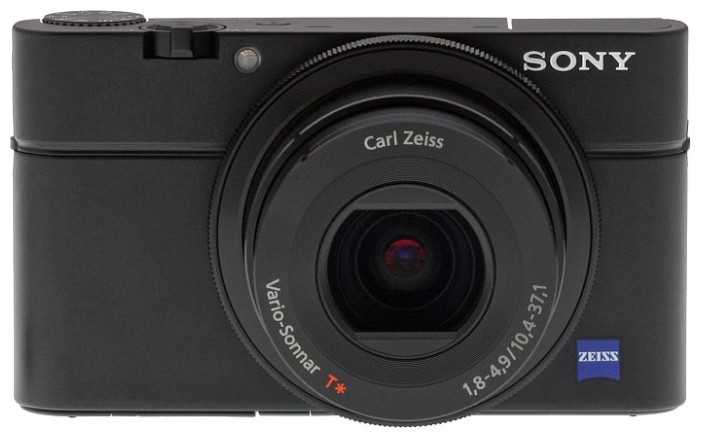
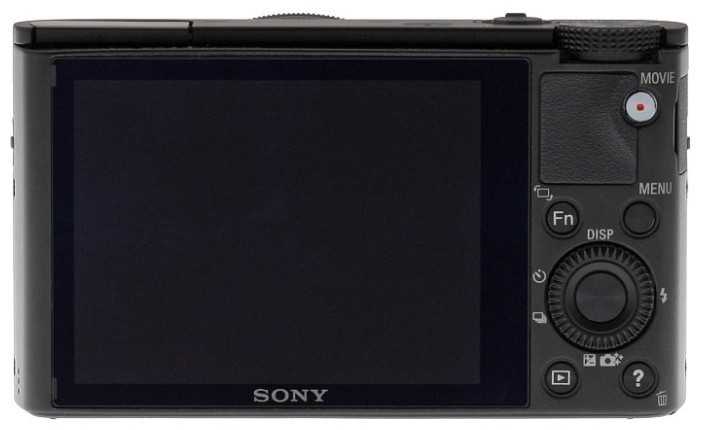


Рейтинг:

 Хорошо
Хорошо
Краткие характеристики:
- 20.90 МП
- 13.2 x 8.8 мм
- Zoom: 3.60х
- RAW
- до 10 к/с
- видео до 1920x1080
Где купить
Фотоаппарат Sony Cyber-shot DSC-RX100
|
Компактный фотоаппарат, черный | Яндекс Маркет | 2 530 ₽ | Посмотреть |
|
Компактный цифровой фотоаппарат (мыльница) Н13 | Яндекс Маркет | 3 800 ₽ | Посмотреть |
|
SONY Фотоаппарат SONY CYBER-SHOT DSC-H300, черный | Яндекс Маркет | 24 700 ₽ | Посмотреть |
|
SONY Фотоаппарат Sony Cyber-shot DSC-W610 | Яндекс Маркет | 25 400 ₽ | Посмотреть |
|
SONY Фотоаппарат Sony Cyber-shot DSC-S2100 | Яндекс Маркет | 25 400 ₽ | Посмотреть |
|
SONY Фотоаппарат Sony Cyber-shot DSC-W510 | Яндекс Маркет | 29 400 ₽ | Посмотреть |
|
Фотоаппарат Sony Cyber-shot DSC-H400 | Яндекс Маркет | 31 000 ₽ | Посмотреть |
|
Sony Cyber-shot DSC-QX100, Black Цифровая компактная фотокамера-объектив | Яндекс Маркет | 55 500 ₽ | Посмотреть |
|
Компактная Фотоаппарат Sony DSC-RX100VII, 4K, черный | Яндекс Маркет | 192 000 ₽ | Посмотреть |
|
Фотоаппарат Sony Cyber-shot DSC-RX100M7, черный | Яндекс Маркет | 200 000 ₽ | Посмотреть |
710 отзывов пользователей о Sony Cyber-shot DSC-RX100
Пользовались
Sony Cyber-shot DSC-RX100?
Поделитесь своим опытом и помогите другим сделать правильный выбор

Скромный эксперт
30.07.2013
10/10
Оценка пользователя
Великолепно
I've had the RX100 for a few months now. I don't go out of my way to write reviews very often, but this is one of those rare products which *really* deserves it. If you're like me- coming from various point and shoots with some experience with borrowed DSLRs- I expect you'll be blown away. I'm sure it sounds like hype to a lot of people, but the RX100 really does provide performance similar to an APS-C DSLR in a tiny package. If you're thinking about entry/mid level DSLR like the Canon Rebel T5i or Nikon D3200 and not planning on getting lenses more than the kit 18-55 zoom that it comes with, I'd seriously recommend checking out the RX100.When shopping for a new camera at the beginning of 2013, I started by limiting myself to various advanced compacts like the Canon S110, Panasonic LX7, Olympus XZ-2, Nikon P7700, Canon G15, and Fujifilm X20. The RX100 was so expensive that I dismissed it out of hand- I'd always spent less than half the RX100's price for a camera and the idea of a six hundred dollar plus (!) point and shoot seemed absolutely insane. Because of this, the nearly as expensive X20 and XZ-2 went out the window. After reading way too many reviews and comparing way too many photos, I eventually found myself contemplating the RX100 and decided to just go for it after getting a nice end of year bonus. I'm very glad I did!What I love about this camera:1. Fast and accurate Auto Focus: The AF is very fast, even in low light. Faster than some of the DSLRs I've used with the 18-55 kit lens- easily beat the Nikon D3000 and D3100 and faster than all of the NEX cameras I've used, including my NEX-5R with kit lens. Has far fewer misfocuses or failed AF than my NEX-5R or my wife's EOS M has.2. Fast operation: Shutter lag is short, images pop up for review instantly, and a half shutter press lets you take another photo with no delay. I never have to sit around and wait for the camera to be ready for me.3. Configurability: The menus are less intuitive than a Canon PowerShot for me, but once you have your Fn menu and other buttons all set up you never have to go menu diving, which I really like. I'm able to change settings very quickly.4. Crazy Battery Life: This doesn't always get mentioned, but it's important to me. The second day I had the RX100 I went to a concert, starting off with a full battery. At the end of the night I had taken 500 shots and still had 50% battery life. It's genuinely shocking to me. Mind you, I only use flash and didn't that night.5. Wonderful lens: IMHO, it outperforms every DSLR kit lens I've used in color, contrast, and clarity. There are some compromises they had to make to keep the lens small, like sharp corners at wide angle fully open but what a lot of reviewers seem to forget is that you see the same type of compromises on most compact zoom lenses. My RX100's lens performs better than my NEX-5R's 18-55, that much is for sure.What I don't like mostly has to do with the kind of dumb design decisions that Sony seems to make for all of their NEX and Alpha cameras:1. Auto Exposure Bracketing (AEB) is very poorly designed. Only +/- 0.7 EV?! And you have to hold the shutter down for the AEB sequence, introducing camera shake and movement. Pretty dumb.2. You can't use the self-timer with AEB - again, needlessly making AEB useless. Bad design.3. No option for a remote: they fixed this with the RX100m2. I have to admit, I was actually kind of surprised- good to see Sony listening to users! Bummer they couldn't make a way for the new wired remote to work with the RX100, though.4. Would have been nice to have some sort of slow-motion video (120 or 240 fps or better) and time lapse feature built-in5. Bulb mode: without a remote, the Sony way of doing Bulb mode is almost useless. I'm not going to hold the shutter down with my finger for a 20 minute star trail! :PIn short, the RX100 has been an excellent all-around camera for me. Great for landscapes when hiking and trail running and it keeps up with my kids in all kinds of light. It performs as well as or even better than a lot of entry level mirrorless and DSLR cameras at higher price tags than the RX100. If you're thinking about getting a DSLR or other interchangeable lens camera and don't plan on buying any lenses other than the one it comes with, you really owe it to yourself to consider the RX100.
Скромный эксперт
14.12.2012
10/10
Оценка пользователя
Великолепно
Expectations where very high when I purchased this little camera. Nearly every review hailed the RX100 as the best compact camera available today. I do photography as a hobby and like to carry a general purpose camera everywhere with me.I have previously owned a Canon S100 but sold it due to underwhelming performance and an E18 lens error. I rarely use my DSLR anymore and figured a solid compact camera I could take anywhere would encourage me to take more photos. I've been using the RX100 for a couple of months and here are my impressions so far:Pros:-Image Quality: I've owned roughly a dozen compact cameras over the last six years including an S100, several Panasonic travels zooms, a Sony HX9V, Nikon P100, etc. They're all had their pluses but in terms of overall image quality (especially low light), the RX100 blows them all out of the water. Photos taken at 1600 ISO are perfectly usable; something I would never have thought with a compact. Overall, images look great!-Build quality: The camera exudes quality. It feels solid and well built. Hopefully it will last for years and be reliable.-Ergonomics: I have large hands and the camera feels comfortable to hold and use. I ordered a Richard Franiec grip because at times the camera felt a bit slippery. The buttons are small but that has never really been a problem.-Screen: the screen is sharp and reasonably bright although I found it slightly too dim in direct sunlight. There is a mode to boost the brightness however.-Customization: I like the ability to customize some of the keys on the back. Also, you are able to customize the menu of the Fn button for frequently used settings making it easy to change things like metering mode and focus points on the fly.-Video: the video quality is great. The camera records in stereo. Zoom and AF are available while shooting.-Battery: battery life is good, not great. However, I do appreciate that a genuine Sony battery is around $30; very reasonable in my book. My old Panasonic took $50 genuine batteries. You can always go third party as well and I am sure there are plenty of fine choices.-Autofocus: the AF is very fast and reasonably accurate. No complaints in this department.-Flash: the flash itself is average and I never really use it. What is nice however, is the ability to bounce the flash. It really does work in some situations and is a nice compromise to a full flash.-Display modes: Sony has a nice way of showing basic shot info in a black bar at the bottom of the screen during shooting; no overlaying icons on your image. You can see more info but this is a nice, uncluttered way of displaying shutter speed, aperture, EV, and ISO.Cons:-Control ring: the control ring is a great way to change functions and the RX100's ring has a nice weighty resistance but it just takes too long to go through settings. Say you're in aperture priority mode and you want to change from f/1.8 to f/8 you have to sit there turning the ring far too many times. It just isn't sensitive enough. I ended up disabling the ring and just using the control wheel on the back of the camera. I am sure this is something they could change with a firmware/software update in the future.-Macro focusing: at times the camera struggles to focus up close at 28mm even past the minimal distance.-Playback: videos and images are stored in separate folders. This seems like a really awkward way to organize files. Also, when you zoom during playback it defaults to 100% as opposed to starting incrementally from 0% zoom. Small, but these two things really annoy me.-Charging: I buy the argument that in-camera charging is convenient but I would have preferred an external charger so I can charge extra batteries on a trip. This somehow seems like cost cutting on Sony's part and is an unfortunate trend among many cameras these days.-No 24p: not sure why this isn't an option but it would have been nice to have. Again, something I hope they can add later with a firmware/software update.Power saver: some RX100 owners are reporting that their batteries are draining even when the camera is not in use. One hypothesis is that the playback button (which powers on the LCD and not the camera) will get pressed in a pocket or bag and drain the battery. It was also discovered that if the camera detects any movement the power saver feature will not work. This has happened to me one when the camera was in my backpack and I found that the battery had drained overnight. Not the end of the world but potentially frustrating - carry an extra battery!-Price: yes it's hard to criticize the price when no other camera combines this IQ in such a small package but I would have liked this to be priced under $600. I'm sure the price will creep down eventually though.Neutral:-Size: this camera produces amazing images considering the size. That being said, it is a tad too big to fit comfortably in a jeans pocket (at least the front pockets).-I sometimes find myself wishing for a 24mm wide lens instead of
Скромный эксперт
25.07.2012
10/10
Оценка пользователя
Великолепно
This review is for pro photo/videographers who are buying this as a pocket cam. You will be pleased I think. Using firmware 1.0 for this review.My preferred settings lean toward cinematography where all-manual operation is used most often, and it's cool a pocket camera supports that way of working now. For photographers, there are cool features such as DMF focus (much like autofocus with full time manual override), AEL lock can be set to the center button, etc. They did not dumb down the computer inside this from the Alpha or NEX levels it seems.You can get the Freniec grip when it comes out but I suggest instead a bottom handle for video such as BARSKA Accu Grip Handheld Tripod System (which is too small for larger hands, but is fine for such a light payload) if not one of the cowboy studio plastic shoulder rigs. This will work well on the flycam nano I think. It has optical image stabilization "steadyshot" in concert with digital IS and both crop the image a bit. There are separate SteadyShot settings for stills and video, "Active" is stronger crop factor than "Standard" which would be for more stable situations. It works well enough for me to handhold 1/20th OK for stills and doesn't look bad on video.Tragically, there is no 24p, but there is 60p (or 50p in those countries, can't have both in one body, I figure they are trying to prevent gray market sales with that restriction). The 60p should be shot at 1/60th shutter speed or faster, you will have motion artifacting below that. The problem of course is 1/60th at 60fps looks too clear and smooth to be cinematic, it's video. But "nearest neighbor" rate conforming works OK, and retiming rate conform, to make 40% slo-mo, works fine too, although not a really impressive slo-mo like an FS700 can do. There is no timelapse support and no remote to workaround that with.For creative style, I suggest Standard -3, -3, -3. You could do -2 saturation but you are trading off detail in the reds with rich redness. Dynamic range optimizer you might get away with, it doesn't seem to change much while shooting when not on Auto, and boosts the shadows for a flatter response curve. It does not affect the highlights like Canon's HTP. I like to shoot somewhat flat and push in post so maybe DRO 1 is a good thing. There is a handy meter offset next to the aperture readout that tells you what it thinks you should adjust in EVs, based on the metering mode you have selected.There is a lot of coarse blue noise at ISO 3200. DRO boosts this noise a lot, so I would only use DRO at low ISO if ever. The worst thing for video regarding noise is you can't prevent digital zoom from being available...it is locked on in movie mode, and if you zoom past optical (there is a visual detente but not a practical one really) your noise profile will change (to coarser) and that may defeat your NR profiles you are applying, causing headaches. They should allow the disabling of digital zoom in movie mode, even though in daylight it's good.Macro is available, to the 2 inch point, only at the widest end, which is fine. The minimum focus distance is 18 inches or so full tele. Video AF is usable, manual of course is better, but it's nice for run and gun and the manual control ring turns to Aperture control which is very cool for rapidly controlling exposure. Aperture changes this way are far smoother than on Canons. The plastic, but tough looking lens barrel retracts midway a bit but it always out when on.I suggest a screen protector for the LCD as you want this in your pocket guilt-free, otherwise there is no point. The LCD is good, VGA but bright. You could glue on a cheap magnetic loupe to make it an EVF (and cheesycam is coming out with magnetic CP and ND filters for the lens) I suppose. There is a micro HDMI port on the bottom, immediately next to the tripod mount, which makes it hard to use without a clever 1/4-20 rig, which I found I could do. Worse is the battery and memory compartment cannot be accessed period without unmounting from tripod. Odd restriction.Another odd restriction is all the JPEG-only things can't be done in RAW + JPEG. Why can't I have both an HDR photo and its RAW ingredients? My 5D3 allows this. So if stuff doesn't work it may be a mode restriction. HDR of 6EV range looks more like 3EV range, but it is nicely graded and not like one of those paintings (though that may be one of the picture styles built in).I often prefer Kelvin white balances which this allows (Canon restricts that to pro bodies), though the color shift thing is a bit coarse for fine adjustment on the RX100. It's very easy to set up custom white balance compared to Canons, but for some reason they make you switch to a stills mode to do it. Expose the still properly and aim at a neutral spot. It will apply to movie mode when you switch, automatically.The bokeh is bit wooly especially toward the corners but there is in-camera correction of CA and distortion and the centers are terrific, which is fine. This isn't
Скромный эксперт
23.08.2013
10/10
Оценка пользователя
Великолепно
I own a Canon 5D mark iii and am a professional shooter. When I want to do personal photo's, I want a smaller camera to carry around that's not DSLR size. I went with the Sony NEX series, thinking this would solve this problem. It did not. I still had to carry around a bag with lenses and the tele lenses were long. The non tele lenses were still too big to put it comfortably in my laptop bag, which goes anywhere I go. I ended up selling the NEX on ebay, as I never used it. I could not justify the near $1700 dollars worth of NEX equipment I had in this small bag. I never felt like bringing it. And the picture quality was good, but not what I expected for having to bring extra lenses.I then went with the Sony RX-100. I needed a compact camera to solve this problem, but I needed one that shoots raw. I am a lightroom user. To my surprise, the images were better than what I assumed they might be. The video was stunning for a compact camera. I love the way the video looks. Although I can't put an ND filter on it, like I did with the nex. I don't really use a compact camera for professional use anyway, so I don't care if the shutter speed jumps a little in daylight in video mode. I realize you can put an ND filter over it, but that ruins it being a compact camera that I can have anywhere. I don't want extra accessories over it. Not even a case. I want to pull it out of my bag and use it.I put a 128GB sd card in it, which is always in it. Incase I see something I want to take video of that ends up lasting a long time. I also carry two 32GB cards in the bag incase the 128GB becomes corrupt. The rest of the SD cards I keep with my Canon 5D as it takes SD and CF cards.I also bought the wall/car charger for it, that came with 3 off brand batteries. These off brand batteries work just as good as the Sony battery that came with it. I can charge in the wall and charge one inside the camera via USB at the same time.If you are a pro shooter, looking for something that you can carry around that shoots raw and produces good images and video. This camera is great.The only con I have with it, is the HDMI port is on the bottom. You can't put it on a tripod and then hook the HDMI cable to it. I wanted this feature because I have an external monitor beside my computer. I wanted to plug it in via HDMI so I could see it recording me and make sure I'm in the frame. But I have to guess if I'm in frame when I'm recording a video of myself doing a tutorial video.The new version of this camera has the HDMI output in the right place. But it cost more, and honestly, for my use it is not worth more than this price. As I will just go to my pro rig when things get too expensive.It's not for people who want to shoot a ton of telephoto. But I am not a telephoto guy most of the time. I shoot a lot of wide angle landscapes and just general video.I recommend this camera. I would not get the mark ii version of this camera, unless you do not have a professional rig and this is your only camera. If this is a second camera, this one does fine. For example, the new version has a hot shoe. I do not want my compact camera to have a hot shoe because the idea is for it to be compact. I don't want to attach accessories onto my compact camera. That is my entire purpose for having a professional camera such as my 5D mark iii.The smaller the better for this case. And this camera is smaller than the NEX, the lens provided is better than the nex lenses, and the video looks better than the nex.
Скромный эксперт
17.02.2014
6/10
Оценка пользователя
Плохо
This camera now costs around 400$ which is very similar price to e.g. Canon S120.I expect more and more people will jump in to buy one due to all these remarkable reviews and the price.The very first thing you should know: if a pocketable camera is not a must for you, there are just too many better choice out there. There is plenty of small m43s that can fit a very small waist pouch.To start with some good things: RX100 will give you excellent video and pictures of landscape/buildings on a nice sunny day. It also has an excellent LCD.However, I have other, better, travel cameras. I needed this one for around the house(e.g. kids parties...) and that's where this camera ultimately fails: kids are running around, in and out of shade, sometimes facing the sun on the beach so fill in flash is the must. RX100 has the recycle speed of no less than 5 sec which is on par with... well, nothing is that bad. More importantly, I was hoping that the recycle speed will be faster if the flash compensation is at minimum. And yes, it is faster - in continuous shooting mode it's around 2sec. But if you keep the flash at minimum, and don't shoot in continuous mode (with your finger on the button all the time) , it's still 5sec. An obvious bug in SW that kills this camera.The second bad thing is the mediocre lens. There is a few reviews available elsewhere telling you which focal lengths work well with different apertures. This helps getting good pictures on a nice sunny day where you can clearly see the power of this sensor. However, as soon as you are close to the zoom end, or your subject is in the shade, forget about it - the picture quality is so inconsistent that really nothing helps. In fact, I have never seen a good picture coming out of this camera (had two) on the zoom end.The are also many other small quirks - no iso limit, no shutter speed limit (two features every enthusiast camera has for ages...). Also, you must rotate the lens ring some 10 times to go through all the focus range. Ridiculous...This would be a 2 star camera for me especially because the manufacturer is an electronics company which only cares about good marketing, not making some good photo equipment (at least in this range, including nex cameras where they offer the worst collapsible zoom kit lens, probably worth 20$, which they then sell with something powerful like nex6). Sony simply knows that the average Joe will fall for the small size and an excellent sensor so the lens can be a pure crap.However, I give this camera 3 stars since Panasonic, Olympus and especially Fuji don't offer anything pocketable. Fuji XQ1 is something I waited for for months just to realize they failed in their attempt to copy Sony - mediocre lens and poor battery life just because they wanted to fit it into a very small body.
Скромный эксперт
14.10.2012
10/10
Оценка пользователя
Великолепно
I won't overcook the review, because of the many comprehensive and excellent reviews already posted. Just a couple of hints to use this incredible little camera.1. Get a grip! This little puppy has a small gripping surface on the right, and may suddenly squirt out of your hand. Richard Franiec has a grip for sale on Amazon. It's metal and looks very well designed. Costly, though at about $40.00. I got a silicone grip on eBay for $21.00 it works great. It uses 3M stickon like the stuff that holds your auto badges on. I think a grip is a must. Amazon also sells a "flipbac grip" for about $10.00, and this appears almost identical to the one I ordered, but less costly. Should work fine.For those of you like me, who shoot mostly at aperture priority, here's a couple of things to save you time when setting up your camera especially for low light work without flash.2. With the aperture priority setting, the rings, front and back, work the same and control aperture (when set to aperature). As you adjust the aperture, the speed follows to maintain the EV (exposure value). You can use either ring to adjust aperture; I prefer the rear one.At the bottom right of the LCD, aperture and speed are displayed. After you set your aperture for desired depth of field and/or light conditions, note the speed. If it is less than 1/8th sec, you'll need to up the iso. The camera's anti vibration system will give you a couple of stops, but, of course, won't stop artifacts from subject motion.Now how to set the function button to complete the scenario; Here's how mine is set.In the setup menu, under number 2 of the gear icon find the function setting. You have 7 functions to program optionally. I used 3. Set number 1 for iso, number 2 for white balance and number 3 for HDR to control shadows. When you press function the choices are displayed at the bottom of the LCD and selected by the rocker. Changes within each function are controlled by front or rear rings.Ready to take a picture: Set your aperture for desired depth of field using ring or wheel.a. Check aperture and speed at bottom right of LCD, If the speed is too low for a clear shot, press function and select ISO at the bottom of the LCD with the rocker. Increase ISO with the ring or rocker wheel till you get adequate speed for your aperture setting. With a large sensor at work, there is very little degradation below iso 1600. Once you press the function button, the front or rear wheels now control function button settings that are displayed at the bottom of the LCD. So rock to the desired function and ring to adjust within that function.b. Then select the white balance icon. If the screen does not look realistic, you can set it to one of the many temperature options. If none work out, use "custom". Then press the lower rocker to get the custom white balance grid and adjust accordingly with the rocker button. It's nice that the screen changes to reflect how adjustments will effect the shot.c. Last, if you want to exaggerate (or minimize) either contrast or shadows, select HDR and you'll get the HDR screen to allow more or less averaging of subject/background illumination. Very helpful for brightly lit subjects with dark backgrounds or vise verse. The camera will take 3 rapid shots, so be steady. Works well without a tripod, though if you set your ISO up enough.There are lots of other functions to select for your 7 slots such as picture effects, size, orientation, aspect ratio, exposure and flash compensation. If you use a function regularly, set it up and it'll be available at the bottom of the LCD when you press the function button.That's it. I found I could take pretty good low light shots with just these settings on aperture priority, getting depth of field and low light control within the understandable limitations of a camera having the RX100's focal length. It also has shutter priority, 3 memory programmable scenarios, and a fun to use panorama function as well. If depth of field is not an issue for outside shots, just use one of the auto settings. They work great, and the pictures have excellent depth and vibrancy in natural light.
Скромный эксперт
29.06.2012
10/10
Оценка пользователя
Великолепно
I bought it to "replace" my Nikon D90: I need a really small camera to go with me on my hiking trips, which I found even a D90 with a 24-120mm VR is too heavy for me. Originally I was considering Fuji X10, but delayed my purchase because of the WDS issue and eventually buying RX100 instead.In short form:Pros -Solid build in compact form factor, and lightVery good wide angel performance"Manually adjustable" flashReasonable ISO performance at its size (1600)Cons -Becomes f/2 after going up just 1mm in focal lengthLacking in telephoto performance: wanted f/4 instead of f/4.9 (2/3 f-stop faster)Want faster boot and shutdown timeToo many pixels: lower pixel count may boost "usable" ISO to 3200, higher FPS etc.No GPS / no way to use cell phone as a GPSIn long form:The camera itself is very small, really small enough to fit in my pockets. However, most of the time it will come with me in my bag instead. Since it tightly fits in my pocket now, I don't expect it to fit in my pocket when I get the leather case which comes with the camera a month later (out of stock for now). I had also considered buying m4/3 and NEX, but what's the point? GF5, for instance, is 362g with the 14-42mm X lens (f/3.5-5.6) attached while RX100 is 240g. Comparing the two using equivalent aperture of 35mm (full frame), at the wide end RX100 is around 1-stop faster (f/4.9 vs f/7), while at 84mm RX100 is less than 1/3 f-stop slower (f/11.2 vs f/12.25). I do not and cannot own all different kinds of cameras for testing, but according to what I see from review sites taking sample photos of the SAME object, I will say that GF5 with the kit 14-24mm X lens produces picture very close to but not as sharp as RX100, particularly at ISO 1600 and onward.RX100's boot and shutdown is around 3 seconds each. Wide angle at 28mm f/1.8 is really amazing, especially that it also have pretty short minimum focus range (roughly 10cm). Telephoto, on the other hand, is a bit weaker at 100mm f/4.9 with a not so great minimum focus range of around 60cm (rough measurement again). Even though the camera is having f/1.8 as the fastest aperture, it goes up very quickly to f/2.0 when the focal length just go up 1mm from the widest; However, it keeps itself in f/4 until going pass 66mm, which is fine and is much better than many lenses already. The picture quality is very good (bokeh is pretty nice), and I see its "usable" high ISO is 1600, which is prefect for outdoor activities but a bit lacking for indoors. I must admit that I am fascinated by the fact that the lens used in RX100 is "Carl Zeiss" : not really produced by Zeiss I know, but at least they are "involved", and I am sold by the T* coating. Perhaps that's also why it performs better as I'd mentioned above?The flash can be tilted up manually as a bounce fill-in flash, though I have to go through the menu instead of using a shortcut button to activate the flash. This is also a very important feature for me to choose it over Fuji X10. With the 4GB card installed, the camera reports that it has capacity to store around 160 photos in RAW and JPEG (small). I generally shot my photos in RAW for archive but upload JPEG to Facebook directly instead of using LR4 to convert and upload, hence my settings preference. I have no idea about its battery performance, but it should be adequate for one-day use in my case. The camera takes Micro USB for charging and comes with a 1.5A@5V USB charger, and it seems that I can charge it by my computer. However, computer USB port generally supplies 500mA at most, which is 3 times lower than the charger, so I don't think it is a good way to recharge the camera. Yet, using Micro USB, it means I can also use a more generic "portable battery" that works for many devices instead of buying a spare battery, though it may seems more bulky. Perhaps the only missing feature I also wanted is GPS, or the ability to use cell phone as a GPS device. I want Geotagging!
Скромный эксперт
23.09.2012
8/10
Оценка пользователя
Хорошо
This is being touted as one of the best ever pocket cameras, with a big sensor and high megapixel count. It has more features than I could use in a lifetime and will probably do anything most people would ever need or want to do.However, it has no optical viewfinder, just the digital screen, and I cannot see it well enough to compose photos outdoors. I knew there was no OVF, but a respected reviewer for a major newspaper swore that it was easy to see in bright sun. Maybe for him; not for me.After using the camera at an outdoor music festival over one weekend, I packed it up and sent it back.The technical aspects of this item have been well-covered by other reviewers, so I'll just mention a few things I liked and didn't like.GOOD:I really liked the USB cable that plugs into a PC or an electrical plug - this seems to be standard with electronics now (my iPad and cell phone both have this feature). Some people have objected to having to charge the battery in the camera, but I did not find this to be a problem.I also liked the ability to directly transfer photos to the PC. I have three card readers, none of which work 100%.This is truly a pocket camera, very small, but very solid and heavier than you would expect from its size.There are many other features that I would have used and no doubt liked if I had kept it.Pictures were good, but not better than the DSLR I've been using. Due to my inability to compose, the subject was cut off on the side of some shots and virtually all shots were off level.BAD:No optical viewfinder.Shutter is VERY sensitive. Pushing half-way down to focus was difficult, since "half-way" seemed to me about 1/16 of an inch. The shutter went off as soon as I touched it a number of times.The camera has two "hooks" on either side for a wrist strap, which can also be connected to a neck strap. They are tiny, and I could not attach the strap, and of course, the instructions don't cover this since Sony probably assumes it's "obvious." This is not minor, since this camera begs to be dropped, and its shape, like a small, smooth brick, provides nothing to help with the grip.The flash location is terrible - on the top left where I put my finger to try to hold the camera. You have to learn to move that finger to the back, which means touching the view screen.You can't delete the pictures from the SD card from within the PC (there's a "delete all" option in the camera's seemingly endless menu). Not a big deal, but an extra step.The mode dial, on the top right, seemed to turn too easily. A couple of times it got turned in the process of taking the camera out of my pocket.Transferred photos were saved as read only files; I had to go into Properties to change this before I could save pictures modified in PhotoShop.Bottom line: Test this camera in a store before buying.UPDATES 9/24/12I wanted to mention one more thing that I really liked about this camera - it produces very large .JPG files, around 5 Mb. This allows one to do extreme cropping and still have a great quality photo. I took a horizontal photo of a man on stage, showing the full, mostly empty stage. I cropped it to a vertical image of just the man; still looks great. This is about 1/4 of the total original image, reduced to 1000 pixels high: [...].Clarification: There is no neck strap; there are two adapters that connect to an optional neck strap and also serve as a wrist strap. Could not attach these adapters.What I bought instead: Nikon Coolpix P7100. Has lots of the same features, costs less, and the view monitor was easier to see outdoors. I'll review it under that product after using it a while.
Показаны отзывы 1-8 из 710.
Где купить
Фотоаппарат Sony Cyber-shot DSC-RX100
|
Компактный фотоаппарат, черный | Яндекс Маркет | 2 530 ₽ | Посмотреть |
|
Компактный цифровой фотоаппарат (мыльница) Н13 | Яндекс Маркет | 3 800 ₽ | Посмотреть |
|
SONY Фотоаппарат SONY CYBER-SHOT DSC-H300, черный | Яндекс Маркет | 24 700 ₽ | Посмотреть |
|
SONY Фотоаппарат Sony Cyber-shot DSC-W610 | Яндекс Маркет | 25 400 ₽ | Посмотреть |
|
SONY Фотоаппарат Sony Cyber-shot DSC-S2100 | Яндекс Маркет | 25 400 ₽ | Посмотреть |
|
SONY Фотоаппарат Sony Cyber-shot DSC-W510 | Яндекс Маркет | 29 400 ₽ | Посмотреть |
|
Фотоаппарат Sony Cyber-shot DSC-H400 | Яндекс Маркет | 31 000 ₽ | Посмотреть |
|
Sony Cyber-shot DSC-QX100, Black Цифровая компактная фотокамера-объектив | Яндекс Маркет | 55 500 ₽ | Посмотреть |
|
Компактная Фотоаппарат Sony DSC-RX100VII, 4K, черный | Яндекс Маркет | 192 000 ₽ | Посмотреть |
|
Фотоаппарат Sony Cyber-shot DSC-RX100M7, черный | Яндекс Маркет | 200 000 ₽ | Посмотреть |
График изменения цены Sony Cyber-shot DSC-RX100
Характеристи Sony Cyber-shot DSC-RX100
Информация о характеристиках носит справочный характер.
Перед покупкой уточняйте характеристики и комплектацию товара у продавца
Обзоры и руководства на Sony Cyber-shot DSC-RX100

Похожие товары с лучшей оценкой






Wizemart © 2026.
Рекомендательная система по умному выбору товаров по отзывам и рейтингам
