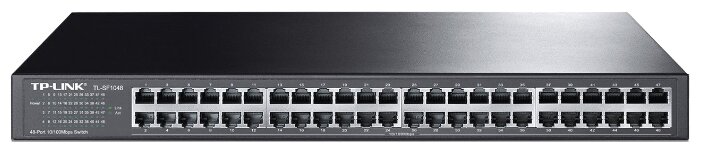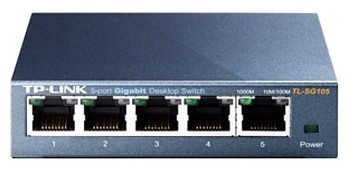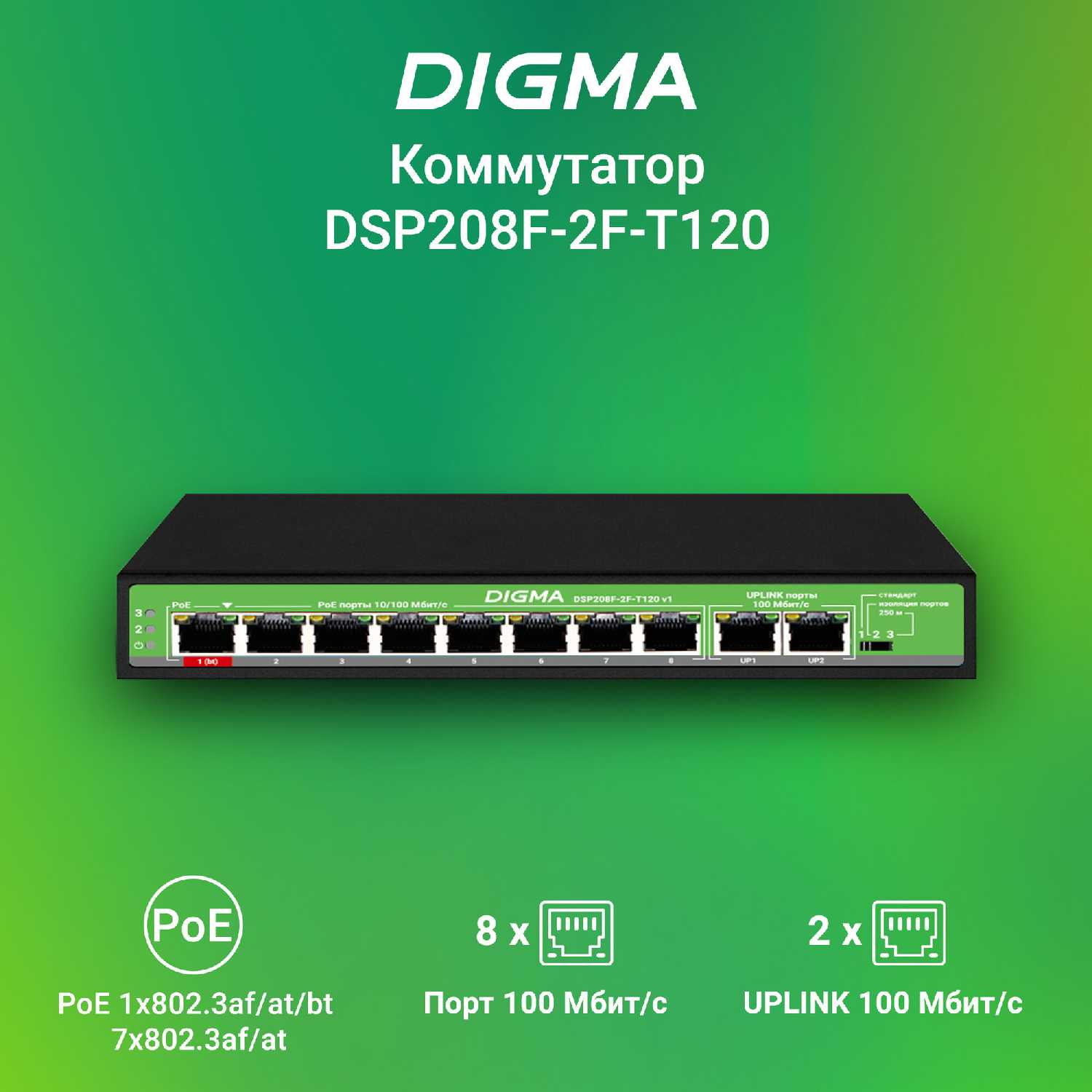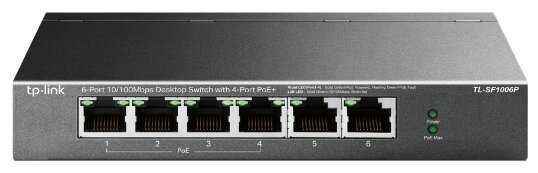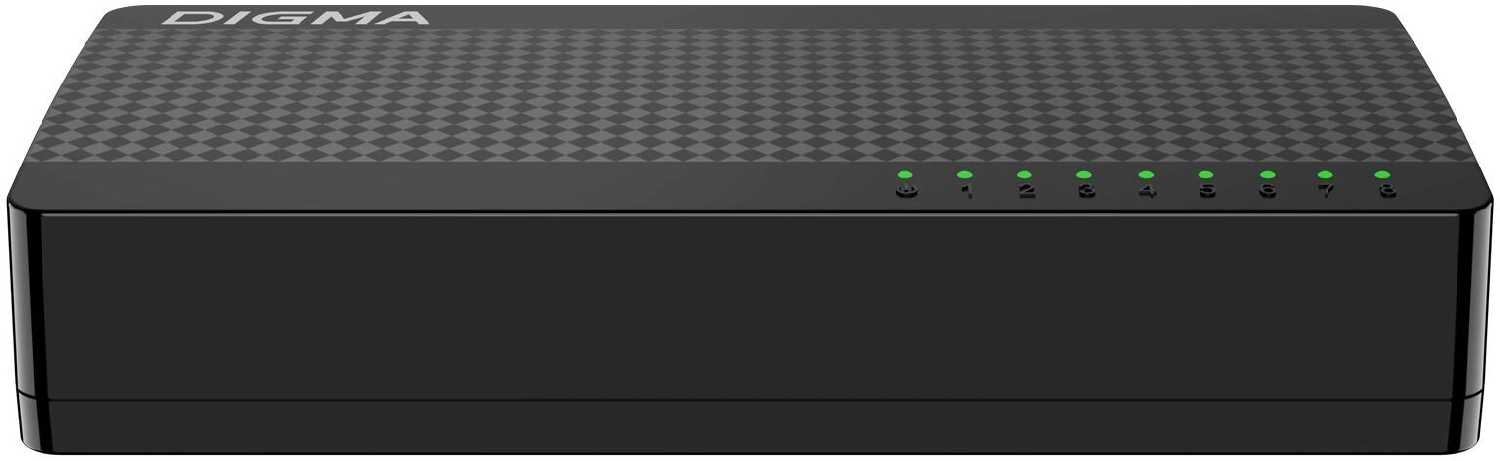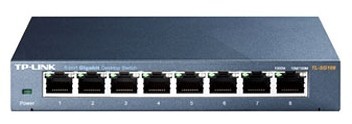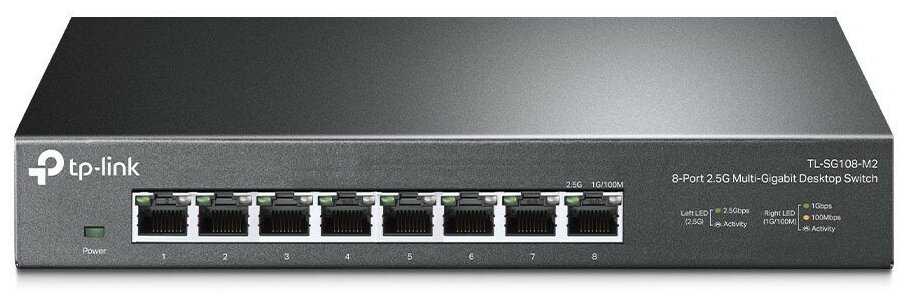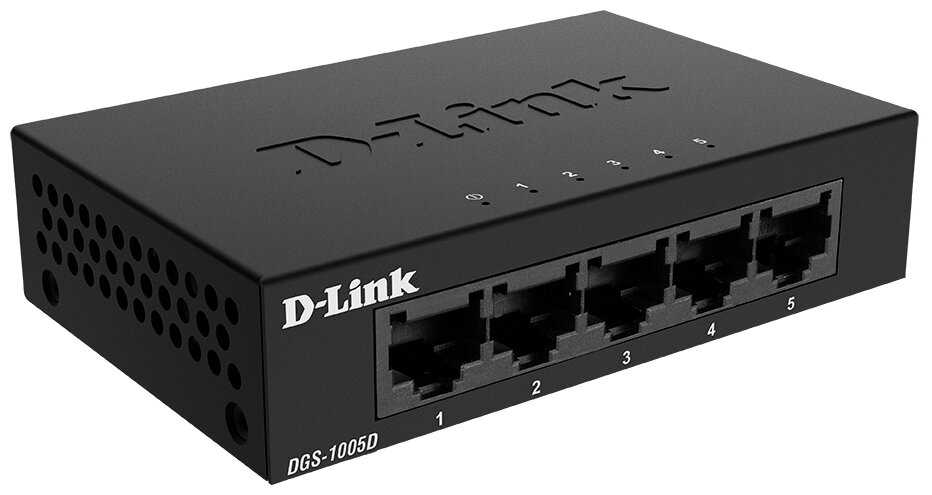
+ Все удобно, в комплекте крепления. Провод питания длинный, около 1,2-1.5 метра. Упаковка очень удобная.
- Мне кажется великоват для достаточно простой железки.
Пульсар-8NIZF
07.03.2013
8/10
Оценка пользователя
Хорошо
I have a gigabit hard wired network throughout my home, so I need gigabit switches wherever switches are used. I have several TRENDnet 8-Port Unmanaged Gigabit GREENnet Standard Switches in my home, and this inexpensive one seems to work just as well. Both remain cool to the touch, are energy efficient, and automatically detect which ports are in use to conserve power. Both automatically detect whether you are using standard or crossover cables, and both work fine with either type.If you are using this to connect your devices to the Internet, chances are any good switch will work for you. If you are copying large files throughout your network, such as copying a 7GB recorded TV program from one computer to another, you want it to go just as fast as if you were copying from one high speed drive to another within the same computer. This will handle the load just fine. You won't find yourself waiting for several minutes, as you might with a 100base-T switch.One limiting factor I hit was that if the ends of all your cables have boots surrounding the plugs, then the fit might be tight or even too close for all the cables to go in. But that's the case with other switches too, and won't be a problem with most commercially terminated cables.Another factor, although it's true for the Trendnet also but is not a universal issue, is that the port numbers are printed on only one side of the lights. So if you mount this to the wall, the numbers will be upside down.When comparing this with the Trendnet switches, there were a few other notable differences. The Trendnet is more expensive and has a much higher list price, although the typical selling prices are closer.The Trendnet has a solid metal case, and the TP-Link has a cheaper plastic case. In either case, I keep mine mounted to the wall and don't anticipate any real world difference.The Trendnet has two rows of LEDs, making it easy to tell at a glance whether there's an active link, whether there's data being transmitted, and whether the link speed is high speed. For practical purposes, it would be good to be able to tell at a glance what the connection speed is, but the Trendnet will tell me if it's 100 or above, or below 100. So without being able to tell at a glance whether it's 100 or 1000, I don't consider that a significant feature. TP-Link's single row of lights tells me all other relevant information.Technical specs are pretty close, although the TP-Link boasts a 15K jumbo frame rate, vs 9K for the Trendnet. That makes it theoretically better for larger files, but for practical purposes the limiting factors in my network will be hard disk speed. And even my largest video files will transfer in under a minute either way.Both are power saving units. The Trendnet claims to save up to 70% power vs 80% for the TP-Link. I couldn't measure any difference and would have to take long term measurements to find any, so I doubt they would be significant.The power adapters are virtually the same size and shape, with minor differences in voltage. The TP-link adapter has the company logo on it, as well as the company name on the sticker. That may not seem like a major advantage, but I have more power supplies and adapters than I can count, and matching them up isn't always easy.The Trendnet has a three year warranty, and TP-Link offers a two year warranty, according to the website. They didn't make it easy to find that out. Generally if a product like this doesn't fail in the first few months, it's not likely to fail in the next few years.Overall, the TP-link comes out ahead on most all of these very minor points. Since the price and the power adapter are the only ones that would make a practical difference for me, even if minor, I can't see a compelling reason to get the Trendnet instead. But I can't see a reason to stay away from it. Either way you will get a quality product, and if you decide to get this to save money, you won't be any worse off for it.
Аргонавт-0LGZZ
07.04.2013
8/10
Оценка пользователя
Хорошо
All the Gigabit Ethernet ports on my wireless router were in use and I needed to connect another device, and the 8 Port switch from Chinese company TP-Link looked like a good solution. I also wanted to change some other devices from wireless to wired connections, and leave room for future expansion."N" wireless (Wi-Fi) is the predominate connection method and the advertised speeds are very fast, 300-600 Megabits per second (Mbps) with even faster versions appearing in the market. In use, wireless is actually much slower than the stated speeds and prone to fluctuations and interruptions, which is especially bothersome when watching video content, such as movies on Netflix or Hulu, which will sometimes pause or stop entirely.Because of these problems, I decided to go back to good old wired connections, and the current standard speed rate is 1,000 Mbps, commonly known as 1000BaseT, also called Gigabit Ethernet. Wired connections are also much less susceptible to interference from outside sources, such as wireless signals, phones, remote controls, etc. So, I expect to be able to watch movies without any interruptions, and enjoy generally faster speeds on all network-related communication. Using wired connections, if video content or the Internet is slow, the Internet provider will be the cause, not my network.The instructions for the switch are simple: place it on a flat surface, plug in the power, and then plug in the devices. So, I powered it up, connected my devices and added a connection to the wireless router.I used Category 5e (Cat5e) or 6 (Cat6) cables for all of the connections. The instructions in the Quick Install Guide that came with the product, as well as those in the online User Guide recommend category 3, 4, and 5 for 10 Megabits (10BaseT) connections, Category 5 and 5e for Fast Ethernet/100 Mbps (100BaseT), and Cat5 for Gigabit Ethernet. This is clearly a mistake - I believe they meant to recommend Cat6 for Gigabit, but even if that was their intention, both Cat5e and Cat6 are approved for use with Gigabit Ethernet.Most vendors do not recommend using Cat5 with Gigabit Ethernet because much of the wire sold as Cat5 will not operate at full speed in Gigabit networks, even though it is good enough for 100 Mbps networks. Gigabit Ethernet devices will sense that the wire is not performing well and drop back to 100 Mbps. Many switches use different colored lights to indicate the speed of the connection, but this one provides no way to determine the speed of the connection.This switch only indicates whether or not the connection is working, but not the speed. In an effort to view the connection speed I checked the Windows computer I'd attached to the switch, and it showed it was operating at the full 1.0 Gigabit speed. Note that if replacing a 100 Mbps switch with this switch and continue to use old Cat5 cables, probably no benefit will occur, other than possible power savings.I streamed video for a baseball game, basketball game, and a movie on devices attached to the new switch without interruptions of any kind, which is an immediate improvement over my previous wireless setup. Files copied between machines connected to the switch were noticeably faster as well.The switch has two "Green" features, described as automatically cutting the power to inactive devices and balancing power, based on the length of the connected cables. Unfortunately, the switch's lights do not indicate when these features are working, and there is no easy way to verify the manufacturer's claim of up to 80% power savings.
ТехноНаблюдатель-1WOPP
03.04.2013
10/10
Оценка пользователя
Великолепно
.Nice. Quite similar to TRENDnet's switch. Prices are very bouncy and coming down. See Pricing below.Green circuitry shaves $8 to $25 off your electric bill over 5 years. (see Note 1). - - - Intro for Novices - -This is like a power strip for your network cabling. Turns one feed into many. "Unmanaged" means it's dead simple. No configuration, software, or settings. It does not substitute for a router.If your router does not have enough cable ports, this is your answer right here. If you have a network cable running to your TV, but your TiVo, Blu-Ray, Roku, X-box, etc. also want network access, this is the ticket. Or the 5-port version, which turns one feed into 4. - - -PROs and CONs - - -PROs: * Green circuitry saves $ * Nice price (at low tide) - Transformer plug does not block other outlets - Slots on bottom for secure mounting (wall, shelf, or bottom-of-shelf).OKs: - Fit and finish seem perfectly fine - Packaging is green and hassle free - 2-year warrantyCONs: - None yet- - - Compared to TRENDnet Models - - -As of April, 2013, TP-Link and TRENDnet seem to be the two leaders in value-priced green switches. I have both, and like the TRENDnet a little better. But the differences are small. Check prices and just pick one.Slight advantages of TRENDnet: - 3-year warranty vs 2-year - Lower energy cost ???? (was not able to do apples-to-apples comparison. See Note 2) - It's tiny (5.38" x 2.79" x 1") vs small (6.5" x 4.25" x 1.18") - Metal housing- - - Alternatives - - -A 5-port model is about $7 less, on average. A 100-Megabit green model (TRENDnet) is on average about $7 to $12 less than a Gigabit green model. Plenty fast unless you're moving very large files between local machines. - 5-port Gigabit TP-Link Green - 5 port...100M-bit...TRENDnet Green - 8 port...100M-bit...TRENDnet Green - 5 port...Gigabit...TRENDnet Green - 8 port...Gigabit...TRENDnet Green- - - Pricing - - -Prices are very bouncy for these switches here on amazon. There's an "Online Price Alert" that will email you whenever this or any amazon product dips below your target price. Google it. It's nicely done. Or try camelcamelcamel, which also shows price history.- - - Tips - - -Blinking lights - If they bother you, cover them with masking or electrical tape.- - - Notes - - -Note 1: Each watt is 8.76 kWh per year (24x365). That's $ .96 to $2.89 per year (@ $ .11 to $ .33 per kWh). I used a Belkin F7C005 Energy Monitor to check each switch. Green circuitry saves about 1.5 to 2 watts, 24 hours per day.0 ports active:0.5 watts TRENDnet TE100-S80g (Green)1.0 watts TP-Link TL-SG1008D (Green)2.6 watts Linksys EZXS55W3 ports active:1.4 watts TRENDnet TE100-S80g (Green)1.9 watts TP-Link TL-SG1008D (Green)3.45 watts Linksys EZXS55W5-ports active:2.1 watts TRENDnet TE100-S80g (Green)2.32 watts TP-Link TL-SG1008D (Green)Note 2: Energy comparison was between the 100 Megabit TRENDnet model and the Gigabit TP-Link model. There was almost no data traffic, but the apples-to-oranges comparison might be unfair. If anybody has the 8 port Gigabit Trend-Net Green model and a meter, please measure and comment.~~~ Comments & questions welcome ~~~
МехаРейнджер-5SEOC
07.03.2013
10/10
Оценка пользователя
Великолепно
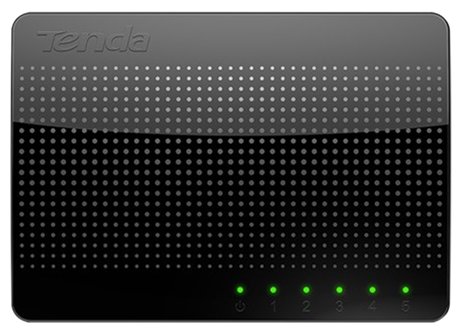
I needed a gigabit switch to add some ports to my Airport Extreme 802.11N (5TH GEN). For some reason, the 3 provided ports just are not enough for my expanding network. The TP-Link Tl-SG1005D seemed like a good choice for a low cost solution.As you can tell from the pictures, this switch won't win any design awards, especially sitting next to my slick white Airport Extreme. In contrast, the TP Link gigabit switch is a utilitarian looking black plastic rectangular box with 6 green LED's in the front. One LED is for power, the other five are for the port status. Unlike most switches, a single green LED handles all of the information. It is lit when there is a link, and it blinks when there is data activity. There is no link speed indicator for each port on this switch, you must rely (and believe) on the hardware to determine that.For the price, you can't beat the TL-SG1005D. TP Link claims they are "The Reliable Choice". If this switch stands the test of time, it's a good deal for all of the features you are getting. This a "Green Switch" which powers down unused and idle ports, and is able use less power based on the length of the cable, all which probably TP Link's closest competitor, TRENDnet 5-Port Unmanaged Gigabit GREENnet Switch (5 x 10/100/1000Mbps Auto-Negotiation, Auto-MDIX Gigabit Ethernet Ports) TEG-S50g (Black Metal) can also do, but at a higher price. The box claims that the energy saving can be as high as 75%. The TP Link TL-SG1005D can also handle Jumbo Frames, though the information on box and user manual differ here. The box claims 15K, while the manual says 9K, so I'm not sure which is correct. As with most TP-Link products the user manual is hard to understand, they really need to hire someone who is better at English to write these manuals. A few last features to note is the Auto-MDI-MDIX which eliminates the need for a crossover cable where situations may warrant one, and also the fan-less design allows for wall mounting.I've only had the TP-Link TL-SG1005D for a few days now, and so far it has been a great speedy addition to my network. It is as if the computer is plugged directly into the router, no difference. Now I have 6 ports to plug things into instead of just three. Keep in mind you lose a port from the router (in my case an Airport Extreme - so now I am down to two on that), and you also lose a port on the switch to the router connection (so that gives you four on the switch). I just hope that "The Reliable Choice" is dependable and lasts a long time, at least it comes with a two year warranty. Oh and one last thing - The cardboard box and internal pulp tray make the packaging easy to recycle.
Астероид-4AXRE
21.03.2013
8/10
Оценка пользователя
Хорошо
My home network seems to keep growing, and now has a router, a 20 port network switch, and there always seems to be another "connected" device showing up. Most of my devices are on wired connections, and I have resorted to using additional small switches to avoid running more ethernet cables to the main switch/router. I added this switch to the entertainment center, which always seems to need more ports.=== The Good Stuff ===* I connected the power, plugged in the network cables, and everything worked just fine. This switch actually plugs into a port on my main network switch, a Netgear 20 port switch, which then connects to a D-Link router. Everything connected to this switch was able to get an IP address with no problem, and all devices seem well behaved.* This is my first switch with gigabit ethernet capability. There are a few devices on my network that have gigabit capability, and when they are both plugged into this switch, transfers sure seem faster. Unfortunately I really do not have a good way of measuring actual speed on this part of the network, so it was more of a stopwatch test.* The switch has functioned for about a month with no hiccups.=== The Not-So-Good Stuff ===* There is no way to tell from looking at the switch if a 100MB or 1000MB connection has been set up. C'mon, how much could 5 more LED's have cost?* There are only 5 ports on the back panel. Since one of these must be used to connect "upstream", this switch only gets you 4 extra ports. The ports are marked 1-5, so I used port 1 as the upstream connection. Worked fine.* While the box was printed in English, the only documentation inside was printed in Spanish. Luckily the switch is pretty much self-explanatory, but might upset some users.* I know it is a futile quest, but I am really not all that impressed by the coolness factor of LED's flashing when I am trying to watch TV. Electrical tape is a marvelous invention, but I would love it if electronic equipment all came with a "blackout" switch to turn off all the LED's unless I ask for them.=== Overall ===* The switch seems to perform exactly as promised. It is not the most attractive looking piece of electronics I own, but it certainly serves its purpose and has performed well with a minimum of fuss. The lack of a 100/1000 indicator is inexcusable, but I will no doubt manage to go on in life. If I was buying this product (as opposed to a free sample), I would have purchased a version with a larger number of ports. No matter what, something new always seems to show up with an ethernet connection.
ТехноНаблюдатель-9JCWK
03.03.2013
8/10
Оценка пользователя
Хорошо
In terms of performance, for most home users, this little 5-port Gigabit switch should be fine, though I would note that if other's homes are like my home, 5 ports may not be enough, or not really enough for more than say a distant room that is connected back to the main router for the home. It seems that I can never find enough network ports to connect all my devices with more and more devices looking for a connection to other devices in the home, or back to their own home bases (devices such as TiVo, Apple TV, video game consoles, Blu-ray players, and things like that).In my own home, I've been able to string cables to the various rooms in the house, and then on the other end of those cables I've connected Gigabit switches so that the network speeds are as high as possible. With the various switches that I've purchased and put into use, the switches automatically determine MDI/MDIX which means there is no need to manually select an "uplink" type mode to connect back to the router or switch on the remote end and no need to plug into any special port on the switch (which used to mean plugging into a designated port and reducing the number of useful ports in the switch).Comparatively speaking, this device works well. It is lightweight (the box that the device ships in is probably heavier than this device) and is designed to be lower power usage and low heat generation. Low heat generation should (hopefully) result in longer life as the electronics aren't stressed by constantly running at warm or hot temperatures. It could and should also mean a little savings in not having to run your air conditioning as long to help combat the heat that is produced.The obvious cost-saving design results in not having a quick visual determination of the port speeds that are being provided on this switch as the designers opted to just offer an indication that a port is in use rather than showing the speeds that are in use on the port. Other switches that I have and/or have used have been a bit higher budget in that area as they show the port speeds with different colors. With those switches it is/was easy to see that a device is connected at Gigabit speed versus slower speeds.Priced very competitively, this device should work well for budget-conscious home users.
Кварковец-9VCTP
26.02.2013
10/10
Оценка пользователя
Великолепно
I just got and installed the TPLINK TL-SF1005D 5 port gigabit desktop switch. I expect to update this review in a few months after living with it for a while.The TPLINK replaces a Netgear FS105 10/100 5 port switch. Before changing over I wanted to see what it meant to have a green switch. I used a Kill-A-Watt power meter - a very cheap unit but surprisingly accurate in my experience.The Netgear FS105 drew a consistently varying amount of power between 2.5 and 3 watts. For calculations I used 2.5 as the number for this switch. The TPLINK TL-SF1005D drew 1.5 watts on startup, but dropped to 1.1 to 1.2 watts after a few moments. Two lan connections are short (3ft) and one is 25ft to an 8 port Trendnet green gigabit switch. The deal with green switches is they reduce power on short run ports or power down disconnected ports to save power. The TPLINK is also a gigabit switch vs the 10/100Mbps Netgear that it replaces. The was a literal swap-out so the comparison should be valid and the TPLINK uses a bit less than half the running power.I went to National Grid web site to find out the current cost of electricity here in Massachusetts. With transmission and a bunch of niggly charges my residential power comes in at about $0.1325 per kilowatt hour. I did the mathc and TPLINK would use 21KWH in a 365 day year, the Netgear 44KWH. The operational savings is just over $3.01/year. So if you are looking for the TPLINK to pay for itself in power savings be prepared to wait 7.5 years or so at current rates!In other matters, the case is molded plastic and is about 50% larger than the Netgear FS105 which has a sturdy metal case, but the indicator lights are on the front rather than on the RJ45 jacks themselves as is the case with the Netgear. It isn't the kind of construction likely to survive being rolled over by a heavy person in a office chair, but who keeps a switch under their office chair?The switch appears to run just fine. I have not noticed any particular improvement in performance yet or any compatibility anomalies. Maybe when I'm doing some large file transfers. With the Netgear I had to occassionally power cycle the netgear as it would hang after some power glitches (all too common here). I'll see how the TP link does with these as times goes by.
Спектроник-5MMAE
28.02.2013
8/10
Оценка пользователя
Хорошо
I've been looking at upgrading my 10/100 switch for some time and the TL-SG100 offers a good value. My router, a D-Link DIR-655 N+300 Extreme-N Gigabit Wireless Router, possesses four Gigabit LAN ports (10/100/1000) already. However, with several printers, computers, game systems, and a server, I need more than those four ports. This is where the 10/100 switch came in.Unfortunately, that meant my file server was stuck using 10/100; anything I transferred to and from was maxed out at 100 Mbps (100 megabits per second is equal to 12.5 megabytes per second). It streamed files well enough, such as playing .mp3s and video files, but it was slow to move the data between different systems.The TL-SG100 provides a max speed of 1000 Mbps (125 megabytes per second) for internal LAN transfers, so it moves my files at a quicker rate than my old switch did. Loading network games between computers is faster too. Keep in mind that this won't make a difference in speed when downloading and uploading information over the WAN (basically, from the internet). It only gives you an advantage over LAN (meaning, computers/devices only inside your home network).Also keep in mind that, in order to experience the 1000 Mbps of speed, your computer/device must have a network card that supports it. If you have a 10/100 card, your computer will transfer files at the max 100 Mbps regardless of whether or not your switch can do 1000.Something else to consider is that you automatically lose one port to the router, which gives you seven total (TL-SG1008D) or four total (TL-SG1005D) for your devices. So a 8-Port switch really only gives you seven active ports, and a 5-port switch four.One last thing to note is with the "Unmanaged" portion of the TL-SG100. In case you don't know what that means, just understand that the switch operates without the ability to customize or optimize settings (such as the ability to set port bandwidth and create/modify Virtual LANs). In other words, it's plug and play. The switch works as-is out of the box. This is to be expected at this price range, but the good thing is that managed switches are not necessary for most home networks.Overall, I find that the TL-SG100 provides good value and performance for it's price range.
Сатурниан-8QAJA
01.04.2013
10/10
Оценка пользователя
Великолепно
Not that long ago, gigabit Ethernet cost about $100 per port...this TP-Link product brings the cost down to barely $2 per port.I found the construction quality to be better than I thought it would be at this price point - but a long way from the heavy metal units you might find in a data center rack. The unit is light and in a thin plastic case with the usual wall-wort power supply. There's a "power" LED and one LED per port that lights up when a cable is inserted and the link is active. As other reviewers mention, it has no fan and it runs both cool to the touch and completely silently. These are both great features to me.It also offers auto-sensing for media speed (10/100/1000) and direction, so you can plug just about anything into it. Want to plug into your broadband router? Simple - just run an Ethernet cable to any open port on the TP-Link...no special "Uplink" port or anything like that. Need more ports? Just plug a second switch into any available port, and you go from 8 to 14 (not 16, since you lose a port on each device for the uplink cable). There's nothing to configure - the device just "works" out of the box.As for performance, I have similar (but more expensive) Netgear and Linksys switches, and the TP-Link seems to perform at least as well as either, even with many devices active concurrently. So far, the unit's been running 24x7 for several weeks with exactly zero outages.This is a home unit, so there are very limited management capabilities inside...no SNMP, etc. There's no way to do sophisticated VLAN setup or priority assignments - again, probably not an issue at home, although some people are starting to wonder how to prioritize VoIP phone traffic over computer traffic. About the only other thing I find lacking is PoE (Power over Ethernet), so if you're connecting (say) a camera or phone that requires PoE, you'll need separate power injectors. Still, at this price, can't really find fault with anything on this TP-Link switch.Definitely recommended if you need a simple but solid 8-port Gigabit Ethernet switch at an incredibly low price.
Странник-9WZLB
01.03.2013
10/10
Оценка пользователя
Великолепно
If you have VOIP and also a wireless router, you know that configuring that VOIP behind the router can sometimes be a pain. That is where this little device can really shine. If you connect your Internet connection (Cable Modem or whatever you use for your Internet) to this device, it allows you to now have up to four more devices connected directly to your Internet connection. Thus, your VOIP (Voice Over Internet Protocol - your phone service)can connect directly to the Internet which makes it easier on your phone service to directly access the device as well as now having your wireless router or regular router connected to the Internet.Of course, there are a lot more uses for this device, but the above was the reason I wanted to obtain this device. Here is what I liked about the device:1. Easy to setup!! You cannot get the connections wrong when connecting your Internet service and your devices to this. On many switches you have to correctly connect the Internet to the right port or it will not function. This device automatically determines what you have connected and sets up the unit to accommodate that. Thus, you cannot connect it wrong!2. Small design with status lights to let you know if you have a good connection or not and the size allows you to place it just about anywhere. It even has mounting screw locations on the underside to allow you to mount it to a wall if you wish or you can just place it on a flat surface.3. Fast switching speed-this unit really does support gigabit data rates. I ran several tests with large file transfers between three computers connected to this device and it all worked as it should. Keep in mind that while this device supports fast connection rates, it cannot increase the speed of your Internet connection!What I did not like about the device:1. Nothing, this switch does exactly what it says it does.Overall, this is a really nice switch and if you have a need for one that allows you to connect 4 devices to the Internet (one port for the Internet and 4 ports for devices) or where you need to connect 5 devices, I would really recommend considering this one for your needs.
МехаРейнджер-2OTEI
14.03.2013
10/10
Оценка пользователя
Великолепно
This is a simple 5 port switch. It supports up to gigabit speeds and is very easy to use. This can be used in a variety of scenarios:1. Need more connections on to connect devices to your router.2. Have a non-gigabit router. (Plug all your devices into this and then one cable from this to your router).3. Have a location with one ethernet connection and multiple ethernet devices, this can connect them all to that.I have been testing it out for a couple of weeks now and am very satisfied with the speeds and ease of use.BUT....Here are a few caveats to this device.1. It is only a 5 port switch, which means that when you connect it to your network, you only have 4 ports to plug devices into. At the time of writing this, the 5 port is about $18 and the 8 port is $26. In many cases i would recomend the 8... it is amazing how after you start plugging things in you will wish that you had just one more port. Might as well plan for that.2. This can not replace a higher end switch. If you just need basic features this will serve you fine. If your network is more complex or you are doing more bandwidth intensive tasks, you should look at a higher end switch. There is a reason why this under $20. I don't want to imply that it is a bad device, it is just a simple switch. If you don't understand what a more advanced switch is able to do.... this probably won't matter to you.3. Wall wart. This device has one of those big plugs, may be an issue for you may not. Better models use a standard power cable.4. really think about long term needs before buying a switch. In some cases you are far better off to buy an 8 or even a 16 port switch. This would be a much smarter move then having several switches daisy chained.All in all, this is a nice switch for limited use. And the price is very easy on the pocket book.
Гравитон-7FWSK
29.03.2013
10/10
Оценка пользователя
Великолепно
The TP Link unit is a marvel for the price, providing 8 fully functional gigabit ports. It is just the right thing for a large home network, maybe one with its own server, when speed is important but price is a consideration. Smaller home networks won't benefit as much, as today many cable and DSL routers have a built-in four-port switch and wireless capability.This is fairly basic but don't get it wrong: to access the internet you need a router (more specifically, router functionality). A switch alone won't do that. But the switch can be used to give you more ports for more connections, or to connect an internal server to your network. If you have, say, a media server and wired connections all around the house, this unit would be great.Now, about this switch: I used to use a 10/100 switch that was large, heavy, ran hot (using substantial power), and needed to be reset every so often. This newer TP Link runs cool (saving power) and seems to never need to be reset. It also has gigabit capability which the older switch didn't. And it costs a fraction of the price. I couldn't ask for more.Of course, it *is* a home unit. It's too insubstantial in construction to be put in a data center; it's lightweight plastic, uses the typical wall-wart power supply, doesn't rack mount, etc. etc. But at home none of this matters, except perhaps that the cable ports are very close together and the unit is so light that with a full load of cables going in all directions, you'll need to weight it down to get it to lie flat in the place you want (just don't cover the cooling vents).So if you need a reliable, efficient, and fast switch, all on a very small budget, look no further. Five stars for sure.
Аэронавт-4IODE
20.03.2013
10/10
Оценка пользователя
Великолепно
When it comes to switches, they either work or they don't. Putting it simply, this one works and does its job well.This TP-Link TL-SG1005D 5-Port Unmanaged Gigabit Desktop Switch was a replacement for an old 5-Port 10/100 desktop switch, a product that had been in service for years. When the power supply on the old one gave out, it was time to look for a new model that offered gigabit (1,000 Mbps) speed while using my existing Cat 5/5e Ethernet cables.Likes:+ Plug and play; no configuration needed with Windows PCs or Mac+ No fan design; runs cool and quiet+ "Green" technology; saves power 50 to 70%+ Excellent value; priced right+ Clean, efficient design+ 2-year limited warrantyDislikes:- LEDs don't change color based on link speed.This TP-Link TL-SG1005D switch came in a true no-hassle package. Inside was the switch itself, the power supply, and a simple instruction sheet. Setup was simple, and as it was being used as a replacement with an existing network, everything was up and running in minutes.There are status LEDs on front to correspond with each Ethernet port, and they're bright enough to be functional, yet so bright as to be irritating or distracting. On the downside, would have preferred to see the LEDs change color; green for 100MB, orange for 1Gb, etc. Not a deal-breaker, but useful for speed verification tests.The TP-Link TL-SG1005D 5-Port Unmanaged Gigabit Desktop Switch is very fast and works very well for streaming and other uses. It's small and efficient, and an excellent solution for expanding network access in small areas with multiple computers. Eliminates the bottleneck of a router for fast LAN inter-connectivity and backups. And above all, the price is right.3/20/2013
Спектр-9FMVE
11.03.2013
10/10
Оценка пользователя
Великолепно
The back of my DLS router was full as I have three computers and a printer wired with ethernet cables. I was able to use this unit to add three more ports to my system. (I had four 10/100's, one of those four is used to connect the router to one of the five on this device, leaving four open on this device plus three on the original, for a total of 7, 3 10/100's and 4 gigabit). While I was at it, I used a CAT 5e and CAT 6 cable to connect two of the computers.This works very well and the transfer speed between computers is noticably faster (I would not say 10 times faster, but certainly three to five times would be a good estimate). I also use this (via a dangling cable I can plug into any computer) for backing up my portable computers to a drive on the desktop as the wireless speeds are too slow for very large files. I also connect to my desktop DVD when I need to load software on my diskless laptops.As others say, you don't know if you are getting gigabit speeds, but I've hidden mine away in a closet and am happy to base my impression on the speeds I am observing. I use the gigabit ports between computers as the wired printer does not benefit from the increased speed and so is on one of the old ports. Also, don't expect your internet to speed up with this as the old ports are likely much faster than your internet anyway.Lastly, I was concerned there was not "uplink" port that one typically sees on a switch and to which one plugs in the router. That isn't a problem as I just plugged the wireless modem into port 1 (chosen arbitrarily) and everything works as expected (wireless is the same, gigabit communication between computers is faster, and communication between old and new ports works fine too.)A great value!
Астрон-7LTEN
07.04.2013
10/10
Оценка пользователя
Великолепно
Home networks work best when computers are wired up the old fashioned way - with wires!This switch from TP-Link is not a router, but rather a relatively "dumb" device that relays data between devices with Ethernet connections.While wireless technology is continuing to increase the available bandwidth between devices, the fact is Internet connections are beginning to surpass what wireless can deliver under normal circumstances. That means for activities like downloading media such as HD movies and games, you might not be getting your money's worth out of just relying on a wireless router to serve the computers and game consoles in your home. A switch can help extend your network by providing more ports. Additionally, depending on the Ethernet speed of your home router, the gigabit speed offered here can increase the speed between computers in the house ten fold.Gigabit speeds are ideal for transferring large files between computers but also a great way to ensure the best possible connection for game consoles and gaming PC's. The reason is that in addition to a greater amount of available bandwidth, a hardwired connection also brings about lower latency and a more reliable connection that won't lose packets or signal due to interference.The switch works as expected. In my testing my devices communicated flawlessly at high speeds and no dropped packets. It supports a mixture of high speed gigabit devices as well as slower 100 and 10 megabit connections.This is a no brainer, especially at this price. I highly recommend it if you're looking at an affordable way to expand your home network.
Вектрон-1CEVS
08.03.2013
10/10
Оценка пользователя
Великолепно
This switch is a very inexpensive way to get an extremely fast home network up and running. The main benefit is gigabit Ethernet speeds for an Andrew Jackson (for the five-port switch which is what I'm reviewing--nice that they have a full line to choose from though). Like any brand-name switch, this one covers the basics that you should expect from any switch such as autonegotiation of the best available rate and duplexing. The device can switch 1000 devices before its buffer fills (which is not a critical event). This is more than enough for home and small office use.Ever wonder why the switches with more ports cost way more? It's all about the backplane, the electronics that connect the ports to each other. Passing data between five ports is a lot easier than passing data between 48 ports. Since any port can theoretically need to talk to any other port, and since all should be able to talk at full speed, the switch with more ports needs to be able to handle a lot more data, which is what drives the cost. If you go cheap with a gigabit switch with lots of ports, you run the risk of saturating the backplane and losing network throughput. Why buy a switch with all those ports if you're not going to be able use them all?If you're wondering what "unmanaged" means, my advice is to not worry about it because if you don't know what a managed switch is then you don't need that feature. Basically, managed switches are able to be configured and monitored remotely, so that if it fails the network administrator will know. If all you want to do is connect some devices together and have it just work, this is the switch for you.
Капеллан-1FHOD
05.04.2013
10/10
Оценка пользователя
Великолепно
There's only so much you can say about an unmanaged switch from the ease-of-use perspective. Connect it to power (with a short-ish wall wart cable), plug in your devices, and get to work. In that sense, this switch works perfectly. Under the hood, it's a little more interesting because of its ability to handle jumbo frames. Network packets might be described as consisting of some header data followed by some user data. The more user data in the packet, the higher the ratio of usable data to network overhead. This means overall faster performance.It's important to point out that a switch with the ability to handle jumbo packets is a necessary enabler, but does not speed up those transfers all by itself. Any device you wish to speed up must also have the ability to support jumbo packets. Otherwise, they fall back to the packet size of the weakest link. It's surprising how few devices have this ability. My Western Digital media servers don't, for example. These are devices that would benefit, since they do little but stream large chunks of data. My Mac Pro and Mac Mini DO support jumbo packets, so it's nice to have the potential communications speedup. But the switch is the key: no jumbo packets on the switch, no jumbo packets anywhere.I'd also like to commend the manufacturer for showing some sensitivity in packaging. Rather than swathing the product in plastic blisters, this comes in a simpler box with a formed paper brace inside. This is a bit more eco friendly (and a LOT more finger-friendly).
Пульсар-6OPIW
11.03.2013
10/10
Оценка пользователя
Великолепно
A switch to those who are unfamiliar to networks is a passive switch that enables signals to pass through unchanged the way a router does. Routers think. Switches simply transmit. It is like a power outlet with 6 connectors for AC. It just takes the same signal that is coming in and spreads it amongst the outlets. A router will sense when a device is booted up, and in a DHCP environment it will assign an IP address to the device. Switches don't do anything like that.So what are the uses? For me in particular, I am remodeling the main bedroom, and in there I am putting a high def TV which has an internet/ethernet connection. I also have a Blu-ray player that has the Net Flix option so connecting to the internet is essential. On top of that I am running Windows Media Center with a Cisco Linksys Media Center Extender which has an ethernet input which enables it to draw video, TV, and audio from the main media center pc. So that is three items that have need of an internet connection. So rather than run 3 separate ethernet cables into the room, you just run one, and then hook that one up to this TP-Link switch, and then you hook all three devices up to the switch. In the living room I have the same setup but with a networked receiver as well. So these come in handy, and for the price it is actually cheaper than buying several cables.There isn't really anything negative to say about this switch. I love the energy efficiency so it is not running full tilt all of the time; I have enough energy drainers running all of the time around the house as it is. Highly recommended.
НаноПилигрим-7HOXJ
26.03.2013
10/10
Оценка пользователя
Великолепно
This Switch worked right out of the box with no problems and I recommend it to anyone looking for an (almost ridiculously) inexpensive gigabit switch. My recommendation is based on:1 - Speed: I ran several speed tests by moving large files between two computers and it seemed to easily handle speeds in the gigabit range. In fact I had to resort to forcing the computers to move files from memory to memory as my hard drives could not deliver data to the network card fast enough to sufficiently test the network throughput. If you install this in a desktop environment like I did, you can be 100% sure that your performance bottleneck will not be your network.2 - Simplicity - there is no config required. Gigabit switches used to be for infrastructure only and required config. This product delivers the speed benefits directly to your desktop.3 - No overheating - I have found over the years that inexpensive desktop network devices sometimes come with heat problems. I have had some models from a range of manufacturers suffer from heat problems so great that you can fry an egg on them. This device stays cool, even with all of the testing I did.4 - Price - This is currently priced cheaper than what I used to pay for 10/100 hubs. There is no reason to buy a slower hub when you can get gigabit speed at this price.One obvious benefit I found after installing this switch was improved speed when backing up my hard drive to a network drive I have at home. I also noticed a reduction in audio related problems when making Skype calls.
Лунатик-5XPGH
09.02.2013
10/10
Оценка пользователя
Великолепно
Put in two of these switches in my home network to replace two older Linksys 10/100 switches. I planned to buy Linksys switches in the Gigabit rating, but they are a weird shape now, and have no lights on the front! Found these switches priced much less than the Cisco/Linksys line, and they are nice and flat so they can be stacked. They also have power and data lights on the front where they can be seen. Two "T" holes in bottom allowed me to wall mount them using two small round head screws (you provide the screws). Moved large 2 gig movie files from a desktop to the server (Windows Home Server 2011). It takes just moments, and the speed was a steady 800 Mbps!!! This is on a network with about 150 feet of plain old Cat-5 cable and these switches inbetween the desk top PC and the server. Also like the fact that the switch save power by shutting off unused ports, and varies voltage on the line based on cable length. I have the Linksys EA2700 10/100/1000 router and it works just fine with the TP-Link switches. The switches also support 15K Jumbo Frame which is nice for large file transfers. And they are cool to the touch. I'm very happy with the TD-Link switches.Update: When traffic is light on the network, I am getting full 1Gbps transfer speeds between desktop and server. The desktop has two of these TP-Link switches, the router, and about 150 feet of cat-5 cable between it and the server it talks to. Not bad in my book. When the kids start streaming video off the internet, the non-internet data slows down, although this is probably more a function of the router slowing down under load than the switch because the streaming video is done wireless.
Капеллан-3JWXB
07.04.2013
10/10
Оценка пользователя
Великолепно
This switch is surprisingly light. It feels like it may not come out of a drop test as well as heavier products. But that's just a guess. It's something I thought the buyer might want to know and it has nothing to do with the performance.This switch is "fully automatic" and not managed. In lay terms, "managed" means that you can program or configure the ports. I call it fully automatic because you just give it power and plug in your network cables. The switch will detect what type of device is on the other end and it will automatically negotiate a port speed and "wire type". Let me clarify. If you connect a port on this switch to another device, that port will self-adjust to the speed of the other device. It will also check to see if you used a normally wired cable or a crossover cable and adjust accordingly. Each port on this switch will adjust to whatever you connect on the other end and to the cable itself (normal or crossover). To be fair, this isn't unusual for switches in this category, but it's nice to know this one does it. One less thing to worry about.The "green" part of the switch almost certainly refers to the fact that ports which are not connected anything are in an "off" state. It may also (I'm not equipped to test against other switches) use less power per active port. It's good to go as green as possible.One last thing that might be relevant. I've used other TP-Link products and have never had any problems.
Астрономад-4DOYG
06.04.2013
10/10
Оценка пользователя
Великолепно
I always knew it was coming, but part of me still can't believe that gigabit switches are now available for home users for the price of a few sandwiches.First: what is this for - basically, if you have a home network and find copying large files from one computer to another is slow, this switch may be for you. however, you *must have a gigabyte ethernet card to take advantage of gigabyte speeds*.This is a great product from TP-Link. I've bought and used many of their products in the past and they never disappoint. I ran this switch at a LAN party with game servers and a firewall plugged into it. We ran over a Terabyte of traffic through it over the course of 2 days and didn't have a single issue. We stressed it with large file transfers with no issues. For a gigabit switch at this price-point, you can't go wrong with this product!One really important part to me was that the LEDs in the front are not extremely bright like the other Netgear switch. Most people probably want something brighter as opposed to dimmer, but when you have the switch run overnight in a dark room, a little LED can be almost like a strobe light.This consumer-grade item is made of plastic (not really a con, more of a personal preference for me...it still feels just as strong as a metal switch), ports in back (again, not really a con, just a personal preference for me).At the price - highly recommended! I also think it'd be just fine for small office use.
Спасибо за регистрацию на портале Wizemart, вам на почту пришло письмо с подтверждением регистрации, пожалуйста перейдите по ссылке внутри него для подтверждения вашего e-mail