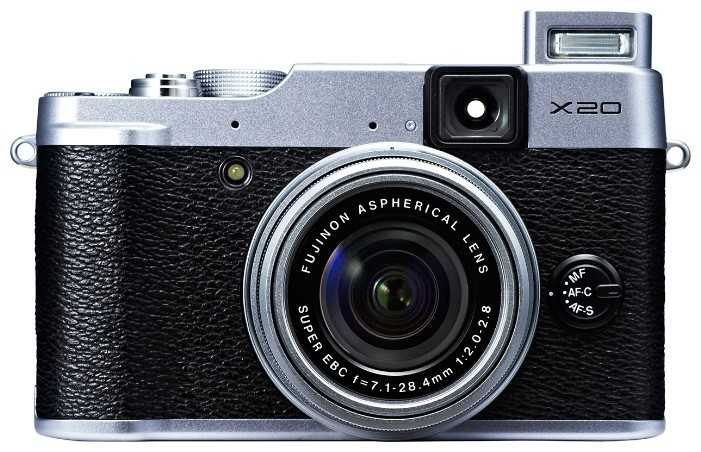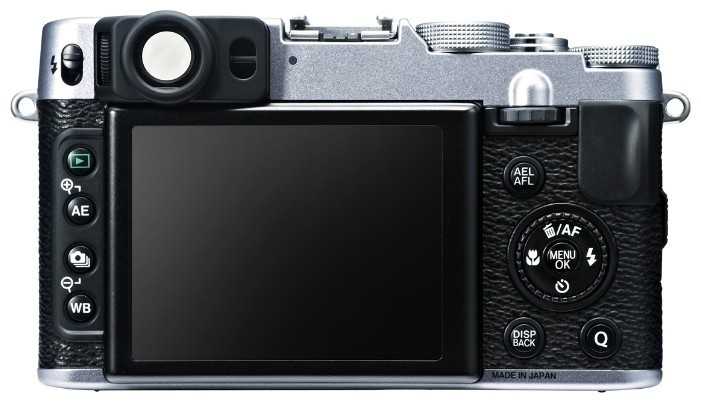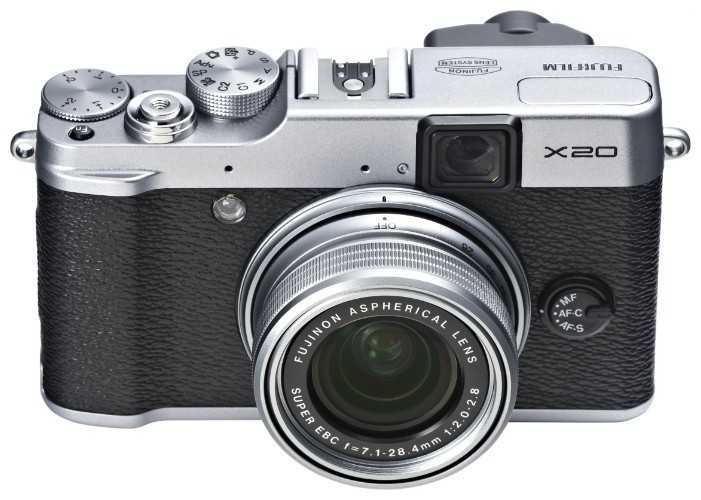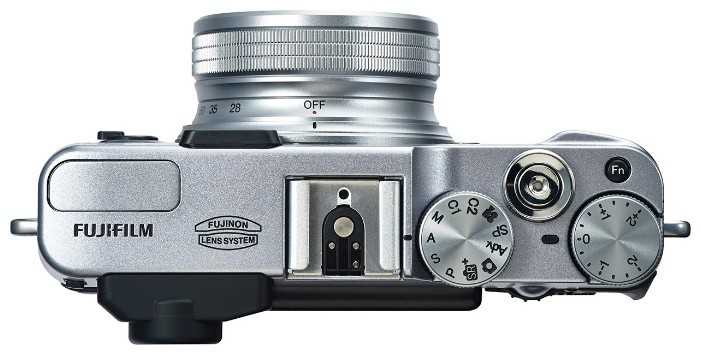
Background:--------------I am writing this review as owner of an Olympus OM-D EM5, regarded by many as the camera of the year of 2012.If one has taken the trouble to master the Olympus OM-D, for example with the help of David Busch's Olympus OM-D E-M5 Guide to Digital Photography (David Busch's Digital Photography Guides), one would feel instantly at home with the Fuji X20. If one can consider the Olympus OM-D to be a master craftsman, with its myriad of features and excellent menu system, then one might consider the Fuji X20 to be the craftsman's artistic kid brother!My impressions about the X20:----------------------------------First and foremost, does the Fuji X20 justify its premium price for a point and shoot camera in the thing that matters most, image quality? And does it have that special Fuji "magic"? The answer is an emphatic yes to both questions!The Olympus OM-D and the Fuji X20 are similar in many ways, starting with the retro design and excellent magnesium alloy construction, to the layout of the controls, the menu system, and scene and art modes. Granted the X20 offers only two custom modes to the OM-D's four, but the X20 also offers excellent macro capability, fast focus with face detection, and a blazing fast frame rate of up to 12fps (albeit with image size set to small).I feel that the X20's menu system and well laid out controls makes it easier to use compared to the Olympus OM-D. I also like the X20's quick access (Q) button better than the OM-D's live view/super control panel button.There is, at the present time, no book in English written specifically for the Fuji X20. (David Busch, please take note!). However, you can find excellent video demos online. (Go to youtube and look for "Fujiguys").The optical viewfinder (OVF) is quite good, although one must keep in mind that it only gives an 85% field of view and cannot be used for macro, due to the parallax issue. Still the OVF is more that adequate for shooting group pictures, where in the LCD information overlay, the focus area and autofocus confirmation come in handy. For serious picture composing I prefer to use the LCD screen.The X20 has an excellent 28-112mm F2.0-2.8 lens, that is capable of pulling in plenty of light rendering sharp focus in all focal lengths. This lens, coupled with its 2/3" sensor (largish for a point and shoot) with the latest X-Trans CMOS technology, and lack of anti-aliasing filter, make for sharp 4000x3000 images with awesome color rendition. It also comes with an excellent optical image stabilization (OIS) system, and I have been able to capture sharp pictures taken at 1/4 second.The image quality on the Fuji X20 nearly rivals the sharpness and tonally nuanced colors of my Olympus OMD with the excellent Olympus 14-54mm f/2.8-3.5 II AF Zuiko Lens for Olympus Digital SLR Cameras (which I have reviewed). I was also pleasantly surprised by the camera's 2X digital tele-converter, which is able to generate pretty good full sized (4000x3000) jpegs which are hard to distinguish from a non-interpolated image unless you pixel peep. In fact I have set the Fn button to the digital converter mode. This effectively gives me a zoom range of 8X (28mm - 224mm), making it useful for photographic wildlife and sporting events!Understanding the limitations of the X20:----------------------------------------------Having said that, the smaller sensor which has roughly a fourth of the area of the micro four-thirds sensor on my Olympus OMD (and roughly an eighth of the area of the APS-C sensor on the Fujifilm X-M1 Compact System 16MP Digital Camera Kit with 16-50mm Lens and 3-Inch LCD Screen (Silver)) imposes some limitations both in terms of high ISO/low light performance as well as shallow depth of field and background blurring (bokeh) capability.In terms of noise, this means that an ISO800 image taken under similar lighting conditions from the X20 will have perhaps the same level of noise as an ISO1600 image from an Olympus OM-D and an ISO3200 image from a Fuji X-M1. In terms of depth of field and bokeh, an F2.0 image from the X20 will have about the same depth of field as a F4.0 image from an Olympus OMD and an F5.6 image from a Fuji X-A1 or X-M1.Given that Fuji has packed in so many pixels (4000x3000) into a 2/3" sensor, if you "pixel peep" you may notice artifacts such as water-coloring and smearing when viewing full (100% crop) pictures taken under less than normal lighting conditions.(For "pixel peepers" only, the smearing is especially noticeable landscape shots that include grassland and foliage. One way to get around the smearing issue is to shoot in RAW and use the RAW converter in your photo application such as Apple's Aperture or Adobe's Lightroom. But you will lose Fuji's proprietary film simulation modes in the process. Another way, that is recommended by many in the Fuji X20 user community, is to set the in-camera noise reduction to the lowest setting (i.e., -2). This approach does result in grainier images, but de
Скромный эксперт
01.09.2013
6/10
Оценка пользователя
Плохо
Great camera for everyone. Is it perfect, NO. Can it do everything, NO. But unless you are willing to buy a DSLR(BIG HEAVY) with expensive lenses this little camera can do a lot. I bought it the day before a vacation trip.This is a very hard camera to review, Fuji made a 5 star camera for 90% of photographers, Fuji's choice of filter size was just plain STUPID. For those photographers who use filters which includes me this is a 3 star camera. 40.5mm is the standard, see cons below for more information. For those who think I am being to critical over the filter size spend time trying to find the right step-up ring, to use ND, or IR filters which everyone has made for years in 40.5mm, no one makes them in 40mm. Why Fuji did you use a non-standard filter size? Really turning into a big pain, 90% of photographers will not care.PROs:Has a complete automatic mode for the first time photographer, has manual mode with many options for the PROVideo is good, but use a tripod it will look SO much better (that is true of ALL cameras)Has two custom settings for those who are willing to spend time learning what all the settings are or the PRO who wants a camera to use in their bag of tricks.Beautifully machined solidly built camera, reminds me of my Leica 35mm of years pastExcellent image quality, with more options from film selection to manual control of everythingFast f/2-2.8 zoom lensGreat ISO range shoots well after sunsetFlash sync speed with any manual flash in the hot shoe all the way to 4000 of a second (big plus here)Optical viewfinder that is handy some of the time. I never really use LCD on my DSLR, but really only use the LCD on this oneVery very deep Menu system that you will need time to go through, but don't need to for great pictures out of the boxCreative options for in-camera Raw processing, I don't use themAccepts filters but also a con see belowFast autofocusMore creative options for different looks than you may get to360 degree panorama that works very well, it is hard to finish the full 360 but everything I got made me happy.small size that makes it easy to carry anytime, leave it in P mode for those quick shotsConsdoes not use standard filter size, big problem don't know what they were thinking it is 40mm BUT it is not 40.5mm - I am still trying to figure that out how to use ND, IR, or several other filters. The only step up ring I found NOW has a B+W clear locked into it, buying another step-up ring would really like Fuji to explain the non-standard filter size, what a pain.The filter size has become a big issue, the ONLY company making filters are Marumi, and they only make a UV and CPL filters. if Fuji had gone with standard 40.5mm filters EVERYTHING made would fit. The step-up ring is an OK solution, but vignetting is now an issue.I have downgraded my review from 5 to 3 stars over this. If you are the 90% of photographers who do not use filters then this will not matter to you. For those of us who always carry several filters this is really a pain. Vignetting with just one filter.The lens cap is cool, but Fuji should include two with every purchase, I worried about losing it every time I took it offlens cap is big and bulky, not comfortable in your pocket (buy a filter and use a generic pinch cap) will update sizeBattery indicator gives little warning ( I need to buy a second battery, charge it every night and you will be fine )The dealer sells them for $19.99 or get the Wasabi, I got the Fuji from Amazon but am not 100% sure it is an OEM. If you buy OEM get it when you buy the camera, wish I had thought of it then.Cons others have mentionedI have read many say the 460K dot LCD should be better, this LCD is as good as my 920K LCD on my high end Nikon's the LCD is fine to compose shot and check focus after if you chimp all the timeImage noise is not a problem at all , if you want really great pictures with no noise over ISO 800 buy the Nikon D4 Nikon D4 16.2 MP CMOS FX Digital SLR with Full 1080p HD Video (Body Only) or high end Canon (another non-issue)No dedicated movie recording button (no big deal, you rotate the dial)Premium price tag (great camera, made well, not plastic crap, much cheaper that the Leica's)SummaryI was under pressure to bring a camera with video on vacation, this one did a great job. After using this camera every day, all day for two weeks I knew I had a winner. With all my reading AFTER my trip I confirmed the little I read before my trip. I did not have time to buy a case before I left but did on my return, and an still waiting for a filter, step-up ring, and other options.accessorieslens hood - you can buy one, but don't, it does not do anything except allow a 58mm lens cap be used. Does not fit any case for the cameracase - there are several, the only thing I wish one had was a hole for the tripod mount, I want a clean hole, need to find a hole punch the right sizeI bought this one EzFoto Black Simulated Leather Case for Fuji Fineix X10 fits very well on the X20
Скромный эксперт
20.08.2013
10/10
Оценка пользователя
Великолепно
The Fuji X20 is the first point-and-shoot camera that I have found to be a fully acceptable replacement for an SLR. In fact, I traded in my Nikon DSLR and extensive lens collection when I made the switch to the X20. After a couple weeks of use, I have NO REGRETS!First, let me assume you're NOT a professional photographer who sells prints for a living, but an enthusiastic and experienced amateur like me--someone who derives pride and enjoyment from snapping excellent pictures, and who is wondering whether this camera will perform well enough to satisfy you. Here's the short answer: If you hold your pictures to high standards for clarity, color, and sharpness, WITHOUT obsessing about post-production editing or nit-picking about "flaws" that are only visible when you "pixel peep" at 100% magnification or beyond, this camera will absolutely satisfy you. However, if you enjoy spending hours tweaking levels and pixels in Photoshop or Lightroom, or if you measure quality by scrutinizing flaws at 200% magnification on a computer screen, you'll be happier with a DSLR or CSC with a larger sensor and better high ISO and low light performance. The X20 yields exceptional photos that will stand up to a reasonable amount of editing and should satisfy the artistic side of almost any photographer, but it will not match the richness and editing flexibility of RAW files captured on larger sensors. I don't consider that a serious downside, though, since the X20 is absolutely capable of producing breathtaking images.In short, the X20 is the ideal "every day" "take anywhere" camera for someone who wants to experience and enjoy life without the camera getting in the way, without settling for mediocre shots from a smartphone or run-of-the-mill point and shoot, AND without having to abandon the pleasure of having total creative control over the camera's functions.Why get rid of my DSLR? In a word: convenience. I found myself using my DSLR less and less--especially after my kids came along--because managing all those lenses and the bulk of the camera itself became a chore. Years ago, when I was single, it didn't bother me because I could dedicate a whole day to photography and even enjoyed hauling around a bunch of cool gear as I went questing after an awesome shot. Now, I have a (growing) family. While I'm certainly keen to snap photos of my children as they grow up before my eyes, I keep finding that multiple lenses, large camera bags, and a bulky DSLR body just get in the way of enjoying the experiences I'm trying to photograph. Sometimes, they even forced me to miss out on certain experiences because expensive camera gear doesn't mix well with some activities and "someone" has to watch the gear after all. So, I switched to a mid-priced point-and-shoot with a long zoom for awhile (Panasonic ZS1), and I even tried relying on my smartphone's camera for awhile (Samsung Galaxy Note 2), but I was frustrated that the resulting images offered little to no post-processing flexibility and had to be confined to small prints for pleasing results. Those cameras also didn't offer any of the delight I had often felt while using my DSLR with its more robust creative controls.In the X20, I have found the perfect solution, and it doesn't feel like I had to compromise at all! Trust me, someone who invests the time to learn the nuances of this camera (and understands good composition) will be able to produce STUNNING photos. Yet compared to an SLR or CSC, the X20 will do it with less weight, less bulk, more convenience, more discretion, and more fun! Moreover, it can produce nearly comparable image quality except under certain conditions, such as very high dynamic range shots, ultra low light photography, or very large prints--all of which will fare better with larger sensor cameras.Here's another reason I switched over to the X20. This is a camera my wife and kids can operate. My wife doesn't share my enthusiasm for photography, but she does appreciate good pictures. Since she wasn't interested in learning how to use my DSLR, I went missing from whole albums of vacation photos because I always had to be the one behind the camera! Fortunately, the X20 has an excellent Auto mode (two actually) so she can simply point and shoot to get great results. Yet it also offers a full suite of manual controls to satisfy my deeper creative urges. Think of the X20 as a camera that can please virtually anyone--from those who like idiot proof point-and-shoot simplicity, to those who like user-friendly pre-set modes for more playful or stylized photos, to those like me who want total control over every nuance of the camera's operation. The X20 fulfills all those roles extremely well.What else should you know about the X20? I'll elaborate briefly on a few things other reviews seem to shortchange or ignore. Obviously, the X20 can produce excellent still images. However, its greatest weakness (relatively speaking) is the video capture, which is a little odd and finick
Скромный эксперт
23.06.2013
6/10
Оценка пользователя
Плохо
Okay, I'm one of those annoying reviewers who doesn't actually own an X20. And, honestly I haven't seen one in the flesh. I DO however, own, and use extensively an X10, which, comparing the pictures, seems to be virtually identical to the X20 with the exception of the live viewfinder which is not an X10 feature.I just recently upgraded my 18 month-old review of the X10 which I am duplicating here, since I do believe my experiences will apply to this camera as well. I downgraded my initial rating for the X10 from 5-star to 4-star, and the 4 star rating I felt only applied due to the drop in price from $599 to $386 (X10), but now Fuji trots out what seems to be the same camera from 2 years ago, tarted up a bit with a live viewfinder, for a $200 premium? In my mind, that sort of pricing is only good for a 3-star rating.Below is a copy of my recent added review for my X10, based on my 18 month experience with the camera. Most all my comments apply to the X20 as well.A 'scientific' review by a guy who takes 3 different images with 3 different cameras is always helpful, but sometimes you have to actually work with a camera for awhile before the 'features' and eccentricities either enchant you or annoy you. In my case, I have to say that the more I've worked with this camera, the less enchanted I've become with its so-called features, and the more annoyed I've become with its distractions.I hope this helps a potential buyer make an informed decision:UPDATE - June 2013Well, I've had this X10 for some 18 months now, and used it a lot. I own and operate a classic car limousine service, catering mostly to weddings, and do a lot of night photography in conjunction with this. Looking back, my rational for purchasing this camera in the first place was:1) Have a pocketable camera as an alternative to my bulky Nikon D70002) A fast lens for low light photography3) A Wide angle aperture for those beautiful limited depth-of-field bokeh shots.Over the past few months, I find that I am picking up the D7000 for my nighttime engagements, and that the X10 is gathering dust in the closet, and, honestly, I have to say that I'm a bit disillusioned by the camera at this point. Here are the reasons, corresponding to my original purchase checklist above:1) This is by no means a pocket camera. It just ain't gonna happen. This is a hang-round-your-neck camera, just like a full sized DSLR2) Fast lens.. well, yes, f2.0 does sound impressive, but, let's face it... it just isn't good enough for any sort of night photography without flash (and that little pop-up flash is only useful if you're shooting right in someone's face). Sure, you can get an image at night, but it is going to be grainy and you'll never be able to call it a professional image. The difference in quality between a f2.8 lens on my D7000 and this f2.0 is really glaring. I know, it's NOT a DSLR, but still, what's the point of paying near-entry-DSLR prices if you can't get better images?3) Limited depth of field.. this has been one of my biggest disappointments in this lens. An f2.0 lens on a small-sensor camera is NOT equivalent to the same focal length on a DX or FX format camera. Only when shooting extremes (like focusing on a subject no more than 2 feet away) will you get any semblance of focus fade in the background. Sure, you can dial up the in-camera D-O-F software, but why would you want to permanently gork up your photo when you can accomplish the same yet better soft-focus effects in Photoshop or Lightroom and have complete control.Other issues that I have increasingly become annoyed with after extensive usage:* The manual focus mechanism is absolutely useless.. to get from one end of the distance scale to the other requires some 8-10 full revolutions of that hard-to-manipulate focus wheel. Why couldn't they have at least added an acceleration mode to the wheel (turn it faster, move the dial faster). To make matters worse, the focus selector lever (AF or Manual) on the front in right in the position where virtually EVERY TIME you remove the camera from its case (which you HAVE to do to see the viewfinder or back screen) the lever gets moved from AF to Manual. Can't tell you how many ruined images I've deleted because the $!%@@& focusing got switch to manual without my noticing... grrr* Lack of standard filter threads... This is one of the most idiotic and non-customer-friendly features of this camera. The threads on the lens won't match any standard filter, so if you want any sort of filter, even a UV to protect the non-replaceable lens, you have to shell out a hunk to Fuji for their adapter ring... Then.. the filter housing obstructs the view in the viewfinder; you can't use that nice aluminum lens cap; AND, now the camera won't fit in that expensive leather Fuji case you bought. Really?? Was this camera designed by photographers, or just a bunch of engineer/marketing geeks?* Auto White Balance... The auto white balance on this for night time shots is just unus
Скромный эксперт
28.05.2013
8/10
Оценка пользователя
Хорошо
Received my X20 on April the second, a timely gift for myself on my birthday. I would like to congratulate Amazon for their great effort worked on Easter weekend so I may have it on time to celebrate.The choice of buying a new digital cameras has not been an easy tusk, as a long time DSRL user and adaptor of NEX system two years ago (I reviewed the NEX-5N) and owner of Olympus XZ1, the demands of image and handling qualities are rather high. Recent full frame product has been disappointed due to oil on sensor issues, the good APC size sensor seems to stay at 16 mega pixels and the 24 mega pixels camera did not show advantage in image qualities over the NEX-5N. With these in mind, I took a different route and decided to get the Fujifilm X20 for its retro designing and the technology innovations inside.The all metal construction of the camera gave a nice feeling of rigidity and excellent quality. The camera fit nicely in my rather smallish hand, all buttons dials and knobs are located at the right places and within the easy reach of the fingers. The right side hand gripper is small however with the manual zone ring on the lens, this camera is a two hands version, therefore this is not a big issue. Handling of this camera is a pleasure, the focusing is fast and precise, the shutter is light and remarkably quiet, the optical view finder though only cover 85% the viewing area but come in handy at advisory light conditions, however the center focus point is not at the composed picture center, this really reducing the effective usage of this feature drastically, too bad.I managed to take some pictures with the new camera before the sun set. The jpg pictures look sharp and vivid particularly those taken with hand held super macro mode revealed remarkable amounts of details of the azalea buds. This camera is a photographer camera, the placement of the dials and knobs were designing intuitively so to operate the camera was very nature. There are enough manual controls to help the composition of desired pictures. Two issues stood out immediately; the tiny battery running out of juice rather quickly (granted not fully charged) and am I missed the build in ND filter of XZ1, using manual metering can utilize the 1/4000 sec shutter speed and using the wide open apertures, the details will be addressed in later sections.Some accessories have to be ordered before serious evaluation can be initiated; a spare battery, a faster SD card and a screw on Marumi 40mm DHG lens protector, no adaptor is required. For those interested, a 40mm circular polarizer is also available.As enough have been said about this X20 in various reviews, I would like to spare you of all those specification and technical details rather concentrate this review in real shooting secessions and addressing the focusing, image qualities, dynamic range, jpg vs. raw and raw conversion with different software issues and real data feedback. It is my understanding some of those topics were barely touched in reviews and hope this review could stir more discussions and inputs so we all can enjoy the X20 more.One thing I have to clear with those interested, "do not expect the small sensor digital camera can perform miracles" rather to look into the sensor technology, electronic and optical advancements in recent years. Now, we can enjoy the image quality of the photos from small sensor cameras that few years ago only DSL can deliver. With this said, lets see what the camera can do in every day shooting.The review will performed in following categories;Section 1: Initial shooting in raw and jpg, the differences, super macro marvelous,Section 2: Raw conversion with software vs. in camera raw conversion,Section 3: Low light focusing dilemma at a church wedding in Honolulu, Hawaii,Section 4: Some unexpected twist of camera setting and operation,Section 5: My conclusion, rating and wish list.Here we go;Section 1On the fourth day, a lovely sonny morning I took the camera to the city park of Swam Lake to run some initial tests, the flowers were in full blooming and scenery were plentiful. Loaded with the partially used battery, set at ISO 100, I managed to take around 70 pictures in raw format. As said the camera handling the shooting nicely, the focus was fast and lock on target precisely, non of the picture has show signs of out of focus under the good lighting conditions. most photos were taken with the pattern metering setting and aperture priority AE mode.Examining the photos in Lightroom 4.4 with newly release ARC 7.4 revealed rather flat converted pictures; the color was not as saturated, the azaleas and tree leave looked little fuzzy and the picture appeared to have a light mist layer coating random the pictures not as sharp as should be. With the white balance set at auto, the pictures also look on the cool side.Loaded with a fully charged battery and a spare in the pocket, I started shooting in jpg to examine the difference in imaging qualities. At this secessio
Скромный эксперт
24.05.2013
10/10
Оценка пользователя
Великолепно
Last Autumn, we took a family trip to the wonderful island of Oahu in Hawaii. I hadn't been to Hawaii in many years, and was very excited to shoot photos during our fun family adventure. It was just as beautiful as I remembered, and I had the excellent Fujifilm X-Pro 1 along to capture the colors and mood of the Islands.While on the trip, I expected to see all sorts of wonderful cameras, and I pre-supposed that I'd see a few X-Pro's along the way. However, while I did see many of the normal DSLR's, I noted throngs of traveling Japanese photographers carrying along a little Fuji I knew as the X10. While I did see one other X-Pro on that trip, it certainly stuck in my mind that the X10 had to be one of the most popular cameras on the island. This surprised me, as I always considered the X10to be the "inferior little brother" of the "real X-cameras." I know of the culture of miniaturization in Japan, but beyond size, I wondered: am I missing something?Much later, I noted the announcement of the Fuji X20, which essentially appeared to be an X10 with a better viewfinder (including shooting information), better autofocus, and an application of the X-Trans sensor technology in the 2/3" sensor size. This really intrigued me, and I decided to answer that question ("am I missing something?") by ordering an X20 from Amazon.The first X20 that arrived was clearly used, even though I purchased a new model. I was disappointed, and even more so when I found out I couldn't receive a replacement from amazon, I had to ship it back, get a refund, and order a new camera. I figured if I had to go through all that trouble, I might as well take a few shots to see what I thought; if I ended up unimpressed, I could always just not order another. I only shot a few frames while out for dinner one evening, but I was quite pleased with what I saw, finding it particularly good at black and white, with a fairly characterful rendering by the fast zoom lens. The autofocus was snappy and positive, and I REALLY liked the twist-to-zoom lens with "35mm equivalent" marked focal lengths.About a week later, I received my 2nd X20. I had the great fortune to receive it on a Friday afternoon, just before a beautiful weekend where I had a good amount of leisure time to put it through it's paces. Perhaps surprisingly, I have already answered that question all the other Japanese tourists knew: YES, I was missing something by discounting the X10/X20… This really is a great little camera.Certainly, compact cameras have come a LONG way in the past few years. One could argue that they had to--otherwise the cellphone-cam-shooting public wouldn't buy them in any numbers. With each year, compact enthusiast digital cameras get better and better--not only in specs, but in haptics, operation, and image quality. I feel like Fuji, in particular, has really been on a roll lately; although their cameras aren't always the best at a pixel-peeping-level, they sure feel built by photographers, for photographers. The X20 felt just like a mini X-Pro 1; the controls are in the same place, you have the same options for configuring and shooting, and it just disappears in your hands and lets you shoot, chasing your muse.I feel like the X20 is skirting the ability to satisfy completely; in good light, the image quality is stunning, with excellent "pop" and 3-dimensionality from it's images. I didn't expect this from such a tiny sensor, and it has just enough subject separation that you do get a nice "feel" to the images. You're not going to vaporize backgrounds, and the fujinon zoom isn't the smoothest of bokeh renderers in some situations. But there's some of that X-Trans magic in there (smooth tonality, rich color palette, nice quick transition between in-focus and oof). Although not as forgiving as the bigger APS-C X-Trans, and very quickly as you move up the ISO ladder you get a lot of noise and lose some of the tonal magic, there's just enough performance in there to reward exploring the envelope a bit.When you do explore the envelope, you find a camera that responds intuitively, quickly, and positively. The autofocus positively rocks--if the X-Pro were this good people would swoon, selling their SLR's in droves. Maybe not, but I speak in hyperbole to emphasize that this little camera didn't stand in my way like so many little cameras of the past--I felt free to use it just like I would my DSLR. There were occasional missteps when shooting with the OVF (the X20 does help with parallax correction, but its response takes some getting used to), and sometimes the tiny sensor just couldn't quite give me all the tonal details I wanted, but to be perfectly honest--there were just as many times that I let the camera down, so I can't lay all the blame on the little X20.I'm also finding the film simulations to behave quite well; I had an X-S1 last year and while I really enjoyed the fun of having such a flexible (and well built) all-in-one camera, I found th
Скромный эксперт
08.04.2013
10/10
Оценка пользователя
Великолепно
Fujifilm is a fascinating photo and imaging manufacturing company, a survivor in a world where we've witnessed the demise of such cameras as those from Minolta, Konica, Yashica, Contax, Topcon, Bronica and too many more to mention here. The company has survived largely because of good business practices and listening to the needs of photographers.The Fujifilm X20 is a camera in which I had been highly interested since the release of this and the Fuji X100s early this year. I had looked seriously at the Fujifilm X10 last year, but there were some subjective needs that for me it didn't meet, so it was passed on. I'm glad that I waited, as the number of improvements over the X10 is quite large. There are said to be about fifty improvements that have been made, but in all fairness, I won't get into a Fuji X20 vs. X10 comparison here, as my experience with the earlier model was limited to just a few days use.Getting right down to the subjective points, followed with a more detailed look based on personal use, here are my basic observations.◆ Pros:+ Excellent retro design; solid build quality coupled with good contemporary ergonomics+ Sharp 4x optical zoom; comfortable 28mm to 112mm f/2.0- f/2.8 equivalent, image stabilization+ Has a 7-blade aperture diaphragm; contributes to excellent bokeh effects+ EXR Processor II dual CPUs; cold start-up time about ˝ second, super-fast sequential shooting+ Near-instant autofocus; virtually no time lag when the shutter button is pressed+ New 2/3-inch X-Trans CMOS II sensor; 12MP, offers excellent image quality+ Hybrid AF; autofocus instantly switches between high-speed phase detection AF and contrast AF+ Front focus selector dial; AF-S (single autofocus), MF (manual), AF-C (continuous autofocus) modes+ Advanced OVF; optical viewfinder offers exposure info overlay via Digital Trans Panel, 85% coverage+ 2.8-inch color LCD monitor; approximately 460,000 dots, 100% coverage+ Excellent ergonomics; rational array of controls, easy to master+ Rechargeable NP-50 Li-ion battery; averages 190 - 220 shots per charge depending on settings, actual+ Full manual exposure plus Program, Aperture- and Shutter priority modes and more+ Uses readily-available SD, SDHC and SDXC memory cards; full support+ RAW (RAF format) support; also offers JPEG and RAW+JPEG+ ISO range is 100-12800 (in Auto); control available up to ISO 3200+ Excellent ergonomics; raised grip area on the body with a thumb rest, add to handling+ Threaded socket on shutter button; allows for threaded cable releases, soft shutter buttons+ Made in Japan; all of Fujifilm's X-Series cameras are made in Japan+ Built-in advanced filters; allow a choice of 8 artistic effects◆ Cons:- Battery life could be far better- Wish this camera would go to 24mm wide angle- Picky point: the X20 lacks a built-in neutral density filter◆ First Impressions:The X20 came well packaged in a distinctive black box, and from the moment it was opened and taken out, the feel of a solid, precision camera was quite apparent. This is truly a camera for advanced users, or pros looking for a good backup or weekend camera. It's crafted from a die-cast magnesium alloy, and the ergonomically placed mode dial and zoom ring are milled from solid aluminum. The professional feel is there, and is reminiscent of its more costly brother, the Fujifilm X100S, and along with its overall retro styling is a small engraved "Fujinon Lens System" logo on top, reminding us of some of the classic 35mm rangefinder cameras of the past. And on the rear, just to the lower right of the LCD screen, is the discretely engraved "Made in Japan" note in white letters against the black of the camera body.Followed the directions in the printed instruction manual and charged the battery for about two hours while reading and going through the box contents. The X20 came packaged with the following:● Rechargeable NP-50 Li-ion battery● BC-50B battery charger with US plug attachment● Shoulder strap with protective pads● Triangular strap clips & attachment tool● Lined push-on metal lens cap● Proprietary USB cable● CD-ROM (with MyFinepix Studio 4.2 viewer software, RAW file converter, etc.)● 141-page owner's manual (1-Egnlish, 1-Spanish)● Fujifilm USA warranty directionsThere's something to be said for Fujifilm's attention to detail with this camera, as they've supplied a small plastic attachment tool with the triangular strap clips. That means no more scratches on the body or broken fingernails while attaching the camera strap clips. The BC-50B battery charger indicator glows steadily when charging, and cuts off when the battery is topped up. I put the USB cable in a safe place (it's proprietary, so don't lose it), and once the battery was fully charged, inserted a Class 10 SDHC card and took the X20 out for a trial run to get a feel for it.◆ The X20 in Use:Following the instruction manual, I did some preliminary setups, setting the camera to its Quick Start mode from the Fuji X20's power management menu. T
Скромный эксперт
15.04.2013
10/10
Оценка пользователя
Великолепно
I am a professional photographer and a previous owner of the Fuji X100. The reason I got the original Fuji, and then this x20 was that I wanted to have a nice looking camera I could take with me on trips, etc. that would take great pictures without weighing a ton and being a huge cumbersome burden (like my 5dmk3).Other than the great looks, I wasn't a big fan of the X100. It had so many glaring flaws that I returned it after a week of use. I am happy to say that this x20 model has addressed most of the issues that made the x100 such a pain. Rather than go into them specifically, I'll just give you my thoughts on this new model.First, and foremost, the camera takes amazing pictures. This is not an overstatement. I have used all levels of point&shoot cameras over the years and this one is the first to really produce SLR-like quality in a small form factor. The pictures are sharp, the focus is accurate, and the colors are rich. Another way of putting it is this: there are always tell-tale signs that pictures are shot with a P&S camera: too sharp, too much contrast, too vibrant, etc. This camera produces these qualities (sharpness, contrast, vibrance) through great optics, NOT through in-camera processing. It's the real-deal, and you can see the difference.The build quality of the camera is fantastic. It is sturdy, made primarily of metal, and feels great in my hands. Most important controls are easily accessed with dedicated buttons. I especially like the +2 to -2 exposure control dial on the top. This is something that I use all the time on my SLR and something I think a lot of non-pros could benefit from. When the sensor is tricked by backlight, just dial it up, when things are too bright and getting blown out, just dial it down. It's easy and fast and it's second nature to use for me.The only control that I think is left out is a thumb controller for the focus point. As it currently is, you must press the AF button (on a wheel with macro, flash, and timer) and then scroll around to change the focus point. It's not a deal-breaker, but it would have been nice to have an 8way dedicated thumb controller for the focus point. I change my focus points constantly, and I just can't do it as fast as I'd like on this model. On top of this, when you look through the eyepiece, which you should be most of the time, you can't change it. You need to take your head back and look at the back of the camera.I also love the variety of modes the camera has. There are so many that I haven't been able to master the benefits of each setting yet. Here's a brief synopsis:P, S, AE, and M are the usual suspect that all cameras have.SR is an advance auto mode that determines the best settings based on the scene. It even shows its predictions, so you can see if it is accurately assessing the situation. From my experience, it's startlingly accurate. It chooses from: landscape, night, tripod, beach, sunset, snow, sky, greenery, and sky & greenery. Having these settings on a camera is old news, but having the camera predict the scene itself and do so with great accuracy is a pretty exciting advancement.Adv. Advanced lets you make some stylish choices and make your pictures look a little Instagram-ish. I'm not a huge fan of this kind of thing, but I suspect many people will be. The choices are: toy camera (lomo), miniature (tilt-shift), pop-color, high-ley, low-key, dynamic tone, soft focus, and a handful of partial-color masks (everthing BW except reds, etc.).In this mode, I LOVE the tilt-shift (miniature) setting. I used to own a $1600 tilt-shift lens that I'd pull out once a wedding and use, but sold it because I wasn't using it enough. Now I've been using this and getting the greatest results.Motion Panorama: an onscreen guide steps you through making a panorama.Pro-Focus: the camera takes 3 pics and then softens the background to make a portrait-like shot. This actually works better than you'd expect, but I don't use this feature to take portraits.Pro-Low light: This combines 4 pictures of poorly-lit subjects and combines them. The problem with this and Pro-Focus is that if your subject moves (and they always are, even if just by breathing), it doesn't work well.Multiple Exposure: You can use this to combine several pictures into one. For example, you can take a picture of the moon, then recompose your shot, and place that same moon in the sky over a cityscape. I've used this to create ghost-pictures to scare my kids.SP (Scene-Position): This is your standard setting where the user gets to choose what their shooting. The choices are portrait, portrait enhancer, landscape, sport, night, night (tripod), fireworks, sunset, snow, beach, underwater, party, flower, and text.And finally, there is the macro mode, which is excellent. It is so good, in fact, that I am selling my macro-lens that I use for ring shots because I can actually get results just as good (possibly better) using this camera. And, because the looks of the camera are non-po
аккумулятор, зарядное устройство, ремешок, крышка объектива, USB кабель, инструкция, диск с программным обеспечением
Экран
Размер экрана :
2.8 "
Число точек LCD :
460000
Экран :
работа в режиме видоискателя, фиксированный
Съемка
Экспозиция :
auto ISO, автоматическая с приоритетом выдержки, автоматическая с приоритетом диафрагмы, брекетинг, мультизонная, ручные настройки выдержки и диафрагмы, точечная, центровзвешенная
Экспокоррекция :
+/- 2 EV с шагом 1/3 ступени
Светочувствительность ISO :
ISO12800, ISO6400
Баланс белого :
авто, предустановки, ручная установка
Режимы съемки :
HDR, запись видео, макросъемка, серийная съемка
Максимальная серия снимков (JPEG) :
11
Время работы таймера :
2, 10
Линейка
Линейка :
Cерия X
Информация о характеристиках носит справочный характер.
Перед покупкой уточняйте характеристики и комплектацию товара у продавца
Спасибо за регистрацию на портале Wizemart, вам на почту пришло письмо с подтверждением регистрации, пожалуйста перейдите по ссылке внутри него для подтверждения вашего e-mail