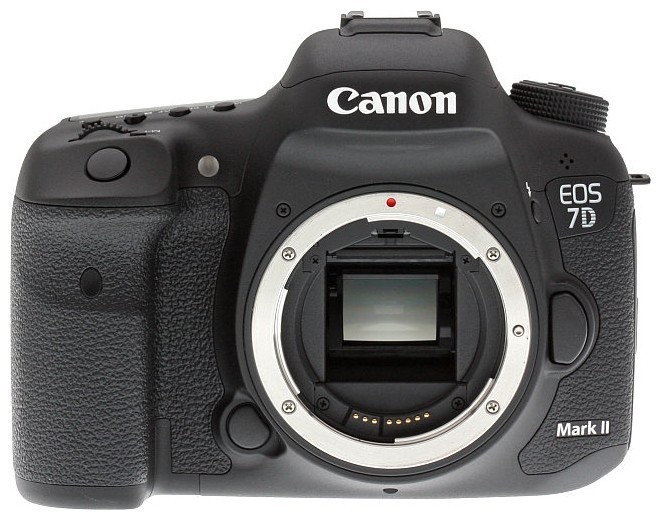
Отзывы о Цифровой Фотоаппарат Canon EOS 7D

614 отзывов пользователей о Canon EOS 7D

Пользовались Canon EOS 7D?
Поделитесь своим опытом и помогите другим сделать правильный выбор

450
92
36
12
24
Profile no image

Скромный эксперт

09.11.2013

10/10

Оценка пользователя

Великолепно

just amazing camera to have as a backup when you are using a 5D MKII as a main body. besides, I have now the doublé of lenses since the cropped sensor of this baby makes longer distances of all my lenses used with full frame on 5D
источник
Profile no image

Скромный эксперт

12.01.2010

10/10

Оценка пользователя

Великолепно

This is my first time writing a product review in Amazon. I want to write this review because the EOS 7D is a big step forward by Canon to address the advanced amateur market not to mention having at last a compelling product to compete head-to-head with Nikon D300 and its more advanced D300s sibling. For more than two years, Nikon has enjoyed such a technical lead that I was constantly yearning for a D300 equivalent body that I could upgrade from my trusty EOS 20D, which I am still using today as a backup body to avoid the hassle of changing lenses. In retrospect, the EOS 20D seems to make me a better photographer as I need to anticipate for the next shot by pre-adjusting all the knobs for proper metering, focus points, and exposure compensation. The substantial improvement in these aspects of the EOS 7D over the 20D gives me the confidence to let my wife use the EOS 7D while I continued to use the old EOS 20D in our recent vacation trip to the Yucatan Peninsula. My wife doesn't like to fiddle with various controls, and she rarely misses any shot because of improper exposure or focusing. In other words, the image results are very consistent. On the other hand, the new focusing system of the EOS 7D requires a little time to get used to. I think I was a little lucky to get a good copy as I have seen some other online user reviews that it did not work for them. At least it works marvelously for me with my EF100-400 F4.5-5.6L IS big gun in birding events.When I purchased the EOS 7D body, I also purchased the EF24-70mm F2.8L lens as a walk around combo. It 's heavy as a dumb bell once I add the 580EX speedlight on top. But that 's the price you pay for with big quality glasses and good weather sealing. Especially with the 7D's 18Mpixel sensor, I figured I would need a good lens with high resolving power. I also tried out my EF28-135mm F3.5-5.6 IS lens, I can see quite bit of difference in high resolution IQ particularly at wide open apertures. Other than that my EFS 10-22mm, EFS 55-250mm, EF50mm F1.4, and EFS 60mm Macro lenses seem to work well with the high pixel count sensor. And don't be surprise that the cheap plastic kit lens EFS 18-55mm IS would also produce decent resolution as well given its nice MTF curves.The video capability of the EOS 7D is not its strength. However, don't discount the usefulness of this feature as the camera is quite capable of capturing high quality HD video if it's used properly and most importantly with patience. First of all, forget about auto mode, it is most desirable to capture video in manual mode to avoid the camera automatically increasing its ISO sensitivity when it points at low light areas. In manual mode, you have full control of shutter speed, aperture, and exposure compensation and it's not as hard as it seems. Ideally, you want to set the shutter speed to 1/60 seconds for silky motion of the subjects and in some cases, you want to set the aperture small enough that you don't have to refocus for any background objects. Otherwise, the background blur resulted from narrow depth of field would seem to introduce compression artifacts when there is lot of motion in the background objects. Hence, good lighting is important to shoot video at smaller aperture to give you more depth of field and clearer background objects. You also may want to turn off IS in your lens to avoid the hunting noise that the built-in microphone would pick up. I 've found that a monopod is necessary if you are shooting video at 50mm or longer focal length. Secondly, I would suggest manual focusing after you let the lens autofocus before you press the video record button. Autofocusing during recording often results in noisy hunting. You may want to invest in an external microphone, but that could make you very standout in the crowd. I was surprised to find that face detection is also possible in video capture mode using the Live View display. I have yet validated the camera actually re-focus accordingly with the faces it detects. But at least I can see the yellow brackets show up on the faces.All in all, I love this camera and enjoy it very much. Hopefully it would last for me for another 5 years. The way I look at it, the camera body is not as important as lenses in terms of investment. My 20D still can produce some amazing pictures with a good lens attached to it. In the past, I have passed up on the EOS 40D, EOS 50D, and EOS 5D MK2. And I can see most EOS 5D MK2 users are now envy with the new focusing system and high frame rate of the EOS 7D. I am not a pro, so the relatively higher ISO noise on the EOS 7D compared with any full frame camera is not an issue for me. The most important thing is that the ISO noise performance of the 7D is much better than my EOS 20D, although I have to say that Canon still has troubles with red color even in low ISO. I did look at the Nikon. During my recent vacation, I had a chance to play with my friend's Nikon D300s. I can tell you that I love my EOS 7D better
источник
Profile no image

Скромный эксперт

08.03.2010

8/10

Оценка пользователя

Хорошо

If you are intending on buying the 7D because of its video capabilities then be forewarned: The camera overheats far too easily.I purchased the Canon 7D in December 2009, using it to successfully capture some soccer games. During the games the camera was stopped -- not shutdown -- quite frequently whenever there was a pause in the action, which was quite often due to the age of the players. At half-time the camera was turned off. For the first couple of months I experienced no problems. But that is no longer the case. Spring has sprung and with it comes warmer temperatures. This past weekend the camera's overheating icon came on after being on for about fifteen minutes of stopping and starting. Temperature: 60 degrees outside. I stopped the camera. I shut the camera down for a couple of minutes. I turned the camera back on and it worked for a minute or two before flashing the overheating icon again. I put my jacket on top to keep the sun off the camera body. No luck. I was unable to capture the last fifteen minutes of the game.Page 159 of the English EOS 7D manual indicates that the camera will experience overheating issues when used for a prolonged time or under direct sunlight. What it doesn't tell you is how long "prolonged" is and under what external temperature conditions this applies too. Based on my results you will have approximately twenty minutes or so when shooting in 60 degrees before the overheating icon flashes. Had I known this I would not have purchased this camera. Given that I'm a long-time Canon customer I can only say that I'm extremely disappointed that the camera overheats so quickly in fair conditions. I'm quite certain Canon is aware of this issue but has chosen to bury it in the operators manual in a loosely-worded description meant to cover their butts. You won't find anything on the Canon 7D product that warns you about "prolonged" use. Try searching the 7D's support section. Nothing with the words "heat, heating, overheat, overheating." A search of the internet tells a completely different story.It's a camera trying to be a video camera and under certain conditions it works great. Know your intended shooting conditions before deciding to buy the 7D for its video capabilities. Get real, in the field reviews from people who tell it like it is without wrapping it in sugar-coated wording designed to keep their revenue streams flowing.Despite years of buying Canon products my next video camera purchase will be from another manufacturer.March 6, 2010 Update:I have amended my rating from a 1 to a 4. Picture taking: 5, Video Recording: 3. Canon Information on Overheating: 1.This review has always been about the 7D's low overheating threshold and Canon's scant information regarding the matter. I am quite happy with the 7D's picture taking abilities -- when combined with a great lens -- but at this time I only intend on addressing the heating issue.Why is it that on the Canon 7D website, under Power Source Specifications for the battery, that Canon provides an estimated "number of shots" table which takes into account the temperature, AE, AF, and Live View Shooting, but doesn't provide something similar for video recording time based on temperature and wind factors? The power source table is there to help people manage their expectations. Something similar should be done for video recording times.Did I expect the camera to be a feature-rich full-time video recorder? Hell no!Am I happy with the video quality? Extremely!Am I please with the sound quality? It's okay. If capturing ambient noise or sound in a closed atmosphere is the goal, then it will get you by. Invest in a good microphone built for your intended use.Did I expect the camera to overheat? Yes, I read about it.Did I expect the overheating problem to occur so quickly when the temperature went from 50 degrees to 60 degrees? No. I thought it would only be a problem when recording for extended periods of time at higher temperatures. Twenty minutes of on and off recording didn't seem like an extended amount of time to me.Knowing what to expect from the camera based on ambient temperature and conditions will better prepare the operator. Based on my experience, once the temperature hits 60 degrees without any breeze, shooting times will drop. As the temperature rises beyond 60 degrees you can expect even less recording time before the temperature warning comes on. You will have to find alternative ways to keep the camera cool. Try an umbrella, a fan, a white cloth draped over the body, or you could even buy a second camera to have on hand when the first one gets too hot. Turn the camera off and get it out of the sun when not in use.Lower your expectations and find creative ways to deal with the problem.
источник
Profile no image

Скромный эксперт

25.05.2013

10/10

Оценка пользователя

Великолепно

I'm currently on vacation and needless to say I brought the 7D with me. Everything was fine for a couple of hundred shots then it started to produce dark shots...real dark! Luckily I brought a backup camera with me. When I return home I'll start the process to rectify the problem. It's just a bummer to have a camera that costs what this one costs and not work properly. I'll keep you updated...5/26/13 (Update)I figured figured out what was wrong with the shots I was taking, so this vacation will end next week on a high note. Apparently somehow I managed to change the exposure compensation to dark. Since readjusting that feature my shots now are super and I couldn't be happier...
источник
Profile no image

Скромный эксперт

26.07.2010

8/10

Оценка пользователя

Хорошо

I bought my 7D in January of 2010.I've used this camera for a quite a bit, both in still and video capacities. I'll review both separately to explain the pros and cons of each side of the camera.Stills:Pros:-Awesome ISO range and low noise-Great autofocus (really, really fast)-Frame rate is ridiculous-18mp is wonderful. Great detail.-Custom Picture Styles are extremely satisfying.Considering I'm more of a video person than a photographer, I've really come to appreciate the stills this camera produces. They are clear, even in horrible lighting conditions. Even photos taken in ISO 3200 have very little noise.I shoot in Manual mode, but when I need to get photos taken in a quick second, I find myself flipping it to Green Box mode and clicking on auto focus and firing off a few frames within a few seconds. The photos are awesome. Considering I photograph events, this has saved me a few times.I bought the camera body only so I can use the extra money for a 3rd party lens, the Tamron 17-50 F/2.8. Its a great lens, but the range is clearly designed for "walking around" which I do, but when I am a good distance away, the 50mm end of the range is usually not close enough, and not sharp enough.I do have to say, for a semi-pro camera, the still side of the camera is the highlight. There are very little things to complain about. If you have the lenses you need, this camera will make those lenses create wonderful images.Now for the cons: Video.Video:Pros:-1080p resolution/ 720p at 60fps.-Manual controls during shooting.-Compact body and weather sealedCons:-Rolling shutterRolling shutter is when the camera takes a frame by "rolling" the scan lines of the CMOS sensor downwards instead of exposing the sensor all at once (called "global exposure"). This is especially obvious in high action scenes and flashing lights. Shooting at 720 at 60fps, it is reduced, but it is still evident, especially in a moving car and looking at tall objects like trees and poles (they appear to lean). This camera is best used in low action scenes with a stabilizer like a tripod or shoulder mount (which kind of defeats the purpose of having a portable camera).-Chroma samplingI understand that some of the readers wont know what this is. But for the film people who are considering buying this camera, this is for you.The sampling ratio is 4:2:0. Which isnt prime for green screen. But another side effect is color grading is affected by this. It creates unsightly artifacts in the footage. There are tutorials online on how to upload custom picture styles to greatly increase the dynamic range of the camera (and custom Picture Styles to create amazing colors in the camera), but there is one more thing that affects the footage: Noise.-Noise ReductionThe noise reduction in video is no where near as good as the picture side of the camera. Considering that some might not have the best light available, they'll have to boost the ISO, and once it peaks past 1000iso, the noise becomes more evident. Canon markets this camera as a monster in low light situations (which it is), but the noise is very painful to see, especially when the footage is mixed with HVX-200 footage. The difference is obvious.So, since a good portion of buyers will not really care for the video, most of my cons are irrelevant. It'll be a wonderful camera for the birthday clips and holidays. But for people who want to buy this (or the 5D) for film production (as I did), the limitations should be considered.It is a good camera for dramatic films with little to no action. But, action is a difficult thing to capture on this camera without it looking gelatinous.Overall, its a great camera. Actually, this is a wonderful camera. It is limited in the video side, but for a $1700, it offers a relatively inexpensive high definition capability (most film quality HD camcorders are $3000+ and they have inadequate lenses) and a great "equalizer" for film students or indie film productions.For an example as to how the camera deals with concert areas, I have this video I made. Look at the strange lines created in the flashing lights. Also, be warned, this camera will be destroyed if lasers hit the sensor (as shown is certain videos online).[...].
источник
Profile no image

Скромный эксперт

17.11.2011

8/10

Оценка пользователя

Хорошо

First, I would say that using this camera compared to my 50d could be compared to driving a Lexus vs. an old Camry. It definitely has the heated seats, the back supports and the nice radio etc. The controls are smooth and easy to use and the options are very nice and detailed. Way too much probably for any casual shooter. I have not had any focusing issues so far, even though I read this is a common problem. In fact, I now have a new respect for my 28-135mm lens that I was ready to trash that came with the 50d. On the 7d it is TACK sharp. I had even calibrated it for the 50d and still did not get results like the 7d straight out of the box. Honestly though, I have not really had time yet to put all the autofocus options to work. I like to be picky about which part of the photo is in focus, so I often just use the center sensor and then move frame the shot once focused. However, I shoot a lot of sports and I have yet to see how this thing tracks.After many hours of test shots and reading online it comes down to this for me. Picture quality. Is the picture quality reeeaallllyy better than the 50d? Or even a much less expensive and older model Rebel? It may not be. And that my friends is the kicker. There is definitely noise even at ISO as low as 400. I can get this out with Adobe raw and/or slightly overexposing the image. But, do I really want to do this on a $1,500 body? IMHO, i think this issue will cause a lot of serious enthusiasts to switch to Nikon and I might have too if I didn't have a nice collection of Canon lenses already. I decided to keep the 7d so far and will be getting into my RAW and focus tracking testing this weekend. ( I have a real job you know) Honestly, if you don't need 8 frames per second, (which I do) I would go with the Rebel T3i and save a pocketful. I will update after the upcoming tests.UPDATE JANUARY 2012: I have been shooting this camera for several months now and have found it quite nice. I do seem to occasionally have some issues with focusing that I havent sorted out yet. I think the biggie thing with this camera is the noise. You hear a lot about it and I complained above. My latest thoughts. There is almost some sort of "baseline" noise that you will see even at very low ISO. But, really, it is not noticeably worse at higher ISO"S like 2500-3500 which is about as far as I have taken it for use. A minimal amount of luminance reduction in post processing and you have a camera that shoots professionally at least up to 3500 ISO. This is a Big jump from the 50d.
источник
Profile no image

Скромный эксперт

07.12.2009

8/10

Оценка пользователя

Хорошо

(I'm putting a quick update at the top, for those who don't get a chance to read all the way through. As of 03/03/2014 my 7D is still working perfectly, and only has slight cosmetic wear on the mode dial, where the rubberized coating is coming off. The camera is a bit over 4 years old at this point and I still love it.)The Canon EOS 7D is Canon's semi-pro / enthusiast digital crop sensor SLR. It's a terrific SLR that shines in photo quality, control placement, speed, and viewfinder size and coverage.First, let me tell you a little about myself so you can gauge what my expectations for the camera are. I'm strictly a hobbyist photographer and use my camera a couple of times a month at museums, outdoor parks, and vacations. Besides photos of my dog, my photography consists primarily of static subjects. This is my second SLR.Enough of me, onto the camera. The 7D is a fairly bulky SLR and dwarfs "entry level" models such as the Olympus E-510 (see my photos), though it's no bigger than Nikon's D300s. With that said, it's not uncomfortably large and is easy enough to carry around all day. Build quality is terrific and the camera has a solid, luxury feel to it. The 7D fits very well into my average sized hands and, with the kit 28-135 lens, is nicely balanced. All the buttons are easy to reach and, if you've used a Canon camera before, easy to figure out. The magnesium body is sealed against moisture and dust. The shutter button is well placed and has a nicely defined halfway point. A control dial is on the back of the camera and behind the shutter button too. There is also a joystick-like toggle on the back of the camera as well.A large (3") and high-resolution (920,000 pixel) screen is on the camera back with a secondary status LCD display on the top (with backlight). The screen is a pleasure to use when reviewing images for focus, and when manually focusing in magnified live view mode. Compared to the 3-inch 420,000-pixel screen on my Panasonic LX3 it's a definite upgrade, and makes a noticeable difference.The viewfinder is huge and bright and has 100% coverage. Coming from the Olympus, which has a very cramped and tunnel-like viewfinder, it was a revelation, and was one of the reasons I decided to step up to the 7D. Also, by using a transmissive LCD on the viewfinder the only markings you see until you confirm focus are for the selected focus method (for instance, a single box when using one focus point, or brackets when using the auto select autofocus method). Moreover, a composition grid can be imposed on the viewfinder. The information display on the bottom of the viewfinder is large and bright and contains lots of shooting and camera information. (Update 05/27/2013: Since I've been trying to shoot manual focus more, I've noticed that the 7D will light up the focus boxes as you manually focus to let you know what part of the scene is currently in focus, at least it does when using Canon lenses. I can't comment on other lens brands since I only own Canon lenses. The 7D's huge viewfinder makes it easy to manually focus.)The camera is very responsive and turns on almost instantly. The sensor cleaning occurs when you turn the camera on or off but can be interrupted during power up. Focus speeds with the kit lens are very speedy, even in dim light (two 40 watt lamps and a television as the only light sources in a 17' x 11' room). The 19-point all cross type autofocus is uncanny at picking the correct subject. If it doesn't get it right the first time it will the second. I usually set all my cameras to center point autofocus, but the 7D does a great job picking out the subject, so I leave it on fully automatic mode (unless I'm using the 50mm f/1.4 lens, since wide aperture lenses like that can focus shift with such a shallow depth of field). Live view focusing is not a quick, especially in low light, and I only use live view when I need to shoot at a weird angle and I can't shoot looking through the viewfinder. Live view can be used with a mirror flip or contrast detection. The contrast detection mode is fairly pokey, while the mirror flip mode is quicker, but introduces a brief break in the view. Continuous shooting is available in both a high and a low setting. High is 8 FPS, while the low speed is 3 FPS. The shutter sound is nicely subdued and not nearly as noisy as the Olympus' is.Photo quality is terrific. There are various Picture Styles you can choose to alter the contrast, sharpness, color tone, and saturation of the photos. At any rate, 99% of the time, colors are natural, exposure is accurate, and dynamic range is great. At this level of camera, that's expected though. What I really love about the 7D is the high ISO noise, or lack thereof. The luxury of feeling confident while shooting at high ISO is priceless. I've taken a good number of shots as high as ISO 3200 and have no complaints. Of course there is a bit of noise, and the mushiness that noise reduction br
источник
Profile no image

Скромный эксперт

28.11.2011

10/10

Оценка пользователя

Великолепно

The canon EOS 7D was my upgrade from the EOS 20D which was getting a bit long in the tooth. After weighing my options, I almost went for the 60D instead but the more robust build quality and additional features of the 7D won out in the end.I've been using this camera for a few months now and am absolutely loving it. Having taken a few thousand images, I'm very happy with my results and would highly recommend this camera to someone wanting to move up from an entry-level DSLR!There's been a lot of reviews amply covering the great features of this camera so I thought I'd tackle an issue that seems to be rather contentious and has some people very needlessly upset - I'm talking about digital noise. This is the kind of noise that is an unwanted side effect of a high-pixel-density sensor like the 18 megapixel one found in the 7D.I'm glad to be able to say that t he noise profile on the 7D is actually *very* good! Unless I heavily underexpose or use extremely high ISOs, noise is a non-issue - even looking at images at 100%. Even up into ISOs well above 1600 I've had very good luck taking very usable shots.At the pixel density of the sensor, I was actually expecting much worse. When I first looked at my shots on my computer monitor at 100% the clarity and smoothness was impressive unless the images were extremely dim. That's not to say these extreme images were completely noise-free but all but the highest printing sizes were still very good quality, and this was on the "problem" shots. What current sensor technology is running into are artifacts caused from the physics of photon behavior, ambient heat and the limits of the mechanics of the sensor technology itself.The behavior of the universe we live in is causing these artifacts. For a higher signal-to-noise ratio, the solution is to get more *signal* - more light hitting the sensor. Faster lenses and shooting in brighter settings help immensely. If you want relatively noise-free underexposed-looking images where noise would be troublesome, say for sillouettes and such, photograph at higher exposures than your target then, after the fact, yank your histogram to the left in photoshop or your favorite raster editing app. You'll have the same look you were going for.Overall, I've found the Canon EOS 7D to be a superb tool capable of very high quality images devoid of noise in all but the most extreme low light environs or intentionally underexposed shots. Even then, usable images are common.
источник
Profile no image

Скромный эксперт

29.08.2010

10/10

Оценка пользователя

Великолепно

I have been wanting to upgrade my T1i for a while now, but decided to wait until the 60D was announced to do anything, and then ended up buying a 7D soon after the announcement. I was waiting/hoping to see if the 60D would have features that I wanted for cheaper but.... no such luck. I will probably still try to get my hands on a 60D when it comes out to see how I like it and to give it a review also, but for now I just wanted to express my extreme delight in the 7D. If I knew this camera would be this good, I would have bought it a long time ago.I say that I'm delighted with the camera for one very big reason: the auto-focus system. It's astounding and better than any camera I have tried yet. I shoot a lot of action shots and wanted a camera that I could quickly attain focus on fast moving subjects. Someone who shoots mainly still/landscape shots or who has no use for the quick autofocus might be satisfied with the T2i or 60D for less money or much happier with the full frame 5D mkII. For me, my decision between the 60D and 7D was made up as soon as I heard the 60D had the same autofocus system of the 50D - a decent 9 point all cross-type autofocus system, but one that can't touch the 19 point all cross-type 7D system. I would have really liked to see at least a slight improvement in the 60D over its predecessor.The autofocus system on the 7D is nothing short of brilliant and I am attaining close to 10x the number of usable shots than what I was with my T1i before. it allows you to choose several different modes of using it's 19 points. The 19 points on the 7D's system cover the same area that the 50D and 60D's systems do, but they offer more density in that area, which allows you to use modes like point expansion and zone auto-focus. In the point expansion, it uses one point to monitor for focus, but it if can't attain focus based on that one point, it will look in the four surrounding points also. The zone system uses set zones of points to look for focus in. These 2 features have helped me a great deal where before I would be using a single point and hoping to attain focus with it, or use a general all point autofocus, which was not anywhere near as quick. In addition, the 7D has a new spot autofocus feature that will hone in one a particular point that is much smaller than the normal single point autofocus. This helps a great deal in still photos or in action shots where you know where the action will be.The brilliant autofocus system of the 7D sold me almost immediately, but it also has a wide variety of great features like wireless flash control, a magnesium alloy body (60D is plastic), a horizontal and vertical level (the 60D only has horizontal), and above everything else except for the AF system: a fantastic viewfinder. It offers 100% coverage and 1.0x magnification with a transmissive LCD screen. What this means is that what you see in the viewfinder is what you take a picture of - unlike several other cameras that cut off the edges in the view finder. The transmissive LCD allows you to overlay autofocus zones/spots and grids when you are looking through - very useful.Now, my one negative aspect about the 7D might actually be a plus for many people: the size and weight. It's pretty hefty and for a person with small hands like me, the camera feels pretty big. A lot of people like the feeling of a large, solid camera though.There are numerous features and aspects about this camera that I could touch on, but for the sake of brevity, I will just say that I am very pleased with the ISO sensitivity/noise ratio - although I probably won't take too many shots above 1600 and try to stay below 800. The burst rate of 8 shots/sec is fantastic, but for both that and the high def video, I recommend a compact flash card above 133x. I have been using a 133x with okay results, but have overloaded the buffer a couple of times. I will invest in a faster card soon.Overall, I'm very pleased with the 7D and wouldn't hesitate to recommend it to anyone who wants to take nice action shots.
источник
Profile no image

Скромный эксперт

23.11.2009

8/10

Оценка пользователя

Хорошо

I have a 50D and jumped at the opportunity to pick up the 7D. The 50D is by no means a slouch. The simple reason for going with the 7D is that it's feature set offers a marked improvement and not just for its price point.Although the 7D is not a follow up model to the xxD line, I make some comparisons to the 50D where warranted and because that's the camera I've been using.Battery LifeBattery life bests that of the 50D. So in straight photography, battery life does last longer. Where battery life is shortened comes in the use of the 7D's video function. The camera defaults to "Live View" for composing and shooting.This added video function will wear through a battery life at an increased pace making having an added battery pack essential. Note the 7D uses the same battery as the 5D Mark IIControls and Button LayoutThe control/button layout is well though out. The left rear border gives quick access to the most important features with the press of the thumb. No need to reposition the camera in the hands to review/delete images or access menus.There is also the option to customize button functions to simplify feature access just as one can do with the 50D. The 7D has a dedicated Live View button incorporated with Video switch. This eliminates menu access and make transitions while shooting almost effortless.LCD ScreenThe LCD screen when compared to the 50D appears a bit dimmer. To its benefit the 50d is equipped with more anti-reflective coatings whereas the 7D appears devoid of any. In bright lights or sunlight, the default luminance of the 7D can make it a task to judge images taken or evaluate/compose your shots in Live Mode. The only way to counter this is to increase the brightness in the menu system - of course the hit on battery life.AF PointsAlthough the 19 point system is a nice added addition. Much of the options appear better used in staged/static/studio environments. However the Spot AF, Single Point AF, and AF Point Expansion offer a wider range of options for catching subjects in motion or picking subjects out from foreground/background.Autofocus SpeedThe AF is measurably quicker than the 50D. Having used the 7D in the same environments as the 50D, the 7D easily locks in the AF solution fasterShutter SpeedShutter speed is phenomenal. It is very welcome when taking shots in action environments wildlife/sports. When taking pictures with long lenses on the fly without a tripod, having the extra frames captured really makes the difference.Image QualityWhen compared to the 50D - the increase in image quality is questionable at best. This almost feels like deja-vu, when the image quality of the 50D was questioned whether it was actually better than the 40D.I've since read in reviews that the soft focus effect can be attributable to the 7D's higher quality Antialias feature. That sounds like a quite a reach for an excuse as the result is counter productive given the cameras specs. If the AA is the problem, there should be a User selectable option to kill it.It appears Canon seems to be on the road to higher megapixel counts without working on tightening up the sharpness and detail in captured images. Canon is on a campaign for increased resolution at the deference of detail and definition which defeats the purpose of increased MP.Using the 100-400mm L f4.5-5.6 Lens, images are no sharper than those taken with a 50D at any given setting. Given the 3MP count advantage to the 7D there is virtually no visible gain. One could upscale the image size from a 50D camera in Photoshop to compensate the additional MP. In doing so you wont see much if any quality difference between the 50D and 7D.Using the EF 16-35mm L f2.8 in low light scenarios, the camera performs admirably. Very sharp vibrant color pictures. Used for both pictures and video the 7D and this lens were well suited for the task. As with the 50D, it is advisable to go with higher quality glass (L lenses) to make up for diminished returns in the megapixel increase. If there are any similarities with the 50D and 7D it is on the marked lapse of gains with increased megapixels. If high ISO settings are your target, the 7D offers a bit better performance @ 2400 and above.HD VideoThe added benefit of high quality video is very welcome option. Being that it's less than elegant to operate various function on a DSLR is almost a given.The video output from the 7D is very solid. Very sharp, color depth, and great contrast at various ISO ranges. In real low light anything above 3200 will result in grainy and other unwanted artifacts.In Manual mode having access to Shutter, Aperture, and ISO really give the user allot of control over the subject. No frames dropped means nice content from which to edit. The downside of doing video with the 7D or possibly any DSLR is the awkward control placement. Any adjustments after the start of video taping means pressing and rotating of dials or adjusting zoom or focus. All this means is the camera will jostle about. Adjustin
источник
Profile no image

Скромный эксперт

25.03.2013

4/10

Оценка пользователя

Ужасно

I have been a Canon guy since I got into photography. I THOUGHT I would upgrade from my discontinued Canon Rebel XT to the 7D. I was wrong to do so. Unless it is PERFECT lighting conditions, this camera blows up with artifact! There are few things more frustrating than getting that perfect shot, and it seems all pixelated and dotted. I have shot numerous photos on an ISO of 100 (while having the F/Stop and time matching perfectly on the camera) and what I get is some dotted out shot. My "thing" is night photography. Forget it with this! I know it is not me, since I have been doing these shots for years with my XT. I made the mistake of purchasing this camera. I will not make the mistake of purchasing anything again from Canon. I never thought I would say this!
источник
Profile no image

Скромный эксперт

09.08.2010

2/10

Оценка пользователя

Ужасно

Although the camera deserves many stars (see the positive ratings here), I rated it as 1 star in order to draw attention of potential buyers to the quality control issues. I wanted something faster focusing than my Pentax K-x with better low light performance. After a lot of reading I decided on 7D with 70-200mm F4 IS lens (yes, F2.8 is faster but much less portable and more expensive).Unpacked, read through the manual (extremely well written and controls are pretty intuitive), took some pics inside with artificial lighting at ISO 200 and got a strange feeling. The shutter sounded like a slamming door, there was a "visible" lag between the lens focus and shutter release and the shutter speed was around 1/8! Took it outside, the same impression, the exposure WAS WRONG (either went to ISO 3200 in broad daylight or stayed at 100-200 with slow shutter speed. The pics were bleak and mostly out of focus. Tried spot focusing, IS off, different metering modes, Tv, Av etc. Nothing worked. Thought that I might have screwed up some setting when getting used to the camera, reset to defaults, the same story. Tried to find a local dealer to see, if the problems was in the camera or the lens. Not many of them carry 7D and those who do weren't eager to open a new box just for the sake of experimentation. Finally put the lens on T1i, worked flawlessly. Started Googling and discovered that $1700 top of the line semi-pro camera has a known autofocus issues!!!The suggested "hard reset" - taking out the camera Li-battery and the `watch' battery that keeps the date/time stored (You'll lose your date/time setting as well as your image numbering, all your custom settings including your custom menu are not lost) for an hour alleviated the problem, need more time for testing. WORD OF CAUTION: according to Google defective cameras that do not respond to the reset cannot be fixed by Canon (they keep sending it back and forth), do your own reading! Even if the reset had worked, I will either exchange the camera for a good copy or get Nikon 300s instead. Would be too risky to take chances after the warranty expires...Very disappointing, lemons do happen but that's what the quality control is for, especially with this price tag.Make sure that you buy 7D from a local store or Amazon, don't go for cheaper shady sellers!!!P.S. If you have problems, make sure it's the camera and not the wrong setting. Here is a very useful quotation form comments of Electric Boogaloo to another 1 star rating:Before giving it a 1-star you need to verify the AF in aperture priority and shutter priority using a single AF point and multiple AF points. It is also important to remember to set the proper Custom Function III.The AF on the 7D is better than what most people who shoot casually need and it has a learning curve. Shooting in full auto may also give you bad results.C.Fn III-1 (Tracking Sensitivity): slow (this is on fast by default)C.Fn III-2 (1st/2nd image priority): 0 (AF priority/Tracking priority)C.Fn III-3 (Tracking Method): 1C.Fn III-4 (Lens drive when AF impossible): 1 (focus search off)C.Fn III-5 (AF microadjust): 0 (disable)C.Fn III-6 (AF area selection mode): Single point, Expansion, SpotC.Fn III-7 (Manual AF point selection): 0 (stop)C.Fn III-8 (VF illumination): 0 (auto)C.Fn III-9 (Display all AF points): 0 (disable)C.Fn III-10 (Focus display in AI servo/MF): 0 (enable)C.Fn III-11 (AF assist beam firing): 1 (Disable)C.Fn III-12 (orientation link): 1 (Different)C.Fn III-13 (mirror lockup): 0 (disable)In Comparison, the Nikon D300s does not have a full auto mode. I would not recommend this camera to anyone who shoots full auto, it was a mistake by Canon to put the "green box" on the dial.*****Happy owners of good copies of 7D started bushing me for 1*. I repeat, this comment is aimed as a warning to the potential buyers who usually read carefully all positive (that are plenty and rightfully so) and all negative reviews and spend less time on in-between reading. If I rated it 4-2*, it would have been lost.
источник
Profile no image

Скромный эксперт

28.10.2009

10/10

Оценка пользователя

Великолепно

The EOS 7D, Canon's latest prosumer digital SLR, is a major step forward, incorporating some features found on the 5D Mark II, as well as some that are totally new to Canon's prosumer line. With much that is new, even those familiar with Canon SLR's, should be prepared to spend some time frequently consulting the often confusing manual.Looking to upgrade from the 40D, I passed on the 5D Mark II, because its 3.9 frames per second shooting rate is inadequate for shooting sports. With the new features and a shooting rate of 8 FPS, the 7D was my choice. These are some early impressions of the 7D.Housing, Controls and Display:The 7D's heavy-duty, dust and weather resistant housing, is made of lightweight magnesium, and feels rock solid. The 7D has a new arrangement of controls for users to get familiar with. The mode dial is similar to the 5D Mark II (no 'Sports', 'Portrait, 'Landscape', etc). The power switch has been relocated to behind the mode dial. The video recording button is on the back, located on the right side of the eyepiece, similar to Canon's 'S' series cameras. Shutter noise is quiet, similar to the 40D. Image quality and color rendition on the LCD display is good, and looks similar to the 40D. The display brightness can be set manually, or the camera will adjust it automatically.Pressing the 'Q' button activates the 'Quick Control Screen', a menu where a number of settings can be conveniently adjusted. The joystick is used to toggle between functions, and settings are adjusted the normal way, using the Main and Quick Control dials. Once you get used to it, the 'Q Menu' may become your preferred method for adjusting your settings.Autofocus:As I find that Canon's nine point focusing pattern is often inadequate, the 7D's improved autofocusing system was of special interest. For those unfamiliar, the AF pattern is eight points in a diamond shaped layout with the ninth point in the middle of the diamond. The new 19 point adjustable autofocus system basically adds points in the interior of the diamond area. The actual area of coverage, does not appear to have increased. Being center weighted is understandable, but expansion beyond the diamond area is arguably more useful than just increasing the number of focus points within the diamond area.The rule of thirds is a useful guide for composing an image, however attempting to implement this rule using the diamond shaped pattern is often difficult. Say you want to focus on something in the top left quadrant of the frame. One method is to lock focus on the area, reframe, and then shoot. This works if the subject is stationary, however this method becomes more problematic for moving subjects. If only there was a focus point nearby. Increasing the concentration in the central area makes some sense, but I really wish they had expanded the overall area of autofocus coverage as well.That issue aside, performance of the new autofocus system appears to be a big improvement over the 40D and 50D. The 19 individual points, are also grouped into 5 multipoint zones, which can be selected using the Zone AF function. This feature is very useful for many applications, like sports or group shots. Shooting college basketball, focus lock using Zone AF was very good, much superior to single point focus. The high speed continuous shooting mode (8 FPS) is smooth like butter. The shutter button quite sensitive, but keeping the camera steady in burst mode takes practice.Remote Triggering and Wireless Flash:A very convenient feature that was a long time coming to Canon's prosumer line, is the ability to remotely trigger the 7D using Canon's RC-1 remote, or other inexpensive remotes. The 7D can also be triggered by Pocket Wizards, via the N3 terminal. The integral flash is essential, and the 7D also has the capability to wirelessly trigger compatible Canon speedlights, eliminating the need for the ST-E2 transmitter, and makes creative flash photography more convenient.Live View, Video, and Memory:Photography via live view mode, is similar to a point and shoot, although the 7D is a little heavy to be holding in front of your face. As claimed by Canon, the image taken seems to be 100% of what appears in the LCD display. I use live view for rough framing when the camera is on a tripod. For HD video a fast card is a must, Canon recommends using a CF card with a transfer rate of 8MB/second. Shooting video is simple, though the results can be kind of spotty. Check YouTube for video reviews of the 7D, and examples of videos shot with the 7D. Picture quality can be quite good, although skin tones may not be accurate, and AF is not continuous. You will need ample memory to shoot video, as a 4GB card holds about 12 minutes of content. For images at highest image quality (RAW + JPEG), the camera reads that a 32 GB card will hold about 960 images, an 8 GB card about 240, and a 4 GB card about 125.ISO:As the 40D tops off at ISO 1600, the 7D's ability to shoo
источник
Profile no image

Скромный эксперт

28.10.2009

10/10

Оценка пользователя

Великолепно

By any measure, the new Canon EOS 7D is a worthy successor to the EOS line of APS-C sensor DSLRs. I believe it finally levels the playing field for many Canon shooters envious of Nikon DXXX shooters.I am an advanced amateur photographer who has owned the 20D for the last 5 years and will use it as a backup body now. With each Canon announcement of a successor to the XXD line of DSLRs, I was tempted to upgrade but resisted each time up until now. This was partly due to budgetary constraints, but I felt mostly that each new model was only an evolutionary modification rather than a revolutionary one. If there's one thing to keep in mind in this fast-moving world of DSLR photography, then it is that DSLR bodies come and go (and depreciate quickly in value, like most electronic goods) but excellent glass will nearly always be sound investments (high-quality lenses maintained in good condition may appreciate in value).The 7D appears to be a game-changer for many Canon photo enthusiasts like myself who prefer or can only afford to shoot with an APS-C sensor body. Nikon shooters have had an excellent choice of a crop sensor body in the D100/D200/D300 (now D300s), but for Canon shooters, the top-of-the-line equivalent was trailing in the feature set department. Now most of the features that were absent in the Canon XXD body as compared with their main rival are present in the 7D.Notable features:- 18 MP APS-C CMOS sensor- Dual DIGIC 4 processors (a first for a prosumer Canon DSLR)- Maximum 8 fps frame rate- Maximum ISO 12,800- VF with 100% coverage and 1.0x magnification (a first for a Canon DSLR)- 19-pt AF (all cross-type with f/5.6 or faster lenses)- 63-zone metering system (measures focus, color, and luminance)- On-demand grid lines in VF (a first for any Canon DSLR)- Built-in electronic leveler in 2 planes (a first for any Canon DSLR)- Built-in wireless flash trigger (a first for any Canon DSLR)- HD video in 1080p (30/25/24 fps) and 720p (60/50 fps)I have had the camera for over a week now. My initial impressions are mostly positive thus far. Additional thoughts in the form of updates will be forthcoming once I get an opportunity to capture more images under various conditions (indoors/low light, outdoors, action, etc.) and get my act together to type it up. So far, I believe that the IQ, VF, LCD monitor, and handling are all vast improvements over the 20D. Taking photos at high ISOs and achieving low noise captures is all the rage these days. I feel that random photos I've taken at ISO settings up to 1600 are completely usuable. In the past, I felt comfortable shooting with my 20D mostly south of ISO 400/800. I shall pixel peep some more and shoot at even higher ISOs to see where the happy medium for me shooting with the 7D lies. Tolerance for noise, I feel, is very subjective.Limitations:There is a steep learning curve with this camera. The 7D is packed with new features that I have yet to maximize to my advantage. Coming from a 20D rather than a more recent line of XXD body makes things even more challenging. A careful read of the user's manual is critical.If ultimately low noise captures at high ISOs is most important to you, then a FF sensor body is the way to go rather than an APS-C sensor body. A larger pixel pitch that captures more light (at the expense of lower resolution) will help maintain low noise levels at very high ISOs. This is a key reason why the small-body FFs, such as the Nikon D700, Canon 5D/5DMkII, and Sony A900/A850, are so revered. Any of those cameras will likely outperform the 7D at high ISOs in terms of low noise captures. Moreover, they provide less DoF than APS-Cs at equivalent fields of view. However, the obvious downsides are their cost and need for big, heavy, and expensive glass.The 7D should not be viewed as an HD camcorder replacement. Although useful to have and with slightly more shooting options as compared with the version currently offered in the 5DMkII, video capture in the 7D still suffers from lack of continuous AF. Unfortunately, the jello phenomenon (from rolling shutter) and monoaural sound (external stereo mic input is available, though) make for a less than harmonious package.*** Please be aware that some information about potential problems with the initial batch of 7D bodies has surfaced on photography forums and elsewhere (including here on Amazon). They include difficulties with the new AF system (particularly in AI servo mode, though some users have had trouble in any AF mode) resulting in OOF photos, as well as ghosting (residual preceding images captured in subsequent images) under certain shooting conditions. Canon is aware of the latter and will issue a firmware update in the near future. Meanwhile, a firmware update (1.0.9) has already been issued that fixes problems with suboptimal AF in Live View, among other bugs. Of note, my copy has no troubles with AF that I have encountered at this point. ***Overall Impression:The Canon
источник
Profile no image

Скромный эксперт

25.10.2009

10/10

Оценка пользователя

Великолепно

It depends! If you are looking for a comparison between the 5D and the 7D, or if I would have a recommendation of one over the other, this is not for you. This is written from the perspective of someone who upgraded from the xxD series to the 7D. Before I go into a detailed review about the 7D and whether you should upgrade or not, a little background about me to help you guys compare it to your situation. I'm an amateur photographer who does the occasional paid gig, more because I enjoy it rather than for the money. I have been taking pictures for 4 years now, went through 35mm learning curve and then switched to 20D in Mar 06. I have shot with the 40D, but never owned the 30/40/50D. Current lenses include 17-40mm f/4L, 24-70mm f/2.8L, Tamron 28-75 f/2.8, 70-200mm f/4L IS, 50mm f/1.4, 85mm f/1.8, 135mm f/2L & 100mm f/2.8macro. I still have my 35mm EOS 3 which I love and use rarely.Am I happy I upgraded from the 20D?You bet! I believe that one should invest in lenses first and keep the camera for the last (unless of course, if you are a pro). It has been a real upgrade from the 20D. The 7D feels like a slightly bigger and definitely heavier camera than the 20D and I am still getting used to carrying it (this is a review after 24 hrs of the purchase). When I put the 24-70 2.8L on to it, it balanced just beautifully, yes, both are heavy, but they just beautifully balance each other. I could carry the 20D with battery grip in one hand. However, the 7D+24-70L is definitely a two handed camera, even without the battery grip. If you are a petite lady or a guy with small hands reading this, you could get some practice lifting 5lbs dumb bells. No, I am not joking...add the 580EX on top of this, and you will know that I am serious. I love the way it feels in my hand and the way the camera rests firmly on my left palm while I hold it. So much for ergonomics and body feel. The neck strap has 7D written on it, which clearly is meant for bragging rights.The IQ is the biggest jump from the 20D (duh!) Every clickgasm results in a beautiful image, especially when you combine it with a good repertoire of lenses. Yes, I said clickgasm, because every click is just so much sweeter like a 1000 bag pipers playing in the distant, but just for 1/60th of a second. Love it.I also love the sensor cleaning functionality, something that was missing in the 20D, which was more prevalent in the 40D & 50D. It provides confidence and reassurance that this is a good thing for the camera.Oh and talk about the LCD. A real leap for me, may be less so from the 50D, but I love how the menu functionality is organized. The resolution of the LCD is outstanding and almost zero glare. I constantly had that problem with the 20D, but this is a huge improvement and am very happy. In the 20D, you could'nt tell if an image was OOF, but in this, it is very obvious if there is a shake or OOF. And the color and contrast visible in the LCD itself is outstanding. Think of the jump between monochrome computer monitors to the color flat screens...that is what it is for me. In addition, I also like how the Quick Setting is organized, which displays about all the image settings from exposure scale, white balance, ISO, aperture, shutter speed, metering and all the happy stuff. The menu is different from the Quick Setting, and that goes into the additional details such as FEB, AEB, ISO expansion, custom functions, Highlight Tone Priority etc. Very well done Canon, I love it so far.The 8fps is really cool, but I used to have 5 fps in the 20D with the battery grip and used it only while shooting sports, the 8 will come in handy on the rare occasion that I use it for pro sports. And you get that without any additional battery pack, which is good.ISO expansion and noise reduction looks very good at the first glance. The pictures from the 20D were sub par at 800 and unusable at 1600 and above. I took a couple of pictures at 3200 with the 7D and am very impressed with the improvement in IQ. There is a substantial improvement despite the higher MP in the sensor, so very happy with it. For the thrill of it, I shot a pic at 12800 (posted it in the gallery, the canon 77mm lens cap) and compared it with the same pic at 3200. I would give a 5 star to canon on this one too.OMG, the 19pt focus, I absolutely love it. Think of it this way, I learnt advanced photography in the Canon EOS 3 (35mm), which has 45 point focus. when I bought the 20D, I felt like it was a huge downgrade in focusing ability. It was not cool to loose the ECF feature of the 3 either. But I love going back to the 19point focus feature...I dont know, something about it is just cooler. It is most helpful in taking macro shots, which I do a lot of, and I dont have to move the focus and then move the camera ( I know, I know, pathetic way of taking macro shots). Again, glad that finally Canon is bringing this feature in.Two features I am yet to use and will add it to a later revi
источник
Profile no image

Скромный эксперт

15.10.2009

10/10

Оценка пользователя

Великолепно

I think this question is one that most of us ask ourselves when considering a purchase of this magnitude. The question is not an easy one, and I'm not sure I made the correct decision in purchasing this marvelous piece of technology. Let me put it in perspective; I am a prosumer camera user. I love photography and take a variety of photographs including family pictures, sports photography (see photos at smugmug for gatorowl), and casual street photography. I have owned lots of cameras including film, digital P&S and DSLRs. The 7D is my sixth DSLR (including a DReb XSI that I sold after two weeks). Before the 7D, my main camera was a 40D, which I found to be satisfactory especially the image quality (IQ). The negatives of the 40D are lack of weather sealing, 6.5 frames per second (fps) repeat rate, 1600 ISO max (can be pushed higher) and some focusing issues especially in sports photography. Of course, when comparing with the the DReb series, these "negatives" immediately become positives. The 40D has better construction, much faster repeat rate, and much better focussing (the T1i has, arguably better high ISO capabilities). The 40D compares well with the Nikon D90. Both cameras are very close. The D90 has video, better high ISO performance, and is a little more compact. However, it is a little slower in repeat rate, and I found selecting D90 focus points a bit on the clumsy side. Anyway, because of lens choices, I decided to go Canon. The 50D held no allure mainly because it was an incremental improvement. So, I thought my kit was set for at least a couple of years.Notice that in the above discussion, I never talk about IQ. Of all the 10MP or better DSLRs that I have used, there is no noticeable difference in IQ. However, after the 7D announcement and some of the preliminary reviews, I was convinced that the 7D was a quantum improvement over the 40D in every respect. I panicked, sold my 40D and bought a 7D.So, what did I find? The 7D is a great camera and is a clear improvement over the 40D. In some respects, it is substantially better than a 40D, but IQ isn't one of those major improvements. If you look at your files at 100%-300%, you will see more detail in a 7D shot. I have a standard photo that I take in my office when I get a new lens. I had to blow the photos up to 300% before I could detect differences. There was more texture detail in the 7D and the contrast and saturation were better. However, to be honest, it's not clear how much of this difference is attributable to the camera or the lenses (I shot the 40D with a Sigma 70-300mm and the 7D with a Canon 70-300mm IS lens). Frankly, I'm not surprised. DSLRs are so good right now, differences in IQ at low ISO are marginal. However, I do feel confident that I can shoot at 1600 ISO or 2000 ISO with the 7D without a substantial reduction in quality. While I can control noise at 3200 ISO, color saturation and contrast decline more than I like. With the 40D 800 ISO was as far as I wanted to go, but I would push it to 1000 when desperate. The 7D provides is a major ISO gain.I really love the 7D focus system. I don't know if it is as good as the Canon 1D series, but it is so, so much better than the 40D. By focusing on the exact point in a field, I feel like my creative options are substantially expanded. I was frequently frustrated by having the wrong part of my picture in focus. This need never happen with the 7D.The 8fps repeat rate is a nice bonus. It just raises the probability that the exact frame you want will be captured.So, the question is should you upgrade? You have to decide whether you can afford it; so my advice assume that you can afford the camera, but are looking for the camera that best matches how you shoot.If this is your first SLR (film or digital): I'd recommend starting with a Canon T1i or Nikon 90D. The 7D is an extremely complex camera that will take many hours to learn and dozen of hours shooting to master. Unless you have the time to invest in such a camera it will just be a source of frustration. Unlike almost every other camera I've owned, the user will obtain disappointing or bad results unless s/he truly understands this equipment. By contrast, you can take other DSLRs and just start shooting. Unlike the other cameras, the 7D has no scene modes. With other DSLRs you can take your time and gradually learn the more sophisticated capabilities. Most importantly, the quality of your pictures will be just as good.If you are moving up from an entry level DSLR:You need to ask yourself why you are moving up? If you are dissatisfied with the IQ, then the 7D is not your answer. Using the 7D, it will take a lot more work (initially) to become proficient. However, if you need a faster framerate, better high ISO performance (although the T1i and D90 are very good for high ISO), long for a better focussing system, or shoot in the rain or the beach, then the 7D might make sense.If you are moving up from a
источник
Profile no image

Скромный эксперт

05.02.2011

10/10

Оценка пользователя

Великолепно

Hello. What can I say that hasn't already been mentioned? Probably not much :) The Canon 7D is the camera I was looking for! I owned the Canon 50D for one year before getting the 7D in November 2010. (Please note, I am a verified purchaser of both bodies.) There were two features missing from the 50D that I really wanted: built in wireless flash and wireless remote. Not sure why it took Canon so lonngggg to put wireless flash into their bodies. I *almost* switched to Nikon to get it.I use the 7D's wireless off-camera flash control indoors and outdoors. It works great in both situations. The commuication between body and flash is very impressive! Indoors, the flash's infrared doesn't even need to be pointed at the camera. And the setup is very easy, and quick. Just turn on my 580EX II, set wireless flash control in the 7D menu -- done. Literally takes about 30 seconds and I can start shooting.Now keep in mind, the built-in wireless has it's limitations. For example, outdoors in bright sunlight, or at distances over 20 feet, or outdoors when no line of sight. Suffices to say radio triggers still have their uses. For my needs though, the built in control has been flawless, very slick!Oh and there are a few other little trimmings and perks on the 7D that I also enjoy.* Dedicated On/Off switch.* Micro focus adjustment (MFA).* High ISO is just a tad better than the 50. Have to pixel peep to see it though.* Menu item to enter your copyright information.* 100% viewfinder.* Lots of buttons on the back, all laid out very nicely, and some customizable.Quick comment about the 7D's video. I've only used it twice. Video looks amazing. But I find my little video camera is more practical for everyday use. In video mode, the 7D eats CF cards for breakfast! Also, processing the movie files requires a sufficiently powered computer. Just something to be aware of.Anyway, I'm really enjoying my 7D. I got a Think Tank ~ Retrospective 30 for Christmas. I find that having a nice everyday bag like that makes me want to carry my 7D with me wherever I go. Fun stuff! If you have any questions about it, find me on Flickr, just ask.UPDATE 2012-08-20:I installed the 2.0 firmware update this past weekend and fell in love all over again with my 7D. This particular firmware update is not just minor bug fixes; it contains quite a few significant enhancements. Rather amazing that Canon would produce such an feature-packed update on a camera that is three years old! Thanks Canon :)The full details of the 2.0 firmware are on Canon's 7D page at usa.canon.com. Here's synopsis of what it contains.* Ability to set time zone and daylight savings time.* Improved maximum burst for RAW images (up to 25).* Ability to set ISO limit (handy if shooting on auto ISO).* Changing the file naming convention.* Sound recording manual adjustment.* Rate images (1 - 5 stars, same rating as you get in Canon's Digital Photo Professional software).* Review images sorted by their rating.* "Q" button can now be used during playback mode to access pertinent features (such as ratings, highlight alert, etc).* Ability to process RAW images within the camera.* Ability to resize JPG images within the camera.* GPS settings (requires the Canon GP-E2 GPS Receiver, sold separately).Pretty cool eh? I thought so.
источник
Profile no image

Скромный эксперт

12.08.2013

8/10

Оценка пользователя

Хорошо

Great camera, fast shutter, lots of options. Easy to use view finder and clear lcd screen. Controls are responsive and easy to use.
источник
Profile no image

Скромный эксперт

10.01.2013

6/10

Оценка пользователя

Плохо

I bought this camera to go alongside my 5D Mark II for both photo and video. I should have waited for the Mark II price to drop and just bought another one. This camera is a great entry level camera, but not too satisfied with it as a professional use camera. The video quality is good, but it's no 5D. If you want to make films, shoot events, its good and will do a wonderful job compared to many more expensive camcorders, however, the 5D is still the benchmark for a reason. The crop factor is nice for long telephoto shots, but a pain when trying to go wide. The quality compared to the 5D seems to lack as well. And if you want a shallow depth of field, the 5D is the best.For photo, the noise/grain in this camera is unacceptable. I can't really shoot over 320 ISO and get a decent image, which negates it for me as a photography camera.
источник
Profile no image

Скромный эксперт

28.01.2012

10/10

Оценка пользователя

Великолепно

I purchased my 7D from a local shop when they put it on sale for the same price as Amazon in June 2011. I have not been sorry.I did read a lot of reviews, both on Amazon and elsewhere, before deciding to buy the 7D. I won't try to duplicate any of the reviews found here, but I will say that I have never had the focus problem others report, nor have I had the 'contrast' problem some have reported.So, if I'm not going to base my review on the technical aspects of the 7D--which are more than adequately covered in other reviews here on Amazon--just why am I writing a review and why did I give it 5 stars.A few months ago, in August 2011, I was on the Oregon Coast during a particularly windy day. The winds were gusting from zero to over 45knots and sometimes even higher. I had just about finished taking photos for the day and was heading back to my car. Just as I started to step upon a curb I was hit in the back by a extremely strong gust of wind, had my center of gravity pushed way out over my outstretched leg and took a severe tumble. I ended up breaking the lens hood on my 70-300 and slightly scratching the side of the B+W pro haze filter I had on the lens.As I was falling I attempted to pull the camera back into my body to protect it but all I managed to do was land on it and bruise three ribs when I pinned the camera between my chest and the concrete. The pop-up flash was scratched severely in several places and the neck strap connection point was also damaged but not destroyed. I also managed to severely cut my finger on the concrete so I wasn't thinking about my 7D (or not too much, anyway) at the time.By the time I returned home I was quite concerned about the status of my 7D. After cleaning and bandaging my finger I gave the 7D a workout. It performed flawlessly. To make a long story short, other than the cosmetic damages the 7D was not damaged in any way. Everything worked just as it did before the fall.The 7D is one sturdy camera. That is why I gave it 5 stars.
источник
Profile no image

Скромный эксперт

21.06.2013

10/10

Оценка пользователя

Великолепно

I would have very little to say negative about this camera. The only negative things I could say would be that the learning curve is pretty steep with the features on this camera, and the obvious, not a full frame. Other than that. Great buy!
источник
Profile no image

Скромный эксперт

25.08.2012

10/10

Оценка пользователя

Великолепно

I have been using this camera since shortly after it was launched. It was a huge step up from the Rebel XT that it replaced. I like the size and weight of the body and the configuration of the buttons and screens. It is an easy camera to use from an ergonomics standpoint. The image quality that it produces is great if I do my part as a photographer. The noise is minimal up to ISO 1250 as long as I don't underexpose the image and try to bring up the exposure in Photoshop. I almost always shoot in RAW format so white-balance isn't a big issue for me, however I find the auto white-balance to be very accurate. My old cameras used to always give me yellow looking photos if shot indoors under artificial light, my 7d doesn't do this ever. The auto-focus gives me better results by far than my Rebel, especially using the outer focus points. I love that the camera remembers which focus point I used last for both portrait and landscape orientation. I like the option to use micro focus adjustment for each of my lenses. This feature has allowed all my prime lenses to become excellent copies. Thanks Canon for finally giving us a crop sensor body with good auto-focus and a quality build. Thank you as well for the excellent firmware 2.0 upgrade.
источник
Profile no image

Скромный эксперт

02.10.2012

10/10

Оценка пользователя

Великолепно

My parents graciously bought me a 7D because I developed an interest in photography. I am far from an expert of cameras, but my review is from the perspective of an entry-level enthusiast.I have not encountered too many problems with this camera. The included lens' stabilizer is very loud, and extended filming heats up the camera pretty fast.This camera's speed is excellent for capturing the moment. You get some gold simply holding the shutter release down and seeing what you capture.It's also great in low light conditions. Even with the ISO amped up, photos are still nice.Probably one of my favourite things apart from the speed is the 18 MP. It eats up storage on my hard drive, but you can crop considerably before the photo quality starts to suffer. I can't afford a telephoto lens yet, so this comes in kind of handy. Not to mention large prints are not lacking in detail.The camera is heavy, but incredibly comfortable to hold. Your hand won't feel strained at all, even if you're holding it with one hand all day. There are so many camera features, I haven't even learned half of them.
источник
Profile no image

Скромный эксперт

08.03.2013

10/10

Оценка пользователя

Великолепно

Had nearly all the features I wanted without going to its much higher priced professional brethren. My choice was between this and the 4i, and I gave up the touchscreen to get the renowned focus system. Plus, since it was the best of the small sensor cameras, I get the 1.6x multiplying effect on my zoom lens. My 70-300 equates to 112-480 on this body! :Love the Q button that gives me quick access to the most used features. LCD is sharp and much easier to read in sunlight than the Rebel XT it replaced.
источник
Profile no image

Скромный эксперт

09.05.2013

8/10

Оценка пользователя

Хорошо

Very durable camera....as a wildlife photographer, I sometimes subject my cameras to dust and wet conditions and this camera has protection against those issues. Also, I had considered a full frame digital camera but chose this model because it give me more with my telephoto lens.
источник
Profile no image

Скромный эксперт

03.03.2013

8/10

Оценка пользователя

Хорошо

I bought this camera 3 years ago and I still love using it. The build quality feels really nice and solid in your hands. The quality of pictures this camera takes is excellent. Packed with tons of features and settings.The 28-135mm f/3.5-5.6 kit lens it comes with is decent, not great. It's an all-purpose lens that can produce good images. Auto focus is kinda slow. Overall I am very pleased with my 7D. This is my first camera I ever bought and I've used other models since. This is my favorite one!
источник
Profile no image

Скромный эксперт

22.01.2012

8/10

Оценка пользователя

Хорошо

I only bought this camera because my 40D was having recurrent shutter problems. The price, megapixels and frames per second were the selling points for me. I use my 70-200, 2.8 L lens with it.Focus - This is a very fast camera good for sports, which is why I got it. At first I really contemplated returning it because the focus was poor. I thought having a gazillion autofocus points would be a good thing, but it was always focusing on the wrong thing as my main subject moved, redndering most shots useless. I primarily shoot horse racing, which has a wide variety of lighting and movement from the horses walking in the sun in the paddock to running on the shadow-covered track. When I changed the focus to zone AF and/or AF point expansion, it was much better and is almost always focused on the correct part of the picture.Grain - ISO of 3200 or above gets very grainy, worse than my 40D, but it's better at getting a sharp action photo in the darker conditions. I'd rather have a sharp, grainy photo than a blurry, smooth photo, but that's just my preference.Video - I've never used the video feature because it's difficult to focus (no autofocus). It's also difficult to hand-hold the camera with a heavy lens on the front, unlike video cameras that you can hold on the side with a strap around your hand. The HD picture quality is very nice, but shooting is challenging unless you use a tripod or lightweight lens, which then limits what you can shoot.Mode Dial - When I need to quickly switch the camera on for an unexpected photo op, I often unknowingly turn the mode dial and then take a bad picture because of that. Usually I accidentally switch it from my Custom 1 to Bulb, which then makes a completely white photo. It's bad placement for the on/off switch. On my 40D, the on/off is at the bottom-right corner of the LCD screen, and does not conflict with the mode dial on the top.
источник
Profile no image

Скромный эксперт

22.05.2013

10/10

Оценка пользователя

Великолепно

I am loving this upgrade from the xTi, which made me fall in love with Digital SLR photography. This takes my photography to the next level. Especially indoor photography. LOVE this camera!!!
источник
Profile no image

Скромный эксперт

01.02.2013

10/10

Оценка пользователя

Великолепно

I've been a professional Canon shooter for over thirty years. In this poor economy I decided to look at 'pro-sumer' level DSLR's.For the Wedding on the riverboat or the vows renewal in a hot air balloon, I have to say this camera really surprises. It's not a 1D but I did not pay 1D money so I feel that I can make this work. The key to quality, after skill, is good glass. Buy the best lens you can afford, and slap it on this baby, and you might find, like I did, that paying the highest price does not make you a pro. Composition and the eye are the ticket.
источник
Profile no image

Скромный эксперт

06.05.2013

10/10

Оценка пользователя

Великолепно

This camera is definitely a step up from the 5D. Not that the 5D was anything to sneeze at. The 7D has a lot of features that I'm still getting used to, but I have no doubts I'll be up to speed in no time. So far, awesome camera!
источник
Profile no image

Скромный эксперт

16.02.2013

10/10

Оценка пользователя

Великолепно

This camera is being used by the big boys in Hollywood as "B" roll cameras. Several of the popular TV shows are using it alongside the Canon 5D because the sensor size gives the cinematographers a better choice of "depth of view" possiblities.I am retired from motion pictures and am amazed at how wonderful these cameras perform at such a low price. No more brute cameras to carry. Wonderful for mobility and quickness. Highly recommend to anyone who wants the best of both worlds.
источник
Profile no image

Скромный эксперт

09.05.2013

10/10

Оценка пользователя

Великолепно

This product is a good camera between the 60d and 50d models. It takes the great 50d features and ups the quality of image up to 60d format. Good for sports photography!
источник
Profile no image

Скромный эксперт

03.07.2012

10/10

Оценка пользователя

Великолепно

m3U4O7SRDRJ9ZP / mo1P4KLU272EA07 Length:: 1:33 MinsI have shot football games for years, and this camera is better than anything I've ever used. The focusing is fast and the fps is awesome! I've shot a night game and using 6400 ISO (and lightroom NR) the shots turn out amazing. Truly an exceptional camera.Seeing that a picture is worth a 1000 words, I decided to post a video slideshow with a few of my images. I know some people may say that the noise at higher ISOs is not that good with this camera, but I disagree. All of the images in this video were taken at ISO 6400 with NR done in Lightroom 3. I hope that the video can display how amazing this camera is at this high ISO. The images were taken from a shoot at a night game between LSU and West Virginia, as well as at the Lion King in Walt Disney and the Halloween party at Walt Disney as well.How good this camera is at high ISO truly opens the door to some great photo opportunities. If I was only using a camera that went up to ISO 1600 or 3200, I would miss out on a lot of shots. With this camera, I feel confident that even at higher ISOs, the images will be solid.This is my first video so I hope it helps. Any questions feel free to ask.
источник
Profile no image

Скромный эксперт

03.02.2013

8/10

Оценка пользователя

Хорошо

This is my second 7D. The first I had for three years with not a problem. In the last 2 months it was returned to CANON FOR SERVICE AND REPAIR [THREE] TIMES. iT WAS REPAIRED AND -SOLD. this NEW cANON OWNED LESS THAN A MONTH HAS ELECTRICAL PROBLEMS ALSO FILE SYSTEM HAS ERRORS.nOW AT canon FOR REPAIRS.This is a fantastic camera when it works properly. Waiting for the new one back from repair.
источник
Profile no image

Скромный эксперт

12.04.2013

10/10

Оценка пользователя

Великолепно

I've never had a DSLR before, So this review might be a bit mute.I'll say it anyway the pictures this things takes is amazing. great camera!!!!
источник
Profile no image

Скромный эксперт

21.01.2010

10/10

Оценка пользователя

Великолепно

I just returned from a shoot in one of the most remote and inhospitable places in the world. It is called the Chaco Impenetrable and is located in the far north of Argentina. The climate there only knows two extremes. Either there is high humidity, rain, and mud, or it is bone dry with clouds of dust blowing almost constantly. Temperatures there often exceed 50 degrees Celsius. As it is summer now, I was either covered in dust or mud. I personally recorded a high temperature of 44 degrees Celsius. My major concerns were with the camera's weather sealing, its high temperature shooting capability, and the camera's nighttime auto focus capability.According to the camera's literature, extreme high temperatures can in principle slow the camera's operation or even shut the camera down if the temp gets too high. I never noticed even a slight degradation in the camera's performance even when shooting at high speed. This includes the day that the temperature reached 44 degrees Celsius at about 4PM.I shot in the rain, but not during the torrential downpours. I just couldn't bring myself to take such a chance. There seems to have been no penetration of water or humidity into the body. The view finder never once fogged over.More than the rain, I was worried about the dust clouds. When the rain ends, the sun's intense heat requires very little time to dry the ground. In short order the mud turns to dust. As always, I was quite careful to never change lenses when conditions were extreme. Instead, I shot principally with my 24 to 105L lens. Therefore, I was principally concerned with dust penetrating the camera's sealing. After I returned, I performed a very careful inspection of the camera and found zero penetration into the camera body. Every camera that I have ever owned, all Canons, including my old and venerable Canon New F1, allowed dust to enter the viewfinder. The 7D's dust sealing is nothing short of astounding.As there is no electricity there, nighttime shooting is wholly dependent either on flash or available moonlight. I traveled with minimal equipment in order to keep weight to a minimum. I left my 580 Speedlite at home and shot only with the onboard flash. During my time there, there was little to no available moonlight. I was therefore quite concerned about the camera's ability to focus at night.One night, I encountered an apasanka. An apasanka is a sort of tarantula except that it is about two to three times larger, runs almost as fast as a man, and can jump to attack. Its venom counts as one of the most fatal on the planet. I was able to run in an open area and get about five feet in front of it. We were head to head. As the situation occurred rather suddenly and the danger was great, my courage was adequate to only get one shot before discretion became the better part of valor and I jumped out of its way. I shot the photo in complete auto mode. The lens was able to achieve proper focus within less than two seconds and the flash light emitted exposed the shot perfectly. What a great photo.In my opinion, Canon's weather sealing claims are if anything, far too modest. I plan on an early winter shoot in Torres del Paine, in the far south of Chile, and am looking forward to testing its cold weather capability as well. The 7D is by far the best camera I have ever used in extreme environments.Update: After showing my photo to a friend who collects tarantulas, and also doing a little research myself, I would like to add/correct the following. "Apasanka" the word the local Criollo and Wichi in the Chaco Impenetrable use for this creature, is simply the generic Quechua/Quichua word for tarantula. This particular tarantula, which my friend once owned, is either called the Chaco Golden Knee Tarantula or Chaco Golden Striped Tarantula. Its scientific name is Grammastola Aureostriata. It is the largest of the known tarantulas here and can reach 8 inches in length. Although the locals informed me that its venom is incredibly dangerous, my friend informed me that its venom, although it can be fatal, rarely ever leads to death in humans. He affectionately referred to his former pet as "muy amistosa," or `very friendly.'
источник
Profile no image

Скромный эксперт

05.07.2010

10/10

Оценка пользователя

Великолепно

After reading all the reviews (thanks to Amazon for this feature) on the 7D and the 5D I struggled for months with a decision to upgrade my 40D. Loved my 40D but I wanted higher ISO and faster FPS. Do I go with the 7D? 5D? or stay where I am? People seem to love the 5D but I really wanted the higher burst rate. Was the 7D really worth saving the $$ versus the 5D? Was it worth the spending the $$ over my 40D?After sending my 40D in for service I called Canon Service and spoke to a technician about my 40D and in passing asked him about the 7D vs. 5D vs. 40D. He was extremely helpful and asked a lot of questions about what type of photos I took (sports - hockey, family stills, vacation) and what lenses I used (70-200 2.8 IS L & 20-70m 2.8 L) and suggested the 7D due to the burst rate and other features (ISO, etc.). Saw a pro photographer at a concert using a 7D and a 5D and he gave the thumbs up on the 7D and the burst rate. Those two conversations made my decision. I bought it for my vacation.Got the 7D and all I can say is WOW! Can't believe I waited or struggled with the decision. Great detail and color. Was very easy to learn - very similar to the 40D. Love the ability to get JPEG & RAW at the same time. The burst rate is awesome. Worried about catching people with their eyes closed? No problem when you have 6+ FPS burst rate. The pictures are AMAZING - what clarity. There is a difference between RAW output and JPEG - obviously raw is much better - but getting raw & JPEGs (I always shot in raw and had to convert) are the best of both worlds - great for the quick and instant viewing on any computer and still have the RAW for post processing. Yep, you need a lot of memory on your CF card but that's no surprise. I'm getting 400+ pictures on a 16GB card using RAW and extra fine JPEG. Was worried about the autofocus issues some people wrote about but I have had no issues. The autofocus is way faster than the 40D and different in a good way. High ISO is great. Took pictures in near dark at 1600+ ISO and the graininess is not noticeable to me until past 2K. The 3 inch display is awesome as well - really helps. Battery life? Haven't had an issue but bought another one for back-up purposes. I was a bit ticked at having to buy another baterry at $80 since I already have two with my 40D and it seems like a waste - but I'm sure there's a reason. Right Canon? You probably want to get at least a 16 GB card with 60 MB/s. I've used my old 4GB and 8GB without issues but it nice to have the extra space and speed to shoot JPEG and RAW at a high FPS.Haven't tried HD Video but I didn't buy it for that reason.All in all, I couldn't be happier with the 7D. I know it's not a full frame (I'm not sure I miss the difference) but I'm happy for now - until Canon comes out with a 5D with a better burst rate and some other great features - then I'll probably start the process all over. But for now - very happy with the camera and my investment. I've taken about 1,000 pictures so far and am constantly amazed at how life like they are - a noticable improvement in Image Quality versus the 40D.Saved the $1K versus the 5D and very thankful to the Canon tech. Probably buy another lens. I'm sure some of the early adoptors of the 7D had some issues but I have none to report.So if you're struggling with the decision like I did, I hope this review helps - I'm a big fan of the 7D. Can't wait for my son's hockey season. Thanks to Canon for another great product! Bought on Amazon because of past experiences and they use reputable dealers.
источник
Profile no image

Скромный эксперт

10.01.2013

10/10

Оценка пользователя

Великолепно

Just as advertised, the camera is an excellent one. I purchased the camera because of it's video function. The only con is when you take movie you can't use zooming function. If you like to take a professional movie you need a professional camcorder. If you are not serious about full frame feature of the camera, I would recommend you to buy 7D instead of 5D Mark III to save half of money.
источник
Profile no image

Скромный эксперт

08.03.2013

10/10

Оценка пользователя

Великолепно

I mainly do outdoor sports photography. i love this camera. super fast! great pictures. if you are debating between the full frame d5m2 or this one... i would chose this one again.
источник
Profile no image

Скромный эксперт

28.11.2010

10/10

Оценка пользователя

Великолепно

This review is intended for amatuer photographers who want better image quality and higher versatility than a point and shoot camera.The Canon 7D is an absolute gem. It is my first DSLR after owning a film SLR, then 3 point and shoot digital cameras over the last decade. I purchased mine with the 28-135mm lens. I would highly recommend buying the body itself, then finding a different lens to fit your needs. Remember, this is a 1.6x crop factor camera, so 28mm is not wide angle at all. The 18-135mm would probably be a better choice for a first inexpensive(relatively) walk around lens.After struggling to learn this camera for a few hundred shots, I finally was able to get some really nice photos. Don't get discouraged, there is a definite learning curve here! Portraits, and close up shots of pets, etc. are the 28-135mm lens's specialty. My next priority was investing in a wider angle lens as soon as possible, as I love taking landscape shots. So I purchased the Tokina 12-24mm lens as soon as I could afford it, and I was not disappointed. It pairs with the 7D to take stunning landscape photos.After owning and enjoying the 7D and these two lenses for nearly a year, I couldn't help feeling that I wasn't using this spectacular camera to it's fullest potential. So just recently, I purchased the Canon 300mm f/4L lens for taking wildlife and bird photos. The difference in clarity, contrast, sharpness, and overall image quality from the other lenses is huge! And the 8 frames per second is wonderful in action. I can now see the potential of this wonderful camera, and it will only be realized with very expensive lenses. I plan on selling my first two lenses, and investing in a wide angle L lens such as the 16-35mm or 17-40mm. The good news is that camera lenses seem to hold their value very well as long as they are treated with care.Another invaluable accessory is a tripod, which will run about $150 to $1000 for a nice sturdy unit. Forego plastic tripods, as you will be buying another one in the near future after it breaks. You will probably soon want to invest in an external flash as well for much better low-light shots. Look into Cokin filters for some really neat effects, and a good quality photo editing software is also a must.This is all just the beginning, as there are numerous other accessories that are all worthwhile, and will allow you to fully utilize your 7D. I am hooked, and I fully believe that the satisfaction I get from taking professional quality pictures is worth evey penny.You can really take some great shots with a 7D and the kit lens, and I'm sure that many people are satisfied with that lens/camera combination. But if you are thinking of buying this camera, chances are it will just not be enough for you. Definitely look at buying this camera as a first step in a wonderful, fulfilling hobby that will have your friends and family amazed at your photos. Plus, if you've ever wanted to have your own photography business, you now have a great deal of the tools to do so.
источник
Profile no image

Скромный эксперт

29.10.2009

10/10

Оценка пользователя

Великолепно

Received camera today and initial impression is good, but........the main dial is not working correctly. When it is rotated, the associated function lags, or does not respond at all. The multi-controller button is also a bit unresponsive in the "up" direction. Over 500 shots with it already. Noisy at ISO above 400 (much more so than my 50D). Sharp at lower ISO settings. The three stars is warranted at this point considering Canon has let a bum unit past QC and the noisy high ISO performance. This is a disappointment considering the great performance of my 50D. I'll update this section when the replacement from Amazon arrives next week.Update (11/11/2009):The replacement body arrived and the problems with the controls are no longer an issue. This one feels tight, and the main dial is responsive like it should be. In fact, all the controls and dials feel tighter than on my 50D.Is it worth the upgrade? I thought so as I'm looking to add sports photography to my portfolio. The camera's 8fps is FAST, and the AF in conjunction with the AI Servo mode works well capturing moving subjects. I can grab 15 RAWS before any noticeable slow down as the buffer fills. If capturing in JPEG mode, it seems to go on forever (using 8GB Sandisk Extreme III, not UDMA compatible).It is not significantly larger or heavier than the 50D (except for the noticeable bulge around the viewfinder). The 100% viewfinder stops the guess work associated with framing your subject and lets in a lot of light. As multiple AF points illuminate in the viewfinder though, you get a red "haze" across the image field which grows in intensity as more points are illuminated (this does not affect the captured image). This is a bit distracting. The multi-function button next to the shutter makes adjusting the AF points a cinch. The AF point expansion is a great option when you want to control the focus point, but risk getting off subject when the subject is moving quickly.The shutter is quieter than the 50D's. The build quality seems a bit more hearty than the 50D. I can feel a very small amount of play in the lens mount on the 50D with heavier lenses attached such as the 70-200 f/2.8 IS. The lens mount on the 7D is very snug, and no play is evident.The ability to see grid lines and the multi axis level through the viewfinder is a great option that helps immensely with getting orientation right the first time. Less image rotation later in Photoshop.The LCD brightness is a bit dim in auto mode, but that can be changed to a manual setting with little effort. The LCD looks a bit smaller on the 7D, but this is due to the presence of a black border around the 50D LCD which has been removed on the 7D.The ability to use the RC-1 remote is nice addition which was a missing feature in my opinion in the 50D, as well as the ability to control off camera flashes with the integrated Speedlight transmitter. I was using a 580EX II on camera to control a 430EX II off camera, but now I can use both off camera when needed without cords or expensive radio controllers.The Auto Lighting Optimizer seems a bit more noticeable when at the default setting than with the 50D. For those times when you want or need to underexpose slightly, this can render the image too bright. It can be set to a lower setting or turned off in the menu.Another small change that might not matter if you don't use a battery grip (or do use one but never take it off) is how the battery door attaches to the body. On the 50D, the battery door has two arms that snap into flexible plastic clips. The 7D has non flexing slots and a spring loaded arm on the door itself. Why does this matter? If you alternate between using the battery grip (portraits, sports, etc..) and not using it (for the weight advantage of walking around all day) the idea of taking the battery door on and off is less worrisome. When plastic flexes it weakens and can break. The spring loaded arm on the 7D battery door is a great idea.Using Canon's 100mm f/2.8 USM macro lens, I was able to capture some of the sharpest handhled images I have ever taken. I've seen one ISO 12233 chart that purports to give the sharpness advantage to the 50D, but I don't see that in practice.My initial impression is that this is the best crop sensor camera Canon has made to date. With features not (yet?) found on the xD models, it's a great feature/price choice.
источник
Profile no image

Скромный эксперт

03.01.2011

8/10

Оценка пользователя

Хорошо

As an aspiring videographer I was on the hunt for a camera that could shoot stellar video without having to spend $10,000. The Canon 7D was the perfect option for me. I bought it about 6 months ago and have gotten a ton of use out of it ever since then.This is my first DSLR camera so it took some time for me to get to learn how to use it and discover the features and differences of a typical video camera. I'm writing this review from a pure video stance since that's mainly what I use it for, and I hope it can help others who are looking at the video capabilities.The picture this camera produces is nothing short of outstanding. I recently finished a rather large project with it and once I exported and everything I just couldn't believe the outstanding quality it had produced. I often shoot sports highlights with it and several of my colleagues shoot using Sony EX3s (a $10,000 camera). Side by side, many have said that the picture produced by the 7D is superior. If you're looking to make a short film on a budget, this is the perfect answer. I honestly don't think from a video standpoint you're getting that much more with the 5D mkII. I do know that I am in love with this camera, and use it more than I ever expected to.I will outline some of the cons I see in it however.First, I find it a little more difficult to shoot handheld video on this than a regular video camera with a shoulder mount. You have to have some very steady hands to keep the picture looking nice. That said, I also love the portability of it in comparison. I got shots off the top of a rappel tower I couldn't come close to getting with a standard video camera.I'd like more options on aspect ratio and frame rate. There are only so many settings and you get locked into them. For example, I can shoot 1920x1080 at either 24p or 30p. I would LOVE the option to shoot 60p. The only option available for shooting in SD isn't a 16:9 (widescreen) option. I always end up shooting in HD and down-converting later on. It clearly has the capabilities end to end, I'd just like to be able to independently manipulate these options.Another con is audio. The on board mic is fine for nat sound. It actually works better than I expect it to a lot of times. It's just when you're trying to capture high quality audio without background noise where it gets tricky. It also only has a mini-jack input and it isn't always feasible to record directly to the camera. Recently, I used a low price lav mic with a mini jack that worked really well, but I hated that I couldn't see my audio levels on screen and really had no way to adjust them coming into the camera. You just kind of have to go on blind faith.Overall though, a FANTASTIC product. People are consistently impressed with the product I produce with this tiny camera. It shoots wonderful video and I am extremely pleased with my decision to purchase it.
источник
Profile no image

Скромный эксперт

14.03.2012

10/10

Оценка пользователя

Великолепно

I wanted to wait before I write a review until I've used it enough; now I think I earned the right for a review. I've had it for exactly 11 months (today!) and took just shy of 10,000 pictures in many parts of the world. One thing I noticed is its consistent output. The image quality is superb. Even at high ISO I got very good pictures. Of course at 6400 ISO (or the 12,500 which I hardly ever use) have noise, but depending one the kind of picture you're taking they're in very acceptable ranges. The 8 FPS output is remarkable even with RAW. Of course you have to have a memory card that can handle it, so I use a minimum of 60 MB/S and even with RAW I could shoot 8 FPS.The lenses I have are either L series or the 17-85 f4.5 which isn't an L but its performance is amazingly close to and L quality. The focus is extremely fast, probably better than any other camera I've used.Overall I honestly don't have anything majorly inconvenient to mention as negative. It consistently gave me beautiful photos, and I assure you, I've put it to extreme conditions including hours of shooting non-stop, and I've even taken it in really cold and humid weather. I should also mention that I've been very pleased with the batter life, I don't have a battery grip, but the original battery lasts me roughly 900 pictures.I hope this helps :)
источник
Profile no image

Скромный эксперт

19.01.2013

10/10

Оценка пользователя

Великолепно

Well built camera, takes great photos. Takes both EF/EF-S lenses, works great with Komputerbay memory. Nice custom feature set. Use it about as much as my 5D mk2, although the 5D takes better photos. 8FPS and the focusing are much better than the 5D.
источник
Profile no image

Скромный эксперт

15.04.2012

10/10

Оценка пользователя

Великолепно

I looked long and hard at either this 7D or a 5D. They each have their strong points. After much deliberation I let go of the full sized sensor and went with modern features. So far so good... I upgraded from a Rebel Xsi which was a wonderful camera for me. There are many features to learn how to use on the 7D but I love to learn. The camera is not simple...The camera is awesome! The build quality is superior. It feels rugged. The switches and dials function well and with ease. The controls are easy to comprehend. Adjustments can be made quickly. There is a noticeable picture quality difference from what I was use to with the Rebel. Lenses I thought were just weak perform better when matched up with this 7D. I enjoy being able to take pictures without flash so I appreciate the ISO capabilities on this camera. I have turned it up pretty high and quality stays satisfactory. (I'm no pro so there isn't too much nitpicking with me...) I would make the same choice again unless I'd won the lottery. (Then I'd buy a Mark 1) Generally speaking I am very happy with my choice. Would I like to have a full size sensor? Sure, but you don't miss what you haven't had so I'll save that dream for my next upgrade!
источник
Profile no image

Скромный эксперт

12.01.2013

10/10

Оценка пользователя

Великолепно

The 7D has a great body, not too heavy. Performs well within the needs of the photographer or videographer as long as they know what they're doing. It's def a more complicated system if you're jumping from a point and shoot to a DSLR.
источник
Profile no image

Скромный эксперт

13.10.2009

10/10

Оценка пользователя

Великолепно

No, but it's so good that one starts to contemplate this question, which was never the case before the 7D was introduced. Both systems, crop and full frame, have their pros and cons and place in photography. But before I get into that let me say I have not been as excited about a camera since the introduction of the 5D MK I four years ago. That's because the 7D raises the crop camera bar to the point where crop users will not feel at a disadvantage to full frame camera users, especially if coupled with awesome ef-s lenses such as the 17-55 f2.8.How so? The 7D sets a new standard in four major ways.1. It produces whopping 18MP pictures, which are just 3MP shy of the current top of the line full frame Canon cameras. Just few years ago most pros were producing stellar results using the 1Ds MKII 16MP camera. Now you have more MPs in a crop sensor, that's a major achievement. This achievement translates into bigger prints and, perhaps more importantly, cropping power. Out shooting wildlife with a 300mm instead of 400mm? You can crop the 7D files down to 50% of their original file size and still obtain sharp pictures. It's just not that easy with the 1D MK III 10MP files.2. Many worried that extra MPs in small crop sensors would translate into nosier pictures, but the amazing thing is that this camera produces images with what seems to be less noise than the 1Ds MKII. The noise level is very good. At ISO 1600 I still prefer pictures coming from my 5D MKII, but below ISO1600 they are very close. Frankly, I can go with either camera because most of my professionally shot portraits and product pictures are shot at ISO100. At ISO100 both produce very clean files and are practically indistinguishable.3. Focus is the one area that was lacking on the previous 1.6 crop Canon cameras and this camera changes that. It's not a 1D in focus speed and accuracy, but it's the next best thing compared to them. It's faster than the Canon 5D MKII, which is known to be slightly faster or around the focus performance range of the 50D and 40D.4. The drive chain is fast, so fast it's beyond anything I needed in my professional work in portrait, commercial, and product photography. Going through pictures taken at 8fps produces very little difference from frame to frame. One probably has to shoot a very fast moving subject/object to see the advantage of such fast drive system.There are obviously many other things that I have not covered in this review. But based on the above, all I can say is that this camera has really raised the bar for all cameras and made it much more affordable to obtain a professional level camera for all types of photography. If you were considering buying the 5D MKII as an upgrade give this camera a test because it might be all you need.As for the advantages of crop cameras I always find it odd that casual users who shoot many things but focus on landscape think they need a full frame to realize their potential. Crop cameras such as the 7D and 50D are fine for most users and offer many advantages including:1. greater depth of field at lower aperture for landscape photography2. greater tilt and shift effect because of sensor size relative to effect (8mm in shift is greater in effect relative to a 22mm sensor compared to a 35mm sensor)3. greater magnification with micro lenses and extension tubes because of smaller sensor (1:1 in full frame equals 35mm, 1:1 in crop equals 22mm)4. smaller lighter lenses with wider aperture that achieve greater reach (such as the 17-55 2.8 vs the 24-70 2.8 similar reach but much lighter and smaller)Traditionally the three areas full frame cameras outshine crop cameras are a bigger brighter viewfinder, shallower depth of field for portrait photography, and better ISO performance, which on the last point the 7D has proven not be an issue anymore.And for the second point really, most beautiful low depth of field portraits are done around f2.8-2.0 in full frame (going wider will make depth of field too narrow to place two eyes in focus). Hence, if one is using a wide prime, a crop sensor will produce the same depth of field at 2.0-1.4. Considering an affordable 50mm f1.4 lens on crop has the same field of view as 85mm lens on full frame there is really no reason to discount a crop camera any more as the 7D levels the playing field.
источник
Profile no image

Скромный эксперт

17.12.2010

10/10

Оценка пользователя

Великолепно

I purchased the Canon 7D over 15 months ago and have been using it exclusively to obtain my captures since then. I'm certain you've already asked yourself about the specs, decided on price point, and are a semi-serious ameture to budding professional in the market if you're looking at this camera.Let me start with the word value. Speaking purely from a consumer standpoint, I'm rather keen on focusing on getting the most from a product for an overall value perspective. The 7D offers it's users just that. At (roughly) a $1,600, there isn't a camera on the market that meets this cameras overall ability (within the space for which it was designed) to deliver stunning photographs time after time.A cropped sensor comes with it's own benefits and costs relative to a full frame sensor so I would suggest that you ensure that you do your homework when considering your needs. I'll give you a very quick rundown of the strengths of each sensor type to help guide you along:Full Frame Advantage:-Viewfinder (Although the 7D is 100% coverage!)-Angle of View: Wide Angle-Shallow Depth of Field-Image Quality-ISO Performance | Low Light (7D is very usable up to about 800)Cropped Sensor Advantage:-Focus Area | Auto-Focus Systems (Smaller senors = more AF point coverage!)A breif bit on this. The 7D for a camera in this particular space is BEST IN BREED with 19 CROSSTYPE AF points. This is BY FAR my favorite part of the camera. Coverage is wonderful and it locks onto your subject with razor precision!-Angle of View: Telephoto (Wildlife, Sports photography!)-Great Depth of Field-Value & AffordabilityPlease review the above to help you make your choices when reviewing the 5D vs 7D series cameras.The 7D is extremely well built and handles like a dream. The construction, molding, weather sealing components scream quality and for the price point, you aren't going to obtain a better value for your dollar! VALUE VALUE VALUE!That being said, for MY personal shooting needs, I am eagerly anticipating the release of the Canon 5D Mark III because portrait work is my area of focus. That isn't to say however that the 7D will not perform admirably for you when shooting portraits, it's just that I'm starting to outgrow it's limitations relative to portrait photography. The current 5D series does in fact offer better image quality and low light performance which is becoming more and more a requirement for my personal style.All things considered though, the 7D it is an absolute classic camera! It has been the pillar of my kit and has become an extension of my vision. I can rely on it...and enjoy using it. You can't ask more from any tool than that!In the end, the 7D is a highly worth while photographic tool and offers photographers many advantages in obtaining the best results possible.
источник
Показаны отзывы 105-152 из 614.

Похожие товары с лучшей оценкой
9.9/10 баллов

Nikon D810

198 отзывов

от 235593.00 руб.

9.8/10 баллов

Nikon D7500 Body

85 отзывов

от 118418.00 руб.

9.8/10 баллов

Sony Alpha ILCE-7M3 Kit

195 отзывов

от 207990.00 руб.

9.8/10 баллов

Nikon D750 Body

598 отзывов

от 154882.00 руб.

9.8/10 баллов

Canon EOS R6 Mark II Kit

72 отзывов

от 272550.00 руб.

9.7/10 баллов

Canon EOS 600D

689 отзывов

от 51975.00 руб.

9.6/10 баллов

Fujifilm X-T30 II Kit XC15-45mm, серебр

82 отзывов

от 165990.00 руб.

9.6/10 баллов

Nikon D3100

1623 отзывов

от 30270.00 руб.

9.6/10 баллов

Sony Alpha ILCE-7M4

82 отзывов

от 246486.00 руб.

9.6/10 баллов

Canon EOS 1100D

473 отзывов

от 42990.00 руб.

9.6/10 баллов

Sony Alpha ILCE-6400

187 отзывов

от 179990.00 руб.

9.6/10 баллов

Canon EOS R8

74 отзывов

от 84278.00 руб.

9.5/10 баллов

Canon EOS 100D

103 отзывов

от 41371.00 руб.

9.5/10 баллов

Canon EOS 7D Mark II Body

208 отзывов

от 86500.00 руб.

9.5/10 баллов

Canon EOS R6 Mark II

54 отзывов

от 218103.00 руб.

9.5/10 баллов

Nikon D850

114 отзывов

от 229990.00 руб.

9.5/10 баллов

Canon EOS 200D Kit

180 отзывов

от 90169.00 руб.

9.5/10 баллов

Canon EOS 77D Kit

287 отзывов

от 129990.00 руб.

9.5/10 баллов

Nikon D5

1334 отзывов

от 39900.00 руб.

9.5/10 баллов

Canon EOS RP Kit

122 отзывов

от 94182.00 0