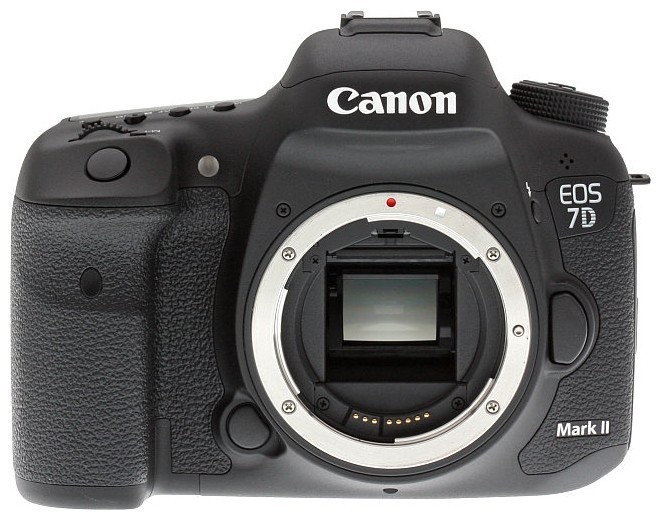
Отзывы о Цифровой Фотоаппарат Canon EOS 7D

614 отзывов пользователей о Canon EOS 7D

Пользовались Canon EOS 7D?
Поделитесь своим опытом и помогите другим сделать правильный выбор

450
92
36
12
24
Profile no image

Скромный эксперт

19.05.2014

10/10

Оценка пользователя

Великолепно

Finally I can have crisp sports pictures when I take outdoor pictures of Lacrosse and Football. Love this camera. Great buy. Everything went smoothly.
источник
Profile no image

Скромный эксперт

27.06.2013

8/10

Оценка пользователя

Хорошо

I didn't purchase my 7D in Amazon, but I wanted to put in my thoughts on the camera. Like I said in the title, sensor technology has improved by leaps and bounds since this camera was first introduced, but having said that, I feel this camera is great. I'm not a professional photographer, but I consider myself an advanced amateur and know my way around this camera.I think to really get the best of this camera is by shooting in RAW. Why? To get the most out of its sensor. I've shot 1600 to 3200 ISO and even though you can see grain, with software such as Lightroom or Photoshop you can easily correct and get usable shots. The camera is rugged and I haven't had any issues with it so far and with the feature set coming with this camera, you can't ask for more.Naturally, if I someday would be able to upgrade, I'm going with the top of the line EOS 1D X. Some people might consider me crazy to spend close to 7 grand for a camera, but when you enjoy what you do and can get the best out there, why not? But right now I can't and I'm enjoying my 7D to the max. I'm learning every nook and cranny in this camera to get the most out of it and in my humble opinion, you can't go wrong if you purchase one. Just wanted to give my opinion hopeful it will help.
источник
Profile no image

Скромный эксперт

09.01.2014

10/10

Оценка пользователя

Великолепно

I initially had a Canon rebel XT and was wanting something bigger. I found this and was very interested. Once I got it, it was easy to operate and has been an amazing product to work with.
источник
Profile no image

Скромный эксперт

30.01.2010

10/10

Оценка пользователя

Великолепно

I had reached the limitations of my beloved Pentax K20 for the type of picture shooting I do, and I didn't find what I was looking for in the new Pentax K-7. I needed fast and accurate auto focus performance in all lighting conditions and exceptional low-light, high ISO performance. The 7D came out at just the right time. I had considered the Nikon D300, but I preferred Canon L lens choices and the lesser relative cost for the ones I was interested in. It was costly to switch to Canon and buy all new lenses, but with the 7D it was certainly worth it!All the positives have been repeated over and over. I can't add anything new. My point of reference for the performance of the 7D was the Pentax K20 and K-7 (briefly). In comparison, the 7D is at least twice as fast in acquiring focus lock in medium to low light situations. Focus accuracy has been excellent once you master how to properly use the various focus modes. I am getting shots now I could never possibly get before with the Pentax in those situations of immediate-shot, candid pictures and moving subjects. Additionally, the excellent high-ISO performance allows me to shoot at ISO 3200 to 5000+ without issue, giving me more flexibility with higher f-stops and shutter speeds, helpful in low-light situations and with lenses that don't have image stabilization (17-40 f4L, 24-70 f2.8L, 70-200 f4L). While exposure control has worked very well, I have noticed a tendency to slightly overexpose most of the time. Some have commented on the shutter sound. I recall the Pentax K-7 has a quiet shutter sound which I found a BIG plus for shooting inconspicuous candids. The 7D also has a very quiet shutter but with an unusual sound - sort of like a coil spring snapping on what would be an extremely expensive toy dart gun. I got used to it and at times depend on the stealth qualities to shoot unnoticed.However, there are few must-haves in my mind, essential for the next upgrade of the camera.Cons:The biggest issue I have with the 7D is the fact that the mode dial is constantly changing setting from what I last left it. Part of the problem is that the power switch is now located right next to it. Quickly turning the power on or off may cause the mode dial to be changed. Since I often shoot spontaneously from "the hip" while the camera strap is slung over my shoulder, I recently found out that the strap itself can rub across the mode dial and move it to another setting. Not good if you are doing sudden, "get the shot now!" shooting. The cure is simple: do like the Pentax K-7 and use a lock button in the middle of the dial. Problem solved. Of course, any photographer on top of their game knows what the camera settings are every time they press the shutter button (note to self).The other irritant I have is with the CF card door. It's large and slides backwards to open, thereby having the back end of it along the side of the body right where you put the most pressure from the palm of you hand. Mount a heavy lens on this camera like the 24-70 f2.8L or the 70-200 f2.8L, and the pressure placed by your hand on the edge of the CF door causes it to flex and squeak. I heard the 5D has the same issue. Mine started solid but now is flexing and getting noisy. I also doubt the integrity of the weather sealing of this cover, referencing back to Pentax for what seemed like better sealing on their high-end bodies.Conclusion:The two issues I mention are hardly deal-breakers. They can be resolved easily if Canon chooses to do so and can be accounted for by the user's handling/acceptance. I still have a long way to go to get to the point of fully mastering the potential of this camera, but for what I've experienced so far, this is an excellent buy and concedes little if you need an APS-C format camera to shoot professionally. Overall, this is an exceptional camera that has taken my photography to a higher level.Update (4/11/10):Still love the camera. The problem I was having with the mode dial being turned by the camera strap when slung over the shoulder has been resolved by going to a special strap that connects to the tripod mount at the bottom of the camera and crosses the upper body so that the camera can be quickly drawn upward into shooting position from your side. However, the other issue I have with the camera is getting worse - the loose and squeaking CF door. I remove the CF card to load pictures on my computer, and I do this once a day for the last 4 1/2 months now. Perhaps I open and close this door more than others which has contributed to the apparent wear. While Canon should repair this issue under warranty, I hate to be without the camera for the several weeks required to send it off and have the work done. It's unfortunate that this little piece of plastic can so undermine the structural integrity of what is otherwise a very solid camera.Update (10/17/10):While the mode dial is still an issue, after a year of use I've noticed that other parts of th
источник
Profile no image

Скромный эксперт

23.09.2010

10/10

Оценка пользователя

Великолепно

So far so good. I just purchased this camera recently and it works so fine so far. I've explored some of its options and menus and they are awesome. I've shifted from my very-old 350D to this more advanced model, so some options and characters are new to me. The weight is heavier a bit than my old camera but this is not an issue I believe. The body has a nice touch to the hand, not harsh and not smooth and would help on stabilizing the camera a bit in your hand (while the 350D body was smooth relatively and would slip sometimes).Some of the many good options and choices this camera has are:1. Live view: Like the point and shoot cameras, you can take a picture by designing the shot in the LCD preview, and you can also view it through a 3x3 grid or 5x5 grid to compose your scene accordingly. Personally, I don't think I will be using this option so much since I'm more used now to the viewfinder.2. Digital level: This thing is viewable only when you switch to the live view mode, and it enables you to level your camera accordingly without any need to the typical spirit level, either on your tripod or your camera's hotshoe.3. Quick settings: It has a quick settings button by which you can make all the settings you want in a fast mode. Simply press the button and the LCD screen will show you all the settings, and you can browse among them using the joystick and change the settings by the top dial.4. Three additional customized modes free for the user to register them under any preferable settings.5. Bulb mode is separated from the (M)anual mode, and not like my old 350D.6. Customizable control-points settings. You can choose 3 different models for your control points, and see them in the viewfinder accordingly.7. Wireless capabilities, which is, to me, so and so.8. Beside various JPEG qualities, you can choose as well various RAW sizes: RAW, M-RAW, S-RAW; with around 18MP, 10MP and 4.5MP resolutions respectively.9. It has different presets of styles for shooting which control colors' contrast and sharpness, and you can set your own settings as well (but personally I go with neutral look and adjust things later).10. It has direct black-and-white shooting, although I heard it is better to avoid this mode in some books, because you won't have much freedom controlling the levels so much. It's better to shoot in colors and convert it to B&W according to your likings later.11. The modes dial is situated on the left. It might not be a big issue, but it is sure a nice placement for me. I think it enables you to switch with your left without losing the grip on the camera with your right hand. Suitable for fast-paced work and shoot I believe.The wireless settings in this camera was a bit tricky. Wireless here is meant to be beam-based wireless, i.e. infrared beams. It is good (and essential) for controlling various accessories like the Speedlite dedicated flashes, but when it comes to a remote control, this is a disadvantage. For a remote control, I would advise of using a cable remote (which the camera is capable of too), because with a wireless remote, you would have to be in front of the camera or at least on the side, but if you plan to work behind the camera (which is the case for me most of the time) it's going to be some hard time triggering the shutter from the back. A beam-less wireless capability would be far more useful than IR.I wouldn't talk about the image quality here, because I think it is obvious by now.I didn't try the video mode, mainly because I'm not interested in this field. I believe this option has raised the camera's price accordingly. I was looking for a camera with such options but without the video mode, simply because I don't need it. The price is an issue here of course but if you are serious about your hobby or profession it is a great investment (with the right lenses). I suggest though, and I don't know about the marketing lines that Canon are involved in, that such video mode would be separated, to drop down the price a little.
источник
Profile no image

Скромный эксперт

25.02.2012

10/10

Оценка пользователя

Великолепно

I approach camera selection differently than most folks -- I start at the lens. Like a $200K sports car, you don't get the most out of it if you're rolling on bargain rubber. Same with a camera -- the glass makes it or breaks it. I will be talking about L-glass only in this review. If you're not interested in L-glass, you may still find it useful.FOCAL RANGEUnless you're a dedicated landscape or interior photographer, I find the L-glass selection of standard zoom lenses pointless if you have a full-frame camera like the 5D. They are just too wide for general purpose. Even the 24-105mm f/4L, if viewed on the 5D, looks like the equivalent of a mere 65mm on a 1.6x crop sensor like the 7D. I find that approximately 70mm on a 1.6x is the equivalent to what your naked eye sees. To get the same effect on a 5D, you need at least 112mm. The problem is, at that length, large-aperture L-glass starts at 70mm, so you're losing your wide angle capability.PERFORMANCE IN LOW LIGHT (HIGH ISO)Large-aperture glass should always be your first weapon, and consider ISO your "Plan B". This is where it gets interesting. The 5D performs better than the 7D at high ISO due to its full-frame sensor. But lets look at our lens choices. For standard zoom, we have the 24-70mm F/2.8L and 24-105 F/4L. Remember our little issue about focal range? If I want to combat the "too wide" issue of the 5D and upgrade to the 24-105mm F/4L, I'm losing a full F-stop. So even though the 5D performs better in low light, I'm getting more light onto the sensor with a F/2.8 mounted on a 7D. In other words, I've leveled the technology playing field and both cameras are producing nearly the same quality of image right now. Except the 5D MkII costs $700 more (!)CONCLUSIONI can think of only one type of person who would receive an advantage with a 5D MkII -- someone who needs to shoot in low light often (without a tripod) and owns BOTH a 24-70mm F/2.8L AND 70-200mm F/2.8L. Anything slower and you're defeating the purpose of a 5D. Considering the newer technology in the 7D (which I didn't even touch on), the 7D is clearly the most practical for most folks and WAY better bang for buck.
источник
Profile no image

Скромный эксперт

20.01.2011

8/10

Оценка пользователя

Хорошо

I purchased this camera a month ago as an upgrade from my Rebel XSi. I considered a couple of Nikon models, but wanted to keep compatability with my existing, and growing, Canon glass collection. I considered the 5D, but decided that for outdoor sports photography, often taken at the long end of 250mm, which has been my main focus, so to speak, that it did not make sense to pay up for a full-frame camera that would also require longer lenses. So I went with the best APS-C camera Canon offers - the 7D.It is notably larger and heavier than my XSi. Mostly I like the extra heft, but it is a mixed blessing. Certainly the solid feel is nice. Also nice for sports is the 8fps in servo mode,which is gatling-gun fast. The dual processors also help display images quickly, unlike the long lag in my XSi.This is a high-performance camera for photographers who know at least a bit about what they are doing. It is not a camera for newbees. For example, there are no "sport" or "landscape" modes built in, as there are in the XSi. There are custom modes, but you need to know something about the camera, and about photography, to create and use them effectively. This is not a complaint, just something you should understand if you are considering buying this camera.Coming from the XSi, I found the controls took some getting used to. Even after a couple of months, I still find myself using the quick dial when I need to use the main dial, and vice versa. And some controls that were easy to access on the XSi, like White Balance, are not quite as easy to access/change on the 7D in some cases. White balance is a particular gripe. It's displayed in the top LCD, but the icons are too small for me to see well, so I wind up using the main LCD, going through screens, etc.The ability to use ISO settings above 1600 to capture indoor action was a major reason I upgraded, and the 7D does very well on this front, albeit to date I not often needed to venture over 3200.Image quality has been very good, though not notably better than the XSi. I take mostly action shots rather than portaits or landscapes, so the gating factor in terms of image quality for me is typically the abilty to use a sufficiently fast shutter speed rather than sensor size/resolution. The higher ISO settings available on the 7D do help in that regard.Improved autofocus was another reason I upgraded from the XSi, and in this regard, the 7D excels. The ability to select groups of the 19 sensors provides a lot of flexibility for different situations, and the ability to strike a balance between the control offered by single-point autofocus, and the cover of multiple points for those shots where a subject in motion may not be covered by the central point. My rate of in-focus action shots improved dramatically using the 7D, and now after having used it I would not want to go back to the XSi's 9 widely-spaced sensors for sports shooting.In sum, this camera is very capable, but does not suffer fools gladly. The question is, is it $1000 more camera than an XSi, or $600 more than a 60D, when $800 more can get you a 5D with a full frame sensor and the image quality and noise reduction improvements that come with that? For my purposes, I would buy this camera again, and would recommend it to anyone who shoots sports and doesn't have the budget for a 1D.
источник
Profile no image

Скромный эксперт

06.09.2011

10/10

Оценка пользователя

Великолепно

I was looking for a HDSLR to replace a Panasonic HMC40 camcorder. I wanted to shoot more light weight and still wanted that shallow DOF in my images. The Panasonic was good, but I still needed to get a Letus adapter to get the same look. So I started researching What Canon and Nkion had to offer. I am already a Nikon guy and I have the terrific D7000. That camera also does 1080p video, but the only issue is that you can't change the aperture settings while in the live movie mode. But for taking pictures, the camera is my go to body for sure. That left me with a choice between the Canon 60D and the 7D. I was looking at the 60D mainly to save some $$ over the 7D, but in most of the reviews that I looked at the 7D was a better fit with the dual Digic 4 processors. Plus it more in the same class as the Nikon with the magnesium alloy body as well. But like I said, I was looking at this from the perspective that I was only going to use this camera for videos and not photos.I got the body and the Tamron 28-75mm 2.8 and the Canon 50mm 1.4 as the starting point. In my opinion, both of these lenses are a great fit for shooing video. I did not want to get the kit lens, because most of all kit lenses are average at best. Having a constant aperture lens is great because wherever the zoom is, the lens is still fast. I got the prime for more close up work and low light use with the 1.4. The camera body itself is big, but not as big and chunky as the D7000. lots of control buttons and menus to go through but it you take the time to learn them, well worth it. Shooting video is really great because you have complete manual control over every aspect of the camera while in live mode. White balance, aperture and ISO so that you can get that great exposure at the start. I love the fact that you can visually see the changes in the live view. With the Nikon, to change aperture, you have to get out of live view, make the change reset the light meter and then re-engage live mode to set it.I have the 7D mounted to the iDC System Zero base plate with follow focus. Attached to this I have the Rode Video Mic Pro and a Zoom H4N recorder for dual System sound. I also have a couple of XLR shotguns and a pair of Sennheiser G3 lavs for interview work. I also use a Manfrotto 501HDV head and tripod as well as a GlideTrack HD 1m Slider. This system works really well of for most of my on the go HDSLR video productions.
источник
Profile no image

Скромный эксперт

31.10.2009

2/10

Оценка пользователя

Ужасно

I paid over $1,800 for the body and the RAW file takes 25M bytes, which is more than twice the size than my previous camera. So, I assumed that the picture quality should be good. Yes, the picture quality is indeed good, ONLY IF you resize the 25Mbytes of RAW file into something like 1024 pixels width, at ISO 400 and above. You buy a cheap point and shoot camera, and it's image quality will be incredible in low ISO and when there is enough light. We pay more and spend more memory (and pay extra for that) for DSLR to get more descent ISO performance when there isn't enough light. If you willing to resize to 1024 pixel width, there is no problem in high ISO - but then why would you spend 25Mbytes for the RAW ? And why would you pay $1,800 for the body ?I took about 40 pictures in a gathering. It was in the evening and light was more than enough to read books very comfortably. So, at least the light was enough not to create bad quality pictures. However, I used high ISO (1600 and 3200) so that I don't have any blurred pictures. Besides, I read so many praises by 7d fanatics about how good 7D's ISO performance was. Somehow, I trusted them. But I was very surprised to see so many white dots/pixels in the dark area when viewed in 100%, as I showed in the uploaded picture. Indeed, there is no problem if you down-sample (resize) to 1024 pixel width. You won't be able to see them.I asked around about this problem and there were two types of responses. One is that it is the expected behavior of 7D, which has so many pixels in a small sensor. And I need to remap those white pixels using software. Indeed, LightRoom does it automatically. But not DPP (Raw processing software from Canon). And LightRoom is not ready for 7D as of now. The other response is that 7D is so good in high ISO performance, and I must have gotten a lemon. I hesitated what to do. And I just decided to return it and try an another 7D, only finding that this was a disaster. The new one showed the exactly the same behavior. In addition, the new one has hot pixels that appear even in ISO100. In fact, there are five such dead pixels. I know that this is OK, only if they are spread around. Unfortunately, all those five pixels are adjacent together and the whole white dead spot area is quite visible in every picture.So, I don't know at this moment what to do. I will definitely return this 7D that has the dead pixels. But unfortunately I can only exchange. Would I just exchange to another 7D and live with those white dots in high ISO, and be satisfied with down-sample'ed pictures ? Or would I exchange to other Canon camera or even Nikon... Anyway, my opinion is that this camera should not be this expensive and waste 25Mbytes for the RAW file just to create this kind of bad images in mid to high ISO. And for my horrible experiences, I can only give one star. But YMMV.--edit---OK, I decided to get the replacement of 7D - this is the 3rd one. This time, I was tired. Whatever it is, I would just take it. I'll live with white dots or some dead pixels or whatever. Let it be my destiny... So, I did not go through mid-to-high ISO testing, and I don't know what it would be this time - and I would not care any more. But then when I took some pictures, I found that they were so soft. I investigated, and saw that 7D is not focusing correctly. The lenses required AF micro-adjustments. At least the previous two 7Ds did not have this AF problem and need not AF microadjustments, as the manual says. They were focusing correctly. Since the 3rd 7D is not, I went through AF micro-adjustments. However, I also found out that the AF microadjustment at particular distance and aperture is not global within one lens adjustment. For example, if I set the microadjustment correctly at F2.8 from 1 foot (this was +15), AF at F 5.6 from 7 feet was very fuzzy. So, I set the AF microadjustment from the setting, and the value was - 20, but then the pictures are fuzzy at F2.8 from 1 foot distance. I tried to find the middle value which would work in all cases, but once I found a AF miroadjustment for particular distance and aperture, it wasn't working for other aperture and distance. So, there is no global setting for one lens. It varies depending on the distance and aperture within one lens adjustment. What a bummer... I think that a lot of people who are complaining about 7D's AF problems have 7Ds like the one that I have now. BUT if you take picture at F8.0 or higher, AF will look OK - not because 7D works correctly, but because at this aperture the depth of field is deeper.So, for all the people who praise Cannon 7D, either you are extremely lucky people, or you just don't care/know about the details.Or I am the extremely unlucky person ...
источник
Profile no image

Скромный эксперт

20.04.2010

10/10

Оценка пользователя

Великолепно

I purchased the Canon EOS 7D to use exclusively for short film and music video work. Prior to buying, I spent a fair amount of time researching the pros and cons of shooting video with DSLRs in general, and specifically as it relates to the 7D.Initially what I had read about the "rolling shutter" issue with DSLRs had me concerned. Essentially the shutter is held open and the image from the lens is recorded off the sensor in a vertical linear fasion. (ie. in "rows") In fast-moving subjects, or if the camera is panned too quickly, this can yield a "jello" effect. For instance, a fast pan of a tall building could cause the building to appear more diagonal than vertical.Thus far, I've had no noticeable issues with rolling shutter. The nature of careful shooting at 24fps (ie. being mindful of panning speeds to avoid jarring/judder, etc.) helps greatly here.Prior to the 7D, I was using a Canon VIXIA HF100 as my main camera, attached to a 35mm depth-of-field adapter. We still use the Vixia as our handy "home movie" camera (It is, afterall, a nice camera!). However, after using the Canon EOS 7D, I don't think I could ever go back to a standard video camera - or any camera that involves a depth-of-field adapter - for short film shooting.Here are the reasons: - No need to flip the video (in the case of 35mm DOF adapters) - Wide array of lenses to choose from. (I use my old M42/Pentax lenses + $12 EOS adapter.) - Convenient video codec (H.264 .MOV file... drops right into most any NLE) - Extreme low-light capability (Wide ISO range can be adjusted quickly) ...great for natural or available-light shooting. - Totally customizable (more below)Starting with my older Canon GL2, I've had a habit with every camera I've owned... that is, I dial the sharpness all the way down (no electronic enhancing) and also knock the saturation down a bit. This tends to give a bit more lattitude in post for color correcting. While the Canon EOS 7D has a LOT of menu options, I was able to figure this out after spending 15 minutes or so flipping through the menus. I now have C1 on my dial set for 1920x1080 24p, 1/50 shutter, no sharpening, low contrast, and a few other features either enabled or disabled. I also have the ISO defaulted to around 200, but this can be quickly changed while shooting, via a button on the top-right and selecting the ISO from the list.Audio recording is an area I read as a drawback to the camera, but I capture all sound wild so it wasn't a big deal in my case. For those requiring quality audio on-camera a quality shotgun mic could help.Being so small... you'll definitely want to add something to this camera to get a bigger form-factor. I've read great things about the Z-Finders but I don't have one yet as they are quite expensive. They can greatly aid in focusing, particularly in bright outdoor shoots, and they give that extra point of contact against your eye for stability. I'm using the IndiFocus setup I'd used previously with the Vixia. Generally speaking, bulking the camera up really improves shots and prevents the jittery look you may get when shooting with a DSLR alone. I find the camera's LCD display to be sufficient for focusing. (One other nice feature: Just prior to shooting, you can hit the zoom/magnifier to ensure your subject is in tack-focus before pressing record.)I'm researching variable ND (neutral density) filters, as one of those is a must for bright outdoor shooting, in cases where you want to maintain the shallow depth of field but not crank up the shutter speed and get that stacatto freeze-frame appearance. Standard NDs can be used as well, but it would likely require a set of them to stack on and remove as needed, which in my opinion wouldn't be as preferable as a single adjustable filter.At any rate, the camera itself is just fantastic. I really can't say enough good things about it for its video capability. It's a pleasure to use, gives total control over the look, and captures stunning HD footage!
источник
Profile no image

Скромный эксперт

05.12.2009

10/10

Оценка пользователя

Великолепно

When I first started reading about this camera I started to get excited, the only thing that bothered me was that it is not a full frame camera. Well I have had it for about 3 weeks and have been putting it through my own test. The picture quality has been fantastic,I don't miss the full frame sensor. The raw files do come out somewhat soft but as soon as you run them through photoshop you get a sharp photo. I edit all my photos in photoshop raw or jpeg, I think if your a serious photographer, you do everything you can to maximize the quality of your images. Some people complain about the file size, yea I hate having more resolution to work with. Kidding of course and anyway you can adjust the size of the files by adjusting the quality of the jpeg or raw file. The jpeg has a 18mp, 8mp, and 4.5mp size the raw has a 18mp, 10mp, and 4.5mp size. So you don't have to shoot at full resolution if you don't need to, I know I don't. I own a 1D Mark3 and have really loved that camera but I like this camera more. The camera is built well it is very nice to hold it in your hands, its lighter than the 1D too. When you pick up the 7D you know your holding something of quality.It is feature rich and has a bit of a learning curve, but I love playing with a new camera so that doesn't bother me. The auto focus and exposure system have both worked well for me, of course I don't expect the camera to do all the work. There are some circumstances where you have to know how to get a right exposure, because all cameras will be fooled in certain situations. As for noise at high ISO I get that with my 1D and every other digital camera I have ever owned. I either use flash or use photoshop to help me live with it. I need to address the 2 Star reviewer who is comparing the 7D's cost with the $900 cheaper canon rebel T2i and ask the question is it worth that much more. I say yes and these are my reasons.First there is no comparison between the build quality of the two. The rebel is made out of plastic and has no weather sealing. Yes the rebel is smaller and lighter that is a plus for him a minus for me. I like something I can hold on to and has a rugged build which the titanium body and weather sealing makes the 7D such a camera. I have shot with it in wet falling snow and rain and had no problems.The 7D shoots at 8fps the rebel at 3.5fps.The 7D has a 19 point autofocus system which has worked very well for me, the rebel has a 9 point autofocus system.The 7D has 27 cudtom functions the rebel has 12The 7D has an electronic level the rebel doesn'tThe 7D has a special macro servo AF mode when you attach a macro lens the rebel doesn'tThe 7D can fire remote flash the rebel needs a remote fireing device to do this.The 7D has duel processors which jumps it to a pro level camera by itself, the rebel has one.The 7D has five different autofocus point, settings the rebel has two.The 7D has a 100% view finder the rebel has 95%.The 7D is rated at 150,000 cycles the rebel is not rated.There are many more features the 7D has,that the rebel doesn't.The 7D is a professional level camera the rebel is not.Is the 7D worth $900 more than the rebel I would say definitely. I would say if you want a very nice entry level camera just above a point and shoot buy the rebel. If you want a professional level camera at a very good price buy the 7D. I think my fellow photographer that wrote that review didn't realize what he had in his hand when he made those comments. For me I am amazed the 7D is only $900 more than the rebel. Well I have had enough of being a photo geek for one day I'm going to go out and make some photographs with my 7D.I have had my 7D for almost 3 months and am still loving it.
источник
Profile no image

Скромный эксперт

09.03.2011

10/10

Оценка пользователя

Великолепно

I've had this body for about a month now and sometimes I just pull it out just to remind myself that I actually have this camera! I did not know how much of an upgrade I was actually making with this purchase!I came from shooting a T1i to the 7D, and right from the build, I was hooked. I have a 70-200mm lens and when it is mounted on the 7D, it just works. I love the grooves on the grip of this camera and because I have somewhat large hands, I can definitely handle heavy lenses without attaching a battery grip, unlike the T1i.Even though I have not put the auto-focus system completely to the test, so far, I really appreciate how you can customize the auto-focus to change depending on whether you are shooting horizontally or vertically. That feature right there has already saved me precious time in recent shoots. I can't wait to test out the 8fps! Let alone, with the shooting speed of this camera, I can handhold a lot more HDR images. I also appreciate the 19 points that I have to focus. It's been a little hard shooting with the T1i now as it only has 9 points.The greatest benefit to me has been the Speedlite Transmitter that comes with the built-in flash. I have a 580 and a 430, and thanks to the Speedliter's Handbook: Learning to Craft Light with Canon Speedlites by Syl Arena, my flash game has accelerated to new levels because of this feature. I still have somewhat of a hard time with the flashes having to be within the line of sight of the camera, but I'll manage fine for now. It works flawlessly in-doors though.Overall, this camera is great. Sorry if I got too technical with the benefits of this camera, but this camera just works! If you are just starting as a photographer, or if you are an enthusiast like myself, you won't go wrong with this purchase. Either way, I think that we as Canoners, or something, should really take advantage of the wireless flash abilities that this body, and others after this one, has built in, even though Canon seems to be the last to integrate this ability. Get the camera!
источник
Profile no image

Скромный эксперт

14.03.2010

10/10

Оценка пользователя

Великолепно

First, some background.I'm currently 23, and I've been shooting with film SLRs since the age of 6. My dad has always been a camera nut, and thus, I became one too. While I would never say any of my old models were "pro" (mostly old Minolta models), they were still an SLR, and as a result, they were a great lesson on photography growing up. As I got older, I became interested in filmmaking and purchased a Panasonic DVX100 video camera, which was a fantastic piece of equipment. I held on to it for about 4 years, and did many projects with it.NOW, when I first heard all the business about DSLRs and video modes, I scoffed. I instantly thought about the video mode on my crummy old point and shoot, which is, in so many words, awful. Then I saw footage. Incredible! It took me a while to be completely sold, but eventually I was ready to sell my beloved DVX to purchase a DSLR. I finally, after much debate (mostly between the 7d and the GH1), I settled on the Canon 7d.This camera is great. I've been wanting to get back into still photography again, and this is my first DSLR, so I'm excited for that, on top of the video mode. Both have performed to my expectations, sometimes beyond. The body feels extremely rugged, and the weight makes you realize it's not some cheapy plastic. I guess the easiest way to not make this review 10 pages would be a pro and con list, so here we go:PROS:-Feels very rugged, yet comfortable. I'm not so paranoid about having it out in scenarios that would have made me nervous with my DVX-Still quality is great-Auto-focus seems good, but I've really never taken much to auto-focus, so I'm probably not the best authority to talk on this. It's very fast, but I prefer manual control in most situations.-Live view is great in still and video mode. The zoom function is something that I've found invaluable for focusing.-HD video is amazing. Moving from SD to HD was a huge bump from the DVX, and I love the quality, sharpness, and detail. Dynamic range is much nicer than the DVX as well.-Battery life is better than expected-Didn't buy the kit lens, but the Canon 50mm 1.4 works great on this body and delivers wonderful results.CONS-As I mentioned, I've used SLRs before, and tinkered with some other DSLRs before, so the learning curve for me was mostly finding what settings are where, but I can see the learning curve being fairly steep for a complete new comer.-Anyone interested in the video mode who has done even a small bit of research knows of some of the limitaons of the camera (rolling shutter, "jello" effect, etc). These are annoyances, but something I'm willing to put up with considering the overall quality and price point-Photography, as I tend to forget from time to time, is an EXPENSIVE hobby. Lenses, battery grips, stabilization systems (for video), tripods, etc. The costs DO add up, so make sure you're committed to the craft before you get started, otherwise you'll be disappointed how quickly you can pour money into this stuff (I assume most people realize this, but always good to mention, even though it's not at all specific to the 7d).Well, I think that's more or less it. I love the camera so far and have no regrets about my purchase. Look forward to using it on some upcoming projects!
источник
Profile no image

Скромный эксперт

17.03.2011

6/10

Оценка пользователя

Плохо

I got the 7d to do a project that was a combination of still work and video recording. So far I am VERY happy with this camera's ability to do still work. My objections come with it's audio feature for hd recording. Though I haven't fully tested it yet as I'm waiting on some proper cf cards, I have been able to experiment with the audio, and it's mind boggling execution. Coming from a video background I have really good mics, and fully expected to be able to use them since the camera has an audio input. However, even feeding a signal from a pro quality field mixer with high end pro mics the sound is plain lousy. Reason is the camera has a built in agc (audio gain control), and so it tries to constantly adjust the level of the sound coming in. Also I think the input itself is of an unbelievably bad quality (as in totally unusable). Now that I have the camera I've discovered all these forums and pretty much the only solution is to buy a separate recording device, record separate audio and video and then sync them up in your video editing system. I couldn't believe this to be the case and so I called Canon support. To say they were less the helpful would be an understatement. Their customer service reps are just armed with very basic knowledge and not much help. When I tried to get through to a more experienced tech person, after a very long wait they basically refused to talk to me. CS said the message they had for me was "the camera works as it was designed". In other words screw you and tough.In any event those of you thinking to buy this camera to do pro or semi pro or even amateur level above shooting the family bbq, I would seriously suggest you read the threads out there about the audio issue. I wish I did before I got the camera. Shame on the canon engineers and especially shame on their pretty snotty attitude.
источник
Profile no image

Скромный эксперт

13.10.2009

10/10

Оценка пользователя

Великолепно

I've had the Canon 7D for about two weeks now and after about a thousand shots:Introduction. A very impressive high megapixel count for Canon's new professional/consumer digital SLR, but keep in mind that, as you approach higher resolutions, you need to ensure the lens on the SLR can resolve that much detail. Being that I only purchased the body, I'll be anxious to see how the lens kit fairs with this new camera. The shots I've seen so far across the internet are impressive, however. The lens I've used with this camera so far is my Canon 24-70 f/2.8L. A huge jump in ISO performance over my XSi, but that's to be expected. I'm having troubles with focusing, but I'll touch on that in a minute.Image Quality. Outstanding. Perfect Colors in comparison to my Canon G10 and XSi. No color banding, excellent sharpness.ISO. Canon 7D's ISO performance is great for the amateur photographer attempting to get great photos (and the semi-pros who know what their doing...I'm the former). As I said previously, I had the opportunity to take photos in a restaurant at about the same time using the same lens with both the XSi and the 7D (different days). The difference in quality and keeper rate was amazing! I am one that will stop shooting at a higher ISO once the grain starts showing more predominantly, but at an ISO3200, I found pretty nice photos in a barely lit restaurant. The LCD screen is the same as the Canon 5D Mark II (3", 920K Pixels), clear and fully visible even in bright sunlight. In comparison, the Canon XSi SLR also has a 3" LCD, but with 230,000 pixels.Size/Build. This build of the camera is substantially well made. It's supposed to be made of a magnesium body and weather proof. Either way, I have no fears of taking this camera out in the elements. It's more substantial than the XSi, and after only a few hours of shooting with the 7D, picking up the XSi felt like a children's toy. I have small hands (ms_ladi hands), but still have no problems carrying the 7D body with the 24-70 lens.Video. I am not interested whatsoever in the video aspect of SLR cameras and can never understand why this feature is included. Well, yes I can understand. I tried out the video for a few minutes and here are a couple of things I did not like. I also searched a few forums and found a couple of the same opinions. When I start shooting, I have to focus prior to shooting, but if I pan somewhere else, the camera won't autofocus again--just manual. Also, while I was taking snapshots during shooting, the video paused and the sound of the picture taking was heard. Since I'm not a fan of shooting on cameras, I'm not sure this is normal. The playback, however, is pretty amazing...lifelike, very realistic colors.Autofocusing. Canon's new 7D packs 19 AF points. It looks like Canon will be releasing a new firmware that might update their AF feature, however mine works fine. I was able to confer with a Canon rep who referred me to various other features on the camera that lets Autofocus really shine through. All points are covered.Conclusion. For the price, the new Canon 7D is the most excellent camera that Canon has released. For the amateur like myself, by itself or coupled with a Canon G10 for the "low-pro" times, one has a one-two power combination. For the semi-pro, this is the probably the best crop to date. The camera is intuitive enough for those new to photography to pick and learn easily, yet configurable enough for advanced amateurs.
источник
Profile no image

Скромный эксперт

06.08.2010

8/10

Оценка пользователя

Хорошо

After a lot of thought and going over things on many sites, I chose the 7D. I went on a week long trip to Italy. The camera performed as would be expected--great. The video part of the camera does take a lot of practice. Editing it is another matter. But since I am not a pro, I do it for therapy!! I just never realized the possibilities of combining modalities till this camera.PROS:--ease of use. Since I am familiar with the 30D, the 7D is intuitive. If you are coming from a REBEL series, then you will have to read the manual or play with it a lot to understand what this camera is capable of.--it will accomodate your shortcomings, to an extent. During a walk along Cinque Terre, the lighting was harsh. But with auto ISO, it really helped the picture quality. Needless to say, the camera is only a tool and you will need to understand how to use it.--versatility. I cannot express how handy the video feature is. It opens up possibilities that simply did not exist. I was not going to lug around more equipment than needed.--battery use is as expected. I did shoot for 8 hours straight without any issues. A lot of looking back at pictures and adjusting things with menus.CONS:--weight. But there is no way around this.--price. Once again, you get what you pay for. This is simply a great camera.--menu functions are not as easy as before.--maybe it is because I am still learning, but the creative settings are just not that easy to use.--manual is okay, but it may be worthwhile to add a DVD that shows options etc. A lot of what I learned were trial and error.CONCLUSIONS:I moved up to 7D because of sensor issues with my 30D.I opted for the 7D over the 5D for cost and the 5D is not going to do things more efficiently than the 7D. I did borrow a buddy's 5D recently, and it is a great camera, but not mush better than the 7D. Ultimately, one has to know what you are going to do with the equipment.If you are on the fence, upgrade if you do not have a camera with video features. It is amazing how much you can do till you have the tools readily. Second, unless you have specific needs, the 7D will suffice for >90% of non-pro needs. The snob factor it will not cure. Third, it will make you a better photographer because you will be more critical of your shots and you will shoot more--thus, you should improve.So, why not 5 stars--namely, the menu issues and the manual is not ideal.
источник
Profile no image

Скромный эксперт

27.01.2011

10/10

Оценка пользователя

Великолепно

I will start of by saying that I am NOT a professional photographer, and I am still on a level where apparture and ISO is very difficult to understand and how they work.Still, I really want to learn how to take great picture, and when I first was looking at dSLR, I was looking at the cheaper entry-level models like the Nikon D3100, Canon Rebel T2i, and so on...But then I thought for myself: "What the heck, lets go for full, and buy a camera that really takes it all!"So I ended up with this, and I do not regret one second of my $2000 spent on this camera + some accessories.The camera is great, and I will write a jargon-free review with words that everyone understands... (sorry)The camera takes wonderful picture of everything, from close-up photo (macro) to safari picture with lots of zooming and bumpy rides. The camera takes picture in such a high speed and quality that when I am on safari, 90% of all the pictures are ultra sharp, and no sign of that i am actually bumping up and down on dirt terrain. The camera have excellent low light performance, where you can take lots of great pictures without using the flash (I have still not used the flash once!).The ergonomics is very individual from person to person, but this camera seems to be made especially for my hands, since it fits like a bullet! It is quite heavy, but that is of course I am used to a small Sony digital camera!The menu is easy to understand, and with quick access to all the most important settings, taking picture in all situations only takes seconds to caliber.All in all is this a exceptional camera, and I say that from an objective stand point. I have no special preference over the different brands, but it was this that looked most okay in my eyes, and I was right!
источник
Profile no image

Скромный эксперт

03.01.2011

4/10

Оценка пользователя

Ужасно

Lots of features but the photo quality always seems...lacking, not as sharp as it should be especially at higher ISO settings. The Mic jack is also flimsy. I bought the Canon 7D a few months back. The Mic jack never did hold securely and recently stopped recording sound through the Mic jack. Upon close examination I noticed the jack was cracked and must have been since the purchase date. No problem it's under warranty I thought.I sent it in and Canon refuses to honor the warranty and will not explain why, only sending me the copy of the warranty basically telling me to go hunt it my self.I have been fighting with them over a week now and they want to charge me 685.00 to fix it. This warranty is a SHAM.After talking with other Canon users I find when it comes to warranty repairs, Canon will put up one hell of a fightnot to honor the warranty.They also refuse to give me there contact information they have on file with the BBB. Had to hunt hard for it.I felt like I was dealing with one of those New York gray market dealers.Oh yes, the AGC is TERRIBLE on this camera and Canon refuses to update the firmware to give us manual control of it.When you spend this much money on something, you think a good AF in movie mode is too much to ask for?Canon did...After 3 months and going through the BBB Canon finally agreed to honor the warranty but did so in such a way to not admit any fault and they still think the damage was user caused.Can't be user caused if it came out the box that way... Simple logic they don't seem to grasp.Think I will switch to Nikon... Canon has left a bad taste in my mouth for sure.
источник
Profile no image

Скромный эксперт

20.12.2010

8/10

Оценка пользователя

Хорошо

I spent a fair bit of time researching these Canon cameras. I am a painter and needed a camera for top quality copy work and some landscape work (professionally) and occasional sports photography (for fun). After looking at the T2i, 50D, 60D, 7d and thinking about the 5d mkII I went for the 7d. What a camera!!! I was amazed at the speed of the autofocus system and all the other bells and whistles. 8 fps is a pretty amazing thing and with all the autofocus/metering fine tuning available on this there are way more hits than misses. However after a month of rigorous use I could simply not get the clarity I needed. At iso 100 the image was fine but by 800 iso images were less than what is available on a good point and shoot. I tried everything..all the built-in adjustments and I even added a few L series lenses to the mix but to no avail. I unloaded it and bought the 5d mkII. I finally have the clarity I needed BUT I do not have everything else...the 7d is a remarkable machine...I miss the raw/jpeg button, the Q button, the fully functional live-view feature, the built-in viewfinder grid option, the flash remote sync, the level...etc etc etc....oh and the speed and accuracy of the AF system...the 5d is awfully slow.... But again, I have the picture clarity I needed and in the end that is what counts. Come on Canon, clean up that 7d sensor (or replace it w/a full size sensor)....bells and whistles are cool...even highly functional but I still care about the simple quality of the image. (I'll be looking for a 5d mkIII or a 7d mkII soon please!)
источник
Profile no image

Скромный эксперт

15.06.2010

8/10

Оценка пользователя

Хорошо

Let me start by saying, I love my 7D. It's the most athletic camera I own - 8 FPS, killer autofocus system, ISO expandable to 12,800, all of the canon lenses - and 3rd party lenses, almost any accessory out there has a canon version. Some of the best photo's I've taken have been with the 7D. Not to mention, the cinematic quality of the 1080p video capability in conjunction with all of those said lenses.So why am I a bit let down in the image quality department? Its very simple, even though the 7D has high ISO capability, I find that cramming 18 MPs on to an APS-C sensor is MP overkill. I've found that noise levels are more acceptable on my Rebel XSi than my 7D. At ISO 100, the 7D is awesome, its awesome all the way to 1,000. However, when I set (and I don't that often) the ISO to auto - the 7D constantly bumps the ISO to 3,200 - the results are some really noisy images. Granted - Noise Ninja does a great job in post production in reducing noise, but the fact is the 7D is sold as a low light camera - implying excellent low light performance - and the performance IS good (focus, metering, etc) but the resulting images are (in my mind) somewhat disappointing. So I switch to full manual mode and work with ISO 100 and pretend there's not any other ISO setting and I've been much happier. I also use f/2.8 and low light primes (85 1.8, 50 1.4, etc.) to take advantage of the 7D's low light capabilities.On the plus side the 7D is simply loaded with features - video, 8FPS, custom settings, doesn't need an additional transmitter to trigger remote speed lites, killer auto focus system, etc, etc, etc.But if your goal is just great image quality, you might consider spending your money on a used first generation 5D. It takes better pictures. If you need a more capable camera (with really good image quality) like for sporting events then The 7D is best suited for you. If you take portraits or families on the beach then get the 5D, and use the left over money to put toward a high quality prime lens.Think of the 7D as an 'athlete' - think if the 5D as an 'artist' - depending on your needs, that's the one to go with...
источник
Profile no image

Скромный эксперт

25.12.2009

8/10

Оценка пользователя

Хорошо

I've had the Rebel XT (350D) for three going four years, and yes it is a awesome camera!when I was looking for an upgrade to my rebel XT the T1i look really great, but then came the 7D and all of the new AF features and video. I think that the rebel body is lean and small even more now having a XD body.If your on a budget the rebel T1i is a great upgrade with more MP (al dough with 8MP is more than enough) good video Q, live view and better high ISO performance than the XXXD and if you like the rebel series bodies then you should go for it, now if you don't mind the video The 50D offers higher ISO and FPS than the rebel series and better IQ overall.7D !!! :I do recommend the upgrade to any one moving in that direction. The size is no issue when you get all that features, and it feels really good solid and hefty in your hands. The FPS & AF Are Fast. The high ISO performance is amazing comparing it to the XT, the low light focus and results are simply great. The AF points and versatile setup is so much better than the XT there is no comparing it.The view finder and the LCD screen are just awesome... you cannot compare it to the Rebel 350D its on another league.The battery life is longer, you can record RAW a JPG on at the same time or choose to do it with a press of a button. And the list of features goes on.I Think that there is still much potential on the 7D via firmware cos it's a awesome piece of hardware, no matter what they say.18-270mm Tamron VC ( got it last year to upgrade the Rebel and now use with the 7D )50D :I think (money wise) that a Canon 50D is a good upgrade (IQ compared to the 7D) and don't care for the video or faster AF.If you are looking for the most IQ available today, it's no brainer that the 5DMII is the choice (and don't mind the extra money) performs better in low light than the 7D. Now the 7D is faster on Focus and in FPS, so if youre a sports shooter or wildlife photographer the 7D will suit you more.Hope it helps you decideThe AF is not 100% accurate all the time ( got in touch with Canon Tech and they say maybe its because of the Tamron Lens? ) I get a bit soft images that you can improve with PP but overall you get very good IQ ( if want excellent IQ get the 5DMKII )Highly Recommended!
источник
Profile no image

Скромный эксперт

05.12.2010

10/10

Оценка пользователя

Великолепно

Outstanding camera! Easy to use whether you are an experienced photographer or a novice. Recently over thanksgiving my three adult daughters and a son-in-law took several hundred photos of my grandaughter. None of them have any experience with a camera other than a PHD (Push Here Dummy) point and shoot type camera. About 95% of there shots were useable if not great. Whether you utilize manual, apeture priority, shutter priority (time value), or program mode, this camera is simple and easy to use. I use a Nikon D300 at work every day. After reading several articles and comparing the D300 to the 7D, I chose the 7D for the clarity of higher ISO shots and what looks like better color saturation. This camera has too many features to explain here, but I am extremely happy with this purchase. Unless you need a full frame camera, this is the best one on the market. One more thing, the eight frames a second setting is great for outdoor shots with the grandkids or sporting events.
источник
Profile no image

Скромный эксперт

24.04.2010

10/10

Оценка пользователя

Великолепно

Three Positives:1. Live View - allows you to see exposure and depth of field (no darkening) in real time on a sharp and bright preview screen. You can then press the * button (AEL)and lock that exposure in.2. Critical Focusing - allows two stages of magnification in live view for critical focusing. I use it for "macro" photography with a EF 70-300mm lens. No stooping!3. Spot Metering - I know this has been on previous models but extremely useful when using in live mode. Really can get pinpoint exposure control without bracketing after some practice.Two other notables are low noise at high ISO and self cleaning sensor that really works. It also doesn't hurt to have the added pixel headroom.Two Negatives:1. Spare Battery - is overpriced on Amazon (sorry guys, I love ya but you need to bring your price in line with everyone else). If you use Live View a lot you will need a spare battery.2. Error Message 01 - "communications between the camera and lens is faulty" appeared at slower shutter speeds with my older EF-S 17-85MM. My two other lenses don't give this message. I just sent the lens to Canon to have it checked out - update to come. I think the 7D may be a bit less forgiving with well worn lenses than the 20D.Conclusion - If you can afford it, buy it. All the things you've been struggling to do with your 20D can be accomplished with the 7D in spades. There are new features that you need to learn by studying the manual but there is also a lot of familiar territory. If you thought you were a photo enthusiast before, you ain't seen nothing yet!Update 5/5/10 - Canon repaired EF-S 17-85mm replacing quite a few parts for $95 plus shipping. Bottom line - camera and lens now work with no error codes.
источник
Profile no image

Скромный эксперт

04.03.2011

10/10

Оценка пользователя

Великолепно

Ok gang, this camera is fantastic. It has features allowing a point and shoot user to operate it, or a very experienced professional photographer. The key to this camera is taking the time and learning all of it's features and capabilities (if that's possible). Leaving this camera on auto is like having a Ferrari and never driving faster than 25 MPH.I would highly recommend getting the DVDIntroduction to the Canon 7D, vol. 1 : Basic Controls Training DVD by Blue Crane Digital. After watching volume I & II, I was amazed at how much the 7D manual didn't cover. Definitely the best professional entry level available for this price.
источник
Profile no image

Скромный эксперт

22.12.2010

6/10

Оценка пользователя

Плохо

I could write a long drawn out review about the good and bad about the Canon 7d, but the truth about this camera is pretty cut and dry. The Canon 7d has NO better image quality than the Canon XSI, XTI, 40d....One can run all the test you'd like, but my customers do not lie. I have the Canon XSI, XTI and 40d as well as the 7d...After many shots in the field with the 7d I have found that this is a features packed camera, great for shooting birds at high speed, but when it comes to the main reason I buy a camera,and probably the main reason most pros buy cameras, which is image quality, the 7d offers NO advantages. Simply put, it's NOT worth the upgrade. Only you can decide if you'd like to spend an extra thousand bucks over say the Canon XSI...In reality, there are few cameras that can exceed its image quality. You'd have to go to full frame to get it !!!!...
источник
Profile no image

Скромный эксперт

11.07.2010

10/10

Оценка пользователя

Великолепно

I am a mom of two boys and focus mostly on sports photography. A spend the better part of my days watching and photographing baseball, soccer and martial arts. I was the historian at sons schools for two years. Prior to the 7D I used the Canon 20D. There are many review that give you all the detail technical information about this camera. My general note is it is a great camera from a great vendor. I big step up from the previous D series cameras.I purchased the 7D because of the eight frames per second and increased MP. The new view finder is impressive and has 1.0X magnification and 100% coverage. I had considered the 50D when it came out, but I did not feel it was a big enough advantage to shelve my 20D. I feel it is not just another D series camera or a small step like the 30D to 40D to 50D, but a significant jump for people who need the shutter speed and are looking for the big brother of the 50D, not the replacement.Overall I have been very happy with the purchase.Key features*18MP APS-C CMOS sensor*8 frames per second continuous shooting*1080p HD video recording with manual controls*3.0 inch Clear View II LCD screen with 920,000 dots*19-point AF system (all cross-type)*1.0x magnification and 100% coverage viewfinder*Wireless flash control*Environmental sealing
источник
Profile no image

Скромный эксперт

17.06.2010

10/10

Оценка пользователя

Великолепно

First off, I'm a casual user -- I upgraded from a 20D and just want to capture those fleeting smiles and pouts on my babies and sports shot of my older son. I have owned tons of digital cameras point and shoots and that 20D and used my brother's digital rebels etc -- there is no comparison. This gives you pro results on auto mode. no need to put in hours to learn anything. just grab a good basic lens and you are good to go. My favorites are the approx $300 canon 50mm and the 17 - 40 L lens for everyday use. And the video is absolutely fantastic. I have used 3 or 4 canon and sony miniDV camcorders in the same to rebel price range and those did worse in low light and with image stabilization. In terms of HD i have used an xacti and flip and both suck! I used a tripod since this thing weighs a bit more than a flip, and it did a pro job at taking a movie of my sons spring concert -- got a better than my naked eye view from the 3rd row.To compare to the 20D -- the flash actually works! no more weirdly dark pics without an external flash. I love that it feels easier to hold and more balanced with the same lenses on it somehow with a sturdier area to grip, and the viewfinder is simply awesome. So just wanted to say -- don't regret this upgrade at all!
источник
Profile no image

Скромный эксперт

07.12.2009

10/10

Оценка пользователя

Великолепно

I am very, very new in photography. I just started to take pictures with my first DSLR, the Canon 7D, as a hobby about a month ago... and I'm loving it.Maybe the 7D is not the best camera for a beginner like me, but you tend to get considerably good results quickly if you don't mind looking for tips online and also carrying the manual for any quick checks.Personally, I think image quality is excellent. Shooting stills is really enjoyable and video is equally awesome. It is quite astonishing to see what the 7D can do when shooting on HD.I only have two problems with this camera: 1 - I can't record more than 12 minutes a time on full HD, and my second problems is that, as any DSLR, the 7D is not really a camera meant for handheld video recording. Video is too shaky without a firm and stable support.That's it! After that, I have no other issues.The rugged look and feel of the 7D is one of the characteristic that I like the most. I went out to the New Jersey country side with all the snow that fell during the weekend (12/05/09), and I never felt worry shooting in some very cold and wet conditions in the woods. Of course, it wasn't Antarctica but to me --a dude from a Caribbean island-- that was a little extreme. The sealing is very good and the buttons on the 7D are big enough that I did not need to take my gloves off to shoot or to play around with the settings.I can't wait to January to take Dallas (yes, I named my 7D Dallas) into a more familiar but also very demanding weather environment such as the one found in the Caribbean beaches in the northern cost of the Dominican Republic. Oh, yes! Let the heat of the sun, the salt of the Caribbean Sea, the sudden tropical downpour and the tiny white sand of those beautiful beaches come... we will be prepared!/AR/
источник
Profile no image

Скромный эксперт

02.08.2010

10/10

Оценка пользователя

Великолепно

My favorite Canon camera so far. I was not ready to buy a full frame Mark II 5D, so the next best option seemed to be clear, '7D'. I thought it was going to be too big for my small hands, but it wasn't. Love the sharpness and all the new features Canon has included in this model, specially the wireless triggering of my speedlite through the pop-up flash and the HD video. It was a huge upgrade from my Canon Rebel. Got the camera with the 18-135mm lens, it gives me a good range, I rarely have to switch lenses.
источник
Profile no image

Скромный эксперт

03.09.2010

10/10

Оценка пользователя

Великолепно

I am really happy with this camera. The quality and functionality is amazing. I bought a Canon 100mm IS Macro lens and together, these products take amazing pictures. If you are looking for a middle line professional digital camera, this one excels beyond your expections! In about a month, our new website will be launched so you can see the quality pictures this camera takes. [...]
источник
Profile no image

Скромный эксперт

16.06.2010

10/10

Оценка пользователя

Великолепно

This is the sixth Canon DSLR we've bought (and just got the seventh, a T2i, two weeks ago). Other reviewers have hit every high spot of the 7D; I don't concur with most of the complaints. Excellent camera, a significant improvement over the prior 1.6x-sensor Canon DSLRs. Recently (May) took over 6000 frames during a three-week birding trip. I rated portability as four-stars because it is somewhat heavy to carry for hours with 100-400 IS USM and battery grip (but two weeks ago gave the 100-400 to my wife for her T2I and got a Sigma 50-500 OS HSM for the 7D - which is even heavier!). Otherwise I am 100% happy with this camera and have zero complaints.
источник
Profile no image

Скромный эксперт

05.10.2010

10/10

Оценка пользователя

Великолепно

Moved up to this from various Rebels. Best thing I could have done. Now, I just need to learn how to really get the most out of it.
источник
Profile no image

Скромный эксперт

22.01.2010

10/10

Оценка пользователя

Великолепно

Hi- I'm about the least experienced photographer reviewing this- more to the point- I'm NOT a photographer... I'm a music video director who bought this camera for its video capabilities. the quality of the video is superb. I read that many directors were foregoing using the Red to use the 7D, and this makes sense to me. I'm very happy with the quality HOWEVER... I took the 7d as my sole video camera down to Costa Rica to shoot a little documentary there, and found it to be very clunky to use in this sort of 'run and gun' capacity. When shooting video with it, you really need to have the camera support by a tripod, or shoulder mount or steady cam or something. Using it on its own is really clunky, and shaky. If i had it to do again, I certainly would have brought my canon hf 10 instead. Outstanding camera, though. No doubt. Just wanted to share what I consider to be that one concern or limitation...
источник
Profile no image

Скромный эксперт

03.11.2009

10/10

Оценка пользователя

Великолепно

I've had this camera for about a week, and I'm still learning how to get the most out of it. I went from a 40D up to this one, and all I can say is that I really like it.If you are accustomed to a less complex camera, it will take you a bit of adjustment. Some of the things that are missing from the 7D are the "beginner settings" such as sports, close-up, portrait, landscape, etc. By the time you get to the point that you are using a camera of this quality, you should be able to figure out these settings on your own.You do have the option of replicating these functions in the custom settings area, so you shouldn't have any trouble working these things out.If you purchased one of these before October 20, 2009, be sure to download the firmware upgrade. It's worth the trouble, which is actually negligible.My lens of choice with this camera is the 24mm-70mm L series lens. It's an excellent match and combination.
источник
Profile no image

Скромный эксперт

07.11.2009

8/10

Оценка пользователя

Хорошо

This truly an incredible camera. The color is remarkable (of course) and auto focus WITH SINGLE SPOT is reliable as the day is long (just be sure to get that spot on what you want to see). I am using only Canon lenses (17-40, 28-135, 50mm f1.8). the kit lens works fine but you can tell it is light on build. I am at a loss to explain Canon's bluster about "17-point auto-focus" though. IT seems utterly useless under normal circumstances and I have not found any that call for it???? thow in a 580EX and set flash for 2nd curtain and a diffuser of your choice and this is a real package. No experience with video yet but there is a whole community doing incredible stuff with this camera ([...]). I have waited 4 years for Canon to cross another threshold. This camera is it.
источник
Profile no image

Скромный эксперт

28.04.2014

10/10

Оценка пользователя

Великолепно

This review is going to be more for photographers that have some experience with DSLR and looking to upgrade.I've owned the Canon 20D, 60D and now purchased the 6D (full frame) but bought a mint condition 7D recently. I wanted a second body that can compliment each other for events and as a backup but did not have the funds to purchase two 5D MKIII or pro body like 1D-series. Nor I would get such setup unless my profession was an event/wedding photographer which I am not. I consider myself as an advanced hobbyist making some money here and there but more than anything enjoy photography. Having the 6D and 7D fills in a lot of voids that two bodies were lacking.Unlike the 7D's cropped sensor, full frame bodies do tend to do better in low light, give you a bit more creamy bokeh and offer wider view (if you're coming from a cropped body that is) . Even then, a semi-pro crop body like this 7D still can shoot wide with the right lens, have more reach (x1.6 after all) and still have great image with low light compared to other xxD series like the 60D, 50D, etc. I shot with the 60D for about six months and the camera did an amazing job in low light with the right setup. If you've ever shot with much older xxD series like the 10D or the 20D you know it's not exactly a low-light camera especially with astrophotography.Full frame bodies like 6D & 5D MKIII has its limitation when shooting fast moving subject like birds, baseball pitcher throwing a ball and football being caught out in the filed. Yes, you can still shoot fast action especially with 5D MKIII but if higher frame rate is a top priority then you'll need this body if not the 1D X (specifically meant for wildlife & sports). Even my old 20D did 'okay' with 5fps but at times it missed a lot of actions as well as focus was sub-par at best. Without spending thousands, the 7D's 8fps is a very nice feature. While it's no 1D X, it does a good job especially when used outdoors with the right lens.I also decided to get the 7D as my 6D wasn't keeping up with the buffer (even with high speed SDXC card) and going to be shooting a lot of kid's events my daughter will be involved & for the town I live in. I also know when I want more zoom and buy a longer focal length lens the 7D will do a superb job in capturing those details.<>Really the only con I've found is having to use compact flash cards that are generally more expensive. I just assume this is due to manufacturing cost of the cards and it's different architecture but seems more rugged and faster than a regular SDHC/SDXC format. Of course there's no dual slot with the 7D so for important events, I wouldn't risk anything but carry a second body and/or second card.<>Who should get the 7D? Advanced shooter that require more auto focusing point & frame rate in capturing actions shots like baseball, basketball, wildlife/bird photography and getting the best image out of a cropped body. 8fps gives you much better chance of obtaining that award winning shot with more auto focus points (than the 6D) for better accuracy. With the very fast auto focusing points (more than 6D) and superb image quality, you cannot discount 7D's capability just because it's not a full frame body. 7D is the top of the line x1.6 crop body currently aside from professional grade body like the 1D X.The 7D's crop body also means if you have quality lens like the Canon 70-200 f/anything you can shoot an object much further without having to buy extenders or more expensive lens with longer focal length. With a full frame camera, this could mean more money to spend depending on the type of shoot you're looking to do. Again, this all depends on the type of photos you're taking. But consider if you buy a used 7D (often times with low shutter count) and pair it with 70-200 f/4L or even the f/2.8L IS II as well as the 100-400 f4.5 then it maybe a better match for those that shoot wildlife and sports more often. It'll certain save you more money than spending $3,000+ on a 5D MKIII.<>7D is like the 60D (same sensor on both) but with faster shutter speeds, more auto focus points, bigger buffer and overall designed for speed. With that said, if you don't shoot wildlife, birds, sports, motorsports and shoot more portraits and landscapes then you may not need the 7D.If you're new to DSLR & photography then read this portion. When you're new to DSLR or photography in general, you're likely shooting everything & anything in sight (I did that for awhile as well). But you'll soon realize your passion and want a body specific to the type of photography that suit your taste. Not everyone is going to be a professional in every area of photography. It's like trying to become a mechanical/civil/electrical engineer all at once. Doable of course but you'll see most professional working as a photographer for a living has a very specific area they work with.If you're still no
источник
Profile no image

Скромный эксперт

05.12.2013

10/10

Оценка пользователя

Великолепно

UPS delivered a new 7D on October 8, 2009, five weeks after I placed an Amazon pre-order. During the last 4.5 years I've gotten to know this groundbreaking DSLR well. With weather seals at the level of the legendary EOS 1N, high performance appointments and contoured magnesium body shell, the 7D is like a mini 1D. It's solid yet comfy in hand: deep finger grooves in the grip and thick textured rubber make for a secure handhold. The large thumb rest anchors the thumb and increases grip security.The shutter is softer than a 50D but louder than my 60D and 6D. If you're a SLR shooter you'll consider the 7D pianissimo. At 8FPS I call it fast. To maintain high FPS you need a good battery and the 7D is good for 1000 images per charge. Obviously video and live view reduce battery time. The LP-E3 batteries are dependable and have a useable life of about 3 years.CONTROL INTERFACE: Controls revolve around 3 wheels, 19 buttons, 1 joystick and 11 tabbed menus. Major features rely on physical controls can be set by feel while looking through the viewfinder. Menus ares used for options. Wheels have stiff resistance, making accidental turning unlikely. EOS veterans whould feel at home and will barely need to crack the manual. Most controls can be reprogrammed. I configured the joystick for direct selection of AF points and assigned center AF point to the DOF button. Menus can be configured too, e.g., group favorite settings under a single tab. The menus are well organized with options on a single page.VIEWFINDER: The viewfinder shows 100% of the image at 1.0X magnification and is the best APS-C viewfinder I've used. The focusing screen is not user replaceable but the transmissive LCD display--transparent LCD over the focusing screen--can simulate five AF patterns, grid and plain matte screens. The red AF display flashes may be changed to dark gray or disabled. The viewfinder data display is bright and easy to read.AUTOFOCUS: The 19-point cross-type AF array is the most significant 7D innovation. The center point is a double cross. Imagine two superimposed crosses: rotate one cross so the arms fall in between the axis of the other. A F2.8 or faster lens is needed to enable high precision double cross sensitivity. With slower optics it reverts to normal precision and single cross. Off-center points are cross point and can snag almost anything. Although the 7D has double the AF points of the 50D, the AF area is the same size. AF selection via joystick is precise and quick.My disappointment with 19-point auto select is active points can't be directly overridden with the joystick. Instead, press the AF selection button, use the M-Fn button to cycle through modes until single point AF appears and, finally, select the AF point with the joystick! Oddly, individual AF points may be chosen in 19-point AI servo. However, the selected point is a starting point for AI servo tracking: focus is handed off to each of the 19 points as the subject is tracked across the frame.My compromise for the problem above is to use Zone AF with center point assigned to the DOF button. Zone AF behaves like 19-point AF, but limited to one of 5 user selected zones. Zones may be chosen directly via joystick and, if pin point accuracy is needed or it misses, press the DOF button to narrow AF to a single point within the active zone. Essentially it becomes 5-point AF with the DOF button. Release DOF button to return to normal operation.Spot AF reduces AF point size for precise control of the focal point, ideal for macro and portraits. Why not use normal Single point AF? Normal AF points are large and may cover both the eye and eyebrow in a tight portrait, locking on the more contrasty eyebrow. Reducing AF point size insures an eyeball lock. Spot AF is the most significant focusing breakthrough of the past 5 or 6 years. It's not for everyone, but makes macro and portrait shooters happy.METERING: Sixty-three zone metering debuted in the EOS 1D Mark III and filtered down to the 7D. Evaluative metering integrates color data into the algorithm and is better at avoiding overexposure of reds. It's a minor improvement over 35-zone metering of XXD cameras but better in tricky lighting. Exposure compensation (EC) is adjustable to +/- 3 stops. Metering is more biased to the active AF point than earlier EOS DSLRs, i.e., the object you focus on has more weight in exposure calculations. In Zone AF where a group of AF points lock, the exposure is more averaged.FLASH: The retractable E-TTL flash is great for fill flash and snapshots. AF assist is the main gotcha--pulses like a disco strobe--but can be disabled. The popup also functions as a wireless E-TTL flash master, using light pulses to trigger compatible Speedlites. If you use auto-ISO with flash, it defaults to ISO 400. Often that is not high enough for balanced fill in low light, and too high for fill in bright light, so you'll need to dial in ISO settings manually.Flash exposure compensation (FEC) in -3 to + 3 in 1
источник
Profile no image

Скромный эксперт

20.04.2013

8/10

Оценка пользователя

Хорошо

I recently had the chance to spend a few days with a friend's 7D and use it for an event shoot that lasted about six hours. My camera for many years was a 40D, and before that, a 300D. There are some notable dissimilarities between the two semi-pro bodies. Most of my comments about the 40D also apply to the 50D.If you're familiar with any of the recent Canon bodies, the 7D won't be a major transition. The brunt of the learning curve is in learning how best to use the new AF system and how to quickly transition between modes. It took about two hours of fiddling to optimize the camera for my shooting style. After that, switching between the 7D and 40D required no effort.BUILD:The 7D's grip is shorter on the lens axis than the 40D, and both are shorter than the 300D. Grip comfort is proportional to depth. My fingertips scrape the camera body more on the 7D than the 40D. I don't care for that. The 300D tops both of the new bodies here. Canon's also changed the button mechanisms. All of the major buttons on the 40D have an audible and tactile click when pressed. The 7D buttons just mush down; only the camera's reaction tells you if the press was effective.Build-wise, the two feel very similar. Without a lens, the 40D is a touch lighter. With a lens that weighs more than a pound, they're interchangeable.LAYOUT:The rear layout of the 7D has changed in subtle ways. With the 40D, I shoot single-point AF, manually selecting the point with the 8-way hat switch and activating it solely with the AF-ON button. This means my thumb is constantly switching from the hat switch to AF-ON. On the 7D, that switch is about a half-centimeter lower, so the transition is more awkward.I've had to change my shooting style to compensate; AF on the 7D is now bound to the shutter button. The reason I hadn't done this on the 40D is that if AF and exposure are on the same button, the camera will wait for AF before taking the picture. If the focus point isn't quite on a contrast, the camera may rack the lens, and you'll have long since missed the shot. The only way around that is to use AI-Servo instead of One-Shot, but the 40D has serious hunting problems in that mode.AUTOFOCUS:On the 7D, Canon's added a couple of AF modes. The most useful of the lot is Zone AF, which is a lot like manually picking a point, except you're manually picking one of five zones. Each zone has a couple of AF points, so you're always likely to end up on some contrast. It's less accurate than a single-point selection, but close enough for any lens f/2 or slower.The physical process of using Zone AF and manually selecting zones with the hat switch is very quick, even more so than my old system with the 40D because there's no thumb-switching. The time to acquire focus and actually fire, though, is a bit slower than the 40D just because of the Zone-AF calculations. You can compensate by using a single AF point with the 7D, but moving between them is more involving because there are 19 relative to the 40D's 9. The AF-point selector has to be on an axis with other AF points to move to them. Because the AF grid has outlier points on the middle on the top, button, left, and right, it's too easy to get caught where you can only navigate in one axis. Put another way, you can't go diagonally from certain points to other ones.The 7D's AF micro-adjustment feature is a godsend and is, alone, sufficient reason to prefer it to the 60D and 40D. It costs about $100 to send a body and lens to Canon for calibration. With multiple lenses, they're all likely to front or back-focus slightly, or even significantly, and their accuracy can drift with time. It took Canon three tries to match my 50/1.4 to my 40D. Without adjustment, the lens was unusably soft below f/2.5. Fixing the same issue on the 7D took about fifteen seconds.It's not perfect; I've got a zoom that front-focuses on the long end and back-focuses on a short end, and there are certain lenses that have focus shifts when they stop down, or at certain subject distances. You can't fix everything, but for the basic gross errors, it's a tremendously useful feature.SPEED & NOISE:The 7D needs a 5 FPS shooting mode. I've found for general portraiture, the safety shot at 6.3 FPS on the 40D is a bit too similar to the previous. It's even worse on the 7D, but the slower 3 FPS mode is too far the other way. Shutter noise is equally loud on both bodies. The 7D's is higher-pitched with a motor overtone. The 40D has a slightly longer clack. In Live View mode with no mirror-flipping, the 40D could almost be called subtle; the 7D is much louder here.Battery capacity calculation with the 7D and battery grip doesn't seem to work right. The grip has the option of two lithium cells or 6 AAs. If one of those AAs is down on voltage, the camera can go from a full display to empty almost immediately. With my Eneloops, I measured 1.35V in 5 of them and 1.2V in the last. This was enough to stop the camera. Replacing the last battery for another with 1.
источник
Profile no image

Скромный эксперт

26.01.2013

10/10

Оценка пользователя

Великолепно

So if you are reading reviews then you already know the stats/specs of the camera and what it is capable of doing. As the title of the review says I just upgraded from a T3i after people told me, "Don't do it! They have the same sensor.blah blah blah..." Yes this is true and was one of the reasons that kept shying me away from pulling the trigger and getting this. Upon opening the box... WOW! I am soooo glad I am got rid of my T3i. Just the build of this camera alone can be seen as a good enough reason to upgrade by some. As soon as I charged the battery the first thing I did was to make sure I installed the newest firmware because it definitely helps with the performance. I really have to emphasize that if this is the camera you find yourself desiring, but do not have the cash to justify spending on this, just save and wait. I am really kicking myself in the butt for not just saving and buying this camera to begin with. Save and get what you want because as soon as you get the camera you can "afford" you are already thinking about ways to get your dream camera. This also allows you to build your lens collection.Low light / ISO settings:After doing my fair share of review reading, I came to realize something while I was playing with my new 7D. I never read a review where anyone mentioned the number of selectable ISO levels available. This may be common knowledge to a pro who has top of the line Canon body's, but for someone coming from an entry DSLR this would have been great to know. Also would have helped me convince myself I needed it :-P Let me give you an example:Canon 7D ISO levels: 100 125 160 200 250 320 400 500 640 800 1000 1250 1600 2000 2500 3200 4000 5000 6400 H(12800)Canon T3i ISO levels: 100 200 400 800 1600 3200 6400 H(12800)Now when people make the argument that I will have the same noise issue with both cameras, I agree and disagree. Yes, at the same ISO level there will be the same amount of noise. However, in a situation where the T3i has to use 3200 because 1600 is too dark, the 7D has two more ISO values between that. Personally, I believe this will help drastically with keep the most amount of noise out of your shot as possible. I have also come to notice that the large amount of ISO settings allows better Auto ISO.Saving Format:With my T3i I always shot in RAW format like 99% of the time. The 7D offers 3 different RAW formats, a small, medium, and large which can be helpful if you don't need to make a large print.View Finder / Auto-Focus:Compared to the T3i, the 7D blows it out of the water in both aspects. The 100% viewfinder and the very quick auto focusing system definitely make the 7D worth it. When I originally started to look at upgrading I always read about people talking about the bright 100% viewfinder, but I always thought, "Could it really be that much better?" I can honestly say there is a noticeable difference.Which lens to get??This questions took me a while to answer and figure out. I had to think to whether I seriously saw myself purchasing a full frame Canon in the distant future. If so, the EF lens would have probably been the best choice in lens. However, since I do not plan to go full frame (For now) then I personally believe the EF-S lens is the best choice. After a good amount of research, I chose to get the EF-S lens for many reasons. The EF lens came out in 1998, so its getting to be a pretty dated lens. On the other hand, the EF-S lens came out in 2009, so almost 10 years later. Some also believe that since the EF lens is USM that it will focus faster. Well when it came out, it definitely focused faster then the non USM lenses. However, the EF-S lens is just as fast if not faster. A friend of mine has the EF lens on his 60D and wishes he got the other one instead. Additionally, on my T3i I had the 18-55mm IS kit lens on it, and the build quality of that lens made me second guess getting the EF-S lens with my 7D. The EF-S 18-135mm lens has a completely different feel then my old kit lens. It's a very solid lens and I am glad I went with it. Also, at first it doesn't seem like the difference between the 28mm and 18mm is a lot, but it actually gives you even more versatility, especially with a crop sensor.WHAT IT ALL COMES DOWN TO:If you are upgrading from a pretty old camera the jump to the 7D will probably make a little more sense. However, if you are coming from a more recent dslr, upgrading may not seem to be the obvious choice. You have to ask yourself what your current camera can't do and the 7D can. Lastly, for everyone who thinks going from the t3i to the 7d was a poor choice because they can produce the same images, that is true, but the 7D offers much much more. The camera is just a tool. It doesn't determine how good of pictures you'll take, its you, and if the 7D brings out your inner creativity and confidence then get it!***The Rattle***That RATTLING noise the camera makes and your heart stops when you first hear it after pulling it out of the box. A
источник
Profile no image

Скромный эксперт

23.03.2014

10/10

Оценка пользователя

Великолепно

I'm the photography editor for my collegiate newspaper and we acquired this camera about 2-3 years ago. Since then, it's been the workhorse for our staff. Going through the metadata of our pictures, almost all the great images we've gotten throughout the years have been taken with this camera.PROS:Fantastic build quality. The magnesium alloy build is worth the purchase alone. Many sporting events take place regardless of weather conditions (lacrosse, soccer, etc.) which means we need a body that can withstand the elements. The 7D has gone through rainstorms, mud, and snow without fail. The small dings and scratches the body has received over the years have yet to impact its performance and weather sealing.The focusing system is probably the best I've used outside of the new Canon 5D Mark III/ 1 DX. It's ability to focus quickly from subject to subject has allowed myself and my other photogs to get some really amazing shots. As long as you have good lighting, it's basically a professional level camera in terms of focusing. Also, the chain drive, 8 frames per second, is great for action. Unbelievable speed that has captured some fantastic moments.The viewfinder. Being 100% coverage, it is simply awesome. It's bright and big, which allows me to compose my shots accurately and correctly. In the field, this makes all the difference, as sometimes, we only have 5-10min to get our shots in. Being able to compose the shot without thinking about the extra 3% the viewfinder isn't picking up is fantastic. Since using the 7D viewfinder, I find it hard to use other cameras that don't have viewfinders of the same quality.Of course the most important thing is the image quality which is also amazing. Great detail and fantastic color reproduction. Despite its age, it still competes quite well with the best APS-C cameras out there. Great value.CONS:Probably the biggest sign of the 7D's age, the ISO performance leaves much to be desired. Shooting basketball games, for example, is tough as I'd prefer another stop of ISO to get a better picture. I limit myself and my photogs to ISO 3200 for this camera, and even then that's pushing it. In JPEG format, the noise isn't that noticeable. However, if you tend to shoot in RAW a lot, then things could get messy, especially if you do a lot of work in post.The camera takes CF cards, which isn't a bad thing. However, when you look at the super cheap price of 16Gb and 32Gb SD Cards these days, it's hard to look past the CF slot. Moreover, most laptops and computers are shipping with SD card slots these days, making image transfers very easy. For our newsroom, having an SD card slot would probably save a good 5-10min on file transfers alone, especially in the field. It's not a deal breaker, but something that would make our life a little easier.OVERALL:Still the best camera I've used. Not only is it reliable, but it consistently takes amazing pictures for all of our staff. Moreover, it is available now for a very good price. I'm looking to add one or two more for our staff, despite it being so "old." Ours has taken a beating and still works like it is brand new. Pair it up with some great glass (we have a 300mm f2.8 L for example) and the pictures will blow you away. In my opinion, the best camera deal out there.
источник
Profile no image

Скромный эксперт

25.11.2013

10/10

Оценка пользователя

Великолепно

I have used the Canon EOS 7D almost exclusively for over 5 years now. The reasons why I selected it still hold true for me: burst rate, picture quality, professional look and feel, after market accessories available at reasonable prices, lens choices and on-board flash. Yes, that little flash has given me shots that would not have happened otherwise. The compromise was supposed to be the sensor size (not full frame). The latter has not been an issue for me, as evidenced by the large scale quality prints I have produced. To see some of the damage I’ve done with this machine, please visit my web site at [...]For my time of ownership I have produced a great variety of high quality images that include 24 x 36 in. posters and long panoramas. The sensor size (APS-C) has not been an issue for me at all. This is also due to the magic of post-production. Additionally, for my needs, I no longer use RAW, but exclusively JPG.On burst-rate: Originally I used this for high-speed sequencing (such as a skateboarder jumping or a dancer across a dance floor) and for HDR production. I no longer use this for HDR, since I find it more productive to use 1 high-quality image and curves to produce HDR. I still use to stack images and produce a flowing effect (such as a waterfall), but not shooting at high speed. This is useful for me since I wouldn’t need to carry a tripod for this type of shot.Picture quality has been exceptional. Most of my prints are between 8x10 to 18x24 inches. As mentioned above, I also have produced bigger prints to include big panoramas. I have upgraded my lens quality through the years and that has made a difference in quality. But the sensor size of the 7D has not been an issue.Weight and feel: This camera is not light, especially with dual battery grip. However, it is not cumbersome. It feels solid. This is due to its magnesium skeleton. Additionally, with the right lens it provides enough resistance and feedback on hand to produce unique movie shots. I prefer the Tokina 11 – 16, 2.8 wide angle for this.Notes on Canon APS-C sensor: Provides extra zoom due to the crop size (1.6X). The down side is the wide angle end of it. So if you have a 30mm lens, you really are shooting at 30X1.6= 48mm focal length. Alternatively, if you have a zoom of, say, 150; you are effectively shooting at 240mm. With the Tokina lens mentioned, I get very nice wide shots and wide movie angles, without going into the fisheye world. Particularly satisfying to me is to pan (hand held) to produce the unreal perspective shift this wide angle produces.The original Canon battery is still strong after 5 years. However, I’ve experimented with Opteka brand and, although they need replacing more often, it allows me to ‘dollar-cost average’ my battery purchases better. I make sure I have enough spares. With the cost of the Opteka (or Power 2000) batteries, this is very reasonable.The low-light performance is really a matter of the lens used. The camera does not seem to hinder any lens performance. It accepts EF and EF-S (for Canon cropped sensors, such as the 7D) mounts.My favorite things about the 7D: How compliant it behaves when you press the shutter, the quality of the shots, and the sound it makes is which is very pleasant.My least favorite: Movie making must be monitored using the LCD screen only. I’d rather use the viewfinder. I primarily use a Panasonic cinema camera for movies, but the 7D for B-shots (supporting shots).In my opinion, this is a regal machine that I have appreciated through the years. Canon will have to go beyond ‘nice things to have’ for me to trade this camera.
источник
Profile no image

Скромный эксперт

21.12.2013

8/10

Оценка пользователя

Хорошо

My experience (or lack of it!): After some Nikon School of Photography classes in the early 1970's I jumped into SLR's with a full range of Honeywell-Pentax cameras and lenses.My first digital camera was the Canon 30D (8mp, no video and no sensor cleaning).I tested a Nikon D800, Canon 5D MkIII and Canon 7D. I kept the 7D.I got manuals on all three from the same author, and was using high end Canon "L" wide and telephoto zoom lenses and Nikon ED high end lenses.Conclusions:I loved the full frame sensor (35mm sized sensor) in both the D800 and 5D.I saw no practical difference in photo quality between the D800's 36mp and the Canon's 22mp.There was also no practical difference (if you're not enlarging to extreme sizes)between these two and the Canon 7D.I love Canon's intuitive controls and that "big wheel" Quick Control Dial.The Canon 7D's menu is very easy to read (there's never more in a particular "tab" than what will fit in the rear LCD (so you don't have to scroll down thru choices)The 7D has a very useful built in flash (pop-up flash), that also can be used as a master flash (to control other "slave" flashes).Both Canon's were faster at acquiring focus (I was using a Canon 70-200mm f/2.8L & Nikon 70-200 f/2.8 ED lens - both are $2,000 + lenses).All three cameras have built in sensor cleaning (although in reality you will probably have to clean the sensor sooner or later).The Nikon D800 and Canon 7D have pop up flashes. No Canon model higher than the 7D has one.(This one item meant a lot to me because a pop up flash can be used to highlight during a "daylight" photo and you always have a flash with you, instead of having to lug a separate SpeedLite flash with you-even the small Canon 90EX or 270EX still needs separate batteries and fills your pocket).Negatives: 1.6x cropped sensor (although if you use a Canon 10-22mm EFS lens, it's the same focal width as the Canon 17-35mm L lens).I did not test the "movie" modes of each camera, as I am not experienced in that area, but all the cameras seemed to have very good quality video when displayed on a Sony 55" LCD TV.Best positive was the price: I paid $1,149 on a special Amazon.com and Canon promotional period just last month.The Nikon and Canon 5D's are around 2 1/2 times as expensive (body only).I don't think anyone could go wrong with either a Nikon or Canon, so Nikonians, please, no "hate mail"!Both are great camera companies. If I were a previous Nikon DSLR user, I may have went with the D800, but the Nikon D800 was just too confusing for me to try and learn a whole new way of adjusting & choosing options.Menus take more time to scroll thru, but are fairly easy to use.Dedicated buttons are quicker to access, but you have to learn and remember what each button does.Canon uses more menu choices, while Nikon seemed to be on the "button heavy" side.Final word: Buy the best lenses you can afford. That extra weight in a Canon L lens, for instance, is because of the extra "glass". And the extra $$$ is for the expensive glass.
источник
Profile no image

Скромный эксперт

13.02.2013

10/10

Оценка пользователя

Великолепно

I ordered mine a little late to the game; my Canon 40D had the shutter fail, and I debated long and hard on what would be a true upgrade to that camera, without breaking the bank.I wasn't in the market for a full frame camera, so that narrowed it down to a used 50D (a new one cost more on Amazon at least than the 7D), the new 60D, or a new 7D.60D missed a few key points on my check-list - auto-focus is key in motorsports photography, which while not my primary focus is something I do frequently. Build quality was another concern, and it seemed as though Canon really dumbed the 60D down deliberately from the 50D (or 40D for that matter) to save a bit of manufacturing costs. Less dedicated buttons, no joystick, worse auto-focus, and while yes, it is cheaper by a few hundred dollars, my feeling of value for $ just wasn't met.The 50D I actually really liked; not a super upgrade from the 40D, and if I could have found a new one for $800 I probably would have gone with it. The fact that it cost the same or more than the 7D on every site I could find it on put it right off my list.Onto the 7D - first, the autofocus. Head and shoulders above the 40D, 50D, and 60D. It's sick. You have to use it to see what I'm talking about, but selectable area from the joystick, or 19 point selection, or autoselect; usable, and fast. I will say that the liveview has more issues with focus than without; this isn't something I use very often, but when I do, its noticeably slower. However, manual focus from liveview is great; a click of the + button and you can go from 5x to 10x magnification on the screen to get that perfect focus - the display is high quality and really helps lock in focus when you use it in this manner. Good for tripod/portrait shots (not something you'd use in situations requiring fast focus anyway)The menu system and features are very well laid out; if you've used a Canon camera this should all be familiar anyway, and there are a few extra bells and whistles coming from the 40D that I noticed; primarily autofocus but being able to limit autoISO is a nice feature as well (if you own this camera and don't have that, update your firmware). Ridiculously fast burst speed - I mean 8fps is getting close to full motion; if you need speed and don't have $8000 to spend on a camera, the argument is over, get the 7D.Image quality - better than the 40D which is to be expected, but not lightyears ahead. I'd expect images between the 50D and 7D to be fairly similar. Having the extra pixels to play with is always nice; 18MP for me is fairly future proof. I think excellent results can be had to ISO 1600 - very usable at 3200 for web based images; 6400 ISO is pushing it a bit but still usable for web and black and white.View finder is excellent. The autofocus and grid display are both unobtrusive and usable. Battery life is great. Camera is actually pretty lightweight, weather sealed as well.Is it with the $1200 Amazon charges? Yes. Is this a futureproof camera? For a mirrored full sized SLR, I'd say yes. I would never need a FASTER camera than this. I'd be hard pressed to justify more MP than this, even more so on an APS-C sensor. Digital cameras have just come so far from where they were a few years ago, and this being an older camera I think like film cameras of old will end up becoming a classic. I thought about buying this used, but I didn't want to have to worry about the shutter being replaced in a year, so I just bought it new.Video - no idea. Haven't shot any. Reviews show its fairly awesome, so thats as far as I can go with that.Honestly, I don't think there is a better Canon APS-C on the market at the moment, and the next version of this will likely cost $600 to $800 more. Hence, I just bought it new, and hope to enjoy it for years. Bottom line, if you need the speed, and the best auto focus system on the market (right up there with the 5D Mark II, Mark III, or 1D Mark II), I think you'd be happy with this purchase.If you don't and just want a decent APS-C camera? Save a few bucks and get the 60D.
источник
Profile no image

Скромный эксперт

13.03.2013

6/10

Оценка пользователя

Плохо

If you are not seeing any noise quality issues with the 7D then, with all due respect, you have little or no experience with what the standard for a high file quality should be (shooting in jpg doesn't solve the noise problems with this camera). The 7D is no where near the best camera Canon has made and, in fact, I would say it is probably one of the worst bodies they've made, excepting that the camera does excel on the video end. There is significant noise beyond ISO 800, although the files are still usable, but ISO 3200 is the absolute limit. This is a very antiquated camera now when you consider that the newer sensors on a camera like the 5D Mark III will shoot clean files in excess of ISO 12000. The files from the 40D were just as good, if not better than the 7D.I had one of the early 7Ds and I can attest to the serious problems that the early cameras had with sharpness and focus. I got rid of that body a couple years ago. After the recent price drop I decided to give it another shot and bought a new recently manufactured body. While it appears that the sharpness issues had been resolved, for the most part, even the newer makes are mostly unimpressive. Focus on this camera when tracking moving subjects is still sub-par. When shooting a typical sporting event it is not uncommon to get a 50% in-focus burst when the subject is moving towards you). The center point focus is really the only one that is usable for moving subjects as none of the other focus setting can produce consistently in-focus shots of moving subjects, including the center-point expansion setting. Contrary to what some have proclaimed, the focus system is not so advanced that is difficult for the user to find the right settings, it is just that this camera's focusing system is simply not very good for moving subjects. In fact, I found that the 9-point focus system on the 40d and 5DmkII, respectively, were just about as good as the 7d's for moving objects. Of course, neither of those cameras fps are close to the 7D's so for sports they were not viable alternatives.This camera has probably been Canon's most hyped body and for those that had the mistaken impression (like me) that is was a viable and dependable backup to your 1D series camera it has been a complete bust. If you think this is a great body then that's fine since it is your opinion but I really think the only person that could objectively say that this is a great camera is someone that has never shot with a higher performance camera. I would take a used 1DmkII over this camera every day of the week.That being said, Canon is producing some amazing camera now, such as the 5DmkIII, which is worth every penny in my opinion. It's a little slow in fps for some sports action but given that the focusing system is incredibly good I would say that I get many more in-focus shots from it then with 7D and almost as many than with the 1DmkIV, even though that camera shoots almost twice as many fps.Let's hope that Canon does not release the 7dmkII with all of the noise problems the 7D has. If it's a 1.6x crop then you can't expect it to be as good as a 5D or 1D but it has to be significantly improved in relation to original 7D or I can't buy it. Given that the 1D cameras have all gone to "full crop" senors my suggestion to Canon would be to adopt the 1.3x cropped used in the previous 1Ds.Given current technology advances this camera is well out dated for a serious shooter. If you're enthusist then have at it but if you need to depend on a camera to help you make money, this is not the most dependable camera. If the 7dII is able to adopt the focus system of the 5DmkIII and at least borrow some of the clean file technology up to, say ISO 8000, then the new camera will be a winner, if not, the 7dII will be every bit the dog that the 7d is for more advance and professional shooters (my apologies to dogs for the insult).
источник
Profile no image

Скромный эксперт

15.04.2012

6/10

Оценка пользователя

Плохо

I started with a Canon XTI Rebel, upgraded to a Canon 50D, both purchased from other sellers and was happy with both purchases. For months, I have vacillated about upgrading to a APS-C 7D and / or Full Frame 5D Mark II. I was looking for three things when I decided to upgrade from the 50D; 1.) ISO speed, 2.) Frames per second, 3.) AF points. Both the 7D and 5D Mark II offered improvements in these areas in addition to increased megapixels. After much research, price comparisons, and recommendations on Amazon's website, I decided on the 7D. After four months of taking pictures with my quality professional Sigma lens I had used with success on my 50D, all I ended up with were out of focus, incorrect forward and / or rearward focus, substantial noise at ISO speeds above 1200, poor sharpness, and soft images. In doing additional online research, I located numerous blogs, threads, and website devoted to 7D issues I was now experiencing from 2009! Most people state Canon refuses to admit a problem and refuses to replace defective 7D's they are unable and / or unwilling to repair! Why would Amazon sell such a camera with this type of "black cloud" on their website? Canon knows about and Amazon should have known about these 7D problems!I believed my camera to be defective!! In an attempt to fix the problem, I followed Canon's telephone advice and; 1.) Did a "hard-restart" which involved removing the main battery and clock battery, 2.) Removed all lens filters from my lens, 3.) Used a tripod with image stabilization in the off position, 4.) Used 6.3 and above aperture for landscape photos. In the end, little if any improvement was noticed. In doing an, "apples to apples" comparison between my XTI Rebel, 50D and 7D, the 50D performed better in focus, sharpness, softness, and focus select and speed of focus!Since I wanted what I payed for and not a $1350 paper weight, I called Amazon on April 14th and was told by a representative that I could return the camera to Amazon for a replacement camera for one year. On April 15th, I telephoned Amazon again and was told a completely different "story"! I was told I could not return the camera for a replacement and / or return it and upgrade with Amazon for a 5D mark II and pay the difference. I was told I could return the defective camera for a 50% to 80% refund!! I have spent thousands of dollars on Amazon and they don't want to replace a defective camera?When I asked the Manager why his representative would have offered to replace the camera the day prior, he stated it would be a, "Training issue"? Huh! How about, keep your word Amazon!Well, now I have a $1350 paper weight.Update, since writing this review I have been "working" with Canon. Canon told me the problem is all the quality professional Sigma lens I have. Canon told me non-Canon lens are not supported by Canon and should not be sold as being compatible. Canon told me to send them three pictures taken with the defective camera using a Canon lens. When I told Canon my quality professional Sigma lens were all that I had, Canon told me to buy, rent, or borrow a Canon lens. Canon "claimed" to have sent me a email link where I could send them my pictures. Funny thing is, to date I have not received a email link, over three weeks.Update, tonight, after following a Canon 7D users following "tips"; Verify the AF in aperture priority and shutter priority using a single AF point and multiple AF points. It is also important to remember to set the proper Custom Function III. The AF on the 7D is better than what most people who shoot casually need and it has a learning curve. Shooting in full auto may also give you bad results.C.Fn III-1 (Tracking Sensitivity): slow (this is on fast by default)C.Fn III-2 (1st/2nd image priority): 0 (AF priority/Tracking priority)C.Fn III-3 (Tracking Method): 1C.Fn III-4 (Lens drive when AF impossible): 1 (focus search off)C.Fn III-5 (AF microadjust): 0 (disable)C.Fn III-6 (AF area selection mode): Single point, Expansion, SpotC.Fn III-7 (Manual AF point selection): 0 (stop)C.Fn III-8 (VF illumination): 0 (auto)C.Fn III-9 (Display all AF points): 0 (disable)C.Fn III-10 (Focus display in AI servo/MF): 0 (enable)C.Fn III-11 (AF assist beam firing): 1 (Disable)C.Fn III-12 (orientation link): 1 (Different)C.Fn III-13 (mirror lockup): 0 (disable)I went to a local bridge and took several night photos using "Live view" with my Sigma 70-200mm 1:2.8 APO DG HSM in "Tv" mode shot in RAW format and ended up with some pictures that, outside of more noise, where comparable to my recently purchased Canon 5D Mark II! Also, I have taken some day photos and most, not all, are in focus, correct forward and / or rearward focus, less noise at ISO speeds above 1200, sharper and less soft?I have been taking photos for eight years and never have been more challenged by a camera like the Canon 7D. I am still disappointed with Amazon and disgusted with Canon.
источник
Profile no image

Скромный эксперт

06.11.2011

10/10

Оценка пользователя

Великолепно

I bought my Canon EOS 7D with the 28-135 mm lens from Amazon just over a year ago. Since then I've taken about 20,000 photos, and had to work with Canon's service department along the way. So now's a good time for a review. I've been a serious amateur photographer for more than 50 years. I don't take snapshots; 99% of my photos are taken with the camera on a tripod. I take a lot of pride in my photos, and hundreds of them are published on several websites I own or manage. I wanted a camera that was so good I couldn't blame it for a bad photo, but not so expensive I'd be limited in what other photo-related items I could buy.My intention when buying the camera was mostly bird photography, so I also bought the 100-400 mm L zoom lens. My interests also extend to close ups, and the 60-mm macro lens got added to the package. Since then I've added only two more lenses to my kit: the 10-22 mm EF-S wide angle and a used Sigma 600-mm mirror lens. Accessories? Oh, yes, we have accessories!One problem with APS-C sensors is greater image noise, especially at higher ISOs. The EOS 7D produces very low-noise images at ISO 800, though I rarely go there. While photographing a night-time prescribed fire in Jonathan Dickinson State Park I kicked the ISO up to 6400, and shot with the 10-22 mm EF-S lens wide open (f/3.5 to f/4.5). Those shots were for the web, and even at 1200-px width the noise is bearable. In fact, for something as dramatic as a night-time forest fire the noise seems to add veracity. Most of the time I shoot at ISO 100 or 200, and large prints look wonderful. (Don't handicap yourself with cheap filters or a flimsy tripod. Accessories can add significantly to the start-up costs of a system like this, so figure them into your budget from the beginning. If you're just getting into DSLR photography, stick with the camera and 'kit' lens, and get a high-quality clear or UV filter. I always recomend a tripod, but good ones are pretty expensive. Autofocus and image stabilization may make tripods seem irrelevant, but tripods make you slow down and pay attention to the shot. That would be a good next purchase.)The sensor and in-camera processing are important, but so is the lens. The supplied 28-135 is acceptable, though not on par with better fixed-focal-length lenses. Its greatest fault is the 6-blade iris, which causes sub-par background blur, but I've been able to fix that up pretty well using Photoshop's "Lens Blur." If your program has Gaussian blur and you know how to work with layers, you can fix the problem so most people won't notice, and the lens does have its benefits.For one, it focuses down to about 20 inches (0.5 m), which is very useful if you're a nature photographer. Schneider makes a +2 diopter achromatic (dual-element) close-up lens with the right thread, and that lets me focus down to about 10 inches, even at 135-mm (more than 200-mm equivalent on a full-frame 35-mm camera). (Canon makes an equivalent achromatic +2 diopter lens but at this writing you can't get a new one in the U.S., and used ones are commanding high prices.) I've gotten some astounding photos of dragonflies and other insects with this combination. The depth of field is limited, so you need a tripod, and it doesn't hurt to manually focus.Ah, here's the thing: If you're an automatic-camera type, the 7D probably isn't for you. Yes, it has built-in options that will think for you, but you can get them for less on, say, a 60D or a point-and-shoot. The 7D is a photographer's camera, like a Porsche is a driver's car. I've never used the full-automatic features and don't miss them. I tend to use Aperture Priority, and set Exposure Compensation to underexpose by one-half f/stop. I also use the Histogram to look for potential problems (you can see the Histogram before shooting by switching to Live View mode, which you can do by pushing one button on the back of the camera).One feature I especially like is the ability to shoot at 8 frames per second. Great for birds in flight and butterflies. If you shoot only JPEG-format, an 8-GB CF card holds more than 1000 images. If you shoot RAW+JPEG you can store about 250 images on an 8-GB card. As I don't do sports photography, occasionally changing memory cards in the field is not a big problem, and if a card goes bad, I'll lose fewer images. I have two SanDisk cards and alternate them, and so far, no problems. I download images to my PC via the USB connection.I did have a problem with the camera, though it was my fault. The body is claimed to be water resistant, but that's not exactly right. I shot outside all summer here in South Florida, and a couple of times I dripped perspiration on the flash hot shoe. I _thought_ I wiped it off, but some must have gotten inside and corroded the hot-shoe terminals. The camera thought there was always an 'unidentified' external flash on board, so the internal flash wouldn't come on. And it wouldn't recognize my Canon 580EX II flash when I slid it into the hot sho
источник
Profile no image

Скромный эксперт

17.12.2012

10/10

Оценка пользователя

Великолепно

Although I have been pondering going full frame for some time, I am postponing the switch out of concern for my pocketbook and because this 7D has been giving me lots of joy for the year I have had it.I shoot a lot; kids, parties, performance art with available light, sport etc. plus I am getting into home studio portrait and strobism with a pair of speedlights and this camera works beautifully and reliably.In a year I reached above 30 000 frames, nearly no video (I do stills).Side equipment I would recommend - I don't have tons of lenses and gear so I can't speak about everything there is out there but here is what I gathered around that camera that I really use all the time. I am very happy with what I can do with this stuff.LENSESAll three lenses are quite pricey and well-built and give gorgeous pictures that the 7D sensor captures with minute details.- I already had a 70-200mm f/4 L IS USM from a few years back. This lens remains one of my very favorite.- I bought the 24-105mm f/4 L IS USM with this 7D, also a full frame-capable lens with in mind a future upgrade to a full-frame body like the 5D-III.- I recently procured the Canon EF-S 10-22mm f/3.5-4.5 USM, which is a crop-sensor only lens - it will not work on the 1D, 5D or 6D but I really wanted a wide-angle lens and this one is just beautiful.With these three I can do almost all I want.If I had known I would have bought the 7D body only and foregone the 18-135mm hich is ok but really not as enjoyable as the ones listed above.LIGHTAdd to that a Canon TTL flash or two such as- the 430EX II,- the 580EX II,- or the 600EX-RT (for a comparison based on spec sheet with the 580, see my review of the 580Ex-II)and you are all set.You will likely find that you want some more lighting equipment but this is beyond the scope of this review.SOFTWAREIt comes with a software bundle that covers all the bases but following the advice of a pro photographer friend of mine I still added Lightroom v.4.0, and I am very glad I did. I wish I had known of it earlier.The 7D is a great camera, very simple to use, yet provides a wealth of possibilities for technically inclined amateur like me.- Once I got used to its basic controls, I found that the camera does not get in the way of taking the picture. This to me is probably the most important, even before image quality.- The sensor gives beautiful, vibrant images - the color rendering is very close to what I see with my eyes, which is my criterion.- The sensor also features a native ISO range of up to 6400 and at ISO 3200 the pictures are really good.- Flash control is excellent - I frequently use the remote flash control from the camera with a 580Ex-II and a 430Ex-II together and the possibilities are staggering.- The JPEG you get directly from the camera are gorgeous. I rarely shoot raw due to the size of the resulting files except when doing landscape or portrait, and the dedicated button that switches to raw+JPEG for the next picture is very useful to me.There are many more good things to say about this camera but I would find myself re-writing the manual, which is informative, well written and well-worth reading from cover to cover.All in all a great camera, the best I ever had and one of the easiest to use.
источник
Profile no image

Скромный эксперт

23.12.2011

10/10

Оценка пользователя

Великолепно

This is not a technical review since there are tons of other existing reviews of those nature. This review is intended mostly for DSLR beginners or even better for those who own point and shoot (PS) and thinking about moving to the so called 'next' level. Before I share my two cents I would like to present an analogical question - what was your experience moving from one grade to the next in school? Not bad right? Eventually you understood what the books were trying to teach you. Well most of them! Same logic applies here.As compared to a PS camera there are of course more controls on Canon 7D but they are all understandable. More options means more control on the picture. You do not need to have 'years' of experience to master/understand this small instrument meant for capturing 'light'. All you need is two books - no one of them is not your camera manual. The only thing you need to understand from your camera manual is how to switch the camera to manual mode. Once you know this, throw your manual out of the window!The first book to read is David Busch's Canon EOS 7D Guide to Digital SLR Photography. Actually you do not need to read this book completely. The first three chapters are good enough to tell you what each button on the camera is meant for. You can read or more precisely refer to the remaining chapters depending on your need. Well some readers might object that you can get this info from your camera manual - that's true. However, if you are like me, you wont be able to stand that small book (camera manual) with monochromatic pictures and boring presentation. The choice is yours.The second book to read is Bryan Peterson's - Understanding Exposure. Read this end to end. It will make photography intuitive. After reading the very first chapter you will understand the core 'triangle' of photography which is comprised of the Aperture (the opening in the lens), ISO (light sensitivity) and shutter speed (the speed with which the shutter opens and closes). You will be surprised how your captured pics will have the correct exposure 'magically'. I guarantee you wont be disappointed after reading this book. Yes there is more to this book than capturing pics with correct exposure.Once you know how to manipulate your 7D, it will be your call how far you want to go with your compositions. As compared to entry level DSLRs, 7D offers more options. If you want to take nice pics and stay there you can choose one of the DSLRs from the rebel series. However if you want to have one DSLR with which you can learn DSLR photography and grow, 7D is the better choice. I particularly like the ability to access any function at the press of a button instead of digging deep in the menu. This translates into more overall speed and control over the camera and thus the pictures.So go ahead and get this fast beast without getting daunted!!3/9/12 Update:Lenses:I added 2 lenses to my collection: Canon EF 50mm f/1.8 II Prime and the Tamron AF 18-270mm f/3.5-6.3 Di II VC PZD LD Aspherical IF Macro Zoom Lens for Canon DSLR Cameras.I have found the Canon 50 mm prime to be the best for portrait photography and works great with the 7D. It can also be used as a general 'walk around lens' for landscape photography. It is lightweight and the max aperture of 1.8 works wonders - no exaggeration here. When purchasing this lens my decision was pretty clear.However, when I was looking for a zoom lens I had 3 choices: Canon 18-200 mm, Sigma 18-200 mm and Tamron 18-270 mm. After doing extensive research and seeing many pics taken by these lenses, I decided to go with Tamron. Another reason for going with Tamron was its jaw dropping 6 year warranty in the US. Nothing can beat this. Recently I took this lens on my trip to Nevada and found it to be great. You can google for the comparison of these 3 lenses and see the sample pics. You may also want to see the sample pics taken by Tamron on Amazon and decide for yourself.Tripod:If you are planning to buy a tripod, I would recommend the SLIK PRO 700DX Professional Tripod with Panhead (615-315). Its sturdy, comes with a carrying case and compliments 7D nicely.Camera Bag:I found the Case Logic SLR Camera/Laptop Backpack to be fantastic. The 7D fits into the bag with the 18-270 mm Tamron attached to it. It has many adjustable compartments and can fit 2-3 more lenses (not telephoto zoom) nicely.Please feel free to post questions if any. Hope this review was of some help. Happy clicking!
источник
Показаны отзывы 9-56 из 614.

Похожие товары с лучшей оценкой
9.9/10 баллов

Nikon D810

198 отзывов

от 235593.00 руб.

9.8/10 баллов

Nikon D7500 Body

85 отзывов

от 118418.00 руб.

9.8/10 баллов

Sony Alpha ILCE-7M3 Kit

195 отзывов

от 207990.00 руб.

9.8/10 баллов

Nikon D750 Body

598 отзывов

от 154882.00 руб.

9.8/10 баллов

Canon EOS R6 Mark II Kit

72 отзывов

от 272550.00 руб.

9.7/10 баллов

Canon EOS 600D

689 отзывов

от 51975.00 руб.

9.6/10 баллов

Fujifilm X-T30 II Kit XC15-45mm, серебр

82 отзывов

от 165990.00 руб.

9.6/10 баллов

Nikon D3100

1623 отзывов

от 30270.00 руб.

9.6/10 баллов

Sony Alpha ILCE-7M4

82 отзывов

от 246486.00 руб.

9.6/10 баллов

Canon EOS 1100D

473 отзывов

от 42990.00 руб.

9.6/10 баллов

Sony Alpha ILCE-6400

187 отзывов

от 179990.00 руб.

9.6/10 баллов

Canon EOS R8

74 отзывов

от 84278.00 руб.

9.5/10 баллов

Canon EOS 100D

103 отзывов

от 41371.00 руб.

9.5/10 баллов

Canon EOS 7D Mark II Body

208 отзывов

от 86500.00 руб.

9.5/10 баллов

Canon EOS R6 Mark II

54 отзывов

от 218103.00 руб.

9.5/10 баллов

Nikon D850

114 отзывов

от 229990.00 руб.

9.5/10 баллов

Canon EOS 200D Kit

180 отзывов

от 90169.00 руб.

9.5/10 баллов

Canon EOS 77D Kit

287 отзывов

от 129990.00 руб.

9.5/10 баллов

Nikon D5

1334 отзывов

от 39900.00 руб.

9.5/10 баллов

Canon EOS RP Kit

122 отзывов

от 94182.00 0