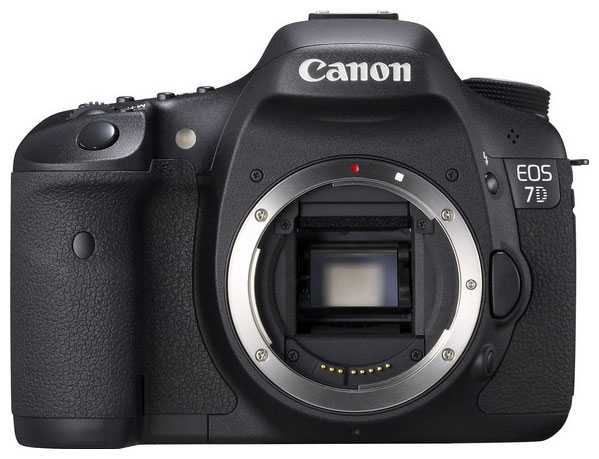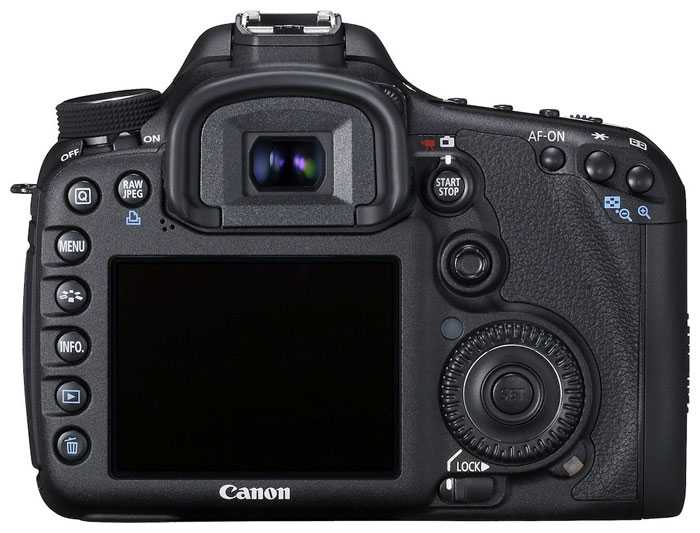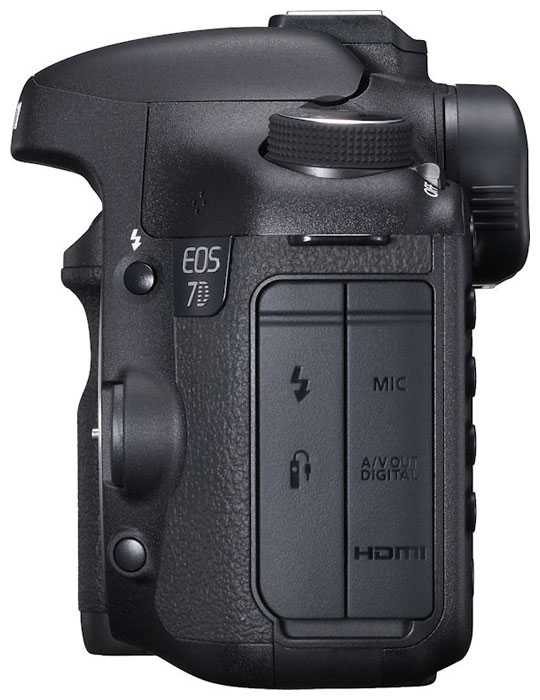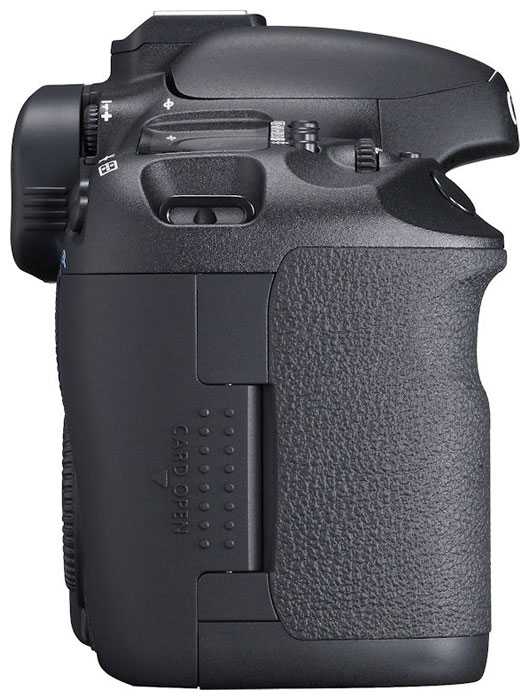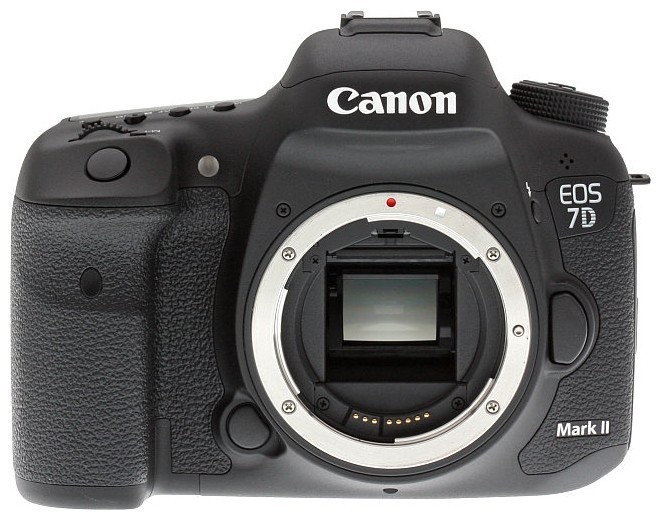
Плюсы по отзывам пользователей - Почему стоит купить Canon EOS 7D?:
- Отличная система автофокуса (19 точек, все крестовые):
- Быстрая и точная фокусировка на движущихся объектах (спорт, птицы, дети), упомянуто в 70%+ отзывов.
- Режимы Zone AF и Point Expansion повышают точность для динамичных сцен, лучше 9-точечных систем предшественников.
- Микрорегулировка AF для каждого объектива устраняет фронт-/бэкфокус, критично для макро и портретов.
- Высокая скорострельность (8 кадров/сек):
- Буфер позволяет снимать 15+ RAW без замедления, идеально для спорта и wildlife (упомянуто многими пользователями).
- Плавная серия без пауз, превосходит 60D и T2i/T3i по скорости и объёму буфера.
- Прочный металлический корпус (магниевый сплав):
- Пыле- и влагозащита выдерживает дождь, пыль, падения (до 1 м на бетон), проверено пользователями.
- Эргономичный хват, удобен с тяжёлыми объективами (L-серия), долговечный затвор (150 тыс. срабатываний).
- Яркий видоискатель (100% покрытие, 1x увеличение):
- Видно весь кадр в деталях, сетка и уровень для композиции, лучше 95% в 50D/60D.
- Трансмиссивный LCD для индикации AF-точек и сетки без затемнения.
- Качество изображения и ISO (до 3200-6400):
- 18 МП для кропа оптимально, отличная детализация и цвета, RAW+JPEG удобны (частые упоминания).
- Шумы управляемы до ISO 3200 (лучше 50D), подходит для слабого света без вспышки.
- Удобное управление и кастомизация:
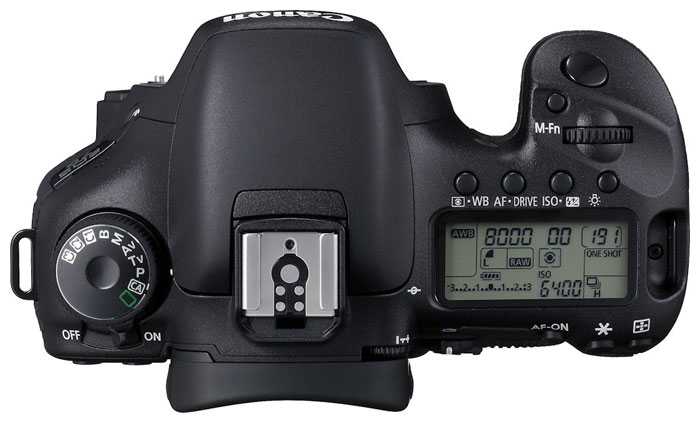
- Много кнопок, джойстик, Q-меню для быстрого доступа, 3 пользовательских режима (C1-C3).
- Встроенный мастер-вспышка для беспроводного управления Speedlite (экономит на ST-E2).
- Большой LCD-экран (3", 920k точек):
- Яркий, чёткий просмотр, гистограмма и увеличение для проверки фокуса.
Минусы по отзывам пользователей:
- Шумы на высоких ISO (выше 3200):
- Видимы даже после обработки, хуже full-frame (5D), особенно в тенях (20%+ жалоб).
- Хуже 50D на низких ISO в некоторых сценариях, требует RAW и NR в Lightroom.
- Большой вес и габариты:
- Тяжёлый (820 г с батареей), неудобен для длительной съёмки с ремнём, сковывает руку (частые жалобы).
- Штативный характер, не для мобильной съёмки без поддержки.
- Проблемы с видео:
- Нет непрерывного AF, ручная фокусировка, rolling shutter (желе-эффект), перегрев (15-20 мин).
- Моно-аудио, шумы стабилизатора, 4 ГБ ~12 мин Full HD (многие разочарованы).
- Проблемы с автофокусом в отдельных экземплярах:
- Фронт-/бэкфокус, промахи в Live View и AI Servo (5-20% отзывов, QC-дефекты).
- Требует микрорегулировки, нестабильность на светлых объективах.
- Короткое время работы от батареи:
- Быстро садится в Live View/видео, ~1000 снимков (хуже 50D, требуется grip).
- CF-карты (Compact Flash):
- Дороже и реже SD, нет dual-слотов, проблемы с дверцей (скрип, люфт).
- Крутая кривая обучения:
- Сложные меню, нет сцен-режимов, для новичков перегруз (не для P&S-пользователей).
614 отзывов пользователей o Canon EOS 7D
Пользовались
Canon EOS 7D?
Поделитесь своим опытом и помогите другим сделать правильный выбор
Dec 28, 2012 update: focus system is great, but you need to experiment with the focus options to figure out which suits you best. I use the AF point expansion most of the time (1 point with 1 expansion in each direction). Some people have indicated they were not happy with the sharpness - I adjusted the sharpness setting up a bit (if you want jpeg) in the standard mode, and it seemed to make a difference. Also, look around on-line and you will see how people have configured the various C.FN menu options. I set up the C.FN III Autofocus/Drive menu options after playing around with it and saved it as "C1". AI Servo seems to work well for me with moving kids. Also, setting up the (*) or other button on the back for metering and focus with your thumb, and the usual shutter release button by your finger. This may take some getting used to if you haven't done it before. I have "M" set up for usual finger meter/focus, and C1 set up the other way using thumb for back button focus / finger for shutter. It worked pretty well. I had some very nice pictures with 50mm 1.4, 85mm 1.8 primes, around f4, and a number of people commented about how nice and sharp the photos were. Also, if you notice the display screen is blank so you don't see the "Q" menu, press "Info" a few times - it will cycle through the displays.----I did not purchase the 7d from Amazon, but recently purchased from another source with a credit card deal for a discount relative to the Amazon price. I think the price I paid was a pretty good deal. I have been using a Rebel xti/400d for about 5 years, and after using the 7d for just a week, it is simply a joy. The xti has served me well, and I'll keep it as a second with the nifty 50 attached.I considered the 7d, 60d and t4i, or even a used 50d, as well as waiting for the new "70d" (whatever it will be called, and whenever it will be released, and most likely at a much higher price, my guess is 1800-2000 with dual digic 5s).The 60d pricing was 799 like the t4i, and then just dropped down to 699 (after I purchased the 7d), so it was priced very attractively. Used 50d seem to go for mid 500s. I am not a pro, but enjoy it has a hobby, shoot manual/raw, and like most most people, considered going the route of a lower priced body with another lens, but the L lens I would be considering is more than I wanted to spend now. I often use the Canon 50 1.4 and 85 1.8 (my favorite) primes and have flash and other lenses that give me good results for my needs, so didn't really feel the need to "upgrade to L lens first" given the jump from xti to 7d.As for the 60d, I actually did not want a flip out screen since I see that as a potential damage point as I carry my camera at my side without a strap, and if the kids were to ever get at the 60d, that is the first thing they would play with (and destroy). If I really need flip out screen/video, a small HD camcorder is much easier to handle compared to a heavy DSLR. The 7d feels much better ergonomically and durability wise than the 60d and t4i. As for the t4i, the touchscreen was not a big selling point since, quite frankly, I have enough touchscreen devices with phones and tablets, and I definitely prefer using the 7d wheel and joystick controls - they seem much easier to me, everything is easy to access and where you expect it to be.Other reviews lay out the many technical specs of the 7d vs others noted above including the exceptional autofocus system, dual processors, speed, weather seal, etc. The firmware update addresses some of the "cons" and improves performance as well, and now magic lantern is available for 7d too whereas before it was on the 60d, but not 7d. The 7d is definitely more complex than the xti I was used to, but after a week of reading the manual and testing it out, the controls are already second nature.All of the cameras above are very good cameras and will probably yield very similar results, and the final decisions may simply come down to preferences for particular features, but I am very satisfied with the 7d. While the "latest and greatest" "70d" would be nice, I am not sure I would want to pay the extra $ for it for what I do, particularly if the improvements are nominal.Happy shooting.
m1J2DX8KQEV8E3 / mo30BVKGPRBIYAK Length:: 8:09 MinsMy review is titled Joy, Pain and Happiness! This is because I finally ordered the camera that I wanted and I was full of Joy in getting it delivered. I received the camera and I immediately began charging the battery and reading the manual. My Pain came when I put the charged battery into the camera. And after 10 test shots the camera locked up with and Error 40 code and it would not do anything. I had checked the camera body's firmware code before I started to use it and I was shocked to see that it came to me fully updated to the version 2.0 firmware. Canon wanted to repair the camera that was literally in use for 2 minutes and I contacted Amazon about the problem.The service was first class and they shipped me a new camera within hours and I received it in two days. The new camera had the old firmware in it and it works perfectly. I have shot about 1000 photos and I now have Happiness in that my dream camera is working perfectly and I am mastering it more every week. This is an excellent camera and I am glad that I purchased it. The quality of the product and the results that I am getting using it are amazing.I have put together a brief video to show the camera and its basic features. This camera is so powerful and contains so many features that it is impossible to even cover them in a video with the limitations that I have to meet to post it. The video is to just let you see the basics. This camera is one of the top 10 ranked professional video cameras in the world in 2012. There is a lot of learning curve to understand the powerful potentials that this camera has. I have written video reviews on the accessories I have purchased like a Canon camera bag, other lenses, lens covers, CF memory cards and lens bags. If you want to know what all I have acquired to use this beautiful camera then just send me a comment and I will provide more details.I also strongly recommend that you get a full copy of Adobe Photoshop. I take all of my photos in RAW format and Adobe allows you to do miracles with the RAW format. This camera is a joy to use and it makes my photography a lot more fun. The results that I get are wonderful and they help you to remember the moments that you took them. Isn't that what photography is all about anyway.Accessories and what's in the box:* Digital Camera EOS 7D* Zoom lens EF28 - 135 MM F/3.5-5.6 IS USM* Wide Canon Strap EW-EOS7D* Battery Charger LC-E6* Battery Pack LP-E6* Interface cable* Stereo AV cable* Software CD plus 2 others with technical data* English and Spanish instruction manuals* Canon warranty cards with product numbers on them for the individual products that you receivedIt is important that you make sure that you get the warranty cards and that the registration numbers match the numbers on your products.The Canon Digital Solution Disk is invaluable and it contains powerful software that you need to connect you camera to your computer. It is good for Macintosh and Windows computers. The EOS Utility allows you to load the camera shots onto your computer and you can assign a drive that you want the photos stored to. Make sure that you select a drive that has a lot of space as the camera shots are quite large. One RAW photo can be as large as 30 MB. The EOS utility also has a powerful batching utility that allows you to convert large numbers of RAW photos to JPEG photos automatically without your doing each one. The disk also contains powerful digital photo editing software that is very useful.I rate this camera 5 stars and I recommend it to you. I enjoy mine and the memories that it helps me capture.
I owned a T2i for about 18 months and it was great but I started to outgrow it. I decided to skip a generation (the 60D) and go for the 7D instead. So glad I did! At first it took a little bit of getting used to but once you figure it out (which is easy if you already had a Canon) it actually makes life so much easier. Here are some examples -1. Selecting AF points is a breeze using the joystick. It was time consuming on the T2i and I rarely did it. This change alone has improved the amount of in focus shots ten fold I reckon.2. The LED display on the top means I never even look at the LCD screens menu settings. T2i required you to press quick jump then scroll around in there until you find what you need.3. The scrolling wheel instead of the arrows makes changing aperture easy work.Of course all pro Camera's have these kind of time saving things but those camera's cost a small fortune. I did have a moments thought when I was considering the 5D Mk II, but then I would of had to sell my 10-22, which I adore! Since I didn't want to use the kit lens from my T2i (which would not be doing this camera justice) or end up with yet another kit lens I got the body only and paired it up with the awesome 17-55mm f/2.8, together they are an awesome combination! I highly recommend it.Now back to the camera, here's a long list of pros.- Lightning fast 8fps, even if you don't shoot sports you might need it if you're in a bind and need that crucial shot to be sharp.- Performs amazingly well at high ISO; I got usable shots at ISO 1600 and even 3200. With minimal Noise reduction in Lightroom.- 19 cross type AF points, with different modes including a precision mode makes focusing so much easier. Less headaches and frustration.- Three programmable custom modes in addition to the Av, Tv M and P means, for example you could set up one for HDR or another for sports and then you're just a dial away from getting to the correct shooting mode.- Built in master flash wireless transmitter. An awesome feature means you can, indoors at least, get away without using expensive radio triggers. Tried it and it works really well, though if you are gonna get serious about off camera flash you might want to invest in other ways to trigger it. Great for learning though.- Dedicated button for video / live view mode. This is a very handy feature. sometimes I'm taking pictures and I see something I wanna video and by the time I had changed the T2i to video, it was all over.- Weather sealed. And apparently quite well too. I read a Canon rep mention that it was better than the 5D MkII in this respect.- Buttons feel nice, not like the 60D's squijy things. These feel more satisfying. A small thing but things like that annoy me!- Show off to your friends with the electronic leveling gizmo. Looks like something out of Top Gun. Seriously cool (though I've never used it!)- Dedicated picture style button. This is a very smart idea. I always forget to change my pic style, at least now I have no excuse!- The hand grip feels nice, I tried the 60D and it felt, for want of a better word - ikky.- Boasts the shortest name for a Canon camera currently in use, just rolls of the tongue. The T2i (550D??) had an identity crises. Mine was called a Kiss x4 and that plagued my dear mind endlessly! (Why the Japanese chose 'Kiss' over 'Rebel' I have no idea!!)Ok there are loads of pros and now the cons- It's not a 5D Mk III (and consequently not full frame). I am starting to doubt myself and all this 5D hype recently is making me jealous!But seriously, the only reason not to get it is if you want to skip from Rebels to full frame in which case good for you for a) being rich and b) becoming an overnight pro! I think the 7D is a great camera and one that I will want to keep for a while. Even if I move to full frame one day, I'd still keep this as my 'back-up' camera.Verdict - Get it and get some decent lenses, heck splash out on L lenses and enjoy the good times. You will not be disappointed (unless you already own a 5D Mk III).
Before I start, let me say that I am not a professional photographer. This review will not contain much in the way of technical details about this camera. There are some great reviews on here that do that, and there are plenty of places you can go to read of what the camera is capable. This instead will be a basic overview of an amateur's impressions, falling somewhere between 'This camera is cool. Buy it!' and 'This particular model features a reverse prism entanglement that is really handy when...' Ok, I totally made up that prism thing. But it sounded cool, right?Anyway, I got my first DSLR 2 1/2 years ago when I bought Canon's XSi/450D. Never having used an SLR before, I had no idea what aperture was, ISO or some of the other fancy terms the manual talked about, and knew it was a big jump from point-and-shoot. In essence, I had a lot to learn. After all, this camera was complicated! At least, at the time I thought it was. Long story short, after a few books and time spent with the camera, I felt like I had a decent grasp on things. I even felt like a big shot at times with my big bad DSLR when everyone around me had point-and-shoots and camera phones.When the time rolled around for upgrade, I looked at a few different cameras. I was deciding between three cameras: the new (at the time) 60D, the 7D and the 5D. For various reasons I chose the 7D over the 60D (wary of brand new/untested-by-the-public model, magnesium alloy body vs. plastic, 8 frames per second) and over the 5D (couldn't justify the extra money for a little better low-light, full frame sensor, and actually slower frames per second).When the camera arrived a few things struck me off the bat. First, this camera is big. I've never held a pro-grade camera before. At least, not one like this. I thought the XSi was big, and it is compared to point-and-shoots. This one's big compared to my XSi. And it's heavy. 5 lbs if memory serves me. Some people may not like the bulk and whine about how heavy it can be, but I like it. I like holding something and feeling it, knowing I'm holding something real instead of a toy. That isn't to say a lighter camera is a toy, but you know what I mean.Second, when I looked the camera over, I got the same helpless feeling I got when I first held my XSi: I have a lot to learn. But in reality, if you understand a lot of the basics in photography (aperture, shutter, ISO) and have used a DSLR before, it's mostly just learning a new camera.It doesn't have the cheater presets on the main dial (portrait, landscape, etc.) which, honestly, I never used on any camera anyway. It has a lot of new buttons and knobs my old camera didn't have. The one I like most is the thumb dial. I know a lot of Canon cameras have this, but it's new to me and I like it. I also like that it has a dedicated switch to swap between Live View for movie recording and regular viewfinder still shooting.Where my XSi did a fairly decent job of shooting in low light situations, it's almost unfair how much better this one is. At 1600 ISO, the highest setting it has, the XSi has a large amount of noise in the picture. The 7D has less at 3200 ISO and maybe 6400. Of course, there's always programs that can reduce the noise. I like Adobe Lightroom. But the more noise you remove, the more detail you remove. And since the 7D creates very little noise at higher ISO's, noise reduction is much less a problem.Another thing I really like about this camera is the 8 fps (frames per second). As a baseball fan, I love to capture the motion of the batter's swing or the pitcher's delivery to the plate. While it's great for sports, the high rate can be good in everyday areas, too. I like to shoot in bursts. It makes later processing a little more work, but also makes it a little more likely that you're going to get THE picture. Photographing children can be a challenge, partly because they're so active. Their facial expressions can change several times in less than a heartbeat. A fast shutter and finger are needed, but the rapid fire of this camera does a lot of the work for you.The 18-135mm lens that comes with the camera is the best lens I have. Keep in mind that I have a very small "collection," but I really like this lens. It takes pretty sharp pictures and has a great range. It may not have Ultrasonic focusing, but it's still very quick and pretty quiet. It is also an image stabilized lens, which comes in very handy at pretty much all focal lengths.I love this camera. The only issues I have with it are: 1. autofocusing in Live View, and 2. navigating menus. My XSi also had Live View available and the autofocusing was terrible. It took forever to focus, if it even did. Luckily, it was usually pointless on that camera to use Live view as it did not take video. You have to on the 7D, though, if you want to take video, and it's Live View autofocus seems no better. That is unless you want to manually focus, which is what I've been doing when recording video. Hopefully, I'll le
I have been shooting motorcycle track photography for about 3 years now. The fist year I shot with a Canon Rebel T2i (AKA 550D) The image quality was good on this camera but the speed was lacking.What I didn't realize until I got the 7D was how much the speed was lacking. The T2i is a great camera in it's own right and for consumers it's very good. When I bought it I thought, hey it has virtually the same sensor as the 7D this should be good enough.Well, I had no idea how much difference the 19 cross type AF points would make, or how much faster 8 FPS was. My keeper rate went up immediately. Now, I realize there are other features I could mention, like the 7D is able to control off camera flashes without the use of a 500 series flash, but really the reason to buy this camera is speed. This is Canon's best crop frame sensor camera body, hands down, nothing else comes close. For my purposes the cropped sensor is an advantage as it multiplies my effective focal length by 1.6 and ISO performance is not terribly important as I'm shooting in daylight. But, I've spoken with many other photogs that have the 5D mk2 and mk3 and when they shoot outdoor sports they still use their 7D, it's AF system is just faster, as is it's frame rate and the added low light capability of the 5D is moot at 2pm outside. Further, I shoot this camera with the double battery Canon vertical grip. It makes for a big camera. This fits my hand very well and the whole system feels very rugged and sturdy. Much more so than the plastic bodied rebel. If you are to read my other reviews you may be sensing a theme here. Value. This body is no exception.It's expensive for the novice and relatively inexpensive relative to other pro bodies but it defintely earns it's xD (single digit D) Canon designation. It is a true pro body and at $1700 it's still a great deal, just look at how much you have to spend to get a 6D, 5D, or god forbid a 1D, and the 1D series are the first bodies to start to compare in terms of AF performance as the other cameras are more wedding cameras. For the money, you can't beat the Al Servo performance of this camera. Of course if money was no object I'd have a 1Dx and all the big boy primes but for me money matters and for my money this camera delivers pro quality. I'm only excited now to see what the 7D mk2 looks like when Canon decides to best this legendary Camera body.
I originally purchased this camera for photos of my family. This camera has excelled at that. The pictures are very sharp - you'll have no problem having large portraits printed. In fact, the largest print I've had made is 24" x 36" and it's crystal clear. So far, I've only used EF lenses, but I'm seriously considering the EF-S 10-22 for wide angle group shots.The build quality is fantastic. This camera has a magnesium body and can really take a beating. Check out the Chinese guy on youtube to see what I'm talking about. I'm continuously pushing buttons and using the dials and have never had a problem. I can see where the screen can get scratched if you aren't careful, but to date my screen still looks like new.I've now had this camera for about 18 months and I've learned the controls and can take beautiful pictures, but I have to admit that I wasn't impressed with this camera at first. I couldn't seem to get a sharp image and had considered sending it back to Amazon. I'm glad I didn't because with some practice I've gotten very good with this camera and am now getting requests to take pictures for friends and neighbors. I've never charged anyone for this so I call myself a professional amateur.To sum it up, this is a really nice camera and I feel that you can't go wrong. Sure, it may not be a 5d MKIII, but it doesn't cost as much as one either and to be honest I can't really tell a big difference in image quality between the 7D and 5D anyway. Maybe it's just me.
I purchased this camera about a year and a half ago when your choices were 60D, 7D, or 5D Mark II. Moving up from an entry level DSLR, I opted for the middle of the pack 7D. I liked it's versatile package, great build quality, and overall value. The one thing I did have a reservation on was the fact that it is not a full frame sensor. If you don't know why this is an issue, you may not be alone. At the time, I couldn't justify the step up to a 5D simply for the full frame sensor. 18 months later, it is a decision I kick myself for nearly every day. It's hard to explain the exact reasons why this has become such an issue, but I'm full of analogies and I'm about to unleash them all on you.Putting a 50mm lens on a full frame camera gives you, as you would expect, a 50mm shot. It is performing exactly as it was designed to perform. Put that same lens on a crop sensor camera like the 7D, and you're getting closer to a 70mm shot. Why is this an issue? Outside the nifty 50 (50mm 1.8), the wider the focal length, the more expensive, typically, the lenses become. So to get a true 50mm focal length on a crop sensor camera, you need a 35mm lens.. which is more. To get a 35mm shot, you need a 24mm lens.. which is more still. In saving a few hundred dollars on my camera body, I have spend much much more on lenses to compensate for this. It's something I didn't consider and something I think should really be taken into account.The 7D does do certain things amazingly though, in some cases better than the 5D. It's burst rate is much faster (8FPS) than the 5, so it's wonderful for sports, wildlife, anything you need to spit out a lot of frames in a short period of time.With the release of the 6D and 5D Mark III however, I feel that the 7D has become a little dated a little quickly. The 6D, in particular, gives customers a full frame sensor for just a small investment above the 7D. Sure, it doesn't have as "advanced" auto focus system as the 7D, but I honestly find myself using center point focus almost exclusively anyway. The body is made from slightly cheaper materials, but you honestly won't notice holding it in your hands.All in all, the 7D was a wonderful purchase 18 months ago. Now though? I'd save a few hundred extra and buy the 6D every single time.
Bought this body used and was a little anxious as to what I was going to get and there were a few hundred dollars involved. I held my breath and have been more than pleased with the quality of this preowned camera body. And most importantly, thrilled with the 7d - all the reviews were correct - it's a tank (don't even think of getting this camera if weight is a consideration) that takes great pix. I wanted a cropped sensor body to go with my 5DM2 so I could use and buy cheaper lenses. More full frame $1,000+ lenses are out of my league and the 7d has been a welcome addition.
Finally I can have crisp sports pictures when I take outdoor pictures of Lacrosse and Football. Love this camera. Great buy. Everything went smoothly.
I didn't purchase my 7D in Amazon, but I wanted to put in my thoughts on the camera. Like I said in the title, sensor technology has improved by leaps and bounds since this camera was first introduced, but having said that, I feel this camera is great. I'm not a professional photographer, but I consider myself an advanced amateur and know my way around this camera.I think to really get the best of this camera is by shooting in RAW. Why? To get the most out of its sensor. I've shot 1600 to 3200 ISO and even though you can see grain, with software such as Lightroom or Photoshop you can easily correct and get usable shots. The camera is rugged and I haven't had any issues with it so far and with the feature set coming with this camera, you can't ask for more.Naturally, if I someday would be able to upgrade, I'm going with the top of the line EOS 1D X. Some people might consider me crazy to spend close to 7 grand for a camera, but when you enjoy what you do and can get the best out there, why not? But right now I can't and I'm enjoying my 7D to the max. I'm learning every nook and cranny in this camera to get the most out of it and in my humble opinion, you can't go wrong if you purchase one. Just wanted to give my opinion hopeful it will help.
I initially had a Canon rebel XT and was wanting something bigger. I found this and was very interested. Once I got it, it was easy to operate and has been an amazing product to work with.
I had reached the limitations of my beloved Pentax K20 for the type of picture shooting I do, and I didn't find what I was looking for in the new Pentax K-7. I needed fast and accurate auto focus performance in all lighting conditions and exceptional low-light, high ISO performance. The 7D came out at just the right time. I had considered the Nikon D300, but I preferred Canon L lens choices and the lesser relative cost for the ones I was interested in. It was costly to switch to Canon and buy all new lenses, but with the 7D it was certainly worth it!All the positives have been repeated over and over. I can't add anything new. My point of reference for the performance of the 7D was the Pentax K20 and K-7 (briefly). In comparison, the 7D is at least twice as fast in acquiring focus lock in medium to low light situations. Focus accuracy has been excellent once you master how to properly use the various focus modes. I am getting shots now I could never possibly get before with the Pentax in those situations of immediate-shot, candid pictures and moving subjects. Additionally, the excellent high-ISO performance allows me to shoot at ISO 3200 to 5000+ without issue, giving me more flexibility with higher f-stops and shutter speeds, helpful in low-light situations and with lenses that don't have image stabilization (17-40 f4L, 24-70 f2.8L, 70-200 f4L). While exposure control has worked very well, I have noticed a tendency to slightly overexpose most of the time. Some have commented on the shutter sound. I recall the Pentax K-7 has a quiet shutter sound which I found a BIG plus for shooting inconspicuous candids. The 7D also has a very quiet shutter but with an unusual sound - sort of like a coil spring snapping on what would be an extremely expensive toy dart gun. I got used to it and at times depend on the stealth qualities to shoot unnoticed.However, there are few must-haves in my mind, essential for the next upgrade of the camera.Cons:The biggest issue I have with the 7D is the fact that the mode dial is constantly changing setting from what I last left it. Part of the problem is that the power switch is now located right next to it. Quickly turning the power on or off may cause the mode dial to be changed. Since I often shoot spontaneously from "the hip" while the camera strap is slung over my shoulder, I recently found out that the strap itself can rub across the mode dial and move it to another setting. Not good if you are doing sudden, "get the shot now!" shooting. The cure is simple: do like the Pentax K-7 and use a lock button in the middle of the dial. Problem solved. Of course, any photographer on top of their game knows what the camera settings are every time they press the shutter button (note to self).The other irritant I have is with the CF card door. It's large and slides backwards to open, thereby having the back end of it along the side of the body right where you put the most pressure from the palm of you hand. Mount a heavy lens on this camera like the 24-70 f2.8L or the 70-200 f2.8L, and the pressure placed by your hand on the edge of the CF door causes it to flex and squeak. I heard the 5D has the same issue. Mine started solid but now is flexing and getting noisy. I also doubt the integrity of the weather sealing of this cover, referencing back to Pentax for what seemed like better sealing on their high-end bodies.Conclusion:The two issues I mention are hardly deal-breakers. They can be resolved easily if Canon chooses to do so and can be accounted for by the user's handling/acceptance. I still have a long way to go to get to the point of fully mastering the potential of this camera, but for what I've experienced so far, this is an excellent buy and concedes little if you need an APS-C format camera to shoot professionally. Overall, this is an exceptional camera that has taken my photography to a higher level.Update (4/11/10):Still love the camera. The problem I was having with the mode dial being turned by the camera strap when slung over the shoulder has been resolved by going to a special strap that connects to the tripod mount at the bottom of the camera and crosses the upper body so that the camera can be quickly drawn upward into shooting position from your side. However, the other issue I have with the camera is getting worse - the loose and squeaking CF door. I remove the CF card to load pictures on my computer, and I do this once a day for the last 4 1/2 months now. Perhaps I open and close this door more than others which has contributed to the apparent wear. While Canon should repair this issue under warranty, I hate to be without the camera for the several weeks required to send it off and have the work done. It's unfortunate that this little piece of plastic can so undermine the structural integrity of what is otherwise a very solid camera.Update (10/17/10):While the mode dial is still an issue, after a year of use I've noticed that other parts of th
So far so good. I just purchased this camera recently and it works so fine so far. I've explored some of its options and menus and they are awesome. I've shifted from my very-old 350D to this more advanced model, so some options and characters are new to me. The weight is heavier a bit than my old camera but this is not an issue I believe. The body has a nice touch to the hand, not harsh and not smooth and would help on stabilizing the camera a bit in your hand (while the 350D body was smooth relatively and would slip sometimes).Some of the many good options and choices this camera has are:1. Live view: Like the point and shoot cameras, you can take a picture by designing the shot in the LCD preview, and you can also view it through a 3x3 grid or 5x5 grid to compose your scene accordingly. Personally, I don't think I will be using this option so much since I'm more used now to the viewfinder.2. Digital level: This thing is viewable only when you switch to the live view mode, and it enables you to level your camera accordingly without any need to the typical spirit level, either on your tripod or your camera's hotshoe.3. Quick settings: It has a quick settings button by which you can make all the settings you want in a fast mode. Simply press the button and the LCD screen will show you all the settings, and you can browse among them using the joystick and change the settings by the top dial.4. Three additional customized modes free for the user to register them under any preferable settings.5. Bulb mode is separated from the (M)anual mode, and not like my old 350D.6. Customizable control-points settings. You can choose 3 different models for your control points, and see them in the viewfinder accordingly.7. Wireless capabilities, which is, to me, so and so.8. Beside various JPEG qualities, you can choose as well various RAW sizes: RAW, M-RAW, S-RAW; with around 18MP, 10MP and 4.5MP resolutions respectively.9. It has different presets of styles for shooting which control colors' contrast and sharpness, and you can set your own settings as well (but personally I go with neutral look and adjust things later).10. It has direct black-and-white shooting, although I heard it is better to avoid this mode in some books, because you won't have much freedom controlling the levels so much. It's better to shoot in colors and convert it to B&W according to your likings later.11. The modes dial is situated on the left. It might not be a big issue, but it is sure a nice placement for me. I think it enables you to switch with your left without losing the grip on the camera with your right hand. Suitable for fast-paced work and shoot I believe.The wireless settings in this camera was a bit tricky. Wireless here is meant to be beam-based wireless, i.e. infrared beams. It is good (and essential) for controlling various accessories like the Speedlite dedicated flashes, but when it comes to a remote control, this is a disadvantage. For a remote control, I would advise of using a cable remote (which the camera is capable of too), because with a wireless remote, you would have to be in front of the camera or at least on the side, but if you plan to work behind the camera (which is the case for me most of the time) it's going to be some hard time triggering the shutter from the back. A beam-less wireless capability would be far more useful than IR.I wouldn't talk about the image quality here, because I think it is obvious by now.I didn't try the video mode, mainly because I'm not interested in this field. I believe this option has raised the camera's price accordingly. I was looking for a camera with such options but without the video mode, simply because I don't need it. The price is an issue here of course but if you are serious about your hobby or profession it is a great investment (with the right lenses). I suggest though, and I don't know about the marketing lines that Canon are involved in, that such video mode would be separated, to drop down the price a little.
I approach camera selection differently than most folks -- I start at the lens. Like a $200K sports car, you don't get the most out of it if you're rolling on bargain rubber. Same with a camera -- the glass makes it or breaks it. I will be talking about L-glass only in this review. If you're not interested in L-glass, you may still find it useful.FOCAL RANGEUnless you're a dedicated landscape or interior photographer, I find the L-glass selection of standard zoom lenses pointless if you have a full-frame camera like the 5D. They are just too wide for general purpose. Even the 24-105mm f/4L, if viewed on the 5D, looks like the equivalent of a mere 65mm on a 1.6x crop sensor like the 7D. I find that approximately 70mm on a 1.6x is the equivalent to what your naked eye sees. To get the same effect on a 5D, you need at least 112mm. The problem is, at that length, large-aperture L-glass starts at 70mm, so you're losing your wide angle capability.PERFORMANCE IN LOW LIGHT (HIGH ISO)Large-aperture glass should always be your first weapon, and consider ISO your "Plan B". This is where it gets interesting. The 5D performs better than the 7D at high ISO due to its full-frame sensor. But lets look at our lens choices. For standard zoom, we have the 24-70mm F/2.8L and 24-105 F/4L. Remember our little issue about focal range? If I want to combat the "too wide" issue of the 5D and upgrade to the 24-105mm F/4L, I'm losing a full F-stop. So even though the 5D performs better in low light, I'm getting more light onto the sensor with a F/2.8 mounted on a 7D. In other words, I've leveled the technology playing field and both cameras are producing nearly the same quality of image right now. Except the 5D MkII costs $700 more (!)CONCLUSIONI can think of only one type of person who would receive an advantage with a 5D MkII -- someone who needs to shoot in low light often (without a tripod) and owns BOTH a 24-70mm F/2.8L AND 70-200mm F/2.8L. Anything slower and you're defeating the purpose of a 5D. Considering the newer technology in the 7D (which I didn't even touch on), the 7D is clearly the most practical for most folks and WAY better bang for buck.
I purchased this camera a month ago as an upgrade from my Rebel XSi. I considered a couple of Nikon models, but wanted to keep compatability with my existing, and growing, Canon glass collection. I considered the 5D, but decided that for outdoor sports photography, often taken at the long end of 250mm, which has been my main focus, so to speak, that it did not make sense to pay up for a full-frame camera that would also require longer lenses. So I went with the best APS-C camera Canon offers - the 7D.It is notably larger and heavier than my XSi. Mostly I like the extra heft, but it is a mixed blessing. Certainly the solid feel is nice. Also nice for sports is the 8fps in servo mode,which is gatling-gun fast. The dual processors also help display images quickly, unlike the long lag in my XSi.This is a high-performance camera for photographers who know at least a bit about what they are doing. It is not a camera for newbees. For example, there are no "sport" or "landscape" modes built in, as there are in the XSi. There are custom modes, but you need to know something about the camera, and about photography, to create and use them effectively. This is not a complaint, just something you should understand if you are considering buying this camera.Coming from the XSi, I found the controls took some getting used to. Even after a couple of months, I still find myself using the quick dial when I need to use the main dial, and vice versa. And some controls that were easy to access on the XSi, like White Balance, are not quite as easy to access/change on the 7D in some cases. White balance is a particular gripe. It's displayed in the top LCD, but the icons are too small for me to see well, so I wind up using the main LCD, going through screens, etc.The ability to use ISO settings above 1600 to capture indoor action was a major reason I upgraded, and the 7D does very well on this front, albeit to date I not often needed to venture over 3200.Image quality has been very good, though not notably better than the XSi. I take mostly action shots rather than portaits or landscapes, so the gating factor in terms of image quality for me is typically the abilty to use a sufficiently fast shutter speed rather than sensor size/resolution. The higher ISO settings available on the 7D do help in that regard.Improved autofocus was another reason I upgraded from the XSi, and in this regard, the 7D excels. The ability to select groups of the 19 sensors provides a lot of flexibility for different situations, and the ability to strike a balance between the control offered by single-point autofocus, and the cover of multiple points for those shots where a subject in motion may not be covered by the central point. My rate of in-focus action shots improved dramatically using the 7D, and now after having used it I would not want to go back to the XSi's 9 widely-spaced sensors for sports shooting.In sum, this camera is very capable, but does not suffer fools gladly. The question is, is it $1000 more camera than an XSi, or $600 more than a 60D, when $800 more can get you a 5D with a full frame sensor and the image quality and noise reduction improvements that come with that? For my purposes, I would buy this camera again, and would recommend it to anyone who shoots sports and doesn't have the budget for a 1D.
I was looking for a HDSLR to replace a Panasonic HMC40 camcorder. I wanted to shoot more light weight and still wanted that shallow DOF in my images. The Panasonic was good, but I still needed to get a Letus adapter to get the same look. So I started researching What Canon and Nkion had to offer. I am already a Nikon guy and I have the terrific D7000. That camera also does 1080p video, but the only issue is that you can't change the aperture settings while in the live movie mode. But for taking pictures, the camera is my go to body for sure. That left me with a choice between the Canon 60D and the 7D. I was looking at the 60D mainly to save some $$ over the 7D, but in most of the reviews that I looked at the 7D was a better fit with the dual Digic 4 processors. Plus it more in the same class as the Nikon with the magnesium alloy body as well. But like I said, I was looking at this from the perspective that I was only going to use this camera for videos and not photos.I got the body and the Tamron 28-75mm 2.8 and the Canon 50mm 1.4 as the starting point. In my opinion, both of these lenses are a great fit for shooing video. I did not want to get the kit lens, because most of all kit lenses are average at best. Having a constant aperture lens is great because wherever the zoom is, the lens is still fast. I got the prime for more close up work and low light use with the 1.4. The camera body itself is big, but not as big and chunky as the D7000. lots of control buttons and menus to go through but it you take the time to learn them, well worth it. Shooting video is really great because you have complete manual control over every aspect of the camera while in live mode. White balance, aperture and ISO so that you can get that great exposure at the start. I love the fact that you can visually see the changes in the live view. With the Nikon, to change aperture, you have to get out of live view, make the change reset the light meter and then re-engage live mode to set it.I have the 7D mounted to the iDC System Zero base plate with follow focus. Attached to this I have the Rode Video Mic Pro and a Zoom H4N recorder for dual System sound. I also have a couple of XLR shotguns and a pair of Sennheiser G3 lavs for interview work. I also use a Manfrotto 501HDV head and tripod as well as a GlideTrack HD 1m Slider. This system works really well of for most of my on the go HDSLR video productions.
I paid over $1,800 for the body and the RAW file takes 25M bytes, which is more than twice the size than my previous camera. So, I assumed that the picture quality should be good. Yes, the picture quality is indeed good, ONLY IF you resize the 25Mbytes of RAW file into something like 1024 pixels width, at ISO 400 and above. You buy a cheap point and shoot camera, and it's image quality will be incredible in low ISO and when there is enough light. We pay more and spend more memory (and pay extra for that) for DSLR to get more descent ISO performance when there isn't enough light. If you willing to resize to 1024 pixel width, there is no problem in high ISO - but then why would you spend 25Mbytes for the RAW ? And why would you pay $1,800 for the body ?I took about 40 pictures in a gathering. It was in the evening and light was more than enough to read books very comfortably. So, at least the light was enough not to create bad quality pictures. However, I used high ISO (1600 and 3200) so that I don't have any blurred pictures. Besides, I read so many praises by 7d fanatics about how good 7D's ISO performance was. Somehow, I trusted them. But I was very surprised to see so many white dots/pixels in the dark area when viewed in 100%, as I showed in the uploaded picture. Indeed, there is no problem if you down-sample (resize) to 1024 pixel width. You won't be able to see them.I asked around about this problem and there were two types of responses. One is that it is the expected behavior of 7D, which has so many pixels in a small sensor. And I need to remap those white pixels using software. Indeed, LightRoom does it automatically. But not DPP (Raw processing software from Canon). And LightRoom is not ready for 7D as of now. The other response is that 7D is so good in high ISO performance, and I must have gotten a lemon. I hesitated what to do. And I just decided to return it and try an another 7D, only finding that this was a disaster. The new one showed the exactly the same behavior. In addition, the new one has hot pixels that appear even in ISO100. In fact, there are five such dead pixels. I know that this is OK, only if they are spread around. Unfortunately, all those five pixels are adjacent together and the whole white dead spot area is quite visible in every picture.So, I don't know at this moment what to do. I will definitely return this 7D that has the dead pixels. But unfortunately I can only exchange. Would I just exchange to another 7D and live with those white dots in high ISO, and be satisfied with down-sample'ed pictures ? Or would I exchange to other Canon camera or even Nikon... Anyway, my opinion is that this camera should not be this expensive and waste 25Mbytes for the RAW file just to create this kind of bad images in mid to high ISO. And for my horrible experiences, I can only give one star. But YMMV.--edit---OK, I decided to get the replacement of 7D - this is the 3rd one. This time, I was tired. Whatever it is, I would just take it. I'll live with white dots or some dead pixels or whatever. Let it be my destiny... So, I did not go through mid-to-high ISO testing, and I don't know what it would be this time - and I would not care any more. But then when I took some pictures, I found that they were so soft. I investigated, and saw that 7D is not focusing correctly. The lenses required AF micro-adjustments. At least the previous two 7Ds did not have this AF problem and need not AF microadjustments, as the manual says. They were focusing correctly. Since the 3rd 7D is not, I went through AF micro-adjustments. However, I also found out that the AF microadjustment at particular distance and aperture is not global within one lens adjustment. For example, if I set the microadjustment correctly at F2.8 from 1 foot (this was +15), AF at F 5.6 from 7 feet was very fuzzy. So, I set the AF microadjustment from the setting, and the value was - 20, but then the pictures are fuzzy at F2.8 from 1 foot distance. I tried to find the middle value which would work in all cases, but once I found a AF miroadjustment for particular distance and aperture, it wasn't working for other aperture and distance. So, there is no global setting for one lens. It varies depending on the distance and aperture within one lens adjustment. What a bummer... I think that a lot of people who are complaining about 7D's AF problems have 7Ds like the one that I have now. BUT if you take picture at F8.0 or higher, AF will look OK - not because 7D works correctly, but because at this aperture the depth of field is deeper.So, for all the people who praise Cannon 7D, either you are extremely lucky people, or you just don't care/know about the details.Or I am the extremely unlucky person ...
I purchased the Canon EOS 7D to use exclusively for short film and music video work. Prior to buying, I spent a fair amount of time researching the pros and cons of shooting video with DSLRs in general, and specifically as it relates to the 7D.Initially what I had read about the "rolling shutter" issue with DSLRs had me concerned. Essentially the shutter is held open and the image from the lens is recorded off the sensor in a vertical linear fasion. (ie. in "rows") In fast-moving subjects, or if the camera is panned too quickly, this can yield a "jello" effect. For instance, a fast pan of a tall building could cause the building to appear more diagonal than vertical.Thus far, I've had no noticeable issues with rolling shutter. The nature of careful shooting at 24fps (ie. being mindful of panning speeds to avoid jarring/judder, etc.) helps greatly here.Prior to the 7D, I was using a Canon VIXIA HF100 as my main camera, attached to a 35mm depth-of-field adapter. We still use the Vixia as our handy "home movie" camera (It is, afterall, a nice camera!). However, after using the Canon EOS 7D, I don't think I could ever go back to a standard video camera - or any camera that involves a depth-of-field adapter - for short film shooting.Here are the reasons: - No need to flip the video (in the case of 35mm DOF adapters) - Wide array of lenses to choose from. (I use my old M42/Pentax lenses + $12 EOS adapter.) - Convenient video codec (H.264 .MOV file... drops right into most any NLE) - Extreme low-light capability (Wide ISO range can be adjusted quickly) ...great for natural or available-light shooting. - Totally customizable (more below)Starting with my older Canon GL2, I've had a habit with every camera I've owned... that is, I dial the sharpness all the way down (no electronic enhancing) and also knock the saturation down a bit. This tends to give a bit more lattitude in post for color correcting. While the Canon EOS 7D has a LOT of menu options, I was able to figure this out after spending 15 minutes or so flipping through the menus. I now have C1 on my dial set for 1920x1080 24p, 1/50 shutter, no sharpening, low contrast, and a few other features either enabled or disabled. I also have the ISO defaulted to around 200, but this can be quickly changed while shooting, via a button on the top-right and selecting the ISO from the list.Audio recording is an area I read as a drawback to the camera, but I capture all sound wild so it wasn't a big deal in my case. For those requiring quality audio on-camera a quality shotgun mic could help.Being so small... you'll definitely want to add something to this camera to get a bigger form-factor. I've read great things about the Z-Finders but I don't have one yet as they are quite expensive. They can greatly aid in focusing, particularly in bright outdoor shoots, and they give that extra point of contact against your eye for stability. I'm using the IndiFocus setup I'd used previously with the Vixia. Generally speaking, bulking the camera up really improves shots and prevents the jittery look you may get when shooting with a DSLR alone. I find the camera's LCD display to be sufficient for focusing. (One other nice feature: Just prior to shooting, you can hit the zoom/magnifier to ensure your subject is in tack-focus before pressing record.)I'm researching variable ND (neutral density) filters, as one of those is a must for bright outdoor shooting, in cases where you want to maintain the shallow depth of field but not crank up the shutter speed and get that stacatto freeze-frame appearance. Standard NDs can be used as well, but it would likely require a set of them to stack on and remove as needed, which in my opinion wouldn't be as preferable as a single adjustable filter.At any rate, the camera itself is just fantastic. I really can't say enough good things about it for its video capability. It's a pleasure to use, gives total control over the look, and captures stunning HD footage!
When I first started reading about this camera I started to get excited, the only thing that bothered me was that it is not a full frame camera. Well I have had it for about 3 weeks and have been putting it through my own test. The picture quality has been fantastic,I don't miss the full frame sensor. The raw files do come out somewhat soft but as soon as you run them through photoshop you get a sharp photo. I edit all my photos in photoshop raw or jpeg, I think if your a serious photographer, you do everything you can to maximize the quality of your images. Some people complain about the file size, yea I hate having more resolution to work with. Kidding of course and anyway you can adjust the size of the files by adjusting the quality of the jpeg or raw file. The jpeg has a 18mp, 8mp, and 4.5mp size the raw has a 18mp, 10mp, and 4.5mp size. So you don't have to shoot at full resolution if you don't need to, I know I don't. I own a 1D Mark3 and have really loved that camera but I like this camera more. The camera is built well it is very nice to hold it in your hands, its lighter than the 1D too. When you pick up the 7D you know your holding something of quality.It is feature rich and has a bit of a learning curve, but I love playing with a new camera so that doesn't bother me. The auto focus and exposure system have both worked well for me, of course I don't expect the camera to do all the work. There are some circumstances where you have to know how to get a right exposure, because all cameras will be fooled in certain situations. As for noise at high ISO I get that with my 1D and every other digital camera I have ever owned. I either use flash or use photoshop to help me live with it. I need to address the 2 Star reviewer who is comparing the 7D's cost with the $900 cheaper canon rebel T2i and ask the question is it worth that much more. I say yes and these are my reasons.First there is no comparison between the build quality of the two. The rebel is made out of plastic and has no weather sealing. Yes the rebel is smaller and lighter that is a plus for him a minus for me. I like something I can hold on to and has a rugged build which the titanium body and weather sealing makes the 7D such a camera. I have shot with it in wet falling snow and rain and had no problems.The 7D shoots at 8fps the rebel at 3.5fps.The 7D has a 19 point autofocus system which has worked very well for me, the rebel has a 9 point autofocus system.The 7D has 27 cudtom functions the rebel has 12The 7D has an electronic level the rebel doesn'tThe 7D has a special macro servo AF mode when you attach a macro lens the rebel doesn'tThe 7D can fire remote flash the rebel needs a remote fireing device to do this.The 7D has duel processors which jumps it to a pro level camera by itself, the rebel has one.The 7D has five different autofocus point, settings the rebel has two.The 7D has a 100% view finder the rebel has 95%.The 7D is rated at 150,000 cycles the rebel is not rated.There are many more features the 7D has,that the rebel doesn't.The 7D is a professional level camera the rebel is not.Is the 7D worth $900 more than the rebel I would say definitely. I would say if you want a very nice entry level camera just above a point and shoot buy the rebel. If you want a professional level camera at a very good price buy the 7D. I think my fellow photographer that wrote that review didn't realize what he had in his hand when he made those comments. For me I am amazed the 7D is only $900 more than the rebel. Well I have had enough of being a photo geek for one day I'm going to go out and make some photographs with my 7D.I have had my 7D for almost 3 months and am still loving it.
I've had this body for about a month now and sometimes I just pull it out just to remind myself that I actually have this camera! I did not know how much of an upgrade I was actually making with this purchase!I came from shooting a T1i to the 7D, and right from the build, I was hooked. I have a 70-200mm lens and when it is mounted on the 7D, it just works. I love the grooves on the grip of this camera and because I have somewhat large hands, I can definitely handle heavy lenses without attaching a battery grip, unlike the T1i.Even though I have not put the auto-focus system completely to the test, so far, I really appreciate how you can customize the auto-focus to change depending on whether you are shooting horizontally or vertically. That feature right there has already saved me precious time in recent shoots. I can't wait to test out the 8fps! Let alone, with the shooting speed of this camera, I can handhold a lot more HDR images. I also appreciate the 19 points that I have to focus. It's been a little hard shooting with the T1i now as it only has 9 points.The greatest benefit to me has been the Speedlite Transmitter that comes with the built-in flash. I have a 580 and a 430, and thanks to the Speedliter's Handbook: Learning to Craft Light with Canon Speedlites by Syl Arena, my flash game has accelerated to new levels because of this feature. I still have somewhat of a hard time with the flashes having to be within the line of sight of the camera, but I'll manage fine for now. It works flawlessly in-doors though.Overall, this camera is great. Sorry if I got too technical with the benefits of this camera, but this camera just works! If you are just starting as a photographer, or if you are an enthusiast like myself, you won't go wrong with this purchase. Either way, I think that we as Canoners, or something, should really take advantage of the wireless flash abilities that this body, and others after this one, has built in, even though Canon seems to be the last to integrate this ability. Get the camera!
First, some background.I'm currently 23, and I've been shooting with film SLRs since the age of 6. My dad has always been a camera nut, and thus, I became one too. While I would never say any of my old models were "pro" (mostly old Minolta models), they were still an SLR, and as a result, they were a great lesson on photography growing up. As I got older, I became interested in filmmaking and purchased a Panasonic DVX100 video camera, which was a fantastic piece of equipment. I held on to it for about 4 years, and did many projects with it.NOW, when I first heard all the business about DSLRs and video modes, I scoffed. I instantly thought about the video mode on my crummy old point and shoot, which is, in so many words, awful. Then I saw footage. Incredible! It took me a while to be completely sold, but eventually I was ready to sell my beloved DVX to purchase a DSLR. I finally, after much debate (mostly between the 7d and the GH1), I settled on the Canon 7d.This camera is great. I've been wanting to get back into still photography again, and this is my first DSLR, so I'm excited for that, on top of the video mode. Both have performed to my expectations, sometimes beyond. The body feels extremely rugged, and the weight makes you realize it's not some cheapy plastic. I guess the easiest way to not make this review 10 pages would be a pro and con list, so here we go:PROS:-Feels very rugged, yet comfortable. I'm not so paranoid about having it out in scenarios that would have made me nervous with my DVX-Still quality is great-Auto-focus seems good, but I've really never taken much to auto-focus, so I'm probably not the best authority to talk on this. It's very fast, but I prefer manual control in most situations.-Live view is great in still and video mode. The zoom function is something that I've found invaluable for focusing.-HD video is amazing. Moving from SD to HD was a huge bump from the DVX, and I love the quality, sharpness, and detail. Dynamic range is much nicer than the DVX as well.-Battery life is better than expected-Didn't buy the kit lens, but the Canon 50mm 1.4 works great on this body and delivers wonderful results.CONS-As I mentioned, I've used SLRs before, and tinkered with some other DSLRs before, so the learning curve for me was mostly finding what settings are where, but I can see the learning curve being fairly steep for a complete new comer.-Anyone interested in the video mode who has done even a small bit of research knows of some of the limitaons of the camera (rolling shutter, "jello" effect, etc). These are annoyances, but something I'm willing to put up with considering the overall quality and price point-Photography, as I tend to forget from time to time, is an EXPENSIVE hobby. Lenses, battery grips, stabilization systems (for video), tripods, etc. The costs DO add up, so make sure you're committed to the craft before you get started, otherwise you'll be disappointed how quickly you can pour money into this stuff (I assume most people realize this, but always good to mention, even though it's not at all specific to the 7d).Well, I think that's more or less it. I love the camera so far and have no regrets about my purchase. Look forward to using it on some upcoming projects!
I got the 7d to do a project that was a combination of still work and video recording. So far I am VERY happy with this camera's ability to do still work. My objections come with it's audio feature for hd recording. Though I haven't fully tested it yet as I'm waiting on some proper cf cards, I have been able to experiment with the audio, and it's mind boggling execution. Coming from a video background I have really good mics, and fully expected to be able to use them since the camera has an audio input. However, even feeding a signal from a pro quality field mixer with high end pro mics the sound is plain lousy. Reason is the camera has a built in agc (audio gain control), and so it tries to constantly adjust the level of the sound coming in. Also I think the input itself is of an unbelievably bad quality (as in totally unusable). Now that I have the camera I've discovered all these forums and pretty much the only solution is to buy a separate recording device, record separate audio and video and then sync them up in your video editing system. I couldn't believe this to be the case and so I called Canon support. To say they were less the helpful would be an understatement. Their customer service reps are just armed with very basic knowledge and not much help. When I tried to get through to a more experienced tech person, after a very long wait they basically refused to talk to me. CS said the message they had for me was "the camera works as it was designed". In other words screw you and tough.In any event those of you thinking to buy this camera to do pro or semi pro or even amateur level above shooting the family bbq, I would seriously suggest you read the threads out there about the audio issue. I wish I did before I got the camera. Shame on the canon engineers and especially shame on their pretty snotty attitude.
I've had the Canon 7D for about two weeks now and after about a thousand shots:Introduction. A very impressive high megapixel count for Canon's new professional/consumer digital SLR, but keep in mind that, as you approach higher resolutions, you need to ensure the lens on the SLR can resolve that much detail. Being that I only purchased the body, I'll be anxious to see how the lens kit fairs with this new camera. The shots I've seen so far across the internet are impressive, however. The lens I've used with this camera so far is my Canon 24-70 f/2.8L. A huge jump in ISO performance over my XSi, but that's to be expected. I'm having troubles with focusing, but I'll touch on that in a minute.Image Quality. Outstanding. Perfect Colors in comparison to my Canon G10 and XSi. No color banding, excellent sharpness.ISO. Canon 7D's ISO performance is great for the amateur photographer attempting to get great photos (and the semi-pros who know what their doing...I'm the former). As I said previously, I had the opportunity to take photos in a restaurant at about the same time using the same lens with both the XSi and the 7D (different days). The difference in quality and keeper rate was amazing! I am one that will stop shooting at a higher ISO once the grain starts showing more predominantly, but at an ISO3200, I found pretty nice photos in a barely lit restaurant. The LCD screen is the same as the Canon 5D Mark II (3", 920K Pixels), clear and fully visible even in bright sunlight. In comparison, the Canon XSi SLR also has a 3" LCD, but with 230,000 pixels.Size/Build. This build of the camera is substantially well made. It's supposed to be made of a magnesium body and weather proof. Either way, I have no fears of taking this camera out in the elements. It's more substantial than the XSi, and after only a few hours of shooting with the 7D, picking up the XSi felt like a children's toy. I have small hands (ms_ladi hands), but still have no problems carrying the 7D body with the 24-70 lens.Video. I am not interested whatsoever in the video aspect of SLR cameras and can never understand why this feature is included. Well, yes I can understand. I tried out the video for a few minutes and here are a couple of things I did not like. I also searched a few forums and found a couple of the same opinions. When I start shooting, I have to focus prior to shooting, but if I pan somewhere else, the camera won't autofocus again--just manual. Also, while I was taking snapshots during shooting, the video paused and the sound of the picture taking was heard. Since I'm not a fan of shooting on cameras, I'm not sure this is normal. The playback, however, is pretty amazing...lifelike, very realistic colors.Autofocusing. Canon's new 7D packs 19 AF points. It looks like Canon will be releasing a new firmware that might update their AF feature, however mine works fine. I was able to confer with a Canon rep who referred me to various other features on the camera that lets Autofocus really shine through. All points are covered.Conclusion. For the price, the new Canon 7D is the most excellent camera that Canon has released. For the amateur like myself, by itself or coupled with a Canon G10 for the "low-pro" times, one has a one-two power combination. For the semi-pro, this is the probably the best crop to date. The camera is intuitive enough for those new to photography to pick and learn easily, yet configurable enough for advanced amateurs.
After a lot of thought and going over things on many sites, I chose the 7D. I went on a week long trip to Italy. The camera performed as would be expected--great. The video part of the camera does take a lot of practice. Editing it is another matter. But since I am not a pro, I do it for therapy!! I just never realized the possibilities of combining modalities till this camera.PROS:--ease of use. Since I am familiar with the 30D, the 7D is intuitive. If you are coming from a REBEL series, then you will have to read the manual or play with it a lot to understand what this camera is capable of.--it will accomodate your shortcomings, to an extent. During a walk along Cinque Terre, the lighting was harsh. But with auto ISO, it really helped the picture quality. Needless to say, the camera is only a tool and you will need to understand how to use it.--versatility. I cannot express how handy the video feature is. It opens up possibilities that simply did not exist. I was not going to lug around more equipment than needed.--battery use is as expected. I did shoot for 8 hours straight without any issues. A lot of looking back at pictures and adjusting things with menus.CONS:--weight. But there is no way around this.--price. Once again, you get what you pay for. This is simply a great camera.--menu functions are not as easy as before.--maybe it is because I am still learning, but the creative settings are just not that easy to use.--manual is okay, but it may be worthwhile to add a DVD that shows options etc. A lot of what I learned were trial and error.CONCLUSIONS:I moved up to 7D because of sensor issues with my 30D.I opted for the 7D over the 5D for cost and the 5D is not going to do things more efficiently than the 7D. I did borrow a buddy's 5D recently, and it is a great camera, but not mush better than the 7D. Ultimately, one has to know what you are going to do with the equipment.If you are on the fence, upgrade if you do not have a camera with video features. It is amazing how much you can do till you have the tools readily. Second, unless you have specific needs, the 7D will suffice for >90% of non-pro needs. The snob factor it will not cure. Third, it will make you a better photographer because you will be more critical of your shots and you will shoot more--thus, you should improve.So, why not 5 stars--namely, the menu issues and the manual is not ideal.
Показаны отзывы 1-24 из 614.
График изменения цены Canon EOS 7D
Характеристи Canon EOS 7D
Информация о характеристиках носит справочный характер.
Перед покупкой уточняйте характеристики и комплектацию товара у продавца