
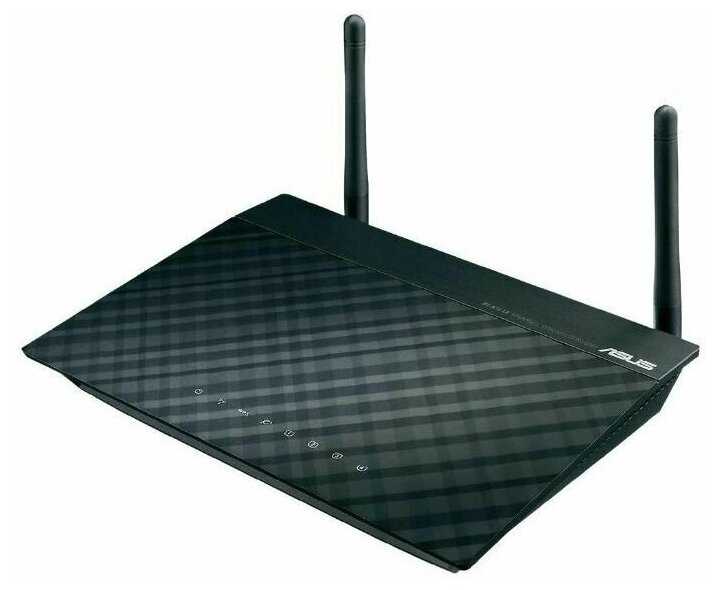
Отзывы о Роутер ASUS RT-N12E
Где купить
Роутер ASUS RT-N12E
|
Роутер ASUS RT-N12E | Яндекс Маркет | 2 935 ₽ | Посмотреть |
|
Роутер ASUS RT-N12E | Яндекс Маркет | 2 935 ₽ | Посмотреть |
3641 отзывов пользователей o ASUS RT-N12E
Пользовались
ASUS RT-N12E?
Поделитесь своим опытом и помогите другим сделать правильный выбор

Астрономад-8ZMZN
09.12.2023
2/10
Оценка пользователя
Ужасно
Очень плохая модель
- + Нет.
- - Нестабильная скорость, обрывы, обвалы, реконнекты, глюки до такой степени, что иногда невозможно зайти даже в учетку роутера. Подгрузка некоторых сайтов обрывалась несмотря на нормальную скорость. Обвал связи после просмотра видео на разных сайтах. Думал, что проблема, в том числе и в вайфай адаптере, но с новым роутером, у которого скорость выше, работает отлично, с предыдущим тоже проблем не было.
Гравитон-1BLJX
09.12.2023
10/10
Оценка пользователя
Великолепно
Отличная модель
- + Более 5 лет работает идеально, ни одного нарекания
- - Со временем стало не хватать 5 GHz и гигабитных портов
Эксопилот-2IAQH
05.04.2025
6/10
Оценка пользователя
Плохо
Посредсвенная модель
- + Настраивать 5минут.
- - Не ловит нормально на расстояние даже 5 метров. На кухни конект вообще пропадает.
НоваГость-5RLXO
06.04.2025
6/10
Оценка пользователя
Плохо
Посредсвенная модель
- - плохой сигнал
ХроноГость-8OVHU
09.12.2023
2/10
Оценка пользователя
Ужасно
Очень плохая модель
- + Понравился описанием.
- - Редкое, тормознутое gavno! Уже не один год с ним мучаюсь, постоянно отваливается Wi-Fi, периодически отваливается интернет. Никогда в жизни больше ничего из Asus не куплю, испортились они окончательно. Если поставить последнюю прошивку, то Wi-Fi вообще отваливается и чтобы вернуть старую прошивку нужно подключаться проводом.
Плазмонавт-0MQRH
13.12.2023
2/10
Оценка пользователя
Ужасно
Очень плохая модель
- + Ничего
- - Зачем вообще производить товар который отвратительного качества
Астрон-2CEYI
13.12.2023
10/10
Оценка пользователя
Великолепно
Отличная модель
- + Работает отлично
- - Нет
НоваГость-5GENM
13.12.2023
10/10
Оценка пользователя
Великолепно
Отличная модель
- + Этот роутер проработал 10 лет у меня. Проблем с ним не было. Не подвисал, wi fi не терял. Прекрасный аппарат для своего времени.
Но пришло время и купил я себе тп линк лучник 6с. Это гигабитный роутер. Понятно, что асусу далеко до лучника 6 с. Аппарат ASUS RT-N12 конечно хорош, очень хорош. 5 баллов.
Сириус-7LHRZ
12.12.2023
10/10
Оценка пользователя
Великолепно
Отличная модель
- + Больше года использую, все супер, советую
- - Нет
Фотон-4MTOF
12.12.2023
10/10
Оценка пользователя
Великолепно
Отличная модель
- + Аппарат верой и правдой прослужил 8 лет. Отличное качество сигнала, очень простой интерфейс.
Интеллектор-2RBXO
12.12.2023
10/10
Оценка пользователя
Великолепно
Отличная модель
- + Относительно надёжный, удобный, качественный.
- - В агрессивном режиме(без выключения с момента приобретения) живёт в среднем 3 года +- месяц. Поменял 3 таких роутера из разных партий.
Лунатик-5CLBT
24.05.2024
10/10
Оценка пользователя
Великолепно
Отличная модель
- + Цена, качество, сборка, работа
- - Отсутствие полосы 5ггц
КиберНаблюдатель-6CAPN
13.09.2023
4/10
Оценка пользователя
Ужасно
Плохая модель
- + Качество, крепится на стену, сама линейка оборудования, качество связи
- - Частые обрывы соединения
Астрономад-9NTTP
13.09.2023
6/10
Оценка пользователя
Плохо
Посредсвенная модель
- + В принципе нормальный
- - По проводу интернет 100 Мбит, а через Wi-Fi в два раза меньше
Капеллан-1GIUF
08.03.2013
8/10
Оценка пользователя
Хорошо
Update 3/11/2013:So far, so good! Flawless performance through a LAN connection with a 1.0 Gbps connection speed. File transfer speeds within our home network are greatly improved over our previous network setup. However, I have made a few changes that resulted in max speeds on our wireless N devices. I changed the following, under the "Wireless" menu in your router UI:-Wireless mode I changed to "N Only" (leave in auto if you have B/G only devices).-Bandwith I changed to 40 MHz only.-replaced the middle and the right antenna (antenna nearest the AC power supply) with some larger antennas I had on hand from our previous router. This resulted in a 5-10 percent improvement in wireless range/strength.I also updated our laptop's wireless drivers to the latest available version. We were getting occasional drops in our connection but after some research it appears this particular chipset (Atheros 9285) is notorious for this when connected to N devices, as well as not maintaining a consistent connection speed. So make sure your wireless devices have the most up-to-date drivers as well before faulting the router.---------------------------------------Bottom line, this is a nice router for the money. I love how it automatically chooses the best channels and that my range has been extended over our old B/G router (A Linksys WRT54GS). With the latest firmware installed, the user interface is extremely easy to navigate despite the somewhat complex settings this router offers. The configuration tool that runs when you first plug in your Ethernet cable and open your browser is intuitive yet simple enough basically anyone can work it out, it's not dependent on the end user's level of experience. Gaming and streaming are both greatly improved as well. My wife and I both agree that Netflix content seems to come through in higher quality now. I tried one of my favorite games online, which is a first person shooter that is fairly rich in graphical details on some of the maps, and I was struggling to play... not because it was slow, but because I was not used to such a smooth gaming experience when compared to our old router! I practically have to relearn online gaming because I didn't realize just how much the Linksys router was degrading the experience and that I had adapted to that! Don't get me wrong, it was a great router in it's time, and still is, but the experience is definitely improved with our ASUS RT-N16. We are very happy with this router.The only serious issue I have had thus far (and it appears to be an ongoing one from what I was reading online) is trouble with firmware updates. This is what knocks a star off of it for me, because the difficulty in applying a firmware update may be too much for a novice and cause them to either return it or re-sell what is otherwise an excellent router. I've read that even trying to install the stock firmware has either bricked these routers or failed to even upload the firmware altogether. The latter happened to me, but fortunately I've been around the block before on firmware updates and was able to find a workaround. Here is what I did to update my firmware. Other methods are available on Volodymyr Shcherbyna's blog (google search for his "Just another Blog" page).1. Downloaded the latest firmware update from the Asus website.Unzip/extract the file to your desktop.2. Insert the disk and install the utilities. Launch the Firmware Recovery tool, and use it to navigate to the unzipped firmware package ending in .trx. DO NOT ATTEMPT TO UPLOAD IT YET!3. Disable your current internet connection, either by disabling it in network and sharing center or unplugging your current router/modem. Using the provided yellow Ethernet cable, plug it into one of the LAN ports labeled 1-4 in the back of the Asus router, and connect the other end of the cable to your computer's Ethernet port. Plug in the power to your Asus router. You should now get a new network connection on your computer and a prompt on your computer will appear. Just choose "Home".4. Using the detection utility installed from the disc, search for your router. Keep refreshing until it shows up. Once it appears, with the router connected to your computer and to it's AC power, use a pen or paper clip to press the reset button. Hold the reset button for 30 seconds (I always count to 35 just to be safe). Keep holding the reset button, and carefully disconnect the AC power. Keep holding the button for another 30 seconds. Reconnect the AC power and continue holding the reset button.5. While still holding the reset button, look at the front of your router. You should see that the only active LED is the one that indicates which port your computer is connected to. If this is the only active light, you are now in recovery mode. Keep holding the reset button, and return to the firmware recovery tool. Upload your firmware file and once the upload completes, release the reset button. So, you should
Кронос-6WYZE
07.01.2012
4/10
Оценка пользователя
Ужасно
I purchased this for the specific purpose of extending our Wireless network (i.e. repeater mode). Because of the positioning of our TP-LINK TL-WR1043ND Ultimate Wireless N Gigabit Router in our first floor study, despite it's claim of "extreme range", our signal weakens as you head toward our second floor rec room. We've long been annoyed by flaky signals on our laptops. This has been mostly a minor annoyance prior to now since our home theater equipment is all wired to the LAN and we had an extra cable available for laptops. Now that we have tablet computers ( ASUS Transformer Prime TF201-B1-GR Eee Pad 10.1-Inch 32GB Tablet (Amethyst Gray) and Toshiba Thrive 10.1-Inch 16 GB Android Tablet AT105-T1016 ) it was time to boost the signal in that part of the house.The installation instructions were brief and easy to follow. What might not be immediately clear is that the CD should be installed in the client you are utilizing to configure the router so that you can run the Configuration Wizard. The Wizard was easy to follow though I experienced a glitch the first time I attempted to connect to the network. For whatever reason, when I cleared the settings and ran it again, it connected without issue and we now have a great signal upstairs as well. This means that it was able to pick up the weak signal from the downstairs router and improve it greatly (i.e. I get full bars on my tablet.)I'm also pleased with the fact that, should we ever need to set up a second network or replace our other router, this unit can do either of those jobs as well. I'm also impressed by it's purported ability to set up different levels of access and am considering purchasing one for my business office so that I can allow restricted guest access, allowing them to use the WiFi while waiting.Current rating of four stars may improve if the product continues to perform this well over an extended period of time.***UPDATE 2012 Jan 15*** Unfortunately, my rating has actually gone down for this unit. IMO, ASUS should not be advertising this as a unit that can operate as a repeater out of the box. From what I've read, heard and discovered, the only hope for it to perform well as a repeater is to use the open source DD-WRT firmware, which of course they won't provide support for).Here's what has lead me to the reduced rating: Initially I experienced reduced download speeds with devices connected through this router. This was expected behavior as the main router in the home is set up to handle mixed (B/G/N) traffic. I'd read that such a situation would likely lead to 50% reduced throughput in the repeater. Within 48 hours, however, the performance became worse and inconsistent. I did some research and learned there was an updated firmware that was supposed to improve repeater performance. Unfortunately, the new firmware had two negative effects:1) The ASUS router now presented itself as a different network (requiring that we connect to it anytime we moved to that part of the house, rather than a seamless transition)2) The performance, while briefly better upon initially upgrading the firmware, became consistently worse. After installing the firmware, we experienced only 30-40% degradation of throughput (instead of 50%). However, after 24 hours of running, it actually rose to 70-80% degradation and eventually became so bad that a connection couldn't be maintained. Even when connected, the download speed dropped to 1Mbps or less.ASUS tech support, while thorough and friendly, were no help as they suggested what I had already tried. Factory resets, reboots, and re-installation of the newest firmware changed nothing. Further, they expressed that the behavior where the router takes on it's own network name (rather than repeating the existing wireless network name) was expected behavior and that, while they wouldn't support it, I'd have the best luck trying the popular open source firmware. While I have a good bit of technical knowledge and follow directions quite well, there's a pretty steep learning curve to use that firmware, and a pretty steep time investment, especially if it's not something you're going to use for other applications. IMO, it should not be required that I use an unsupported, third party firmware for the product to do what ASUS advertises that it does out of the box.At this point I was torn between returning it and trying another box and keeping it and simply setting it up as an Access Point. For now, I've set it up as an Access Point. This has the negative effect of maintaining the need to connect the ASUS wireless network separately from the downstairs network. It has the positive effect of removing the degradation in throughput.My rating may raise up to 3-stars if it consistently performs as an AP though I'd really rather not put it above 2.5 since it doesn't work as advertised and I felt slightly cheated on my purchase.
Небулоид-4USFZ
29.11.2011
10/10
Оценка пользователя
Великолепно
Pros: Dual Band, Easy Set Up, Good Range, Wireless Speed, Internet SpeedI have been getting pretty consistent 50 - 80 Mbps (which is good) doing tests with Lan Speed Test from a floor above the router. On the second floor it drops to about 20-40 mbpsFor my wireless routers I have always turned off security and used mac filtering along with hidden SSID to "secure" my home network. Along with those changes I updated the 2.4 and 5 ghz channels to separate SSIDs, 40hz, N only and set to a channel that no one else in the neighborhood uses. It took about 20 minutes when you throw in all the apply or save The UI to set all that up is pretty easy.Cons: Questionable Firmware based on other reviews, Not so fast rebootsOther Thoughts: I've owned this router for about 3 weeks now, and have yet to have any real problems. My main reason for purchasing was to get something a little more beefy compared to my older 150 N router. I have 4 pcs, ipad2, Wireless TV, DVD and Directtv hooked up to it now and don't have lagging problems. I got the latest firmware after it wasn't available for a while, but seems to be working fine.One suggestion to anyone who owns it is to reboot the router AFTER you are done setting it up completely. For whatever reason this makes the speed consistently better. My two cons are livable "features" since I have no stability issues so far. I have read a couple of reviews about some features not working but have not had any problems myself.***Update To Review 1/4/2012***After a couple more months the router is working well and I would buy it again if I had it all over to do again. More devices connected (3DS and wii) and it never slows down or lags. As I'm writing this I have 2 netflix sessions going and my wife is surfing on her ipad. I have 3 separate SSIDs going and no problems there either. I would recommend the router to anyone who needs a router primarily for wireless and doesn't need gigabit lan. The only times I have rebooted the router is to change settings, it has been very stable so far.***Update To Review 4/20/2012***Router is still running flawlessly. I wanted to update because there is a new firmware available and I have installed it. Everything still works well. I would still buy this router if I had to do it again.I have a little different setup now, I created a ssid that is broadcast and completely open. I have it set to internet access only which I verified works by testing with my laptop. I was able to see my desktop while I was connected to the "internet only" connection, but could not open anything. When I switched to a "LAN enabled" connection I was able to read/update public folders on my desktop.***Update To Review 6/3/2012***There are a couple of new firmware versions available now. The interface looks nicer, not that the older one was bad, and most functions seemed to work that I tried. However, for some reason I could not get wireless clients to get speeds of anything over 1Mbps. Not sure if it was due to some setting I had or a particular device that was connected to the router, but I had the problem on multiple devices. By the way I followed the firmware update instructions and reset the router prior to updating. I tried messing with the new Qos settings, which are kind of flaky UI wise, but was not able to figure it out. Finally, I changed back to the previous firmware (....52), and the WAN port wasn't detecting the connected cable. I did another hard reset and all was well. I have tested from various wireless devices and all are getting much better speeds (19-20Mps WAN). Slightly frustrating, but glad I was able to resolve it...warning to others who upgrade to the new firmware.***Update To Review 10/3/2012***Almost a year and would buy this router again. Super stable for me, the only time it restarts is when the power goes out. I listen to Pandora all over the house on my galaxy player and don't have issues. Can mow the lawn and it rarely loses connection. I am still using the 1.1.1.1.1.1.52 firmware which just works so I am not going to mess with it. If you are using the newest firmware and are getting consistently good bandwidth I would like to hear about it. Currently there are 4 wireless and 2 wired devices connected to it. We sometimes have more wireless connected, and use pandora and netflix a lot without problems;-) ;-) ;-) UPDATE 12/17/2012 ;-) ;-) ;-)A new firmware is available now. I have it installed and so far its had no issues with bandwidth or stability. Hoping this one sticks.*** UPDATE 12/22/2012 ***Latest firmware has passed my seal of approval. Have not rebooted since setting up after firmware upgrade. All devices connected to it (Wired and Wireless) are getting as good of network speeds as I ever have. The Netflix on my Vizio TV is probably the worst implementation of Netflix I have encountered and it started loading movies in an acceptable timeframe. Very pleased with the latest firmware so far.
Капеллан-0PKCY
17.10.2011
4/10
Оценка пользователя
Ужасно
I have always had trouble with AP Repeaters. Prior implementations often required you use trivial security such as WEP.In Router mode, or AP mode, this device functions very well and is an excellent value. My AP is aDlink DIR-655, and I am of course using WPA2 AES/128 security. When Hard reset by holding the resetbutton in for 5 seconds while power on, I do a NVRam reset and reboot. I was able to easilyset up WPA-Personal, WPA2-AES, and indeed it came right up as a client. Problem is DHCP was enabled.I have a Juniper 5GT firewall, and it is professional enough that I can run 5 OSPF Area's and 3 BGPASN's. (On a Cisco switch you need to hit the 12000 to do that. The 6500 enterprise class switch doesnot support more than 1 ASN Fully, never the less 3). My Home core switch is a Cisco-3550-G24.I am using a MMF SFP to link to a CIsco 2960-24TC-L with 2 GigE SFP's, one populated with a SFP-MMas well. It is all good, I have been a network engineer for over 25 years. So it is not like Iam a novice here...I worked at it. I tried going back to Router mode, and AP mode, and disabling the DHCPon the LAN, then switching back to Repeater mode, but alas I can not disable theDHCP Server. (THe main issue is that I use best practices... I reserve the first 20 IP'sfor Network equipment. My DHCP Range from my Juniper FW is 10.10.1.50 - 100. I reserve101-200 for static devices, such as WAP's, Printers, NAS devices, etc. And from 200 to254 is reserved for Networking devices...THe problem is that my Firewall Gateway is 10.10.1.1, The Static 3550 Switch is 10.10.1.2, the 2960-24TC-Lis 10.10.1.3, WAP 10.10.1.254, etc....The Network IP of this thing if set Dynamic gets a DHCP Address from my Firewallbut starts giving out IP's at 10.10.1.2, since it resets the DHCP Server basedon the scope of the LAN IP!! If I staticly set the IP to 10.10.1.X, GW10.10.1.254 or 10.10.1.1, again DHCP is enabled and you can't turn it offand it starts giving out IP's at 10.10.1.2. This trashes my network.I can understand a DHCP server in Router mode, or even AP mode. In thosemodes you can disable DHCP. But in Repeater mode, there is no way todisable DHCP Server, and in Repeater mode that is the one mode youare most likely to have a DHCP server already...either your WAP APwhich may be a AP and Firewall/DHCP Server, or in my case I use afirewall that is just a firewall, professional Juniper Firewall.This is very poor and basically the reason I purchased it was I havetwo printers in the other room. Can't get a cat5 cable to a switchwhich I have plenty of in the closet. So I need to do it via WIFI.It does work... I indeed can enable it, plug in the printers on theLAN ports. They have static addresses and I can print to the printers.But, as soon as I enable my IPAD or IPHONE, they get an IP of 10.10.1.2, or10.10.1.3.... This is terrible.So 4 stars for a Router mode, and AP mode. 1 star for Repeater mode because it isthe one mode when you are likely to have a DHCP Server already, and it is theone mode you can not disable the DHCP Server!!So.. if you want a repeater, this does the job, but just don't have anystatic IP's on your network, or a DHCP server, because you can't turn thisone off!UPDATE: Oct 23, 2011I replaced this unit after filing the issue with Technical Support. They are now aware of itand I suspect it is a matter of time before they resolve this via a firmware upgrade as it isvery simple to do.I replaced this with a "Amped Wireless High Power Wireless-N Smart Repeater and Range Extender (SR150)"which was $30 more, hence almost double the price. There were many reviews of issued with repeater modethere as well. One written by a fairly technical individual complaining about the inability tooverride the DHCP addresses the unit gives out on the LAN. I verified he is correct, it does have thatproblem.However, I was able to set up the unit manually, full WPA2 Personal AES Encryption andit deferred DHCP to my firewall, and pointed to itself as the gateway. If I attemptedto set the IP address of the AMPED unit statically, it did not work. It defaulted backto a DHCP address from my firewall. But it did do DHCP Relay to the firewall, hence all mydevices that connected (Iphone, IPAD, Laptop) received IP's in the range 10.10.1.50 - 10.10.1.90from the firewall. It also acted properly as a DNS proxy. Hence from a PC attached to therepeater, entering www.amazon.com, did proxy the DNS from the Wifi to the Gateway firewall 10.10.1.1and resolved DNS perfectly.A nice added feature was you could set the power level in increments of 10%. I found at 100% I couldstand 400' away and still get my wifi signal. I didn't quite want it sent to that level of range.Dropping the power to 50%, I had full coverage in the back yard, and anywhere in the house, but now 4houses away (400'). So I disabled DHCP, and it allowed DHCP properly from my firewall, but changedthe gateway from the firewall 10.10.1.1 to itself 10.10.1.70 (or the DHCP address it g
МехаРейнджер-5WSHY
20.09.2011
8/10
Оценка пользователя
Хорошо
In short, I like it and would purchase again but wish they include better illustrations/instructions for Access Point and Repeater Modes...If you are using this as an access point (AP) or repeater...PLEASE READ!!! There are MANY ways to use this device, so depending on your configuration, this may or may not apply to your situation...I have used wireless networks for many years with success (and occasional trouble shoots) but this is my first "Access Point" application. I wasn't expecting pure sunshine after the reviews, but the end result is a nice and fast wireless access point at a great price...and a repeater to boost my signal and range as a bonus.I am using this as an access point to connect a PC and Blue Ray player in wireless fashion to the 2nd floor of my home rather than snaking CAT5 cables. If you have a similar situation...read on!Oddly enough, if you want to use this as an "Access Point", you have to put it into "Repeater" mode. When run in "Access Point" mode, you have to run a wire between your existing wireless router and this particular device, thus negating the advantage of having a "WIRELESS Access Point"...I don't really understand the concept of a "WIRED Access Point", but that may work for some people.My main router is a Lynksis wireless N router. This sets up my household wireless network. I am connecting various wireless devices to my network...phones, Nook, laptops, and such. The main purpose was not to extend my network, but to create a remote connection for my WIRED devices (a PC and blue ray player as mentioned above). In the end, it works very well...but it wasn't exactly plug and play...it could have been had I understood better, so maybe my learning experience will save you some time ;)It seems the reviews are hit and miss for the set up procedure in either AP or Repeater mode...my instinct was just to plug it into my remote location and configure it from there, which probably would have worked fine. Unfortunately, I attempted to follow the directions (my first problem) which seem to imply needing to tether it via an Ethernet cable ("To minimize problems" as stated in the literature) to the modem on setup. There was no mention of what to do with your existing wireless router in this case, so I tried it both wired to my Lynksis and the modem directly - neither worked.This lead to issues similar to other posts (disappearing router, etc.). I tried manually configuring through the IP (192.168.1.1) while tethered to my PC, using their wizard, and also the device discovery utility located on the disc. I also tried the familiar power on / power off rituals with all modems and routers. I was able to get part of it to work at times, but not all of it initially. For example, I could view the repeater, but didn't have internet access...or my computer that was hardwired would connect, but knock off all other wireless devices...I explored the options for flashing new firmware, but that seemed silly for a brand new router...and there is a LOT of research required to safely move through that without risking permanently locking up your device.Having admitted (temporary!) defeat...I finally called ASUS support (yes, they have free US based phone support available during normal business hours: 812-282-2787) and spoke to Bill. 5 minutes on hold, and connected to live English speaking support at 2pm EST on a Tuesday - Kudos to Asus. It appears there is a way to get this "stuck" when configuring as a repeater - which I managed to do in the process. After 5-10 minutes of power cycling, we got the device "unstuck" and running as my intended wireless access point. All seems good now.From what I learned in our discussion here is what I can recommend for using this as an "access point" (in repeater mode) in existing wireless setups:Once the included software is installed, it is almost like connecting a new wireless device...1. Install the utility included on the disc onto whatever machine will be hardwired FIRST!2. Switch the Asus device into REPEATER MODE and power it up.3. Plug the device into whatever machine you just installed the software onto via Ethernet cable - DO NOT disconnect or in any way alter your existing wireless router or network!4. Run the device discovery utility (SKIP the Wizard!) from that machine (should be in your start menu after you install the utility from the included disc).5. Do a "search" for available wireless networks.6. "Connect" to your network...enter your existing wireless network password if necessary. That should do it!Here are a few more tips:1. If the "Connecting" screen hangs up for a bit as it did with mine, just check your internet connection because it might already be up and running (I was even though the window was stalling). If so, just do the familiar wireless jig: unplug the router...wait 10 seconds...reconnect. The rep walked me through this.2. Once completed, your repeater will be totally transparent, so when you type in the IP addre
НеоВояжер-2JIMI
08.04.2012
10/10
Оценка пользователя
Великолепно
First, be sure to install the DD-WRT firmware (note that the "B1" hardware version, what you will likely receive, does NOT work with Tomato firmware as of Apr 8, 2011).To install the DD-WRT firmware on this router, look up the router on the DD-WRT Supported Database [...]. On this router, there are two files that need to be installed: 1. factory-to-ddwrt.trx 2. asus-rt-n10plus-ddwrt-webflash.binUsing your laptop/PC and assuming a Windows OS as well as DHCP, using your browser, go to 192.168.1.1 (username and password = "admin"). Go to Administration and upload the factory-to-ddwrt.trx file. Once that completes, wait about 5 minutes and unplug your router and plug it back in.Using your browser again, once again visit 192.168.1.1. Change your username and password and click Save. Then, go to Administration and upload the asus-rt-n10plus-ddwrt-webflash.bin file. Once that completes, wait about 5 minutes and unplug your router and plug it back in.You're done; just configure your router as you would any other router (visit DD-WRT's website for help if needed). Note, the firmware is quite comprehensive and can turn this little router into a thousand dollar device if desired. For most, the default settings plus wireless security is all you'll like need.Remember, Tomato is currently unsupported on the "B1" version (the previous non-B1 version is supported). If you tend not to read material like me and try to install Tomato, you will brick your router as I did.To unbrick your router:1. Change the DHCP network setting to Static and set the IP Address to 192.168.1.15 (the "15" is critical, this is the IP Address this router is expecting on a firmware flash). Make sure your gateway is set to 192.168.1.12. While power is on your router and an ethernet cable is connected between your router and laptop/PC, depress the Reset button on the router using a paper clip. While holding the Reset button in, unplug the router - wait 10 seconds - plug it back in and continue to hold the Reset button for about another 10 seconds until the WPS light starts to blink (the router is now in recovery mode). Note, the router will not accept a ping at this point in case you're checking.3. If using Windows, download TFTP2.exe from [...](or google and download from elsewhere). Note, if using Windows 7, you'll need to go Control Panel > Programs & Features > Turn Windows Features On (in LHS panel) and check "TFTP Client".4. Run the downloaded TFTP2.exe program and set the Server = 192.168.1.1; leave Password blank; and use the factory-to-ddwrt.trx file to reflash your router.5. Wait 5 minutes, unplug and replug your router.6. Change your network settings back to DHCP (wait about 1 minute before going to the next step).7. Using your browser again, once again visit 192.168.1.1. Change your username and password and click Save. Then, go to Administration and upload the asus-rt-n10plus-ddwrt-webflash.bin file. Once that completes, wait about 5 minutes and unplug your router and plug it back in. Your router should be working fine now.Just a note: I previously was using a Linksys WRT54GS router with Tomato (rock solid). I bought this Asus wireless router for the purpose of extending the wireless range and for the gigabit file transfer speeds (I have a NAS on my network). One thing I noticed with this Asus router is that my web pages render faster than with the Linksys router which was a pleasant outcome.For the price, not a bad little device. Like others have pointed out, it is cheaply made. But, for the money, the value is hard to beat. As for longevity, time will tell.
Туманник-5BBIW
08.01.2012
10/10
Оценка пользователя
Великолепно
I got this router because I am a geek, and wanted a router I could really push to its limits. But, it turns out I don't need to really tweak or geek out on this router to get the functions that I wanted. I am using mine as an Access Point and network switch on the far side of the house from my office and main router. I used a HomePlug ethernet connection to feed it the Internet signal from the router, and then the Asus shares that to four devices over there, and any Wi-Fi devices.Here's what's good (firmware v:3.0.0.3.84:)- Power: It has a faster processor and more memory than most routers. That means it can handle a very busy home of small office. It can handle multiple threads of Internet communications without getting bogged down. This would be important for gamers, bit-torrent users, or people with many concurrent Internet users at once.- 3 Antenna Wi-Fi N. This router doesn't have mind-blowing range, but it certainly is what I would call good. It seems very slightly better than my D-Link Dir655, which is a great router, too, but not as modern.- The user interface is very simple, easy to set up, and well-designed for a home router. Especially given the full range of features. There is a wizard that makes it extremely easy to get set up for the novice. On-screen help is limited outside the wizard.- Gigabit speeds on the ethernet plugs- AP Mode and LAN Switch: this allows the Asus to be used to simply extend your home network. If you set it to Access Point mode, then connect your existing router to the WAN port, you can add another WiFi access point, but also use the four ethernet plugs on the Asus for plugging other computers or devices into the network. Think of it like a splitter.- Bridging Mode: this mode allows the Asus to act as a sort of Wi-Fi relay, so you can put it at the opposite end of your home from your router, and it will extent your Wi-Fi coverage into that side of the house and yard.- NAS and Servers: Just stick a USB drive or external hard drive into one of the usb ports, and you instantly have Network Attached Storage that is accessible from any of your computers on your local network. You can open the files in your computer and copy them, share them, etc. Even better, Windows and iTunes servers are included so Apple and Windows devices can stream media from the NAS. This is plug and play easy.- FTP: You can open up the NAS server to the Internet, and access that shared storage from anywhere in the world.- Printer Port: You can take any USB printer, plug it into the second USB port on the Asus, and print from any computer on the network. This is not plug and play simple, but it is as easy as any other network printing setup. A bonus on the Asus is that it can handle Multi Function Printers that also scan documents. You can scan from any computer on the network, a feature that is often lacking.- Download Agent: If you do a lot of file sharing (P2P or Bittorrent), you could set up the Asus to receive your downloads and share them out to others. This allows you to take your laptop or PC away from the network (or off) and still continue the download or upload. This uses the NAS storage in the USB port. This may be useful to some advanced users.- Control: It is easily DD-WRT upgradable. This is geek-speak for the fact that you can install a powerful, open-source operating system on the router that gives you greater control. That said, I bought it for this reason, but found the features that I wanted (bridging, AP mode) were available right out of the box. The fact that it is designed to work with dd-wrt is good, but it is also a negative, see below.On the Con side:- Using the built in control software, you don't have micro-level granular control. That means things like Port Forwarding, Wi-Fi signal strength, and many more are not available in the simplified default User Interface. You'd need to install dd-wrt to get that control.
Синтрон-4DBMU
28.10.2012
10/10
Оценка пользователя
Великолепно
While I research my purchases thoroughly, I've learned to expect disapointment once a product is in hand. Not this time--at least not yet.I replaced a bulletproof (since 2007) WRT54GL with the RT-N16 primarily to add network attached storage with low noise/power to get all my data in one place. The storage doesn't need to be fast as we don't stream video. I had a 500GB laptop drive (WD5000BEVT) to use for the storage, and a USB2-SATA dongle (Apricorn) to connect it. I looked at adding separate ARM based NAS (e.g. Pogoplug), but suspected I could get to lower total power with one box.I expected to need third party firmware (e.g. tomato, ddwrt) however, after updating to Asus firmware 3.0.0.4.220, I'm gonna stick with it for a while.Where I was prepared to be disappointed (and wasn't):1. Both USB ports power the drive on the adapter easily. No clicking or hesitation. No external power needed.2. The firmware spins the drive down after 10 minutes of inactivity. I expected to need third party firmware for this.3. The range on G is as good as the WRT54GL. I have another WRT54GL serving as a client bridge (ddwrt) where the RF path is bouncing off a motel about 200' away. It works as well, or better, than before.Writing to (proprietary) NTFS from a UNIX makes me nervous so I formatted the drive ext3. After writing some files through the RT-N16, I removed the drive to test file recovery which went well because the files have read/write/execute permissions for everybody.I successfully set up DDNS on asuscomm.com to share files over the internet. It worked well but ShieldsUP showed port 21 open, so I turned the client off for now. (I had to subsequently hard reset the router to stealth port 21.)I moved a 1GB file around while watching seconds on the clock. Got roughly these read/write speeds (Mbit/s):1. With wired Gb/s controller on motherboard (DG31PR): 80/802. 802.11n2x2 to laptop (SL500/intel5100): 40/203. 802.11g to laptop (SL500/atherosAR5BHB63): 13/18I took some power measurements (watts at the DC input with two multimeters):1. Radio enabled. No connections: 4.662. Add WAN: 4.703. Add 3 wired LAN: 5.164. Add wireless LAN streaming youtube: 5.195. Add drive/adapter: 6.576. Add writing to drive at 80(Mb/s): 7.737. Subtract youtube, and let drive spin down: 6.22I ran wash and reaver to verify WPS is truly disabled--it is.In summary, I've added what I wanted (low power low noise NAS) without giving up anything. Good job Asus!
Аргонавт-4LMKV
20.01.2012
10/10
Оценка пользователя
Великолепно
My apartment is a rather old one with thick brick walls. Since my router (a Linksys WRT320N) is located exactly at one end of the apartment, rooms located at the opposite end had weak wifi signal.So I've been looking for an option to extend the wifi coverage and found the RT-N12. The price was unbeatable for what it offered. Reading all the reviews, I saw that many people complained about the complicated setup, unclear instructions, etc. I decided to give it a try and couldn't be happier.I learned that this device has three modes (router, access point and repeater), selectable by a physical switch. My obvious choice would be "repeater" but the original wifi signal would not reach the spot where the RT-N12 would be located. Additionally, I understand that "repeater" mode actually drops your wifi bandwidth by 50%. Well, since the whole place is cabled, I decided to use it in "access point" mode, where it can also extend your wifi coverage.The way to set it up (which is clearly stated in the manual, by the way) is to put the switch in "access point" mode, install the sofware in a client PC, connect the PC to the RT-N12 via cable, connect the RT-N12 to your main router via cable, turn it on and then run the Discovery utility in the client PC. This application will find the RT-N12 and set it up with your wifi configuration (SSID, password, etc, etc). Many people tried to connect the client PC to the RT-N12 via wifi or to access it via a browser (just like any router) but this simply does not work for the initial setup. It does work after that, but the initial setup is different, period.Once set up, the RT-N12 immediatelly started broadcasting a wifi signal and I had my whole apartment covered with a 5-bar signal. Another benefit of setting it up as an "access point" (might be the same for "repeater" but I did not test it) is that it does not create another subnetwork, does not assign IP addresses to devices connected to it, etc. So, from my main Linksys WRT320N router, I can see all devices connected to the RT-N12. Additionally, Windows sees them all as connected to the same network (enabling sharing), including a desktop connected via cable to the RT-N12. Totally transparent!A minor detail: after doing the inital setup, I used my Android cell phone to run a wifi scanning application in order to check signal strength all over the apartment. This application showed me that there were two devices sending wifi signal under the same SSID (the Linksys router and the RT-N12, correct). Depending on the room I was by the time I connected to the wifi network, I would connect to either one or the other and this was transparent. However, when I started moving around the apartment I would eventually lose connection to that device and connect to the other (which had a stronger signal at that spot). Even though this whole process was automatic and transparent to the wifi client, it meant an interruption of signal for a couple of seconds. I went back to the RN-T12 setup and after some research found out that it was using a different wifi channel than the Linksys. I changed the channel and the problem disappeared. Now, when I move around, the connection does not drop ad the client switches smoothly from one router to the other.I've been running the RT-N12 for over a month now and it never had a hiccup. No dropped connections, nothing. Rock solid.
Фотон-1CNKZ
02.04.2013
10/10
Оценка пользователя
Великолепно
I got the router and flashed it with DD-WRT right away to get the most out of it. DD-WRT is firmware you install that allows you to use extra features like Quality of Service (QOS). QOS, for example, allows you to tell the router to give priority over things so they don't slow down when there is a lot of activity. Playing an online game while your iPhone is downloading the latest app? No problem... You can set it up so the online game takes priority to ensure seamless play while the app might take a couple more minutes to download, but who cares!To add these features you can go here: [...] or just search for DD-WRT RT-N12. You'll need to look at the bottom of the router to see which version you have. Very easy to find.Once I installed the firmware I noticed the default power didn't match with what the text description of the default. The power was set at 17mw and the text said it should be 71. I needed to up the power to make sure my second story was covered and I was scared to jump to 71. I bumped it to 22 instead and have no issues upstairs now. One other issues was when I turned on HTTPS only to connect to the router I never got a response after that. Tested this a couple times so now I just kept the default HTTP. Less secure but to connect to the router in the first place you already need to have the key so it's already pretty secure so it's not much of an issue.I have it reset itself every morning (very early) and it has been rock solid. I can stream Netflix HD in another room without issue to my my laptop (that I hook up to the TV). I don't notice any dropped frames or artifacts.If you're looking for a router that is rock-solid, a good price, and gushes data at many devices without skipping a beat, this router will do the job. I'd say, along with DD-WRT firmware, this router is currently the biggest bang for the buck.
Показаны отзывы 3097-3120 из 3641.