

Цифровой Фотоаппарат Nikon D7000 — 965 отзывов, плюсы и минусы


Где купить
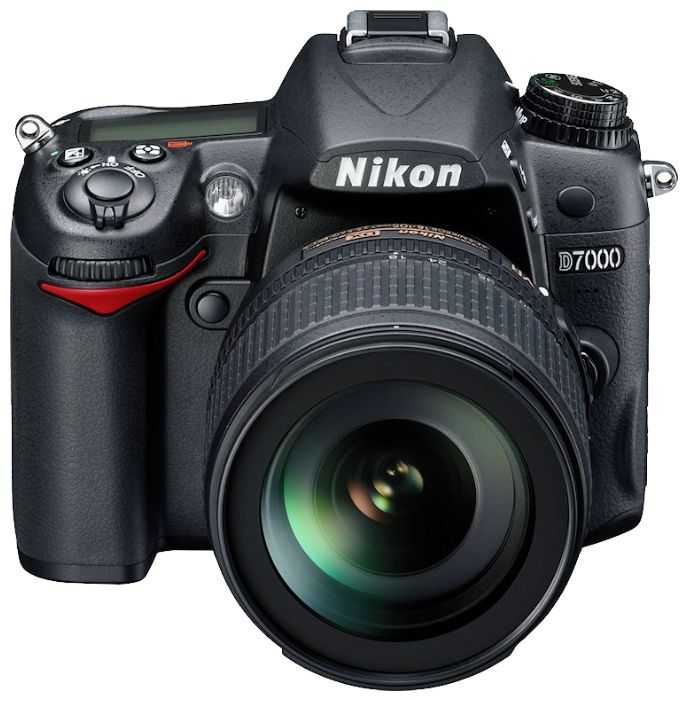
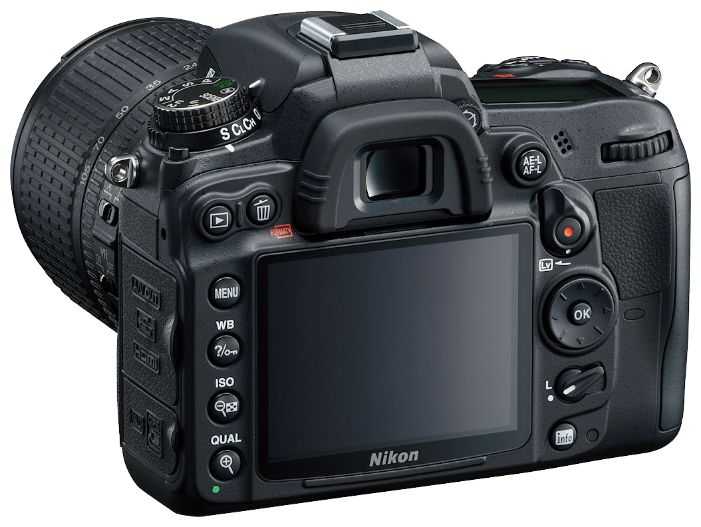
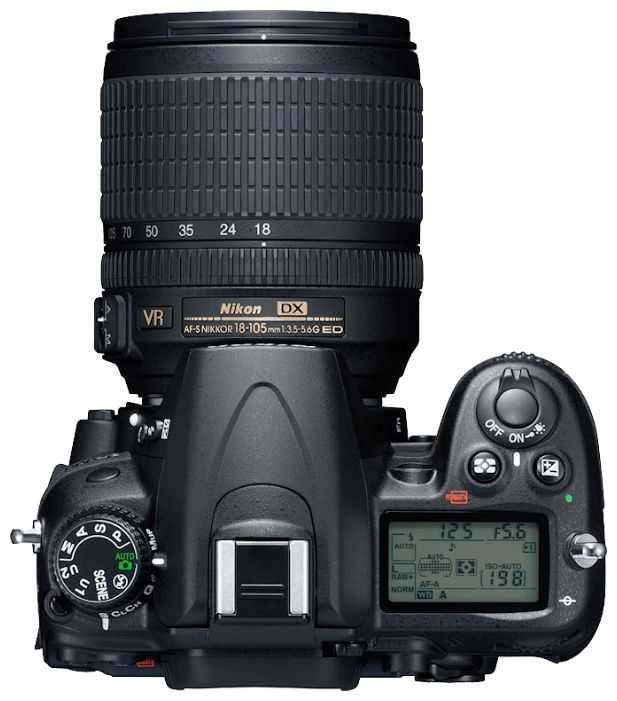
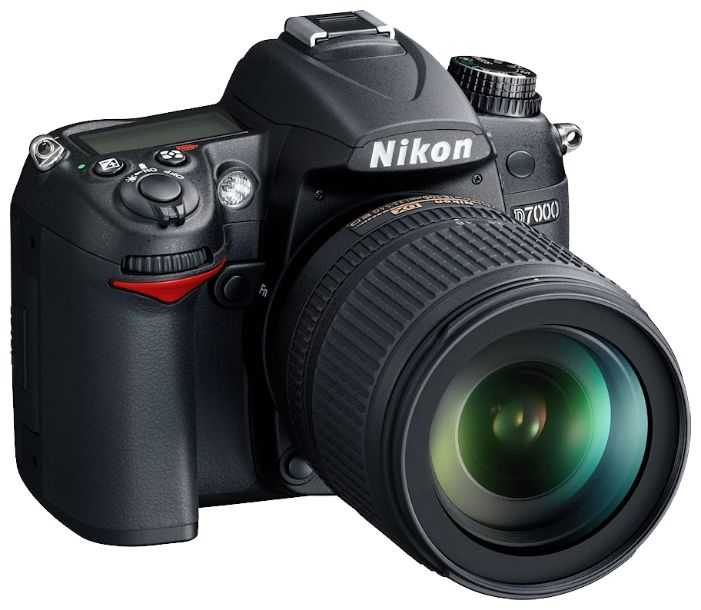
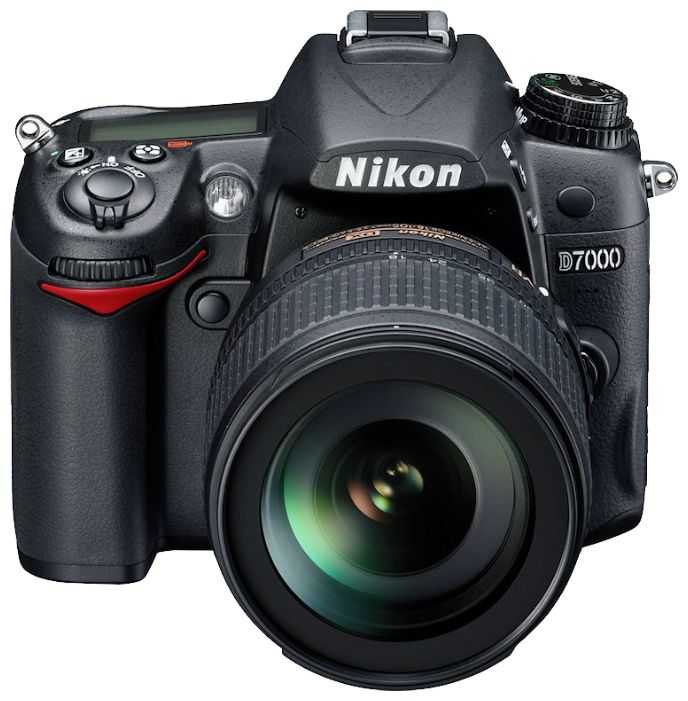
Цифровой Фотоаппарат Nikon D7000
|
Фотоаппарат Nikon D7000 Kit AF-S DX NIKKOR 18-105mm f/3.5-5.6G ED VR, черный | Яндекс Маркет | 58 272 ₽ | Посмотреть |
👍Почему стоит купить Nikon D7000 - Преимущества по отзывам пользователей
- Прочная и надёжная сборка:
- Магниевый сплав и погодозащищённость выдерживают дождь, пыль, падения и экстремальные условия (боевой фотограф использовал в зоне боевых действий, без пыли внутри после месячной чистки).
- Тяжёлая, но удобная в руке, не люфтит, краска стирается на краях, но работает идеально даже после 148 тыс. снимков.
- Кнопки и рычаги на удобных местах, эргономика как у профессиональных моделей.
- Отличная автономность аккумулятора:
- Держит 1000–2000 снимков на заряд, неделя съёмки по 100 фото в день или 6 дней поездки с минимальным расходом.
- С батарейным грипом меняет батарею раз в день при интенсивной съёмке фото и видео.
- Высокое качество в слабом освещении:
- ISO до 3200 без заметного шума, 6400 usable после обработки, лучше D90/D300 в низком свете.
- Шум как плёночный грануляр, не цифровая грязь; отличная работа с быстрыми объективами.
- Быстрый и точный автофокус:
- 39 точек с 3D-трекингом, молниеносный даже с не-Nikkor, лучше D80/D90; ручная фокусировка с индикаторами в видоискателе.
- 100% покрытие видоискателя, яркий и точный.
- Точная экспозамера:
- Значительно лучше D80/D90, редко ошибается; Active D-Lighting сохраняет детали в тенях и светах.
- Матричная экспозамера точна в большинстве сценариев.
- Гибкие настройки и удобство:
- U1/U2 режимы для быстрого переключения профилей; множество кнопок для прямого доступа (ISO, WB, metering).
- Двойные слоты SD для бэкапа/переполнения; 6 fps серия.
- Отличное качество видео:
- Full HD 1080p с ручными настройками, хорошее качество для DSLR; внешний микрофон минимизирует шум AF.
👎О чем стоит задуматься перед покупкой - Недостатки по отзывам пользователей
- Проблемы с автофокусом:
- Частые жалобы на back/front focus (до 50% снимков мягкие), требует AF fine tuning; не всегда точен в низком свете или с не-Nikkor.
- AF в видео шумный, охотится, бесполезен; live view AF медленный.
- Пересветы в ярком свете:
- Матричная экспозамера часто пересвечивает небо/воду, требует -0.5/-0.7 EV; 15–20% отзывов жалуются.
- Малый буфер и серия:
- 10 RAW в серии, затем пауза 9–10 сек; SD-карты ограничивают скорость.
- Ограничения видео:
- Нет 1080p@30fps (только 24fps), шум AF в записи, нет аудиомониторинга; dead/hot pixels в тёмных сценах.
- Сложность для новичков:
- Много меню/настроек, крутая кривая обучения; не для auto-режима.
- Скользкий grip, мелкие огрехи (ISO-кнопка слева, верхний LCD не гаснет).
- Китовый объектив слабый:
- 18-105 не погодозащищён, пластиковый байонет ломается; слаб для ковров/динамики.
- Передача файлов:
- Не монтируется как диск, требует Nikon Transfer; workaround через Image Capture.
*Плюсы и минусы, которые пользователи называют чаще всего на основе практического опыта использования.
965 отзывов пользователей о Nikon D7000
Пользовались
Nikon D7000?
Поделитесь своим опытом и помогите другим сделать правильный выбор

Скромный эксперт
30.10.2012
8/10
Оценка пользователя
Хорошо
I bought this camera from my local dealer a few months ago and got a chance to give it a real workout on a trip to MN recently. I think this is a great camera and have had no back-focus issues some have mentioned.When I was shopping for this camera I compared it to an APS-C Canon in the same price range (7D maybe?), and also compared it with the Olympus OM-D E-M5 and the Fuji X-Pro1, both of which seem to have great reputations.The Fuji was really, really, tempting but in the end I had read too many reviews on too many sites about strange focusing behavior and various other problems and quirks. The Fuji also lacked image-stabilization in the body or in any of the lenses available at the time. The Oly looked like a nice camera on paper but when I held it in my hands, it was a lot smaller than I expected and felt very light (I wanted a more solid feeling camera - just my preference). It also uses a micro 4/3 sensor which is noticeably smaller than the APS-C sensors used in the D7000 (and its corporate brethren). I don't know how much difference the smaller micro 4/3 sensor makes in real life, but it was just another nail in the coffin for the Oly for me.The other issue I had with the Oly and the Fuji is that the bodies are so small that a lot of functionality is done via menus, and I HATE menus on cameras. I had an old Canon F1 film body for a long, long time and really like it. Built like a tank, no electronic menus - everything was run via buttons and dials. More recently I had an Olympus E-20 ZLR and it, too, offers much of its functionality via buttons on the camera body. I have used plenty of cameras with all the settings buried under menus and just can't stand that. So any camera that is menu-intensive is out of the picture for me.I am the proverbial "bull in china shop" and am not as careful as I should be, so I needed a camera that would withstand me. The D7000 feels very solid and hefty and has a magnesium shell under the plastic exterior which helps make it more durable for people like me. The "solid" feeling reminds me a lot of the Nikon D300 (I've never owned one but have played around with a few at the local camera store) and the D300 is supposed to be a pro or semi-pro model.The D7000 has plenty of buttons - ISO, +/- exposure adjustment, shooting modes (P/A/S/M/scene modes), spot/center-weighted/matrix metering setting, DOF preview, and a function button to which you can assign just about any function you like. There are about fix or six buttons vertically oriented to the left of the LCD on the back of the camera.The viewfinder coverage is ~100% so pretty much what you see in the viewfinder is what you'll get in the final image - nothing is visible in the viewfinder that is cropped out in the final image and nothing outside of the viewfinder shows up in the final image.The cameras shoots RAW, JPG, and RAW + JPG. I've never shot RAW before and can definitely tell the difference between RAW and JPG but when manually editing RAW files in Lightoom, I have a hard time matching the quality of the JPG straight out of the camera. I'll probably still shoot RAW + JPG for special trips but shoot mostly JPG for less special events.The one bone I have to pick with the D7000 and Nikon is the infamous Nikon over-exposure issue. I had read about this before I bought the camera and so kind of knew I might run into it. I was shooting lots of pictures with blue sky and some with Lake Superior in the picture (either or both). I found that with any significant amount of water or blue sky in the picture, the D7000 is going to blow out the highlights at the metered setting. I used matrix metering to meter the scene in general, and I also used the spot meter to meter off of grass, rocks, pavement, etc. to get an approximate 18% gray metered value and still got blown (overexposed) highlights. If I'm shooting a scene that has grass, rocks, trees, flowers, etc. but no sky, the D7000 metered exposure is pretty much right on. What I found is that I have to set the the +/- exposure setting to -0.5 or -0.7 in most cases when overexposure is possible. This brings the highlights under control. I have the camera set to display flashing red color in the image playback to show me parts of the image that have clipped (seriously overexposed) highlights and I have the histogram enabled too (it shows all three channels - R,G,B, plus luminosity) so I can see what channel(s) are clipping when I get flashing highlights on image playback. So an exposure adjustment of -0.7 or so usually tames the highlights.The camera also offers an Active D-Lighting feature which helps bring the shadows and highlights under control when enabled. I was shooting waterfalls in MN recently and some of the waterfalls are in shady areas and/or in deep gullies, yet some sky is in the picture too. I underexpose (according to the meter) to keep from blowing out the sky (i.e.. having the sky get be so overexposed that it is completely white and washed out) and th
Скромный эксперт
24.07.2012
10/10
Оценка пользователя
Великолепно
The Nikon D7000 is truly wonderful to use. This camera is cram-packed full of performance and features that put it punching well above it's class.PERFORMANCE:The most impressive thing about the D7000 is image quality; incredibly high dynamic range and color depth create crisp, punchy images that pull out incredible detail in the darks and highlights. ISO performance is also a good selling point; this is argued by many, but I find the D7000 can create usable non-distracting images all the way up to ISO 5000, and below 3200 the images are fantastic. The new image processor in the D7000 is great at giving the images a film-like grain under high sensitivity and does a great job of curbing the noise. The new color metering system is generally very accurate and adapts well to changing light, though it often over-exposes by about a 1/3 stop in bright sunlight. The Autofocus is very customizable and overall is impressively quick, snappy, and accurate. The 39 focus point selection is easy to use and comes in handy when using variable selection. Set to subject tracking, the AF is stunning and seems to know exactly what you are going to do - I commend Nikon here greatly. The viewfinder is huge for a DX camera and is completely accurate to the final framing (100% accuracy); it's also very bright with a well thought-out layout of information. Shooting is seamless and breathtaking; 6 frames per second and a great trigger are to help here. Video performance is strong, though not as strong as I would have hoped; don't bother with continuous autofocus as it's not useful. Battery life is very good on the D7000; I can go for a few weeks of shooting on and off before worrying about charging the battery (which charges quickly).CONTROLS & FEATURES:Nikon did their homework here; the D7000 has the best button layout/ergonomics of any SLR I've used. I can do nearly everything without going into the menu - in fact it's possibly my least used button on the camera. All major controls can be accessed with one hand with the exception of the ISO button being to the left of the LCD (the only major complaint I have with this camera's ergonomics). I love the lockable drive-mode dial under the shooting-mode dial; it's incredibly handy. The thing that struck me the most was how customizable this camera is; the menus are fantastic and very deep and you can save several shooting setups within the menus and on the control dial (U1, U2). There are many buttons that can be re-assigned and programed in many configurations. The top LCD is a little small, but provides loads of information; I just wish it had an extra spot to show your ISO without replacing the remaining frame-count. The addition of the professional trigger from the top-guns of the Nikon DSLR range is great; I love the firm, but 'squishy' feel that gives a very accurate release point. Size and weight are good, but I wish there was more space for fingers (the optional battery grip fixes this issue). I am very glad Nikon decided to put in a dual-SD card slot, though CF would have been nice too... but really, I'm asking too much considering the incredibly generous feature list. The AF selection button located on the manual-auto lever is nice, but is a bit hard to reach. The LCD is very high-resolution and offers good contrast and color for accurate photo-previews.BUILD QUALITY:The D7000 feels like a brick, and I mean that in the best possible way. Nikon's choice to go for a chunky magnesium block for the frame was a good one; this camera feels very, very well made. The seams and edges meet very nicely and the rubber surfaces are adequately grippy. The control dials are also grippy and come in handy during hot days (sweaty hands). This camera just oozes quality and thoughtful design; bravo Nikon!PROS:- Ridiculous performance/ features for the price- Outstanding image quality- Outstanding dynamic range and color-depth- Sharp, contrasty images that render beautifully- Great images up to ISO 3200, usable up to 5000; not bad for a veteran of the current DSLR market- All around good AF system- Huge, 100% accurate viewfinder- 6 fps- Great shooting modes and controls- Very deeply customizable menus/controls- Well thought out ergonomics and controls that just work. Period.- Built like a magnesium tank- Has many pro features from higher-end camerasCONS:- Small-ish in size (could be a pro if you like this)- Overexposes slightly in bright sunlight- Average video performance (not a bad thing, just not as exemplary as the rest of this camera's performance)- ISO button needs to be near the exposure comp/ metering buttons (or at least on the right side)- ISO range could be better- Top LCD has no default spot for the currently set ISO- Body-grip rubber could be grippier- No CF slot, though dual SD is niceOverall the Nikon D7000 has strengthened my faith in Nikon for delivering top of the line performance in incredible packages. If you're not ready for FX, this is the next best thing.
Скромный эксперт
12.04.2013
2/10
Оценка пользователя
Ужасно
I've used Nikons for years and was really excited to get the D7000, in part because I could shoot video with it. I've had it for just over two years, and it just died - apparently a shutter failure, though I'm awaiting a verdict from Nikon repair. It died at 48,000 clicks - about a third of its promised life. I treat the camera with care. Needless to say, given the original cost of this camera, I'm not at all happy.My other issue: I've had focus problems with the D7000 from the start. My old D80 had rock-solid autofocus; the D7000, even when using single-point focus, never did. So for all the professional event shoots I do, I've had to manually focus the camera. Yes, that's unacceptable, but till now (with the shutter failure), I hadn't wanted to deal with Nikon service. Now I get to see if I'm one of the lucky ones when it comes to timely repair - I'll post an update when I know.Of course, the camera has many good points, including great resolution and highly customizable settings. I love the user profiles that allow me to program all the settings I need to shoot lightning, for instance, and get there with one turn of the switch. The video is pretty, though I wish it shot 1080p at 30fps (you have to go to 720 on this camera to get that frame rate; newer models remedy this issue). Serious video people will not like the lack of a headphone jack to monitor audio, but if you just want pretty shots, it does the job. (Especially if you don't pan too much, and if you can put it on a tripod and focus manually, because the autofocus is dreadful. At least on mine.) Having two SD card slots is awesome. The camera handles well. Battery life is terrific. There is a lot to like. But again, dying a third of the way through its projected life, and out of warranty, is discouraging.EDIT POST-REPAIR: I was impressed that Nikon got the camera back to me in two weeks, door-to-door. It's working very well with some heavy use, and the focus is working much better, too. In addition to the shutter mechanism replacement, Nikon's repair center adjusted the focus and cleaned the sensor. I'm happy with the camera.EDIT Aug. 11, 2013: Just four months after the April repair, my Nikon has died again. I've tried all the conventional resets, swapping out of battery, lenses and cards, and a firmware update, but it's making floppy sounds when I press the shutter button and has the "ERR" message. I am a pro and use the camera a lot, but I treat it well. It died when I was shooting photos on a tripod - it just stopped working. I'm about to try to resolve this with Nikon service, but at this point, I would NOT recommend this camera. I have downgraded the review to two stars.UPDATE Aug. 26, 2013: I have to give Nikon props for fixing the camera for free this time and getting it back to me in less than two weeks. The shutter mechanism was again replaced. Nikon's service has been good.UPDATE May 15, 2014: For this first time since I'd had the camera repaired, I attempted to do a long exposure to shoot a rocket launch a couple of months ago and realized it had a new problem: excessive green noise in long exposures. So excessive, that at 43 seconds, the frame had turned completely green. Even with a three-second exposure, the green noise starts to appear (not just color, but noise, too). Noise reduction cannot solve the problem. I shoot a lot of lightning and night shots, and I had never seen this issue before. After a frustrating exchange with Nikon's online support, which at first suggested I just shoot shorter exposures, I've now been told it has to go back in for repair. I am considering not throwing good money after bad. I will update if I get it repaired.At this point, I would not recommend the D7000.
Скромный эксперт
04.06.2012
10/10
Оценка пользователя
Великолепно
I am a semi-professional photographer and have been shooting, with a variety of cameras, since the early 1960's. My first camera was a Kodak Brownie in 1960-or-so, followed my a Nikkormat in 1964.Since then I have had all kinds of film and digital bodies including Pentax, Nikon and Sony ultra-zooms.I had several of the earliest digital cameras, starting with the 2/3 megapixel Casio OM models, the Sony F series (great cameras in their days) and a variety of Nikon DSLRs, starting with the D70, and including the D200/300. Never went for full-frame because I shoot events, often from the back of a theater or arena, and appreciate the extra crop that comes with an APS-C sensor.But nothing, no camera I've ever owned, holds a candle to the D7000. Sometimes a manufacturer just gets everything right, and this is one of those times.DUO CARD SLOTSHaving two SD card slots means never having to say "I'm sorry". I use 2 16GB cards and when one is full, the camera switches over the other - which is only one of the two-slot options. Another is using one for photos, one for video.BATTERIESEven before receiving my D7000 body, I purchased an extra battery and worried that I might need a third. Many of my assignments require more than 1000 shots and quite a few hours on the shoot. But I'm stunned: I've never yet had the battery run out and had to switch to the second battery! In fact, I've shot multiple events without recharging between events, something I've never even considered doing with any previous camera! I don't know how they did it, but it is nothing less than amazing. I'll never forget losing shots at a New Year's fireworks display when my battery died in the middle of the show! Will never happen with the D7000.IMAGE QUALITYWhat can I say - it's the best image quality I've ever experienced, film or digital. Because many of my shoots are at low-light indoor events, I always used f/2.8 lenses and often shot wide-open at ISO 400. Result: low shutter speed and many shots lost to motion blur and the tiny depth of field of a wide-open f/2.8 aperture. Now I shoot at ISO 1600, smaller apertures, and totally acceptable shutter speeds - and I get pictures that need little post-processing and make my clients very, very happy.At ISO 1600 RAW, at a pixel level, there is a bit of noise. But it's like no noise I've ever seen before: it's so fine-grained and uniform that I can print without doing any noise reduction, or use just a hair of N/R to clean it up completely without sacrificing detail. Even my ISO 2500 shots come out better than my ISO 400 shots on the D200/D300! So impressive.AUTOFOCUSTo be honest, I was a bit disappointed, at first, at the quality of the autofocus - it was very fast, but not always accurate. I did fine-tune the AF for my lenses, which helped. But one day, on a lark, I switched from single-shot to continuous autofocus (AFC), which I rarely used in the past (with the exception of shooting sports), because I was annoyed by the lag and the number of out-of-focus shots the cameras allowed.But the D7000 is another story, entirely. I now shoot everything in AFC. It is thrilling to watch how fast the AF adjusts when you move the camera or zoom the lens - and I almost never miss focus on a shot, now. On top of that, you have predictive autofocus in AFC mode, where the camera calculates the motion of the subject and adjusts focus based on a mathematical calculation. The D7000 AF is faster and more accurate than any camera I've ever used. Bravo, Nikon!OTHER PROSThe Viewfinder is immaculate, bright and offers 100% coverage. No more framing errors! No more side-cropping needed!Video quality is excellent, though I don't use 1080p, since it can usually only be burned to Blu-Ray and my clients still want DVD presentation, so I stick to 720p. The results have been really excellent, though for best results, I recommend an external microphone setup (which I recommend for ANY serious video).CONSFor my needs and tastes, this camera has very, very few cons. I find the two-hands ISO setting to be a bit of a pain and usually have to use the menu on the LCD to accomplish it correctly.And I was a bit disappointed to discover that the artificial horizon, which I really need for stage shots, was only on the rear screen, and not in the viewfinder.It's not a big deal to me, since I shoot video at 720p/30fps, but the 1080p video only allows a frame rate of 24fps.All in all, the D7000 is the best camera I've ever owned, and its reasonable price just blows me away! I can't recommend it highly enough for anyone from a beginning DSLR user to a pro needing a second body and everyone in between. The move from the D300s to the D7000, to me, is a no-brainer.
Скромный эксперт
19.07.2012
8/10
Оценка пользователя
Хорошо
I have been old-school for all of my years of photography. I have probably over 1,000 if not 2,000 film photos (I would have to go back and manually count becuse I have lost some over the years and various people have gone through, moved, taken, etc... them). My wife bought a hybrid Canon S3 is camera about 7 years ago. It is a pretty nifty little camera. It takes long exposures and has various shooting modes, but has a fixed (zoom) lens and only a few bells and whistles. I was hoping that we would get to go for another trip to Peru for my birthday, but, alas, finances... For my consolation prize, I finally upgraded to a true dSLR- the Nikon D7000 DSLR to go with my lenses (mainly Nikkor). I received it about 9 days ago. I started reading the manual, but at 300+ pages, finally decided to dive in. I read how to set-up the camera and went for it. Over the years, I have pretty much decided that I like aperature-preferred shooting except for shooting B&W infrared. I used a hand-held light meter and had to set the shutter speed manually for that. Anyway, back to the D7000. It has an shutter speed from 1/8,000th (!!!) of a second all the way to the equivalent to cable release. You do need a remote to take full advantage of this. Holding the shutter button down manually or even just pressing twice can cause all kinds of havoc on long exposures. The "bulb" setting allows you to totally override the shutter speed regardless of lighting conditions. This camera will do pretty much anything an old-school film SLR can do. It has about every bell and whistle you can imagine or want. So far I have been happy with the results and the images are clear and sharp. I have yet to take full advantage of everything. In the half-week I have been playing with it, I have shot in aperature-priority mode for pretty much all of my shots. I have played with the D-lighting, ev values, and a couple of other features. I am really excited about trying out the continuous high-speed mode (up to 100 photos by holding down the shutter- you won't have to worry about camera shake at 1/8,000th of a second! lol) and the strobe-effect flash. I might try to see if the two options can be done at high shutter speeds. The only downsides that I have found so far are that it is DX-format (not really its fault, it is what it is); light output of flash is lame; even at the high D-light setting; there is really not much of an increase in contrasting detail (will have to experiment more); some of the commands are not intuitive (with as many options as it has, not too surprising); and a really weird thing happened while I was photographing the moon, Venus, and Jupiter conjuction. When I gave the ev value a positive response (even at 0.3!), the moon ghosted on another part of the frame.(?!?) I will have to do some research to see whether it is the camera, the lens, or maybe even just the angle of the shot. These issues are the only reasons that I did not give this 5 stars are because of the flash and the mysterious ghosting in that one series of shots. In conclusion, with the shots I have tried (and I have played with more settings than some people ever will), this appears to be a VERY solid dSLR. This is a great dSLR and the flash is the main limiting factor for this level of camera. This can be remedied by using an SB-700 or other flash, but having to shell out more money kind of sucks. I have absolutely no regrets with this purchase. The packaging was great and Amazon shipped it out quickly. It comes with nice accessories such as an eyepiece cover (useful for those long exposures). With things like exposure lock, focus lock, white balance, being able to do post-editing within the camera (better than using outside software), and quite a few other features, this camera will keep even the most serious amatuer happy. You might consider going for the FX version at another $1K, but that is the cost of a good Nikkor lens, for not THAT much of an upgrade. At that point, you might as well go for the D800E. Unless you are a professional photographer, you would buy a Nikon D4, this camera is a GREAT value for its price. Enjoy and fill up that 32 gig memory card of which you can have TWO at once!!! I HIGHLY, HIGHLY recommend this camera and would buy this camera again.
Скромный эксперт
09.02.2013
8/10
Оценка пользователя
Хорошо
I purchased this camera bundle in anticipation of a big European excursion, which I would like to document photographically. I enjoy shooting landscapes, architecture, and wildlife. After a lot of research, I decided on the D7000 as an upper level consumer camera, and the 18-200mm lens as a versatile lens solution for all the situations I anticipated.The camera itself is phenomenal. The viewfinder is vivid and clear, everything responds nicely, and it's solid. It's weighty, but not too much, which makes sense with the metal body. The built-in flash works well, even with the long lens (though I haven't tested how it casts shadows at the largest zoom). The only issue I've had is probably more an issue of getting used to a couple nuances of the camera. There are settings for being able to shoot without focus for two of the autofocus modes, but not for AF-A, so you have to fiddle with a button or tweak the focus ring slightly before the camera will respond to the shutter button.Thus far, the lens has been great as well. I was expecting it to be bigger than it is. It extends to a reasonable length, but still not that big, and at 18mm, it's a very manageable size. Some reviews show pincushion and barrel distortion from 150-200mm or so, which is visible when shooting architectural targets with many parallel or perpendicular lines. I haven't shot such scenes yet, and haven't noticed it in other shots, but there are software updates of some kind out for the lens/nikon software things that will automatically correct it, apparently.I haven't gotten to use the instructional booklets (other than the manual) yet, so I can't comment on those.The only issue that's at all concerning is with the supplied memory card. It's a SanDisk class 10 16 gig stick, which I have paired with an equivalent Team Group card. I have been shooting RAW+JPEG, which writes raw to one card and jpeg to the other. Two or three times, the camera has stopped me during shooting (flashing error in the viewfinder, card error or something on the little display lcd), saying that the first memory card (SanDisk) has errored. Sometimes it'll be fixed by turning the camera off and on, sometimes it'll quit complaining and just show the second memory card as being inserted. If I take the card out and put it back in, it'll read it and continue. I'm hoping it's just some weird thing with the memory card, not with the memory slot in the camera.*update* As I've shot a greater variety of photos, I've noticed several gradiations of grey spots in the upper area of my pictures. They are only really obvious when shooting solid background colors, such as a blue sky. A number of reviews at various places indicated they'd had to send the body back to nikon for cleaning, because the sensor had oil spots or something similar from manufacturing that wouldn't go away with an in-camera sensor clean. I tried a series of cleans and test shots and found they went away, or I thought they did, until they showed up again later. It could also be in the inner pieces of glass in the lens for me, though I'm not sure, as I don't have multiple lenses to try. It's a bit late to send in for repairs now, since I have a trip upcoming, but that's something to keep in mind--test with various types of shots and send it in while you can if you need to.
Скромный эксперт
11.10.2011
10/10
Оценка пользователя
Великолепно
I am a photography teacher in NYC and online. (See my Amazon profile for my website.) I teach beginner and intermediate photography students every week. I've also been a professional photographer for the last five years with images published in The New York Times, GQ, New York Magazine, Women's Wear Daily, The New York Observer, The Village Voice and Time Out New York.(This review is for beginner photographers.)If you're a beginner, you're most likely asking yourself: Nikon or Canon? Really, I feel confident in saying that you can't go wrong with either. I've used both brand's cameras extensively and find that they both offer amazing image quality with well-built, solid cameras that, if taken care of, will last decades. There are two differences between the cameras, though, that can be taken into consideration.The user-interface: If cameras were computers, Nikons would be PCs and Canons would be MACs. PCs are built for people not afraid of technology whereas Macs are built for people who want things super-easy. Nikons excel at customization options which means you'll see so many more options with the Advanced features of a Nikon than you will with a Canon. Canons, on the other hand, excel at ease-of-use for beginners. Canons offer less advanced options and can be easier to learn on. This can be frustrating down the line, though, once you've learned a lot about photography. At that point you may want all of the options that Nikon offers and be frustrated with your Canon. If you're someone who really likes to delve deep into your hobbies or if you're intent on becoming a professional photographer, I'd say a Nikon would be your best bet. If you're someone who wants to learn the basics of photography and only imagine yourself being a hobbyist, Canon would be a better option for you.Where Nikon excels: Flash photography. I often find myself in situations where I'm shooting event photography (weddings, movie premiers, benefits and galas) where I need to use a lot of flash. For this kind of photography, I'll always prefer to be shooting with a Nikon. Nikon's flash metering (how the camera magically decides how much light to fire out of the flash) is much more consistent than Canon's. You can take a Canon and shoot the same scene three times in a row with flash and all three images will be at different brightness levels. You can do the same thing with a Nikon and all three images will be wonderfully the same. If you're somebody who plans on shooting a lot with flash (indoor photography, event photography, etc.) you'll want to consider going with Nikon.Where Canon excels: Richness of colors. I've been in numerous situations where I've been on the red carpet taking the exact same picture as the photographer next to me. I'll have a Canon and the person next to me will have a Nikon. This has provided quite a few opportunities to compare the images side-by-side. What I've found is that the colors on the Canon's images look richer and make the image pop more. If I'm doing fine art photography (anything I'd like to someday hang in a gallery), I'll always want to be shooting with a Canon for this reason.If you're set on Nikon, there are three cameras you should be considering and it all comes down to what your budget is:D7000 $1,400 without lensD5100 $750 without lensD3100 $600 only available with lens(current prices as of 2/19/11)Here's what you get for spending extra money (each camera compared to the one below it):D3100 vs. D5100:The D3100 is an EXCELLENT camera so if you only have $550 to spend total on camera and lens then go out and buy this camera. You won't regret it. If you're considering spending more money, here's what you'll get from the D5100 in comparison:-Better performance in low light situations.-A higher resolution screen on the back of the camera so you can see your images more clearly and make out if they actually turned out well.-An external mic jack. (If you're planning on shooting video with an external mic, you'll want the D5100 over the D3100.)-A flip out screen (handy if you want to put your camera anywhere but at your eye level and be able to see what your camera is about to capture before you shoot it)-Faster continuous shooting. If you're often shooting sports or any fast moving subject, continuous shooting allows you to capture multiple images in a single second. The D3100 shoots at three frames per second whereas the D5100 shoots at four frames per second.-Higher ISO options. The D5100 offers one more stop of ISO than the D3100 does. If you don't know what ISO means (or what a stop is) just know that this allows you to more easily shoot images in low-light situations.-Longer battery life. The D5100's battery will last 20% longer than the D3100The two advantages of the D3100 over the D5100 are: less expensive and less weight. Whenever a camera is less expensive, it means you'll have more in your budget for the lens. The D3100 weighs 10% lighter and is 10% smaller than the D5100.D5100 vs. D700
Скромный эксперт
25.04.2011
10/10
Оценка пользователя
Великолепно
After shooting with the Nikon D7000 for a little over two months now (mine arrived in mid February), I'm at a point where I feel comfortable putting together a brief review for those still considering making a D700 purchase. I won't try to duplicate the level of detail that you can read in some of the excellent reviews that have already been posted (here, and on many other sites), but will try to summarize some of my experiences with the camera, as well as provide some of the most important information regarding the camera. I've been primarily shooting with the Nikon 18-200mm VR lens, but have also used the Nikon f/1.8 50mm prime, as well. So, my review here will be focused on those lenses, but it is useful to have this background as you read my comments.Getting straight to the nitty-gritty, and leaving extended explanations and comments until afterwards, and based on my actual use of this camera:Pros+ Ability to shoot at extremely high ISO levels with little noise (comparatively speaking) makes this a low-light shooter's dream+ Sophisticated 39-point focus system+ Good overall image quality in a wide range of shooting situations+ Good video quality that makes up for many of the deficiencies of previous Nikon models+ Huge feature set, with large number of customizable settings surpassed only by very expensive, professional cameras+ Excellent construction quality, with few, if any, squeaks and/or loose assembly parts+ Large set of "mechanical" controls, including switches, knobs, and assignable buttons which allow you to shoot without being required to dig through menus+ Optical viewfinder amongst the best you will see in the camera's price range+ LCD display at top of camera displaying current settings+ Built-in autofocusing mechanism allows for the widest range of compatibility with past and current Nikon lenses+ Extremely good battery life - I'm getting 400-500 shots on a single battery (no flash)+ Quick turn-on time; it's ready almost as soon as you flip the switch+ Excellent rear display that provides good resolution imaging and also provides an excellent setting display (each when activated)+ Dual-card SDXC memory slots which can be set for either simultaneous (i.e., duplicate) or consecutive (i.e., switches to card 2 when card 1 is full) writing+ Reasonable pricing, when you consider what you getCons- A bit heavy; this thing can wear you out after a few hours- Although many report a comfortable grip, the size of the camera could have been smaller (this is personal taste, however)- No articulated display screen (the lack of which really limits video taking, but for those of us who have for years used an articulated display for photography, it's a real shortcoming, and one that is not easy to work around - again, as it pertains to PHOTOGRAPHY, this is a very personal taste issue; for VIDEO, which this camera shoots quite well, it's a real shortcoming)- LiveView is still too slow to be really feasible (and can in no way match Sony's SLT cameras and some of their traditional SLRs, some of which focus instantaneously in LiveView; if you are looking for LiveView, I suggest you look elsewhere)- Power on/off flip switch feels somewhat mushy, with no clear click position for On" (and its wild just how much this can bother me over time)- Battery charger design is too large, and does not have foldable prongs for the wall outlet (who at Nikon can overlook such simple, but important things as this?)- No built-in GPS (can't believe its not included at this price; it's an optional component)- Pricing is unlikely to come down in the near futureThere is no reason to try and deny it: the Nikon D7000 is, in many respects, an amazing camera. As I mentioned above, one of the areas in which I have been most impressed is the camera's ability to have it set way up to 2,400 ISO and even higher and then just be used to knock off good quality photos in very low light settings at noise levels that were typically associated with cameras shooting at 400 ISO. In a pinch, you can move the ISO way up to 6,400, and although at this point noise is a real factor, you can still get some shots that would have been impossible before. But even at modestly high ISO levels in the 2000's and 3000's level, you can take shots with little noise, and this is, where in my mind, the camera really stands out from many others (the camera uses the same Sony sensor used in Sony's SLT a55 camera, which may largely account for this capability).The camera feels tightly built and well constructed. Whether or not it is 100% magnesium construction underneath (you can read this debate in many online postings), the camera feels much more like a professional camera that a lower cost entry level model. The grip and design of the camera make holding the unit comfortable, although it is a bit on the large side (some people like the large size to help them hold the camera better). In addition, the camera is physically heavier than I would prefer, and I find myself d
Показаны отзывы 1-8 из 965.
Где купить
Цифровой Фотоаппарат Nikon D7000
|
Фотоаппарат Nikon D7000 Kit AF-S DX NIKKOR 18-105mm f/3.5-5.6G ED VR, черный | Яндекс Маркет | 58 272 ₽ | Посмотреть |
Как менялась цена на Nikon D7000
Характеристики Nikon D7000
Информация о характеристиках носит справочный характер.
Перед покупкой уточняйте характеристики и комплектацию товара у продавца
Обзоры и руководства на Nikon D7000
Альтернативы с более высокой оценкой






Wizemart © 2026.
Рекомендательная система по умному выбору товаров по отзывам и рейтингам
