
Отзывы о Цифровой Фотоаппарат Ricoh GR
Где купить Цифровой Фотоаппарат Ricoh GR
 | Фотоаппарат Ricoh GR III, черный | Яндекс Маркет | 129 990 ₽ | Посмотреть |
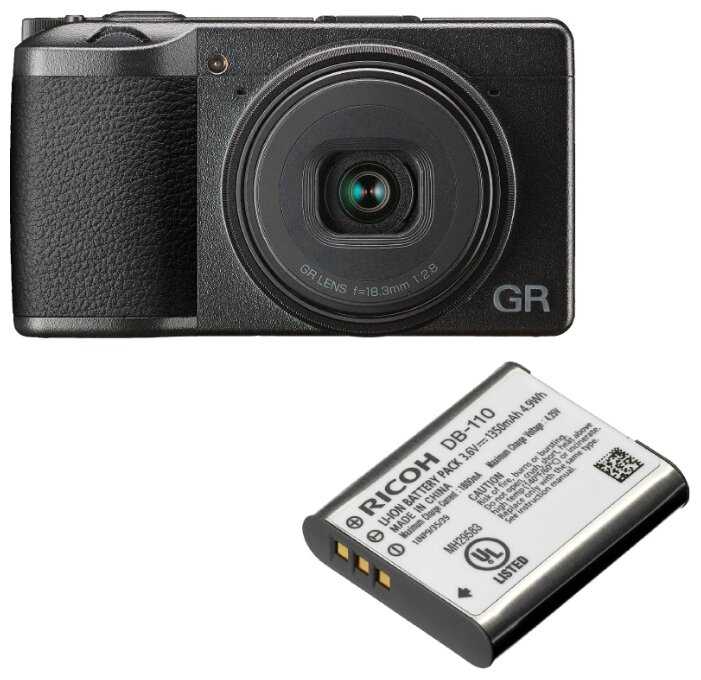 | Фотоаппарат Ricoh GR III, черный | Яндекс Маркет | 147 488 ₽ | Посмотреть |
272 отзывов пользователей o Ricoh GR
Пользовались
Ricoh GR?
Поделитесь своим опытом и помогите другим сделать правильный выбор

Астероид-0OWTU
05.11.2013
10/10
Оценка пользователя
Великолепно
Professional standard yet easy to use. Takes stunning DSLR quality photographs, has lots of nice effects to choose and love the trim option. Brilliant!
Плазмонавт-8YOHF
29.10.2013
10/10
Оценка пользователя
Великолепно
small size, quality, big sensor, customisable, full manual command, super! I'm highly satisfied with this purchase and recommend it. This is very good camera.
Гравитон-0PBMD
14.06.2013
10/10
Оценка пользователя
Великолепно
... except that it's BRILLIANT! Don't hesitate, and don't waste time wondering about other makes/models ... if you're looking for a prime lens compact this is THE one to have. No, I'm not employed by Ricoh. Have a look for Steve Huff's review on the net. Not much to add to that except that I've had mine for a week or so, I take it everywhere and I can't stop taking pictures. GREAT pictures. Such a joy and so easy to use. Even if you simply leave it on auto the results are nearly always stunning. Worth every penny and much much more. I particularly love the character of the B/W images.
Квазар-0LSFY
18.05.2013
10/10
Оценка пользователя
Великолепно
As a previous GRD user I was delighted that my photography got selected by Pentax-Ricoh (http://www.pentaximaging.com/) to debut the US campaign of the new Ricoh GR. I've dedicated a complete page on my site with all things Ricoh GR that I hope are helpful to potential buyer ― http://ledesmaphotography.wordpress.com/new-ricoh-gr-review/ if I had to encapsulate it in one word, well maybe two, or three, then it would be "Just do it" its a must buy in any photographers arsenal. APS-C image quality in the most coveted compact of all times. Join the club folks.
Аэронавт-3GKXT
20.10.2009
10/10
Оценка пользователя
Великолепно
Ricoh GRD3 is an advanced fixed lens compact camera and also the best Ricoh compact camera up to date. Ricoh GRD belong to the famous Ricoh GR line, which features fixed wide angle lens equivalent to 28mm with big aperture.
This product philosophy is pretty straightforward, it is designed and engineered for serious photographers. Every buttons, features, and menu interface are designed to be easily accessible for photographers. Aufo focus performance is excellent. This combination ensures photographers to be able to capture the decisive moment when it occurs.
BODY & HANDLING
Ricoh GRD3 is made by magnesium alloy body, very lightweight but very sturdy. It has a big leather-like texture in the hand grip and a bit on the back of the camera. The ergonomic is excellent. It is very comfortable even for a long period of time. The grip make it easier for photographer to keep the camera steady to prevent camera shake/blurred image.
Ricoh GRD3's body interface are the best interface for compact camera. Here is why:
First, it has many dedicated buttons, two dials, and up-down button in a very thoughtful design. All the buttons are very accessible.
Second, most of the buttons are customizable. There are two customizable function buttons. In addition, the up-down button and the two dials can be customized in certain way to fit your prefered shooting style. There is also a ADJ. button, which is also function as a customizable button.
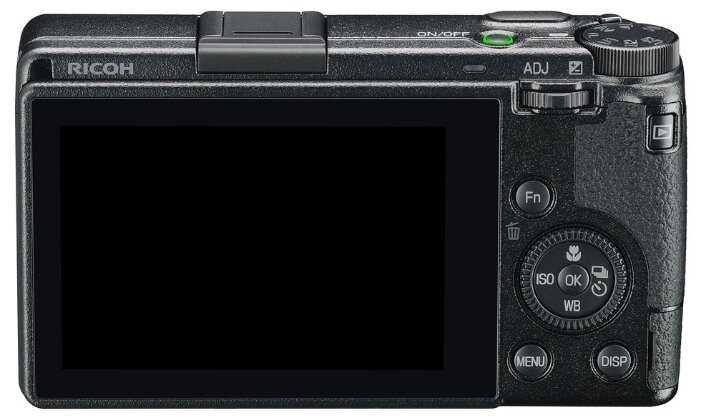
Mode dial is positioned far top right of the camera with a dial lock. The lock prevented the mode dial to be changed accidentally. GRD3 also has three custom mode dials that can be customized. For example, MY1 for general outdoor shooting, MY2 for low light shooting, MY3 for macro shooting, etc.
This kind of body interface usually only available on high-end digital SLR cameras. But even that, I doubt there are any high-end dSLR cameras that offers wide range of customization option that GRD3 offers.
When using a camera, most of photographers are forced to adapt to the camera interface, but in GRD3, you can tailor fit it into your style. With practical experience, you will find which kind of setting is the best for you.
OPERATION & AUTO FOCUS
Ricoh GRD3 starts-up time is 2 seconds and off-time is around 3 seconds which are not very fast, but not the slowest. The operation is generally smooth. Regarding Auto focus system. This camera has the usual multi-focus and spot focus (focus on the center). Focusing speed are moderately fast at around half a second. AF noise is very quiet. You can only hear the faint swirling noise clearly when you are very close to the camera in a quiet room.
Ricoh has several rather unique AF features. Here is some unique AF features:
Pre-AF = When this feature is activated, the camera will performs auto focus automatically when you start pointing on a scene. This will make auto focus operation a lot faster.
Snap-AF = This is basically bypassing auto focus. You set the focus distance (GRD3 offers 1m, 2.5m, 5m and infinity). When this setting activated, you just click away without having to wait. Because shutter lag is almost 0 sec. You will able to capture the frame instantaneously.
GRD3 also provides depth of field guideline for each aperture in the LCD screen, so you can make sure that your subject will be in focus. The Snap AF works well in digital compact camera with small sensor because the depth of field are large. So the possibility of getting sharp picture is a lot larger than in digital SLR cameras.
There is also a focus confirmation lamp positioned right to the hot shoe. This is very effective when you use external viewfinder as a compositional tool. The AF lamp will provide focus confirmation. The lamp also serves as camera processing indicator.
Missing from GRD3 auto focus is the ability to move the move the spot focus to other part of the frame. There is manual focus that allow you to enlarge / zoom the center portion of the scene, which is helpful when you deal with macro photography, but it is not adequate for normal range of photography because the magnification is only around 2-3 times. and it is only in center of the screen.
IMAGE QUALITY AND NOISE IN HIGH ISO
Image quality is excellent in advanced compact camera class. Shooting in low ISO (200 or lower), it is hard to find the difference the result between this camera with digital SLR camera which has much bigger sensor unless you zoom in to 100%. Dynamic range (the difference between the brightest and darkest parts of an image) is generally good, but around 1 stop lower than digital SLR camera. The camera has adjustable dynamic range expansion (weak, medium, strong) which will help to optimized your image with special algorithm.
To deal with dynamic range problem, Ricoh GRD3 has
This product philosophy is pretty straightforward, it is designed and engineered for serious photographers. Every buttons, features, and menu interface are designed to be easily accessible for photographers. Aufo focus performance is excellent. This combination ensures photographers to be able to capture the decisive moment when it occurs.
BODY & HANDLING
Ricoh GRD3 is made by magnesium alloy body, very lightweight but very sturdy. It has a big leather-like texture in the hand grip and a bit on the back of the camera. The ergonomic is excellent. It is very comfortable even for a long period of time. The grip make it easier for photographer to keep the camera steady to prevent camera shake/blurred image.
Ricoh GRD3's body interface are the best interface for compact camera. Here is why:
First, it has many dedicated buttons, two dials, and up-down button in a very thoughtful design. All the buttons are very accessible.
Second, most of the buttons are customizable. There are two customizable function buttons. In addition, the up-down button and the two dials can be customized in certain way to fit your prefered shooting style. There is also a ADJ. button, which is also function as a customizable button.
Mode dial is positioned far top right of the camera with a dial lock. The lock prevented the mode dial to be changed accidentally. GRD3 also has three custom mode dials that can be customized. For example, MY1 for general outdoor shooting, MY2 for low light shooting, MY3 for macro shooting, etc.
This kind of body interface usually only available on high-end digital SLR cameras. But even that, I doubt there are any high-end dSLR cameras that offers wide range of customization option that GRD3 offers.
When using a camera, most of photographers are forced to adapt to the camera interface, but in GRD3, you can tailor fit it into your style. With practical experience, you will find which kind of setting is the best for you.
OPERATION & AUTO FOCUS
Ricoh GRD3 starts-up time is 2 seconds and off-time is around 3 seconds which are not very fast, but not the slowest. The operation is generally smooth. Regarding Auto focus system. This camera has the usual multi-focus and spot focus (focus on the center). Focusing speed are moderately fast at around half a second. AF noise is very quiet. You can only hear the faint swirling noise clearly when you are very close to the camera in a quiet room.
Ricoh has several rather unique AF features. Here is some unique AF features:
Pre-AF = When this feature is activated, the camera will performs auto focus automatically when you start pointing on a scene. This will make auto focus operation a lot faster.
Snap-AF = This is basically bypassing auto focus. You set the focus distance (GRD3 offers 1m, 2.5m, 5m and infinity). When this setting activated, you just click away without having to wait. Because shutter lag is almost 0 sec. You will able to capture the frame instantaneously.
GRD3 also provides depth of field guideline for each aperture in the LCD screen, so you can make sure that your subject will be in focus. The Snap AF works well in digital compact camera with small sensor because the depth of field are large. So the possibility of getting sharp picture is a lot larger than in digital SLR cameras.
There is also a focus confirmation lamp positioned right to the hot shoe. This is very effective when you use external viewfinder as a compositional tool. The AF lamp will provide focus confirmation. The lamp also serves as camera processing indicator.
Missing from GRD3 auto focus is the ability to move the move the spot focus to other part of the frame. There is manual focus that allow you to enlarge / zoom the center portion of the scene, which is helpful when you deal with macro photography, but it is not adequate for normal range of photography because the magnification is only around 2-3 times. and it is only in center of the screen.
IMAGE QUALITY AND NOISE IN HIGH ISO
Image quality is excellent in advanced compact camera class. Shooting in low ISO (200 or lower), it is hard to find the difference the result between this camera with digital SLR camera which has much bigger sensor unless you zoom in to 100%. Dynamic range (the difference between the brightest and darkest parts of an image) is generally good, but around 1 stop lower than digital SLR camera. The camera has adjustable dynamic range expansion (weak, medium, strong) which will help to optimized your image with special algorithm.
To deal with dynamic range problem, Ricoh GRD3 has
Сириус-6NRUH
16.07.2013
10/10
Оценка пользователя
Великолепно
I was looking for years for a proper street camera that would allow me to control it and be small enough to carry it the most of the time with me.
Кронос-7FLNH
22.05.2013
2/10
Оценка пользователя
Ужасно
To those who are looking for "Ricoh GR V" this is not the one. Description is wrong. It says this camera has 16 mp APS-C sensor but if you see the the item name it says this is a "Ricoh GR IV". I hope Amazon catches this and fix it. The new "Ricoh GR V" is not out yet.
ТехноНаблюдатель-4FGCS
20.11.2010
6/10
Оценка пользователя
Плохо
What I like:
- solid camera body
- very attractive camera
- casing does not feel cheap
- fairly simple to use
- crystal clear LCD viewer on the back
- rechargeable battery
- resolution
- video capabilities
- locking features wheel
What I don't like:
- difficulty with pictures take with low light (blurry even with the flash)
- distortions on the edges of pictures (I'll post a few here)
- very specific uses
While there are only a few things that I don't like about this camera, I think that they are significant enough to warrant a deduction of two stars. It's a great toy to play around with, but you really wouldn't want to take your really important photos with it. Ricoh has built this camera into a solid body with a slim profile and I applaud the inclusion of a rechargeable battery (you don't see this in a lot of point and shoot cameras). The LCD screen provides crisp views of your just taken photos and the lock on the mode wheel ensures that you'll stick to your last mode as your whipping this camera out of your pocket. The camera has a built in flash and a hot foot as well. Your picture taking capacity is only limited to the size of your SD card.
Still, the distortions caused by the lens are a huge draw back and I can't bring myself to giving this camera more than three starts. That plus being locked in to a true point and shoot realm (with only a 28mm capability) really drives the negatives home.
***update***
it was requested that I provide proof of my last paragraph. Please see the customer images section of this page (you can see some of this discussion in the comments section of this review as well).
I think I left the last paragraph a little lacking, so I'll provide more information here. When the camera was used at less than 10 feet away, some of the edges were distorted in that there was an elongation of the photo on that edge (my picture of me cutting my wife's birthday cake demonstrates this - she was standing 2 or 3 feet from me). My guess is that the average user will utilize this camera in such settings (an not just panoramic or scenic shots) and that he or she should be aware of this. I have other shots that show this, but they are of my wife and I don't know how comfortable she is with me posting the pics here - I'll check and edit (maybe blur her face or something) and see if I can't post them here.
In addition, I provided a picture of my bike in my basement to exemplify taking pictures in low light situations. The bike is sitting directly under two fluorescent lights, but it comes out a little blurry. I could have mounted the camera on my tripod to take the picture, but if you're an average user, you probably won't be doing that (or if you do, the people you're taking a picture of are going to hate you for it... trust me, I know) so I didn't do that either.
Bottom line: For long distance or scenic shots, this camera is great (see my picture of the city - I'm not saying that my shot is great, but the crispness of the colors, the contrast and the resolution make for a satisfying shot). For everyday shots - events in your house, up close, etc., I would be wary of purchasing this camera.
- solid camera body
- very attractive camera
- casing does not feel cheap
- fairly simple to use
- crystal clear LCD viewer on the back
- rechargeable battery
- resolution
- video capabilities
- locking features wheel
What I don't like:
- difficulty with pictures take with low light (blurry even with the flash)
- distortions on the edges of pictures (I'll post a few here)
- very specific uses
While there are only a few things that I don't like about this camera, I think that they are significant enough to warrant a deduction of two stars. It's a great toy to play around with, but you really wouldn't want to take your really important photos with it. Ricoh has built this camera into a solid body with a slim profile and I applaud the inclusion of a rechargeable battery (you don't see this in a lot of point and shoot cameras). The LCD screen provides crisp views of your just taken photos and the lock on the mode wheel ensures that you'll stick to your last mode as your whipping this camera out of your pocket. The camera has a built in flash and a hot foot as well. Your picture taking capacity is only limited to the size of your SD card.
Still, the distortions caused by the lens are a huge draw back and I can't bring myself to giving this camera more than three starts. That plus being locked in to a true point and shoot realm (with only a 28mm capability) really drives the negatives home.
***update***
it was requested that I provide proof of my last paragraph. Please see the customer images section of this page (you can see some of this discussion in the comments section of this review as well).
I think I left the last paragraph a little lacking, so I'll provide more information here. When the camera was used at less than 10 feet away, some of the edges were distorted in that there was an elongation of the photo on that edge (my picture of me cutting my wife's birthday cake demonstrates this - she was standing 2 or 3 feet from me). My guess is that the average user will utilize this camera in such settings (an not just panoramic or scenic shots) and that he or she should be aware of this. I have other shots that show this, but they are of my wife and I don't know how comfortable she is with me posting the pics here - I'll check and edit (maybe blur her face or something) and see if I can't post them here.
In addition, I provided a picture of my bike in my basement to exemplify taking pictures in low light situations. The bike is sitting directly under two fluorescent lights, but it comes out a little blurry. I could have mounted the camera on my tripod to take the picture, but if you're an average user, you probably won't be doing that (or if you do, the people you're taking a picture of are going to hate you for it... trust me, I know) so I didn't do that either.
Bottom line: For long distance or scenic shots, this camera is great (see my picture of the city - I'm not saying that my shot is great, but the crispness of the colors, the contrast and the resolution make for a satisfying shot). For everyday shots - events in your house, up close, etc., I would be wary of purchasing this camera.
Странник-2KLYG
07.05.2013
6/10
Оценка пользователя
Плохо
I agree with the other reviewer. The latest version, V, is not yet available. I know nothing about version IV. But if you want the newest version, it is set to be available May 15 as stated.
Альфа-Юнит-4PQLZ
07.05.2013
10/10
Оценка пользователя
Великолепно
This little gem will put many bigger and more expensive cameras to shame.
(This is not my review yet. It meant to conter the previous one star rating)
(This is not my review yet. It meant to conter the previous one star rating)
Синтрон-9LGQT
01.05.2013
2/10
Оценка пользователя
Ужасно
This is NOT the newly released Ricoh GR. I have emailed AMAZON and they are still advertising this as the GR IV and seem to be clueless the GR is being released 15 May.
Синтрон-5UFWB
13.10.2010
8/10
Оценка пользователя
Хорошо
Ricoh digital point and shoot cameras aren't your traditional point and shoot cameras. Take the GR III, it's not the smallest or doesit have the longest zoom lens or is it the cheapest. Actually, it's pretty pricey. And it's not for everyone. And if I hadn't gotten it for free, I wouldn't have bought it. But now that I have had some time to use it, I really like it.
As I said above, this isn't the smallest camera. It's considerably bigger than the newer Canon SD series. However, it will comfortably fit in a shirt pocket. It is also quite a bit heavier. The body appears to be of metal with a rubber covered grip. The grip is nice sized and very comfortable. There is a nice 3" LCD on the back for composing and viewing images. As has become the norm on P&S cameras, there isn't an optical viewfinder. On the top, there is the typical power button, shutter release, and mode dial. A nice little feature is that the mode dial locks so that it can't change settings accidently. Also on top is a hot shoe for using an external flash. You almost never see this on a camera this small. The camera also has a small built in flash.
On the subject of a zoom lens, there isn't one. The GRIII comes with a fixed 28mm (35 equivalent), fast f1.9 lens. Why no zoom lens? My guess is that Ricoh went for quality here (and they achieved it). This wide angle lens is great for landscapes, shooting around the house, street photography, and macro shots. And with the fast f1.9 aperture, you can easily control the depth of field to blur the background if desired.
The camera has many shooting features. Some, like Snap Focus, the leveling aid, and High contrast B&W mode are not found on any other P&S cameras. I recommend you download the manual (available on Ricoh's website) and read up on these if you're thinking of getting this camera.
For me, the most important aspect of a P&S is image quality. Due to the small sensor size, you get more noise and less detail than digital SLRs. In P&S cameras, there are two basic sizes. The smallest (the one in most P&S cameras) and a slightly larger one that is found in the bigger sized point and shoot cameras. The larger one is found in the bigger Canon G11, G12, and Nikon s7000 cameras. As I write this, there are only 3 really pocketable cameras that use the bigger sensor... the Canon S90, its replacement the S95, and this camera. In this case size does matter. The larger sensor gives you a lot less noise and better detail. Couple this with the Ricoh's lens and very good image processing engine, and you end up with images that are better than most. I've been happy with 13 x 19 inch prints and probably could go bigger. Is it as good as a digital SLR? No, but it close and nowhere near as big and heavy.
In conclusion, this camera is not for everyone. The casual shooter taking holiday pictures would be better served by a smaller, cheaper point and shoot. But if you normally use a wide angle lens, want a lot of shooting features, and the highest image quality you can get in a pocketable camera, give this a look.
As I said above, this isn't the smallest camera. It's considerably bigger than the newer Canon SD series. However, it will comfortably fit in a shirt pocket. It is also quite a bit heavier. The body appears to be of metal with a rubber covered grip. The grip is nice sized and very comfortable. There is a nice 3" LCD on the back for composing and viewing images. As has become the norm on P&S cameras, there isn't an optical viewfinder. On the top, there is the typical power button, shutter release, and mode dial. A nice little feature is that the mode dial locks so that it can't change settings accidently. Also on top is a hot shoe for using an external flash. You almost never see this on a camera this small. The camera also has a small built in flash.
On the subject of a zoom lens, there isn't one. The GRIII comes with a fixed 28mm (35 equivalent), fast f1.9 lens. Why no zoom lens? My guess is that Ricoh went for quality here (and they achieved it). This wide angle lens is great for landscapes, shooting around the house, street photography, and macro shots. And with the fast f1.9 aperture, you can easily control the depth of field to blur the background if desired.
The camera has many shooting features. Some, like Snap Focus, the leveling aid, and High contrast B&W mode are not found on any other P&S cameras. I recommend you download the manual (available on Ricoh's website) and read up on these if you're thinking of getting this camera.
For me, the most important aspect of a P&S is image quality. Due to the small sensor size, you get more noise and less detail than digital SLRs. In P&S cameras, there are two basic sizes. The smallest (the one in most P&S cameras) and a slightly larger one that is found in the bigger sized point and shoot cameras. The larger one is found in the bigger Canon G11, G12, and Nikon s7000 cameras. As I write this, there are only 3 really pocketable cameras that use the bigger sensor... the Canon S90, its replacement the S95, and this camera. In this case size does matter. The larger sensor gives you a lot less noise and better detail. Couple this with the Ricoh's lens and very good image processing engine, and you end up with images that are better than most. I've been happy with 13 x 19 inch prints and probably could go bigger. Is it as good as a digital SLR? No, but it close and nowhere near as big and heavy.
In conclusion, this camera is not for everyone. The casual shooter taking holiday pictures would be better served by a smaller, cheaper point and shoot. But if you normally use a wide angle lens, want a lot of shooting features, and the highest image quality you can get in a pocketable camera, give this a look.
Кварковец-1XGIC
01.10.2011
10/10
Оценка пользователя
Великолепно
Ill keep this short. There are a lot of things this camera doesnt have and if you are like me these things arent always important in a camera like movies, zoom lenses, automatic settings for photographing a flower.
But if you value the things below in this camera as I do it will be right up your alley because you will recognise these things are what makes it easier to get the camera to do what you want and to get good feedback on your shots.
Brick like build quality, fast f/1.9 lens, shoots RAW files, discreet appearance, slim enough to pocket, very customisable interface, wonderful 920,000K LCD screen, adequate image quality, useful playback features like one button press to zoom into "x16" to check focus, and just an overall great user experience with
Direct access to exposure compensation (via dedicated up and down buttons) aperture and shutter, (via front and rear dials like on a mid-range DSLR) and ISO (via "Adj lever)
One button press access to (my custom settings) AEL Lock, Snap Focus, Macro,
One press of "Adj" lever and move lever left or right to choose any number of things like Continuous mode, White balance, Flash amount, Picture quality (about 15 to choose from)
I compared this to my Canon s95 which was more versatile with zoom lens, smaller and easier to pocket, better movie mode, probably better high ISO quality, and above average user interface but ended up selling it and keeping this.
I just love it, its a little jewel.......maybe one day Ill miss the zoom and get the new Canon s100 though
But if you value the things below in this camera as I do it will be right up your alley because you will recognise these things are what makes it easier to get the camera to do what you want and to get good feedback on your shots.
Brick like build quality, fast f/1.9 lens, shoots RAW files, discreet appearance, slim enough to pocket, very customisable interface, wonderful 920,000K LCD screen, adequate image quality, useful playback features like one button press to zoom into "x16" to check focus, and just an overall great user experience with
Direct access to exposure compensation (via dedicated up and down buttons) aperture and shutter, (via front and rear dials like on a mid-range DSLR) and ISO (via "Adj lever)
One button press access to (my custom settings) AEL Lock, Snap Focus, Macro,
One press of "Adj" lever and move lever left or right to choose any number of things like Continuous mode, White balance, Flash amount, Picture quality (about 15 to choose from)
I compared this to my Canon s95 which was more versatile with zoom lens, smaller and easier to pocket, better movie mode, probably better high ISO quality, and above average user interface but ended up selling it and keeping this.
I just love it, its a little jewel.......maybe one day Ill miss the zoom and get the new Canon s100 though
Гравитон-0QYCZ
25.08.2010
8/10
Оценка пользователя
Хорошо
First off, I like to approach my digital camera reviews from the point of view of a novice since I'm far from a tech geek and ease of use is typically on the top of my mind. That said, the Ricoh GR Digital III is a pretty amazing camera for being so compact. It's overall user-friendly and intuitive functions matched with pretty darn good image quality is quickly setting it apart from most of the digital cameras I've used in the past.
As far as what's great about this camera, the thing that really jumps out at me is the image quality, in particular in moderate low light. My experience with most digital cameras while shooting inside with moderate lighting has been that the flash was a necessity to capture any decent detail and to prevent high pixilation. This has been an issue in the past because it's hard to use the flash well indoors at close range without overexposing the image. With the Ricoh GR D III I was able to capture medium-high, to high quality pictures with no flash indoors. Also, the Macro function image quality is amazing indoors in medium light.
The other thing that really surprised me was the ease of use right out of the box. I had the camera unpacked with the included battery installed (it already had a 2/3 full charge) and was literally taking pictures in 3 minutes. The menu and function navigation is super intuitive for anyone even moderately comfortable with basic digital cameras (I'm assuredly a novice in that department.) I was able, without the manual, to figure out how to turn on/off the macro and flash, change the image quality settings, adjust the focus options (turning on/off multi or single box focus, etc.), as well as playing back the images and even switching to video mode.
As far as drawbacks go, the main issue I think will bug most people is the lack of any true optical zoom. The camera does have a 4x digital zoom, but honestly I've never been a fan of the large quality reduction digital zoom imparts. Even though the camera lacks zoom, I don't see this as an issue as the camera seems designed for more on the go snapshots, and the overall picture quality makes up for slightly less versatility.
My only real complaint about the camera is in the left side body design. Though overall the camera is easy to use with just the right hand, it's hard to find a good place to hold it with your left because the LCD screen is flush on that side and there's only a thin border to rest your thumb. Also because the flash is flush with the top left it prohibits a good grip when it's in use. It's a minor quibble, but it's worth noting none the less.
All in all, it's a little pricy for an on-the-go camera, but the image quality and ease of use put it light years above lower priced compact digital cameras.
As far as what's great about this camera, the thing that really jumps out at me is the image quality, in particular in moderate low light. My experience with most digital cameras while shooting inside with moderate lighting has been that the flash was a necessity to capture any decent detail and to prevent high pixilation. This has been an issue in the past because it's hard to use the flash well indoors at close range without overexposing the image. With the Ricoh GR D III I was able to capture medium-high, to high quality pictures with no flash indoors. Also, the Macro function image quality is amazing indoors in medium light.
The other thing that really surprised me was the ease of use right out of the box. I had the camera unpacked with the included battery installed (it already had a 2/3 full charge) and was literally taking pictures in 3 minutes. The menu and function navigation is super intuitive for anyone even moderately comfortable with basic digital cameras (I'm assuredly a novice in that department.) I was able, without the manual, to figure out how to turn on/off the macro and flash, change the image quality settings, adjust the focus options (turning on/off multi or single box focus, etc.), as well as playing back the images and even switching to video mode.
As far as drawbacks go, the main issue I think will bug most people is the lack of any true optical zoom. The camera does have a 4x digital zoom, but honestly I've never been a fan of the large quality reduction digital zoom imparts. Even though the camera lacks zoom, I don't see this as an issue as the camera seems designed for more on the go snapshots, and the overall picture quality makes up for slightly less versatility.
My only real complaint about the camera is in the left side body design. Though overall the camera is easy to use with just the right hand, it's hard to find a good place to hold it with your left because the LCD screen is flush on that side and there's only a thin border to rest your thumb. Also because the flash is flush with the top left it prohibits a good grip when it's in use. It's a minor quibble, but it's worth noting none the less.
All in all, it's a little pricy for an on-the-go camera, but the image quality and ease of use put it light years above lower priced compact digital cameras.
Синтрон-5QNYK
29.09.2010
8/10
Оценка пользователя
Хорошо
RICOH GR DIGITAL III CAMERA
This is a very, very good, high performance 10 MP digital camera with a surprising number of professional features for its diminutive size and weight. It also has a couple of unfortunate shortcomings. The most important lack is an optical zoom (there is only a 4X digital zoom). There is also no image stabilization. However, if you can live without these two features, which are present in almost all point-and-shoots being sold today, read on.
PHYSICAL CHARACTERISTICS
This is one of the few small cameras that has a built-in hot shoe for accessories such as an external flash unit or an external viewfinder. It has a superb fixed 6.0mm lens (equivalent to a 28mm lens on a 35mm camera) that opens to a nice, wide f1.9 aperture. Because of this, the lens is outstanding in low light situations. Focus range is from 30CM to infinity and in the Macro setting, it will focus down to 1CM - one-quarter inch. Autofocus is very fast with almost no lag time. The camera is very compact and lightweight - 7.5 oz. (only 2 oz. more that my mobile phone!) The reason for this is the well-built magnesium body - very sturdy feeling with a secure, wide rubberized gripping surface. It has an incredibly sharp 3 inch LCD screen that can be adjusted for brightness.
OPERATION AND EXPOSURE
There are several modes - Aperture priority, Shutter priority, a Program Shift mode that ranges properly exposed settings combining various apertures and shutter speeds. In addition there are six "MY" settings where custom configurations to match various shooting conditions can be set up and saved. There is also a completely manual setting for times when no auto program will do. The versatility of available settings is very impressive - exposure compensation, flash synchro settings, noise reduction, ISO settings, level adjustment/correction, white balance compensation and several more. In addition, there are two function buttons that can be set to control any of the above adjustments that the operator uses most. There are four `scene' settings - HDR combines two exposures to optimize high contrast scenes. In this case, the HDR combination is saved as well as the normal exposure. There is a Skew Correction feature where the camera attempts to reduce perspective distortion with varying success. There is a Text setting that makes high contrast exposures for capturing printed text, whiteboard charts and written notes. The camera takes VGA size movies as well, not HD. The camera will take bracketed exposures in 1/3 or
This is a very, very good, high performance 10 MP digital camera with a surprising number of professional features for its diminutive size and weight. It also has a couple of unfortunate shortcomings. The most important lack is an optical zoom (there is only a 4X digital zoom). There is also no image stabilization. However, if you can live without these two features, which are present in almost all point-and-shoots being sold today, read on.
PHYSICAL CHARACTERISTICS
This is one of the few small cameras that has a built-in hot shoe for accessories such as an external flash unit or an external viewfinder. It has a superb fixed 6.0mm lens (equivalent to a 28mm lens on a 35mm camera) that opens to a nice, wide f1.9 aperture. Because of this, the lens is outstanding in low light situations. Focus range is from 30CM to infinity and in the Macro setting, it will focus down to 1CM - one-quarter inch. Autofocus is very fast with almost no lag time. The camera is very compact and lightweight - 7.5 oz. (only 2 oz. more that my mobile phone!) The reason for this is the well-built magnesium body - very sturdy feeling with a secure, wide rubberized gripping surface. It has an incredibly sharp 3 inch LCD screen that can be adjusted for brightness.
OPERATION AND EXPOSURE
There are several modes - Aperture priority, Shutter priority, a Program Shift mode that ranges properly exposed settings combining various apertures and shutter speeds. In addition there are six "MY" settings where custom configurations to match various shooting conditions can be set up and saved. There is also a completely manual setting for times when no auto program will do. The versatility of available settings is very impressive - exposure compensation, flash synchro settings, noise reduction, ISO settings, level adjustment/correction, white balance compensation and several more. In addition, there are two function buttons that can be set to control any of the above adjustments that the operator uses most. There are four `scene' settings - HDR combines two exposures to optimize high contrast scenes. In this case, the HDR combination is saved as well as the normal exposure. There is a Skew Correction feature where the camera attempts to reduce perspective distortion with varying success. There is a Text setting that makes high contrast exposures for capturing printed text, whiteboard charts and written notes. The camera takes VGA size movies as well, not HD. The camera will take bracketed exposures in 1/3 or
ИнфраГость-5SEOW
04.01.2011
8/10
Оценка пользователя
Хорошо
I started out with the 110 and then to 35mm. Then, several years ago the digital cameras and finally to the SRL digital cameras. I received this from Amazon and was shocked that it takes better pictures than my SRL that costs a lot more. Plus, it's smaller and seems more sturdy. This is a fixed lens camera so your body has to be the zoom. You will not get the tight close up shots that you are used to with your SRL and huge lens. However, that's probably a good thing because too often I rely on a tight zoom for a good picture. Now, I have to position myself and the lighting for the shot. My pictures are better.
The imagine quality with this camera is just remarkable outside. Inside I have problems if I don't use a flash. There is a little bit of noise when you crop the picture from long distances, but overall quality is so much better It's a compromise I can make. I now take more pictures because it fits in my pocket, but I know I'm taking as good or better shots than everybody around me with the big cameras.
Ricoh did everything right with this camera and you will not be disappointed. Just to make sure I was not being deceived by the LCD, I had about 35-40 pictures developed at the local Wal-Mart and even though the quality of the one hr processing was substandard the pictures turned out good. Imagine how much better they'll be if processed with higher standards. I love my Ricoh GR digital III.
(edit) 2011 I have since gone back to my original 4 starts rating. The picture quality is just goo good, for such a small camera and the shutter speed is fast. Wish I could take better pictures with the manual settings. I just have to work with it a little more to get it. I now take this everywhere.
(edit) 2010 I now have knocked it down to 3 stars. Wish I could give a 3.5 rating because I would. I think depending on what you need you could be happy or disappointed. It will not replace your DSLR. I compared the pictures from my SRL again to this camera and I may have jumped the gun a little bit. The SRL is much better most of the time. I was looking at the camera screen and uploaded them to Apple TV and it's a noticeable difference now; the SRL is better. That camera is a Nikon D50.
The imagine quality with this camera is just remarkable outside. Inside I have problems if I don't use a flash. There is a little bit of noise when you crop the picture from long distances, but overall quality is so much better It's a compromise I can make. I now take more pictures because it fits in my pocket, but I know I'm taking as good or better shots than everybody around me with the big cameras.
Ricoh did everything right with this camera and you will not be disappointed. Just to make sure I was not being deceived by the LCD, I had about 35-40 pictures developed at the local Wal-Mart and even though the quality of the one hr processing was substandard the pictures turned out good. Imagine how much better they'll be if processed with higher standards. I love my Ricoh GR digital III.
(edit) 2011 I have since gone back to my original 4 starts rating. The picture quality is just goo good, for such a small camera and the shutter speed is fast. Wish I could take better pictures with the manual settings. I just have to work with it a little more to get it. I now take this everywhere.
(edit) 2010 I now have knocked it down to 3 stars. Wish I could give a 3.5 rating because I would. I think depending on what you need you could be happy or disappointed. It will not replace your DSLR. I compared the pictures from my SRL again to this camera and I may have jumped the gun a little bit. The SRL is much better most of the time. I was looking at the camera screen and uploaded them to Apple TV and it's a noticeable difference now; the SRL is better. That camera is a Nikon D50.
Зета-Орион-3LGHF
15.06.2011
6/10
Оценка пользователя
Плохо
ok so its ~$100 cheaper than several APS-C or micro four-third sensor equipped competitors that have exchangeable lenses.
I would have happily paid $100 more to have an APS-C camera with an excellent fixed lens from Ricoh, where a small sensor doesn't diminish the usefulness of the expense of its lens. Of course, they probably started designing this lense a while ago, and at the time, the choice of an APS-C sensor might not have been available to the designers. Since you can't really design a lense in a vacuum, they would have had to start the design all over to match it to a different size sensor...
A combo of a lens like this with large sensor would have afforded a camera that could handily beat the Nex-5 or GF2 on size, when those bulky exchangeable lenses are taken into account.
And the need for different lenses diminishes if you have one that is truly excellent.
This Camera's build quality is very good. I'm not much into retro style / retro surface coverings, but I can't argue about the quality.
Here's hoping that Ricoh will keep their much appreciated lens philosophy and produce a follow-on with a larger sensor and fixed lense.
Such a camera would be unique at this time as far as I know, as all the other Manufacturers are selling theirs with exchangeable kit lenses that aren't really that great, which of course is meant to get you to buy more lenses from them in the future. This I wouldn't mind so much, if those lenses weren't so bulky that you can still forget any thought of shirt-pocket storage...
Ricoh? what do you think? can you do it by xmas 2012?
I would have happily paid $100 more to have an APS-C camera with an excellent fixed lens from Ricoh, where a small sensor doesn't diminish the usefulness of the expense of its lens. Of course, they probably started designing this lense a while ago, and at the time, the choice of an APS-C sensor might not have been available to the designers. Since you can't really design a lense in a vacuum, they would have had to start the design all over to match it to a different size sensor...
A combo of a lens like this with large sensor would have afforded a camera that could handily beat the Nex-5 or GF2 on size, when those bulky exchangeable lenses are taken into account.
And the need for different lenses diminishes if you have one that is truly excellent.
This Camera's build quality is very good. I'm not much into retro style / retro surface coverings, but I can't argue about the quality.
Here's hoping that Ricoh will keep their much appreciated lens philosophy and produce a follow-on with a larger sensor and fixed lense.
Such a camera would be unique at this time as far as I know, as all the other Manufacturers are selling theirs with exchangeable kit lenses that aren't really that great, which of course is meant to get you to buy more lenses from them in the future. This I wouldn't mind so much, if those lenses weren't so bulky that you can still forget any thought of shirt-pocket storage...
Ricoh? what do you think? can you do it by xmas 2012?
Спектроник-2AROO
06.04.2012
6/10
Оценка пользователя
Плохо
This is not a point and shoot camera. To use this camera you need a cooperative subject, good lighting and a tripod. There is no zoom feature and it is not capable of attaching any zoom lenses. The few lenses that are offered are for visual effects only, wall eye and filter type.
This is a good camera for a photographer to set up his studio shots or to take in the field for some fun pictures. Unless you have a good understanding of SLR functions this camera is too complicated for general use.
This is a good camera for a photographer to set up his studio shots or to take in the field for some fun pictures. Unless you have a good understanding of SLR functions this camera is too complicated for general use.
Спектроник-1MJXU
20.10.2010
10/10
Оценка пользователя
Великолепно
This camera has inspired me to learn about photography. It is small and compact and easy to carry around but it has so many features that I just don't know what they all do. I love taking pictures and I do some scrapbooking. A good camera has become more important to me since having children and taking up the hobby. I have discovered some cool things along the way by accident. (You can change black and white photos to have different shades of black...some have a purple or a blue tint). So I won't claim to understand everything this camera can do, but it makes a darn nice point and shoot too if you use the default settings. My husband made the comment 'You'd have to try to take bad pictures with this camera!". We took pictures at all angles and in all light settings. We took pictures while we were spinning in a circle or while the kids were skateboarding or riding their bikes past us. Nearly all the action pictures came out in decent to excellent quality. The only pictures I have been disappointed in have been those in poor light. In the house with the flash on, the pictures come out nice unless the subject is extra dark. We took a picture of our brown dog in the corner of the living room laying on the carpet. The corner was pretty dark but the carpet is a medium beige. Even with the flash those pictures came out a little blurry. When the dog moved out of the corner into a little more light, the pictures were perfect although we still needed the flash. Does anyone know a way to use this camera and get better pictures inside the house? There very well could be features to help with this that are above my skill level. We were disappointed that you can't zoom in further with this camera, yet in our everyday picture taking we haven't been displeased. Also you have NEVER seen better pictures taken outside. The quality is amazing. Using my dog again for an example, you can see each line of his fur and all the different colors that make that fur stands out brilliantly. The camera is basic and some other reviews have complained about that. It IS basic, but its so compact and easy to go wherever you go. That didn't bother us at all. I wouldn't give this less than a five star rating because even my complaints very well could be because I dont' have the photography know how to correct them.
Кронос-5ZMGP
18.10.2010
8/10
Оценка пользователя
Хорошо
This camera is not really for someone who has no knowledge of digital cameras and how they function unless they are willing to take the time to learn the fuctions so that they can get the most out of the camera. Someone who knows what they are doing will be undoubtedly impressed with the amount of features the camera has. I do hobby photography and I've had this camera a month almost and I'm still learning the basics. I was up for the challenge though. I was taking pictures right away and they are superior quality pictures. The detail it picked up blew me away. And that was with me not really knowing how to use it and just messing around with it. As I've read the manual and explored more, I've been really impressed with all this camera is capable of doing and it's actually inspired me to sign up for an advanced class to learn more so I can get more out of the camera. The one disappointing aspect of this camera for me is the lack of a real zoom. That is just personal preference, on a camera that costs this much I want an impressive zoom and this camera does not have it. As it was it took me a good chunk of time just figuring out how to find the zoom it did have.
It did not come with a case so I ordered an AmazonBasics one http://www.amazon.com/gp/product/B002VPE1X4/ref=oss_product that it fits perfectly in.
The look, feel and weight of the camera is perfect for my preferences.
The battery life is exceptional. I've been out taking pictures for a week now and have not had to charge the battery.
Irodio Photo and Video Studio software is included for photo editing.
The LCD screen is generous for this size camera.
Very fast shutter speed. I never have to hold the shutter button down and wait, it's bam bam bam quick as I need to take shots.
Decent user guide included. I appreciated that it came with that and that I did not have to download or print one out. That way I can take it with me when out taking pictures to reference something I'm not sure about.
I recommend ordering an SD or SDHC memory card when ordering this camera as it does not come with one. It does have an 88 MB internal memory.
It did not come with a case so I ordered an AmazonBasics one http://www.amazon.com/gp/product/B002VPE1X4/ref=oss_product that it fits perfectly in.
The look, feel and weight of the camera is perfect for my preferences.
The battery life is exceptional. I've been out taking pictures for a week now and have not had to charge the battery.
Irodio Photo and Video Studio software is included for photo editing.
The LCD screen is generous for this size camera.
Very fast shutter speed. I never have to hold the shutter button down and wait, it's bam bam bam quick as I need to take shots.
Decent user guide included. I appreciated that it came with that and that I did not have to download or print one out. That way I can take it with me when out taking pictures to reference something I'm not sure about.
I recommend ordering an SD or SDHC memory card when ordering this camera as it does not come with one. It does have an 88 MB internal memory.
Плазмонавт-7VCDD
28.02.2011
4/10
Оценка пользователя
Ужасно
I've owned many macro lenses on DSLRs, and was excited to get this interchangeable lens/sensor combo for my GXR. I liked the novelty of the GXR, and purchased that with the 24-72mm lens/sensor option.
The build on this unit is excellent. Ricoh did a great job of making this a closed system so no dust can get on the sensor. This is a mixed blessing because you also have no way of cleaning the sensor and the back of the lens like you would with a normal DSLR/macro lens combo. This is true of all lenses/sensors in this system. I've shot with this lens for about 2 weeks (fairly heavy use outside) and noticed small spots on my images due to dust on the sensor. I ended up returning this unit since it was within 30 days.
Another problem is the cost - it will run you over $1000 for the Ricoh GXR and this lens, which means you have a lot of options if you wanted to spend that money investing in a DSLR and macro lens combo. Additionally, as an photographer I am sometimes torn over whether or not to swap lenses and sensors. Since this lens is CMOS, the pictures are obviously a lot better than the ones taken with the smaller sensored 24-72mm lens. This isn't a choice I'm used to making, since DSLRs you just have to decide to carry an extra lens.
Overall, this unit is nicely built, but impossible to clean the lens or the sensor. I hope we would at least give us the self-cleaning sensors that vibrate from time to time to remove dust, but right now I can't recommend getting this if you already have a DSLR. For $700, you'd be much better off getting a macro lens separately.
The build on this unit is excellent. Ricoh did a great job of making this a closed system so no dust can get on the sensor. This is a mixed blessing because you also have no way of cleaning the sensor and the back of the lens like you would with a normal DSLR/macro lens combo. This is true of all lenses/sensors in this system. I've shot with this lens for about 2 weeks (fairly heavy use outside) and noticed small spots on my images due to dust on the sensor. I ended up returning this unit since it was within 30 days.
Another problem is the cost - it will run you over $1000 for the Ricoh GXR and this lens, which means you have a lot of options if you wanted to spend that money investing in a DSLR and macro lens combo. Additionally, as an photographer I am sometimes torn over whether or not to swap lenses and sensors. Since this lens is CMOS, the pictures are obviously a lot better than the ones taken with the smaller sensored 24-72mm lens. This isn't a choice I'm used to making, since DSLRs you just have to decide to carry an extra lens.
Overall, this unit is nicely built, but impossible to clean the lens or the sensor. I hope we would at least give us the self-cleaning sensors that vibrate from time to time to remove dust, but right now I can't recommend getting this if you already have a DSLR. For $700, you'd be much better off getting a macro lens separately.
Сатурниан-5WLQS
07.05.2012
10/10
Оценка пользователя
Великолепно
this is the best camera that i ever had if you looking for a small but good quality camera! this is it!!
Капеллан-3KBOY
05.09.2010
10/10
Оценка пользователя
Великолепно
This camera does more than any pocket-sized camera I've ever owned; I'm still figuring out how to handle all the bits and parts. But for a device with so many features, the learning curve is remarkably straightforward, and I haven't savvied everything yet only because this camera has so many advanced capabilities. The enormous digital camera I used during my brief journalism career had fewer, weaker capabilities than this one.
Family photo buffs will like the clear image on the (relatively) large viewfinder screen. You can immediately tell how desirable and clear your photo will appear when you take it to the printer or post it to the web. This will save a great deal of frustration in the long haul. The video capacity is pretty rudimentary, not recommended for movie prodigies, but for casual snaps, this camera gives you more than you will likely need.
The print manual that comes enclosed with the camera is rubbish. First of all it's tiny, and the type pushes the limits of legibility. Then the writing takes place in abrupt, telegraphic sentences. Thankfully, the CD-ROM manual is much more useful and legible. Even better, this camera is so simple to use that you might be astonished at how quickly you'll pick up the important points by plain old trial and error.
As a word of warning, don't try to load your photos to your computer until you install the enclosed software. I took a photo roster of my students, then hastily connected the camera to my office computer, and my photos disappeared into the cosmos. The enclosed software is both quick to install and simple to use, so perhaps installation should be your first priority, before you start taking test snaps.
All in all, I find this camera enjoyable for casual photography, and straightforwardly useful for more formal applications. I would probably look at more sophisticated models if I wanted a career as a portraitist or artist, but for most purposes, this camera goes beyond what even pricy high-end technology could do only a couple of years ago. I see myself, and you, using this camera for some time to come.
Family photo buffs will like the clear image on the (relatively) large viewfinder screen. You can immediately tell how desirable and clear your photo will appear when you take it to the printer or post it to the web. This will save a great deal of frustration in the long haul. The video capacity is pretty rudimentary, not recommended for movie prodigies, but for casual snaps, this camera gives you more than you will likely need.
The print manual that comes enclosed with the camera is rubbish. First of all it's tiny, and the type pushes the limits of legibility. Then the writing takes place in abrupt, telegraphic sentences. Thankfully, the CD-ROM manual is much more useful and legible. Even better, this camera is so simple to use that you might be astonished at how quickly you'll pick up the important points by plain old trial and error.
As a word of warning, don't try to load your photos to your computer until you install the enclosed software. I took a photo roster of my students, then hastily connected the camera to my office computer, and my photos disappeared into the cosmos. The enclosed software is both quick to install and simple to use, so perhaps installation should be your first priority, before you start taking test snaps.
All in all, I find this camera enjoyable for casual photography, and straightforwardly useful for more formal applications. I would probably look at more sophisticated models if I wanted a career as a portraitist or artist, but for most purposes, this camera goes beyond what even pricy high-end technology could do only a couple of years ago. I see myself, and you, using this camera for some time to come.
Квантум-5GSJT
21.09.2011
10/10
Оценка пользователя
Великолепно
A lot has been said about this camera so I'll just go into the pieces that I found very interesting about it as a result. The number one reason this camera is worth its cost I'd say is the quality and size of the photos all things considered. The shots are high resolution images and really look great.
One of the more annoying things as a normal consumer was the lack of a real zoom in regards to the camera. I know this isn't a huge feature for this type of camera as it's a fixed lens but as a normal consumer (and not a power user by any means) it just really makes it hard to bring this one out for certain things.
This camera has become the camera I bring out when I really want top notch pictures, however, and its quality definitely dwarfs the lack of a real zoom.
One of the more annoying things as a normal consumer was the lack of a real zoom in regards to the camera. I know this isn't a huge feature for this type of camera as it's a fixed lens but as a normal consumer (and not a power user by any means) it just really makes it hard to bring this one out for certain things.
This camera has become the camera I bring out when I really want top notch pictures, however, and its quality definitely dwarfs the lack of a real zoom.
Показаны отзывы 217-240 из 272.