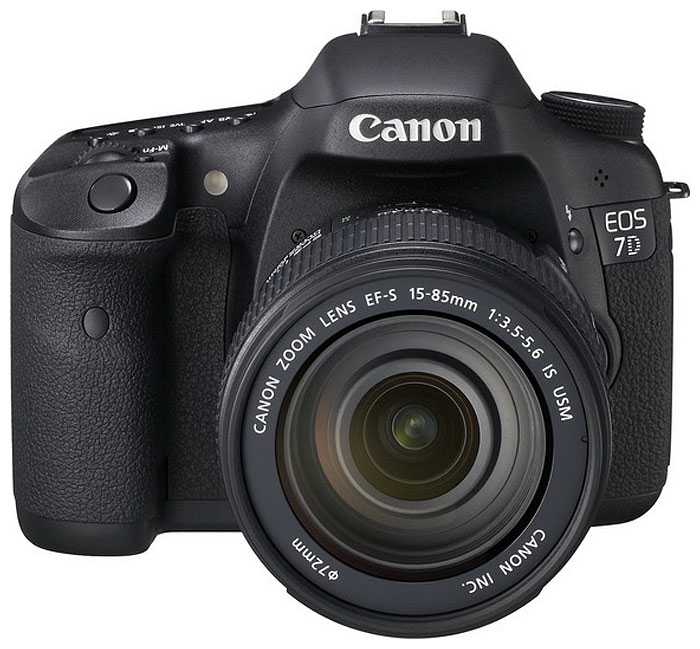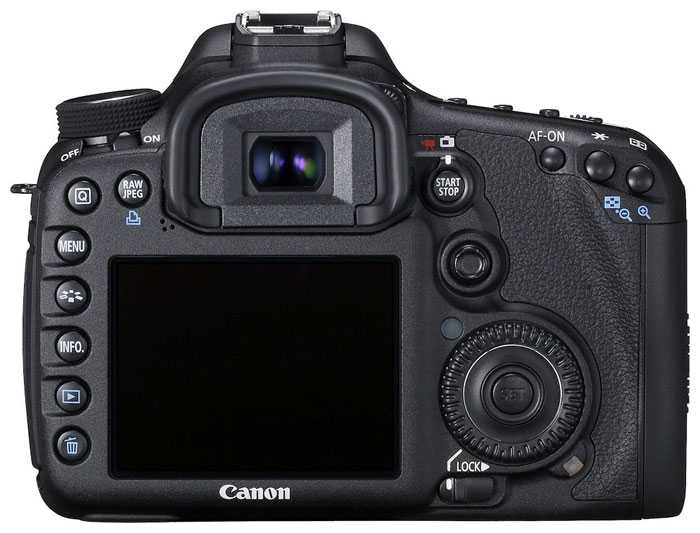
Фотоаппарат Canon EOS 7D Kit — 544 отзывов, плюсы и минусы

9.5/10

Великолепно

Рейтинг: Великолепно 544 отзывов
Средняя цена в магазинах 37 973

Краткие характеристики:

  • зеркальный
  • 19 МП
  • 22.3 х 14.9 мм
  • RAW
  • до 8 к/с
  • видео до 1920x1080
  • 820 г
405
81
30
9
19
Загружаем цены...

544 отзывов пользователей о Canon EOS 7D Kit

Пользовались Canon EOS 7D Kit?
Поделитесь своим опытом и помогите другим сделать правильный выбор

405
81
30
9
19
Profile no image

Скромный эксперт

28.04.2014

10/10

Оценка пользователя

Великолепно

This review is going to be more for photographers that have some experience with DSLR and looking to upgrade.I've owned the Canon 20D, 60D and now purchased the 6D (full frame) but bought a mint condition 7D recently. I wanted a second body that can compliment each other for events and as a backup but did not have the funds to purchase two 5D MKIII or pro body like 1D-series. Nor I would get such setup unless my profession was an event/wedding photographer which I am not. I consider myself as an advanced hobbyist making some money here and there but more than anything enjoy photography. Having the 6D and 7D fills in a lot of voids that two bodies were lacking.Unlike the 7D's cropped sensor, full frame bodies do tend to do better in low light, give you a bit more creamy bokeh and offer wider view (if you're coming from a cropped body that is) . Even then, a semi-pro crop body like this 7D still can shoot wide with the right lens, have more reach (x1.6 after all) and still have great image with low light compared to other xxD series like the 60D, 50D, etc. I shot with the 60D for about six months and the camera did an amazing job in low light with the right setup. If you've ever shot with much older xxD series like the 10D or the 20D you know it's not exactly a low-light camera especially with astrophotography.Full frame bodies like 6D & 5D MKIII has its limitation when shooting fast moving subject like birds, baseball pitcher throwing a ball and football being caught out in the filed. Yes, you can still shoot fast action especially with 5D MKIII but if higher frame rate is a top priority then you'll need this body if not the 1D X (specifically meant for wildlife & sports). Even my old 20D did 'okay' with 5fps but at times it missed a lot of actions as well as focus was sub-par at best. Without spending thousands, the 7D's 8fps is a very nice feature. While it's no 1D X, it does a good job especially when used outdoors with the right lens.I also decided to get the 7D as my 6D wasn't keeping up with the buffer (even with high speed SDXC card) and going to be shooting a lot of kid's events my daughter will be involved & for the town I live in. I also know when I want more zoom and buy a longer focal length lens the 7D will do a superb job in capturing those details.<>Really the only con I've found is having to use compact flash cards that are generally more expensive. I just assume this is due to manufacturing cost of the cards and it's different architecture but seems more rugged and faster than a regular SDHC/SDXC format. Of course there's no dual slot with the 7D so for important events, I wouldn't risk anything but carry a second body and/or second card.<>Who should get the 7D? Advanced shooter that require more auto focusing point & frame rate in capturing actions shots like baseball, basketball, wildlife/bird photography and getting the best image out of a cropped body. 8fps gives you much better chance of obtaining that award winning shot with more auto focus points (than the 6D) for better accuracy. With the very fast auto focusing points (more than 6D) and superb image quality, you cannot discount 7D's capability just because it's not a full frame body. 7D is the top of the line x1.6 crop body currently aside from professional grade body like the 1D X.The 7D's crop body also means if you have quality lens like the Canon 70-200 f/anything you can shoot an object much further without having to buy extenders or more expensive lens with longer focal length. With a full frame camera, this could mean more money to spend depending on the type of shoot you're looking to do. Again, this all depends on the type of photos you're taking. But consider if you buy a used 7D (often times with low shutter count) and pair it with 70-200 f/4L or even the f/2.8L IS II as well as the 100-400 f4.5 then it maybe a better match for those that shoot wildlife and sports more often. It'll certain save you more money than spending $3,000+ on a 5D MKIII.<>7D is like the 60D (same sensor on both) but with faster shutter speeds, more auto focus points, bigger buffer and overall designed for speed. With that said, if you don't shoot wildlife, birds, sports, motorsports and shoot more portraits and landscapes then you may not need the 7D.If you're new to DSLR & photography then read this portion. When you're new to DSLR or photography in general, you're likely shooting everything & anything in sight (I did that for awhile as well). But you'll soon realize your passion and want a body specific to the type of photography that suit your taste. Not everyone is going to be a professional in every area of photography. It's like trying to become a mechanical/civil/electrical engineer all at once. Doable of course but you'll see most professional working as a photographer for a living has a very specific area they work with.If you're still no
источник
Profile no image

Скромный эксперт

05.12.2013

10/10

Оценка пользователя

Великолепно

UPS delivered a new 7D on October 8, 2009, five weeks after I placed an Amazon pre-order. During the last 4.5 years I've gotten to know this groundbreaking DSLR well. With weather seals at the level of the legendary EOS 1N, high performance appointments and contoured magnesium body shell, the 7D is like a mini 1D. It's solid yet comfy in hand: deep finger grooves in the grip and thick textured rubber make for a secure handhold. The large thumb rest anchors the thumb and increases grip security.The shutter is softer than a 50D but louder than my 60D and 6D. If you're a SLR shooter you'll consider the 7D pianissimo. At 8FPS I call it fast. To maintain high FPS you need a good battery and the 7D is good for 1000 images per charge. Obviously video and live view reduce battery time. The LP-E3 batteries are dependable and have a useable life of about 3 years.CONTROL INTERFACE: Controls revolve around 3 wheels, 19 buttons, 1 joystick and 11 tabbed menus. Major features rely on physical controls can be set by feel while looking through the viewfinder. Menus ares used for options. Wheels have stiff resistance, making accidental turning unlikely. EOS veterans whould feel at home and will barely need to crack the manual. Most controls can be reprogrammed. I configured the joystick for direct selection of AF points and assigned center AF point to the DOF button. Menus can be configured too, e.g., group favorite settings under a single tab. The menus are well organized with options on a single page.VIEWFINDER: The viewfinder shows 100% of the image at 1.0X magnification and is the best APS-C viewfinder I've used. The focusing screen is not user replaceable but the transmissive LCD display--transparent LCD over the focusing screen--can simulate five AF patterns, grid and plain matte screens. The red AF display flashes may be changed to dark gray or disabled. The viewfinder data display is bright and easy to read.AUTOFOCUS: The 19-point cross-type AF array is the most significant 7D innovation. The center point is a double cross. Imagine two superimposed crosses: rotate one cross so the arms fall in between the axis of the other. A F2.8 or faster lens is needed to enable high precision double cross sensitivity. With slower optics it reverts to normal precision and single cross. Off-center points are cross point and can snag almost anything. Although the 7D has double the AF points of the 50D, the AF area is the same size. AF selection via joystick is precise and quick.My disappointment with 19-point auto select is active points can't be directly overridden with the joystick. Instead, press the AF selection button, use the M-Fn button to cycle through modes until single point AF appears and, finally, select the AF point with the joystick! Oddly, individual AF points may be chosen in 19-point AI servo. However, the selected point is a starting point for AI servo tracking: focus is handed off to each of the 19 points as the subject is tracked across the frame.My compromise for the problem above is to use Zone AF with center point assigned to the DOF button. Zone AF behaves like 19-point AF, but limited to one of 5 user selected zones. Zones may be chosen directly via joystick and, if pin point accuracy is needed or it misses, press the DOF button to narrow AF to a single point within the active zone. Essentially it becomes 5-point AF with the DOF button. Release DOF button to return to normal operation.Spot AF reduces AF point size for precise control of the focal point, ideal for macro and portraits. Why not use normal Single point AF? Normal AF points are large and may cover both the eye and eyebrow in a tight portrait, locking on the more contrasty eyebrow. Reducing AF point size insures an eyeball lock. Spot AF is the most significant focusing breakthrough of the past 5 or 6 years. It's not for everyone, but makes macro and portrait shooters happy.METERING: Sixty-three zone metering debuted in the EOS 1D Mark III and filtered down to the 7D. Evaluative metering integrates color data into the algorithm and is better at avoiding overexposure of reds. It's a minor improvement over 35-zone metering of XXD cameras but better in tricky lighting. Exposure compensation (EC) is adjustable to +/- 3 stops. Metering is more biased to the active AF point than earlier EOS DSLRs, i.e., the object you focus on has more weight in exposure calculations. In Zone AF where a group of AF points lock, the exposure is more averaged.FLASH: The retractable E-TTL flash is great for fill flash and snapshots. AF assist is the main gotcha--pulses like a disco strobe--but can be disabled. The popup also functions as a wireless E-TTL flash master, using light pulses to trigger compatible Speedlites. If you use auto-ISO with flash, it defaults to ISO 400. Often that is not high enough for balanced fill in low light, and too high for fill in bright light, so you'll need to dial in ISO settings manually.Flash exposure compensation (FEC) in -3 to + 3 in 1
источник
Profile no image

Скромный эксперт

20.04.2013

8/10

Оценка пользователя

Хорошо

I recently had the chance to spend a few days with a friend's 7D and use it for an event shoot that lasted about six hours. My camera for many years was a 40D, and before that, a 300D. There are some notable dissimilarities between the two semi-pro bodies. Most of my comments about the 40D also apply to the 50D.If you're familiar with any of the recent Canon bodies, the 7D won't be a major transition. The brunt of the learning curve is in learning how best to use the new AF system and how to quickly transition between modes. It took about two hours of fiddling to optimize the camera for my shooting style. After that, switching between the 7D and 40D required no effort.BUILD:The 7D's grip is shorter on the lens axis than the 40D, and both are shorter than the 300D. Grip comfort is proportional to depth. My fingertips scrape the camera body more on the 7D than the 40D. I don't care for that. The 300D tops both of the new bodies here. Canon's also changed the button mechanisms. All of the major buttons on the 40D have an audible and tactile click when pressed. The 7D buttons just mush down; only the camera's reaction tells you if the press was effective.Build-wise, the two feel very similar. Without a lens, the 40D is a touch lighter. With a lens that weighs more than a pound, they're interchangeable.LAYOUT:The rear layout of the 7D has changed in subtle ways. With the 40D, I shoot single-point AF, manually selecting the point with the 8-way hat switch and activating it solely with the AF-ON button. This means my thumb is constantly switching from the hat switch to AF-ON. On the 7D, that switch is about a half-centimeter lower, so the transition is more awkward.I've had to change my shooting style to compensate; AF on the 7D is now bound to the shutter button. The reason I hadn't done this on the 40D is that if AF and exposure are on the same button, the camera will wait for AF before taking the picture. If the focus point isn't quite on a contrast, the camera may rack the lens, and you'll have long since missed the shot. The only way around that is to use AI-Servo instead of One-Shot, but the 40D has serious hunting problems in that mode.AUTOFOCUS:On the 7D, Canon's added a couple of AF modes. The most useful of the lot is Zone AF, which is a lot like manually picking a point, except you're manually picking one of five zones. Each zone has a couple of AF points, so you're always likely to end up on some contrast. It's less accurate than a single-point selection, but close enough for any lens f/2 or slower.The physical process of using Zone AF and manually selecting zones with the hat switch is very quick, even more so than my old system with the 40D because there's no thumb-switching. The time to acquire focus and actually fire, though, is a bit slower than the 40D just because of the Zone-AF calculations. You can compensate by using a single AF point with the 7D, but moving between them is more involving because there are 19 relative to the 40D's 9. The AF-point selector has to be on an axis with other AF points to move to them. Because the AF grid has outlier points on the middle on the top, button, left, and right, it's too easy to get caught where you can only navigate in one axis. Put another way, you can't go diagonally from certain points to other ones.The 7D's AF micro-adjustment feature is a godsend and is, alone, sufficient reason to prefer it to the 60D and 40D. It costs about $100 to send a body and lens to Canon for calibration. With multiple lenses, they're all likely to front or back-focus slightly, or even significantly, and their accuracy can drift with time. It took Canon three tries to match my 50/1.4 to my 40D. Without adjustment, the lens was unusably soft below f/2.5. Fixing the same issue on the 7D took about fifteen seconds.It's not perfect; I've got a zoom that front-focuses on the long end and back-focuses on a short end, and there are certain lenses that have focus shifts when they stop down, or at certain subject distances. You can't fix everything, but for the basic gross errors, it's a tremendously useful feature.SPEED & NOISE:The 7D needs a 5 FPS shooting mode. I've found for general portraiture, the safety shot at 6.3 FPS on the 40D is a bit too similar to the previous. It's even worse on the 7D, but the slower 3 FPS mode is too far the other way. Shutter noise is equally loud on both bodies. The 7D's is higher-pitched with a motor overtone. The 40D has a slightly longer clack. In Live View mode with no mirror-flipping, the 40D could almost be called subtle; the 7D is much louder here.Battery capacity calculation with the 7D and battery grip doesn't seem to work right. The grip has the option of two lithium cells or 6 AAs. If one of those AAs is down on voltage, the camera can go from a full display to empty almost immediately. With my Eneloops, I measured 1.35V in 5 of them and 1.2V in the last. This was enough to stop the camera. Replacing the last battery for another with 1.
источник
Profile no image

Скромный эксперт

26.01.2013

10/10

Оценка пользователя

Великолепно

So if you are reading reviews then you already know the stats/specs of the camera and what it is capable of doing. As the title of the review says I just upgraded from a T3i after people told me, "Don't do it! They have the same sensor.blah blah blah..." Yes this is true and was one of the reasons that kept shying me away from pulling the trigger and getting this. Upon opening the box... WOW! I am soooo glad I am got rid of my T3i. Just the build of this camera alone can be seen as a good enough reason to upgrade by some. As soon as I charged the battery the first thing I did was to make sure I installed the newest firmware because it definitely helps with the performance. I really have to emphasize that if this is the camera you find yourself desiring, but do not have the cash to justify spending on this, just save and wait. I am really kicking myself in the butt for not just saving and buying this camera to begin with. Save and get what you want because as soon as you get the camera you can "afford" you are already thinking about ways to get your dream camera. This also allows you to build your lens collection.Low light / ISO settings:After doing my fair share of review reading, I came to realize something while I was playing with my new 7D. I never read a review where anyone mentioned the number of selectable ISO levels available. This may be common knowledge to a pro who has top of the line Canon body's, but for someone coming from an entry DSLR this would have been great to know. Also would have helped me convince myself I needed it :-P Let me give you an example:Canon 7D ISO levels: 100 125 160 200 250 320 400 500 640 800 1000 1250 1600 2000 2500 3200 4000 5000 6400 H(12800)Canon T3i ISO levels: 100 200 400 800 1600 3200 6400 H(12800)Now when people make the argument that I will have the same noise issue with both cameras, I agree and disagree. Yes, at the same ISO level there will be the same amount of noise. However, in a situation where the T3i has to use 3200 because 1600 is too dark, the 7D has two more ISO values between that. Personally, I believe this will help drastically with keep the most amount of noise out of your shot as possible. I have also come to notice that the large amount of ISO settings allows better Auto ISO.Saving Format:With my T3i I always shot in RAW format like 99% of the time. The 7D offers 3 different RAW formats, a small, medium, and large which can be helpful if you don't need to make a large print.View Finder / Auto-Focus:Compared to the T3i, the 7D blows it out of the water in both aspects. The 100% viewfinder and the very quick auto focusing system definitely make the 7D worth it. When I originally started to look at upgrading I always read about people talking about the bright 100% viewfinder, but I always thought, "Could it really be that much better?" I can honestly say there is a noticeable difference.Which lens to get??This questions took me a while to answer and figure out. I had to think to whether I seriously saw myself purchasing a full frame Canon in the distant future. If so, the EF lens would have probably been the best choice in lens. However, since I do not plan to go full frame (For now) then I personally believe the EF-S lens is the best choice. After a good amount of research, I chose to get the EF-S lens for many reasons. The EF lens came out in 1998, so its getting to be a pretty dated lens. On the other hand, the EF-S lens came out in 2009, so almost 10 years later. Some also believe that since the EF lens is USM that it will focus faster. Well when it came out, it definitely focused faster then the non USM lenses. However, the EF-S lens is just as fast if not faster. A friend of mine has the EF lens on his 60D and wishes he got the other one instead. Additionally, on my T3i I had the 18-55mm IS kit lens on it, and the build quality of that lens made me second guess getting the EF-S lens with my 7D. The EF-S 18-135mm lens has a completely different feel then my old kit lens. It's a very solid lens and I am glad I went with it. Also, at first it doesn't seem like the difference between the 28mm and 18mm is a lot, but it actually gives you even more versatility, especially with a crop sensor.WHAT IT ALL COMES DOWN TO:If you are upgrading from a pretty old camera the jump to the 7D will probably make a little more sense. However, if you are coming from a more recent dslr, upgrading may not seem to be the obvious choice. You have to ask yourself what your current camera can't do and the 7D can. Lastly, for everyone who thinks going from the t3i to the 7d was a poor choice because they can produce the same images, that is true, but the 7D offers much much more. The camera is just a tool. It doesn't determine how good of pictures you'll take, its you, and if the 7D brings out your inner creativity and confidence then get it!***The Rattle***That RATTLING noise the camera makes and your heart stops when you first hear it after pulling it out of the box. A
источник
Profile no image

Скромный эксперт

23.03.2014

10/10

Оценка пользователя

Великолепно

I'm the photography editor for my collegiate newspaper and we acquired this camera about 2-3 years ago. Since then, it's been the workhorse for our staff. Going through the metadata of our pictures, almost all the great images we've gotten throughout the years have been taken with this camera.PROS:Fantastic build quality. The magnesium alloy build is worth the purchase alone. Many sporting events take place regardless of weather conditions (lacrosse, soccer, etc.) which means we need a body that can withstand the elements. The 7D has gone through rainstorms, mud, and snow without fail. The small dings and scratches the body has received over the years have yet to impact its performance and weather sealing.The focusing system is probably the best I've used outside of the new Canon 5D Mark III/ 1 DX. It's ability to focus quickly from subject to subject has allowed myself and my other photogs to get some really amazing shots. As long as you have good lighting, it's basically a professional level camera in terms of focusing. Also, the chain drive, 8 frames per second, is great for action. Unbelievable speed that has captured some fantastic moments.The viewfinder. Being 100% coverage, it is simply awesome. It's bright and big, which allows me to compose my shots accurately and correctly. In the field, this makes all the difference, as sometimes, we only have 5-10min to get our shots in. Being able to compose the shot without thinking about the extra 3% the viewfinder isn't picking up is fantastic. Since using the 7D viewfinder, I find it hard to use other cameras that don't have viewfinders of the same quality.Of course the most important thing is the image quality which is also amazing. Great detail and fantastic color reproduction. Despite its age, it still competes quite well with the best APS-C cameras out there. Great value.CONS:Probably the biggest sign of the 7D's age, the ISO performance leaves much to be desired. Shooting basketball games, for example, is tough as I'd prefer another stop of ISO to get a better picture. I limit myself and my photogs to ISO 3200 for this camera, and even then that's pushing it. In JPEG format, the noise isn't that noticeable. However, if you tend to shoot in RAW a lot, then things could get messy, especially if you do a lot of work in post.The camera takes CF cards, which isn't a bad thing. However, when you look at the super cheap price of 16Gb and 32Gb SD Cards these days, it's hard to look past the CF slot. Moreover, most laptops and computers are shipping with SD card slots these days, making image transfers very easy. For our newsroom, having an SD card slot would probably save a good 5-10min on file transfers alone, especially in the field. It's not a deal breaker, but something that would make our life a little easier.OVERALL:Still the best camera I've used. Not only is it reliable, but it consistently takes amazing pictures for all of our staff. Moreover, it is available now for a very good price. I'm looking to add one or two more for our staff, despite it being so "old." Ours has taken a beating and still works like it is brand new. Pair it up with some great glass (we have a 300mm f2.8 L for example) and the pictures will blow you away. In my opinion, the best camera deal out there.
источник
Profile no image

Скромный эксперт

25.11.2013

10/10

Оценка пользователя

Великолепно

I have used the Canon EOS 7D almost exclusively for over 5 years now. The reasons why I selected it still hold true for me: burst rate, picture quality, professional look and feel, after market accessories available at reasonable prices, lens choices and on-board flash. Yes, that little flash has given me shots that would not have happened otherwise. The compromise was supposed to be the sensor size (not full frame). The latter has not been an issue for me, as evidenced by the large scale quality prints I have produced. To see some of the damage I’ve done with this machine, please visit my web site at [...]For my time of ownership I have produced a great variety of high quality images that include 24 x 36 in. posters and long panoramas. The sensor size (APS-C) has not been an issue for me at all. This is also due to the magic of post-production. Additionally, for my needs, I no longer use RAW, but exclusively JPG.On burst-rate: Originally I used this for high-speed sequencing (such as a skateboarder jumping or a dancer across a dance floor) and for HDR production. I no longer use this for HDR, since I find it more productive to use 1 high-quality image and curves to produce HDR. I still use to stack images and produce a flowing effect (such as a waterfall), but not shooting at high speed. This is useful for me since I wouldn’t need to carry a tripod for this type of shot.Picture quality has been exceptional. Most of my prints are between 8x10 to 18x24 inches. As mentioned above, I also have produced bigger prints to include big panoramas. I have upgraded my lens quality through the years and that has made a difference in quality. But the sensor size of the 7D has not been an issue.Weight and feel: This camera is not light, especially with dual battery grip. However, it is not cumbersome. It feels solid. This is due to its magnesium skeleton. Additionally, with the right lens it provides enough resistance and feedback on hand to produce unique movie shots. I prefer the Tokina 11 – 16, 2.8 wide angle for this.Notes on Canon APS-C sensor: Provides extra zoom due to the crop size (1.6X). The down side is the wide angle end of it. So if you have a 30mm lens, you really are shooting at 30X1.6= 48mm focal length. Alternatively, if you have a zoom of, say, 150; you are effectively shooting at 240mm. With the Tokina lens mentioned, I get very nice wide shots and wide movie angles, without going into the fisheye world. Particularly satisfying to me is to pan (hand held) to produce the unreal perspective shift this wide angle produces.The original Canon battery is still strong after 5 years. However, I’ve experimented with Opteka brand and, although they need replacing more often, it allows me to ‘dollar-cost average’ my battery purchases better. I make sure I have enough spares. With the cost of the Opteka (or Power 2000) batteries, this is very reasonable.The low-light performance is really a matter of the lens used. The camera does not seem to hinder any lens performance. It accepts EF and EF-S (for Canon cropped sensors, such as the 7D) mounts.My favorite things about the 7D: How compliant it behaves when you press the shutter, the quality of the shots, and the sound it makes is which is very pleasant.My least favorite: Movie making must be monitored using the LCD screen only. I’d rather use the viewfinder. I primarily use a Panasonic cinema camera for movies, but the 7D for B-shots (supporting shots).In my opinion, this is a regal machine that I have appreciated through the years. Canon will have to go beyond ‘nice things to have’ for me to trade this camera.
источник
Profile no image

Скромный эксперт

21.12.2013

8/10

Оценка пользователя

Хорошо

My experience (or lack of it!): After some Nikon School of Photography classes in the early 1970's I jumped into SLR's with a full range of Honeywell-Pentax cameras and lenses.My first digital camera was the Canon 30D (8mp, no video and no sensor cleaning).I tested a Nikon D800, Canon 5D MkIII and Canon 7D. I kept the 7D.I got manuals on all three from the same author, and was using high end Canon "L" wide and telephoto zoom lenses and Nikon ED high end lenses.Conclusions:I loved the full frame sensor (35mm sized sensor) in both the D800 and 5D.I saw no practical difference in photo quality between the D800's 36mp and the Canon's 22mp.There was also no practical difference (if you're not enlarging to extreme sizes)between these two and the Canon 7D.I love Canon's intuitive controls and that "big wheel" Quick Control Dial.The Canon 7D's menu is very easy to read (there's never more in a particular "tab" than what will fit in the rear LCD (so you don't have to scroll down thru choices)The 7D has a very useful built in flash (pop-up flash), that also can be used as a master flash (to control other "slave" flashes).Both Canon's were faster at acquiring focus (I was using a Canon 70-200mm f/2.8L & Nikon 70-200 f/2.8 ED lens - both are $2,000 + lenses).All three cameras have built in sensor cleaning (although in reality you will probably have to clean the sensor sooner or later).The Nikon D800 and Canon 7D have pop up flashes. No Canon model higher than the 7D has one.(This one item meant a lot to me because a pop up flash can be used to highlight during a "daylight" photo and you always have a flash with you, instead of having to lug a separate SpeedLite flash with you-even the small Canon 90EX or 270EX still needs separate batteries and fills your pocket).Negatives: 1.6x cropped sensor (although if you use a Canon 10-22mm EFS lens, it's the same focal width as the Canon 17-35mm L lens).I did not test the "movie" modes of each camera, as I am not experienced in that area, but all the cameras seemed to have very good quality video when displayed on a Sony 55" LCD TV.Best positive was the price: I paid $1,149 on a special Amazon.com and Canon promotional period just last month.The Nikon and Canon 5D's are around 2 1/2 times as expensive (body only).I don't think anyone could go wrong with either a Nikon or Canon, so Nikonians, please, no "hate mail"!Both are great camera companies. If I were a previous Nikon DSLR user, I may have went with the D800, but the Nikon D800 was just too confusing for me to try and learn a whole new way of adjusting & choosing options.Menus take more time to scroll thru, but are fairly easy to use.Dedicated buttons are quicker to access, but you have to learn and remember what each button does.Canon uses more menu choices, while Nikon seemed to be on the "button heavy" side.Final word: Buy the best lenses you can afford. That extra weight in a Canon L lens, for instance, is because of the extra "glass". And the extra $$$ is for the expensive glass.
источник
Profile no image

Скромный эксперт

13.02.2013

10/10

Оценка пользователя

Великолепно

I ordered mine a little late to the game; my Canon 40D had the shutter fail, and I debated long and hard on what would be a true upgrade to that camera, without breaking the bank.I wasn't in the market for a full frame camera, so that narrowed it down to a used 50D (a new one cost more on Amazon at least than the 7D), the new 60D, or a new 7D.60D missed a few key points on my check-list - auto-focus is key in motorsports photography, which while not my primary focus is something I do frequently. Build quality was another concern, and it seemed as though Canon really dumbed the 60D down deliberately from the 50D (or 40D for that matter) to save a bit of manufacturing costs. Less dedicated buttons, no joystick, worse auto-focus, and while yes, it is cheaper by a few hundred dollars, my feeling of value for $ just wasn't met.The 50D I actually really liked; not a super upgrade from the 40D, and if I could have found a new one for $800 I probably would have gone with it. The fact that it cost the same or more than the 7D on every site I could find it on put it right off my list.Onto the 7D - first, the autofocus. Head and shoulders above the 40D, 50D, and 60D. It's sick. You have to use it to see what I'm talking about, but selectable area from the joystick, or 19 point selection, or autoselect; usable, and fast. I will say that the liveview has more issues with focus than without; this isn't something I use very often, but when I do, its noticeably slower. However, manual focus from liveview is great; a click of the + button and you can go from 5x to 10x magnification on the screen to get that perfect focus - the display is high quality and really helps lock in focus when you use it in this manner. Good for tripod/portrait shots (not something you'd use in situations requiring fast focus anyway)The menu system and features are very well laid out; if you've used a Canon camera this should all be familiar anyway, and there are a few extra bells and whistles coming from the 40D that I noticed; primarily autofocus but being able to limit autoISO is a nice feature as well (if you own this camera and don't have that, update your firmware). Ridiculously fast burst speed - I mean 8fps is getting close to full motion; if you need speed and don't have $8000 to spend on a camera, the argument is over, get the 7D.Image quality - better than the 40D which is to be expected, but not lightyears ahead. I'd expect images between the 50D and 7D to be fairly similar. Having the extra pixels to play with is always nice; 18MP for me is fairly future proof. I think excellent results can be had to ISO 1600 - very usable at 3200 for web based images; 6400 ISO is pushing it a bit but still usable for web and black and white.View finder is excellent. The autofocus and grid display are both unobtrusive and usable. Battery life is great. Camera is actually pretty lightweight, weather sealed as well.Is it with the $1200 Amazon charges? Yes. Is this a futureproof camera? For a mirrored full sized SLR, I'd say yes. I would never need a FASTER camera than this. I'd be hard pressed to justify more MP than this, even more so on an APS-C sensor. Digital cameras have just come so far from where they were a few years ago, and this being an older camera I think like film cameras of old will end up becoming a classic. I thought about buying this used, but I didn't want to have to worry about the shutter being replaced in a year, so I just bought it new.Video - no idea. Haven't shot any. Reviews show its fairly awesome, so thats as far as I can go with that.Honestly, I don't think there is a better Canon APS-C on the market at the moment, and the next version of this will likely cost $600 to $800 more. Hence, I just bought it new, and hope to enjoy it for years. Bottom line, if you need the speed, and the best auto focus system on the market (right up there with the 5D Mark II, Mark III, or 1D Mark II), I think you'd be happy with this purchase.If you don't and just want a decent APS-C camera? Save a few bucks and get the 60D.
источник
Показаны отзывы 1-8 из 544.
Загружаем цены...


Как менялась цена на Canon EOS 7D Kit

Характеристики Canon EOS 7D Kit

Камера
Тип камеры : зеркальная
Конструкция : зеркальная
Объектив
Объектив в комплекте : есть
Объектив в комплекте : да
Байонет : Canon EF/EF-S
Минимальное фокусное расстояние : 18 мм
Матрица
Кроп-фактор : 1.6
Тип матрицы : CMOS
Глубина цвета : 42 бит
Auto ISO : есть
Функция очистки матрицы : есть
Тип матрицы : CMOS
Формат матрицы : APS-C
Кроп-фактор : 1.6
Число эффективных мегапикселей матрицы : 18
Число мегапикселей матрицы : 19 Мпикс
Физический размер матрицы : 22.3 х 14.9 мм
Разрешение по X : 5184 пикс.
Разрешение по Y : 3456 пикс.
Функциональные возможности
Синхроконтакт : есть
Подавление эффекта красных глаз : есть
Скорость быстрой съемки : 8 кадров/с
Режимы съемки
Таймер : есть
Время включения : 0.1 c
Фотосъемка в формате 3:2 : есть
Видоискатель и ЖК-экран
Тип видоискателя : отсутствует
Поле зрения видоискателя : 100%
Второй экран : есть
Экспозиция
Экспокоррекция : +/- 5 EV с шагом 1/3 ступени
Брекетинг экспозиции : есть
Выдержка для X-Sync : 0.01 c
Фокусировка
Подсветка автофокуса : есть
Ручная фокусировка : есть
Корректировка автофокуса : есть
Тип автофокуса : фазовый
Количество точек фокусировки : 19
Фокусировка : корректировка автофокуса, по лицу, подсветка автофокуса, ручная
Память и интерфейсы
Максимальный объем карты памяти : 32 Гб
Разъем для пульта ДУ : есть
Разъемы и интерфейсы : Bluetooth, HD-видео, HDMI, USB, Wi-Fi, аудио, видео, разъем для пульта ДУ
Версия USB : 2.0
Поддерживаемые карты памяти : Compact Flash, Compact Flash II, SD, SDHC, SDXC, microSD
Питание
Тип аккумуляторов : свой собственный
Количество аккумуляторов : есть
Емкость аккумулятора : 1800 мА*ч или 800 фотографий
Батарейный блок : BG-E7
Тип аккумуляторов : свой собственный
Количество аккумуляторов : есть
Емкость аккумулятора (количество фотографий) : 800
Запись видео и звука
Запись видео : есть
Максимальное разрешение записи видеоролика : 1920x1080
Запись звука : есть
Запись видео в формате MOV : есть
Использование видеокодека MPEG4 : есть
Время записи видео : размер видеофайла 4 Гб или 29 минут
Запись звуковых комментариев : нет
Число кадров в секунду при 1280х720 : 100
Поддержка форматов изображения : MOV, MP4, MPEG4, RAW, формат 3:2
Число уровней JPEG : 3
Максимальное разрешение видеосъемки : 1920x1080
Максимальная частота кадров видеоролика : 60 кадров/с
Время записи видео : размер видеофайла 4 Гб или 29 минут
Число кадров в секунду при 1280х720 : 50/60
Число кадров в секунду при 1920x1080 : 25/30
Другие функции и особенности
Материал корпуса : металл
Крепление для штатива : есть
Дистанционное управление : есть
Датчик ориентации : есть
Управление с компьютера : есть
Видоискатель
Видоискатель : зеркальный (TTL)
Вспышка
Опции вспышки : башмак, брекетинг, встроенная вспышка, подавление эффекта красных глаз, синхроконтакт
Максимальное расстояние действия вспышки : 12 м
Прочее
Ширина : 148 мм
Высота : 111 мм
Вес камеры (без элементов питания) : 820 г
Дополнительно
Расширенные функции : батарейный блок, датчик ориентации, функция очистки матрицы
Дополнительные опции : возможность смены объектива, дистанционное управление, крепление для штатива, таймер, управление с компьютера
Материал корпуса : ABS пластик, металл, пластик
Защищенность : влагозащита
Комплектация : Li-ion аккумулятор, зарядное устройство, USB-кабель, видеокабель, ремешок, компакт-диск с программным обеспечением
Экран
Размер экрана : 3 "
Экран : два экрана, работа в режиме видоискателя, фиксированный
Число точек LCD : 920000
Съемка
Экспозиция : auto ISO, автоматическая с приоритетом выдержки, автоматическая с приоритетом диафрагмы, брекетинг, общая (Evaluative), ручные настройки выдержки и диафрагмы, точечная, центровзвешенная
Экспокоррекция : +/- 5 EV с шагом 1/3 ступени
Светочувствительность ISO : ISO12800, ISO6400
Баланс белого : авто, брекетинг, предустановки, ручная установка
Режимы съемки : HDR, запись видео, серийная съемка
Максимальная серия снимков (JPEG) : 126
Время работы таймера : 2, 10
Линейка
Линейка : EOS
Дополнительная информация : возможность беспроводного подключения нескольких вспышек, поддержка sRaw

Информация о характеристиках носит справочный характер.
Перед покупкой уточняйте характеристики и комплектацию товара у продавца

Альтернативы с более высокой оценкой

9.9/10 баллов

Nikon D810

198 отзывов

от 217163.00 руб.

9.8/10 баллов

Canon EOS R6 Mark II Kit

72 отзывов

от 345469.00 руб.

9.8/10 баллов

Sony Alpha ILCE-7M3 Kit

195 отзывов

от 210847.00 руб.

9.8/10 баллов

Nikon D750 Body

598 отзывов

от 165840.00 руб.

9.8/10 баллов

Nikon D7500 Body

85 отзывов

от 120791.00 руб.

9.8/10 баллов

Canon EOS 5D Body

645 отзывов

от 45783.00 руб.

9.7/10 баллов

Canon EOS 600D

699 отзывов

от 20890.00 руб.

9.6/10 баллов

Canon EOS R8

74 отзывов

от 134646.00 руб.

9.6/10 баллов

Canon EOS 1100D

473 отзывов

от 23280.00 руб.

9.6/10 баллов

Nikon D3100

1623 отзывов

от 20383.00 руб.

9.5/10 баллов

Nikon D850

114 отзывов

от 306139.00 руб.

9.5/10 баллов

Sony Alpha ILCE-7M4

83 отзывов

от 245866.00 руб.

9.5/10 баллов

Canon EOS R6 Mark II

58 отзывов

от 225110.00 руб.

9.5/10 баллов

Fujifilm X-T30 II Kit XC15-45mm, серебр

101 отзывов

от 164669.00 руб.

9.5/10 баллов

Sony Alpha ILCE-6400

207 отзывов

от 141537.00 руб.

9.5/10 баллов

Canon EOS RP Kit

123 отзывов

от 127586.00 0

9.5/10 баллов

Canon EOS 77D Kit

287 отзывов

от 105593.00 руб.

9.5/10 баллов

Canon EOS 7D Mark II Body

208 отзывов

от 90915.00 руб.

9.5/10 баллов

Canon EOS 200D Kit

180 отзывов

от 71704.00 руб.

9.5/10 баллов

Canon EOS 7D Kit

544 отзывов

от 37973.00 руб.