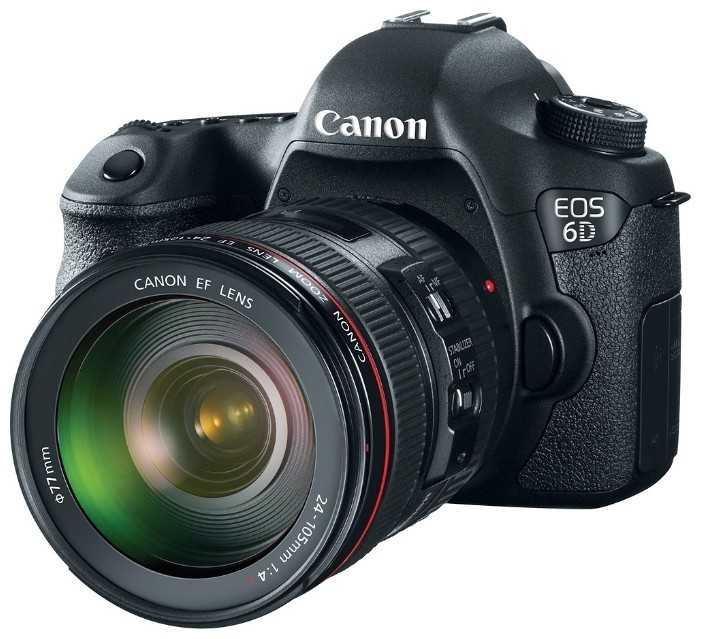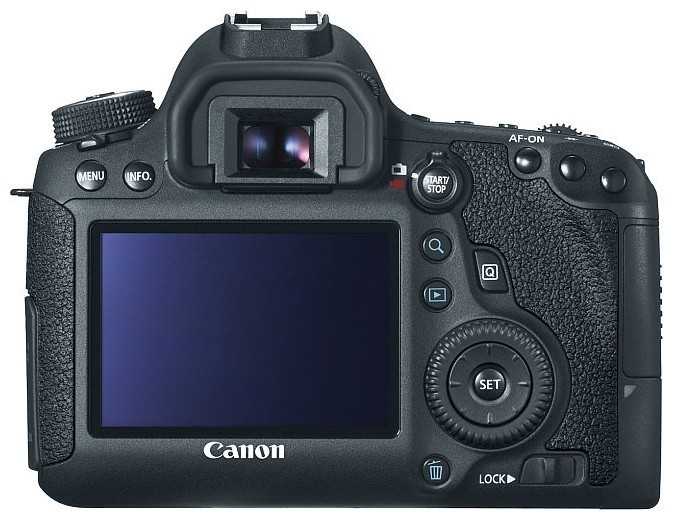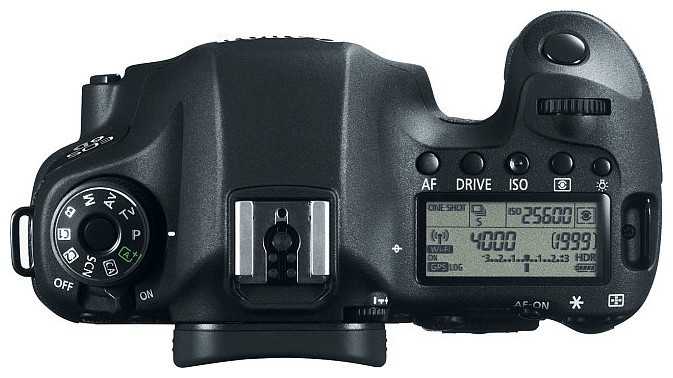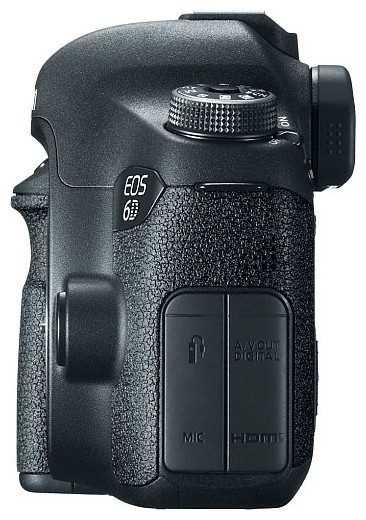
Плюсы по отзывам пользователей - Почему стоит купить Canon EOS 6D Kit?:
- Превосходная работа на высоких ISO и в низком освещении:
- ISO до 12800–25600 даёт чистые снимки без сильного шума, лучше APS-C (T3i, 60D, 7D) и на уровне или лучше 5D Mark III (упомянуто в 80% отзывов).
- Центральная точка AF фокусируется в почти полной темноте (-3 EV), идеально для съёмки без вспышки indoors/ночью.
- Авто ISO с минимальной выдержкой предотвращает смазывания, держит 6400 ISO чистым.
- Отличное качество изображения:
- Острые, насыщенные цвета, отличный DR, RAW-файлы с большим запасом по теням/светам (сопоставимо с 5D Mark III).
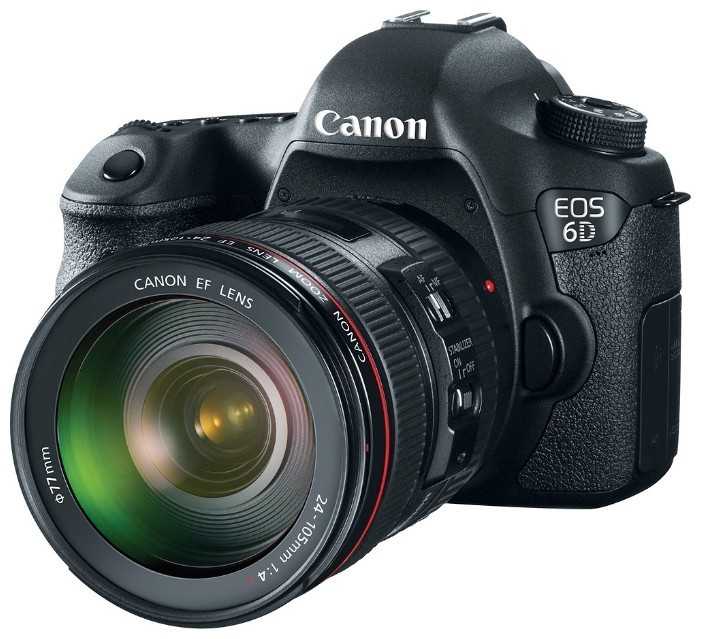
- Китовый объектив 24-105mm f/4L даёт резкие фото с хорошим контрастом, универсален для повседневной съёмки.
- HDR в камере (handheld) работает без штатива, сглаживает контрасты (JPEG).
- Компактность и эргономика для full-frame:
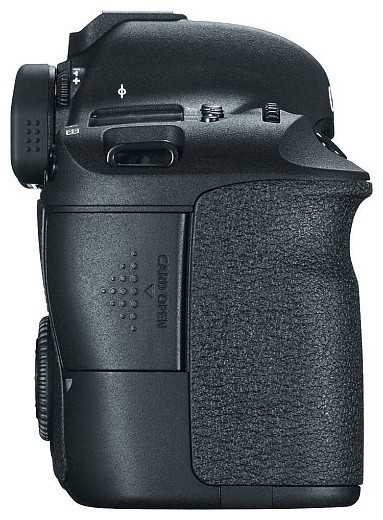
- Лёгкая (680 г с батарейкой), меньше 5D, удобный хват даже для средних рук.
- Тихий затвор (silent mode) не пугает объекты, низкие вибрации.
- Wi-Fi и GPS полезны на практике:
- Удалённая съёмка с смартфона (EOS Remote app), просмотр/передача фото мгновенно (JPEG/RAW-превью).
- GPS точно геотегает (1-2 мин на фиксацию), трекинг маршрутов для путешествий.
- DLNA для TV, EOS Utility для ПК.
- Автофокус надёжен для неспортивной съёмки:
- Центральная крестовая точка быстрая/точная даже в -3 EV, боковые точки работают в нормальном свете.
- Не уступает 60D/5D Mark II в портретах/пейзажах, recompose после фокуса.
- Качество сборки и удобство:
- Пыле- влагозащита как у 7D, магниевый сплав + пластик сверху (не ощущается дешёвым).
- Яркий видоискатель (0.71x, 97% покрытие), чистый LCD.
- Долгая батарея (до 1000+ снимков без WiFi/GPS).
Минусы по отзывам пользователей:
- Ограниченная система AF:
- Только 11 точек (1 крестовая в центре), скучены в середине кадра, нет джойстика (d-pad медленный).
- Не для спорта/движения: слабое трекинг, боковые точки уступают 7D/5D Mark III (15–20% жалоб).
- Live View AF медленный, без continuous AF в видео.
- Один слот SD-карты:
- Нет dual слотов/CF, риск потери данных (5–10% упоминаний, критично для свадеб/про).
- SD медленнее CF для burst (буфер ~10 RAW+JPEG).
- Wi-Fi/GPS сильно садят батарею:
- Работают даже при выкл. камеры, разряжают за часы/дни (частая жалоба, 20%+).
- Wi-Fi нестабильный в видео, сложная настройка (не для всех).
- Отсутствие поп-up вспышки и разъёма для наушников:
- Нет commander для off-camera flash, fill-flash (нужен Speedlite).
- Видео без mic/headphone jack, моаре на узорах (одежда, решётки).
- Мелкие ограничения конструкции:
- Макс. выдержка 1/4000 с, синхро 1/180 с (хуже 5D/7D).
- Пластиковый топ/LCD, резина отклеивается, скрип (редко, 5–10%).
- Кнопки мягкие/нечёткие, смена layout раздражает с 60D/7D.
- Видео уступает по удобству:
- Моаре/aliasing на узорах, rolling shutter, нет headphone/AF в видео.
- 30 мин лимит, хуже 5D Mark III (про видео — в Magic Lantern).
414 отзывов пользователей o Canon EOS 6D Kit
Пользовались
Canon EOS 6D Kit?
Поделитесь своим опытом и помогите другим сделать правильный выбор
So, I received my new Canon 6D on Friday and this Sunday morn I am releasing my review (Ooo, Everybody has been waiting for my review! Right? Anyway, let me start off by telling you that this is Kendall and Not Michelle, My beautiful wife / photogenic model. She also runs the Business side of things and to me being on Amazon is like being a kid in a candy shop, so the account stays in her name. Enough of that let's begin the review. My last new camera purchase was the canon 50D in the spring of 2009, Love that thing! The mirror has seen almost 10G of action. Before that I had, or I should say have a Canon XSI (Canon 450D to yous is outside of the USA) purchased from Kits Camera in 2008, before they were bought out by Ritz Camera. Ok, Ok enough of this history stuff. But wait, there's more! I've owned several dozen 35mm cameras, And a 2 ź Mamiya. Ok enough!!! What to say about this Canon 6D, Well,, I'd have to say is it is the best Camera that I've ever owned! What's that You Say? Nikon D600, D800, Canon 5D Mark III? What about them?I know, all the nerds say the Nikon is Better! And I did almost go to the point of Changing loyalty. And I also looked at what was available for non mirrored Cameras. I looked at everything before spending $1,800.00 on a camera. Like you, I don't have money falling out of my, um backside. So I spent pretty much 1 ˝, 2 hours a night for a couple of weeks looking for what would be best for me! As for Nikon, I was almost to the point of purchasing the D600 because of the VS 6D reviews. But, I have many nice Canon Lenses and a review by Ken Rockwell and other pro's changed my mind. Check Ken out at [...] The Mirror less race is upon us. This, I believe will be the next big thing in Photography. In the next two to three years Mirror less cameras will be the only choice in the upper end of Videography/Photography. Sony looks to be the leader with the NEX series, Panasonic for video. But, if I wound up buying a mirrorless it would have been the Fujifilm X Pro 1. Why? Because I really like the feel, the look, and how retro this camera is. I did like the Olympus OM-D E-M5 too.Final Conclusion.I LOVE MY NEW 6D! Why did I give it 4 stars? Because there is always something better! (5D mark III).Why did I choose this camera? Because pretty much all the crap I read and I have Canon Lenses and because I don't have money pouring out of my wazoo . The other and the main reason, Because of the Images I had found online and the test Images I have seen. They say a picture says a thousand Bla. Bla. Bla. Just look at what this thing can do and decide for yourself.See links below for my workthanks for reading[...][...][...]
After 2 month of use, I can say a few more words about the 6D wi-fi capability and HI ISO.The wi-fi function, if you have an Iphone, is unbelievable. Not hard to set up, just take a brief look at the instructions on the app. After you set it up for the first time, just have to choose your camera at the settings each time, if you have an Iphone.First of all, your self portraits and family photos are going to reach a new level. You can see at your phone the actual composition, so... NO MORE SELF TIMER AWFUL PHOTOS.And you can control focus, aperture and speed. Then, just press the shutter at your phone. Truly impressive.And, after all this, you can download the photos immediately to your phone at a reasonable size. I take pictures always on raw format, wich are about 20mb. They go to your Iphone at 600kb, so you can send it thru email, sms or whatsapp. When you are at a gathering, take the pictures, download it and share it right on the spot. The look of the photos on your phone are going to be way differente from other photos, taken on phones or point and shoot cameras. Looks really professional, deep, sharp. I am truly impressed. My family is impressed. My friends are impressed. Really cool.Hi ISO photos are also a remarkable feature of this camera. I am using 2 F4L lenses (24-105 and 70-200), and they are not exactly bright lenses. But I being able to take photos indoors, including at night, without flash and tripods. Handheld photos at 2500 ISO are great. No significant noise, I can tell you. A few adjustments on Lightroom and you're done. But, if you use a tripod, the pictures are going to be better, for sure.Well, more then my first full frame, this is a breakthrough camera for me, since I'm doing things that I would not think about few years ago.This is my first full frame digital camera since my K1000 in 1987.On film days, I used to take fotos on large formats, B&W, diapositives, and had a lab at home...Since I've moved to digital, somehow it felt always soft, always shallow, never got what I was looking for. Truly disappointing.Upgrading from a Canon T1, finally I found in digital photografy the results that I used to achieve on 35mm. Sharp and deep images.There's a button below the lens on the body that reproduce the depth-of-field that you will get, just like it used to be on old film cameras. Incredible efects on close objetcts and portraits.Amazing video shooting also, I must say, even though my main goal are pictures.So many edit options on the camera, you may find it a little tricky to remember, but some of then are very useful, like HDR or multiple exposure.Strongly recomend the tutorials at canon web site.And I would recommend to a friend.
This camera was my upgrade from a T3i, and I regret not making the jump sooner. The larger sensor works beautifully with L-series glass, and it allows for lovely depth of field, even in conditions that would force you to stop down a bit.The body is sturdy, and around twice the weight of a Rebel-series body, so expect to use a nice strap for this hearty beast. The only thing that scares me is that the LCD screen is built right into the back, so it's exposed all the time. However, this hasn't been an issue in the 6+ months that I've had it. Still, I might consider a protective film for it.While not quite as complex as the 5DmkIII, the 6D has all manner of bells and whistles to appreciate. The two custom setting modes allow you to set up profiles that match your exact needs ahead of time for the conditions you expect to encounter if they're not already covered by the other modes, which I find especially handy for filming. What I find most handy is the Wi-Fi function, which can by synced up to a smart phone for remote viewing and firing. Perfect for self-portraits, or for setting out to snap shots without disturbing wildlife.Overall, I find this to be a great (and considerably cheaper) alternative to the 5DmkIII.
What would you do if you had a camera and a WiFi connection? The developers of Android and iOS (iPad/iPhone) implemented a feature that trickles up photos (and videos, in the case of Android/Google+) to a Web site where they can be sorted and shared. What would you do if you were adding a WiFi feature to a camera four years after the release of Android? Apparently, "use an Android phone and copy the best features" were not something that Canon's engineers did.It takes about an hour to configure the WiFi feature on this camera to do anything at all. Multiple manuals are involved, both on paper and in PDFs distributed on CD-ROMs(!). You need to connect the camera to a conventional personal computer (Mac or Windows) via a USB cable before you can even think about using WiFi. The USB connector is not the ubiquitous micro-USB of smartphones, Android tablets, Sony NEX and RX100 cameras, etc. It is an old-school mini-USB. So don't lose the cable that Canon supplies. Even if you're a happy user of Facebook, Flickr, Google+, Picasa, iCloud, and every other photo-sharing service on the planet you will need to create an account at Canon's photo-sharing service.Once you've got everything configured you can send photos up to Canon's proprietary service... one at a time. So instead of streaming them all to a hard drive on your computer or a Web site from which you can then look at them on a big screen you're supposed to pick the winners looking at the small screen on the back of the camera and then, one at a time, pick photos to be transmitted wirelessly.If you have WiFi turned on it is impossible to capture video. If you have WiFi turned on, it is impossible to plug the camera in via USB (it just silently fails).WiFi offers some peculiar features, e.g., the ability to send a photo to another camera, but not the features that you'd want, e.g., "send everything to my desktop computer" or "send everything at 2000 pixels wide to Google+".[On a lower level of bad design, the camera is heavily dependent on an up/down/left/right arrow control, as is the Canon 5D Mark III. On the 6D, however, the control is embedded inside the rear control dial and it is rather difficult to press the arrows. The software seems to be quite different from the software on the 5D Mark III and it will take some getting used to.]How does it work as a camera? Reasonably well, but the green idiot mode chose an ISO that required a shutter speed of 1/40th with a 50mm lens rather than pumping up the ISO a little more to enable a 1/60th shutter speed.
Wonderful camera and well worth the cost. Crop cameras just didnt do it for me. I have owned the TSI, the TI2, and the TI3. While each of them took great photos, you dont know what you are missing until you have full frame. I did try the Mark III from a local shop (rented it for the weekend) to compare. I found the 6D delivered better overall photos and seemed more user friendly. The focus points didnt make a big difference to me. I shoot mostly landscape and this is by far the best choice. I was a Nikon fan for years but I grew tied of all the failures and returns for repairs. Nikon offers a great camera if you can find one that last over 6 months without issues.Spend the money and go for it. You will not be disappointed.
6D's metering system is light years better than the 5D Mark II/III. That makes shooting in tricky lighting situations so much more enjoyable, for once I no longer have to fiddle with exposure compensation as I did on my 5D Mark III.I like the fact that most operations can be completed with one hand.Downside compared to the 5d3 is that the lcd is not glass anymore, and got scratched the first week of use.The non-cross type af-points does affect some usability in low light situations, but not much.Another downside is that you can't categorize images into folders or make custom naming like you can on 5d2/5d3.
Love love LOVE this camera and the lens as well! I recently upgraded to this camera after owning two Rebels and I can't even believe the difference! The low light performance is superb, it shoots incredibly fast, and it's very user friendly. I'd recommend this camera to anyone over any other camera I have used (that includes the 5D Mark III)
Before this camera , I had 5D mark ii , a better camera , the matrix metering never fail , also had 40 D , matrix metering excellent also . I will sell this camera , and buy the 5D mark III because had the profesional matrix metering that a Camera over 2000 dls should use . The matrix metering fail at night , and in Aruba, daytime, I shoot 100 photos , had to correct more of the 90 % of the photos , minimun correction but I prefer my old 5D mark II that never had this problem . I use RAW , and most of the photos need corrections of 0.33 to 1.33 , this camera is not for profesional peoples .Also the camera need to be taller , I had 85 mm 1.2 II and the camera rest in the lens , also the Canon designer touch the ISO position and is very unconfortable to use , and is the most important for me to use and be in the right position .1000 dls MORE for a 5D mark III , I will took it like a investment . All my Canon cameras and lens had never dissapoint me . It's a good camera this 6D , But I expect a perfect camera from Canon .
The picture and camera functions quality are great, amazing, the best I have owned.However it is very poorly build! This is the worst built of all the EOS I have ever owned: Rebel, 20D, 50D, 5DMk II and 60D.There is some play in all buttons and switches. No second click on the trigger. Cheaper plastic construction does not improve the overall. This is definitively very disappointing for a $2000 camera Body.
The Camera is good but the better route would have been to the buy the kit that comes with the lens.
Nearly impossible to understand menus. Burns through 2 or 3 batteries per day. That is shooting less than 1000 photos.
I love that we can review products we not only never purchased but are not yet even available for purchase. This is perfect. Is there a place where we can also review imaginary products?
I'm not going to bore you with all the technical mumbo jumbo. If you're looking at the 6D then I'm going to assume you have above average experience with photography and know the differences but CANNOT decide and pulling your hair out by now (I've been there and finally bought one).For many years I shot with a crop sensor. Wonderful thing about photography technology is that for the price it just gets better. I shot with the 20D for eight years (and the body was still going strong) and last year purchased the 60D. I still have the 60D and very happy with majority of the results. Having the extra reach with the crop is great for day time shoot. It's one thing I missed suddenly with the 6D is having that extra reach. Of course there were so many beauty packed in the 6D I was very much stunned.Few things I noticed right away with the 6D compared to the 60D:- Quiet shutter- A very sturdy feel even with it's compact design- Low light ISO performance is AMAZING- Bokeh is more beautiful with the full frameFew things I fell in love with the 6D:- Full frame = wider (My Tamron 17-35 became an ultra wide monster)- Very fast center focus speed- Noticeable smoother bokeh with every lensMinor things I miss from the 60D:- Losing reach (if you're coming from a cropped sensor that is)- Swivel screen for creative shots including astrophotography use- Tad bit slow on action shotsWhat I don't like:- Slow for action; 4.5fps is slower than the 60D and even slower than older xxD series.- The buffer isn't all that big compared to the 7D; again it's not a body geared towards dedicated to fast action- Max 1/4000 shutter speed; wide open during the day I have to set the ISO to 100 (or 50 sometimes) to avoid overexposureWhy I Went with the 6D instead of the 5DMKIII:One of many reasons why I didn't go with the 5DMKIII is the price and what I generally shot. If I was a professional making a living with photography then the 5DMKIII would've been a no-brainer with its fast shutter speeds that can be use for sports, more AF focus points that are faster and dual memory card slot. But I also don't shoot sports or wildlife currently. At the same time I enjoy both natural & artificial lighting which meant for low-light situations, the 6D would outshine the 60D and most camera's out there (many tests show it outscores the 5DMKIII by few points).Low Light Sensitivity:I've only had this camera for a week so I haven't had the chance to get out there and shoot stars at night but quick initial test showed so much less noise than the 60D (even though 60D was by FAR better than my old 20D). With the 60D I was shooting night sky at ISO3200 and up to 22 seconds or so to avoid star trails. With the 6D I was able to shoot that with half the ISO (and probably more if I had the time and right sky) and same time (using the Rule of 500 instead of 600).I've shot many indoor portraits of my kids with the auto-ISO and I'm just completely blown at how this body can handle high ISO and have very usable photos anywhere. Sure, shooting at ISO12800 doesn't mean I'll shoot it at that ISO and make prints all day but for everyday shots and what would've been difficult with other bodies is possible with the 6D.Body Design:Many people complain about the design of the body but I haven't noticed too much difference other than the button positions that's completely different from the 60D. But I'll get used to it with time. To compare my hand is about large to x-large in case you're wondering. I did notice a slight awkwardness in changing the focus points on the fly. I may have to custom assign the buttons.Bokeh:Everybody loves bokeh like fine chocolates. With full frame sensor the bokeh is smoother and you'll notice a difference right away with similar focal lengths. It's like looking at bokeh between the 50mm f1.8 & 50mm f1.4 with the same aperture. But you'll notice the bokeh being a bit more creamier that really makes the subject pop.Wifi:I love this feature. I have Galaxy S3 and downloaded Canon's app and I can shoot remotely with a click of a button. I haven't had much time to play around with it but since it's Wifi I can remotely trigger the OCF. Being able to see what's happening away from the camera & triggering it is a neat feature. Of course for simplicity sake & save on battery (assuming Wifi function does eat up battery faster), then you can always get the wireless trigger for $12 on Amazon.Who It's Really For:I definitely feel this is one of the best camera's for portraits/weddings/still's without fast moving objects but also astrophotography and low-light shooting that demand great ISO performance without breaking bank. It's like a stripped version of 5D MKIII but the image quality is the same if not hair better when it comes to high ISO shooting.If you're into sports/wildlife and want some of the best features then the 5D MKIII (or 1D-series for serious pro's) may be the ticket. Of course if 5D is out of your budget and also want more
I wanted to jump to FF from crop. Researched, researched, debated and debated over and over between the Nikon D610 vs. Canon 6D for weeks! I'm coming from shooting a Nikon and have been a Nikon fan for many years from the F3. This is for those in similar situations where they just need one simple review to help them decide between the D610 or 6D before they go slightly crazy as I did.On magazines and online reviews, the D610 specs just looked so much better than 6D, esp. the AF system 11 vs. 39 pts. But, if you are looking to buy a camera at this level, you probably have done your own research and there are numerous reviews as to specs out there, so let's leave the specs out of this review.SHORT REVIEW:Feel: the feel of the camera is fantastic! It is solid and well built. I held the D610, which is also solid, but I really liked the feel and grip of the 6D. Solid. Plus, all the function buttons are located on the right side which makes it easier to shoot with only one hand. Made in Japan reassures that its a quality product (not that Nikon isn't).Looks: I always thought and still believe that Nikon has that sexy look to it even from the F3 vs. F1 standpoint. Canon on the other hand, less sexy IMHO. But, I'm actually liking the simplistic design of the Canon in my hand esp. so because of the pro-level feel. Nice.Day Pics: On my 1st run with the 6D, I compared the photos vs. my son's D90 on the camera's LCD screen. It was a very sunny day at the Getty Center. Anything you shoot there on a sunny day produces great images. I thought to myself, "well I guess it looks a little better" than the D90. But at home, the 6D's pictures are sharper and more defined (try zooming to test). The color was also excellent! If you are ready to move up to FF, this is a great camera that produces excellent images.Night Pics: Ok, so one of the main reasons I chose the 6D is its low-light capability. This is where the camera really shines. The same day my son and I shot at Santa Monica at night. We snapped away and compared the photos. Even on the LCD screen, the 6D images were so much better at the same ISO. Colors were bright and natural. D90 less so. Caveat, the D90 is not a D610 and is unable to compete with a newer pro-level FF camera and I am not here to compare a D90 to the 6D, but was compared only to share my experiences with the 6D. At home, OMG - the nights were so awesome on the 6D! All the reviewers are right in that 6D rocks for night shooting. I am sold.WIFI/GPS: Ok, at first I thought why?? I rather have a mag-alloy top or a flash in the same spot. But, the WIFI is pretty cool and convenient. I downloaded an app on my phone and instantly messaged a photo to my wife's phone in a few short minutes. This will be awesome to instantly transfer to my Flickr page. As to the GPS, I turned it off to save battery - I don't need it.Why I chose 6D over D610: Ok, I was sitting around comparing reviews after reviews, images after images and debating camera vs. value, etc etc. Basically, I realized that I was wasting time by not being out and about taking pictures. I also was getting a headache. So, I decide to pull the trigger on the 6D based on my own Ultimate Decision Maker for Buying below:MY ULTIMATE DECISION MAKER FOR BUYING:1) Am I a pro? YES -> buy/rent what you need - I would go for 1DX2) Can I spend $3500 on a camera body without flinching? YES -> 5D mk3 / NO -> goto #53) Can I spend $3500 on a camera body without flinching but prefer studio shooting? YES -> D800 / NO -> 5D mk34) (optional) Should I consider mirror-less? IMHO "image" of a profession still matters (lawyers should wear suits at court with his/her client; and photographers should bring bigger cameras at the shoot than his/her clients). Smaller the camera, less pro you look. Of course, this is up to the buyer - you pick. I prefer bigger cameras and lens.For anyone who really wants a FF camera but will flinch uncomfortably at the though of spending $3500 on a camera body:5) Do I shoot a lot at night or low-light conditions? YES -> 6D / No -> D6106) Do I shoot a lot of sports? YES -> D610 / No -> 6D7) Do I plan to buy more specialized lens in the future (ultra wide or ultra zoom), but I'm on a budget? YES -> 6D / No -> D610 (Nikon lens tend to be more expensive for those types of lens). Again, if you're rich or a pro, buy whatever suits your fancy.8) Do I have a lot of money invested in one brand of lens (more than 3)? YES -> stick with that brand / NO -> 6D9) I found an extra $1500 or so lying around the house. Then go buy yourself a 5D mk3.All the other specs and stuff: well that's really up to the individual buyer. I really think that you can't go wrong with either a 6D or a D610; it really comes down to sports vs. low-light shooting preferences. Don't spend too much time debating which to buy, rather go take more photos instead.I did and I am really happy with the 6D.Good luck that was fun!
Pros:Great Canon build qualityVery extensive menus and featuresGreat handling and ease of useWonderful low light sensitivity for center auto focus pointGreat ISO sensitivity with usable prints at 12800Cons:Only one cross type AF sensor (center), would have preferred more (minor quibble)Buffer for RAW + JPG is limited to 10 imagesBatteries from 3rd parties dont seem workShutter Speed tops out at 1/4000th of a secondDoesn't slice bread....Background:I have multiple Canon DSLR bodies including EOS-1D, EOS-1Ds and 40D with multiple L lenses. Used to shoot professionally (medium format - film), now just shooting for myself.I decided on this camera to take to WDW in Orlando in January of 2014. The decision was based on wanting a smaller and more powerful camera to take than my 1Ds with higher ISO sensitivity. This camera certainly impressed with the allowed options. It fits well in the hand, is reasonably light and even with a BG-13 attached for extended battery life and portrait controls. For the price of 1499 from Amazon, it was too good to pass up.Camera was shipped promptly and without issue.The camera is FAST to start up and be ready to take pictures. Focusing with any Canon lens I used was snappy and accurate. All controls worked as expected and while I miss the joystick that is on the 40D, the 8 position pad on the back was accurate and I found no issues using it like those I had read in other amateur and professional reviews. I do like all the buttons on the right side, accessible from the thumb, its a good control layout. The Q button is taking a little bit to get used to, but it's a decent learning curve.Image quality:This is a full frame sensor that's 20+ MP. That's a lot of digital real estate. The images are sharp, balanced, and provide great color rendition before using any post processing. Colors using the auto WB seems the most true and were never glaringly wrong. ISO Noise is something to behold. I was able to shoot up to 12800 and get VERY usable images from them. While you will see grain in your images if you are doing a very tight crop, for most monitors you will get very good rendition and grain is easily controlled with post processing in Lightroom or Canon DPP.Auto focus in low light:Simply superb! I shot on anything from a 50mm f1.4, thru a 24-105mm F4 and 70-200mm F4 lens with very little issue with getting good focus in low light.Features:Little things like a locking mode button are very nice to have. The menu's are very snappy and having wi-fi capability at your fingertips is wonderful when your wife wants to post pictures of her and Winnie the Pooh to Facebook from her iPhone. The custom menu option to turn WiFi on and off allows essential functions you want to be handy instead of hunting. Wifi relatively easy to setup once you understood the process. Bringing pictures over and controlling the camera is also snap from the free Canon App.Silent shooting modes are a snap to get to and do provide a very very quite shutter experience. I'm under know illusion that it will be a quiet as a leaf shutter, but compared to an 1D, 1Ds, and 40D it is VERY quiet.The cons:These are minor things that I noticed after putting 3000 cycles on the camera after a weeks shooting. These apart or as a whole would not keep me from buying another 6D if something happened to my current one. Having read extensively about the camera these are my take on them:There is only one cross type sensor on the camera (my 40D has 11!), however the center sensor is VERY sensitive (a definitely plus) and as I prefer to shoot of the center sensor for verifying my focus point, and then recompose the image, this wasn't a huge issue. I did shoot some automatic using all AF points and focusing was accurate.The buffer for images seems a bit small for such a large sensor and the acceptance that many many people will capture RAW and JPGs at the same time. When doing bracketed exposures with 5 images in each set, you run out of buffer pretty quickly. (For non-HDR purposes, but to get a varied number of exposures in difficult lighting situations) I would have preferred a larger one as it seems it's gotten only large enough to keep a similar buffer size to my EOS-1Ds even though the file sizes are much larger.I did find in the high sun of the day the need to close my f stop down a bit just to keep from topping out my shutter speed when shooting my 135mm F2L at ISO100. Granted 1/8000 get's only one more stop, but in some cases it would be nice. I feel ultimately that the slower shutter speed is a requirement of the extra extra quiet shutter of the 6D.Overall: This camera works VERY well with 24-105 F4L IS USM lens. (You can get them as a kit) The camera is lacking a few features of it's bigger brother the 5D, such as HDR RAW processing. However the sensitivity of the sensor and processor are on par with it's sibling. You are losing 2 MP of information, but getting higher ISO sensitivity and clarity in low li
I have never written a review for any product, but I liked this camera enough to take the time to write one.A little background and disclosures, I have had this camera since december 6th 2013, so nearly 2 month in use and nearly a 3000 pictures taken. I come from two prior canon bodies, the XS for 4 years and the T4i for one year.It took me a long time to decide between the Nikon D610, the sony A7 and this one. I finally when with this camera mostly because of my prior lenses and flash I had for my other canons, and I don't claim to compare this one to the two others. I read plenty of reviews comparing all three and for those who are looking for a comparison here you might as well google more professional reviews than mine.The bottom line for me after reading all the reviews was that these were great cameras producing great images, therefore, since I had already accessories, I went with Canon.Concerning my needs and why the need to upgrade from the T4i to this one was low light shooting indoors of my one year old. I was very unsatisfied with the low light capabilities of the T4i and the iso at 1600 looked too noisy for me. Otherwise, it was a great camera that served me well.Now, to the camera.Since I said low light was an issue for me, I took the camera and immediately snapped picture of my living room with no flash. It was dark enough and the auto iso went to 12800. I thought, Ok, it will probably be terrible but let's try. When I looked on my 27" screen at the result I was surprised. The picture was noisy sure but it was comparable to the results I got from my T4i at 1600 iso.So from there I started expecting great things from this camera and therefore I was disappointed rather quickly.I started using the kit lens which is an L lens and theoretically should be very good, but I found my 50 mm 1.4 produced way nicer images indoors. Outdoors, the 24-105 mm produced great images and proves obviously more versatile, I guess it's unfair to compare both these lenses since the 50 mm 1.4 is such a great lens anyways. But, in my mind, I thought an L lens should be way better than a cheap 50 mm that I got on amazon for $290.Now, the wifi and GPS.I have tried using the GPS, and I'm sure it can be helpful, but after I saw it draining my battery in one day while on standby, I just turned it off and decided to turn it on only when needed (like when traveling). The problem with this is that I went to DC took nearly a thousand pictures and forgot that it was off. Therefore, no geotagging for the whole trip (Granted, I can add that info later since I know where the pics were taken, but you get catch my drift). So I don't like how the GPS stays on when your turn off the camera, this really limits battery life. When turned off, my battery lasts for days.The Wifi is arguable more useful, and the iPhone app is quite easy to use. However, I have had problems connecting to it using the camera as a router. It proved a little bit finicky where I would find it in the wireless networks but then it would disappear just when I connected to it. Weird, I'm probably doing something wrong here. Otherwise, when I connect the camera to my home network, My iPhone finds it and takes pictures and everything, no problems.I have not used it much though and I still need to find a smoother way to use it to automatically import my pictures into iPhoto. Currently, when it imports them it puts each picture in a new event, creating mayhem in my library. I have tried the eyefi card before on my T4i and it imported automatically with very little effort on my part and it kept my library well organized. Again, this is software issue but after tinkering with it for a while I couldn't solve that problem so for now I just pop my SD into my IMac, it's faster anyways.HandlingThe camera is quite large compared to my two previous bodies, so for me I felt this is the heaviest camera I have ever used. So I know how this is advertised as the smallest full frame DSLR in the world, but to me, and many people like me, we won't get to feel this way because we are coming from the opposite direction, from cropped sensors and point and shoot. However, despite it being large (again all is relative in this world) it didn't bother me much even when I have my Speedlite 430 EX II, as long as I don't carry it around my neck for a while. It's heavy enough that I actually carry it on my hand and in my bag most of the time as opposed to the XS or T4i where I could keep them for an hour or two with no problems around my neck. So for people looking at buying a small therefore light to travel camera, you need to realize that it is still a heavy camera, especially with the 24-105 mm attached to it! When I put the 50 mm on, it actually is way lighter and more friendly to my neck, but then you lose on versatility.The buttons, dials, wheel are easy to use and self explanatory. Since I am not a pro photographer, I can't really comment on what's missing and how it affects workflow, for me
There are many reviews by professionals on this camera, so I won't go into the hard technical details. For that, see DPReview.com, or read the reviews by Ken Rockwell and Bryan Carnathan. What I want to discuss here are my reasons for buying this 6D instead of the 5D-Mk.II or 5D-Mk.III. First off, I already have a 60D and four "L" series lenses, plus a Rokinon 85mm f1.4. The 60D is a wonderful camera, but the APS-C sensor, with it's 1.6 crop factor, was preventing me from getting the most out of my lenses. I knew I wanted a full-frame body, but the 5D was priced too high for me. When the 6D recently became available for $1499, I knew it was time to upgrade. At that price, it was only $500 more than the 60D's original list price, and with the on-board GPS, full frame sensor, and all of the other features, it is an amazing value. Comparing the 6D to the 5D Mk. III side by side, the 6D offers about 95% of the functionality of the 5D-III for $1,000 less. The only major differences appear to be that the 5D-III has two additional megapixels, a faster burst rate, larger buffer memory, a fancier autofocus system with more focus points, and a slightly better pentaprism that gives a100% viewfinder frame. The CMOS sensor in the 6D has almost identical performance in terms of signal to noise ratio, high ISO capability, and color rendition; i.e. it captures images every bit as beautiful as the 5D Mk.III. The 5D Mk. III probably has better weather sealing. In the hand, the 6D and 60D feel virtually identical, and the 6D feels almost exactly like the 5D-III except a little lighter in weight. This ergonomic similarity is especially true if comparing the three cameras with battery grips installed on them. Ergonomics is extremely important to me: if the camera is too small (like the Canon Rebel series), or somehow just doesn't feel good in the hand, the photography "experience" won't be as enjoyable. The 60D and 6D both feel wonderful in your hand. If you buy a 6D, I highly recommend getting a BG-13 battery grip for it, especially if you will be using the heavier "L" series lenses like the 70-200. The NEEWER and Meike battery grips are both solid pieces of kit for around $40 (or you could pay the $200 for Canon's "official" BG-13 if you are a Canon purist).Now for some specifics Pros and Cons:Pros:1. Full frame 35mm x 24mm, 20 megapixel CMOS sensor. Takes beautiful, noise free images up to to ISO 3200, and very good (slightly noisy) images to ISO 6400. Much higher ISO speeds are available, but the signal-to-noise ratio falls off fast above ISO 6400. There are cameras from Nikon, Pentax and Sony that have sensors up to 36 megapixels, but realistically, very few people will ever print an image larger than 20" x 30", and the 20 megapixels that the 6D delivers are more than enough resolution for 20"x30" prints.2. On Board GPS and WiFi. The GPS allows for automatically geotagging your photos with latitude, longitude, and elevation data in the EXIF header; a very nice feature for landscape photography. The GPS can be set to just geotag images, or store a continuous GPS tracklog. The tracklog feature increases battery drain, and I don't recommend using it if you have an actual GPS (like a Garmin handheld unit) for hiking trips. WARNING: Power to the GPS chipset on the 6D is not controlled by the main power switch on the camera! Even when that switch is "off", the GPS is still running if it has been enabled in the camera's menu. This will drain your battery flat in a few hours. So don't forget to either remove the battery or disable GPS in the menu when putting the camera away at the end of a shooting session. This is not a malfunction: Canon designed the GPS chipset to function this way so that the camera would always be ready to shoot instantly (assuming you are outdoors with a clear view of the sky). A GPS chipset can take as long as 7 minutes to lock on to satellites and initialize it's location if the device has been powered down for several weeks and/or moved a long distance since it's last use. Even a "warm re-start" of a GPS unit can require 20 to 40 seconds to initialize, and that's far too long for a photographer to capture a shot of a moving subject. So the 6D has been designed to keep the GPS "hot" and ready for instant use, even when the main power switch is "off". The WiFi capability has several uses: transfer of images to a WiFi printer or another WiFi enabled camera, Connection to an Android or Apple IOS smart phone running Canon's EOS Remote App, and maybe other uses I haven't heard about. I have used the WiFi remote capability on my Samsung Galaxy MP3 player and it does work, although setup and configuration seems to be more difficult and complicated than it ought to be. EOS Remote puts the camera into LiveView mode and lets you see what the sensor is seeing. You can control ISO, aperture and shutter speed, and trip the shutter, from much farther away than with the Canon infrared remote, and in any
I also own a 5D MK II and 60D and the 6D is a near marriage of the two older cameras: full frame innards of the 5D MKII coupled with the petite form factor and controls of the 60D. Toss in Wi-Fi, GPS, AF tweaks, enhanced high ISO, and that's the 6D in a nutshell.CONSTRUCTION: The 6D is a handsome camera with top notch fit and finish: tough magnesium body shell, engineering grade plastic top panel and matte black paint. I suspect the plastic panel was used to enhance Wi-Fi/GPS reception. Canon claims the 6D is weather resistant to the same level as the 7D and 1N and, indeed, mist and light rain don't faze it but I'd protect it in a downpour. The textured rubber grip is comfortable for my medium sized hands and feels secure. It's noticeably smaller and lighter than a 5D MKII and the same size and weight as the 60D.The 6D is very quiet. My 5D MKII and 70D thunder next to it. However, if quiet isn't enough, silent drive mode can fade operation to pianissimo, making it idea for stage and intimate ceremonies.The 3.0" 1,040,000 dot LCD is vivid and clear and spanks my 5D MKII in terms of clarity. It appears to the same LCD as the 60D but without the articulating ability.CONTROLS: The Spartan control interface was inherited from the 60D but buttons and wheels feel a little more solid and precise. Like the 60D, there's no joystick, and dedicated flash exposure compensation (FEC) and white balance buttons are MIA. FEC is set on the LCD. I prefer a dedicated FEC button so flash compensation may be applied while looking through the viewfinder. One control was inherited from the 7D: a button/switch on the upper right for toggling between LiveView and video.AUTOFOCUS: The 6D AF array has the same diamond shaped coverage as the 5D MKII, a single cross point (center) but two additional outer points. The center AF point has been significantly enhanced and is amazingly sensitive and sure-footed in low light. It can snag focus in closets and caves! The 10 single axis outer points are not nearly as senstive but are better than those of the 5D MKII. All in all, a big step up from 5D MKII AF.Contrast AF used in LiveView/Video is pokey compared to an Olympus Pen or S90, but a level faster and more sure-footed than contrast AF on the 60D or 7D, and a couple levels better than the 5D MKII. If you're not in a hurry, it's very accurate and fine for macro and product shots.IMAGE QUALITY: RAW image output very similar t the 5D MKII from ISO 100 to 1600, i.e., great! The 6D comes into its own at high ISO, and coupled with ultra sensitive AF, is an amazing low light camera. By ISO 3200 the 6D pulls away from the 5D MKII and is shockingly good at ISO 12800 with only moderate noise reduction. Beyond ISO 12800 is emergency use for me, but if I need to shoot at ISO 102400 the center AF point is up to the task. I'm not an avid "shadow lifter" but the 6D is amazingly clean--less patterned artifacts--and you can easily bump up shadows another stop over the 5D MKII when needed.WI-FI: WI-FI via the EOS Remote app can be used to set exposure, select AF points, fire the shutter., etc. Like the wired EOS remote, you can use LiveView or save images on your iPhone, iPad or Droid. Wi-Fi drains the battery fast, so have spares ready. My only complaint is Wi-Fi is needlessly complicated to set up.GPS setup is easy: two or three menu selections, point the pentaprism at the sky and you're done. However, acquiring a GPS signal in downtown Honolulu was impossible due to tall buildings and nearby mountains. I was able to catch the signal here and there on Oahu but found GPS spotty. I had hoped GPS would bring clarity to my befuddling vacation images but I'll reserve final judgement until I get travel time in North America during the summer. For now, I disabled GPS since it shortens battery life.VIEWFINDER: The quality of the optical viewfinder is astounding. On paper the specs of 97% coverage and .71x magnification are less impressive than the 5D MKII/III. However, viewfinder clarity is a level above my 5D MK II, 60D or 7D. Even with a slowish F4 zoom the focusing screen is bright, grainless, smooth and vivid. It's a real pleasure to shoot with.FLASH: Although the 6D is a prosumer camera aimed at serious hobbyists, it lacks a popup flash. My 430EX II Speedlite works great but I miss having a popup for fill flash and E-TTL trigger use. If you're looking for a small Speedlite, consider the Canon 270EX II Speedlite Flash for Canon SLR Cameras (Black): it fits in a pocket, can bounce and is about twice as powerful as a popup.LAST BLURB: Canon's blend of features from multiple cameras make the 6D the a highly evolved and refined camera. Tried and true works for me: menus, features and controls were very familiar. I barely needed to crack the manual. I also love the small form factor combined with full frame format. It's easy on the shoulder, able to capture clean and vivid images in almost any light and, for me, the ideal travel DSLR.
I've had this camera around 6 months now so I decided to write the review. In my mind you can't really write a review after owning the camera for a day or even a week. I have thoroughly tested this camera as a semi-pro photographer. I have taken just over 10,000 pictures with it. I have used it for many professional gigs included food photography, studio portraits, fashion and interior/architectural. I have used it for leisure on family trips and urban hiking.If you want technical stuff there are a million websites that go over the specs of this camera with a fine tooth comb. This is a great camera! It takes great photos that can compete with any of the pro level cameras on image quality (IQ). This camera is light too which is a plus. When purchasing this camera I could have cared less about the wifi and gps. Upon owning the camera I can say that I actually like and use both features more often that I thought I would. The wifi is great for self portraits and setting up the camera and walking away from it. You can also change aperture, shutter speed and ISO right from the app which is nice. Another great feature is handing my iPad to a really picky client so we can discuss the photos as they are shot. I usually would never offer this or let anyone see the photos before I put my own touches to them, but sometimes, with some clients, it is easier to just give them the iPad and let them have some input. I'm in the business of making my clients happy and this is one—albeit rare—option that I have and can use with the very picky and demanding clients.I use the gps sometimes. It's certainly a feature I could live without, but I do use it and like it. If they put this option in at the expense of something else I would say take it out. I'm not sure what, if any, sacrifices they had to make to put gps in the camera, but it isn't a feature that I find useful enough to actually want. With that being said, it is really cool to take on a walk-a-bout on vacation or on a hike and see the path that you took and exactly where the pictures were taken. The gps isn't pinpoint accurate indoors, but it is mostly accurate when outside. It does seem to take a while to get a signal locked on. I think you can use your phones gps too if you want. I haven't used that feature, I do think I remember reading that you can do it though.The video quality on this camera is good. I know a lot of people tsk, tsk the moire patterns, but all of the DSLRs have these, the 5d Mrk iii to a lesser extent, but this camera is made for stills not video, as is the 5d mrk iii. All of the DSLRs have the rolling shutter effect too. The 6D performs admirably with video. If you want this for professional video you should buy a camera made for professional video, if you want a still camera that will take great video this camera is rock solid. The video is mildly worse than the 5d, but c'mon the 5d also costs a lot more.I love this camera! The autofocus is great, the low light (high ISO) performance is great, and the IQ is great! I give it 4 stars mainly for the max shutter sync only being 180, which isn't bad, but I would have really like the standard 200 at least. Also a joystick would have been nice. I don't mind the 11 AF points, but I wish they were more spread out across the frame. All of the AF points work very well, but in really low contrast, low light situations you have to rely on the center point, otherwise the outer points are very good in normal use. I don't have many complaints about this camera. For the price that they are offering this camera they chose to make some sacrifices and I don't mind the ones that they made. I purchased the 6D because I really need a FF camera and the lowlight capabilities. I was getting hired more often for photography and I needed a camera that could perform... and this camera does! I took that extra money I saved from buying the 5d and purchased a decent lighting system and the 70-200 f2.8 non-IS. The 6ds photos are indistinguishable from the 5ds as far as IQ. Maybe even a little better at high ISO.I'm not sure how this compares (hands on) with any of Nikons cameras and I truly don't care. I did a lot of research before buying the 6D and I almost went with the D600. I had a couple of canon lenses that I liked and that really was the tie-breaker along with the 6Ds lowlight performance. Now that I have the 6D I'm focused on making the most out of the camera I have and for my purposes this camera is everything that I need it to be and more. No camera is perfect and photography doesn't rely on any specific camera. I could jump to a Nikon system right now if I were given the opportunity and I would try and get the most out of that camera. In the end I want the camera out of the the way. I just want great photographs. The 6d is aiding me on that mission. I have real world experience with this camera and it definitely has some minor drawbacks that may even be deal breakers to some. Overall this camera should make most peop
Bottom line: This camera is perfect for a pro who needs a second body or an amateur looking to step up into full-frame. The cost is right, the quality is what you would expect (see below), and the pictures are stunning. Complements my 5D mkII and 40D perfectly, and seems like a reasonable merging of the two. Although a new user might feel comfortable, I would recommend this camera to those with experience in photography. Fantastic camera, glad I bought it!The details: I'm going to start with what I don't like first. Keep in mind that none of these are significant and do not affect my enjoyment of the camera a bit. They are small things that I've noticed, though. First, the build quality is slightly below what I would expect. I have no doubt that the camera is rugged, but I'm used to feeling the sturdiness of a camera in my hands. When i first picked it up, it seemed too light and plasticy to hold up to regular use and the occasional bump. But it's worked fine and the plastic is necessary for the GPS and Wi-fiSecond, although it's made by Canon, there are some small user interface differences between this and previous models. You may at first turn it on and think, "Wait, where's that setting I used to love?" It's there, but it's likely buried, accessed via a counterintuitive route, or on the opposite end of the camera! But, after a few minutes of messing around you'll be fine navigating all that the camera offers.So, onto the good and great:Image quality: Surprise! It is amazing. It is leaps and bounds above my 40D (likely due in part to the full frame), significantly better than my old 5D, and I would say marginally better than my 5D mk II. Obviously this last comparison is debatable and can actually be ignored entirely; both produce stunning images that are only slightly different upon unusual inspection. If you're used to a point-and-shoot or worse, your cell phone camera, you'll probably cry a little once you see the images this thing takes. They're sharp naturally, without post-processing. The exposure is sometimes a tad off, but it's still better than most bodies I've used.Low-light: I found out by accident how capable this camera was of taking low-light images. After opening the camera the night I received it, clicked the shutter by accident and was blown away by the image it produced. The ISO was not cranked to the max and the lens was not particularly open. I've added the image to show what I mean. On my previous cameras, those shadows in such low light would have been indecipherable. This is my go-to when out for an evening shoot.UI: As mentioned, there is a slight learning curve. Canon moved some things around, I think to keep up with modern conventions, so if you're coming from a previous Canon body you might have to take some time to learn where all the important settings are. But once you find them, they're easy to remember. Buttons, dials, etc., are all self-explanatory.Specs: On paper the camera is impressive. All of its features add up to a wonderful photography experience. Low-light noise handling, the autofocus, dynamic range, ISO, shutter speed, and general speed are all superb thanks to the powerful processor. The viewfinder is clear and encompassing. You can crop in-camera and the battery lasts plenty.Bells and Whistles: This thing has them. They were not a primary concern for me, but after a month of heavy use I can say I'm glad they're there. The Wi-fi and GPS enablement is a time-saver and appreciated nicety. The latter is becoming increasingly popular with online photo sites, so it's just something cool to have built-in.The magic: The processor and focus mechanisms in this thing are unparalleled. There are times where I would normally switch into manual focus to get the right feel to the picture, but this camera predicts with 90% accuracy what I intended. When shooting complex subjects with multiple textures, the camera accurately selects what I would have focused on. And beyond just focusing on faces of human subjects, it targets specifically their eyes. It's wonderful.This camera is amazing. If you've been contemplating this for a while and have had trouble justifying the cost or have been switching between this and other bodies but have yet to make a decision, but it. If you stumbled across this and are considering it for an expensive impulse buy, buy it. If you have a significant other still using an earlier body and want to help them step up their game, buy it. You will not regret it.
I owned a 5d1 and then a 5d2 for many years shooting wedding and portraiture. I loved both those cameras and wasn't really in the market for a new body until my 5d1 took a nasty spill and the AF light indicator stopped working. I thought about picking up a 2nd 5d2 or another 5d1 on the used market but in the end I decided it would be a good time to upgrade.The 1dx was out of my price range, the 70d is a crop camera (no offense to crop shooters it just doesn't fit my style or lens lineup) so it came down to the 5d3 or 6d. Luckily I had access to both cameras so I was able to play around with both as well as get other photographer's opinions before deciding. I concluded that while the 5d3 was clearly the "better" camera, it wasn't really the better camera for ME.The main gripe people seemed to have against the 6d (at least based on specs) is the lack luster AF system. Not enough points, only one cross type, etc. This worried me a bit because the only complaint I had about the 5d2 was the AF could be a little frustrating at times. It wasn't a major complaint however, I never totally missed a big moment or amazing picture because of the 5d2 AF, it just made me work a little harder in low light sometimes and so I was hoping for at least an upgrade in that department.So when I used the 6d for the first time I pleasantly surprised to find that, despite the complaints I had read about from spec watchers, the 6d AF actually was a decent improvement from the 5d2. Yes, it would have been nice to have a gazillion cross-type AF points like the 5d3, but again my frustrations with the 5d2 AF were never that dramatic. The 6d added a couple more points and is both quicker and more accurate so I was satisfied. I really only use 3 focus points anyway, center and the the two outer most points.Another aspect where the 6d pleasantly surprised me was ISO performance. ISO on the 5d2 was quite good, I shot to 3200 regularly and would occasionally go to 6400 if it was a shot I really needed but I found/find that with the 6d I can get good, usable shots at 12800. I could maybe push it further but I've never had to try. The 5d3 I used was fantastic on ISO as well but not quite as good as the 6d. While focus points aren't a huge deal with me, ISO performance is so this was a major bonus for the 6d.A couple more things that I thought might bother me about the 6d but haven't been an issue for me: (1)SD cards... I prefer CF cards but SDs are more affordable and don't require a reader. It wasn't hard to sell myself on that (2) 1/180 sync speed. I shoot some OCF and I was worried about that but 1/180 vs 1/200 hasn't been much different... (3)the joy stick. I sometimes find myself searching with my thumb for that joystick but I don't mind the d-pad at all, I just have to get used to using it. (4) 1/4000 second shutter speed. I have a 50/1.2 and I might have to stop it down a little in bright, bright conditions but it hasn't come up yet. I can drop the ISO to 50 and that usually takes care of the issue.The only really significant factor that appealed to me about the 5d3 over the 6d was the dual memory slots... that would be a nice luxury to have but frankly, I lived without it before on the prior 5d's so I can live without it now. I'd rather have the wifi of the 6d anyway.With all those function and performance based issues out of the way, I can move on to the more practical matter of cost. Like I said, I shoot weddings, portraits, and events. Its a business for me and consequently every purchase I make has to make financial sense for my business. The 6d will deliver the exact same results as the 5d3 will for the type of work I do and it costs half as much. That was not a difficult decision for me to make.Again, I'm not saying that 6d is a better camera than the 5d3, clearly its not, I'm just saying that it's the better camera for ME. In the end I retired my 5d1, sold my 5d2 and then picked up two 6d's for a little less than the price of one 5d3... It's nice having two identical bodies with the same batteries, same memory cards, and same amazing ISO performance. As much as I loved my 5d1, it's tragic demise may have been a good thing for me in the end!
Note - I acquired the Canon 6D (body only) through an incentive premium program and did not purchase from Amazon. I have had this camera for approx 2 months.Much has been written editorially and by end-users about the Canon 6D, so I will highlight only items which are most relevant to my experience thus far.Canon 6D lay-out - As a creature of habit, initially I was a bit dismayed with the feature lay-out of the Canon 6D. This is in comparison to my Canon 50D which I have owned for several years. After a couple of sessions, I have come to really enjoy the well thought out lay-out of this camera. First, the "Off/On" switch is located top left below the Mode Dial. Second, the Mode Dial has a lock button to prevent inadvertent changes. Third, I really like how the Quick Control & Multi-controller dials have evolved into a single dial. Fourth, the Back Focus button (AF-ON) is located in a very accessible spot - on the 50D, I constantly fumble to locate it without looking. Finally, I also like the location of the Live View access button - much more intuitive than the 50D.Full Frame - As I previously mentioned, my other DSLR is a Canon 50D. This camera uses what is commonly referred to as a "crop sensor". When I first got the 50D, I was thrown off by the change in perspective compared to my Canon SLR film camera. That said, I am so happy to be shooting Full Frame again! I won't get into all of the technical reasons why Full Frame over APS-C/Crop Sensor except to say, I am thrilled with the light gathering capability of the 6D. I can shoot at lower iso's thus reducing any image noise potential. 6D - 20.2mp/50D - 15.1mp. Fyi, my primary lens are: 24-70mm f/2.8L USM & 70-200mm f/4.0L IS USM.Shutter - I don't know if it's my imagination, the Canon 6D seems to have a relatively quiet shutter. Editorials and end-users have commented on continuous shooting speed. I'll just say 4.5fps will not set the world on fire by today's standards. It is plenty fast so long as I am not shooting action sports/scenes. My 50D shoots @ 6.3fps which will be well suited for action shots.AF Points - I generally use center auto focus point. Having a gazillion auto focus points is not a priority nor a requirement for my needs.Media card - The 6D uses an SD card. And there is only one slot. Some cameras now have multiple slots and can use both Compact Flash & SD. As above, not a priority nor a requirement for my shooting needs.Manual focus - In combination of the location of the Live View & the Magnify buttons, manual focusing has now become an integral part of shooting technique/routine. Fyi, AF works as expected.Battery life - In general, battery life is as expected and acceptable. Now that I am shooting more in Live View, battery life has decreased (as expected). I will be buying at least one more battery for a back-up.New technology | WiFi & GPS - Presently, I do not use the WiFi feature. Since I usually shoot on the fly and like to pack light, I do not carry a laptop/iPad. At some point, I will explore integrating WiFi into my routine. GPS is a real cool feature for geo-tagging. Call me old fashion/old school... I have no compelling reason to geo-tag at this time. Like WiFi, I will explore later and perhaps use. That said, these two features are battery power guzzlers. So the upside for me is my battery(s) will last longer in the field.Build - I am liking the build and feel of the 6D. It fits my hand very well. Feels solid. The body is textured in all the right places.Flash - No built in flash. No biggie here as I prefer using external light sources.Conclusion - Overall, I am thrilled to have this camera in my bag. It has performed (thus far) to expectations. When my skills grow and expand, I will consider a 5D. In the meantime, I look fwd to viewing my new photos after a shoot and determine if any are worthy of those slick photo gifts (canvas prints, glass prints, metal sublimation prints) for family & friends! Ps: still using the 50D for action stuff and where a little more reach is needed.---Product Review Update - Jun 10th, 2013When I wrote the above Canon 6D product review, I had used the 6D for about two months. Since the original review, I have had the opportunity to use this camera in the field extensively. That said, I would like to add additional comments referencing the Canon 6D.Canon 6D lay-out - I have completely bought into the intuitive lay-out of the 6D. Besides to usual AF/Drive/ISO/Metering buttons on the top right of the camera, the consolidation of the Quick Control dial, the Multi-controller & Set button is well thought out, easy-to-access and intuitive. I like this set-up much better than the separate joy-stick/multi-controller found on my 50D. To access the shooting functions, all I have to do is push the "Q" button and navigate with the Quick Control/Multi-controller/Set button. Easy peazy.Shutter - Even in standard mode, the shutter on the Canon 6D is noticeably quiet. Nice feature.Continuous shooting mode - I ha
I've owned the 5D Mark II and the 7D, so this review is in light of both those experiences. I am a professional, simply meaning I get hired to take photos of people, landscapes, and events and I expect to be paid for that work. :)- surpasses the Mark II and the 7D in image quality, for what I shoot and the way I shoot it. The reduction of noise in low light is fantastic. I also found that my 7D just wasn't reliable when it came to metering. It's so nice to know that what I'm seeing in the live preview is what I'll actually have to work with in editing. I really missed the full frame when I moved from a 5DII to a 7D for video purposes.- highlight alert, when enabled, is helpful to me. I have a tendency to overexpose and that is a big blinking reminder to adjust my settings.- you have to press Q before the keypad function will work (for copyrighting images, naming wi-fi, etc.). I don't remember that from the 7D or the 5DII.- the wi-fi functionality is really cool. It's more difficult to make it work when there is another wi-fi network present, and I really wish I could use it with video. This isn't really functional with anything that moves too quickly, so I don't know why they tout it as a benefit for wildlife photography. It is more useful in situations where you need the camera to be really high or really low, self-portraits and DIY family portraits, or perhaps photographs of your kids playing where you don't want to be in the room distracting them.- it appears that they've tried to make it so the camera only communicates fully with Canon brand batteries. Other batteries work, but you can't view the power level, and if you're using a third party battery it will tell you 'can not communicate with battery' whenever you turn the camera on, which is super annoying. Sometimes I turn the camera on and try to start shooting right away and the shutter won't go because that screen is still up.- video with STM lenses doesn't automatically continuously autofocus (I believe the EOS M is the only body that does that right now). You can still focus with it by hitting the back button but it's not really functional for moving subjects or low-light situations - exposure goes all over the place and it's hella loud. There might be a setting I'm missing for the exposure problem.- joystick missing from the 7D is replaced by a directional pad inside the big wheel around the 'set' button. I prefer it to the joystick.- video modes are expanded to include ALL-I and IPB. I had never heard of these modes before, but as far as I can understand it, ALL-I compression is done in each frame, and it's restricted to that one frame, making it ideal for situations where you'd need to be grabbing stills from your video. With IPB, the frames are more reliant on each other and you might get enhanced detail. I can't see any difference in image quality.- I shoot with a few vintage lenses and it works fantastically. When I used vintage lenses on my 5DII, the mirror would get stuck every once in a while, prompting me to switch to the 7D. The mirror works fine with my vintage lenses despite a shallower body?- no buttons on the left side, takes a bit of getting used to coming from the 7D.- you can change the aspect ratio of what you're shooting. Default is 3:2, but 1:1, 4:3, and 16:9 are also included. 16:9 is great for time-lapses.- autofocus is similar to MKII. I like it simple, but there does seem to be a little problem with hunting for focus in extremely low light conditions. I like to take photos completely in the dark with a flash sometimes, and it's kind of difficult - could be partly a lens choice, too.- there doesn't seem to be a way to turn off live view exposure simulation... not sure if I'm missing something there.Overall, this camera is fantastic and very much worth the money for what I use it for.
I already own a Canon T4i and T1i, wished to go full frame for some time. I am a amateur with decent skill level and own some of the Canon prime lenses and 430EXii speedlite.Options considered:1) Canon 5D Mark iii - Too costly and big for me but a dream.2) Nikon D800 - Again big and costly. 36 mp...not for me. For some category of people, this could be best of bunch.3) Canon 5D Mii - Already aged and doesn't match the ISO performance of 6D. Again bigger.4) Nikon D600 - Toughest competitor but not convincing enough for me to sell my Canon primes and speedlite. Also, i don't like the colors of Nikon specially for portraits. It offers some advantages over canon - specially higher dynamic range and better color depth. DXO seems to favor it but looks biased. DXO rates it over 6D in ISO, however, everyone else who has tested this and 6D seems to favor 6D for lower noise at same ISO.I will definitely update this review and rating after using it for decent time. My observations so far:Pros:1) Low light and ISO performance - Yes, this is the biggest factor to go full frame and 6D is better than old generation full frames and neck-to-neck with none other than 5DMiii. As per reports, also beating rival Nikon D600 by a small margin. With a canon T4i, i can see considerable noise at ISO 800, this is very clean at 6400. I no longer need to worry about ISO and use faster shutter when required in low light conditions which is must for me as a father of 2 year old.2) Center AF focus point is really great, it can focus in conditions i never imagined with Canon T4i. As per reports, this can focus in some conditions where Nikon D600 fails.3) Kit lens (24-105 F/4) is reasonably good and costly as compared to kit lens that comes with Nikon D600. I would recommend everyone to purchase 6D with kit lens even if you already have one. You can easily sell it for at least $750 (new is over 1K).4) WiFi - Haven't used it yet, will configure this weekend. It is useful in many ways. For me, it would help in framing self-portraits and make-up for lack of vari-angle LCD.5) Light weight - Honestly, this is bigger than what i expected (feel so due to bigger kit lens) but I am still happy because i can't imagine going even bigger with 5DMiii.6) AF micro adjust7) SDHC memory cards instead of CF - I already have 4 SDHC cards (16GB each) which i use across my all cameras. CF cards are costly. I am happy that 6D use SDHC.What i miss:1) Touch-screen - Canon T4i is having a very nice touch screen. If canon had decided to put touch-screen on 6D, prices could have been higher, so no issue here but i really miss it.2) My 18-135mm STM IS lens which i used on T4i: Kit lens with 6D is 24-105mm L F/4 while my 18-135 lens was practically 28.8-216mm (due to 1.6 crop factor) which is very good range on the telephoto side as compared to 105mm. Anyway, this lens can not be compared to image quality of L lens on same focal lengths.Also, STM lens are good for auto-focusing in video on compatible cameras (Read: T4i and new T5i) without recording auto focus sound. On 6D, i must focus manually in order to have decent video.3) Auto white balance on T4i is very good, i never had to use other presets or custom WB. Auto white balance on 6D is little on the warm side (only used so far in average tungsten lit indoor environment), i must play around with WB more often to get colors of my liking and it allows to save just 1 custom WB setting. Even, my P&S Panasonic gives me option to save 2 custom WB settings. I could be wrong here, its just a few days with me yet. Also, there is no dedicated button for WB :(What i don't care about:1) 97% viewfinder coverage - I can imagine that 3% less can possibly effect 4-5% of my pictures (for my kind of use). With 20 mega-pixels, i don't mind cropping some of my pictures (for my use, there won't be many).2) Built-in flash: Although, I never used popup flash on T4i alone, it has ability to trigger speedlite remotely and i used it frequently to trigger my 430EXii remotely. Now with 6D, i must purchase RF triggers (could be Yongnuo 622C). Although, not having a built-in flash doesn't matter to me, its a deal breaker for many. This is nice-to-have. Anyway, no regrets here, i will be fine with remote triggers which anyway are better than using IR on T4i.3) Only 1 card slot - Good enough for me but could hurt professional/event photographers who use second slot to backup everything as a security against memory card failure.Cons:1) Just 1 cross type AF point - Although, the cross type AF point in center is one of the best ever and it can focus in conditions where many rivals will fail, i am still not happy with Canon's decision not to put more cross type points. I shoot mostly with center point but need better AF system for at least 20% of my need. Being a father of 2 year old who is always in action, i do miss some of the shots. I don't expect an AF system of 7D or 5Dmiii at this price but this could have been better with at least 9 or 11 cro
Показаны отзывы 1-24 из 414.
График изменения цены Canon EOS 6D Kit
Характеристи Canon EOS 6D Kit
Информация о характеристиках носит справочный характер.
Перед покупкой уточняйте характеристики и комплектацию товара у продавца