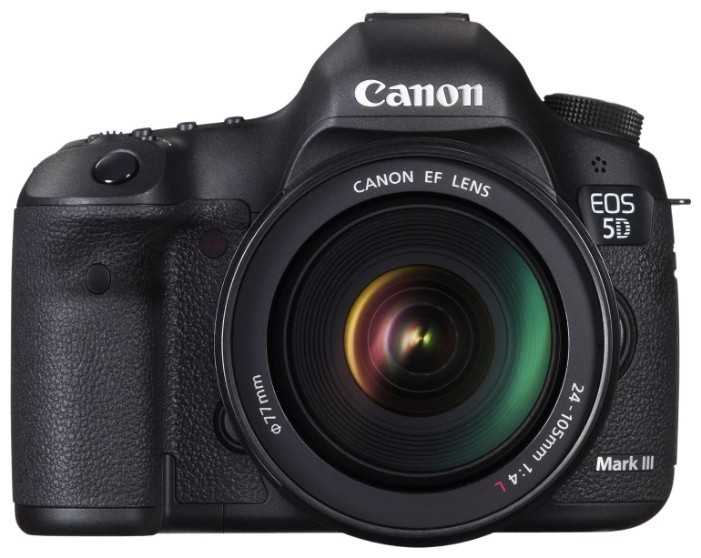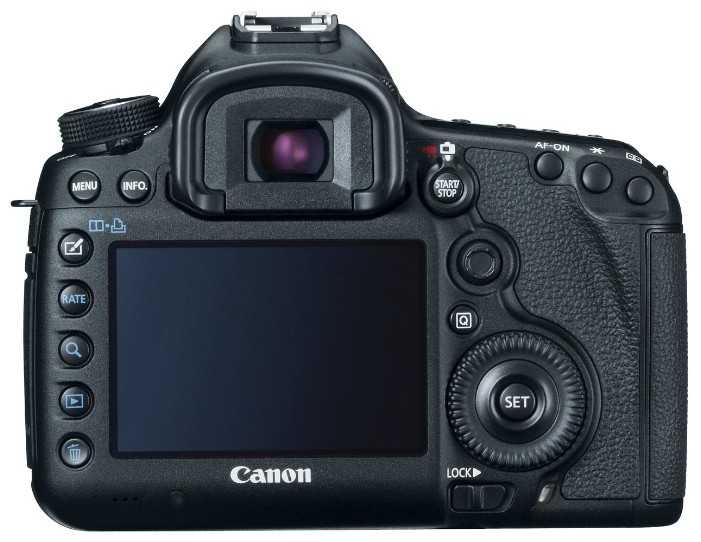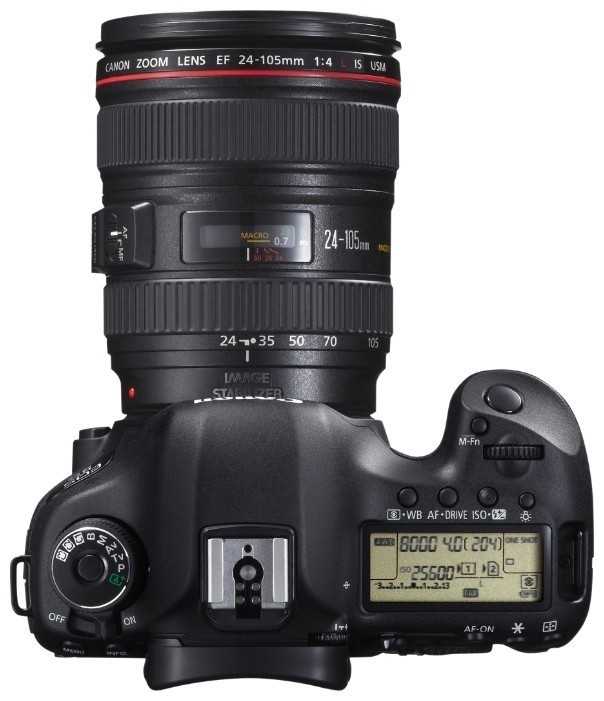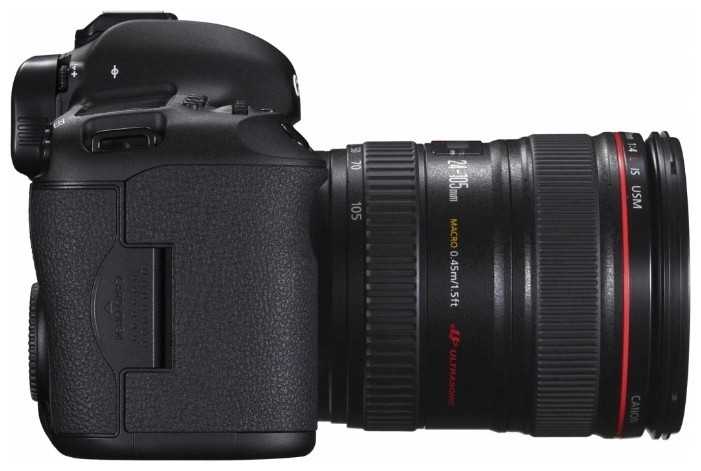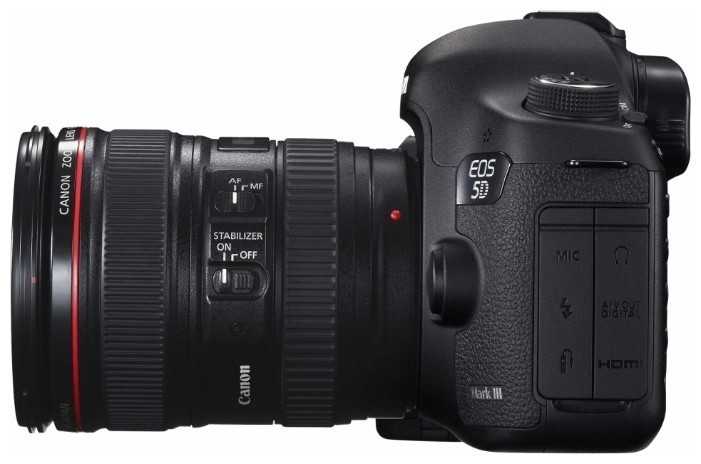
Плюсы по отзывам пользователей - Почему стоит купить Canon EOS 5D Mark III Kit?:
- Превосходная система автофокуса:
- 61 точка фокусировки с 41 крестообразной, быстрый и точный захват подвижных объектов даже в полумраке.
- Значительно превосходит 5D Mark II и 7D, позволяет использовать боковые точки без потери резкости.
- Настраиваемые режимы слежения, идеально для спорта, свадеб и детей.
- Отличная работа на высоких ISO:
- Чистые снимки до ISO 12800, шумы минимальны и похожи на зерно плёнки.
- Превосходит 5D Mark II на 1-1.5 стопа, позволяет снимать без вспышки в помещениях и ночью.
- RAW-файлы легко обрабатываются, детали сохраняются даже при ISO 25600 для веб или мелких отпечатков.
- Высокое качество сборки и эргономика:
- Прочный магниевый корпус с улучшенной погодозащитой, выдерживает дождь, пыль и падения.
- Удобный хват, кнопки настраиваемы, режимы C1-C3 для быстрого переключения.
- Более надёжный, чем у 5D Mark II, с блокировкой диска режимов.
- Детализация и цветопередача изображений:
- 22 МП матрица даёт резкие снимки с отличной детализацией, особенно с L-объективами.
- Улучшенная динамика по сравнению с 5D Mark II, меньше хроматических аберраций.
- Тихий режим затвора:
- Почти бесшумная съёмка на 3 к/с, идеально для свадеб, концертов и дикой природы.
- Меньше вибрации зеркала, повышает резкость ручной съёмки.
- Не привлекает внимания, удобнее для стрит-фото и портретов.
- Быстрая серия снимков:
- 6 к/с с буфером на сотни RAW, лучше 5D Mark II (3.9 к/с).
- Подходит для спорта и событий, с двойными слотами CF/SD для резервной копии.
- Функции HDR и мультиэкспозиции:
- Встроенный HDR до 7 кадров с естественным результатом, лучше, чем в ПО для новичков.
- Мультиэкспозиция для творчества, как в плёночные времена.
Минусы по отзывам пользователей:
- Высокая цена:
- Дороже 5D Mark II на $1000-1500 и Nikon D800 на $500, оправдано только для проф. использования.
- Требует инвестиций в L-объективы (минимум 3 шт.) и ПК для RAW (CS6, 16+ ГБ RAM).
- Общая стоимость системы 300-350 тыс. руб. без учёта времени на обучение.
- Зависимость от качественных объективов:
- Полный потенциал раскрывается только с топ-оптикой (Zeiss, Canon L), китовый 24-105 средний.
- Стоковые Canon-объективы уступают в детализации и цвете, для новичков "не спешите покупать".
- RAW-файлы требуют мощного ПК и ПО (Photoshop CS6), иначе детализация страдает.
- Ограничения видео:
- Нет непрерывного AF во время записи, ручная фокусировка обязательна.
- Rolling shutter эффект остался, хотя уменьшился; нет чистого HDMI-выхода без прошивки.
- Хуже Nikon D800 по детализации видео, подходит не для кино, а для любителей.
- Нет поворотного экрана:
- Фиксированный LCD усложняет съёмку с неудобных ракурсов (над головой, у земли).
- Хуже, чем в 60D/T3i, оправдано погодозащитой, но раздражает для видео/макро.
- Неточность экрана и шумодав в JPEG:
- LCD врёт по экспозиции/ББ, требует Wi-Fi-карты или смартфона для проверки.
- Сильный шумодав размывает JPEG, лучше снимать RAW; шумы на ISO 200 в тенях (исправимо в PS).
- Медленная запись на SD:
- SD-слот не UDMA-7, буфер заполняется быстрее CF; используйте CF для серий.
- Редкие дефекты сборки:
- Люфт диска режимов, пыль на сенсоре (редко, но требует чистки Canon за плату).
444 отзывов пользователей o Canon EOS 5D Mark III Kit
Пользовались
Canon EOS 5D Mark III Kit?
Поделитесь своим опытом и помогите другим сделать правильный выбор
Bought this model to take over where the Canon 1Ds worked perfectly using the EF 28-300 3.5-5.6 L IS USM lens mostly. It departs in may ways with great improvements in the higher megapixel, quieter shutter noise and video/audio recording. I needed the camera to be quiet and could not believe the 1Ds was SO noisy. Could not use in recitals or shooting creatures. The EOS 5D Mark III has so much desirable and few things a bit awkward starting with the mode dial locking button. Didn't need to have 2 functions to rotate the dial that previous models for the most part omitted. The set button changes not only the touch pad changes but also the multi-controller toggle button that you need to drop down and hit the set button to confirm an action. The CF card positions in the camera does not allow your finger/thumb nail to snag the CF edge lip since it faces the card slot cover. I have to noodle around rather than use a thumb nail and pull out easily. Could be my "basket ball palming"size hands.FYI: If you need Canon service out of warranty. This new 5Dm3 gave contact errors with the 28-300 L lens the 1Ds didn't and noticed the lens mount was damaged but still would fire taking perfect shots. I sent to Canon authorized facility in CA last week for the mount to be replaced and dust removed out of the front elements. They quoted $435 and later changed it to $998(discounted to $804 after complaining) citing a stabilizer major repair plus what I wanted originally. Canon cites a tier structure not visible to the public of billing with no way to order what you want but what they deem needing repair. Your choice is to pay what they want or they will not repair it and send it back. This is America isn't it? (Wish I could do that in my service business, dictate what and how much you will pay or else!). It was not clear what was included with various tiers and not at their service website for disclosure. Canon has great products but their authorized service is appalling to not do what consumers want but what they want to do. I have zero confidence in their repair skills/service if this is how they charge consumers with out disclosure prior to sending gear to them. I found out to late that the Canon original parts cost of a flange and rubber seal, over-nighted would have been under $65. Of course the cleaning of the front elements would have been excluded but the lens would have never left my house. The lens had no other evidence of failure other than contacts not meeting and the damaged flange. Now I will never be sure if the repair was actually needed, damaged in shipment to them or how long the lens will function since it was opened up and "repaired". I lost major ground in Canon authorized services. Be advised, don't freak out when "what ever" fails and start figuring out what you need. Study ALL your options before the "bait and switch" or mystery billing events tags your wallet! There are websites that offer everything you need for your out of warranty gear repair if you or someone is up to it. Some of us have no problems with repairs and given the risk potential of strangers work, shipping and can do just as good. Not everyone has endless funds and this lens was not cheap.Update Feb 26, 2014: After back and forth with Canon in Irvin, CA and customer relations more "damages" were disclosed that seem to be their justification for the major service criteria. The small surface scratch on the lens barrel from a 1943 bomber ride with my then 85 year old mother at 5000 feet with wind turbulence was the reason for the need to replace the lens barrel. Did not effect functionality and I earned and loved that scratch. It was a paint scratch, not a dent, the camera and lens was never dropped and the zoom action was perfect, just fine. That along with the stabilizer replacement and what I wanted, front elements cleaned and base mount replacement justified the second estimation of the $998. Talking with customer relations dropped the labor cost to parts only charges. The point is I needed the front elements cleaned and the base mount replaced and Canon in Irvin, CA found everything else and refused to do what I wanted/needed due to their high standards of not letting anything out the facility that did not meet their "high" standards of service. All or none! The owner of the property DID NOT have any say in what was going to be performed, zero. With Canon services warranty or out of warranty gear the owner of the property has zero input to what is performed. The web site does not give you a clue to anything you can expect and you will not learn anything until the item is shipped and gone through who knows how many Canon service hands, departments. The risk potential grows exponentially once it leaves your hands no matter what anyone says. Again, before sending to any repair facility, Canon or not, in or out of warranty, be advised that what ever you thought you needed may be of no consequence to the p
The switch from Nikon:After being with nikon for 16+ years, I recently threw in the towel. As a wedding shooter, I count on my equipment and need things to work correctly.I had purchased two nikon d600's 1 year apart and both had the horrible dust/debris issue. After repeat cleanings and 20,000+ shots, both cameras still had the issue. I got tired of wet cleaning the sensors and got tired of nikons poor customer service. Nikon decided that the D600 owners just had to either deal with repeat sensor cleanings or send in the camera to "possibly" have the issue resolved. Nikon had no proven fix besides switching out the shutter and praying that the issue went away. Nikon released the d610 and left the rest of the people hanging.Leaving nikon was extremely difficult for me because I had a big investment in the bodies, accessories and glass. I made the move at a huge loss but am extremely happy that I did.The differences:I purchased both a 6D and the 5D mark III from amazon. The immediate thing that I have noticed is that all my canon glass has been good with focus right out of the box. With almost every nikon lens/camera combo, I had to pull out a focus chart and focus tune software and apply fine tuning. I also noticed that the focus system on my canons do not have the tendency to act up under tungsten lighting like my nikons did. My d600's and d7000 had a tendency to back-focus under heavy tungsten lighting.The canon DPP software is a pleasure to use. I hated Nikon capture NX2. It was slow and the user interface was horrible. Canon DPP loads quickly and applying batch changes is amazing. I do miss the Nik software selection point feature of CNX2.The one thing I don't like is the fact that canon makes you purchase your lens hoods separately and at a premium.I do like the fact that the canon equipment is made in japan and has a quality feel to it compared to cameras like the d600 that are made in Thailand.The 5D mark iii vs D800:Prior to leaving nikon, I also spent a week with the nikon D800. I found that the d800 produced a lot of noise in the raw files when pushed to higher iso's. This alone was enough to turn me off. I did test my sample of the d800 for left focus issues. I did not have the left AF issue of older d800's but the camera I got had some focus issues that required fine tuning all my glass to the body. In some cases the fine tune was at +20.The D800 files did have a lot of detail and dynamic range but the file size was huge. If you shoot a lot of landscape and want lots of dynamic range, the d800 is a good option. But the dynamic range comes at the cost of nikons lack of quality control.If dynamic range is not your main goal but want a great reliable camera with a killer AF system (better in my testing) and smaller files, the canon 5D mark III is amazing. I suggest not to get caught up in the megapixel game unless you do some very heavy cropping like birds in flight for which the d800 may be a better choice. The 5D mark III files are great and have plenty of latitude for most users.5D mark III:Focus:Focus Focus Focus. The 5D mark III has a killer focus system. The best that I have used. The focus system is lighting fast, accurate and very very customizable. It is a pleasure to be able to customize my focus system like this. I recently shot an event and out of 700+ images, I scrapped maybe 10 shots because of focus. The ones I did delete because of focus was do to me not placing the focus point on the right area of the image. No back/front focus like my nikons had. No focus shift under tungsten lighting like some nikons.The hit rate on focus is amazing. You want to know why canon can charge a premium for this camera? Because of its pure amazing focus system! If you absolutely need the best focus system on any camera, this is it.Customization:You can assign buttons to do certain functions and to your own shooting style. This is a god send compared to nikons lack of customization.Body:The camera is solid with a good feel in the hand. The buttons are easy to operate and cleverly located. Coming from nikon is an adjustment because the camera buttons are in a different layout. It will become easy to use after some time and practice.I did not like the fact that canon has no built in removable screen protector like the nikon. This is a minor gripe but one that I resolved by buying the vello stick on glass protectors. I know the nikon plastic screen protectors are not fancy but they did a good job of protecting the screen from bumps.Images:The 5D makr III images are fantastic. The auto white balance works much better compared to my nikons I had owned. The 5D mark III is not able to pull details from the shadows like the D800 or D600 so it is a sacrifice in dynamic range if that is the most important thing to you. Nikon still has canon beat in dynamic range.I will personally will take a in focus, sharp, good out of camera white balance and dust free image out of a canon any day vs a hit and miss focus and du
UPDATED REVIEW OUT BELOW. AFTER 3 TRIPS TO THE REPAIR CENTER, CANON FINALLY REPAIRED MY CAMERA.I got this camera as a birthday gift this year. It worked great for the first 2 month and I noticed a lot of dust just started sticking to the sensor and isn't falling off. I never had this issue with my Canon EOS 7D which I had for 2 years now. On my Canon EOS 7D, I rarely get dust, and when I do, it usually gets shaken off by the self cleaning unit on the next power cycle. On my Canon EOS 5D Mark III, this never happened. The dust just kept collecting and collecting (the sensor was a dust magnet), so I sensed something was wrong with the self cleaning unit. Not to mention the camera was underexposing 80% of the time. I sent it into the Canon Irvine, CA service center for them to repair it. They adjusted the camera meter. They also adjusted the self cleaning sensor unit (so it was malfunctioning) and did a sensor clean. When I got it back, I noticed they left a bunch of residue and dust on my sensor (more than what I had before). The self sensor cleaning unit did nothing to it. Canon support gave me a shipping label back to get it fixed. So I sent it back in. A week later I got it back, not only was my sensor dirtier (I have test shots), they also left several scratches across the back of my camera and on the side! I contacted Canon support again. They gave me a label to ship it back in to get all the problems fixed. Now they want me to pay almost $280 for replacement parts even though all these issues happened because of the camera malfunction and due to the repair center worker's carelessness! To add insult to injury, I shared this repair story on their Facebook page. Instead of replying me to make things right, they just deleted my post all together. Very scammy company, do not recommend buying their products. I will attempt to work things out with their customer support. Will keep you guys posted. Also Canon, if you are reading this, having to send in my camera in for repair for the same issues (and issues introduced during the repairs) 3 times is very unacceptable.To people who says the reviews are about the products and not the repair centers. It is about the product. Not only is my camera screwed up on the basic functions of a digital camera, don't count on Canon to honor their in-warranty repairs (which is part of the product you buy). If you get a defective Canon EOS 5D Mark III, guess what? You are out $3500+tax!Update 7-11-2013:After 3 trips to Canon's repair center (still pretty ridiculous how they didn't get it right the first time), they have adequately fixed my camera. While there are still a few dust spots on the sensor, they are barely noticeable, so they did clean my camera to an acceptable level. It seems CPS handled my repair this time as my camera came back in a CPS bag. Also they have decided to replace the scratched up parts (caused by the repair center) for free after I complained to their Facebook page. Since my camera is usable now, I will need to take this camera and shoot before I can give a full review on the product. Right now I have upped my review to 3 stars and I doubt I will ever give it a 5 star rating due to the fact that the I had to send the camera in 3 times to get an in-warranty repair correct. If the warranty is part of the product you buy, Canon needs to be able to honor that warranty before the customer needs to make complaints online.MAIN REVIEW HERE (10-15-2013):I will not raise my star rating from 3/5 on this camera due to the problems I am about to describe in this review and the horrible warranty service I received. This is an okay camera, and can work very fast in continuous shutter mode. The focus tracking is very fast and I have used it on quick moving subjects and it hits the mark 95% of the time. Also, I can use this camera up to ISO 6400 with no issue in low light. While a bit grainy, there is barely any image noise even at ISO 6400. There is also no noise even during long exposures. I only spotted around 5 tiny "hot pixels" after a 4 minute long exposure. The camera has a built in "quiet mode" which kind of works. It suppresses the mirror slap noise, and I have used a few times outside around wildlife. While it does make a sound, ambient noise is enough to cover over it! Sometimes, I accidentally fire off 2 shots in this mode because I didn't hear the mirror. Also, this camera is incredibly rugged, and I have shot with it in rain and under waterfalls. No water got in and it performs very well (just make sure you have a weatherproofed lens too!). The only few issues that still persists in this camera is underexposure and white balance. My camera still constantly underexposes 2/3 to 1 stop around 75% of the time even though the light meter has already been checked and adjusted several times at the repair center during that self sensor cleaning problem. Also, I have noticed that the auto white balance is always off especially in day light. All my photos always h
I am an amateur photographer with no aims or designs to ever become a professional. My start into digital photography was a fluke, and in the intervening years I have become increasingly passionate about this hobby but know I never will seek to do this professionally. I chose Canon simply because I was first exposed to it, and not because I have deep-seated convictions it is "superior" to Nikon. I have used some Nikon equipment and find it to be very high performing and exceptionally suited to photography. I am more familiar with the Canon menu system, and having used it for a number of years, I feel I have come to understand the layout and functionality of the menu system, which is important for on-the-fly changes to settings.I own a Canon camera with an APS-C, two film slr cameras (Pentax), and now the 5d Mark III.I love this camera. I admit to having a bit of techno-lust, but this camera has was worth every single penny to me, because I love the images I've been able to produce with it.The larger sensor size on the Mark III makes it roughly equivalent to 35mm film. The ISO range is large (50 to 102,800), and low-light performance is solid. Images still have very high detail at 1600, and the camera produces very acceptable images at 6400 ISO. Images produces at 12,800 are still solid, as there is still a lot of detail though noise does enter the picture.The auto-focus system is tremendous. Having gone from 7 auto focus points on my previous model to a fast and response 61 point system has helped nail focus in dark environments. It is fast and very responsive, and the ability to switch to a precise auto-focus point with one touch is a real boon. Customizable menus and the ability to change functions from factory default to specialized functions has really made this camera a joy to use. With my old camera, I sometimes felt limited or frustrated in what could be accomplished; with the Mark III I often find myself saying, "it can do that, too? Oh man... how cool is that?"I travel frequently (and often in harsh environments), so the weather sealing and rugged body is a real plus for me. My old camera looks like it's been fed to the dogs but it still keeps going, the Mark III feels like it is built like a tank in comparison, so I have fewer qualms about taking it out into rougher weather or dirty environments. I prefer landscapes and street photography, so the wider sensor suits my style. The ergonomics are preferable (for me, at least) to the smaller APS-C styled bodies, but the rugged build does come at a significant weight disadvantage, as this weighs roughly 50% more than my other body. When coupled with a heavy lens, it can be a burden to drag around on a long day.Even still, it is a joy. The silent shutter mode is a HUGE advance, as it makes street photography much more practical. You can snap a pic and be on your way before your subject even registers the camera.EDIT:I've had this now for over a year, and I've just fallen completely in love with its capabilities. It's making me a more adventurous photographer as it is making me push the boundries of my photography as it presents options that I didn't even know where there. In camera HDR is a gimmick but produces useful images. Multiple exposures are fun, and a nice feature. But what really has blown me away with this is the level of control I have over my images. I find more and more that I am able to dial in settings on the fly to get the image "right" in the camera, reducing post processing time.Since you can write RAW and JPEG, you've got files ready for transfer and the originals for playing with.This camera will age gracefully. It has withstood lots of abuse already and still looks great. The weather sealing has been a boon. Even though I am careful with my gear, there's a certain amount of damage that will happen if you're in tough environments.A tremendous effort by Canon.
Exceptional low light DSLR. Shows very little noise, even at high ISO. Focus is spot on, though a little complex at first. Paired with L lenses, this has tremendous capability to focus in very dim lighting conditions and deliver some great results.For the last three years I have shot with either a Rebel or the 7D, and my biggest complaint has been the noise that is present in low light photos. With the 5D Mark III, this is no longer an issue. The best part of the camera is that it can adapt to most lighting conditions, with the right user input and management of camera settings. I prefer the natural look of photos without a flash, and it seems that in most cases the lighting conditions you shoot in are sub optimal.Color of photos it produces looks very pleasing and natural. Though there may be some advantages to shooting RAW, my preference is JPEG for simple photo sharing and editing, and JPEG photos work great.Love the sound of the shutter, and love the fact that you can easily switch it to silent mode shooting. It's impressively quiet.The two compromises I felt I had to make when getting this camera were (1) lack of a flip out screen and (2) lack of autofocus video. Perhaps in future versions Canon will consider a pull out screen, and hopefully improve the focus accuracy and speed when shooting in Live View mode. Still a big sluggish on this model. As far as the video autofocus capability goes, it seems like it needs refining and fine tuning. I believe some Nikon DSLR cameras have this, but I'm not sure how well it really works. Overall I've been quite satisfied with the 5D Mark III and have not dwelled much on what I considered to be "compromises" (or missing features), but rather have enjoyed shooting.Most of my photography is for my children, and this is where the autofocus and low light capabilities really shine. Other things I shoot include flowers and landscapes.The 6D may be a good alternative for some who are looking for the best budget full frame option. Though I considered it, my concern was that the autofocus capability and limited view finder coverage of the 6D would be limiting. It would be nice to have the 5D Mark III be a little bit smaller, though.The build is excellent. Feels much like the 7D, but more refined. My hands are big, so it fits me well.Lenses I use in with the camera includeCanon 24-70 L - extremely useful. I find the wide angle quite nice. The 24-70 on the 7D (cropped sensor) just didn't go wide enough.Canon 50 1.4 - nice and lightweight, and great when stopped down to F2 or beyond. Has great background blur. I also have the 40mm lens but find the 50mm more useful viewing angle. Quite tricky to shoot at F1.4 or F1.8 - most everything is out of focus. But a fun lens. Wish it focused better in dim lighting - seems to struggle.Canon 28-135 IS - handy walk around lens. Use it for vacations mostly. F5.6 on the telephoto side is a bit slow for me. Quality of photos is good, but not really comparable to the L lenses. Don't use this lens that much.Canon 100 IS L Macro - the viewing angle seems just right for portraiture. Also use it for macro, of course. Exceptional bokeh and photo quality. Fairly lightweight.Canon 70-200 IS L II - my favorite lens by far. Most pleasing results, and fast on focus and on performance. Most often shoot at F 2.8 or F 3.5. Would probably use this lens much more if it were smaller / more lightweight. But then it probably wouldn't be F 2.8. My wife and I call this the "King Lens," and it's well deserving of that title. Phenomenal build quality and very fast lens.I like Ken Rockwell's review of the 5D Mark III. Read it several times before getting the camera, and I think it's a great source of information to consider if you're looking at the camera.Costs a lot. Ouch! I've actually been somewhat careful about where I take it, which wasn't even a thought with the 7D or the Rebel T1i. Sometimes I wish I had a little Rebel for smaller size and portability and less liability (i.e. concern it will get lost or be stolen), but then I remind myself that I wouldn't be satisfied with the performance and photos, particularly the low light capabilities.I hope to get many years of functional and successful use with the 5D. I considered the Mark II version, but wanted easier video controls and updated auto focus. Glad I went with the Mark III. I'm using the video more often than I thought, though the manual focus does take some getting used to. And lots of practice and patience. But when done right, it's very rewarding.By the count and quality of lenses I have, and given the 5D Mark III is pretty much a professional camera, I probably ought to be making some kind of business or money on it. But I just use it for family photography and enjoyment. Worth the price for something like this? It took me about three years thinking about a full frame wondering that question. Glad I did, if for nothing else, then for the reason that
I'll keep this brief since there are so many thorough reviews. Everybody talks about the big things, so I thought I would try to focus more on the little things you don't read about as much. I'll hit on the big things first and get into the little things after. The recommendation is simple and short: is this body worth it as an upgrade from a 7D or a 5D II.This camera is substantially improved in the autofocus system of the 5D II! But lesser so relative to the 7D. The 7D is likely good enough to not require an upgrade to this camera for this feature, but this is a revolutionary upgrade over the 5D II. Having all the points is so convenient, and almost all of them are as accurate as the center point of the 5D II. One advantage over the 7D autofocus system is the level of customization possible with shutter priority and servo methods.The ISO range and noise performance at high ISO is much better than both the 7D and 5D II. This is a feature that I would recommend upgrading for. Images are usable for publication at 12800 after noise reduction and sharpening for small enlargements. 25600 ISO on the 5D III is pushing it, but for 8 X 10 prints, the quality is good enough to make sellable prints.Weather sealing is better than both the 7D and the 5D II. The battery grip is more stable and integrated with the 5D III than either of the other camera bodies I have used. Canon did a great job with making the battery grip feel VERY solid on the 5D III. This was actually one point that not many people comment on but I really appreciated. It almost feels as uniform as the vertical grip on the 1D X - yes, it's that firm with the body. I really liked that.The shutter speed is 2 frames faster than the 5D II and 2 frames slower than the 7D. It's right in the middle between the two.A smaller difference that isn't usually mentioned is how much better the depth of the hand grip is. The camera handle actually comes out a little further, which means my fingers wrap around the handle much better. I really like that because I feel like I have a more solid hold on the body with heavy lenses than I did with either the 7D or the 5D II.There is the addition of a multi-function button next to the shutter, and the 5D III is more customizable in general than either the 7D or the 5D III. The customization ability is probably the least spoken about benefit of upgrading to the 5D III from the 7D and 5D II.Is the 5D III worth the upgrade for the price? I think it depends on what you are going to use it for. The 7D was always best considered the enthusiast action camera and the 5D II was always considered the enthusiast studio camera. I think the 5D III could replace both of these as a combined enthusiast action and studio camera. I have to be careful about saying that however - the 5D III is really a professional tool, not an enthusiast camera. I think the 5D III performs best as a studio camera, but it can do well as an action camera. The level of performance is in some ways on par with the 1D series, but missing some of the advanced technology in the 1D X like the improved metering system and the metering-autofocus integration. Upgrading from a 7D for action photography? I would upgrade to the 1D X instead of the 5D III, unless you want to do more studio work than action photography. Upgrading from the 5D II is an easy recommendation to spend the money and upgrade. The low noise performance, improved dynamic range, added versatility, and customizable options make the 5D III an easy upgrade from the 5D II and worth the price.
This is my review as a landscape photographer. Upfront you should know that I don't shoot video. I realize there are many video upgrades but I wouldn't have a use for them in my current work. That's not covered in this review.When the MkIII first was announced, it was about $500 more than it is now. And on paper, I decided that for the quality differences in my actual images, it would not be worth the upgrade. I felt content in my analysis and went on happily using my MkII for several more months in which I logged thousands of frames and make several new additions to my portfolio, which you can see at LensTraveler18 and at this moment all images in the last 3 years are from the MkII. This winter, I traveled to Jordan with a group of photographers and met a guy who went through the same thought process I did. He gave me a complete tour of the new features and I was blown away with the improvements made by Canon.After the recent price drop, which brought the MkIII within about $500 more than what I paid for the MkII, I decided to make the purchase. I am thrilled that I did.I just returned from Iceland and used both cameras and started to notice differences that make my experience more enjoyable and my images "better" from my perspective. I will try and explain what I found and why those changes were important to me.This is a complete overhaul, upgrade and enhancement of the MkII.There are no similarities except the size of the sensor physically and the number of megapixels which is roughly the same as the MkII. So to consider this an upgrade is misleading.The body is shaped differently yet almost completely familiar to the MkII user, and the menu structure is an enhanced version of the MkII. It's VERY enhanced.The Canon "Experience:"If I were to summarize what I realized and what's been said over and over here in the forums is that Canon actually listened to users carefully and implemented nearly every suggestion for improvement, and there are many. I cannot say enough about Canon and Canon Professional Services (CPS,) who are the repair and service arm of Canon. Nikon readers should tune out here, I suspect you will be disappointed. Before I left for Iceland, I had my 5dMkII cleaned and adjusted by CPS, it took 3 days, the camera came back better than it was before and I had a long conversation with the service rep who explained what was found and what was done to my camera. Side note: I slipped and smashed a 17-40L zoom to smithereens. I spent 5 minutes picking up the pieces so I wouldn't litter. I put all the pieces into a box and shipped it to Canon. They charged me under two hundred and returned a perfect, tested lens. That's what you get with Canon.Features:With the MkIII, autofocus has been enhanced so much that it's practically telepathic. The problem is that so much new functionality is built in, the learning curve on the autofocus system itself is substantial. You can just use it like you did on the MkII and it's 1000% better but there's so much it can do. I cared about that, I was thrilled to see how heavily it was enhanced.The AEB (autoexposure bracketing) system now matches Nikon in allowing for 3, 5 and 7 frames, with 1/3 to 2 stops between each frame and with full offset. For HDR types, this is a huge improvement and very welcome. The memory card management system now accepts two cards, one SD and on CF, and you can separate which image types goes to which card or use them as backup. I realize Nikon's high end cameras had this before so it's catchup here too. But very welcome.There are two new "functions" which are useful and one of them is AWESOME. The camera can now shoot HDR and process 3 frames into a single Jpg image. I have no use for this since I do everything in software but many people will really enhance their results with this new feature. The other new function is "multiple exposure" shooting which I haven't had since my film days. Yes, I am that old. I had some fun with it this past weekend and I am thrilled it's there.Virtually ALL buttons are definable and a new "Q" button has been added. I think it was on other Canon models but not on the MkII. I have already become so used to it, I almost can't imagine working without it.The processor upgrade shows up as faster processing time for noise reduction, higher frame rates and generally snappier performance. Since I spend time out in the dark, I was concerned with low light performance. This gets into a discussion of how the new sensor performs. The new sensor has about double the dynamic range as the MkII. At night, I expose at ISO100 for 10 minutes typically and sharpness was always excellent on the MkII, I never complained. Yet the MkIII is better in several ways; the pixels are "sharper" the fringing/noise is far lower and the color appears more accurate. There are also non-specific differences in that images seem to "look better" which is totally subjective, when shot with the MkIII.I know the new 6D will be readily available s
I have owned this camera for about a year now and just now getting around to writing my review, so I can say with 100% certainty how I feel.I have been a Canon shooter for a while and I am stepping up from a Canon 7D. The 5D is a little bit bigger than the 7D but both have similar build qualities. Some of the things that have changed from the 7D to the 5Dmkiii is the shooting function button, to change from Manual to Shutter Priority there is now a button on top that stops you from accidentally changing modes. Other than that, the ergonomics are pretty much the same (outside of the AF System).I had been shooting with the 7D for some time and I was really on the fence about making the move because I swear (and still do given I own both cameras) that there is not a significant difference between the images of the cameras when shooting at lower ISO's. When looking at both images side by side colors are slightly better, it seems like tonal gradients looked a little better but it was not huge. The problem I had with the 7D is that at ISO 3200 the images were so noisy they were about unusable, even with some cleanup things were pretty rough. I have shot many images with the 5D3 and I get great looking shots at ISO3200.The other huge difference is the AF System on the 5D3, head and shoulders better than anything I had ever used. The 7D was good and worked well and I had an old 1DMkii that had 45AF Points and was blazing fast but the new 5D was amazing and how many different configurations of the AF system you could set took me months to get used to but I love it. Sure the Nikon D800 has 36megapixels but I have always said, I will take a lower resolution shot that is spot on and crisp over a high resolution image that is blurry.Both in studio and out in nature this camera performs well and is very refined. I have shot with the Canon 7D, Sony NEX 5, NEX 3 and the new Fuji X-E2 and will take this camera every time. It has an AF System I can count on to be spot on every time, the ergonomics of it allow me to pull the camera out of my bag and change shutter, aperture and ISO without ever moving my eye out of the viewfinder and the LCD screen looks great in back.If I were going to knock anything it might be the slower burst mode but that would be about it. I don't shoot enough video with it to really talk about it's performance but I know a lot of people love it for that.************UPDATE****************** 04-09-2014After my last studio shoot I decided to send my camera into canon for cleaning (I normally have my camera sent out in January when I am shooting less to make sure everything is working right) and I get the estimate back that the there is dust between the low pass filter and the sensor and because of that the sensor needs to be replaced. Keep in mind at this point the camera had been used mainly in studio and never seen a drop of rain and is never kept without a lens or body cap on the camera AND the camera is only 15 months old. Given the light use and delicate care I take with my equipment and that I had a 7D for over two years working in the exact same environments with no problems, I feel this is 100% a manufacturers defect. After writing Canon several times they refused to address the problem and I was stuck with a 940 dollar bill.After the new sensor had been placed in the camera everything works good.To me it is crazy to think that needing to replace the sensor every year is a normal thing and considering Canon refuses to answer my questions regarding this repair I am to assume this is somewhat common.At this point I am never buying another Canon product ever again. There are too many great camera manufacturers out there to hold allegiance to a company that does not value me as a customer. I have owned the 20D, 7D and 5Dmkii. I own the 16-35 L, 24-70L, 35mm L, 50mm macro, 85 1.8, 100mm Macro L, 135 L and 70-200 L. Goodbye Canon.
As a background, I've been shooting SLRs for nearly 35 years. I've owned and loved my Nikon D300, battery grip, and Nikon 24-70mm f/2.8 and 14-24mm f/2.8 lenses for 5 years. I was ready to upgrade to a "hybrid" stills and video camera, but my primary passion is stills photography.Like most Nikon photographers, I was extremely excited about the Nikon D800 when it was announced, but paused as it became clear that there were some manufacturing problems that were being sorted out. I waited a year and recently purchased a D800 body with serial 305xxx from Amazon, thinking that surely the left-focus issue was behind us. I was incorrect. After two bodies exhibiting the same unacceptable left-sensor-focus problem, and despite witnessing the most amazing dynamic range I've ever seen from a DSLR sensor, I decided to take a deep breath and switch to Canon.However, my switch from Nikon was not without its challenges--mostly due to apparent manufacturing tolerance issues between the 5D Mark III body and several L lenses that I ordered. The first 24-70mm f/2.8L II, 70-200mm f/2.8L IS, 50mm f/1.2L did not focus properly. For all three of these lenses, micro-adjustments were not adequate to fix the problems. However, the second copies of two out of three of these lenses were fantastic (I gave up finding a 50mm f/1.2 that could focus). The 24-70mm f/2.8L II in particular is the sharpest lens I've ever used on any camera at f/2.8.Now that the lens problem is sorted out, I offer the following review:Image quality: Subject detail for a 22MP sensor is astounding (especially with the 24-70mm f/2.8 II) and the color rendition is wonderful--much better auto white balance than the D800. Dynamic range is only acceptable; I occasionally see shadow noise and banding with dark, colorful subjects at ISO 100 when I push the images slightly in post (but oddly, not at higher ISOs). Likewise, highlights can't be recovered as reliably as I would expect. Canon has some room for improvement here (this is a real Nikon strength), and for this alone I deduct 1 star. The high ISO noise performance is about as good as the D800--really excellent! If you are careful with exposure (which oddly I have to bias +2/3 or the images are too dark), you can achieve extraordinary results.Autofocus: Quite good overall--fast and accurate. It is similar to the D800 but without face detection through the viewfinder. It is unfortunate that face detection through the viewfinder is missing; the feature appears in the Canon 1D X, actually works and seems to aid not only candid photography, but also sports/action where faces can be detected. The detail focus on the 5D Mark III is really great, but the subject tracking is remarkably poor, bordering on unusable in my opinion. My Nikon D300 from 5 years ago can track subjects much more reliably.Ergonomics: The camera is big, but the ergonomics are fantastic--far superior to the Nikon D300 and the D800. Unlike the D800 that feels a bit like holding a 2x4, the 5D Mark III has a wonderful grip and thumb groove that inspires confidence. The control layout is different than Nikon but not terribly so, and after a brief period every bit as easy to use. The C1, C2, C3 custom modes are wonderful. I purchased the battery grip extender and love the improved ergonomics. I don't quite understand why the grip extender control positions don't better match the positions on the camera body, although this doesn't seem to matter much in practice.Video quality: I was prepared for good-but-mushy, alias-and-moire-free video. What I am seeing is wonderful, bokeh-filled, full-frame goodness. The resolution looks great to me, and while there are 3rd party firmware upgrades available (from Magic Lantern) that bring high-dynamic-range RAW video with remarkable quality, I don't think I need this; I love the look of the stock 5D Mark III video. As a point of reference, the Nikon D800 exhibited some moire the first time I tested the video feature.Overall: Except for the rough landing with Canon lenses (all sorted thanks to Amazon), I haven't had this much fun with photography in a very long time.
I've had this camera for a while and bought it because I was in need of it for a video shoot during the summer. I primarily shoot video and not so much with photos. I just want to highlight some key rounds on why I chose this camera over Nikon, which a lot of people who come here are probably debating.I had high hopes for this camera. The II which came out in '08 was already an exceptional camera and people were comparing it to RED, so naturally I thought the III would be all that better. Canon did fix what the II had deficiencies on, but it didn't really take any great leaps to continue with furthering its strong suites, which I think holds it back in some categories that Nikon now surpasses in.Here are a few things that Nikon D800 does well better than 5dIIIBetter latitude/dynamic range (especially in photos) You can actually pull out detail, color information and gamma in shadows taken in RAW that you can't do with the 5dIII. In fact, if you try to do so with the 5dIII, you get heavy noise and artifacts.It is sharper in terms of video (out of camera). The out of camera video remains much sharper and has greater detail than the 5dIII. When I shot with the 5dIII it looks very fuzzy and very soft. But I do think this is in direct correlation to why the 5d has better moire and anti-aliasing than the d800. This becomes apparent when I sharpened the image in post and the detail and sharpness came back but I got more aliasing and moire . So I think Canon did this in mind that this was the trade off for the low moire and aliasing.I think the D800 just takes better overall photos in general.Here is a few things that the 5d III does better than Nikon D800First off, I explained that there was an issue with the softness of the video. Well all this can be corrected if you just run it through some software and sharpen the video. It looks more comparable to the D800.The 5d is faster than the D800 in terms of FPS and how fast and accurately it focuses in on the subject.It is all around better in low light, better ISO performance and doesn't go to the extremes that D800 goes through by making the ISO steps less dramatic.Better ergonomics. Feels like you're gripping a military weapon that was designed in mind that someone would need to express a comfortable feel when shooting.Allows for editing and post work in Video shot. The d800 doesn't fair well when you try to sharpen it and the 5d performs better in post for video. The opposite is true for photo though.And here are a few of the intangible observations that I came up with. The 5d III has excellent battery life and far surpasses the D800 in battery longevity. The battery lasted for maybe 3-4 hours of shooting video and idling when I did my shoot. When I used an older Canon 60d, the battery life was about just an 1 hour of the same activity I was putting it through. The D800 is about just an hour of battery time for the same out of work. The second one that nobody mentions is the codec. The 5d III uses a very advanced codec that compresses the files so they take up almost nearly no space on your flash drives. I shot with the 60d last year and it was gobbling up maybe 32 gigs per 45-50 mins. Whereas the 5d III uses about 3 hours maybe a bit more on the same amount of storage. I was completely surprised and I bought way more SD drives than I needed because I just remembered how fast they were running out in the last shoot. You can choose from two. They are all-i and the IPB. One is used primarily for editing while it uses more storage space, but the other uses less storage but is less indusive to editing (as Canon lists). But from my own experience, I thought the IPB performed very well in my editing suite. The D800 eats through storage space very recklessly and doesn't use a very efficient codec system.Here is the final breakdown that I would recommend.Go for D800If you need a Video camera to shoot studio shots in a controlled environment where lighting isn't an issue.Go for D700If you don't care at all about Video and all you care about is photos. Seriously the D700 is the best thing out right now and it just got a lot cheaper. If I wasn't a video professional, the D700 would be my pick if video wasn't my concern.Go for 5dIIIIf you shoot video in outdoors settings or indoors with bad lighting and you have no control of the environment. This is especially great for a rogue documentary filmmaker.This is just a short brief detail of what I think of these cameras. I don't hate or like Nikon or Canon. I am partisan to both and only care about performance. So with that being said, you should buy the camera that suites the type of shooting you need.What really won me over was the battery life and how i never have to worry about running out of storage. I shoot in long shoots and just need the extra security. And I have 4 batteries to boot and 200 gigs.
I have thought a long while about whether the 5D3 or the Nikon D800 would be the best camera for me to shoot weddings. Both cameras are phenomenal and when using the best glass for each, I'd be very impressed if anyone could look at a photo and said that it came from a 5D3 or a D800. DXOMark is considered by many to be the authority on how cameras stack up. The rivalry between the 5D3 and D800 is well-known to those who are interested and DXO has actually even published an article on how they compare. DXO is known, however, to heavily favor Nikon bodies than Canon bodies where even some crop frame Nikon bodies are apparently 'better' than even the best Canon bodies. I believe that the DXO formula for what makes a high scoring camera is biased towards the Nikon but I don't knock their results. So here I'd like to address two main reasons why someone would want to get a D800 over the 5D3 from a person (me :D) who owns and is very happy shooting weddings with a 5D3:"The D800 has better dynamic range"-This is true. The D800 gives you very nice depths that the 5D3 can't spit out. However, this only happens at lower ISO settings. Take a look at the chart here: [...] You'll see that from ISO800 and up, the dynamic range of both cameras start to converge upon the same values. Weddings are action-packed and you can't afford to miss a moment thus you will need a high shutter speed to get the shot. I don't remember the last time I shot a wedding below ISO800 because I like more depth of field to my images and there must not be any blur. I tell people that if I didn't shoot weddings, I would have bought a D800. If you shoot in a studio or take photos of bridges and whatnot, the D800 would be an excellent tool for your use. But if you are doing action, there's really no difference in this department."The D800 has more megapixels"-This is true. If you need/want that many more megapixels, then the D800 is your camera. More megapixels is nice because you can crop a full sized image to the point where you won't even need a short telephoto for up-close shots. But if this is not as important to you, and you don't want huge raw files, meaning more hard drive space, get the 5D3. The one downside with the D800 is this, because your files are so large, the buffer during rapid-fire shots cannot keep up with the 5D3. Going back to my weddings - rapid fire shots are required all the time because you don't want to get a money shot with the main subjects blinking. A photogs worst nightmare!So there you have it. I'm pretty sure that my review was useless to you if you: are a Nikon fanboy/girl, never shoot above ISO800, need the best dynamic range for details, have lots of Nikon glass and like that the D800 is cheaper than the 5D3. Here are my reasons for why the 5D3 is nice for my purposes:1) Canon quality control beats Nikon (google Nikon D600 oil+dust, D800 left AF problem)2) Better burst firing capabilities3) Ergonomically more comfortable (but to each his/her own)4) Manageable file size + ability to do smallRAW and mediumRAW5) Canon has lenses that Nikon does not have or are not as good - 50L, 85L, 135L, 70-200 2.8L II. But Nikon makes a crazy good wide angle zoom - the 14-24. It just depends on what you like to shoot.6) With the right lenses, the 5D3 produces sharper images than the D800 (a DXOMark result)And lastly, for the record, I am not a Canon fanboy, just a shooter who wants the best gear for a particular purpose.
Wow, where do I begin.To start with, I've been a Nikon guy up until this point. Going back to my first SLR with the N80 film camera back in the day (god only knows how many rolls of film I exposed with that thing), to the D70, the D200, and the D7000. I was skeptical of all the hype around the 5D3, so being a cautious man I rented it and a 16-35 LII first. As soon as I held the camera in my hand, I knew I was hooked on the ergonomics alone. Further shooting continued to impress with it's amazing user experience, refined menus, and incredible autofocus performance. So I ended up buying a 5d3 along with a 35 1.4 L. (16-35 had too much distortion for my applications)Ergonomics:This thing fits your hand like a well worn glove. My hands are on the small side being only 5'7" tall, but even the big full frame body just snugs in my hand like it was custom designed for me. You really need to hold this camera to believe how ergonomically amazing it really is. It balances perfectly both with the 16-35L II and the 35 1.4 L. The physical buttons are very customizable, letting you configure the camera to make it's operation so intuititve, it just gets completely out of the way and let's you focus completely on shooting.User Experience:The top notch physical ergonomics and the customizeable buttons combine to make a user experience like I've never had before. I liken it to my Volkswagen GTI - everything is in the perfect spot and the product feels like it was designed to maximize the joy in the user experience. It really must be used to be believed.Refined Menus:Despite being a Nikon DSLR users since 2004 with the D70, I've never got used to Nikon's menus. On my D7000, changing anything takes me forever just to find the item. I've had the 5D3 for less than a week, and I can already find items right away. Maybe it has to do with Canon's method of Horizontally orienting the menus, instead of Nikon's veritical orientation. I'm really not sure, but I know for me the menu is so much more intuitive than Nikon.Autofocus Performance:Autofocus performance is simply stunning. I've heard it said in the photography world that Nikon has accurate and slow autofocus, and Canon has inaccurate but fast autofocus. I've used the 5D3 to shoot challenging indoor sports, and I'm blown away by it's speed AND it's accuracy. On both the 16-35 and the 35 1.4, the autofocus feels like it BITES into the subject. It's very confidience inspiring, letting you worry about important things like Light, Color and Gesture.Screen:While I admit that I have not personally tried a D800, several reputable review sites complain of it's green tinted dispaly. This is not confidence inspiring. The 5D3's display is just gorgeous - bright enough to see outdoors, responsive, quick, and accurate.Why I went with the 5D3 instead of the D800:After analysis, I felt like 5D fit my 'shoot from the hip' style of photography best. The d800, as evidenced in DxO Mark and other sources, cleary gives better technical IQ. But as most of my work is indoor sports and candid photography, the 5D was the clear winner for it's silent continuous AF-DRive mode, higher FPS (4 vs 6) in fast mode, user experience, and legendary canon autofocus.Conclusion:This camera was cleary designed with THE PHOTOGRAHER in mind. It becomes transparent , letting you focus on what matters - Light Color and Gesture. To me, this is the clincher. LCG are really what is most important in photography.Update 10.24.2012Color:I used to convert all my images to B&W when I shot Nikon. With this camera however, I find myself loving the way color images look. Colors are deep and smooth, without being overly saturated and harsh. I find myself using Silver EfxPro less and less. I'll A/B in lightroom between the color image and the B&W converted image, and the color image has some inexplicable ethereal quality that I love. Remember Kodack NC and VC film? This camera renders skin tones like NC, and colors like a slightly less saturated VC. It's a beautiful balance - it has a soul to it, like an old Fender Twin reverb tube guitar amplifer. Smooth and soulful.Now admittedly this could just be an evolution of my style, but I thought I would throw this in here and you can take it with a grain of salt. Also note that I think a lot of my love for this camera comes from my love of the 35 1.4 L that stays glued to it. Also #2, I always shoot RAW. So I can not comment on the camera's color modes or .JPG engine.Also #3, I've learned with this camera to "overexpose" by about 2/3 EV and turn down exposure by 1/3 to 2/3 in post. When you do this, the noise performance in the shadows is stunning.Update 01.11.2013I'm continually amazed at how clean the sensor says. Using the D7000 in the same environment I'm using the 5D3 in, I was forced to continually clean the sensors. The 5D3's sensor cleaner is quite effective - I have a sensor loupe, and even upon inspecting the sensor that closely I still hav
Just to give a little background about myself and uses. I have owned over the years a 20D, 40D, 50D, 7D, 5D, 5dMkII and now the ultimate camera of all time... the 5D Mark III!!!!Holy cow! This is an amazing camera. First off:1.) Build: The 5d Mk II while being an amazing camera never felt like a tank to me. It always felt like it had just a little bit of give. Especially around the CF compartment door. When you picked it up, there was always a little bit of give in it, where you could just feel it move a little. Not anymore. The new door feels solid, and when you hold it in your hands, it feels great. The rubber grip over the door makes a huge difference. The whole camera feels solid. The way the back wheel clicks. The way the on/off clicks. It just feels like a REAL camera. Almost a like a 1D that has just had it's bottom chopped off. You just have to feel it to believe it. Making the dial have to have a button to move is a nice feature. I can't count how many times I would rush from location to location to get a shot and from where it would rub on my side it would change my dial from AV to M or something else. The new M.Fn. button is nice as well to have an extra button near the trigger to change AF modes. I do find that the trigger on this to be more sensitive but not a deal breaker. The 100% view finder makes a bigger difference than you would think. It is bright and expansive. The added SD card slot is nice, but I don't use it, as I don't feel like buying more memory cards so I cannot comment on this extra feature.2.) AF: Sooo.... This is the #1 reason I chose to upgrade, as is the reason for most of you. After having shot 40,000 shots on my Mark II, I know what to expect from it's AF. Well this cameras AF is not even in the same galaxy as the 5d II. I actually turn off the AF points now, as there are a whopping 61 of them!!! Compared to 9 before, it's like being in heaven. It's like a wall of AF points!! ALL of which are actually usable!! I have taken it for a test run on my dogs at the dog park and my 20 month old son. WOW!!!!!! Before I was lucky to have 40% keepers at best. Now I'm up near 80-90%. The AF Servo is phenomenal. I tested it out in my dark bedroom using only some TV lighting focusing on my blinds and corners of desks that were BEHIND the TV so there was no direct light and after a bit of searching would actually get a LOCK!! With my old 5d II the chance of that was a whopping 0. It would hunt for days! I tortured the AF, and it can find a lock nearly everytime, even with the far most AF points most of the times. Worth the money for the AF alone! I was using a 35mm f/1.4 for the record. The dark AF point that has been widely talked about is quite annoying I must say. Not having it light up, esp. in the dark, makes it very difficult to locate at times. If I still did wedding photography this could be an issue. If they have a firmware fix to fix the problem, this will be the perfect camera. Don't let this deter you from buying the camera. It's a nuisance, and I can live with it, and during the day it's not a problem at all.3.) IQ: I would say I'm getting about a 1.5 stop improvement in iso noise. At 1600 I don't even think twice. Might as well be 400 in most cases. At 3200 and 6400 it's a little more of a push, but still tolerable with some NR. Compared to the 5d II I wouldn't even try for 3200 unless I was completely desperate. I didn't really buy it for the IQ improvements, but a nice added bonus. I didn't want a bigger MP camera as I don't want to buy more memory cards so I was happy with the minimal MP improvement. Other's might not be, but 22.3MP is enough for me. The image quality is what you would expect from a full frame camera, so in other words spectacular. Nothing really else to say there. I do not use JPG so I cannot comment on in camera processing, but I hear the NR is a little excessive and there is some detail loss rather than if it was done in post processing. That is not from first hand experience, however.4.) Menus: Menu system is much easier to navigate, and I love the fact that I can get a 1:1 magnification instantly now with the push of one button on review to check for focus, which is almost always spot on. =) Just saves time. The side by side comparison and rating system is nice. Helps me reduce the number of shots for processing later. Just a nice added bonus. The AF options are aplenty. It's a little intimidating coming from the AF menus of the 5d II. After playing around with them, and reading some, it's not too hard to grasp. The AF micro adjustment is back and can be set for tele and wide. In all honesty, the pics I've gotten so far are so spot on, I haven't felt the need to tamper with it, like I did on my 5d II. Maybe it's the AF, so who knows.5.) Video: I don't use video much so I can't really remark on this feature.6.) Overall: Quite possibly the best camera per weight I've ever touched. This is e
Let me first start by saying that I am a former Nikon shooter. I sold all of my gear hoping to purchase a Nikon D4. That didn't happen so I got what I thought was the next best thing. Boy was I wrong! I honestly think that for the way in which I use a camera, I purchased the best camera available. The key here is "the way in which I use the camera". I'm not trying to start any arguments as to what is a better camera between Canon and Nikon. That being said, I shoot sports photography at an amature level, weddings and other events professional and also do professional video work. Like many of you, I hope, I did a ton of research on everything that was coming out in an effort to make an informed decision. Unfortunately, much of what I read seemed to be very biased. Having had the 5D Mark III now for about 2 weeks, I can tell you that I haven't even scratched the surface in terms of its abilities but, I am blown away with every shot that I take and every video that I capture.This is not a camera for someone who doesn't like to read. There are about 450 pages or do in the manual that need to not only be read but understood. Taking a simple picture is easy and doesn't require as much planning but, you do need to know how to use both your camera and your lens. From some, not all, of the images that I have taken with the camera, I can tell you that it is a H U G E, let me spell it again a H U G E improvement over the Nikon D700 that I recently sold which should be the case considering this is using new technology. Anyway, the pictures really are 3D-Like. The colors are phenomena! Different from Nikon but just really good for my purposes. I'll be honest, I haven't yet gotten an understanding of the new auto focusing system yet. I keep telling myself that If I want to be considered a pro, I should probably be using manual anyway. None-the-less, I continue to try to read and re-read the manual to gain a better understanding.One of the surprises that I didn't recall reading about as it relates to the autofocus system is that not al lens are designed to take full advantage of the new system. This is where knowing how to use your lens comes in handy. The manual does provide a detailed breakdown of what lenses can do what as it relates to the focusing system. For me coming from Nikon to this camera as you might imagine was a nightmare in terms of learning how to actually manipulate the camera controls. For current Canon shooters, I don't see this as an issue.For Nikon guys like me, yes, I am still a Nikon guy, I just happen to be a Canon guy too. But as I was saying, for anyone moving from Nikon to Canon, you will have to be patient and allow yourself to become familiar with this camera and its ergonomics. The camera feels good in my hand, the buttons for the most part are within reach. Every now and then, I need to look at the top of the camera as I try to recall where certain features are. The 6 Frames per second are somewhat disappointing but only because I had my heart set on the 11 FPS on the Nikon D4 but this doesn't in anyway change the way I feel about this camera. I new that it was 6FPS when I purchased it. Attaching lenses is simple. Coming from the Nikon world, I actually don't have any issues with selecting a specific focus point as I know other who didn't seems very comfortable with it. The battery doesn't last very long on video mode but then again, neither does a 16GB card. Oh, and let me offer this...the video mode has two different setting that you can shoot in. One is called ALL-I and the other is called IPB.The first thing I wanted to know is what does this mean, ALL-I and IPB. I actually still don't now but what I do know is that the ALL-I mode is supposed to offer easier editing due to it's less compressed nature whereas the IPB mode actually compresses the image and allow that 16GB card that I mentioned earlier to store more footage. I haven't personally seen a difference in footage that matters to any client that I have. These other guys and girls that are making Hollywood movies might disagree but again, for my purposes, I see no difference and if I gave you a DVD, you would love it or hate it without ever knowing which mode I filmed in.As far as the video quality, what more can one guy say. If this camera were, a woman, and were single, I'd propose. I love the image quality of this camera. I actually picked up a 5D Mark II a couple days before getting this camera and wasn't as blown away. I actually like the 7D for video better. That's another discussion for another time. For anyone holding on to a 5D Mark II because of what others are saying, I say go rent one and test it out for yourself. Make your own decision; after all, it's your money. Now to be fair, I am not and was not invested in the 5D Mark II so I may be looking at this at a different perspective than some but, if you have a chance to get this camera, get it and see for yourself. Oh and a couple of other quick points. I had heard that
There's been a plethora of reviews already, addressing specs and then comparing attributes, but I thought I've give a little perspective to those who shoot similar to me.On paper, let's be honest, the 5Dmk3 doesn't seem all that more impressive than the Canon EOS 5D Mark II 21.1MP Full Frame CMOS Digital SLR Camera (Body Only), and then compared to the Nikon D800 36.3 MP CMOS FX-Format Digital SLR Camera (Body Only) - it looks like a perfect storm against the 5Dmk3.I typically used a pair of Canon 7D's (and sometimes a Canon XHA1 as an additional back-up against corrupt files on the 7D bodies before the 1.2.5 firmware update) to shoot video. Fine video, with a crop sensor (helped in recording speeches or wedding nuptials from the back of church, etc), didn't downconvert HDMI out to monitor to 480p like the 5Dmk2 when you pressed record. Of course there were the typical Canon SLR problems, the moire - aliasing, and the approximate 12-minute recording time limit. And of course, a 7D is only decent in low light.I recently needed to purchase some additional bodies, or camcorders, which would have:-longer record time than 12 minutes-be much better about moire - aliasing-be tapeless (I know, shame on me for being so late in making sure that even my backup is tapeless)-be better than decent in lowlight-beneficial if it could use EF lenses-would be nice if they could take good pictures (this last one was strictly because I take business pictures as a filler for cash from time to time and fill in as a second photo shooter in weddings when I'm not taking video)I used a 5Dmk2 on shoots from time to time, but had not owned one. I thought about going the Panasonic Lumix DMC-GH2 16.05 MP Live MOS Interchangeable Lens Camera with 3-inch Free-Angle Touch Screen LCD and 14-42mm Hybrid Lens (Black) along with a 5Dmk2, since it seemed the differences between the mk2 and mk3 were not so great, but there was enough of a price difference to make me wonder what the big deal was.But I was also really impressed with Black Magic Design's Cinema Camera from this year's NAB show, which could be purchased with an EF mount. However, it wouldn't be released until the end of July, and I needed to purchase before June.I settled on the 5Dmk3 over the 5Dmk2+Panasonic GH2 option and the Nikon d800 option.And I'm very glad that I did.Pros:+30 minute record time (well, 29:29 - for tariff purposes, if you don't already know why the strange record limit)+Fixed moire - aliasing issue (Well, made it much better. It can still show up in certain angles with certain patterns, but I see it maybe once a wedding shoot)+clean ISO up to 3200, very usable at 6400, okay at ranges higher than that+Full-frame is just so nice, compared to crop, micro 4/3, or Black Magic Design's almost micro 4/3 chip+Much better pictures than the 7D+Headphone jack for monitoring+CF and SD/SDHC card use+Didn't have to sell my EF glass and re-invest in Nikon glass to go with a d800 or additional issues using EF lenses on the GH2 bodyCons:-Not as sharp as a d800, but usable, clean sharpness can be added in post, and far more superior in lowlight than the d800. (I recommend a d800 if you are always in a studio setting, but if you do more event or run-and-gun style shooting, the ISO range is a must)-Dynamic range doesn't seem to be as good as d800, but once again, shoot with a neutral profile, or Technicolor Cinestyle profile, and fix in post-Initial price-30 minute record time (I put it in the cons as well because some events may need continuous shooting of 30 minutes or more)-On board sound recording (I put this here because it's still not phenomenal. It's decent. And that works fine sometimes. But not all the time. Same with any SLR body, though.)To be honest, the 5Dmk3 fixes so many headaches that I was having using the 7D as my main video choice, headaches that would not have been resolved with just the 5Dmk2. The d800, which takes beautiful pictures, is a fantastic camera except in one very crucial area, lowlight. Even though it starts out with a brighter image at its low ISO levels than the 5Dmk3, the noise is atrocious as you increase ISO, even with noise-reduction software. A beautiful love affair can be had with the d800, I will say definitely say. And to all the GH2 fanboys, there are so many good things about the GH2, but it really felt like a trade-off compared to the 7D. It's like those bodies, the 7D and GH2, complimented each other greatly in that where one was weak, the other fixed, but in turn was weak where the other was strong. (If that makes sense.)I purely wanted to upgrade to fix issues. The 5Dmk3 has proven to not be deficient to where I would need the 7D, or another camera body, to fill some gap.I've had zero buyer's remorse from this purchase. And I can't say that about many purchases.Rating: 4.5 StarsPrice knocks it down to 4 StarsBut because I love using it, 5 Stars - I know, all crushes are 5 stars when they first start out... so it's really a 4 - 4.5 St
I've spent a couple of weeks with the 5D Mark III. Previously, I spent several years with the x0D line of Canons, most recently the 50D, so this new model represents a substantial upgrade in terms of raw capabilities. Other reviewers have extensively discussed the many aspects of the 5DIII's overall handling, so I'll refrain from being repetitive.Upon taking the camera from the box, I excitedly placed a lens on the camera, turned it to my window and looked through the viewfinder. I was utterly dismayed. The view was dim and unfocused. I turned the focus ring of the lens to no avail. Something must be askew within the camera, I thought. I removed the lens, placed it on my 50D to be sure that it wasn't the lens. It wasn't. This wasn't good. To make a long story short, it turns out that the battery is necessary even with the camera turned off just to look through the viewfinder. With a charged battery in place, the image brightens and can easily be brought into focus. I've yet to see any discussion of this online and there is only a brief statement buried within the hundreds of pages of owner's manual; perhaps this is unchanged from the 5DII, but it sure represents a big difference from my old 50D. So - Step 1 - charge your battery and install it, then begin your exploration of the camera.My second issue came with my installation of Canon's software from their DVD onto my Mac Pro, on which I was running OS 10.6.8. I couldn't install the software. The installer would bounce once, then stop running, and that was the end of that. I had no problem installing the software on my laptop running Lion, or on an iMac running Lion, so I figured the software simply wouldn't work under 10.6.8. I bit the bullet and upgraded my Mac Pro to 10.7, only to find that the Canon software still wouldn't install, even after booting in Safe Mode. After several back-and-forth discussions with Canon Support, they suggested that I try logging in to my Mac Pro as a different user. I created a new Administrator that would have access to my applications folder, and behold, the software installed properly. I then needed to download several software upgrades from Canon, move those to the new user account, and install those, as they too would not work with my own account. I've never had a problem with Canon software installers and still have not found an explanation as to what's wrong or how to fix it. Canon stuck with me, though, until I got the workaround working. Some people asked me why I was bothering with Canon's software, given Lightroom, Aperture, Photoshop, and so forth. There are some aspects of Canon's software, however, that make certain activities easier. I like it for quick use of stitching photos together as well as for upgrading firmware in the camera. Your mileage may vary.Now I had camera operational and software installed. I installed two cards: the Lexar Professional 400x 128 GB SDXC UHS-I Card and the Lexar Professional 128 GB 400x UDMA7 CompactFlash Card. Both quickly formatted and have worked flawlessly since. I appear to have a impressive amount of storage room for raw photos and at least a sufficient amount of space for video, which I admit I have yet to explore. I've noticed a few things over the past weeks:1) The lack of a built-in flash is an improvement. I often found that my 50D would suddenly pop up its flash attachment when I least expected it. Yes, of course there are workarounds to that, and I used them at times when I really didn't want the flash to be used. But outside in the middle of the day, I wouldn't expect the flash unit to open up and hadn't bothered with the workaround. In any case, I greatly prefer the 5DIII's approach of simply adjusting the ISO to fit the need if I'm running in automatic mode (and sometimes I do). I'm more than happy to grab my flash unit if I want to take flash pictures. Maybe it's because I trained with a Contax II and was limited to occasional use of a heavy flash attachment and Press 40 flashbulbs that I find myself being perfectly comfortable without a flash, but I truly feel that this leaves the choice of flash/no-flash to me every time without my having to give it a second thought.2) Never once in years of use did my mode dial turn by itself. I see no need for a locking mode dial and find it a very minor annoyance, particularly when my hands are full while trying to take photos in active situations.3) I'm not particularly comfortable with the interface of the enlarge button. With the x0D, you push the button repetitively to get to the level of enlargement desired on the screen. With the 5DIII, you push it once, then use the dial to adjust the level of enlargement. Pushing the button a second time simply returns you to the full image. The number of steps hasn't changed, but the need to move from button to dial has been added. I'm not clear as to why that added step is now necessary.4) This part IS repetitive - low light photos are impressive. With a Canon EF 70-300mm f/4.5-5
I'm coming from 15 years on the Nikon system and I have to say that the meters on the canon's are much easier to fool with mixed brightness compositions than my nikon ever was. The first unit I got was metering 1-2 stops under exposed based on my histogram readings. I've since returned that unit and got another. It still shoots dark but it's a bit better. I've seen lots of people complain about this online with the compromise being a +1/3-2/3 stops over exposure compensation on all the time. There's just no excuse for that in a camera of this caliber.To be fair, Nikon does have a tendency to over-expose but I find it easier to recover some bright areas and keep the detail than I find it to boost the shadows and exaggerate the noise in those shadows. Since I sold all my Nikon gear, that's just the compromise I'm gonna have to live with.The rear LCD scratches easily so I recommend you buy a screen protector made of high quality glass and install it on day 1. That's another thing that just comes free with a Nikon body.The camera shoots like a champ all the way up to ISO 3200. It can do well at ISO 6400 but you better get the exposure spot on or you'll get lot of noisy shadows if you under expose your RAW files and make adjustments in your preferred RAW converter. My old nikon D300s started to scream "uncle!" if I get anywhere near ISO 3200. I know the D800 is a low light champ but 36mp is overkill for my needs. I'd rather save the hard drive space.Another issue I've seen is in the red channel. This is also something I've seen mentioned a lot on forums. Shooting the new red tulips that are popping up all over NYC produces mixed results. The red is way over saturated at the default settings and the details are washed away because of it.Over all this is a great camera but it's not perfect by any means, no camera is. I couldn't give it a full 5 star rating because of some of the issues I laid out here. Don't let that hold you back though. This camera has allowed me to get shots that I never though I could before. The shallow depth of field with the new 24-70 f2.8 is simply breathtaking. It has taking my photography up a couple notches for sure.It's not what I would call an affordable camera, but the combination of image quality, autofocus performance and video quality make this camera well worth the money.This former Nikon guy recommends it highly.
I used a 7D prior to this. I have both bodies now. I'll spare you the technical aspects of the camera, because honestly, I don't think it matters that much. What is important to me is that the camera has the ability to do what you need it to, and it doesn't make it a chore to do so. It needs to remove itself from the process as much as possible so you can make the art not master how to flip switches or earn the high score at The Game of Menus.I'll preface the remainder of the review with some information about my shooting style.1. I'm a RAW only guy; I just don't think about JPG.2. I can sometimes be an IQ geek (I try not to be).3. I only shoot in manual mode... because I don't ever remember that Av and Tv exist (I've long forgotten about P and A).4. I turn off just about every setting that exists. Highlight priority, Noise reduction, long exposure comp, etc... all off.5. I usually only shoot in Expanded AF Area or Spot AF.6. I process everything through LR.Now... here's what I like about the 5D Mark III:- The 5D III has some wonderful ISO response, especially compared to my 7D. I was only marginally content up to ISO 400 on the 7D, but I'm happy with ISO 6400 on the 5D before I feel the need to apply some noise reduction (I shoot with all that off). This lets me shoot in darker places without my own light, which is great.- Handling the camera is a joy, but man does it have menus out the yingyang. Sometimes it is a bit annoying to have to go from one end of the menus to another (e.g., from Mirror Lock up to Format Card). I am glad they took Mirror Lock up out of the Custom functions... of course... there are custom functions. For that mirro lock up bit, just set a "Tripod mode" to one of the C's on the dial and problem solved. Easy. In my hands, I really like the 5D III w/ Grip. It's bulky and heavy. It definitely feels like a tool and not a toy. Then again... I'm one of those people that liked the original O controllers for the Xbox. I held it in a bit of a weird way, though.- The AF system is great (coming from the 7D). Now when I shoot with my 7D, I feel the same as when I used a 5D II from using the 7D's AF system. The viewfinder is oddly... bare on the 7D.- The dial lock is amazing. My 7D is always ending up in Bulb or a Custom mode (it hangs at my hip from a strap). 5D III? Never changes modes, and I surely never want it to... except for tripods, which is so rare anyway.- Images come out great (when I don't suck). This is really more a consequence of the glass on the front (and my own skills holding the camera still), but the 5D III doesn't hinder the process at all.- Very well rounded. Decent FPS (7D is faster, which is why I keep it around), great ISO response, Full Frame, great AF, and wonderful button placement. Naturally, I could go to a 1DX from the 7D, but that's a lot of money, and then I lose the "1.6x crop factor" (which is only a composition/FOV thing; there is no actual magnification... beyond the differences in different size and pixel pitch senors and so forth. That's all really beside the point).All in all, it's a great camera. More MP than you need, well thought out ergonomics, and so many functions. If you are looking for a Full Frame camera that isn't $6,000, this is a wonderful option. There's also the 6D, too, and they're pretty much the same thing minus some choice features. I bought this camera before the 6D came out, and I don't regret it.If you are a professional photographer, I don't really know why you are reading this review. You already know way more than I do.If you are a serious photographer looking for a good FF camera, I give this thing a thumbs up.If you are a serious [money] amateur looking for a great all around camera (or a great FF), sure, I'd wager you won't be disappointed.If you're tight on cash, buy a much cheaper camera and invest the rest in your retirement or in glass. After all, glass matters more than the camera. I've never met anyone who can look at a photo and tell me which camera it was shot with or even which brand. Lens maybe, camera definitely not. Give a photographer a Canon Powershot, and I'm sure he/she can make better stuff than I can with this fancy pants 5D III.
Canon 5D MK IIISorry this is NOT an in-depth review. I spent more time working on it than I planned but I wanted to be sure of my first impressions. So it is what it is. Hopefully some of you will find enough information here to make your own decisions. Also note that all the images you see here are JPEGS with minimal processing, virtually straight out of the camera, through 15 seconds of tweaks in Aperture 3.2 and then converted for use in this post. I had no way to convert the RAW files based on the computer and software I had with me in Alaska so I'll update later on the RAW files.I can't think of many cameras that have been more eagerly awaited than the new full-frame Canon EOS 5D Mark III. The Canon 5D MK II was one of the most popular DSLRs ever sold. But let's face it, it's a little long in the tooth.This may come as a surprise to many of you but I was never a big fan of the 5D MK II. I gave plenty of them away on Twitter because THAT is the camera YOU folks wanted, but as for me, well my best reaction to the 5D MK II was "Meh."I think the 5D MK II was soft, slow and bulky. The AF was slow and in general, I think there are many better cameras. That said, I was in the minority and the MK II became a fan favorite - so who am I to argue with the fans? Now that the 5D MK III has shipped, the game has changed. Today I have in my hand a new, revamped camera - the 5D MK II's successor - the Mk III. All I can say is wow!Here are my initial thoughts - I am going to primarily concentrate on new features here and give a summary of my limited experience with the III. (By the way this review is based on me actually using, shooting and owning a MK III not based on the Canon press release.)Let's start with the new processor. The new, 30% faster DIGIC 5+ offers many improvements to the Canon line including better chromatic aberration correction, a multiple exposure mode and in-camera RAW conversion. There is also now in-camera HDR and 2, 3, 5 and even 7 frame auto exposure bracketing. It also allows for up to six FPS shooting which is a dramatic improvement from the MK II. In my experience all these claims proved to be true. The camera is noticeably faster.The new magnesium alloy body shell is more waterproof than the old version. It feels beefier in the hand and just a tad heavier than the II. I didn't personally test the waterproofness - but I did use the camera from a boat for a week and found no problems.I primarily tested the camera with the Canon EF 70-200mm f/2.8L IS II Lens both with and without a new Canon EF 1.4X III Telephoto Extender. The results were fantastic either way, but the camera was (as expected) slower to focus with the 1.4 mounted. The images are crisp and the color rendition accurate. (Thanks to Borrowlenses.com for shipping me the 1.4 TC. I forgot mine and they overnighted me one to Alaska so I could test it for this post.)The viewfinder now offers 100% coverage and is very bright - I mean REALLY bright. I like this feature because it just makes it easier to find the photograph. There are also electronic levels on display in the viewfinder and LCD. The LCD is 3.2' and less reflective than the old screen. There's a noticeable improvement in my opinion.There is a CF AND an SD slot onboard along with all sorts of improvements to the audio including a dedicated headphone jack, mic jack, and input level control (using a touch sensitive dial). Moire and aliasing problems are mostly gone.HDSLR movie shooters will love this camera since shooting video was factored into the design of the III where it was more of an afterthought on the II. There is a well-placed, video start stop button and there is less rolling shutter effect. Canon has also added SMPTE timecode recording, maximum 29:59 minute files, a better CODEC and better HDMI out options.I only shot a few minutes of video on the camera and that just to test the manufacturer claims as best I could. I do see a decrease in rolling shutter - not a dramatic decrease mind you - but noticeable. The overall video quality seems about the same to me.The autofocus has been beefed up significantly in the MK III and frankly it's about time. The 61 point AF on the new MK III is identical to the 1DX except that it does not include face detection. (Boo!) It's fast, reliable and much easier to customize than the MK II's AF. I cannot stress enough how much I like this new AF. If I had to decide on upgrading to this camera and money wasn't a factor, I'd do it on the basis of the new autofocus alone. I photographed eagles, flying erratically and straight at me and the new AF stuck with them every time. I had about a 92% keeper rate on the toughest shots - compared with about 85% on the 1D MK IV and 60% on the 5D MK II. This autofocus rocks. Period.There are other small improvements. You can now set a minimum and a maximum range in the Auto ISO and Auto ISO can now be used in manual shooting mode. One thing I really like is that Canon kept the battery the same for b
I'm a Sony shooter with only a few lenses. I use to shoot Canon during the film days. I tested both the Canon 5D mkIII and the Nikon D800 and here are my results. I tested a 5DmkIII with a 24-70 f2.8 lens and a Nikon D800 (not D800e) with a 24-70 f2.8 lens.High ISO:About the same, except D800 has a lot more detail to work with. In Lightroom, I can save a higher percentage of ISO 6400 shots because the D800 has more detail. Canon seems cleaner initially in Lightroom but when the picture fits into a 24" 1920x1080 monitor or a 64" Samsung plasma TV, the Nikon looks a tad cleaner, noise less noticeable. I think the Canon looks cleaner in Lightroom because it is just a smaller picture. But displaying ISO 6400 shots on a monitor or TV, Nikon looks nicer in general. Both cameras at ISO 12,800 look awful and not recoverable in Lightroom. It might look acceptable as a really small pic but why the heck would you buy an expensive camera to display really small crappy looking pictures?Frames per second:Easy winner. Canon can shoot 6 FPS, Nikon 4 FPS. However, in practice I think 4 FPS is pretty good. None of these cameras are really Olympic style sports cameras.Resolution:Easy winner. Nikon's RAW files are more detailed, almost 3D like. I can't really explain it other than the pictures look more real. I can crop a photo to 1/3 it's size (12 megapixels) and it still looks stunning. I wonder how much better the D800e version is. I'll have to wait until my friend receives his to find out.JPEG:Easy winner. Out of the camera, the Canon JPEGs are phenomenal. The processing done is quite remarkable.RAW:Easy winner. If you shoot RAW, Nikon is it. Also there is an issue with the Canon with the color red. I think the color is overblown at times because all the details are loss and not recoverable in Lightroom. Not always but it has happened at least twice. The same photo on the Nikon kept all the details.Autofocus:About the same. Canon and Nikon have awesomely quick autofocus and I couldn't determine a difference. The only caveat is that Nikon focuses better in lowlight (without the autofocus assist lamp) and also the Nikon focuses when there is almost no light (with the autofocus assist lamp). Why the heck doesn't Canon include an autofocus assist lamp is beyond me. Also, Nikon's face detection is extremely useful because it focuses right on the eyeballs.Flash:Easy winner. Canon doesn't have built in flash. Nikon flash worked surprisingly well.Dynamic Range:Easy winner. Nikon knocked it out of the park. I got a lot less blown highlights with shots with white clothing and more realistic blue skys. Also, there is a lot more headroom on both the highlights and shadows on the Nikon when editing in Lightroom. How did Nikon have better shadows and highlights! They have to share some of that technology!Video:Suprisingly about the same. I would have thought that Canon's lead in video would maintain. Surprisingly, the Nikon's video was just as awesome as the Canon. Nikon's video has a bit more detail and is definitely a little sharper than the Canon. I didn't test Nikon's uncompressed HDMI out, although it seems to be a useful feature (this is like RAW HDMI output for video). Canon should adopt uncompressed HDMI out also.Price:Easy winner. Why anyone (who doesn't already have Nikon or Canon lenses) would buy this Canon for $500 more than the Nikon would need to think twice. I can see why the Nikon is selling so much better than the Canon, at least on Amazon.Comfort:Both about the same weight. Both feel nice in the hand. Canon possibly slightly more comfortable if you have bigger hands. Nikon maybe more comfortable with smaller hands. Both are fine though.USB transfer:Nikon wins with USB 3.0. Skipping the card reader altogether by just plugging in the camera to the computer is convenient. Also the transfer speed is much much faster than Canon's older USB 2.0. This saves a lot of time.LCD Screen:Canon has slightly better screen in direct sunlight (LCD facing up towards the sun). Nikon is better when the LCD is not directly facing the sun. Nikon's screen is crisper and more 3D like.Weatherproofing:My last day of shooting was in a light mist/drizzle. I was shooting both cameras again for about 20 minutes when the Canon 5D mkIII developed some fogging inside the viewfinder screen. I could not wipe it away as it seemed to be inside the camera. I could no longer take pictures normally without live view. Nikon didn't have this problem and I continued to shoot the rest of the day with the Nikon in the same wet conditions without issue. I had planned to shoot at least 2 weeks with both cameras so this was definitely a bummer.Lenses:Both Canon and Nikon's 24-70 2.8 lenses are great. I would say the Canon 24-70 2.8 is just a tad faster on focus. Nikon is slightly sharper in the corners. Both Nikon and Canon seem to have a very comparable lens assortment (although my wallet won't be happy buying so many new lenses!)Well, after using both cameras for
I didn't rush to make a review of this camera, as I wanted to really put it through it's paces first. I won't try to list every feature or go over every bullet point (the above description does a fine job), but instead try to go over a few things which make a big difference to me as a 5D Mark II owner. For some background, I bought an original 5D in 2007, a 5DII in 2008 and have been working with these bodies ever since then. I also have experience with all of the Canon 1-series up through the 1DIII and 1DsIII. I currently log about 60,000 photos per year with the 5D Mark IIs as a professional wedding and portrait photographer. I shoot almost exclusively with fast L prime lenses in my work.So after a week of solid shooting with the camera, here are the areas which are of note relative to previous 5D bodies:**AUTOFOCUS**AF is the elephant in the room here so I'll address it first. Good news, we now have a focusing system worth of it's price point. The AF system here is identical to that in the 1Dx and is THE most sophisticated AF system EVER put in any Canon body. It is superior to that in the 1DV and all bodies before it.I have tested the AF point in servo and one shot mode with my fastest lenses. Speed, accuracy, and consistency have been exceptional and better than anything I have used before. AF gets the job done with zero drama. NO focus jitter, NO frontfocus, NO backfocus, nothing but near-instant, dead accurate focusing with all of my lenses. Even with my Sigma 85/1.4 (which gives my 5DII bodies absolute fits) is 100% accurate with no jitter on the 5DIII. Center AF point and all peripheral AF points are all usable with fast primes. With the 5DII you just use the center AF point and hope for the best (with often mixed results). You could forget using the outer AF points with fast lenses on previous 5D bodies. That has all changed now.Just to see how far I could push it, I took my most difficult to focus lens (24/1.4 II), put it on the 5DIII, and tried to focus on my black lab in my dimly lit apartment. At a distance of about 2 feet I would able to lock focus on the dog's eye with the far left AF point at F1.4, 1/40, ISO4000. Think about that. I was able to focus on a black eye on a black dog in a dimly lit apartment at F1.4. The 5DII would have hunted all day long trying to do this, even with it's center AF point.I could sit here and write a book on how happy this performance makes me. For what I do, if this were the only upgrade from the 5D Mark II, it alone would be worth of the $3500 price tag. That said, there is more...**BUILD QUALITY**It's hard to put my finger on exactly what changed, but the 5DIII just feels more substantial. It feels like a chopped down 1-series instead of a buffed up 10 series. The contour of the body has changed to fit your hand better. The rubber is also a new compound which is much grippier than before. The 5DIII feels much better to hold and use than the previous 5D bodies.**SCREEN**I wasn't expecting a big improvement here, but the screen is drop dead gorgeous. The height is about the same, but it's wider than that in the 5DII and fits the aspect of horizontal images perfectly now. The screen itself has better coatings which allow you to see it easier outside. The contrast, viewing angle, color, and saturation have all improved noticeably. It has a very similar look to a high end smartphone screen. This is a substantial upgrade from the 5DII's screen.**IMAGE QUALITY**Image quality is better than the 5DII, but not substantially so. Let me explain.The 5DIII now natively amplifies the sensor data to ISO 25,600 whereas the 5DII only natively went to ISO 6400. This means that for anything higher than ISO 6400, the 5DIII is better. In RAW you are looking at an improvement of about 1/2 to 3/4 of a stop at high ISO. At lower ISOs, the noise level is about the same.JPEG quality has improved much more though. The JPEG engine in this camera is staggeringly good and a solid 2 stops better at controlling noise at high ISO than the 5DII. It strikes the best balance of detail and noise control of any camera on the market right now. Note though that default NR in JPEG mode is fairly strong and that you will generally attain a better "look" from your files with the "low" NR setting.As an aside, the nasty cross-hatch banding present in the deep shadows of 5DII files is now gone with the Mark III. There is still mild vertical banding, but it's similar to the original 5D and only visible when pushed heavily (3 or more stops).**METERING**I don't have any hard data on this, but I'm fully convinced the metering of the 5DIII is better than that of the 5DII. I find myself correcting with exposure compensation MUCH less now with the new body than with the mark II. Shooting with the two side the newfound metering accuracy of the mark III is very obvious. I found the 5DII metering very similar to the original 5D. The new 5DIII is much improved here.**SPEED
This is a user not a professional review. Otherwise, I'd suggest go to dpreview.com or your preferred reference. I think they are capable of showing evidence of issues such as vignetting or chromatic abberration in a product that could get the attention of the manufacturer's engineering department. They helped or convinced me with the purchase. My intention is to give feedback on the couple of points they've raised and highlight what I've experienced as a user so far.I agree that this camera performs excellent at 12,800 ISO or even higher. At f/4, this allowed me to shoot handheld and flipped the mirror in a fraction of second. The almost black sky showed the clouds in the captured image which was not visible to my eye (my vision is 20/20). At some situations, you can have a 4L lens function at 2.8L. I was going for the new 24-70mm 2.8L but I had to wait 2 months for the 5D body only so I went for the kit. I guess it's a good accident.I am pleased with the new 61-point AF. Fast and gets my focus right most of the time so far. What I mean by fast is less than half a second or probably faster than that. I could catch a bird flying within my frame without exciting some nerves. I won't mention how the new AF system works. The pros could discuss this all day. What's important is that when you use AF you can capture a nice pic fast without going for MF or manually controlling the exposure. I was able to produce a silky background blur consistently (1 foot away from subject) with AF using the kit lens. Nevertheless, if you bought this camera you would find the MF as sweet or sweeter than the AF.35mm camera these days can do still and motion pictures but not excellent at both worlds in my opinion. 5D3's video is handsomely good but if you spent $3500, I think you wouldn't mind going a little further and buy a possibly lighter, smaller and more than capable video cam and get the 1080p/60fps. Pros I've met use their SLRs mainly for shooting still pictures. However, its video performance can be used in some production in my opinion as it's way too good for the end user.The manual states that this 5D does not comply with the Ultra High Speed memory cards but SDHC/SDXC can be used. I guess Canon is referring to writing at 95MB/s. I used the SDHC (600x) it worked just fine but I'm noticing some delay (around 1/4 second) when flipping images in the LCD. It might be normal. I will try the CF (600x too) and see the diffence. If you're considering to get the latest and greatest like 1000x you might want to wait a little while. Canon might release a newer firmware and make it fully compliant with UHS. Fast cards need fast writer too. Having both CF and SD is winner for me. Saving money on cards (unless CF and SD cost and perform the same) but achieving the same thing. Record to both or use one then switch. Don't have to worry losing the images or clips and backing up to the laptop regularly unless somebody steals the camera or I dropped it above the mariana trench.22M pixels is more than enough I believe unless you print posters or billboards. It's too big for me already. Large prints consume 10MB in the card. I don't see much difference shooting lower (12) than 22M pixels. Noise seems to show faster and noticeable at higher pixels and ISO.Physically, it's ergonomic and the buttons are placed almost perfectly. Kenrockwell articulated this well and I agree with him that 5D3 is the best well rounded SLR that Canon ever made. However, I disagree when he compared the D4 and 5D. It's like comparing BMW's SUV with Audi's sedan. Anyway, when I first lifted 5D3 the thumb, index, and middle finger put a groove in the grip. I'm 5 foot 8. Fits my right hand perfectly. The battery compartment has an internal lock - ensures pins remain in contact and it gets more secure as you put your hand around the grip. The camera is not heavy I would say but with the lens and the first all day shooting I felt the weight.Not sure why Canon did not go for USB 3. 128GB CF/SD will be a norm soon. Imagine taking hours transferring files to your computer via USB 2 where it could take in minutes. This is my biggest disappoinment. The touch pad is like the egyptian table compared to iPhone and it's a bit redundant with the track ball (above the Q button). I saw some cosmetic imperfection around the mode dial. It looks like a dent. If you notice this, please let me know. The top LCD looks to have a protective film but not the 3.2 LCD. I can't find anyone selling screen protector so I ordered the ones for the iPhone. I will cut and fit when it arrives.In summary, excellent ISO, AF, ergonomic. Best form factor out there for full 35mm SLR for me - I shoot outside and under the roof. No flash which is a plus for me - makes camera smaller and you won't need it most of the time if you have good lens but if you do, you wouldn't want the built-in flash. I have a couple of minor issues but the thing still deserves 5 stars.I will post some pics
I was able to pre-order and the Canon 5D Mark III arrived on March 29th. I had mixed feelings when the press release first came out with the specs on the new Mark III. Several features that were high on my wish list didn't make it into the camera, but when I started seeing some of the image samples, particularly in low light, I knew I wanted it anyway.I'm currently an owner of the 5D Mk II and the 60D and my expectations were that the Mk III would inherit many of the superior handling features of the newer 60D. I am an enthusiast and not a professional photographer but I do make my living shooting product photography for online sales. For pleasure I shoot nature, architecture, and the occasional portraits. I'm also an avid fan of DSLR video and the fact that these cameras can literally capture Hollywood quality footage with few modifications is a big deal to me and a lot of people in the independent cinematography community.The much anticipated release of the 5D Mark III was a bit of a letdown to me initially. One of the things I LOVE about the 60D is the articulating screen. The articulating screen is so handy to have and a joy to use in situations where the camera needs to be at an odd angle, such as low to the ground, high above your head or in tight quarters. The other indispensable use for the articulating screen is shooting self-portraits and videos of yourself. As a one-man act, you can't shoot a video and also be in it at the same time if you can't see the screen! So I really couldn't believe it when Canon came out with the specs on the Mark III -- and NO articulating screen!? It's a feature that has been in the lower-grade 60D and T3i for over a year and a half already, and here we're paying three times the price of the 60D we don't get it? COME ON, Canon!Canon's reason for not including an articulating screen to preserve weatherproofing. To remedy this I'm getting the Swivi 5.6" HDMI LCD Screen which is a giant 5" articulating LCD screen that even has FOCUS PEAKING (really cool). I guess I'm making lemonade out of the lemons in this situation. Another feature that didn't make it into this camera that has all the cinematographers grumbling is there is no clean HDMI output which would allow the uncompressed video footage to be captured on an external recorder. This feature would have made this a true high-end movie making machine to rival the $30,000 RED ONE and knock the socks off the Panasonic GH2 and even the AF100. For myself, not a deal breaker... but the Nikon D800 has this. [UPDATE: The latest Canon Firmware Update 1.2.3 has enabled clean HDMI output, but it's a disappointment. The uncompressed footage is still hampered by an internal processing system that delivers soft footage.]Probably the most vexing thing that did not make it onto my wish list is the elimination of the rolling shutter problem. It has been reduced a little, but it has by no means been eliminated, so the jello effect remains an issue and impossible to completely remove in post. And so far, there has been NO program that has been able to eliminate it entirely without creating additional artifacts (believe me, I've wasted untold hours trying them all). Rolling shutter has only been reduced by 20% or so and I won't be fully satisfied shooting video until we get the global shutter and eliminate this unprofessional looking artifact altogether.Continuous autofocus during video? It's not even an option. The Panasonic GH1/GH2 have it, and do it well. And now the Nikon D800 can auto focus continuously during video recording too, and includes face detection to keep subjects in focus. The only option for autofocus with this camera whole shooting video is still the old way: press the AF-ON button, and you'll set a clunky, noisy, re-focus point. So don't think about replacing your camcorder yet. Shooting video with this camera remains a manual focus affair best handled with a rig and follow-focus setup... classically handled as a two-man operation.Those are my three primary disappointments. Now the fun part: all the great things (and more) that DID make it into my wish list:1. Live View focusing with half depress of shutter button. The Mk II had a really awkward way of focusing while in Live View mode. You had to depress the separate AF button on the BACK of the camera, then hold absolutely still while you moved your finger back to the shutter button, and then take the shot. The Mk III acts just like the 60D in that you half press the shutter to focus, just as it SHOULD, which is to say exactly like shooting with a viewfinder. And you no longer have to go into the menu and set Live View to Stills-Only in order to get Exposure Simulation: The Mark III has a handy dedicated movie/stills mode switch.2. Better low-light performance. Nikon has been beating out Canon in high ISO performance since the D3, then the D3s, the D3x, and the D700. It's taken two product cycles for Canon to finally catch up. The Mk II was the low-light king when it
After only having owned this camera for a couple days, I am incredibly impressed with the Canon 5D Mark III. I am upgrading to this camera from a 30D, and while I have used a Mark II once in the past, my primary experience was with that (30D) camera. Therefore, I will focus primarily on a couple features that this camera offers, and not attempt to compare it to the Mark II or other full-frame cameras. Additionally, since I am primarily a stills photographer, I am not really qualified to discuss the issues of most concern to videographers, so I will leave it to another reviewer to cover those features of this camera. Finally, years ago I made the decision to buy Canon over other vendors. My subsequent investment in glass means that I realistically cannot switch systems at this point. I am not a Canon zealot and recognize that Nikon (and Sony, Fugi, etc.) all have great cameras. I chose this Canon because it was the upgrade path for me to continue to use my lenses, not simply because it was Canon.Taking the camera out of the box, it feels very good in my hands. It is very well balanced, has excellent "grip" and is molded nicely to fit my thumb on rear panel. I do not have very big hands and the size of this camera is just about at the limit of what feels comfortable to me. The buttons are laid out in a manner similar with most of the other Canon prosumer models, with some new buttons and some rearrangement as well. Canon put some thought into the button placement, and, while it will take a bit to get used to new layout, I think that the changes made work very well. For example, the set of buttons along the left side of the rear display are nicely arranged to be image review functions (erase, play, zoom, and the new "rate" and "creative photo" buttons), while the right side of the display is dedicated to "before you click" functions. Newly added to the 5D series is the Q button that is finding its way on other Canon DSLRs, giving you a the ability to select and adjust camera settings all from the rear panel. At first I was didn't think that I would use this, since I am accustomed to using the other buttons for adjustment, but I have come to like that feature now.This being my first full-frame sensor body, that alone would be reason to upgrade. However, I chose the Mark III instead of the Mark II for a few key reasons-- the pro-level focusing system, the improvements in ISO performance, and the improved weather sealing. As mentioned, I only had limited experience with the Mark II, but one of the things I didn't like was the small number of focus points (given the cost of the body), and the fact that they were really squished into the middle ~40% of the viewfinder. I was psyched when I learned that the focusing system from the 1DX was being added to this camera. It seemed like it could be cumbersome to use (the 61 available on the 5d Mark III is a big step up from the 9 on my previous camera), but it is really simple to select the focusing method (using the multi-function button) as well as select the focus point(s) (using both the main dial and the quick control dial). The result of these added focus points is a system that is very quick to lock focus, and very accurate. The high number of single and dual cross-point sensors really benefits the photographer.The ISO performance is no less impressive. The Mark II already was a great performer at high ISO, and the Mark III is even better. Stunning, nearly noiseless results all the way to ISO 6400. And still incredible results all the way to ISO 25600. Given that you can set the top end of the auto-ISO value set by the camera, you can *almost* leave the camera on auto-ISO with 6400 at the top end. I say almost because you can see some minor noise creeping in at 6400 when viewing shots taken in low light and viewed at 100%. Given better lighting conditions, you truly get EXTREMELY usable images directly from the camera all the way to 25600, and with a bit of post processing, those very high ISO photos look great as well.A few other things that I really like about this camera... The view finder is huge (perhaps only because I was shooting with crop-sensors in the past) and bright. The camera is very configurable, from changing the behavior of the buttons to the amount of focus data to display in the view finder, setting servo tracking parameters, it really can be individualized to suit your needs and manner of shooting. Also, I love the rear monitor as well-- very bright and crisp. And, while I know that video shooters will not be happy that the monitor does not flip out, given that this was done to improve the weather sealing of the camera, that was okay with me as well.There is so much more for me to discover with this camera that I have not had a chance to as yet. I am interested in seeing how good the HDR feature works, as well as the multiple exposure feature. And, I am interested in playing with the creative photo features as well. Al
Показаны отзывы 1-24 из 444.
График изменения цены Canon EOS 5D Mark III Kit
Характеристи Canon EOS 5D Mark III Kit
Информация о характеристиках носит справочный характер.
Перед покупкой уточняйте характеристики и комплектацию товара у продавца