

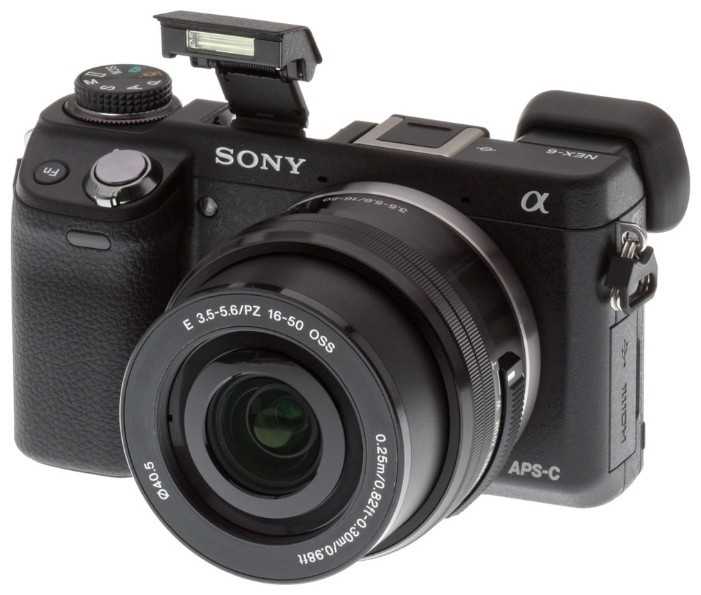
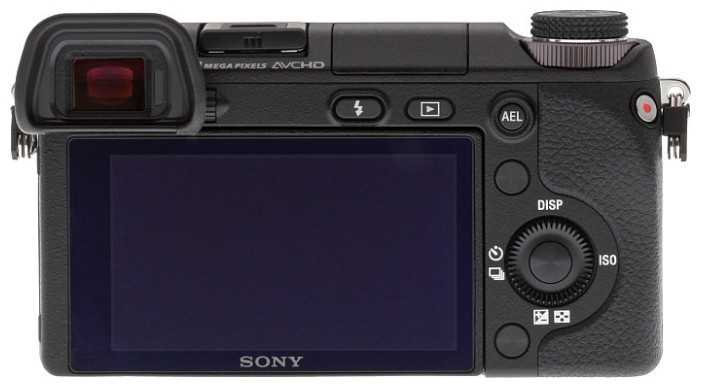
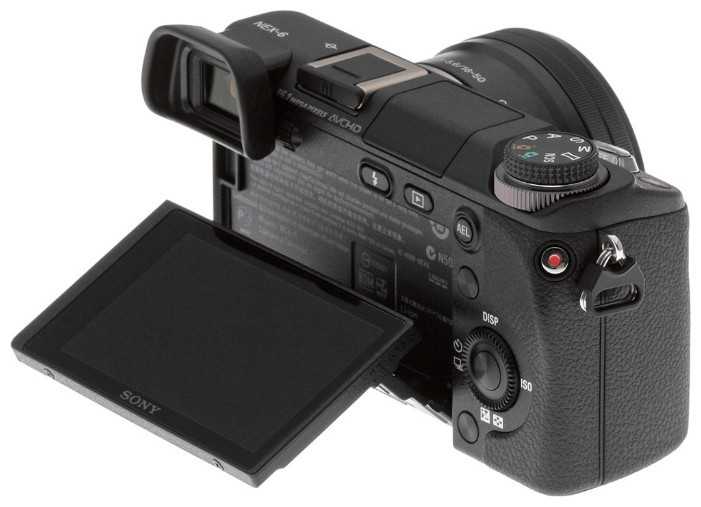
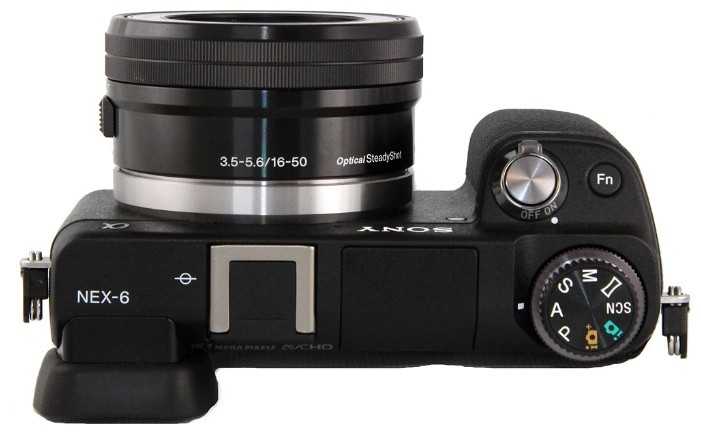
Фотоаппарат Sony Alpha NEX-6 Kit — подробный обзор, плюсы и минусы на основе 224 отзывов
Рейтинг:

 Отлично
Отлично
Средняя цена в магазинах 48 888 ₽
Краткие характеристики:
- 16.70 МП
- 23.5 x 15.6 мм
- RAW
- Wi-Fi
- до 10 к/с
- видео до 1920x1080
224 отзывов пользователей о Sony Alpha NEX-6 Kit
Пользовались
Sony Alpha NEX-6 Kit?
Поделитесь своим опытом и помогите другим сделать правильный выбор

Скромный эксперт
17.05.2014
10/10
Оценка пользователя
Великолепно
when it comes to my experience in taking pictures I'm a novice at best but I can, and do shoot in other modes other then auto. plus I have purchase a couple other lens to use with camera other than what came with it. with that said I bought this camera to replace and upgrade from my NEX f3 that I bought a couple of years ago. I researched both the NEX 6 andthe A6000 that was going to replace it and I was set to purchase the A6000 when it came out. but ultimately it came down to money and at the time I could buy the NEX 6 for a couple hundred dollars cheaper, plus with the A6000 not out yet their were a few things that they had changed that I wasn't sure if they were for the better or not. so here's my impression of this camera for the couple months that I have had it first the badCONS.the menu system: and this goes for all Sony NEX cameras. if you plan on taking pictures in any other mode than automatic it takes way too long to find some of the settings that I'm looking for. setup is the worst by far there are settings in this menu that should be under camera and settings under camera that would better served under settings.the control wheel:again this goes for all Sony NEX cameras and even the new A000 series that replace the one I have. it's simply a bad design, it's too easy to bump it and go into another setting that is designate for this wheel not to mention it likes to flip back to a previous item on it's own. if you are trying to navigate the menu system this task is made I little worst on the NEX 3 were the mode dial is part of that same menu system. E16 - 50mm lens:I don't like this lens for a couple of reason for one since it's meant to be more compact in size, the zooming in and out is by wire instead of the traditional mechanical, which means that when you turn the rotator ring there is a lag between your action and the Len's response time and its a little annoying when your trying to compose a shot just right. the power zoom lever in my opinion isn't much better. the other thing to note about this lens is the distortion at the lower end of the zoom range.Phase Detection Compatibility:I found out by accident that the Phase Detection part of the hybrid AF system on this camera is a firmware feature of the E16- 50mm lens. yes you do have ability to turn this function on or off (Setup Menu) on the camera but the Phase Detection AF is only compatible with certain Lens. you can't use it with third party lens or some prime lens. and if you bought one of the older E mount lens like I have, it becomes a compatibility issue without a firmware upgrade to the Lens itself. I have a E55 - 210mm lens I had purchased in a bundle when I bought my NEX 3 and had to do this upgrade. note that the particular lens that you want to updated has to be connected to the camera while doing so. as of this writing firmware updates are only available for the E18 -55mm, E55 - 210mm, E18 - 200mm, and the Sonar TE 24mm lens. check the Sony site for updates.Eye Sensor (for EVF):on bright days if your hand passes over this sensor as you are adjusting the LCD screens angle it will confuse the camera into thinking that you are using the EVF and briefly turn of the LCD screen off. that being said its still a nice thing to have.PROS.EVF(electronic viewfinder):this is one of the main reason why I wanted to purchase this camera. their are some situations were the LCD screen just wont work, like a bright sunny day or on a winters day when everything is covered in snow, it helps to have this feature. best part is that 100% of what you see is exactly what your shot will be so composition is a no brainer. the downside of this is that even at over 2,000,000+ dots the picture is still noisy with colors tending to be a little over saturated. and on cloudy days it's hard to pick out details, however the brightness of this viewfinder can be adjusted to compensate for this. just keep in mind that the EVF actually uses more battery power.Build Quality:taking this camera out of the box first thing I notice is how this felt better in my hand than the NEX 3. I know they're pretty much the same camera but this one feels a little more like it was honed from one piece of metal even though the housing is basically plastic. it still has weight to it, not too much though. I love the feel of the grip in my hand. I'd rather walk around with the camera in hand like this than around my neck, that's why I bought a Joby wrist strap for it. the mode dial requires a little more of a cokes to turn it than the control dial below it. this will ensure that it wont be accidently moved while it's in your bag or if it gets bumped up against something.Mode Dial:if you've had a NEX 3 or 5 this speaks for itself.Control Dial:this is a great addition and alternative to the control wheel that the NEX series uses to navigate Aperture or Shutter Priority. it's also better to use this to navigate the menu system than that bloody wheel. Fn (function button) + other custo
Скромный эксперт
01.02.2014
10/10
Оценка пользователя
Великолепно
A point I want to get across first is if your reading this, you have to decide what kind of photographer you are right off the start.Are you someone just starting?Are you a casual shooter who just wants good pictures and either is considering this first an entry level dslr or has one already but is considering a size reduction?Are you a legacy lens shooter who knows about and is looking towards using vintage glass via adapters?Are you a professional/semi professional protog looking for a second/third back up or travel focus camera?The reason why I wanted to start with that is because this camera, can be your boon or our bane largely on what your exceptions coming in.--The Causal Shooter Simply put for image quality, kit lens quality, auto focus speed,this camera will be on par with t3i,t4i,t5i or the 3000 series from Nikon, epl/ep series from olympus easily plus or minus some pixel peeping tid bits. This particular APS-C sensor is fantastic at low light while providing plenty of resolution for a crisp decently large size print, cropping, and obviously way more than needed for any sort of online social media sharing. Just let it be known that while smaller, it gives up almost nothing in terms of image quality, don't let size fool you! However, on the subject of size, it comes down to this. It's a smaller, much more compact camera than any DSLR out on the market, and thus way easier to carry around. However a reduction in size does obviously mean a reduction of ease of use. The Nex 6 has more than plenty of buttons and wheels for easy access for most controls, however a dslr simply always has more features and more dials, buttons etc to make it more quicker for setting changes on the go. Thus if your very casual shooter looking for very simple controls towards a nice photo, than the NEX series may be just for you. It gives you all the same ability and quality of a dslr just without the fluff. I also forgot to throw in that with the NEX on board flash, you can tilt it upwards to create a bounce flash that is far better than limiting you to a direct flash alone like other cameras.--Current Entry Level DSLR Owners This moves on to those who may already have a entry level DSLR and is considering a switch. This is a tougher situation but what you need to ask yourself is if your someone hoping to grow with photography, or simply looking to scale down. If your one of those people who bought a dslr hoping for those nice images you see other people have but eventually realized the bulk and the amount of buttons and knobs that you never bothered to learn just gets in the way then I'll say a sideways move to a NEX series camera is best for you. Your not giving up any image quality while reducing your size and again ridding of the fluff. Now if your someone who does want to grow with photography, then you need to seriously consider Canon, M 4/3, Pentax and Nikon systems before you make this jump. I'm not going to lie, the brands simply has much much more to offer in the long run than the E mount at this point. Entry level lenses, mid level IS lenses, L lenses, TTL Flash, etc etc at a much better price point than any E Mount, or full frame E Mount gear currently. For example, Sony wants roughly $300 for a 50mm F1.8 while Canon offers a 50 1.8 for $100? 50mm F1.4 for $330? You get the idea.--Legacy Shooters I personally use my Nex 6 so that I can use the plentiful amount of old legacy lenses out there. If you don't know already, due to the short distance of the mount, your able to use adapters to mount any, and I do mean almost any, film camera lenses , and if you wish modern af lenses (although with no af controls outside of the contax G and A Mount I believe) to your Nex. I currently shoot Konica AR, Canon FD, and a few C Mount, Eos Mount, and Olympus mount lenses and all I have to say, it's the most joyful thing in the world. Obviously they are plenty of times where I wish I had autofocus due to the speed of the subject in which I'm taking my photo, however by shooting manual, I've grown to feel like I'm being more hands on with my photography than simply pressing a shutter button and calling it a day. No dig towards modern AF since well, obviously it's almost better in every way hence why we have it, but having old film lenses, and plenty of them is a joy to use. They render extremely nicely on the NEX 6 sensor (I previously owned a Nex 5n) with no resolution problems as seen on the Nex 7. The extra dial at the top makes it much easier to control shutter speed all the awhile the thicker body and grip of the 6 makes it much easier to balance the weight of the camera since most film lenses are quite heavy. My only grip is that the third wheel that is offered on the NEX 7 would've been nice for say exposure comp or quicker iso change but the downside is that NEX 7 Sensor pushes just a few too many MP and you lose the low light performance of the 6 , which for me personally, I find myself shooting far more often wi
Скромный эксперт
01.09.2013
8/10
Оценка пользователя
Хорошо
This review is going to focus on the NEX-6 as a video camera. To start with, I didn't even buy this camera to shoot video. I own an FS700 and shoot video professionally using the Metabones Speed Booster with full frame Canon lenses. I wanted an inxepensive stills camera that I could use with the Speed Booster just for fun and settled on the NEX 6. On a whim, I took it with me on a video shoot and was genuinely surprised at how well it handled as a B-cam. I do a lot of multicamera shooting and use a pair of Panasonic GH2's for alternate angles. The GH2 produces a very detailed image and has no recording time limits, so it is great for multicam events. The NEX-6 of course isn't going to replace the FS700, but it could well replace the GH2's as b-cameras, which came as a surprise to me. Here is the breakdown on topics important to me.Continuous Recording:While the GH2 can record continuously to the full capacity of the SD without interruptions, the NEX cameras are limited to 30 minute clips. Previous NEX models however would overheat and shut off before you got anywhere near that. The NEX-6 appears to have fixed this. There are reports online of people shooting five or six 30 minute clips back to back without overheating. As I write this, I am nearing the end of my second 30 minute clip and while there is a flashing yellow temperature indicator, the camera is not noticeably hot and recording has not stopped. As I write this sentence, I have just started my third clip. I could probably keep going, but I've already exceeded the real-world duration of a typical wedding ceremony or corporate presentation with no overheating issue. Of course the camera will need to be restarted (and re-synced in editing) every 30 minutes, so for really long events, the GH2 still wins in this arena.There are however a couple of differences in the camera's functions while recording. Unlike the GH2 and most other video DSLRs I've used, you can adjust the ISO while recording on the NEX-6. This is important for event shooters, because you could be rolling on an important event and have an unexpected lighting change. Your aperture may already be wide open or stopped too far down, and your shutter speed isn't a good way to ride your exposure because it will change with way motion is rendered. So your only recourse with many cameras is to stop recording (breaking sync with audio and/or other cameras) adjust your ISO and start recording again. This also slows down your shooting. With the NEX-6 you can change ISO without stopping. White Balance cannot be changed while rolling, but this is far less important in my opinion.One downside is that once you start rolling video, the histogram disappears. I cannot imagine why this would be, because it displays live on the LCD and EVF the rest of the time.Image Quality:The NEX-6 isn't tack sharp in video. The GH2 definitely resolves more fine detail and is able to reproduce intricate patterns without aliasing or moiré artifacts. Aliasing and moiré are present on the NEX-6, but in real world shooting don't crop up nearly as much as you see on Canon DSLRs. The NEX-6 image, while not overall as sharp as the GH2, has greater dynamic range and thus retains more detail in shadows and highlights and is a bit more flexible in real world uncontrolled lighting situations. The GH2 tends to crush the shadows and have punchy less natural colors. To my eye, the NEX-6 produces more pleasing colors and gentler gradations. A big part of this is down to picture profiles. The NEX cameras have a fairly flexible image with custom profiles and image settings. Comparatively, the GH2's picture profiles do relatively little to dial in a look. Even the more expensive VG series camcorders don't provide the level of image flexibility as the NEX cameras, despite sharing their sensors and other internal components. You can dial in the contrast, saturation and sharpness to fit any particular scene, as well as set color temperature in 100 kelvin increments and shift color on green/magenta and blue/amber axis's to help handle color casts in camera.Slow-Motion:The NEX-6 can shoot at 60 frames per second which makes very nice 40% slow motion when conformed to 24 frames per second in post. However you have to do it in post. It's not a difficult task, but you don't get to play it back at the intended speed in camera while you are on set. The FS700 and Panasonic GH3 before conform higher frame rates in camera, which means when you want to show a client how something is going to look, they can see how the slow motion affects the shot right there. It would have been great to see true in-camera slow motion in the NEX-6.Use as a main camera:Compared to a pro video camera, there is a lot missing here, but it really just boils down to audio and ND filters. The ND filters can simply be placed on your lenses, but the audio has to go somewhere else entirely. There is no mic input, no gain control, no meters, no headphones. As a b-camera this is no
Скромный эксперт
20.08.2013
8/10
Оценка пользователя
Хорошо
The Sony NEX-6 is a very good mirrorless camera that we chose after trying out a fair number of competing cameras. It's not perfect -- no camera is -- but for our needs and preferred style of use we felt it was the best compromise out of the current crop of cameras. I'd held off on writing this review until I felt I understood the camera well enough to be able to provide useful information on its strengths and weaknesses. We've now had it for about two months at the time I write this.Summary:Our priorities were good still and video quality, light weight/portability, and having a viewfinder (as opposed to needing to rely on the rear screen to frame shots). We bought this camera for a family with both enthusiast (like to take full manual control) and casual (just want to use the camera as a point-and-shoot) photographers. Overall we're quite pleased with the camera and have gotten some very good shots with it.Pros:- The sensor (essentially the same sensor as a good APS-C DSLR) provides very good image files with relatively low noise.- Plenty of resolution for most people (unless you're printing quite large or doing a lot of cropping, you're unlikely to need more).- Better-than-average video quality for cameras in this segment, including the ability to take full manual control of shutter/aperture/ISO while taking video.- One of the smallest/lightest bodies among cameras that include a viewfinder.- One of the better electronic viewfinders available today.- A reasonable-sized grip that makes it easy to hold on to despite its small size.- The included zoom lens is very compact for the amount of coverage it provides.- Fast, accurate auto-focusing so long as the subject isn't moving too quickly.- If you're willing to deal with RAW files (as opposed to the more convenient JPEGs) the image files have a lot of latitude for recovering blown highlights and shadow detail.- A clearly marked mode dial that makes it easy to put the camera in point-and-shoot mode (when you don't want to have to fuss with settings and are willing to let the camera make all of the decisions) or Program, Aperture Priority, Shutter Priority, of full Manual control.- Ability to use "legacy" lenses from other camera systems via cheap adapters (for more advanced users only, as in most cases you have to manually focus and select the lens aperture). The focus peaking feature really makes this work well.- A built-in flash plus a hot-shoe that allows the use of a dedicated flash unit (or other accessories).Cons:- The menus are too long and not arranged as well as they could be. Sony has a much better menu system on their Alpha cameras and the RX100; they should have used that same menu system on the NEX line. Fortunately you can set the camera up so that you rarely need to delve into the menus.- The drawback of the large sensor is relatively large lenses (by mirrorless camera standards). Other than the included kit lens, the lenses for this system tend to be larger than those for the Olympus, Panasonic, and Nikon competitors in the mirrorless camera segment.- With the included zoom lens, the camera has to apply a *lot* of distortion correction as you get to either extreme of the zoom. That correction is done automatically for JPEG images (and most RAW software that supports the camera can do so as well) but you end up with images that suffer from loss of detail towards the edges. This software correction is what makes compact lenses like the 16-50mm zoom possible and isn't confined to Sony.- Difficulties auto-focusing on fast moving subjects. If you plan to do a lot of sports shooting, a D-SLR is still the better way to go.- The video suffers from moire (false color) in some cases where there's a lot of repeating, fine detail in the shot.- The camera could use more user-configurable buttons.- No external microphone input for video.- If you zoom with the kit lens while taking video, the noise from the lens is very noticeable/annoying in the resulting video.- Like all electronic viewfinders, the refresh rate becomes very slow in low light.- No separate battery charger is included, so you have to charge the battery in-camera (meaning you can't be using the camera while charging a battery). Fortunately cheap-but-good battery chargers are available here on Amazon.- The are some odd design choices with the camera. For instance, when deciding you need to override the camera's exposure setting using exposure compensation, you'd want to be able to view the live histogram. But, while you're adjusting the exposure compensation, all other data disappears from the screen. So you need to make a guess with the exposure compensation, get out of that setting mode so you can see the live histogram, go back into exposure compensation if you didn't like what you saw, etc. You sometimes wonder if the engineers who made the design choices ever take pictures.For me, the key to being happy with this camera is learning how to configure it to your liking as it
Скромный эксперт
10.08.2013
8/10
Оценка пользователя
Хорошо
This is a rather specialized review that I'm writing for people who are interested in using great old Nikon lenses (ca 1960s to 1980s) with their NEX-6. They make an excellent combination and the old Nikon lenses can be obtained for relatively cheap. What I have to say my be true for other lenses such as Canon but I have no experience with them.NEX-6 REVIEWIt's an excellent camera. I was attracted to it because of its low light capability and it's viewfinder. Both are excellent. I can usually shoot at ISO 3200 if I need to and get good results. The viewfinder is big and bright and I would not consider a high-end camera without a viable viewfinder, especially when using old lenses. I think the software is horrible. It is poorly organized and some functions are named so that you would never know what the function is unless you dig into the documentation. I would not recommend this camera for a novice. Overall I rate it at four stars.WHY OLD LENSES?Actually, I found out that I could use an old Nikon 50mm f/2 lens I had that's close to 50 years old. So I gave it a shot and it worked great. Everything is done manually and I find that improves my photography because I actually get to think about what I'm doing. With the NEX-6's 1.5 crop factor the 50mm is equivalent to 75mm for a 35mm format. This lens has become my favorite lens, again. Once I realized the 50mm worked so well I was hooked.I soon discovered that I could acquire some of the best lenses Nikon ever made at low cost. I probably went a little overboard but now I have a great collection of six Nikon prime lenses ranging from a 20mm f/2.8 to a 200mm f/f4. I even purchased an 80-200mm zoom that's built like, and weighs like a tank. The total cost of five lenses I purchased was $500. I believe the equivalent optical power in new lenses would cost thousands.WHAT YOU GIVE UPYou give up autofocus, anti-shake, and many other automatic capabilities. But you don;t give up everything and not the ones that I think could the most for the quality of your photos. With a Nikon lens mounted you basically have a limited functioning camera and a lens. The rest is up to you, the photographer. You also sacrifice having the lightest weight and compact camera and lens. The Nikon lenses are known for their rugged metal construction and so they are heavier than today's lenses. If you only want to aim your camera and press the shutter I would not recommend this path. You can stop reading now.PICKING LENSESThe lenses I go for are the Nikon's made anywhere from the 60's through the 80's. They are either "AI" or non-AI (older are non-AI). You can read about AI on Ken Rockwell's site mentioned next. Basically, to AI or not makes no difference on the NEX-6 in and of itself. However, AI lens may have higher resale value but they generally cost more.There is an excellent web site by Ken Rockwell. Do a Google search and you will find it. Ken has reviewed just about every Nikon lens ever made, in fact it may be all for all I know. Although his reviews are based on all-Nikon shooting (camera + lens), I found the reviews to be very helpful, allowing me to select the lenses I wanted to hunt for (which turns out to be easy, more below. He has separate pages for the best and worst lenses and he explains his reasoning. Call me crazy, but I focused on the best lenses.Do not purchase "G" lenses. I have not used any but I think they have a different mount than all the others and I have been told they won't work.THE SECRET SAUCEIn order to use the lenses on an NEX-6 you need a lens adapter. I chose the Nikon Lens to Sony NEX E-Mount Camera Mount Adapter which is about $15 on Amazon. It gets the job done. But because I was committed to using the old lenses I decided to purchase an adapter for each lens which obviously adds some cost. But I wanted the convenience of having the adapter+lens combination as a single unit to make it quick and easy to mount the lens.Attach a lens. Then turn on Peaking which allows you to make precise manual focusing adjustments by highlighting the edges that are in focus in your choice of three colors (white, red, or yellow). I wouldn't even consider old lenses on a modern camera unless there was something comparable to the Peaking technology.Go to SetupGo to Peaking Level and select a level. I like medium.Go to Peaking Color and select a color. I like red.In order to use your Nikon lens you have to go into the menu system again and change a menu setting, which has a name that sounds like nothing of what it does.Go to SetupGo to "Release w/o Lens'Set it to "Enable"The camera will now work with non-Sony lenses like Nikons.When you switch the lens back to a Sony E-mount lens change the Release w/o Lens setting to "Disable".I also set "Menu Start" in Setup to Previous so that I can quickly get back to Release w/o Lens when that was the last setting I changed and I want to use my E-Mount lens.USING THE LENSESLike I said, everything is manual. I'm still experimenting wit
Скромный эксперт
09.06.2013
8/10
Оценка пользователя
Хорошо
The Sony NEX-6 with 16-50mm kit lens.The image quality and high ISO noise is good, as good or better than the Nikon 5200 I was also considering, though not as good as the Fuji EX-1. However, the NEX-6 does have a multi-shot auto noise reduction that can help offset the the noise when taking static images in low light (the resulting images do have a processed look, but at least it is an option, one you don't get with the Nikon 5200).The NEX-6 with the 16-50mm motorized, auto-collapsing zoom is compact enough to fit in a coat pocket, has wi-fi image transfer to your mobile device, optional remote control with image preview on your mobile device, a partially articulated screen, auto HDR and handles fairly quickly. I like taking high and low angle shots, so the partially articulated screen is something I really use a lot. The screen isn't as useful as the fully articulated screen on the Nikon D5200, but it is better than not having one at all, which is the case with the Fuji EX-1.The optional visible focus peaking feature makes manual focusing easy. It causes high contrast areas presumed to be "in focus" to show up as a lived colored overlay. It is basically a human readable version of how the camera does auto focus using contrast detection, and it's a near must have for using a camera with an electronic viewfinder with manual focus. It is also one of the reasons I chose the NEX-6 over the Fuji. I need help with focusing using an EVF. The NEX has it. The Fuji doesn't.The 16mm lens is wider than any of the Nikon APS-C kit lenses, and as sharp or sharper on the wide end than any of them- and way, way sharper than the wide end of the Nikon 18-200mm super zoom I was considering.On the other hand, the camera was buggy, with the kit lens constantly resetting as the camera claimed not not recognize the lens. Lost lots of good shots that way. Really irritating. The bracketing function cannot be triggered by remote control or by the self timer because bracketing, remote control and self timer release features are "drive modes", and thus mutually exclusive. The camera takes a while to boot up - the powered, collapsing lens also has to boot and extend. Not a good grab shot camera.The fact that the camera can't do Auto HDR while in RAW mode is annoying. You have to dig into the menu to turn off RAW, then dig into another menu to turn on Auto HDR, and then the reverse when you are done. I realize the processed image wouldn't be in RAW, of course, but I'd like the option to have the camera process an HDR image even if the unprocessed exposures are in RAW.Overall, I've been happy with the camera, but a DSLR handles quicker, and the fully articulated screen on a Nikon D5200 would have been really useful for all the ceiling fresco shots I took from a medium sized Gorilla Pod. The compact size of the camera let me take the camera and the medium Gorilla Pod places a big DSLR with a big zoom on a big Gorilla Pod might have gotten me outed from. But I missed a number of shots due to camera bugs when the camera refused to recognize the lens, and due to the so-so boot time of the camera.Pros:* Coat pocketable with collapsing 16-50mm kit lens, with a decent sized coat pocket - good for being inconspicuous when you aren't taking photos.* Low shutter lag* Mechanical shutter prevents rolling shutter artifacts* Phase and contrast focusing* Visible focus peaking makes manual focusing easy - very, very useful* Automatic electronic zoom for critical focusing - very useful* Histogram available live and for stored images* RAW format option* RAW format and kit lens compatible with Adobe Lightroom 4 and above* High resolution Electronic View Finder lets you compose photos even in bright sunlight* Partially articulated screen on back of the camera lets you compose low angle shots without having to lie down on the ground* Works with inexpensive 3-d party infrared remotes* Large APS-C sensor* Noise is comparable or better to APS-C DSLRs like the Nikon 5200* Built in multi-frame noise reduction - works great for static photos in dim places you can't use a flash like museums.* Built in HDR* 3-Frame Bracketing up to 3 EV apart* Wi-Fi upload to mobile device works well, handy for sharing vacation shots. Automatically creates a WiFi hotspot for your mobile device to connect to so you don't have to be near a WiFi network, and converts both JPEG and RAW format shots to low res images JPEG for transfer. Lets you preview and pick which ones to transfer on your mobile device.* Optional mobile device remote control with remote image preview works pretty well.* 16mm (24mm equivalent) wide angle end of zoom is really useful for getting everything you want in frame* Kit lens is as sharp or sharper than Nikon 18-55mm kit lens* What you see is what you get. When you stop down to smaller apertures the camera actually stops down during preview--unlike a DSLR which always composes with the aperture wide open. This is good and bad, good for previewing depth of field,
Скромный эксперт
07.06.2013
6/10
Оценка пользователя
Плохо
Before I begin, let it be known that I come from the DSLR world, I'm what most people would consider a "pro-consumer" or serious enthusiast, I've owned many pro-grade cameras, my last one was the Canon 5Dmk3, which cleaned out my bank account along with some L lenses, I love the 5Dmk3, and I know that no cropped-frame camera can (yet) come close to it, so I'm not here to compare the NEX-6 to a pro-grade body. Why the NEX-6? or any mirror-less compact {powerful} camera?: After having a baby last year I could not carry my 5D/lenses around with a diaper bag, formula, bottle warmer, stroller, and all the crap my wife makes me carry. So I went to the mirror-less line a little over a ago when the NEX-7 came out, I've had the NEX7 for about a year now, but I've never been fully satisfied with it, it is great, but not all that great. I sold it a week ago after listing it on Amazon (I didn't think it would sell so fast!) And so with the earnings/lost money from the NEX7, I wanted to try this NEX-6, the new features of it and see if the NEX line is still for me, or if I should jump ship, sell the rest of my NEX lenses and go micro 4/3 (MFT) with the Olympus OM-D EM5 (which is the camera that most people consider NEX-6's top competitor). So here we go...I've had the NEX-6 for about 10 days now and I've been testing the OM-D for about 4 days now, so I feel pretty confident and ready to give my review:What I really like about the NEX-6:+ Great ISO (low light) performance. Better than the NEX7, and slightly better than the OM-D (this is due to a larger APS-C sensor than OM-D's Micro 4/3, and compared to the NEX-7, the NEX-6 has a lower MP count on this sensor, the NEX7 has more resolution, but images have considerably more noise at 1600 ISO and above). I still hold some reservations against the way Sony implemented Auto-ISO (more on that on the CONs section of this review) but overall the NEX-6 is pleasant for low light shots (without a flash) of the baby sleeping. Low light performance is HUGE for me, it is a MUST to take good pictures indoors and of my (now very-mobile) baby around the house as she recently learned to walk.+ Kit lens (16-50mm electronic zoom) is more compact that the original NEX7 kit lens, and it behaves well, easy to use, IQ is great, just as good, if not better than the old 18-55 kit lens, though note that the NEX-6 body does have some magic to correct the distortion and other imperfections that the lens produces if you were to use it on an older NEX model.+ WiFi (between camera and phone): Some people report this to be problematic and hard to use. I did not think so, I think it's fairly easy to use and great! (that is WiFi between the camera and a phone/tablet, setting up WiFi settings without a touchscreen is another story, more on that later) I was able to link up with my iPhone and send pictures from the camera to my phone quickly, very cool when you want to show off how cute your baby is on-the-spot and quickly post the picture to a social network, or just have it available on your phone... NICE!+ built-in flash, I was used to this from having the NEX7, same exact operation, the cool thing about this built flash (different from most other mirror-less) is that you can move it as you take the shot and bounce the light off the ceiling for a more natural look, (the OM-D does NOT have this capability and you have to attach the flash, which is worthless) great for quick portraits or fill-light, this flash is one of the best things about this camera!+ Overall Image Quality: This really should be the number one concern, and it is! in good light and even low light, this camera can produce some amazing shots, it focuses quickly (in good lighting conditions, more on that later), and pictures are sharp most of the time.+ The EVF: Some people love it, some hate it, I think it is awesome! I use it a lot to review pictures and zoom into the images to do a little pixel peeping to see if I got the focus right where I wanted it. Same as the NEX-7. Good implementation in my opinion+ Creative options: I like that (like the NEX-7) this camera has a lot of creative options like HDR, retro-look, single-out colors, rich tone B/W and others which are fun for casual pics without the need to play around in post-processing. I know that "Pro's" do not care for them, but I think these are fun to try different styles and seeing what they look like before you transfer the pics from your SD card.What I wish Sony would have done better (what I do NOT like):-BIG ONE: At nearly $900, this small camera should have had at least SOME type of weather sealing, it is NOT weather sealed at all! so if you are constantly traveling, going to the beach, rainy season in Florida, your house is dusty (like mine), or your kids spit apple juice at you as you're taking a picture then you WILL have some issues. I took the camera to the beach and I had to really watch it to make sure it did not end up on the sand or wet. At the end of the day the
Скромный эксперт
04.06.2013
6/10
Оценка пользователя
Плохо
Since everyone's needs and expectations from a camera are different, a word about who I am. I'm what one might call a photography enthusiast. I bought my first digital camera (a 1 megapixel HP Photosmart C30, which I find absolutely hilarious now) in 1998 and my first DSLR (a Canon EOS-D60) in 2002. At one point, I went hog wild, spending thousands and thousands of dollars on a Canon EOS-1D Mark II N and several of Canon's high-end 'L' lenses, studio lighting, backdrops, the whole nine yards. Over time, life got too busy, and I sold off all of my photography gear and downgraded to an entry-level Canon DSLR (the T1i) for casual shooting. I also have a Sony HX9V travel zoom, which I love for its convenience, but which is obviously hampered by a very small sensor.Recently, however, I became reacquainted with my love for photography, and decided to really start devoting some time to it. Since I was last paying attention, there's been a great deal of movement in the mirrorless ILC space, which I found very intriguing. The idea of a highly compact camera with interchangeable lenses, boasting DSLR image quality seemed wonderful. I pored over the reviews and in the end, decided the Sony NEX-6 was the right choice for me. My hope was that this camera would be able to take the place of my DSLR.I struggled with how to proceed with this review and with the rating I'd give the NEX-6, because the truth is, it's capable of some truly wonderful shots. The weekend before last (Memorial Day weekend), I took at trip to Utah to visit Canyonlands and Arches National Parks, and I left my DSLR behind and brought only the NEX-6 to see if it would be up to the challenge.Part of me feels guilty for giving the NEX-6 a three-star rating, when I was absolutely satisfied with the image quality. But there's more to using a camera than just the final output.WHAT I LIKED+ Image Quality: The Sony NEX-6 has an APS-C size sensor, which gives it parity with any entry- and most mid-level DSLRs. While many of those DSLRs have higher megapixel counts, it's important to note that the NEX-6's fairly middle-of-the-road 16 megapixels means that the sensor's pixel density theoretically allows for better low-light performance than a comparably-sized (APS-C) sensor with a greater megapixel specification. For my part, I was shooting exclusively in bright outdoor settings at extremely low ISO, and generally not at wide-open apertures -- it's certainly true that I wasn't putting too many demands on the camera in terms of image quality, but I was nevertheless pleasantly surprised at the results I got. I shoot only in RAW and do my post-processing in Lightroom 4, and while I was shooting in pretty much ideal conditions, I was thrilled with the color, detail and dynamic range of the shots.+ Size: The only lens I had was the 16-50mm kit lens (roughly 25-80mm equivalent), which is a very compact lens. When mounted, the entire camera is extremely light. This is a plus, but it's also a minus (see below).+ Autofocus: Again, I was shooting in bright, ideal conditions, but the autofocus was extremely responsive. I also really appreciated the ability to manually override the autofocus (which automatically zooms in the display for even more precision). Also loved the focus peaking option -- more cameras should have that.+ Articulating Rear Display: Extremely convenient being able to tilt the rear display up or down, allowing for unusual camera angles.WHAT I DIDN'T LIKE- Size: I know I also listed this as a plus, but it's not without its downsides. The camera is so small that, despite a seemingly excellent build quality, it feels fragile and insubstantial compared to a DSLR. The camera doesn't sit well in my hands as a result of its diminutive size. And from a purely psychological standpoint, when you're surrounded by people carrying large, intimidating-looking DSLRs, you feel like a rank amateur. (I realize that last point is completely stupid, but I did honestly feel inadequate on a couple of occasions, like I was trekking around with a cheap point-and-shoot.)- Controls: As a UX designer, I recognize that there's a balancing act between giving users immediate access to as many controls/settings as possible... and keeping the user interface as simple as possible. The NEX-6's controls lean toward the side of simplicity (when compared to a DSLR, at least). That would be fine if the camera were aiming to conquer the point-and-shoot segment, but (ostensibly) it's trying to steal ground from the DSLR market, where more advanced features need to be as close to the surface as possible. I found myself frequently frustrated by having to dive into Sony's ridiculously convoluted menu system for things that I could access much more quickly on my DSLR.- EVF: The electronic viewfinder has gotten a great deal of praise for being a wonderful example of the technology. However, for my part, I think the technology is crap. This may be an excellent execution of the electronic viewfinder
Показаны отзывы 1-8 из 224.
Как менялась цена на Sony Alpha NEX-6 Kit
Характеристики Sony Alpha NEX-6 Kit
Информация о характеристиках носит справочный характер.
Перед покупкой уточняйте характеристики и комплектацию товара у продавца
Обзоры и руководства на Sony Alpha NEX-6 Kit
Альтернативы с более высокой оценкой







Wizemart © 2026.
Рекомендательная система по умному выбору товаров по отзывам и рейтингам
