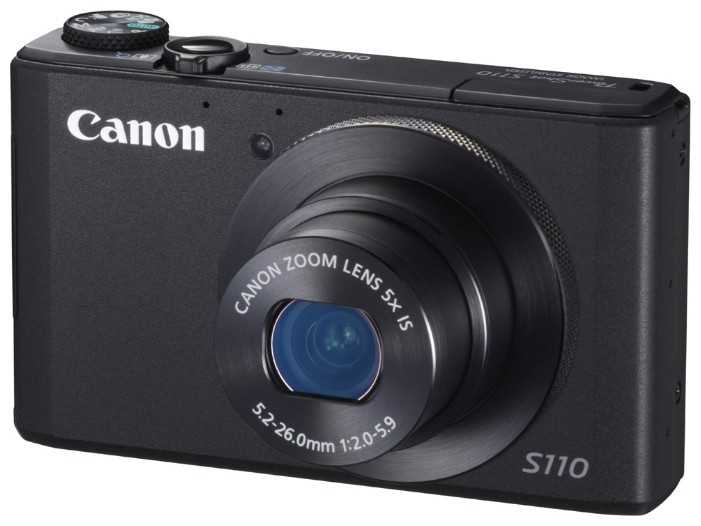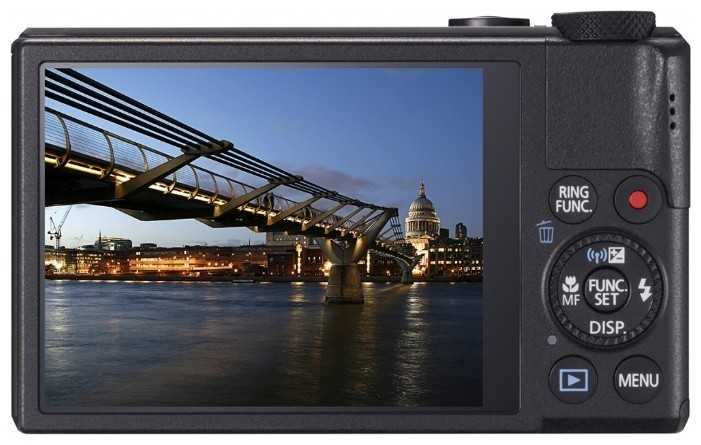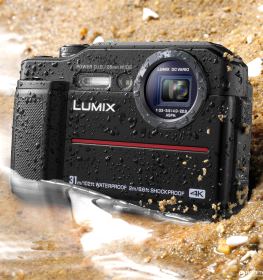
This review is from the perspective of a long time Nikon DSLR user. My regular camera is a Nikon D300s with the battery grip and several lenses. I have been looking for an easily portable camera to carry when I don't need or want the heavy gear. My goal was to reproduce the functions of the DSLR in a small package and do it for under $400. This review looks at my five most important DSLR functions and explains how they are reproduced in the S110.Shooting in Camera RawI always shoot my DSLR in RAW mode and custom crop and process every image. It sounds like a pain, but thanks to automated features in programs like Photoshop and Photoshop Elements, it isn't a big deal and the results are worth it. If this is new for you, the difference between capturing a picture in JPEG and RAW is in the ability to further manipulate the images later. For example, assume you have set your camera to use: 1) Auto White Balance, 2) No Exposure Compensation, 3) Medium Sharpening, and 4) produce the image in JPEG format. The camera takes the picture, applies your settings and records it as a JPEG file. If you shoot the same picture in RAW with the same settings, the camera notes your settings and may apply them to the thumbnail that it shows you, but what you download from the camera is the data collected from the sensor without the settings applied. This is why pictures from a cheap point-and-shoot (P&S) camera may look better out of the camera than pictures from a DSLR or advanced P&S. But, the trouble comes when your JPEG settings don't give you what you expected. Suppose you get the pictures on your computer and they have a green cast from the lighting, they are under-exposed and under-sharpened. If you shot them in JPEG, you may be out of luck without doing extensive fiddling. If you shot them in RAW, you use your processing software's RAW converter and change the settings to what they should have been to give you the shot you wanted. Basically, you adjust RAW images on your computer like your camera produces JPEG images in the camera. The computer gives you more processing power, more sophisticated processing software, and the ability to change the settings until you get the image you want. Combine this with the fact that JPEG compression will hurt image quality and RAW images come out of the camera uncompressed and you can see why shooting in RAW mode is more work, but can provide a much better outcome. The primary reason for selecting any of the cameras in this class of advanced point-and-shoots is the ability to record images in RAW format. If you plan to leave the camera in JPEG mode, you can save yourself some money, get a good camera, and get very nice pictures by choosing a different camera that takes only JPEGs.Front Control RingYou can assign 8 preprogrammed functions to the front ring. I use the control ring to change the lens zoom settings. The focal length changes in fixed steps of the standard prime lenses from 24mm to 120mm. I find the control ring works much faster than trying to frame with the zoom lever on the top of the camera. After using a range finder and SLR cameras for years, it is natural to have this control on the front of the camera and I love the ability to program it with the push of a button. I have been surprised by how this one feature simplifies shooting with the S110.Display InformationI don't know if I will ever get used to framing on the screen of a P&S. I prefer the "real" optical viewfinder of a SLR. But, none of the cameras in this class have an optical viewfinder, to get that feature you will pay another $100 and get a larger camera. The S110's display gives me all of the information I get when using my DSLR and more. When framing the shot, I see the battery level, shooting mode (e.g. RAW), the exposures remaining on my SD card, the length of video I could shoot, the flash setting, horizontal level, exposure compensation, f-stop, and ISO. When I press the shutter button, the display clears at the top and then shows me the information on that shot along the bottom of the display: exposure meter mode, horizontal level, f stop (in aperture priority), exposure compensation, and ISO setting.Aperture Priority ModeCameras in this class will allow you to choose Aperture, Shutter, and Manual mode in addition to a bazillion scene settings. Like my DSLR, I keep the S110 in aperture priority nearly all the time and use the back thumb wheel to change the aperture. If you have read the reviews for this camera and the others in this class you know that you lose a lot of aperture range as you extend the zoom. For example, the aperture range is f 2.0 to f 8.0 at 24mm and at 50mm the aperture range is f4 to f8. The relatively fast lens helps get good pictures in low light situations. The problem is that the relatively small sensor gives little control over the depth of field, again an issue with this class of cameras that is not unique to the S110.Exposure CompensationThe
Скромный эксперт
02.04.2013
10/10
Оценка пользователя
Великолепно
The S110 is a truly amazing subcompact camera and is probably the best pocket able camera for under $350 you can buy at today's prices. The Sony RX100 is probably the best subcompact camera but it costs twice the S110 price and is missing some key new features that separate it from the subcompact camera competition. I rated the S110 5 stars because it is a great subcompact camera at a great price. The price does fluctuate so watch for a good deal if you decide to buy.I upgraded my Canon S95 which is still working perfectly two years later after taking over 5000 images. The images I've taken with that camera rival the other more expensive digital cameras with larger sensors and lenses that I own. It's one camera I always have with me. When you compare the S95 with the S110, they almost look identical. There are of course a few changes in the button layout and the surface appearance. Why change a successful camera? The S110 is a tad heavier by a fraction of an ounce over the S95. The interface is the typical Canon interface and it's easy to find your way around. The separate video button is now standard on virtually all cameras today so that's not so special but it is nice to have.The S110 has many new and improved features that make this camera an even a better camera than earlier versions. The processor, sensor and zoom have changed but the basic camera shape remains the same. The things I like a lot that are either new or improved from the Canon S95. The biggest changes came in the S100 released a year ago. That model while improving on the S95 had some lens issues on a number of the cameras especially when it was first released. You can see some of the negative reviews list the problems. If you didn't have a bad lens, you probably loved that camera. Today it sells for more than the S110 which is surprising.The S110 has much faster autofocusing. It allows faster image capture. New image processor. Here are some other things which add greatly to the user experience.1. Touch Screen interface. Helps in focusing on subject and faster setting things up.2. WiFi that replaces the GPS unit is not present on S95. There are many possibilities with this...3. F2 starts wider at 24mm instead of 28mm equiv.4. Wider zoom range 5X versus 3.8X. So its wider and with more telephoto.5. Better low light capability and a much expanded ISO range. Very high ISO images are possible.6. Expanded digital zoom up to 20X is surprisingly good but not typical super zoom quality.7. Many more manual and custom settings possible.8. Expanded compensation9. Slightly improved ergonomics with thumb rest and slightly rougher texture on the surface, allowing a better grasp. You still need the wrist strap for safety reasons.10. Full high definition video, 1080P at 24FPS with separate video button.11. Slightly stronger flash.12. Excellent and expanded image stabilization. (Which is pretty good)13. Excellent image quality with the new CMOS sensor. Much better low light images.14. Many advanced features. (it does take time to try everything)15. Separate charger for the battery, allows charging second battery while using the other battery16. Has a new level meter to help keep your camera positioned correctly. It does help at times.17. Contains some self-help on the LCD that can be removed.The things that are not so great and that are not improvements.1. Smaller battery, the same as the earlier SD series. It means fewer pictures per charge. Two of my earlier Canon subcompacts used the same battery so I now have spares.2. Change from CCD to CMOS sensor brings some change in image quality and noise.3. Flash pop up location pushes finger and can startle an unsuspecting holder.4. HD video is MP4 and allows less video footage but is easier to edit.5. Still only a small starter manual. Manual is PDF and can be downloaded.6. No remote trigger. You can set delayed shutter snap at 2 or 10 seconds.7. Button placement is similar but different. The power button is harder to push. The shutter button is larger.8. The same popup flash that will hit your finger if you don't change your left hand position.9. Build quality is very good but is not at the level of the Sony RX100. It is a combination of metal and plastic. Does feel very solid.10. As you zoom out to about 100mm, the F stop is over F5 and not so great for low light. You may need to raise the ISO to get an image.If you do decide to buy this camera or the Sony RX100, Panasonic LX7, you will not want to retire your dSLR, or Super zoom or whatever because those cameras offer features not possible with a very small camera without viewfinder. The Canon S110 is truly pocket-able and at the current price is half the price of the Sony RX100 making this camera seem like a best buy in the subcompact field. A subcompact camera is a must have camera because, you can carry it everywhere. The current crop of smartphones can take a decent images for the internet but don't come close to the image quality or convenience
Скромный эксперт
15.03.2014
10/10
Оценка пользователя
Великолепно
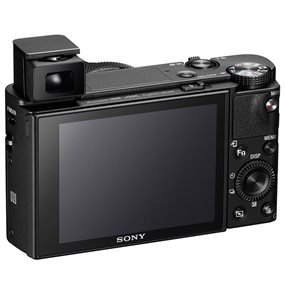
I tried few of the advance compacts, Sony RX100, Panasonic LX3, LX7, and Canon Powershot S90, S100. Sony RX100 is the best in this category considering image quality and size. Panasonic LX7 and many others are simply too big to be pants pocketable. If it isn't pants pocketable, you have much better options in similar sized mirrorless cameras. Nikon 1 and Olympus PM2 comes to mind. Also, if it's too big, it can't be your always carry camera. STILL, there is one issue with RX100. RX100 is just too darn expensive. It costs more than many of the entry mirrorless cameras. It's fine if you are only getting RX100 for everything, but if you have multiple camera systems, like a DSLR and a Mirrorless system, then RX100 seems bit too much as you would probably want to use your "portable" mirrorless camera as well. I don't want to spend more on a compact than my mirrorless camera or even a DSLR. It will be for snap shots... for always carry type of thing.So, my only other option is Canon Powershot S series. You can get S110 currently for $200. S110 take great quality pictures for a compact camera. I like the jpegs out of the camera and you are able to shoot raw as well. The new touch screen on the camera is very useful. Now, it doesn't have all the controls in buttons and dials. Many of the features are in the menu or quick menus options. I can live with that since I bought it for convenience for snaps with "better" image quality than my cell phone. If you want a serious camera for photography that is portable, you really should get a mirrorless camera since compact cameras are compromise cameras. LX7 has a great lens, but mirrorless camera has prime lenses that can easily beat it. Sony RX100 has a great sensor but even Nikon 1 with their prime lenses can beat it in my opinion as I own them together before. (Nikon 1 with 18.5mm f/1.8 lens can get sharp images with decent bokeh compared with Sony RX100, and it has DSLR like af speed and incredible burst rate.) Canon Powershot S110 is perfect carry everywhere truly pocketable camera. There is nothing better in this size. Again, there is nothing better in this SIZE. Any bigger, just get a mirrorless as a jacket pocketable camera. Sony Nex 3N and Olympus PM2 are very jacketpockable. Nikon 1 J1, J2, J3, S1 of course is another option. As for a "compact" camera, Canon Powershot S beats others in terms of price, convenience (no lens cap), size, features (touch screen), and has similar image quality as other "advance compacts".One more thing, the wifi on S110 is pretty useless. You have to be on wireless network to share pictures with you phone or tablet wirelessly. That kind of defeats the purpose if you are outdoors. Also, no remote shutter or view finder capability as with Samsung cameras. If you won't use the touch screen, S100 with GPS is probably better for you. As for me, I like the touch focus feature on S110, so I went with S110 over other Powershot S series. (Also S95 has 28mm wide versus 24mm on S100 or S110) Well, here is it. If you have other systems and want truly a carry everywhere camera, Canon Powershot S110 is as good as it gets. If you are looking to get one compact as your only camera because you will never carry multiple lenses, LX7 or RX100 or other bigger advance compact may fit you better with more buttons and dials.
Скромный эксперт
09.06.2013
6/10
Оценка пользователя
Плохо
I'd been shopping the Canon S110 versus the Sony DSC-RX100. I bought the S110 hoping it would be a good enough camera at its price point and save me the $300 price difference. I had it for a week and was generally pleased despite a few flaws, but the thought of the RX100 photo quality kept nagging at me. So I relented and ordered the RX100 and have made a thorough comparison conducting extensive side by side photo shoots. Though the S110 has some really nice features that make it tempting to keep, and also save the extra money, the RX100 photo quality exceeds it by such a large degree that I ended up sending the S110 back. The following is the summary of my comparison.The S110 is lightweight and easy to grasp. The button labels printed on the camera are larger and easier to read and the buttons themselves are larger than those on the RX100. It's menu system is intuitive and easy to use and is aided even more by the touch screen. The touch screen also enhances the photo-taking functions by activating a secondary function for the control ring when you place your thumb on the right hand edge of the screen. The wi-fi is a convenient time saver. However the app won't work on my Android tablet which was a big disappointment. Picture quality on the S110 is inconsistent. Auto mode produces photos that are overexposed, overly vivid, and the color tempurature far too much on the cool side. They are essentially unusable for me. You can get decent pictures in Program AE mode but you will need to play with settings to find what works best for you in given conditions. Even then you may be in for some post-processing work to get them "dialed in". Overall I feel my six year old Canon SD800IS produces equal or better results. HDR mode requires a tripod (or very steady hand) and does not always produce a good end results in-camera. Further post-processing is still needed. Battery life on the S110 is poor. It is made worse by the fact that the battery indicator gives little warning of battery death. It did leave me stranded with a dead battery once. You'll need spares with you at all times. The Canon software is very good and makes uploading easy and also provides excellent info on all the settings used in the photos.RX100 picture quality is phenomenally better than S110 in almost all cases. The only exception is in macro mode where the S110 is close (but the RX100 still better). The DRO and HDR functions on the RX100 are worth the price of admission by themselves by ensuring very good in-camera results. The low light capabilities of the Sony are incredible and in another league entirely than the Canon. The RX100 menu system is sometimes awkward, forcing you to push buttons or turn dials unnecessarily to scroll through options. It is also not as intuitive as the S110 so you sometimes have to use some trial and error to find the function you want. The screen is very bright after setting it to sunshine mode, and it has very nice resolution. It is noticeably better than the S110 screen. Due to its weight and large diameter lens the handing quality of the RX100 is not as sure footed as the Canon. Sony made an ergonomic blunder in putting the movie button beside the thumb rest which makes the thumb pad much smaller than it could have been, which I think would have greatly aided the handling quality. I prefer the smooth operation of the Sony function ring as opposed to the clunky detents of the Canon. The Sony software is good and has a couple of unique features but overall I preferred the Canon software.To conclude, the S110 is a very good integrated design package that has some cool features. Its battery life is a frustrating inconvenience. But its generally unremarkable photo quality and poor Auto mode seal its fate for me. The RX100 has stellar photo quality but is less refined in menu and handling than the Canon. The RX100 has a much better screen and battery life. Both have good software. The shortfalls of the RX100 versus S110 are minor. The S110 has the cool features of wi-fi and touch screen that are nice conveniences that one can ultimately live without. As an overall package for my needs and budget the RX100 wins even at the much higher price point.
Скромный эксперт
21.10.2012
10/10
Оценка пользователя
Великолепно
As we all know, Canon's S90 - S100 models have pretty much set the bar in The Advanced Point And Shoot market for the last 4 1/2 yrs... Until recently ( With the advent of The Sony RX100). Canon sales more cameras than almost all other brands combined, this does not indicate, however; that they are the best in all categories, but that they are either the best over all, or at least in the top 5 for most classes of cameras. I have owned many Canon Cameras and printers over the years, and I have been very happy with most of them, but I also place a lot of stock in fellow Amazon customer's reviews. For many months, I noticed that every other review, or updated one, for The Powershot S100 indicated a nasty lens error. That said, this time around researching advanced P&S's, I decided to see what other Brands such as: Nikon, Fuji, Panny and Sony were offering... What I found was this, Other brands have really took notice of The Canon S and SX line's success and or offering very stiff competition! Sony has, IMHO, set the New Standard with the almost perfect Advanced P&S, The RX100. My coworker owns one, and it stomps all others in this now crowded class! Only problem is that it cost over $650.00, but the image quality, and low light rendering are truely amazing! Needless to say, Sony discounts its products about as often as Apple discounts its products... NEVER! The Panny Lumix LX5 and LX7, Nikon P300 and P310 and Fuji X10, are all now offering very good to excellent image quality in this class. You saw correct! I did include The Nikon Coolpix P310! Nikon has really stepped their game up with The Coolpix Line, in fact; this was the only model that came close to The Canon S100 and S110's Bang-For-Your-Buck. Price, it is $200 less than Canon S110, $450 less than The Sony RX100, while offering excellent I.Q., pocketabillity, low light performance and manual controls... Sans Raw mode. Came so close to getting The Nikon P310, before you judge me, just take a gander at the online sample shots of this camera! In the end, I came back to The Canon S110. Chose The newer S110 over The S100 in the hopes of avoiding The Lens Error (Fingers Crossed). So happy with this camera! The S110 looks identical to The S100, but let me tell you, Canon has made some huge improvements with The 110. Canon has improved upon the sensor and auto focus speed of this model, added usable ISO, WiFi and touchscreen functionallity. Low light performance is a lot like that of The S95 and S100 combined. Allow me to explain. Sometimes The S100's colors would be a little off in low light, casting an orangish hue... as if shot in sepia. The Powershot S95 rendered sharp, detailed and very accurate colors in lowlight, but the lens was a bit slow under these conditions. I don't know what Canon did, but there is almost zero lag in AF, despite others claim that this is a slower lens or sensor than its predecessors. Color, contrast and sharpness are spot on! I predict that the next S model will have a larger sensor to be competitive with The Sony RX100's lowlight performance, but until then, I have to say that the S110 is very close in low light image quallity and will surpass the Sony, although at the cost of a higher price point and perhaps a larger form factor because of the larger sensor. Battery life has never been an issue with me, because I rarely took over 100 pictures in a day and never used GPS tagging or logging. I also rarely shoot video clips longer than 10 min. in a day,also buy cheap aftermarket Batt.s as back-up. Canon's addition of WiFi to The S-Line is really cool and useful; I use it way more than I thought I would! It is implemented very well with this camera, much smoother and faster than using Eye-Fi's top of the line card... That's an $80 dollar value right there! Lol Also, I already own a Canon SX-230HS and many extra batteries. The S110 uses the same battery ( NBL-5) as The SX-230. Yes! Winning! WiFi connection with your smartphone or iPhone is almost instantaneous, once the App. is opened on the device, or printer turned on. GPS functions are combined with these WiFi transmissions between your phone and camera, and they are thus also instantanious. The WiFi operates very efficently, and a cool, bright, blue LED lights up on the top of the camera when it is connected. It flashes when busy. The Camera asks if you would like to geotag or log your location while connected to your phone or computer. It is a 2 second affair, so GPS no longer drains your battery. Built-in GPS and Eye-Fi cards do not work nearly as seemless as this! I had issues when first setting this connection up, because I thought I could bypass the step where you connect the Camera to a computer via USB cable and run software CD... You have to do this step! I think you may have to also Register your S110 for it to properly set up initial WiFi. Touchscreen: Very Responsive, and can be adjusted.... Nuff said on that. CONS: The things I don't like about The Cano
Скромный эксперт
07.04.2014
10/10
Оценка пользователя
Великолепно
I'm not going to touch much on the quality of the photos/videos this camera takes because it's simply beautiful. I was even able to capture a decent photo of Aurora Borealis. So here are some other highlights.I owned the S100 for a while but lost it while I was traveling so replaced it with this S110. The one major complaint I had with the S100 was that it had a very slow response time when using flash. So slow that when I would ask strangers to take a photo for me, I'd have to explain to them each time that they need to hold the shutter down for a while (on average 3~5 seconds). With the S110, however, it's significantly faster. It works like how it should (on average <1~2 seconds).It also takes better pictures under low light conditions (without flash). Even when capturing against the sun in the background, you can still clearly see the person's face (where normally it would be too dark).Wifi Capability - The wifi capability is SO useful. I don't even care that they took off the GPS geotag that they had in the S100 (because it didn't even work that well to begin with). The built in wifi doesn't mean it connects to a wifi hotspot. It BECOMES the wifi hotspot for your devices (phone, tablet, etc) to connect to. It allows you to use your phone's GPS to geotag each pictures taken by the camera. The best feature about this that I absolutely LOVE, is that it lets me transfer my camera photos directly onto my device through this wifi connection (very fast, too). This makes photo sharing SO much easier. For example, I can take a photo of a waterfall with my camera, then transfer it onto my phone, then upload it or email it to someone right ON THE SPOT, while I'm still standing in front of the waterfall (as long as I have phone reception).Underwater Housing compatibility - I have an underwater housing for the S100 (Canon WP-DC43). I did not want to purchase a new one for the S110 because they cost almost as much as a brand new S110 on Amazon. Great news is that the underwater housing for the S100 works just fine! The only thing is, the power on/off button does not align. All of the other buttons work fine. You can get around the power button issue by pressing the photo review button to turn on the camera and pressing the shutter button to take photos, and make sure to adjust the automatic shut off time (not to waste too much battery) to let it turn off on its own.I love this camera <3I think one complaint I might have though, is the power on/off button. Why the heck did they shrink it so small? It makes it difficult to turn it on/off when wearing gloves. Oh well it's still manageable.
Скромный эксперт
04.05.2013
8/10
Оценка пользователя
Хорошо
Canon S110! I haven't had a Canon brand point-and-shoot since an Powershoot S10 failed me on numerous occasions, including on 911 and on a few job surveys.Due to overwhelming recommendations I chose this model S110 to supersede my third Samsung camera. This Canon has a touch screen and a sturdy body. The buttons are relatively easy for me and nothing has accidentally turned on by rubbing against things in my bag.Generally I'd say this is a very nice camera although a bit pricey above $300-I have no comment on the wireless function. The pictures are clear and the camera is fast. I like that!I am not going to comment on general specs that you can find out on your own. But rather a few personal experience issues that may or may not matter to you, especially since you're probably much smarter than I am:1. Why is there a zoom button on the lens and another zoom button on the shooter button? Why are there two buttons doing the same thing? The one on the lens looks kind of cool but is ergonomically lacking and not any better than the small one. On custom settings it does work for aperture and such, but I do that on my larger camera. Still getting used to this.2. I do have a big problem with the battery. To me its is far more important than the wireless stuff. These days so most peripherals plug in AND CHARGE via USB. This Canon has a separate battery charger like the P S10 from 1999, and you need to open the body and take out the battery, put it in a charging saddle and put that in the wall. Okay. And instead of it charging when plugged into USB, it drains if on the USB and is turned on. This is outdated by many years. Uploading the photos via USB should mean replenishing battery power. Seriously! Yes this is very annoying and cumbersome and I really don't need or want more chargers (junk) around the house or on my trips.3. My fingers keep accidentally pressing "stuff" on the touch screen.4. The flash pops up under an ergonomically natural finger position where I'm holding the camera. I turned it off altogether, since the camera is great in darker areas anyway.5. The finish of the body is slippery and have come close to dropping it a few times. I am not the type to drop things like this, and I never liked having a wrist chord on my cameras.Reading the reviews, I am concerned about a future lens failure, especially at critical moments. Because that is when they occur. I naively expected Canon to have repaired this issue from the S100 model, -which is why I didn't buy the S100. Buying a product from a reputable company should not be a roulette and I wouldn't mind some comments on that one.I am also a little annoyed that this camera feels (to me) a bit overloaded with gadgetry. A somehow simpler camera is more desirable, and a on/off button for the touch screen would be helpful. I wonder if the battery would last longer that way.But hey. It shoots great pictures for a P&S and so far I have had good luck with the video, minus some focusing issues when on the move. Another reason why I chose it: 1920x1080-H.264! Tripod preferred and gives you great results.Generally the function buttons are fine to use and well thought out. The on/off button takes an effort -which prevents it from accidentally going on. Good thinking, Canon.Canon makes nice cameras and I have an old 10 Rebel and the HV30, both great and lasted a long time.*** Update 6-25-2013. Whoops! My daughters last day at school and the camera is dead and says to charge the battery. I foolishly left it plugged into the computer the day before uploading a lot of work photos. I'm so used to things charging that way. Either its foolish me or foolish Canon designers. Take a pick. Missed pictures at last day of school is how much? Half a star? ;-)
Скромный эксперт
23.03.2014
10/10
Оценка пользователя
Великолепно
Recently I have written many reviews in Amazon and other web sites.So far recent camera I have used Fuji XF1, Olympus XZ1 and Canon Ixus 255.And gone through reviews of Canon S110 and saw images in Flickr.Other web sites like Cameralab,Photographyblog reviewed images from Canon S110 are excellent.True to all reviews images of Canon S110 are excellent with accurate colors rendition.Strength of camera :1.Absolute image quality.2.Color accuracy and rendition.3.Sharp images.4.Although it's maximum focal value is 5.9 ,but still it's quite sharp without any issues.You can check it's other sibling Canon Ixus 255 which produces almost same out put of images even at tele end of f6.9. I found in practical life Canon S110 is much better in image section,although theoretically it's lens is having f5.9 at tele end.I am convinced about Canon's strong processor which does great job.5.High dynamic range with low noise.7.Night pictures are good,but do not compare with f1.4 lens.But it's quite good.At ISO 800 almost all images can be shoot at night,no need to enhance further.8.Wi-fi connectivity.8. A gem in designing and built quality.9. Very useful PSAM mode.10.Touch screen focus and shutter apart from physical control.Pinch and Zoom action of LCD is very useful for me.11.All filters are really usable and fantastic unlike other camera.WEAKNESS OF CAMERA1.Macro shots are ok.I just use normal focal length of 4-5 CM and gives out standing results.Olympus XZ1, Fuji XF1 excel for macro.2.Night photography can be better.Fuji Xf1 excel, but my lens of Fuji xf1 shown 2 times error in 3 months.I sold it without second thought.Useless lens retraction design of XF1.I was not convinced at all about Fuji XF1.My all uploads can be seen in flickr.com for comparison purpose.3.HDR mode is not hand held.You have to use a tripod or rest over a hard surface.4.Battery back up could be better.Final words:Canon S110 is under rated camera available now at great price.Its sibling Canon Ixus 255 produces good images with low price,but output from Canon S 110 is excellent due to its outstanding Digic processor.Without any hesitation I can recommend Canon S 110.
работа в режиме видоискателя, сенсорный, фиксированный
Съемка
Экспозиция :
auto ISO, автоматическая с приоритетом выдержки, автоматическая с приоритетом диафрагмы, брекетинг, общая (Evaluative), ручные настройки выдержки и диафрагмы, точечная, центровзвешенная
Экспокоррекция :
+/- 3 EV с шагом 1/3 ступени
Светочувствительность ISO :
ISO12800, ISO6400
Баланс белого :
авто, предустановки, ручная установка
Режимы съемки :
запись видео, макросъемка, серийная съемка
Максимальная серия снимков (JPEG) :
10
Время работы таймера :
2, 10
Линейка
Линейка :
PowerShot
Дополнительная информация :
брекетинг фокусировки
Информация о характеристиках носит справочный характер.
Перед покупкой уточняйте характеристики и комплектацию товара у продавца
Спасибо за регистрацию на портале Wizemart, вам на почту пришло письмо с подтверждением регистрации, пожалуйста перейдите по ссылке внутри него для подтверждения вашего e-mail